(Not Quite) All the Food in Thomas Pynchon’s Books

I was looking for something else when I found a fun article from six years ago in Bon Appétit. The article, by Nicole Villeneuve, is called “All the Food in Thomas Pynchon’s Books (and What It Means, Sorta),” and it riffs on most of the food in Pynchon’s oeuvre.

Here’s the section on “The Inedible,” which includes notes on two of my favorite scenes from Gravity’s Rainbow—–

The Inedible

“A lot of people who think they’re cooks but are clinically deluded,” says a mess hall manager in Vineland. Pynchon includes a lot of their misguided creations in his books, relishing the gross and inedible—the places where “even [the] Jell-O salads have scum on them.”

Maybe the most memorable example is the “English Candy Drill,” in which a parade of disgusting sweets are sampled, unwillingly, by Tyrone Slothrop, the protagonist (sorta) in Gravity’s Rainbow: rhubarb creams, cherry-quinine petit fours, eucalyptus-flavored fondant, and pepsin-flavored nougat, licorice drops with a “dribbling liquid center, which tastes like mayonnaise and orange peels” and “a hard sour gooseberry shell into a wet spurting unpleasantness of, he hopes it’s tapioca, little glutinous chunks of something all saturated with powdered cloves.”

Gravity’s Rainbow includes another scene that’s hard to stomach: As a culinary prank, Bodine and Roger hold a dinner party with an intentionally revolting menu: “snot soup,” “sum soufflé,” “vomit vichyssoise” and “wart waffles.” Needless to say, “A general loss of appetite reigns, not to mention overt nausea.”

It’s a fun article, like I said, but there are a few things missing. It notes Against the Day’s cult of mayonnaise but leaves out all the ketchup (ketjap) stuff in Mason & Dixon, as well as Mason & Dixon’s important core distinction between Grape People and Grain People:

“If this is as bad as it gets, why I can abide thah’. As long as the Spirits don’t run out.”

“Nor the Wine.”

“Wine.” Dixon is now the one squinting. Mason wonders what he’s done this time. ” ‘Grape or Grain, but ne’er the Twain,’ as me Great- Uncle George observ’d to me more than once,— ‘Vine with Corn, beware the Morn.’ Of the two sorts of drinking Folk this implies, than’ is, Grape People and Grain People, You will now inform rne of Your membership in the Brotherhood of the, eeh, Grape…? and that You seldom, if ever, touch Ale or Spirits, am I correct?”

“Happily so, I should imagine, as, given a finite Supply, there’d be more for each of us, it’s like Jack Sprat, isn’t it.”

“Oh, I’ll drink Wine if I must…?— and now we’re enter’d upon the Topick,— ”

“— and as we are in Portsmouth, after all,— there cannot lie too distant some Room where each of us may consult what former Vegetation pleases him?”

Dixon looks outside at the ebbing wintry sunlight. “Nor too early, I guess…?”

“We’re sailing to the Indies,— Heaven knows what’s available on Board, or out there. It may be our last chance for civiliz’d Drink.”

“Sooner we start, the better, in thah’ case…?”

Again, a fun article—but what other food bits are missing? (We can leave the coprophagia and urolagnia in Gravity’s Rainbow out, though.)

Culte de la mayonnaise (Thomas Pynchon)

THE NEXT TIME he saw Pléiade Lafrisée was at a café-restaurant off the Place d’Armes. It would not occur to him until much later to wonder if she had arranged the encounter. She was in pale violet peau de soie, and a hat so beguiling that Kit was only momentarily surprised to find himself with an erection. It was still early in the study of these matters, only a few brave pioneers like the Baron von Krafft-Ebing had dared peep into the strange and weirdly twilit country of hat-fetishism—not that Kit noticed stuff like that ordinarily, but it happened actually to be a gray toque of draped velvet, trimmed with antique guipure, and a tall ostrich plume dyed the same shade of violet as her dress. . . .

“This? One finds them in every other midinette’s haunt, literally for sous.”

“Oh. I must’ve been staring. What happened to you the other night?”

“Come. You can buy me a Lambic.”

The place was like a museum of mayonnaise. This being just at the height of the culte de la mayonnaise then sweeping Belgium, oversize exhibits of the ovoöleaginous emulsion were to be encountered at every hand. Heaps of Mayonnaise Grenache, surrounded by plates of smoked turkey and tongue, glowed redly as if from within, while with less, if any, reference to actual food it might have been there to modify, mountains of Chantilly mayonnaise, swept upward in gravity-impervious peaks insubstantial as cloud, along with towering masses of green mayonnaise, basins of boiled mayonnaise, mayonnaise baked into soufflés, not to mention a number of not entirely successful mayonnaises, under some obscure attainder, or on occasion passing as something else, dominated every corner.

“How much do you know of La Mayonnaise?” she inquired.

He shrugged. “Maybe up to the part that goes ‘Aux armes, citoyens’—”

But she was frowning, earnest as he had seldom seen her. “La Mayonnaise,” Pléiade explained, “has its origins in the moral squalor of the court of Louis XV—here in Belgium the affinity should not be too surprising. The courts of Leopold and Louis are not that different except in time, and what is time? Both monumentally deluded men, maintaining their power through oppression of the innocent. One might usefully compare Cleo de Mérode and the marquise de Pompadour. Neuropathists would recognize in both kings a desire to construct a self-consistent world to live inside, which allows them to continue the great damage they are inflicting on the world the rest of us must live in.

“The sauce was invented as a new sensation for jaded palates at court by the duc de Richelieu, at first known as mahonnaise after Mahon, the chief port of Minorca, the scene of the due’s dubious ‘victory’ in 1756 over the illfated Admiral Byng. Basically Louis’s drug dealer and pimp, Richelieu, known for opium recipes to fit all occasions, is also credited with the introduction into France of the cantharides, or Spanish fly.” She gazed pointedly at Kit’s trousers. “What might this aphrodisiac have in common with the mayonnaise? That the beetles must be gathered and killed by exposing them to vinegar fumes suggests an emphasis on living or recently living creatures—the egg yolk perhaps regarded as a conscious entity—cooks will speak of whipping, beating, binding, penetration, submission, surrender. There is an undoubtedly Sadean aspect to the mayonnaise. No getting past that.”

Kit was a little confused by now. “It always struck me as kind of, I don’t know . . . bland?”

“Until you look within. Mustard, for example, mustard and cantharides, n’estce pas? Both arousing the blood. Blistering the skin. Mustard is the widelyknown key to resurrecting a failed mayonnaise, as is the cantharides to reviving broken desire.”

“You’ve been thinking about mayonnaise a lot, mademoiselle.”

“Meet me tonight,” a sudden fierce whisper, “out at the Mayonnaise Works, and you shall perhaps understand things it is given only to a few to know. There will be a carriage waiting.” She pressed his hand and was gone in a mist of vetiver, abruptly as the other evening.

A passage from Thomas Pynchon’s novel Against the Day; I don’t think you need any context to appreciate this passage.


Machines in the Head: Selected Stories of Anna Kavan (Book acquired, 18 Nov. 2019)

img_4405

I’m really excited about this one. Anna Kavan’s novel Ice is one of the best books I read this year (I blogged about it here and here and here. T Machines in the Head: Selected Short Stories of Anna Kavan is out early next year from NYRB. Their blurb:

Anna Kavan is one of the great originals of twentieth-century fiction, comparable to Leonora Carrington and Jean Rhys, a writer whose stories explored and plumbed the depths of her long addiction to heroin. This anthology of Kavan’s stories draws together a selection of her best writing from across her long career. Stories from across her collections show the range of her style: oblique and elegiac tales of breakdown and asylum incarceration from Asylum Piece (1940), moving evocations of wartime from I Am Lazarus (1945), fantastic and surrealist pieces from A Bright Green Field (1958), and stories of addiction from Julia and the Bazooka. Her late sci-fi stories will appeal to fans of her last novel, Ice. “Five Days to Countdown,” first published in Encounter (1968) and later collected in My Soul in China, is preoccupied with Cold War concerns and the sartorial aesthetics of the 1960s, and, published here for the first time, “Starting a Career” is a futuristic spy thriller, whose protagonist sets out to become the world’s greatest enigma.

Kavan was determined to experiment throughout her writing career, and this collection is moving, funny, bizarre, poignant, often unsettling, but always distinctive and often unique. And even though better known as a writer than an artist, Kavan painted throughout her life.

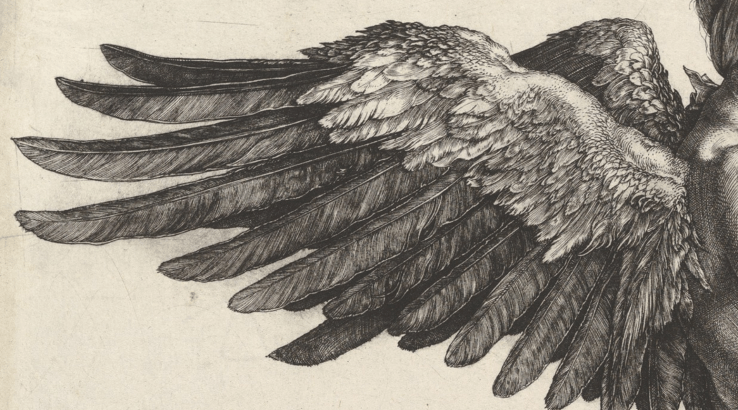
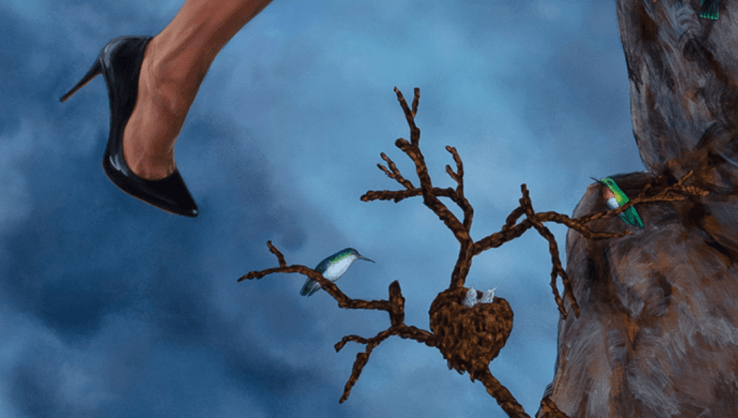
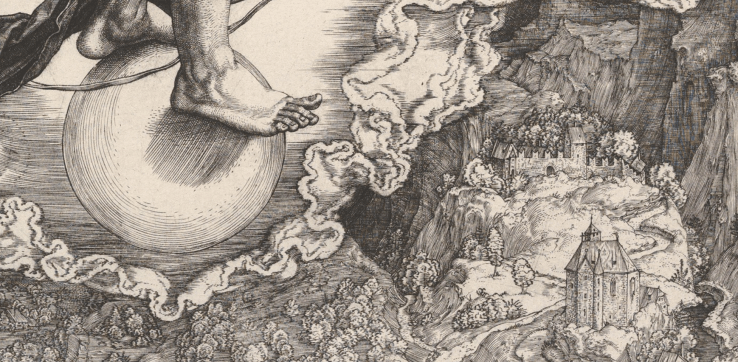
Nemesis (Detail) — Albrecht Durer

nemesis.PNG

Nemesis (Detail), 1503 by Albrecht Durer (1471-1528)

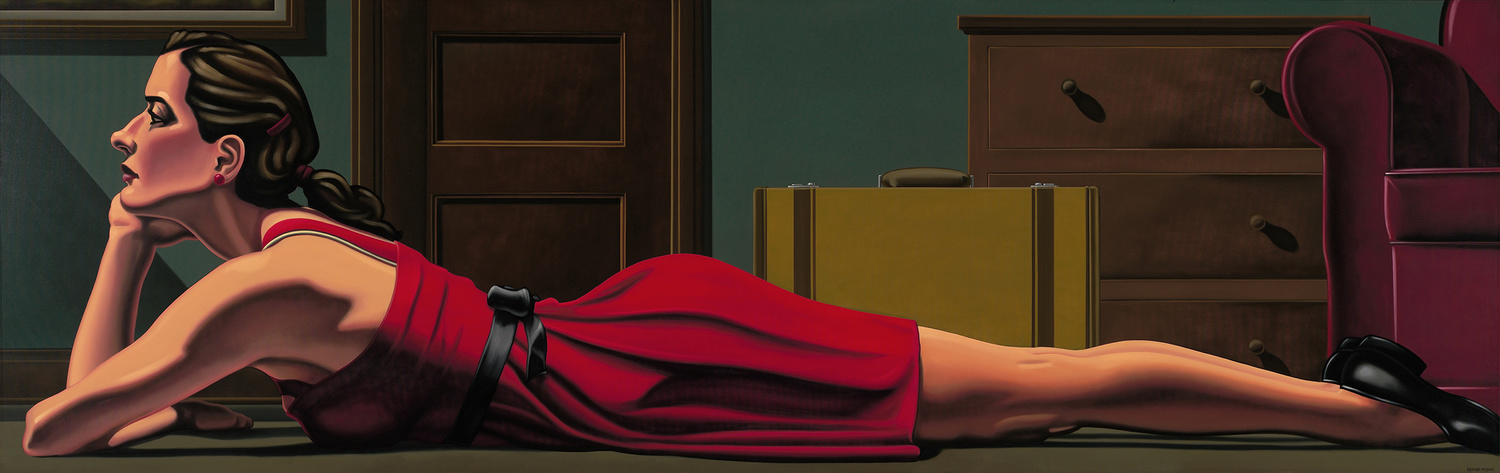
Wait — Kenton Nelson 

image-asset

Wait by Kenton Nelson (b. 1954)

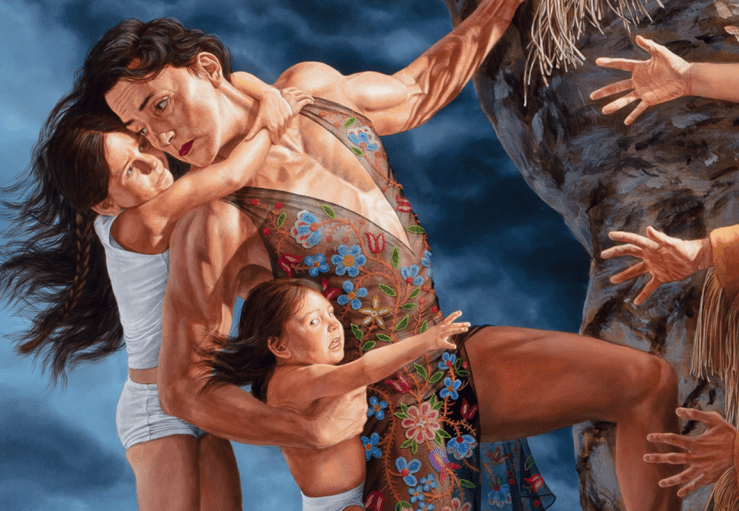
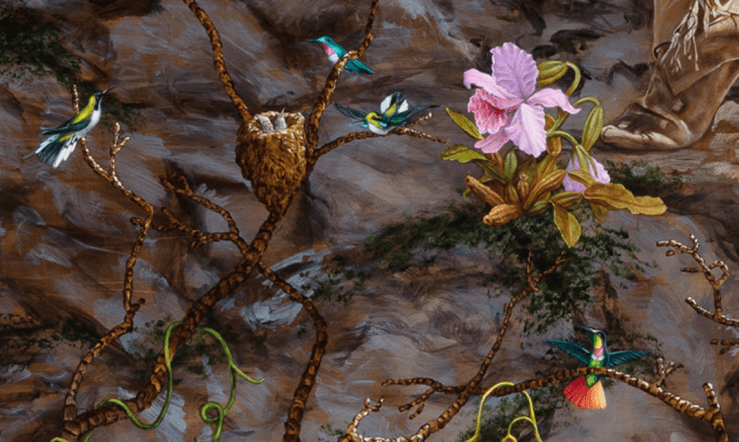
The Deluge — Kent Monkman

thedeluge285025resjpeg29

abcd

The Deluge, 2019 by Kent Monkman (b. 1965)

Three Books

2019-11-24-113310

Under the Volcano by Malcolm Lowry. 1965 hardback from Lippincott. Jacket design by David Lunn.

2019-11-24-113310-1

Under the Volcano by Malcolm Lowry. 2014 trade paperback from Harper Perennial Olive Editions. Cover design and illustration by Milan Bozic.

2019-11-24-113310-2

Under the Volcano by Malcolm Lowry. 1962 paperback from Vintage. Cover design by Harry Ford.

I have now bought four copies of Malcolm Lowry’s 1947 novel Under the Volcano. The first copy I bought was a cheap movie tie-in edition with a ghastly cover. I later replaced it with the 1962 edition, and reread it. A few years later I resisted buying a 2007 Harper Perennial paperback edition that featured an afterword by William Vollmann. (You can read Vollmann’s afterword—and the entire book, if a 700 page pdf is your thing—here).

On 8 Nov. 2019, I picked up the 2014 Olive edition.

On 22 Nov. 2019, I picked up the 1965 Lippincott hardback, blowing the rest of my store credit in the process. I couldn’t not buy it. I had to have it.

It also matches a folding hard print of Hokusai’s Red Fuji that a student gave me as a gift when I left Tokyo.

IMG-4400

This clipping of a 1984 not-really review of John Huston’s film adaptation was folded inside of the book.

IMG-4399

I wrote a review of Under the Volcano on this website back in 2011. From that review:

For all its bleak, bitter bile, Volcano contains moments of sheer, raw beauty, especially in its metaphysical evocations of nature, which always twist back to Lowry’s great themes of Eden, expulsion, and death. Lowry seems to pit human consciousness against the naked power of the natural world; it is no wonder then, against such a grand, stochastic backdrop, that his gardeners should fall. The narrative teems with symbolic animals — horses and dogs and snakes and eagles — yet Lowry always keeps in play the sense that his characters bring these symbolic identifications with them. The world is just the world until people walk in it, think in it, make other meanings for it.

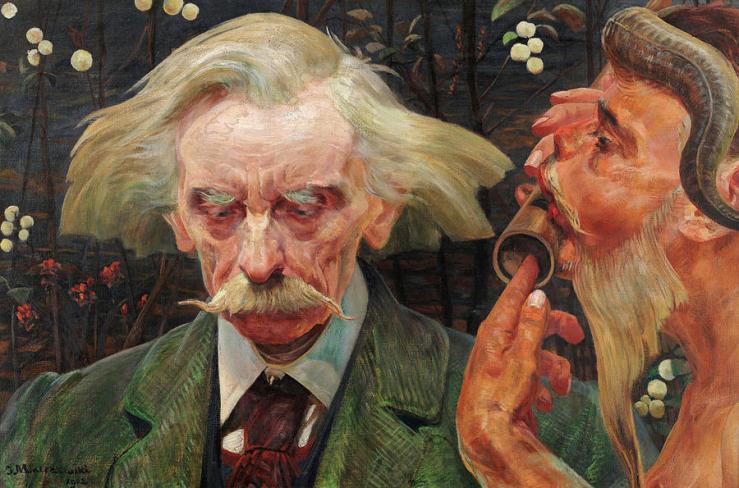
The Unknown Note — Jacek Malczewski

the-unknown-note-1902-jacek-malczewski

The Unknown Note, 1902 by Jacek Malczewski (1854-1929)

Saltwood Window — Robin Ironside

75_bg

Saltwood Window, c. 1955 by Robin Ironside (1912-1965)

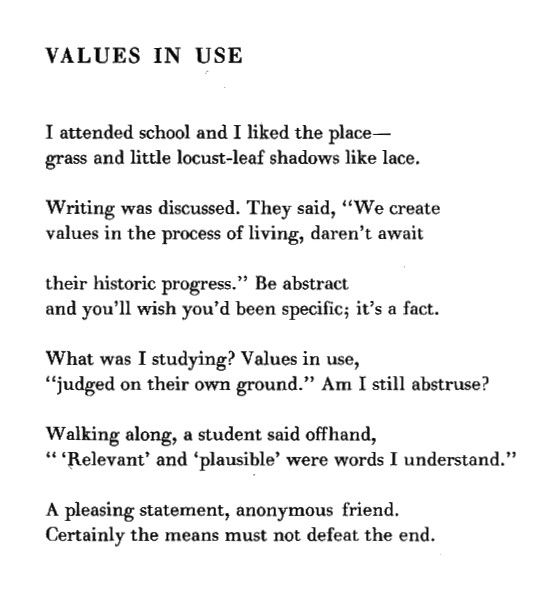
“Values in Use” — Marianne Moore

values in use

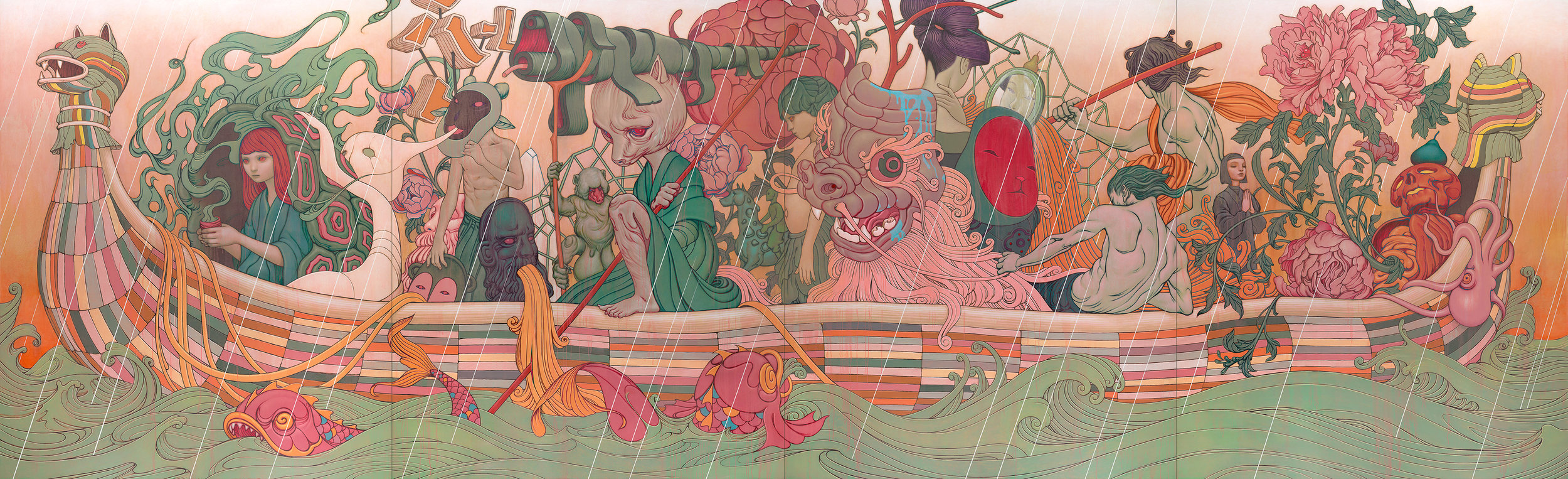
Passage — James Jean

passage-web-lores

abc

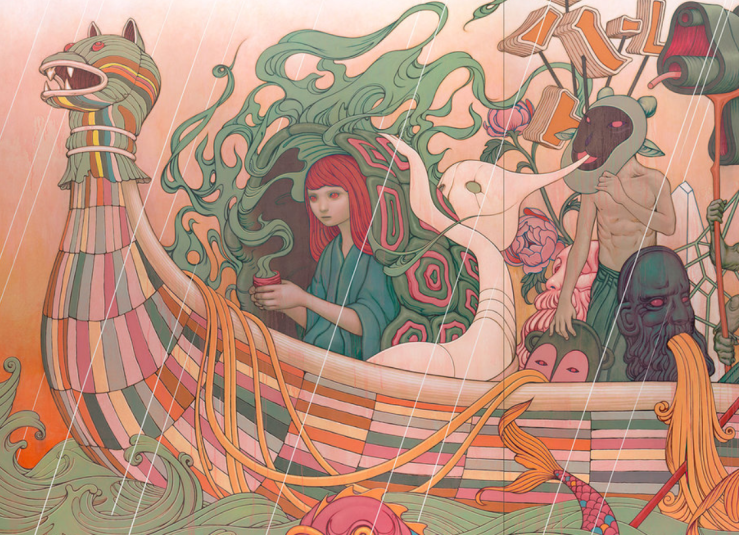
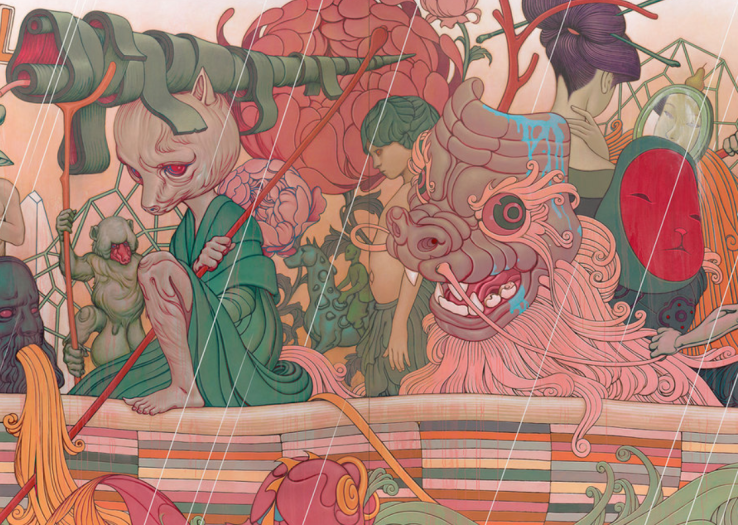
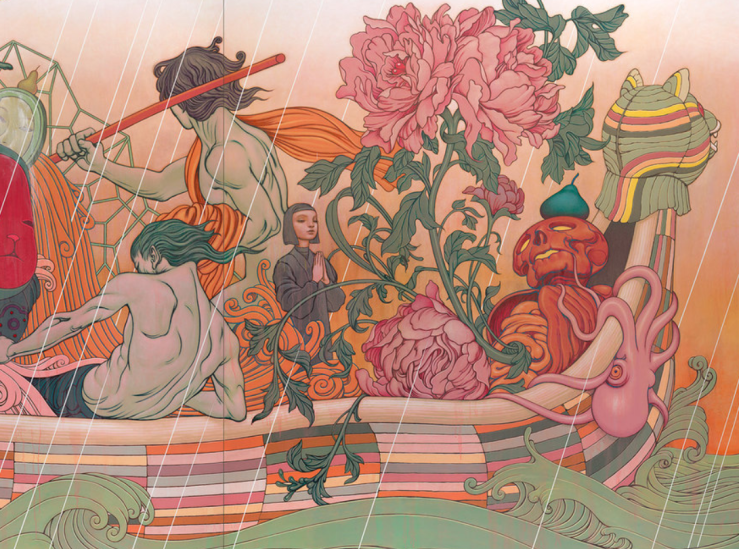
Passage, 2019 by James Jean (b. 1979)

Nemesis (Detail) — Albrecht Durer

nemesis

Nemesis (Detail), 1503 by Albrecht Durer (1471-1528)

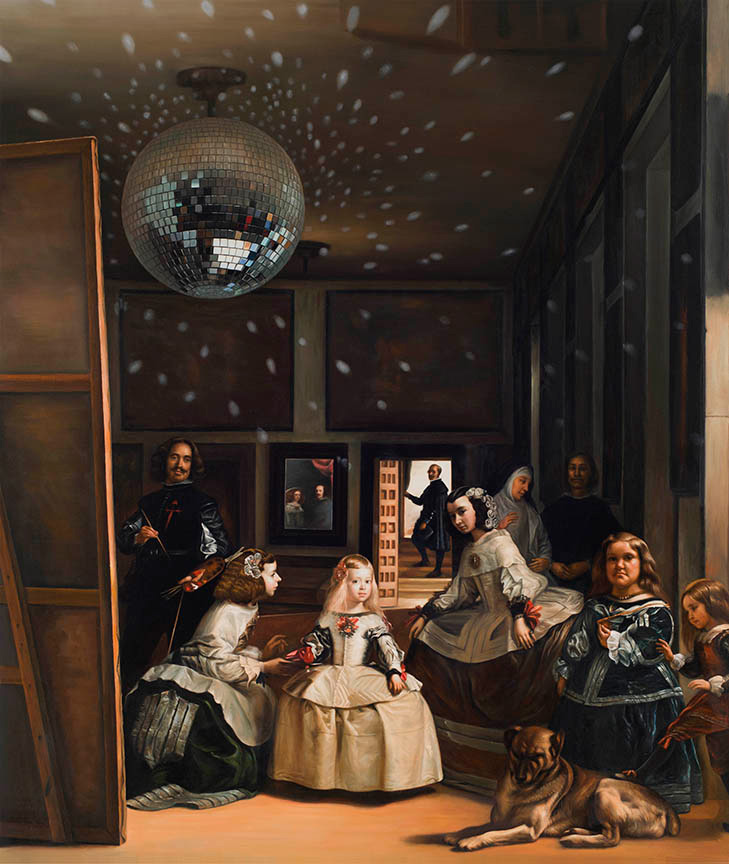
Rock Star — Marc Dennis

marc-dennis_rock-star_2015_oil-on-linen_70x60inches

Rock Star, 2015 by Marc Dennis (b. 1971)

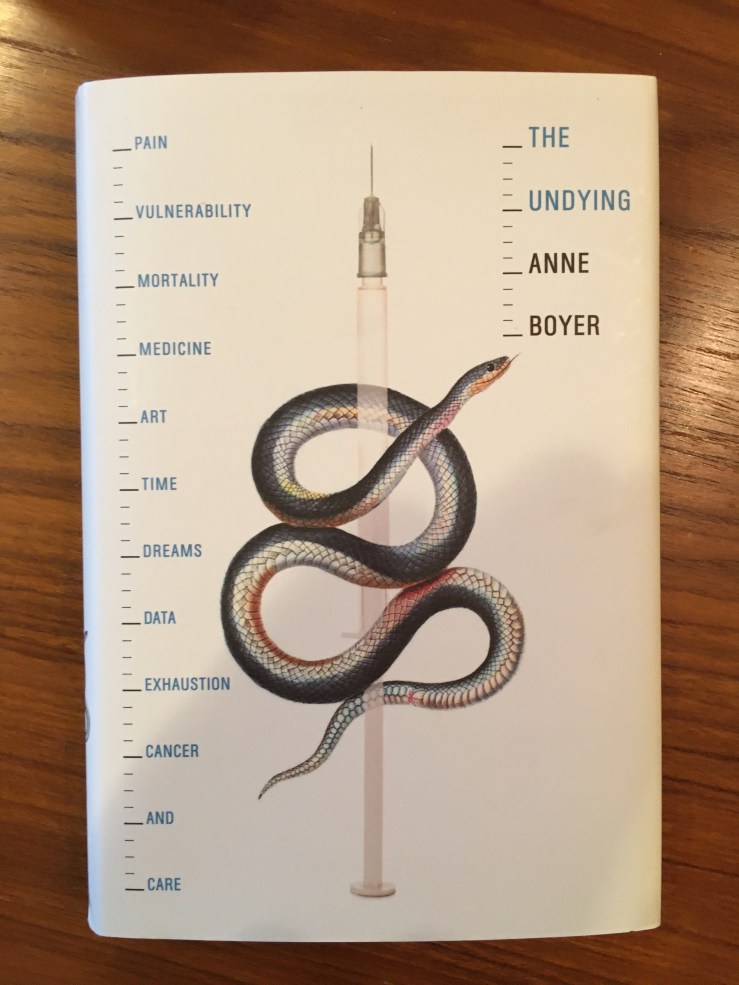
Anne Boyer’s The Undying (Book acquired 12 Nov. 2019)

img_4281

Huge thanks to BLCKDGRD for sending me Anne Boyer’s aphoristic, poetic memoir-essay The Undying. I guess he read that I went to my bookstore to buy it a few weeks ago and came home not empty handed but nevertheless Undyingless. I wanted to read Boyer’s book after reading her essay collection (“essay” isn’t really the right word, but)  A Handbook of Disappointed Fate this summer—-also sent to me by generous Mr. BLCKDGRD

I’m about 100 pages away from finishing The Undying, a book that doesn’t so much chronicle Boyer’s 2014 diagnoses and treatment of breast cancer as it explores and explodes what cancer—a “twentieth-century disease” that we still treat with “twentieth-century” methods, in Boyer’s words—means and is and does in our neoliberal late-capitalist early twenty-first century. Boyer writes,

To become a cancer patient is to become a system-containing object inside another system that only partially allows the recognition of the rest of the systems in which one is a node and also almost wholly obscures the heaviest system of the arrangement of the world as it is, which hangs around, too, in the object that contains a system (by which I mean “me”) as part of the problem in the first place, requiring our latent unhealth just as it profits from our active one.

Later, again addressing that “latent unhealth” which is part and parcel of the system, Boyer declares: “I would rather write nothing at all than propagandize the world as is.” This is a wonderfully angry book.

This is a wonderfully angry, discursive, recursive book: literary biography, literary criticism, art history, art criticism, Foucault, John Donne, Susan Sontag, Lucretius, Virginia Woolf; a howl at the hoaxers, frauds, self-helperists and their pinkwashed platitudes. And lots of pain, expressed with sentiment that bears no trace of sentimentality.

Boyer’s aphoristic style is engrossing. Her paragraphs and one-liners bear a ludic stamp seemingly at odds with her subject matter. The work of the writing, the heavy burden of smithing those sentences is all but elided—instead we get the clarity of a focused mind drawing together seemingly-disparate threads into a cohesive and compelling memoir that transcends the personal without necessarily meaning to.

Showing is a betrayal of the real, which you can never quite know with your eyes in the first place, and if you are trying to survive for the purpose of literature, showing and not telling is reason enough to endure the disabling processes required for staying alive.

Everything here feels and reads True. 

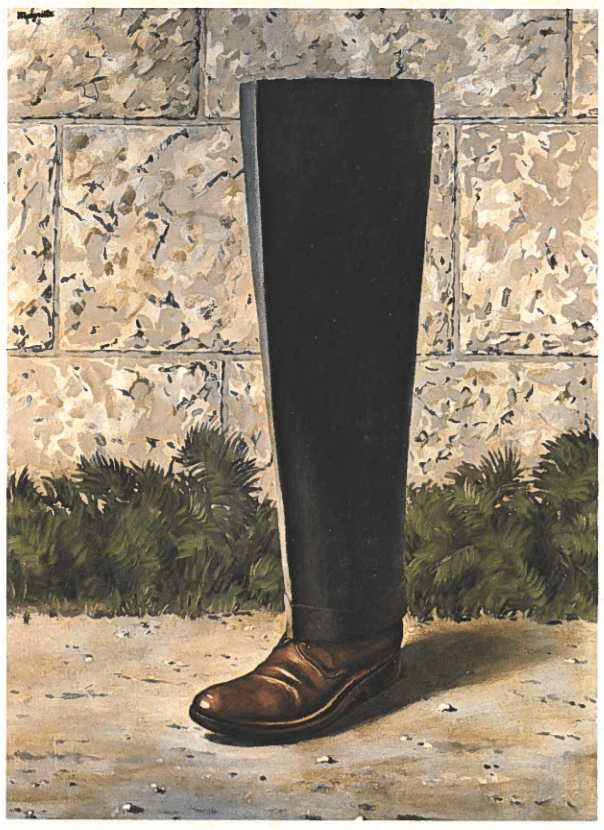
The Well of Truth — René Magritte

welloftruth

The Well of Truth, 1963 by René Magritte (1898-1967)

A review of Chris Ware’s new novel Rusty Brown, a sprawling story about memory and perception

q

My review of Chris Ware’s Rusty Brown—one of the best novels I’ve read this year—is up now at The Comics Journal.

From the review:

Rusty Brown, Ware’s latest novel (or, more precisely, novel-in-progress) strengthens the argument that Ware is a Serious American Novelist, one who deserves a large crossover audience. Like Jimmy Corrigan and Building StoriesRusty Brown has a central primary setting, a small private school in Nebraska. And like those novels, Rusty Brown comprises material (lightly reworked) from Ware’s Acme Novelty Library series (issues 16, 17, 19, and 20, specifically). The cast here is much larger and the themes are arguably more ambitious though.

Rusty Brown is a sprawling story about memory and perception, about minor triumphs and chronic failures, about how our inner monologues might not match up to the reality around us. In Ware’s world, life can be blurry, spotty, fragmented. His characters are so bound up in their own consciousnesses that they cannot see the bigger picture that frames them.


Posted in Art

Escaping the Candy Jail with My Good Eye Closed 1 — Drew Simpson

untitled-2-1024x819

Escaping the Candy Jail with My Good Eye Closed 1, 2016 by Drew Simpson