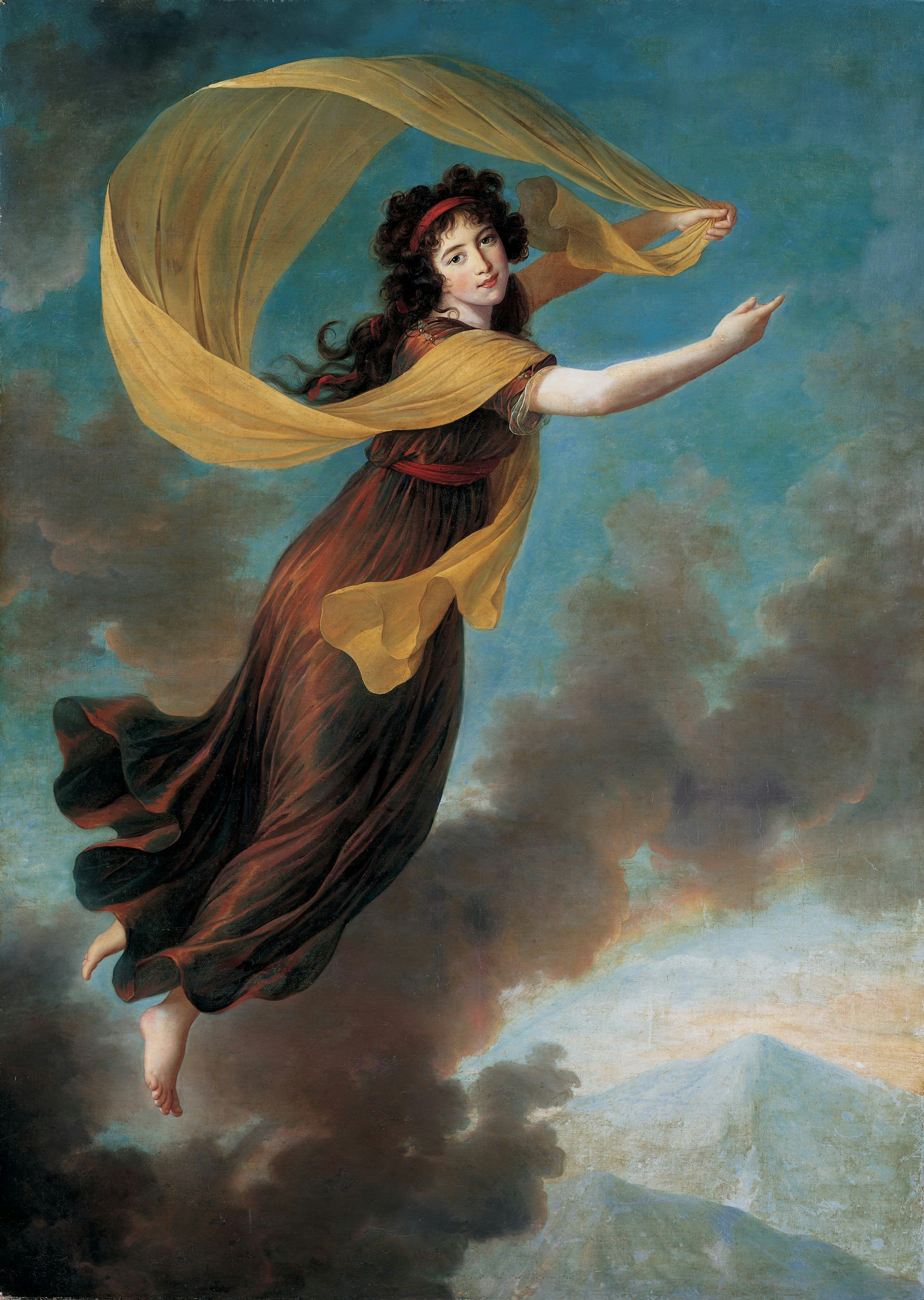


Princess Karoline of Liechtenstein, 1793 by Élisabeth Vigée Le Brun (1755—1842)

Princess Karoline of Liechtenstein, 1793 by Élisabeth Vigée Le Brun (1755—1842)
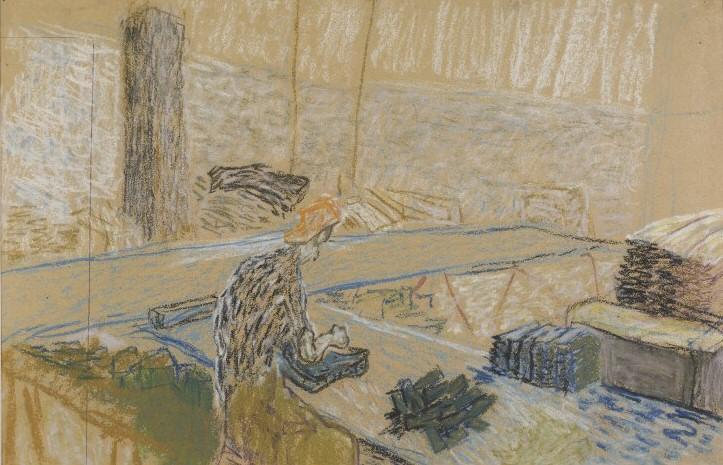
Woman at Work at a Table, 1948 by Ilka Gedo (1912-1985)
[Ed. note: I originally wrote and posted this review in January of 2012. My kids were four and one at the time. This morning, my daughter finished the edition of A Wrinkle in Time I reviewed here, reading the last hundred pages or so in a marathon sitting so we would take her (and her brother) to see Ava DuVernay’s film adaptation today. I’ll try to post some thoughts on the film later today.]
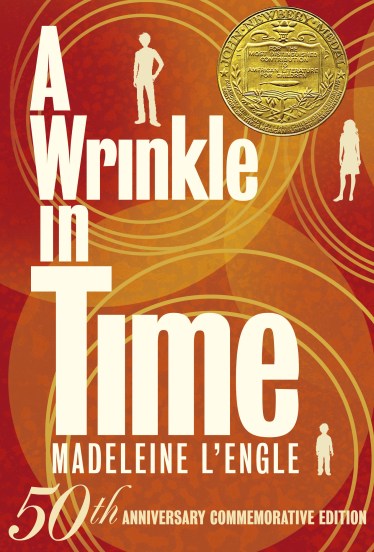
Madeleine L’Engle’s seminal fantasy novel A Wrinkle in Time turns 50 this year, and publisher Macmillan is celebrating by releasing a new anniversary edition with oodles of extras, including photos, manuscript pages, and new editorial content. They’ve also initiated a “50 Years, 50 Days, 50 Blogs Celebration Campaign” to promote the new book, and they asked Biblioklept to participate in the first week.
Here is the new cover:
And here is the cover to my beloved, ragged edition:
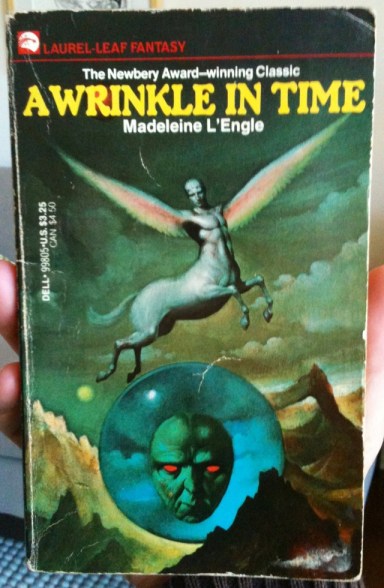
A Wrinkle in Time explores the strange intersections of space and time against a backdrop of adolescent angst. Our intrepid heroine Meg, her child genius brother Charles Wallace, and her would-be beau Calvin O’Keefe, go on a trans-dimensional quest to find her missing physicist father. They are aided (and initiated into) this quest by a trio of immortal women (shades of the Norns); their intergalactic mission finds them encountering angelic centaurs, motherly tentacled beasts, a red-eyed automaton, a disembodied brain, and more more more. Dr. Dad has disappeared while working on a mysterious project involving a tesseract.
Here’s a nifty visualization of the tesseract:

Like a lot of young people, as a child I was deeply fascinated by the concept of “tessering” away to a strange, marvelous, dangerous place, and it was surely this idea that most enthralled me as an early reader of the novel. I was probably ten when I first read the book, which I’m pretty sure was a gift from my aunt who brought it to me while our family was living in New Zealand. I actually wrote my name and our six-digit phone number into the book, which suggests that I loaned it out quite a bit.
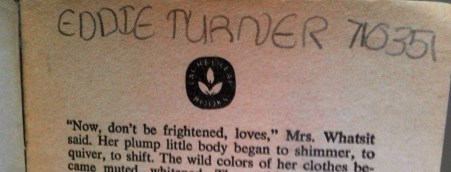
A Wrinkle in Time gelled with all of the stuff I was reading then: lots of Tolkien, C.S.Lewis, and Douglas Adams, but also plenty of crappy Dr. Who novels and lots of execrable fantasy novels. L’Engle’s novels (of course I read all of them after reading Wrinkle; to this day, Many Waters is probably the one that stands out the most, weird and sexy as it was) were of a piece with Tolkien and Lewis (especially Lewis’s oft-overlooked space trilogy)—but there was something distinctly American about L’Engle’s characters—her writing even—that intrigued me. I had spent my entire childhood expatriated and was constantly looking for avenues of American expression, ways “to be American” (yes, I realize how silly that sounds now).
In retrospect, it’s not the tesseract and its fantastical properties that I so recall from A Wrinkle in Time so much as it is L’Engle’s characters, especially mercurial Meg and her future-husband Calvin. While much of literature emphasizes the clash between individual desires and societal conventions, L’Engle’s particular tone and characterization is keenly sensitive to the difficulties adolescents face navigating this conflict. In a sense, L’Engle is working out the early blueprint for what would become the conventions of Young Adult literature. L’Engle wrote a specific brand of sci-fi/fantasy that, on the surface, sets her apart from S.E. Hinton and Robert Cormier—but what these writers share in common, what makes their work so enduring even as society changes, is the essential emotional reality their characters share with readers.
Wrinkle endures also because of its handling of complex themes of conformity, idealism, faith, and science. It’s a book that challenges a youngish audience to read in new ways. It’s also a frequently challenged book—always the sign of something good—suggesting that it’s not going anywhere soon. In this sense, Wrinkle’s literary legacy externally recapitulates its internal themes of nonconformity.
Of course, characterization and strong themes probably wouldn’t get too far with young readers if Wrinkle didn’t deliver the goods that YA readers demand: a good yarn. Wrinkle is spry and engaging at fifty, and while it’s not as bloody as new kid on the block The Hunger Games (the protagonist of which owes some small debt to Meg Murray) it nevertheless negotiates the dangers of existence (both physical and metaphysical) with greater emotional intensity.
But I’ve veered off course here, invoking a newer, more violent YA star at the end of my riff, when what I really want to do is encourage young people who haven’t read Wrinkle yet to pick it up (okay, especially young people who think that Collins’s trilogy is the bee’s knees). It’s a wise, endearing, and enduring classic, one that deserves attention on its golden anniversary.

Parachutist, 2011 by Paul Fenniak (b. 1965)
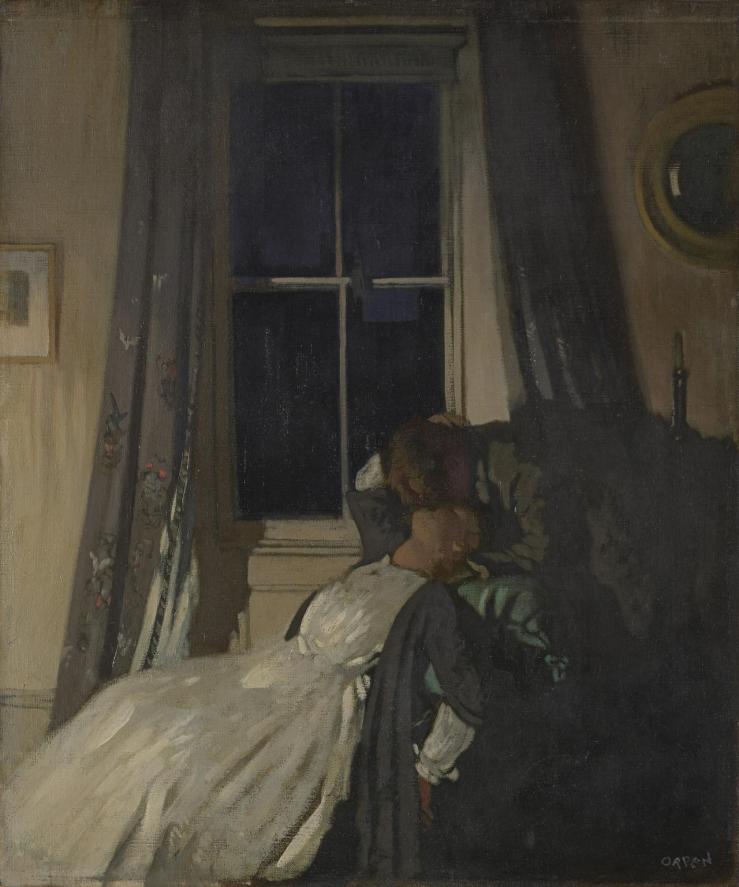
Night (No. 2), 1907 by William Orpen (1878-1931)
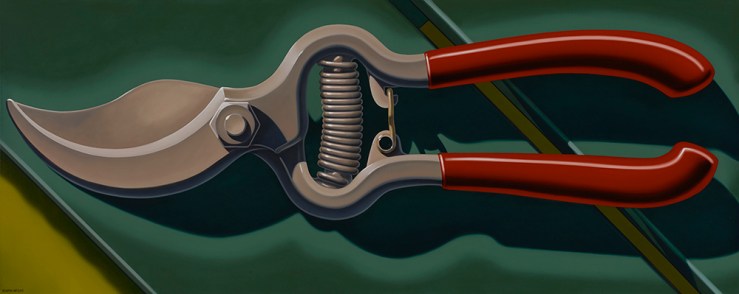
Shears by Kenton Nelson (b. 1954)

Campamento y Madrigales, 2015 by Julio Larraz (b. 1944)
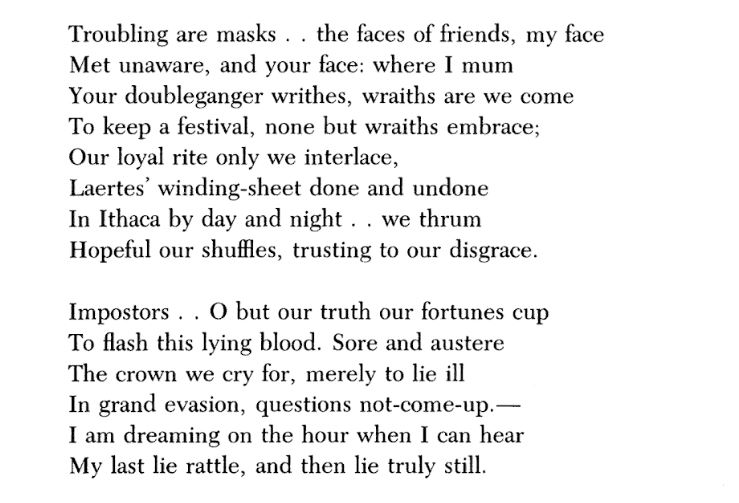

From Early Italian Poets 1974–6 by Eduardo Paolozzi (1924–2005)
March 7th.–J—– and I walked to Tranmere, and passed an old house which I suppose to be Tranmere Hall. Our way to it was up a hollow lane, with a bank and hedge on each side, and with a few thatched stone cottages, centuries old, their ridge-poles crooked and the stones time-worn, scattered along. At one point there was a wide, deep well, hewn out of the solid red freestone, and with steps, also hewn in solid rock, leading down to it. These steps were much hollowed by the feet of those who had come to the well; and they reach beneath the water, which is very high. The well probably supplied water to the old cotters and retainers of Tranmere Hall five hundred years ago. The Hall stands on the verge of a long hill which stretches behind Tranmere and as far as Birkenhead.
It is an old gray stone edifice, with a good many gables, and windows with mullions, and some of them extending the whole breadth of the gable. In some parts of the house, the windows seem to have been built up; probably in the days when daylight was taxed. The form of the Hall is multiplex, the roofs sloping down and intersecting one another, so as to make the general result indescribable. There were two sundials on different sides of the house, both the dial-plates of which were of stone; and on one the figures, so far as I could see, were quite worn off, but the gnomon still cast a shadow over it in such a way that I could judge that it was about noon. The other dial had some half-worn hour-marks, but no gnomon. The chinks of the stones of the house were very weedy, and the building looked quaint and venerable; but it is now converted into a farm-house, with the farm-yard and outbuildings closely appended. A village, too, has grown up about it, so that it seems out of place among modern stuccoed dwellings, such as are erected for tradesmen and other moderate people who have their residences in the neighborhood of a great city. Among these there are a few thatched cottages, the homeliest domiciles that ever mortals lived in, belonging to the old estate. Directly across the street is a Wayside Inn, “licensed to sell wine, spirits, ale, and tobacco.” The street itself has been laid out since the land grew valuable by the increase of Liverpool and Birkenhead; for the old Hall would never have been built on the verge of a public way.
Nathaniel Hawthorne’s journal entry for March 7th, 1855. From Passages from the English Note-Books.

The Fountains by Agnes Lawrence Pelton (1881-1961)
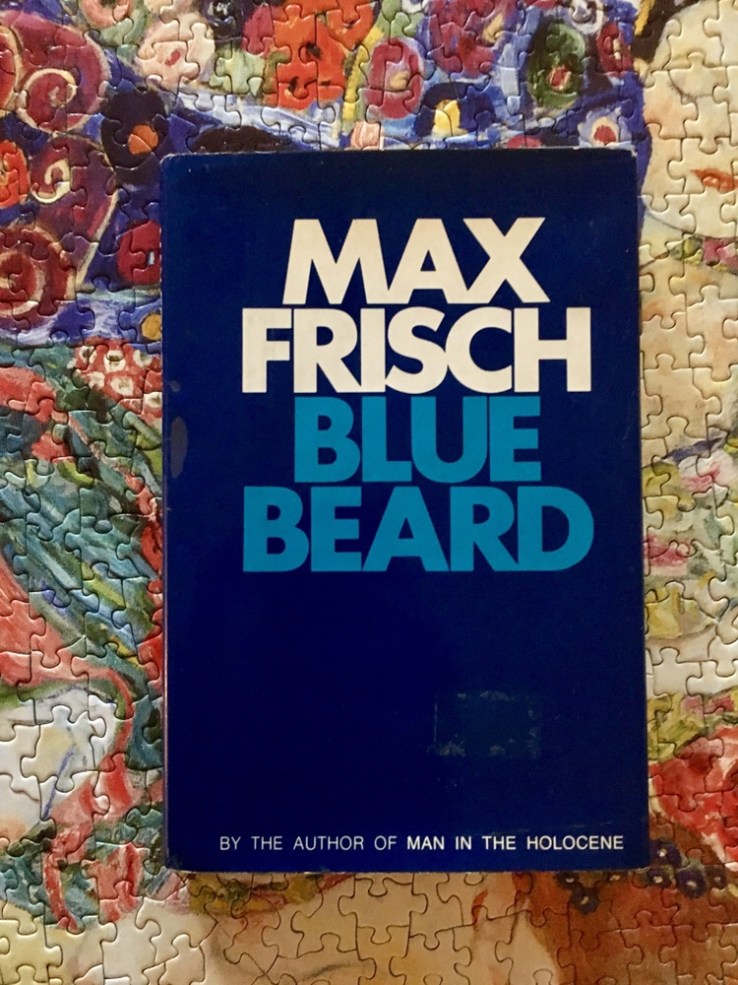
When I saw a hardback copy of Max Frisch’s 1982 novel Bluebeard (in English translation by Geoffrey Skeleton) the other week at my favorite used bookstore, I picked it up and started reading. I loved the cover and was attracted by its slimness—under 150 pages and written almost entirely in Beckettian dialog—but more than anything it was the title. Is it creepy to admit that I have a slight obsession with the Bluebeard narrative? Yes? Chalk it up to a formative memory: When I was around five, a cousin, ten years older than I am, read an illustrated book of Charles Perrault fairy tales to me to tuck me in one night. He read read a few before getting to “Bluebeard,” a story both he and I were unfamiliar with. I know he didn’t know the story because I can vividly recall the shock it produced in him as it progressed, the sense of horror. I remember that he kept going through the story even after the awful violent secret at its core was revealed, simply in the hope that some kind of justice might happen. I remember him telling me, “That wasn’t a children’s story.” He’s right, of course—sample a few paragraphs from Andrew Lang’s translation of Perrault’s version:
Having come to the closet door, she made a stop for some time, thinking about her husband’s orders, and considering what unhappiness might attend her if she was disobedient; but the temptation was so strong that she could not overcome it. She then took the little key, and opened it, trembling. At first she could not see anything plainly, because the windows were shut. After some moments she began to perceive that the floor was all covered over with clotted blood, on which lay the bodies of several dead women, ranged against the walls. (These were all the wives whom Blue Beard had married and murdered, one after another.) She thought she should have died for fear, and the key, which she, pulled out of the lock, fell out of her hand.
After having somewhat recovered her surprise, she picked up the key, locked the door, and went upstairs into her chamber to recover; but she could not, so much was she frightened. Having observed that the key to the closet was stained with blood, she tried two or three times to wipe it off; but the blood would not come out; in vain did she wash it, and even rub it with soap and sand. The blood still remained, for the key was magical and she could never make it quite clean; when the blood was gone off from one side, it came again on the other.
It wasn’t so much the story but an older person’s reaction to the story that impacted me so much. I’m not sure if the book included an illustration that pertains to the images above, but I know that I remember an image of the scene, perhaps one I conjured all by myself—of a closet full of corpses.
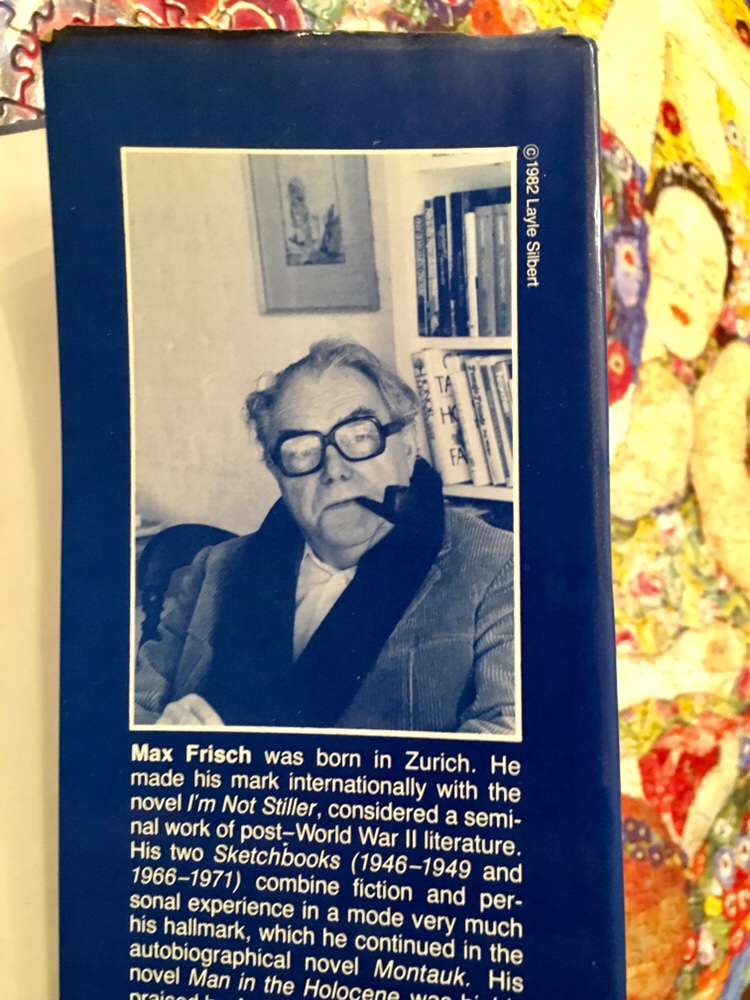
The Bluebeard story seems to have largely fallen out of the canon of children’s “fairy tales”; it’s one of those stories that I remember trying to bring up to others as a reference point when I was young. The reference never seemed to land. My students have no knowledge of it. And yet it’s still soaked into the culture—the recent film Ex Machina was a take on Bluebeard, and elements of HBO’s Westworld also allude to the tale. Over the years I’ve read plenty of versions of the story: Kurt Vonnegut’s Bluebeard, Donald Barthelme’s “Bluebeard,” Edna St. Vincent Millay’s “Bluebeard,” Anne Sexton’s “The Golden Key,” Angela Carter’s “The Bloody Chamber,” Margaret Atwood’s “Bluebeard’s Egg” — but I’d never heard of Max Frisch’s until I saw it in the store the other day. I didn’t pick it up then—I was committed to getting and reading Iris Murdoch’s The Bell, and I didn’t want to pile up too many books—but the blue cover wormed around in the back of my brain and I gave in the other day. Plus, dig this author photo:
“Bluebeard” is an extremely short “tale,” as Mr. Frisch calls it, even shorter than “Man in the Holocene.” Like Samuel Beckett, Mr. Frisch seems to be paring away his stock of expressiveness, moving toward a purer means as he nears his mid-70’s. The book is made up in large part of remembered excerpts from the transcript of a fictional murder trial, interspersed with remarks, comments and reflections by the accused man.
He is a 54-year old Zurich physician named Felix Schaad, who was charged with strangling one of his former wives with a necktie. She had been the sixth of his seven wives, and after their divorce, she had become a high-priced call girl whom he would sometimes visit, although apparently not for sexual purposes. At the time of her murder, Schaad had been married for a year to his seventh wife, and it was she who gave him the nickname Bluebeard, as a term of endearment. “He once said that he already had six wives in the cellar,” she said on the witness stand.
The press had siezed on this bit of testimony. The doctor remembers the headlines – “NO ALIBI FOR SCHAAD/BLUEBEARD IN COURT/DOCTOR’S SEVEN MARRIAGES” – and recalls how “I looked it up in the library: the tale of the knight who had killed his seven wives and concealed their corpses in the cellar was written by a Frenchman, Charles Perrault, in the seventeenth century.”


Boy Between Balloons, 2008 by Robin F. Williams (b. 1984)
“Rebecca”
by
Donald Barthelme
Rebecca Lizard was trying to change her ugly, reptilian, thoroughly unacceptable last name.
“Lizard,” said the judge. “Lizard, Lizard, Lizard, Lizard. There’s nothing wrong with it if you say it enough times. You can’t clutter up the court’s calendar with trivial little minor irritations. And there have been far too many people changing their names lately.
Changing your name countervails the best interest of the telephone comany, the electric company, and the United States goverment. Motion denied.”
Lizard in tears.
Lizard led from the courtroom. A chrysanthemum of Kleenex held under her nose.
“Shaky lady,” said a man, “are you a schoolteacher?”
Of course she’s a schoolteacher, you idiot. Can’t you see the poor woman’s all upset? Why don’t you leave her alone?
“Are you a homosexual lesbian? Is that why you never married?”
Christ, yes, she’s a homosexual lesbian, as you put it. Would you please shut your face?
Rebecca went to the damned dermatologist (a new damned dermatologist), but he said the same thing the others had said. “Greenish,” he said, “slight greenishness, genetic anomaly, nothing to be done, I’m afraid, Mrs. Lizard.”
“Miss Lizard.”
“Nothing to be done, Miss Lizard.”
“Thank you, Doctor. Can I give you a little something for your trouble?”
“Fifty dollars.”
When Rebecca got home the retroactive rent increase was waiting for her, coiled in her mailbox like a pupil about to strike.
Must get some more Kleenex. Or a Ph.D. No other way.
She thought about sticking her head in the oven. But it was an electric oven.
Rebecca’s lover, Hilda, came home late.
“How’d it go?” Hilda asked, referring to the day.
“Lousy.”
“Hmmm,” Hilda said, and quietly mixed strong drinks of busthead for the two of them.
Hilda is a very good-looking woman. So is Rebecca. They love each other–an incredibly dangerous and delicate business, as we know. Hilda has long blond hair and is perhaps a shade the more beautiful. Of course Rebecca has a classic and sexual figure which attracts huge admiration from every beholder.
“You’re late,” Rebecca said. “Where were you?”
“I had a drink with Stephanie.”
“Why did you have a drink with Stephanie?”
“She stopped by my office and said let’s have a drink.”
“Where did you go?”
“The Barclay.”
“How is Stephanie?”
“She’s fine.”
“Why did you have to have a drink with Stephanie?”
“I was ready for a drink.”
“Stephanie doesn’t have a slight greenishness, is that it? Nice, pink Stephanie?”
Hilda rose and put an excellent C & W album on the record player. It was David Rogers’s
“Farewell to the Ryman,” Atlantic SD 7283. It contains such favorites as “Blue Moon of Kentucky,” “Great Speckled Bird,” “I’m Movin’ On,” and “Walking the Floor Over You.” Many great Nashville personnel appear on this record.
“Pinkness is not everything,” Hilda said. “And Stephanie is a little bit boring. You know that.” “Not so boring that you don’t go out for drinks with her.”
“I am not interested in Stephanie.”
“As I was leaving the courthouse,” Rebecca said, “a man unzipped my zipper.”
David Rogers was singing “Oh please release me, let me go.”
“What were you wearing?”
“What I’m wearing now.”
“So he had good taste,” Hilda said, “for a creep.” She hugged Rebecca, on the sofa. “I love you,” she said.
“Screw that,” Rebecca said plainly, and pushed Hilda away. “Go hang out with Stephanie Sasser.”
“I am not interested in Stephanie Sasser,” Hilda said for the second time.
Very often one “pushes away” the very thing that one most wants to grab, like a lover. This is a common, although distressing, psychological mechanism, having to do (in my opinion) with the fact that what is presented is not presented “purely,” that there is a tiny little canker or grim place in it somewhere. However, worse things can happen.
“Rebecca,” said Hilda, “I really don’t like your slight greenishness.”
The term “lizard” also includes geckos, iguanas, chameleons, slowworms, and monitors. Twenty existing families make up the order, according to the Larousse Encyclopedia of Animal Life, and four others are known only from fossils. There are about twenty-five hundred species, and they display adaptations for walking, running, climbing, creeping, or burrowing. Many have interesting names, such as the Bearded Lizard, the Collared Lizard, the Flap-Footed Lizard, the Frilled Lizard, the Girdle-Tailed Lizard, and the Wall Lizard.
“I have been overlooking it for these several years, because I love you, but I really don’t like it so much,” Hilda said. “It’s slightly–”
“Knew it,” said Rebecca.
Rebecca went into the bedroom. The color television set was turned on, for some reason.
In a greenish glow, a film called Green Hill was unfolding.
I’m ill, I’m ill.
I will become a farmer.
Our love, our sexual love, our ordinary love!
Hilda entered the bedroom and said, “Supper is ready.”
“What is it?”
“Pork with red cabbage.”
“I’m drunk,” Rebecca said.
Too many of our citizens are drunk at times when they should be sober–suppertime, for example. Drunkenness leads to forgetting where you have put your watch, keys, or money clip, and to a decreased sensitivity to the needs and desires and calm good health of others. The causes of overuse of alcohol are not as clear as the results. Psychiatrists feel in general that alcoholism is a serious problem but treatable, in some cases. AA is said to be both popular and effective. At base, the question is one of willpower.
“Get up,” Hilda said. “I’m sorry I said that.”
“You told the truth,” said Rebecca.
“Yes, it was the truth,” Hilda admitted.
“You didn’t tell me the truth in the beginning. In the beginning, you said it was beautiful.”
“I was telling you the truth, in the beginning. I did think it was beautiful. Then.”
This “then,” the ultimate word in Hilda’s series of three brief sentences, is one of the most pain-inducing words in the human vocabulary, when used in this sense. Departed time! And the former conditions that went with it! How is human pain to be measured? But remember that Hilda, too… It is correct to feel for Rebecca in this situation, but, reader, neither can Hilda’s position be considered an enviable one, for truth, as Bergson knew, is a hard apple, whether one is throwing it or catching it.
“What remains?” Rebecca said stonily.
“I can love you in spite of–”
Do I want to be loved in spite of? Do you? Does anyone? But aren’t we all, to some degree?
Aren’t there important parts of all of us which must be, so to say, gazed past? I turn a blind eye to that aspect of you, and you turn a blind eye to that aspect of me, and with these blind eyes eyeball-to-eyeball, to use an expression from the early 1960s, we continue our starched and fragrant lives. Of course it’s also called “making the best of things,” which I have always considered a rather soggy idea for an Americal ideal. But my criticisms of this idea must be tested against those of others–the late President McKinley, for example, who maintained that maintaining a good, in not necessarily sunny, disposition was the one valuable and proper course.
Hilda placed her hands on Rebecca’s head.
“The snow is coming,” she said. “Soon it will be snow time. Together then as in other snow times. Drinking the busthead ’round the fire. Truth is a locked room that we knock the lock off from time to time, and then board up again. Tomorrow you will hurt me, and I will inform you that you have done so, and so on and so on. To hell with it. Come, viridian friend, come and sup with me.”
They sit down together. The pork with red cabbage steams before them. They speak quietly about the McKinley Administration, which is being revised by revisionist historians. The story ends. It was written for several reasons. Nine of them are secrets. The tenth is that one should never cease considering human love, which remains as grisly and golden as ever, no matter what is tattooed upon the warm tympanic page.

Airport, 1995 by Carol Rhodes (b. 1959)
 Biblioklept