Hell is the place we don’t know we’re in (Don DeLillo)

“Singh remarked to me once, his conspiratorial aspect, fixing those flat heavy eyes on me, ‘Hell is the place we don’t know we’re in.’ I wasn’t sure how to take the remark. Was he saying that he and I were in hell or that everyone else was? Everyone in rooms, houses, chairs with armrests. Is hell a lack of awareness? Once you know you’re there, is this your escape? Or is hell the one place in the world we don’t see for what it is, the one place we can never know? Is that what he meant? Is hell what we say to each other or what we can’t say, what is beyond our reach? The sentence defeated me. I was afraid of the desert but drawn to it, drawn to the contradiction. Men will come to fill this empty place. This place is empty in order that men may rush in to fill it.”

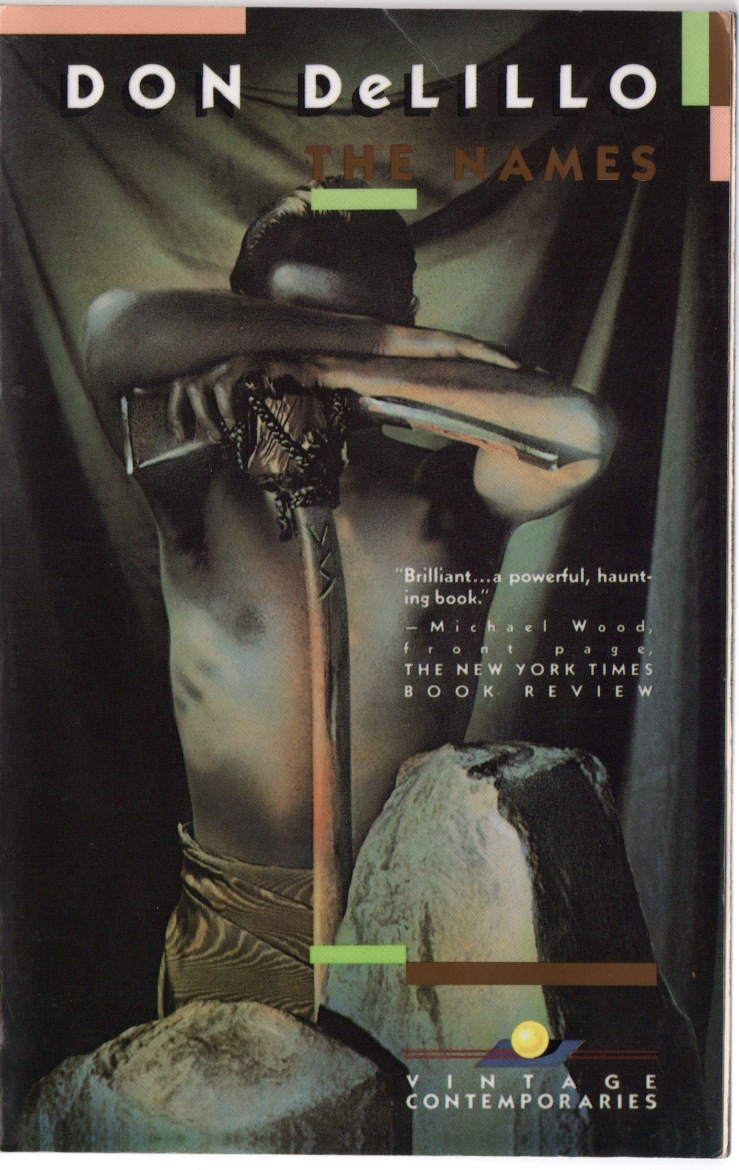
From Don DeLillo’s novel The Names.

Portrait of Stefan Glass — Stanisław Ignacy Witkiewicz

img_9141

Portrait of Stefan Glass, 1929 by Stanisław Ignacy Witkiewicz (1885-1939).

From Narcotics, Twisted Spoon Press, 2018.

Witkiewicz’s notes indicate that he painted his portrait of the poet Stefan Glass while on mescaline, vodka, and cocaine.

“In other words, I stole from a kid” | Don DeLillo and Atticus Lish

Like ”Ratner’s Star,” a book in which Mr. DeLillo says he tried to ”produce a piece of mathematics,” ”The Names” is complexly structured and layered. It concludes with an excerpt from a novel in progress by Axton’s 9-year-old son, Tap. Inspiration for the ending came from Atticus Lish, the young son of Mr. DeLillo’s friend Gordon Lish, an editor.

”At first,” Mr. DeLillo says, ”I had no intention of using excerpts from Tap’s novel. But as the novel drew to a close I simply could not resist. It seemed to insist on being used. Rather than totally invent a piece of writing that a 9-year-old boy might do, I looked at some of the work that Atticus had done when he was 9. And I used it. I used half a dozen sentences from Atticus’s work. More important, the simple exuberance of his work helped me to do the last pages of the novel. In other words, I stole from a kid.”

Young Atticus is given ample credit in the book’s acknowledgments, but creative borrowing from life is not a new technique for Mr. DeLillo, who has been praised for his ear for dialogue. ”The interesting thing about trying to set down dialogue realistically,” he says, ”is that if you get it right it sounds stylized. Why is it so difficult to see clearly and to hear clearly? I don’t know. But it is, and in ‘Players’ I listened very carefully to people around me. People in buses. People in the street. And in many parts of the book I used sentences that I heard literally, word for word. Yet it didn’t sound as realistic as one might expect. It sounded over-refined even.”

From a 1982 profile of Don DeLillo in The New York Times

Atticus Lish’s 2014 novel Preparation for the Next Life was one of the best novels I read last year, and one of the best contemporary American novels I’ve read in ages.

Other Oscars

portrait-of-oscar-wilde-1895
Portrait of Oscar Wilde, 1895 by Henri de Toulouse-Lautrec
sur_9c
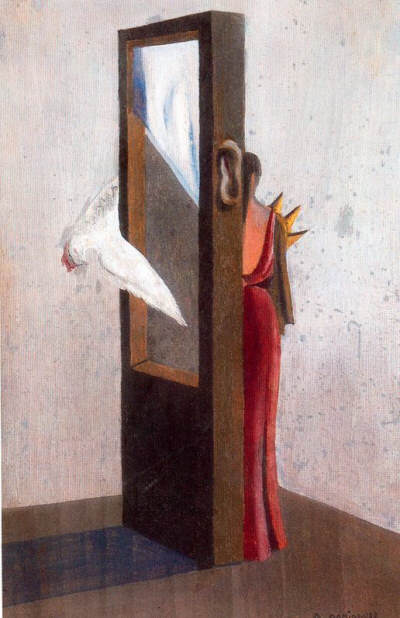
The Guillotine, 1938 by Oscar Dominguez
ok
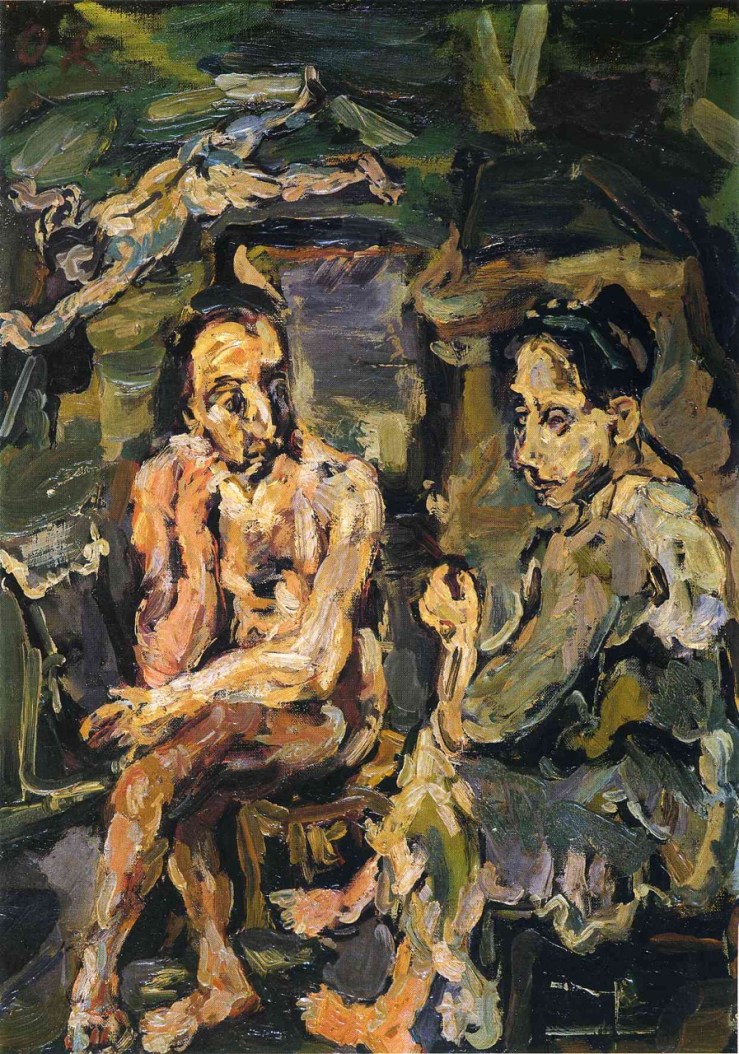
Orpheus and Eurydice, 1917 by Oskar Kokoschka
portrait-of-oscar-miestchanioff-1916
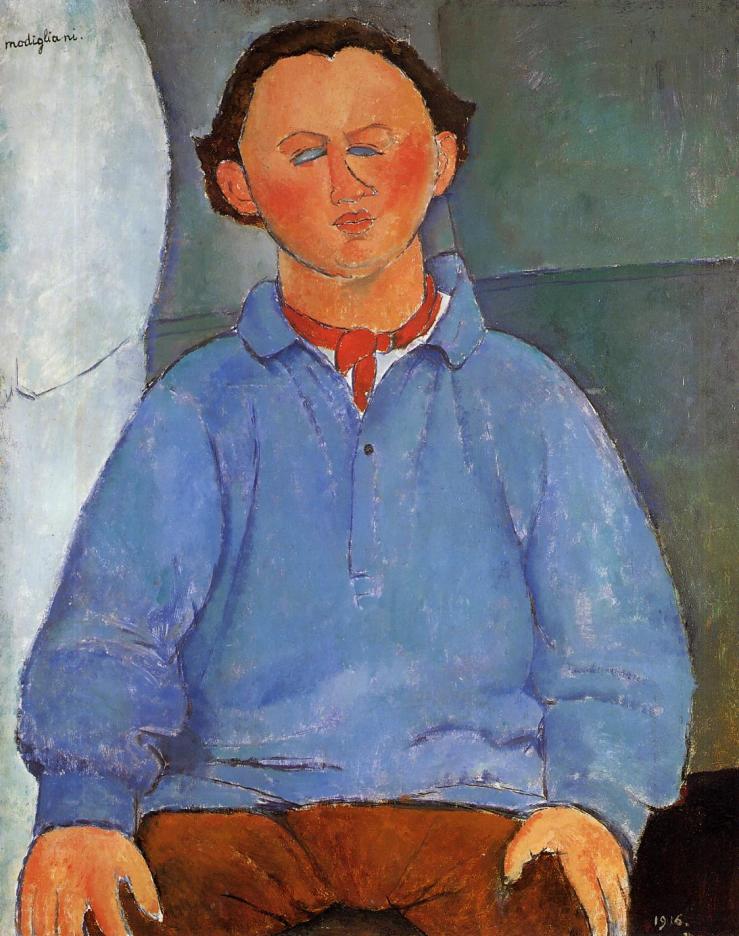
Portrait of Oscar Miestchanioff, 1916 Amedeo Modigliani
w1siziisije3mdm5ocjdlfsiccisimnvbnzlcnqilcitcmvzaxplidewmjr4mtaynfx1mdazzsjdxq
Bauhaus Stairway, 1932 by Oskar Schlemmer
120679-sgsg-42082_l
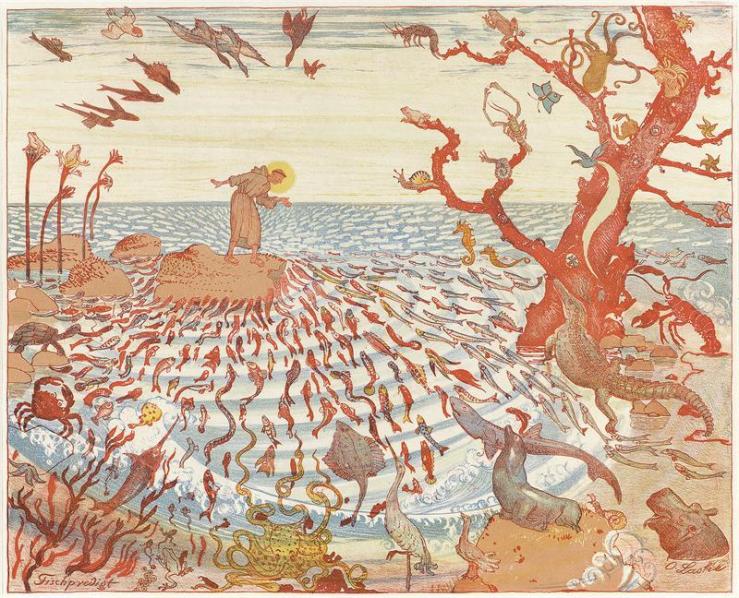
Fish Sermon, 1919 by Oskar Laske
Posted in Art

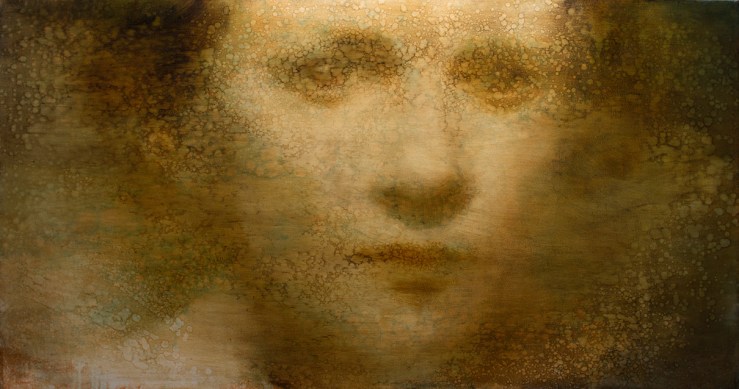
Iris, Dust — Maya Kulenovic

kulenovic_iris_dust_1

Iris, Dust, 2016 by Maya Kulenovic (b. 1975)

Air travel reminds us who we are. It’s the means by which we recognize ourselves as modern (Don DeLillo)

In this vast space, which seems like nothing so much as a container for emptiness, we sit with our documents always ready, wondering if someone will appear and demand to know who we are, someone in authority, and to be unprepared is to risk serious things.

The terminal at each end is full of categories of inspection to which we must submit, impelling us toward a sense of inwardness, a sense of smallness, a self-exposure we are never prepared for no matter how often we take this journey, the buried journey through categories and definitions and foreign languages, not the other, the sunlit trip to the east which we thought we’d decided to make. The decision we’d unwittingly arrived at is the one that brings us through passport control, through the security check and customs, the one that presents to us the magnetic metal detector, the baggage x-ray machine, the currency declaration, the customs declaration, the cards for embarkation and disembarkation, the flight number, the seat number, the times of departure and arrival.

It does no good to say, as I’ve done a hundred times, it’s just another plane trip, I’ve made a hundred. It’s just another terminal, another country, the same floating seats, the documents of admission, the proofs and identifications.

Air travel reminds us who we are. It’s the means by which we recognize ourselves as modern. The process removes us from the world and sets us apart from each other. We wander in the ambient noise, checking one more time for the flight coupon, the boarding pass, the visa. The process convinces us that at any moment we may have to submit to the force that is implied in all this, the unknown authority behind it, behind the categories, the languages we don’t understand. This vast terminal has been erected to examine souls.

It is not surprising, therefore, to see men with submachine guns, to see vultures squatting on the baggage vehicles set at the end of the tarmac in the airport in Bombay when one arrives after a night flight from Athens.

All of this we choose to forget. We devise a counter-system of elaborate forgetfulness. We agree on this together. And out in the street we see how easy it is, once we’re immersed in the thick crowded paint of things, the bright clothes and massed brown faces. But the experience is no less deep because we’ve agreed to forget it.

From Don DeLillo’s novel The Names.

The Mothers — Jenny Saville

cd7645e5bf9925dca7f0174bc9125b19

The Mothers, 2011 by Jenny Saville (b. 1970)

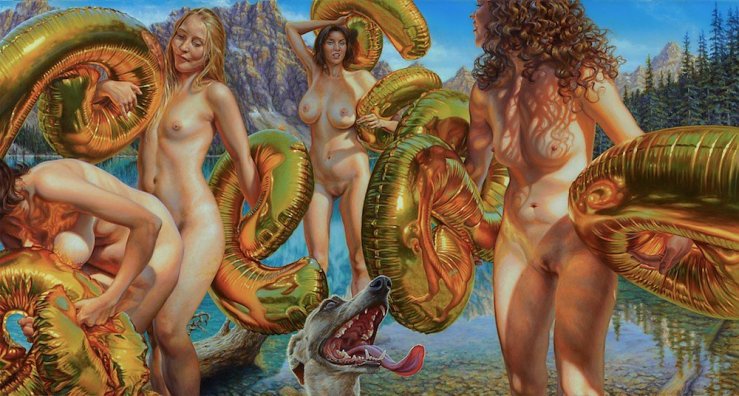
Helium — Susannah Martin

susannah-martin-helium80x150-better-color-kopie-2large-1517607914

Helium, 2017 by Susannah Martin (b. 1964)

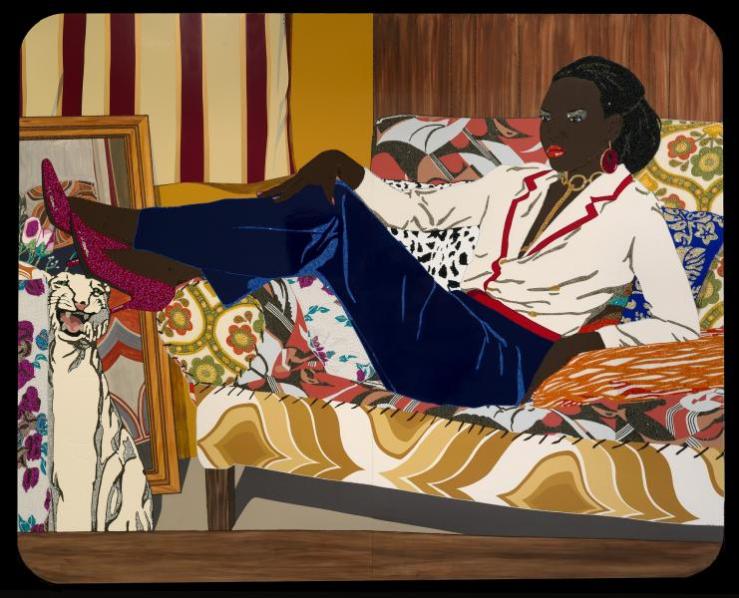
Portrait of Mnonja — Mickalene Thomas

saam-2011-16_1

Portrait of Mnonja, 2010 by Mickalene Thomas (b. 1971)

Girl with Blonde Hair — Helene Schjerfbeck

009L15102_8FFNL_Web

Girl with Blonde Hair, 1916 by Helene Schjerfbeck (1862-1946)

If a thing can be filmed, film is implied in the thing itself (Don DeLillo)

“Film is more than the twentieth century art. It’s another part of the twentieth-century mind. It’s the world seen from inside. We’ve come to a certain point in the history of film. If a thing can be filmed, film is implied in the thing itself. This is where we are. The twentieth century is on film. It’s the filmed century. You have to ask yourself if there’s anything about us more important than the fact that we’re constantly on film, constantly watching ourselves. The whole world is on film, all the time. Spy satellites, microscopic scanners, pictures of the uterus, embryos, sex, war, assassinations, everything.”

From Don DeLillo’s novel The Names.

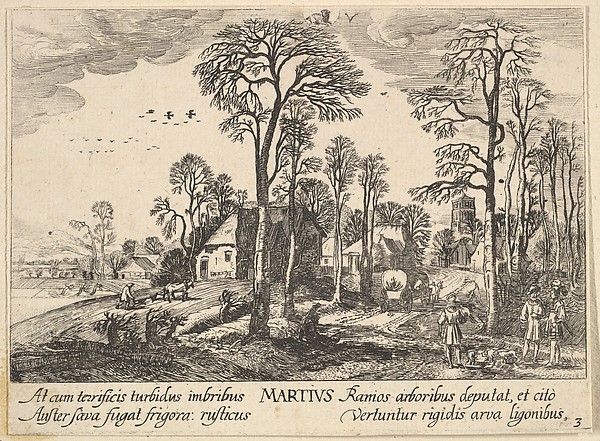
March — Wenceslaus Hollar

dp822990

March, 1629 by Wenceslaus Hollar (1607–1677) (After Jan van de Velde II, ca. 1593–1641)

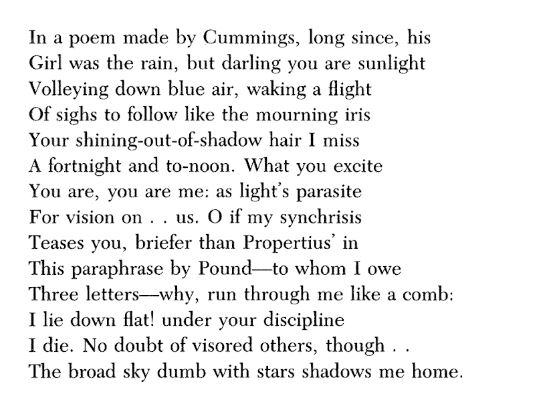
“In a poem made by Cummings, long since, his” — John Berryman

Capture

Portrait of Kerry James Marshall, La Lectura — Kehinde Wiley

kw-pa-17-016_portrait-of-kerry-james-marshall_la-lectura_2017-1024x768

Portrait of Kerry James Marshall, La Lectura, 2017 by Kehinde Wiley (b. 1977)

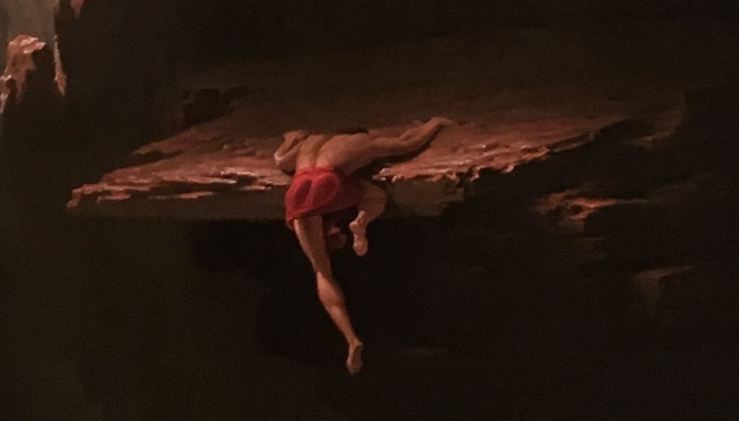
Sadak in Search of the Waters of Oblivion — John Martin

sadak_in_search_of_the_waters_of_oblivion

Capture

Sadak in Search of the Waters of Oblivion, 1812 by John Martin (1789-1854)


America is the world’s living myth (Don DeLillo)

Terror. This is the subject she chose. In Europe they attack their own institutions, their police, journalists, industrialists, judges, academics, legislators. In the Middle East they attack Americans. What does it mean? She wanted to know if the risk analyst had an opinion.“Bank loans, arms credits, goods, technology. Technicians are the infiltrators of ancient societies. They speak a secret language. They bring new kinds of death with them. New uses for death. New ways to think about death. All the banking and technology and oil money create an uneasy flow through the region, a complex set of dependencies and fears. Everyone is there, of course. Not just Americans. They’re all there. But the others lack a certain mythical quality that terrorists find attractive.”

“Good, keep going.”

“America is the world’s living myth. There’s no sense of wrong when you kill an American or blame America for some local disaster. This is our function, to be character types, to embody recurring themes that people can use to comfort themselves, justify themselves and so on. We’re here to accommodate. Whatever people need, we provide. A myth is a useful thing. People expect us to absorb the impact of their grievances. Interesting, when I talk to a Mideastern businessman who expresses affection and respect for the U.S., I automatically assume he’s either a fool or a liar. The sense of grievance affects all of us, one way or another.”

“What percentage of these grievances is justified?”

I pretended to calculate.

From Don DeLillo’s novel The Names.

img_2722

Still Life with Watermelon, Carrots, and Flowers — Kateryna Bilokur

c2abd090d180d0b1d183d0b7d0bcd0bed180d0bad0bed0b2d18cd186d0b2d0b5d182d18bc2bb1951

Still Life with Watermelon, Carrots, and Flowers, 1951 by Kateryna Bilokur (1900-1961)