
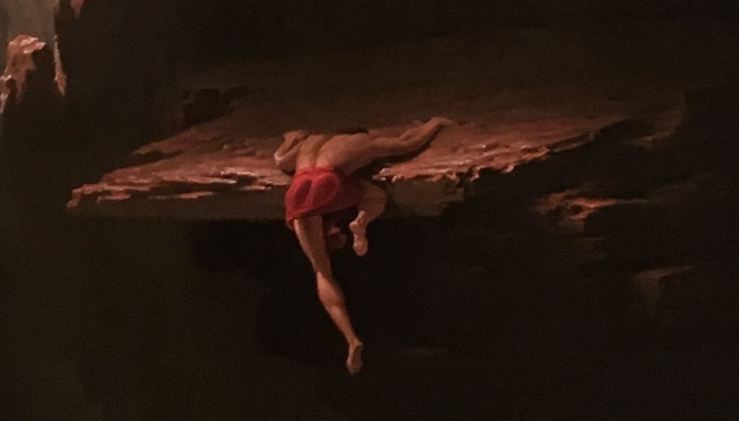
Sadak in Search of the Waters of Oblivion, 1812 by John Martin (1789-1854)

Sadak in Search of the Waters of Oblivion, 1812 by John Martin (1789-1854)
Terror. This is the subject she chose. In Europe they attack their own institutions, their police, journalists, industrialists, judges, academics, legislators. In the Middle East they attack Americans. What does it mean? She wanted to know if the risk analyst had an opinion.“Bank loans, arms credits, goods, technology. Technicians are the infiltrators of ancient societies. They speak a secret language. They bring new kinds of death with them. New uses for death. New ways to think about death. All the banking and technology and oil money create an uneasy flow through the region, a complex set of dependencies and fears. Everyone is there, of course. Not just Americans. They’re all there. But the others lack a certain mythical quality that terrorists find attractive.”
“Good, keep going.”
“America is the world’s living myth. There’s no sense of wrong when you kill an American or blame America for some local disaster. This is our function, to be character types, to embody recurring themes that people can use to comfort themselves, justify themselves and so on. We’re here to accommodate. Whatever people need, we provide. A myth is a useful thing. People expect us to absorb the impact of their grievances. Interesting, when I talk to a Mideastern businessman who expresses affection and respect for the U.S., I automatically assume he’s either a fool or a liar. The sense of grievance affects all of us, one way or another.”
“What percentage of these grievances is justified?”
I pretended to calculate.
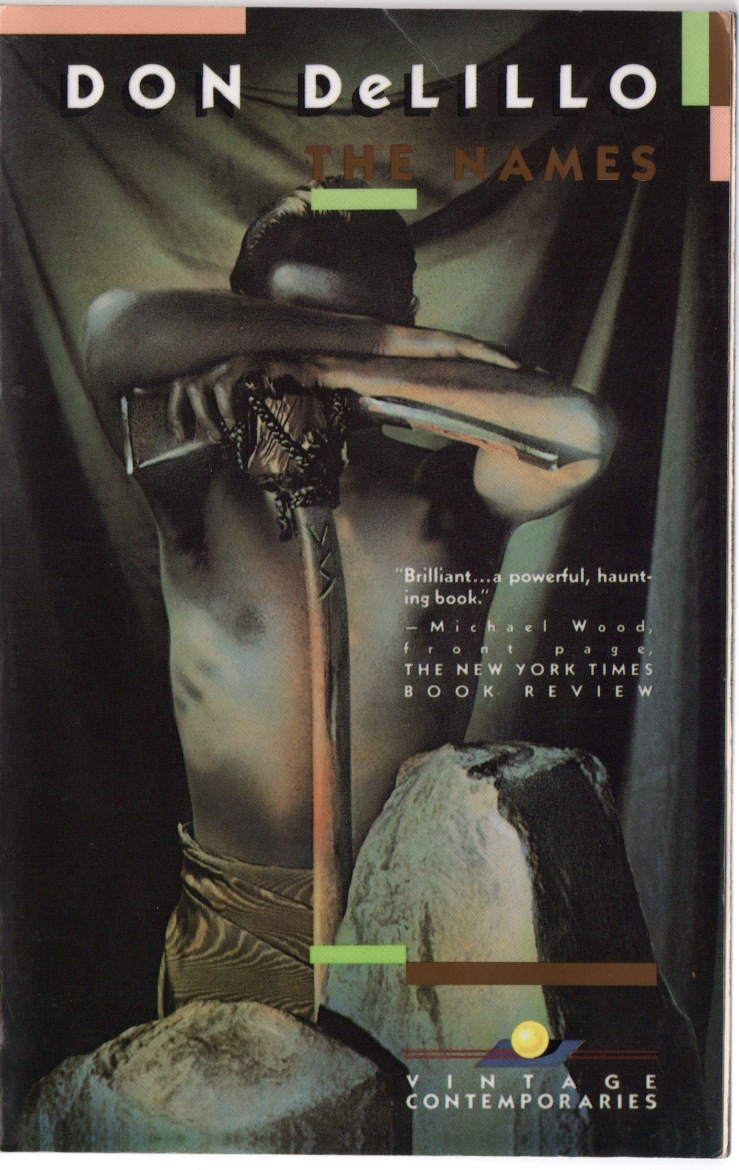
From Don DeLillo’s novel The Names.

Still Life with Watermelon, Carrots, and Flowers, 1951 by Kateryna Bilokur (1900-1961)
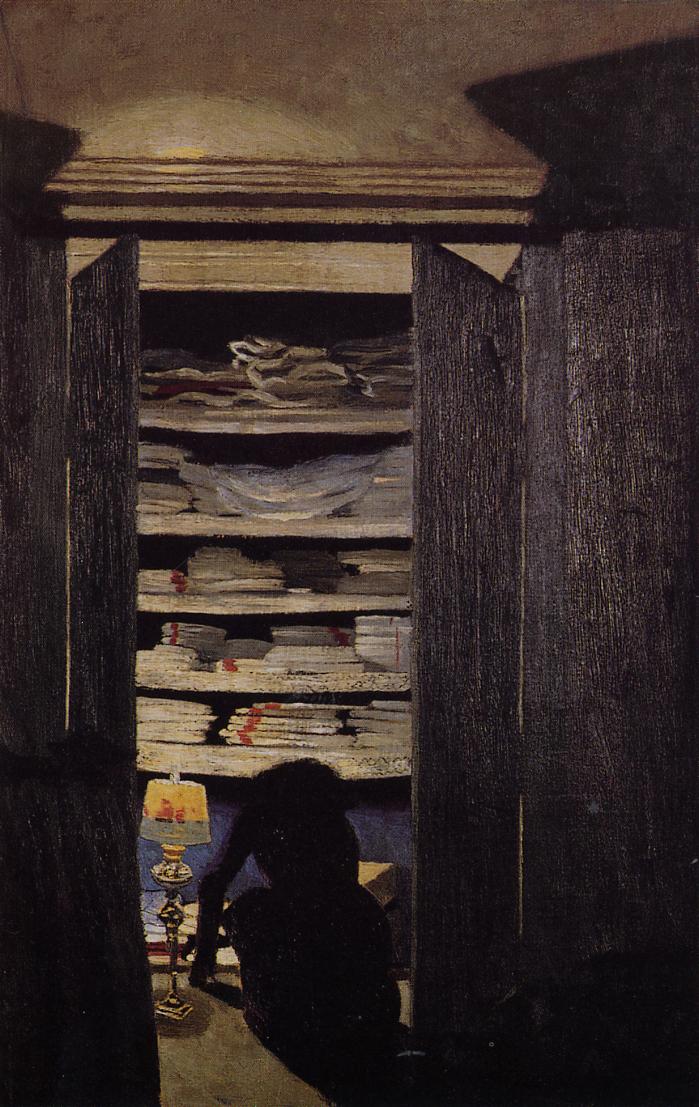
Woman Searching through a Cupboard, 1901 by Felix Vallotton (1865-1925)
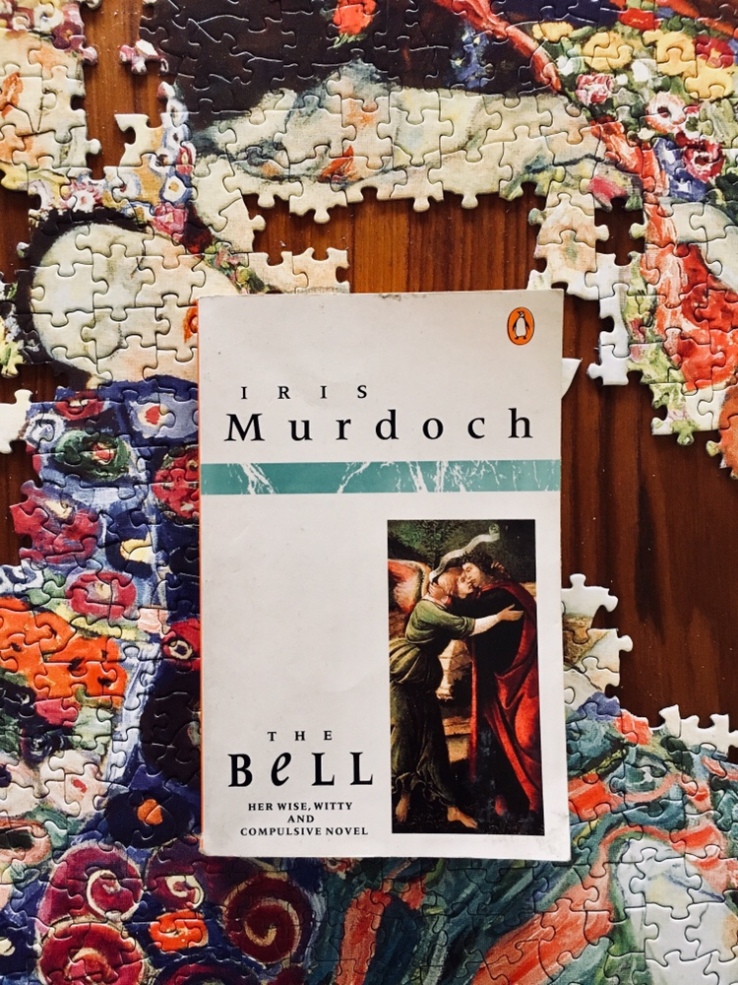
I picked up Iris Murdoch’s novel The Bell the other day. I’d put it on my 2018 Good Intentions Reading List, but somehow failed to find it at the big used bookstore I frequent. I found six copies there on Friday, all in different editions—it turns out there was another shelf of Murdoch, but higher up and to the right of where I was looking. Anyway.
How is my progress on that 2018 list, you ask? Not great. I stalled out on William Gass’s The Tunnel after about 60 pages. I usually have fun reading Gass and I wasn’t having fun; in fact, I started approaching the book as a chore, which is not what I want to be doing with my spare time. I got sidetracked with Stanisław Witkiewicz’s Narcotics (not on The List—I hope to have a review up this week), and then picked up Don DeLillo’s The Names (on The List) instead of The Tunnel. I sank into the DeLillo, which feels a bit like a smart beach read after tangling with The Tunnel’s difficult defensive barriers. I plan to dip into The Bell next, and then approach the bigger books on The List—Middlemarch, War & Peace, uh, The Tunnel—this summer when my teaching load is a lot lighter.
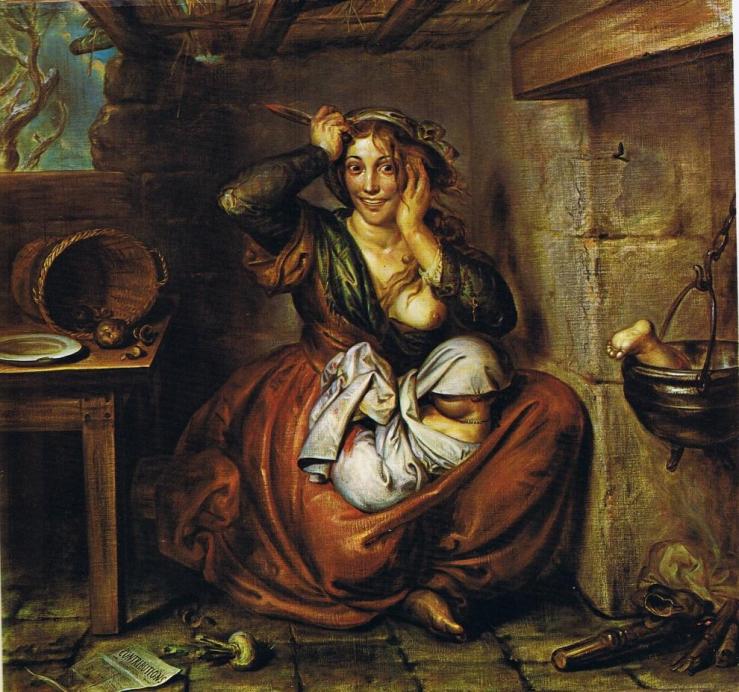
Hunger, Madness, Crime, 1851 by Antoine Wiertz (1806 – 1865)
He had bitten into a peach and was smelling the pit-streaked flesh. I think I smiled, recognizing my own mannerism. These peaches were a baffling delight, certain ones, producing the kind of sense pleasure that’s so unexpectedly deep it seems to need another context. Ordinary things aren’t supposed to be this gratifying. Nothing about the exterior of the peach tells you it will be so lush, moist and aromatic, juices running along your gums, or so subtly colored inside, a pink-veined golden bloom. I tried to discuss this with the faces across the table.
“But I think pleasure is not easy to repeat,” Eliades said. “Tomorrow you will eat a peach from the same basket and be disappointed. Then you will wonder if you were mistaken. A peach, a cigarette. I enjoy one cigarette out of a thousand. Still I keep smoking. I think pleasure is in the moment more than in the thing. I keep smoking to find this moment. Maybe I will die trying.”
Possibly it was his appearance that gave these remarks the importance of a world view. His wild beard covered most of his face. It started just below the eyes. He seemed to be bleeding this coarse black hair. His shoulders curved forward as he spoke and he rocked slightly at the front edge of the chair. He wore a tan suit and pastel tie, an outfit at odds with the large fierce head, the rough surface he carried.
I tried to pursue the notion that some pleasures overflow the conditions attending them. Maybe I was a little drunk.
From Don DeLillo’s novel The Names.

Three Peaches on a Stone Ledge with a Painted Lady Butterfly, 1695 by Adriaen Coorte (ca. 1665–1707)

Black Pegasus, 2010 by Tomohiro Takagi (b. 1972)
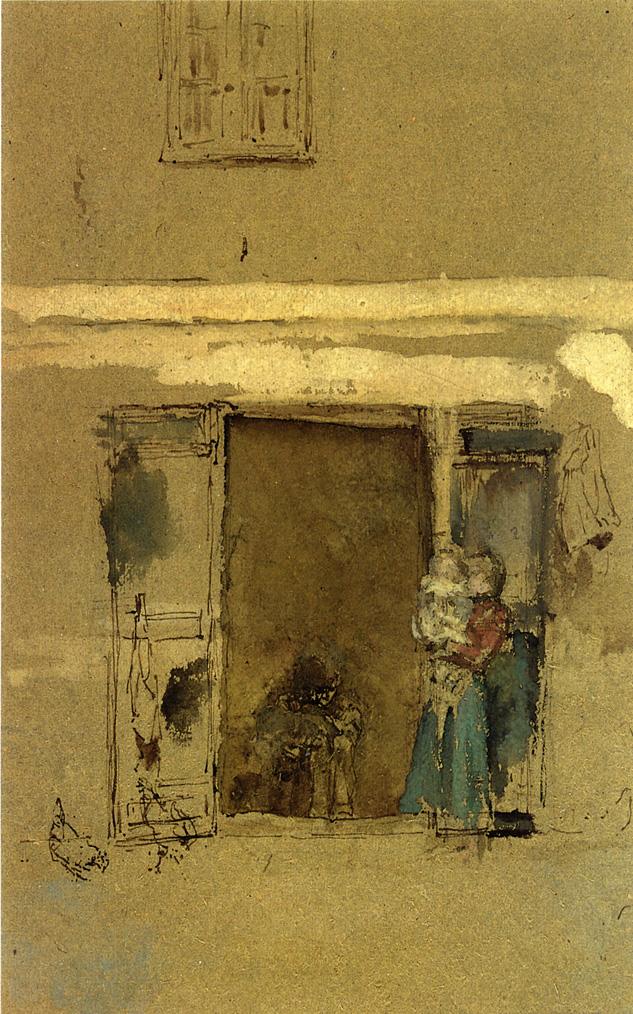
The Open Door, c. 1901 by James McNeill Whistler (1834-1903)
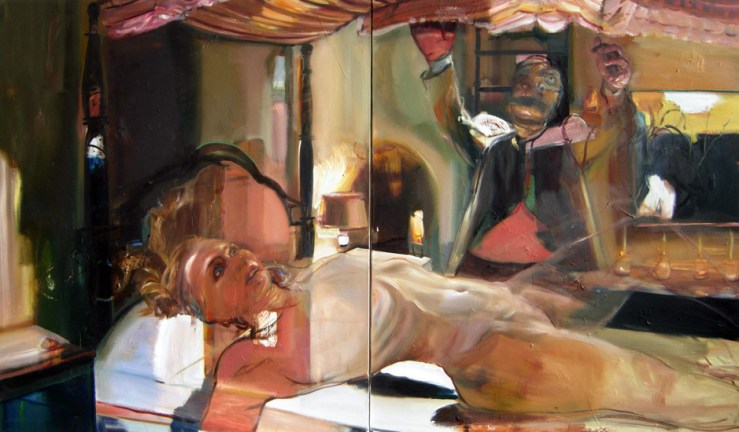
Exorcism, 2012 by Natalie Frank (b. 1980)
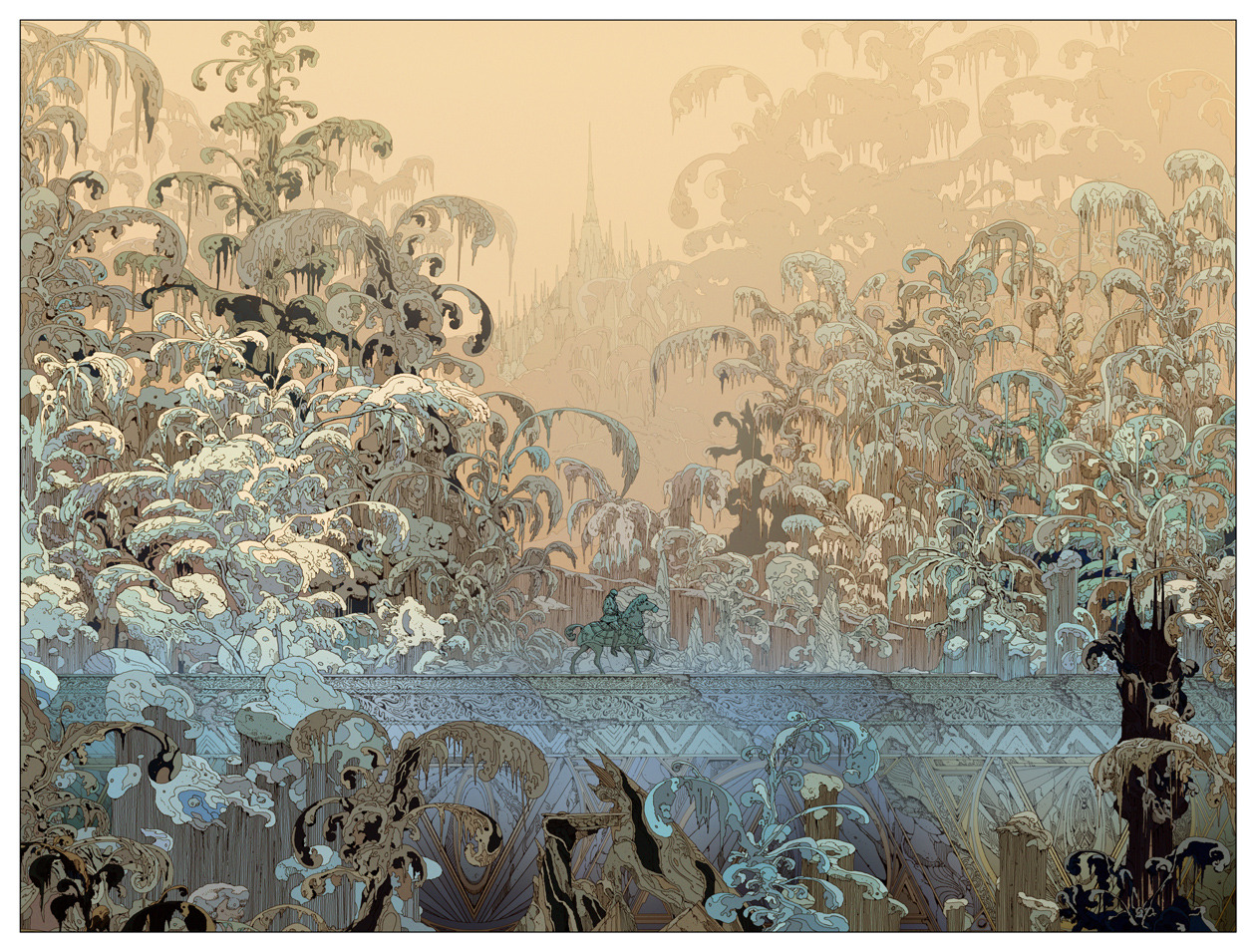
Cursed Forest by Kilian Eng (b. 1982)
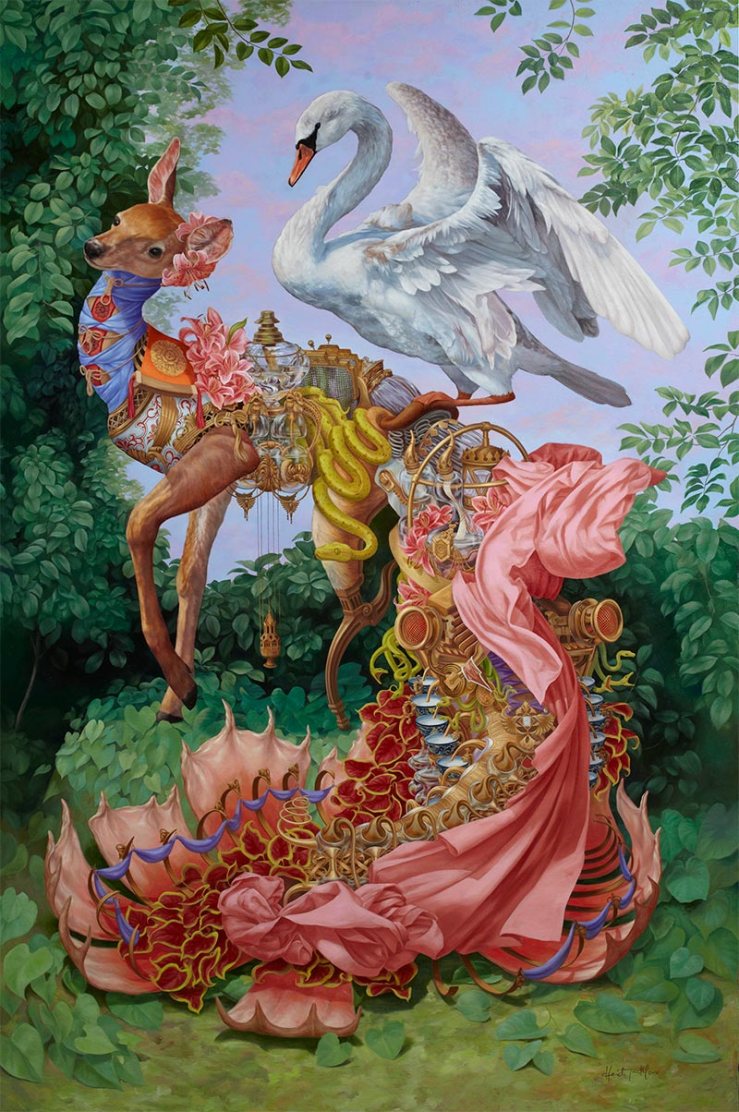
Understanding Leda, 2014 by Heidi Taillefer
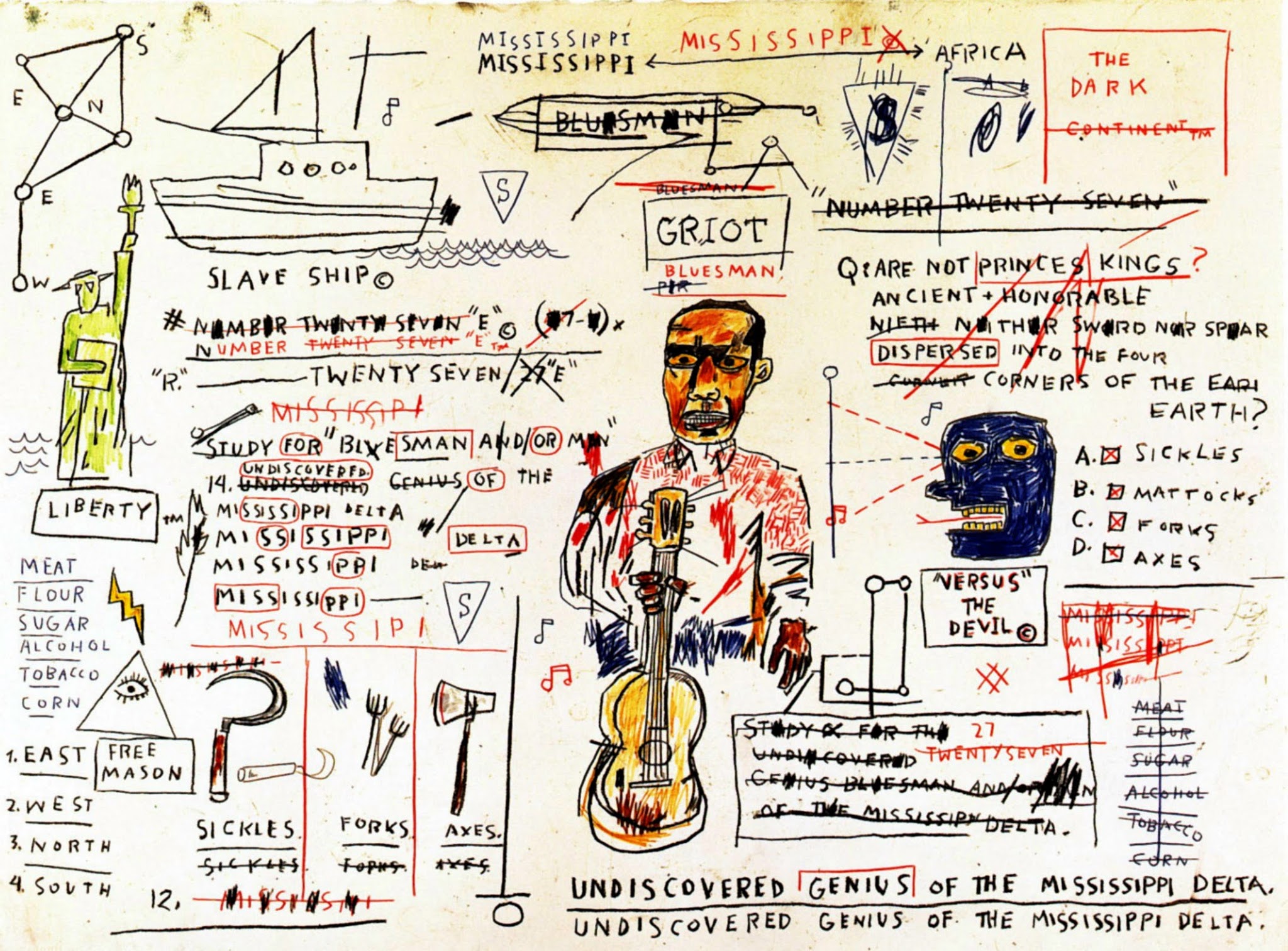
Undiscovered Genius, 1983 by Jean-Michel Basquiat (1960-1988)
 Biblioklept