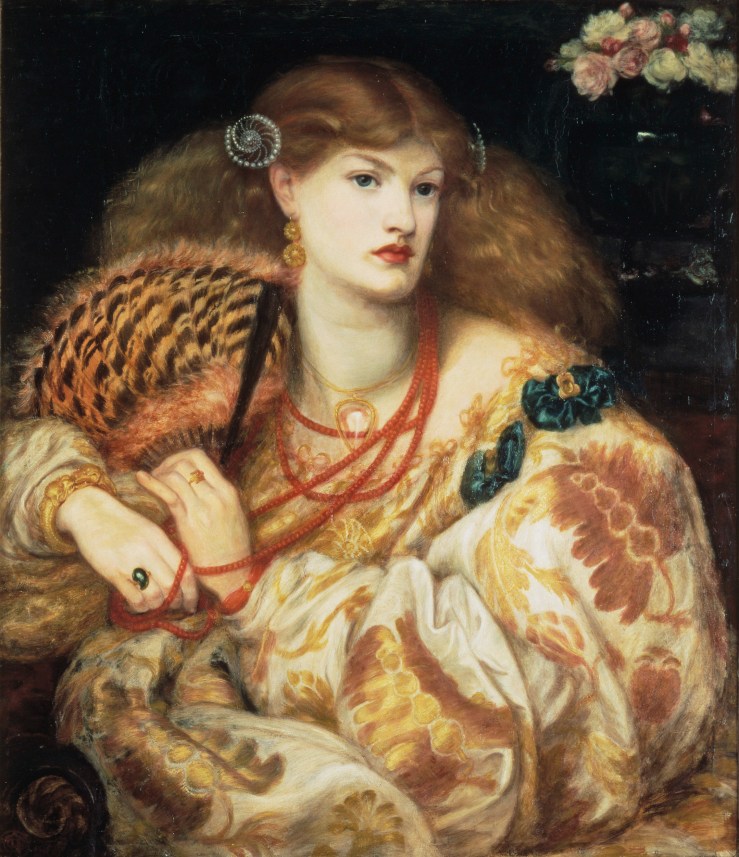
Monna Vanna — Dante Gabriel Rosetti

Dante Gabriel Rossetti: Monna Vanna, 1866.

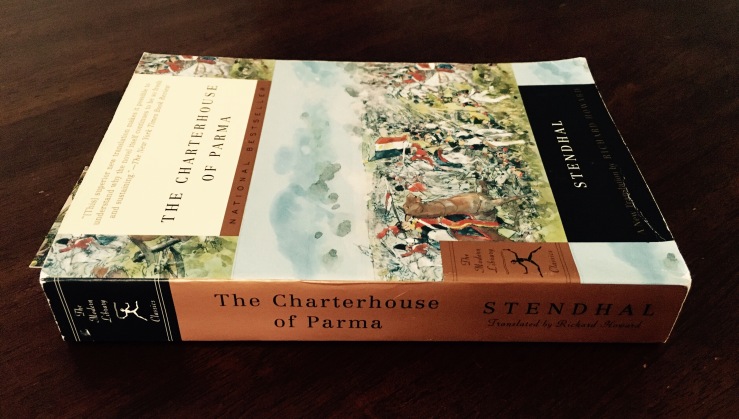
(Another copy of) The Charterhouse of Parma (Book acquired sometime the week before last)

img_2734

I included Stendhal’s The Charterhouse of Parma in a post I wrote a few weeks ago about books I start repeatedly yet have never been able to finish. Various folks on Twitter and elsewhere told me I need to stick it out with the novel, including Jacob Siefring, who suggested I try Richard Howard’s 1999 Modern Library translation (instead of the 1925 Moncrieff translation I’d been struggling with).  Jacob wrote about this translation on his blog Bibliomanic, by the way. I’m a little over halfway through with Stanley Elkin’s novel The Dick Gibson Show and I plan to give this a shot next.

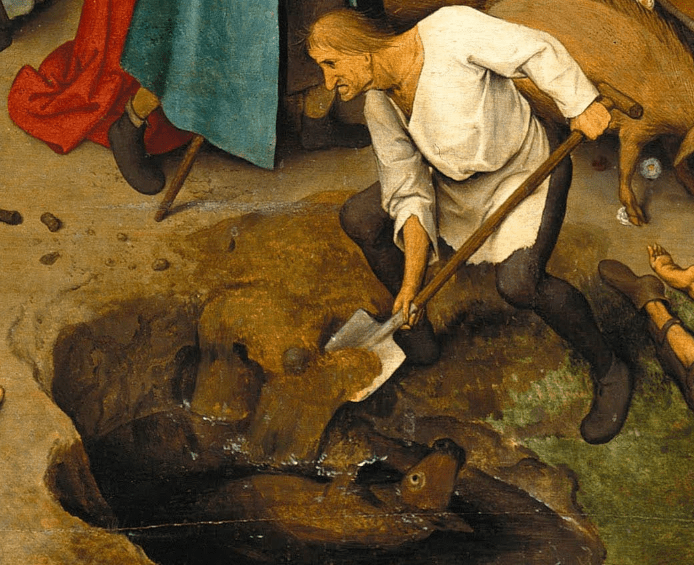
Netherlandish Proverbs (detail) — Pieter Bruegel the Elder

Screenshot 2016-06-26 at 11.25.04 AM

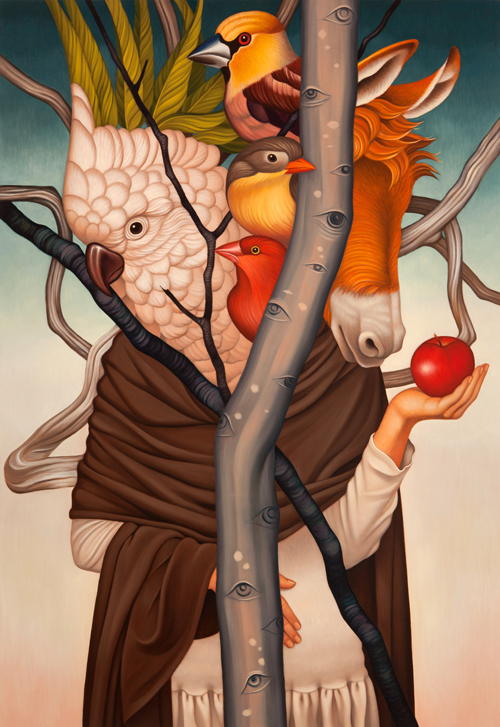
Very Old Riddle 2 — Egene Koo

very20old20riddle2

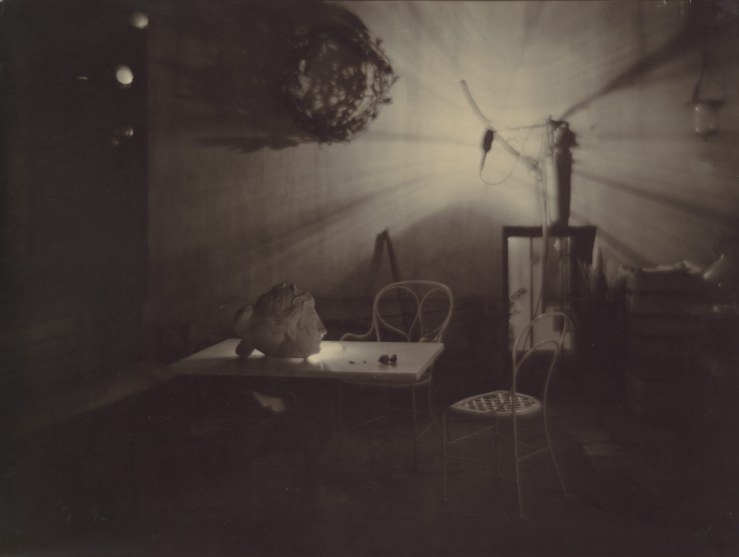
Nightfall — Josef Sudek

1989.1073

Suburban Life — Leonard Koscianski

small-suburbia_web

HIC SUNT DODOS! (From Stanley Elkin’s novel The Dick Gibson Show)

The report has come back. It’s official. HIC SUNT DODOS!

The dodo is an extinct species of ungainly, flightless bird of the genus Raphus or Didus. Its incubation ground and later its world was the island of Mauritius. It was closely related in habit and aspect to a smaller bird, the solitaire, also extinct but once indigenous to the island of Réunion. It has long been held by ornithologists that the dodo—both the dodo proper and the solitaire henceforward will be subsumed under the pseudo-generic term ‘dodo’—was related to the pigeon, but this is only an hypothesis since the bird has not been available for study since 1680, the year that the last known dodo died. Although the dodo was sent to European museums, no complete specimen exists, and today only the foot and leg of one specimen are preserved at Oxford. The representations one sees, even in the Mauritius Museum of Art itself, are merely restorations, little more than cunning dolls constructed on skeletal frames. Nevertheless, the skeletons, the scattered bones of which are to be found abundantly even today in the Mauritian fens and swamps, have been painstakingly reassembled by Mauritian dodo artisans—the best in the world—and give an accurate picture of what the bird was like.

He was large, slightly bigger than the American turkey whom he in no mean way resembles. In silhouette the dodo is not unlike a great scrunched question mark. For detail we may refer to the paintings from life that have been made of the bird, many of the best of which are still here in the Mauritius Museum of Art and Dodo Reconstruction. Most of the artists seem to be in agreement that the animal possessed an enormous blackish bill which, together with the huge horny hook in which it terminates, constituted the shepherd’s crook of the question mark. Its cheeks, partially bare, seem oddly weather- beaten and muscular, like the toothless cheeks of old men who have worked out in the open all their lives. Black except for some whitish plumage on his breast and tail and some yellowish white the tint of old piano keys on his tail, the dodo was somewhat formal in appearance, if a trifle stupid looking. This formal aspect is attributable also to his wing, foreshortened as a birth defect, which in repose flops out and down from his body like an unstarched pocket handkerchief.

Dodos are said to have inhabited the Mauritian forests—this is the style of information, of certain kinds of fact; I find it relaxing—and to have laid a single large white egg which they mounted high in a setting of piled grass. Hogs, brought in by the settlers, fed on the dodo eggs and on the dodo young, and in one or two generations the birds were extinct.

From Stanley Elkin’s 1971 novel The Dick Gibson Show.

Voulangis — Edward J. Steichen

hb_1990-1042

The American — Bo Bartlett

bb_the_americanslideshow_280954

“This Schedule In Effect July 5th, 1922” — The Great Gatsby’s House Guests

In Chapter 4 of F. Scott Fitzgerald’s The Great Gatsby, narrator Nick Carraway recounts the names of the rich, shallow, parasitic guests who attended Gatsby’s parties. Nick tells us the list comes from “an old time-table” of names he originally recorded in July 5th—significantly, the day after Independence Day: the day after the hopes and dreams of a new country. From the chapter—-

Once I wrote down on the empty spaces of a time-table the names of those who came to Gatsby’s house that summer. It is an old time-table now, disintegrating at its folds, and headed “This schedule in effect July 5th, 1922.” But I can still read the gray names, and they will give you a better impression than my generalities of those who accepted Gatsby’s hospitality and paid him the subtle tribute of knowing nothing whatever about him.

From East Egg, then, came the Chester Beckers and the Leeches, and a man named Bunsen, whom I knew at Yale, and Doctor Webster Civet, who was drowned last summer up in Maine. And the Hornbeams and the Willie Voltaires, and a whole clan named Blackbuck, who always gathered in a corner and flipped up their noses like goats at whosoever came near. And the Ismays and the Chrysties (or rather Hubert Auerbach and Mr. Chrystie’s wife), and Edgar Beaver, whose hair, they say, turned cotton-white one winter afternoon for no good reason at all.

Clarence Endive was from East Egg, as I remember. He came only once, in white knickerbockers, and had a fight with a bum named Etty in the garden. From farther out on the Island came the Cheadles and the O. R. P. Schraeders, and the Stonewall Jackson Abrams of Georgia, and the Fishguards and the Ripley Snells. Snell was there three days before he went to the penitentiary, so drunk out on the gravel drive that Mrs. Ulysses Swett’s automobile ran over his right hand. The Dancies came, too, and S. B. Whitebait, who was well over sixty, and Maurice A. Flink, and the Hammerheads, and Beluga the tobacco importer, and Beluga’s girls.

From West Egg came the Poles and the Mulreadys and Cecil Roebuck and Cecil Schoen and Gulick the state senator and Newton Orchid, who controlled Films Par Excellence, and Eckhaust and Clyde Cohen and Don S. Schwartze (the son) and Arthur McCarty, all connected with the movies in one way or another. And the Catlips and the Bembergs and G. Earl Muldoon, brother to that Muldoon who afterward strangled his wife. Da Fontano the promoter came there, and Ed Legros and James B. (“Rot-Gut.”) Ferret and the De Jongs and Ernest Lilly — they came to gamble, and when Ferret wandered into the garden it meant he was cleaned out and Associated Traction would have to fluctuate profitably next day.

A man named Klipspringer was there so often and so long that he became known as “the boarder.”— I doubt if he had any other home. Of theatrical people there were Gus Waize and Horace O’donavan and Lester Meyer and George Duckweed and Francis Bull. Also from New York were the Chromes and the Backhyssons and the Dennickers and Russel Betty and the Corrigans and the Kellehers and the Dewars and the Scullys and S. W. Belcher and the Smirkes and the young Quinns, divorced now, and Henry L. Palmetto, who killed himself by jumping in front of a subway train in Times Square.

Benny McClenahan arrived always with four girls. They were never quite the same ones in physical person, but they were so identical one with another that it inevitably seemed they had been there before. I have forgotten their names — Jaqueline, I think, or else Consuela, or Gloria or Judy or June, and their last names were either the melodious names of flowers and months or the sterner ones of the great American capitalists whose cousins, if pressed, they would confess themselves to be.

In addition to all these I can remember that Faustina O’brien came there at least once and the Baedeker girls and young Brewer, who had his nose shot off in the war, and Mr. Albrucksburger and Miss Haag, his fiancee, and Ardita Fitz-Peters and Mr. P. Jewett, once head of the American Legion, and Miss Claudia Hip, with a man reputed to be her chauffeur, and a prince of something, whom we called Duke, and whose name, if I ever knew it, I have forgotten.

All these people came to Gatsby’s house in the summer.

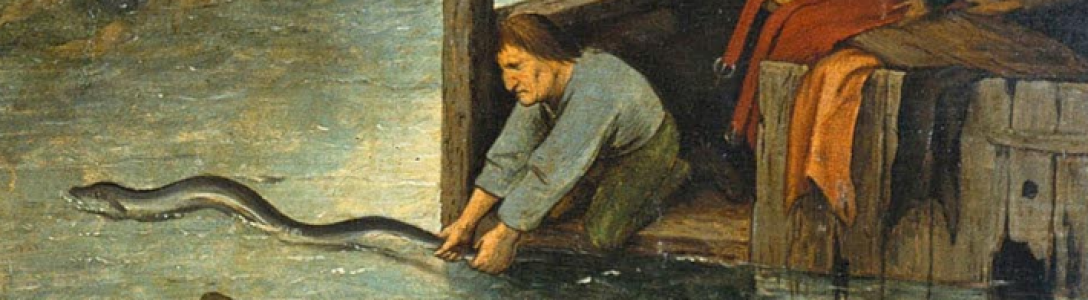
Netherlandish Proverbs (detail) — Pieter Bruegel the Elder

Screenshot 2016-06-26 at 11.23.14 AM.png

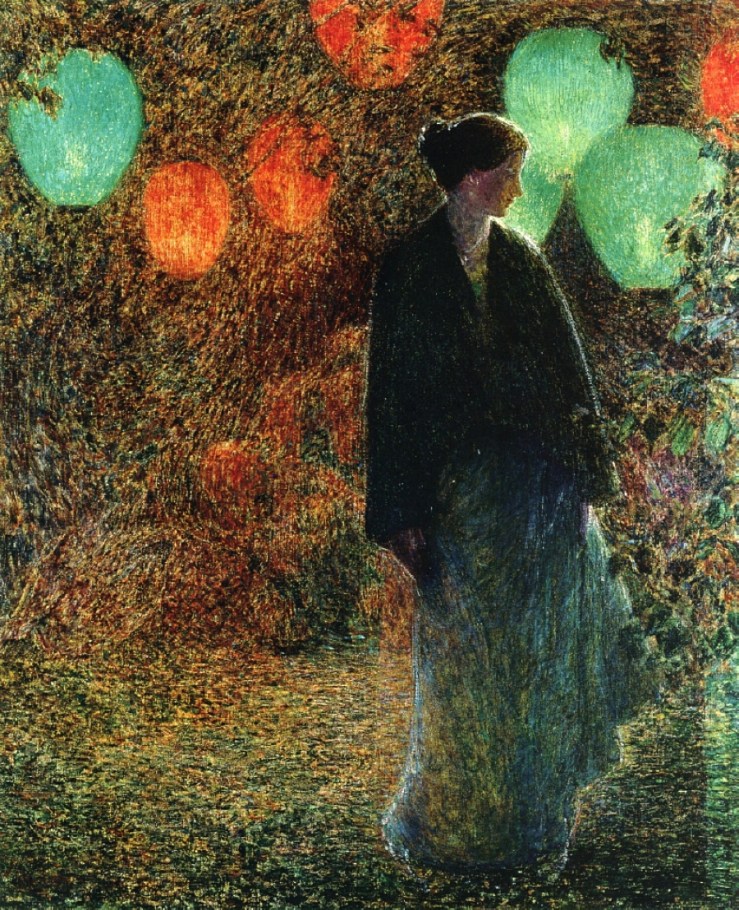
July Night — Childe Hassam

0_b1516_9aad7d68_xxxl

Nathaniel Hawthorne’s journal entry for July 4th, 1838

July 4th.–A very hot, bright, sunny day; town much thronged; booths on the Common, selling gingerbread, sugar-plums, and confectionery, spruce beer, lemonade. Spirits forbidden, but probably sold stealthily. On the top of one of the booths a monkey, with a tail two or three feet long. He is fastened by a cord, which, getting tangled with the flag over the booth, he takes hold and tries to free it. He is the object of much attention from the crowd, and played with by the boys, who toss up gingerbread to him, while he nibbles and throws it down again. He reciprocates notice, of some kind or other, with all who notice him. There is a sort of gravity about him. A boy pulls his long tail, whereat he gives a slight squeak, and for the future elevates it as much as possible. Looking at the same booth by and by, I find that the poor monkey has been obliged to betake himself to the top of one of the wooden joists that stick up high above. There are boys going about with molasses candy, almost melted down in the sun. Shows: A mammoth rat; a collection of pirates, murderers, and the like, in wax. Constables in considerable number, parading about with their staves, sometimes conversing with each other, producing an effect by their presence, without having to interfere actively. One or two old salts, rather the worse for liquor: in general the people are very temperate. At evening the effect of things rather more picturesque; some of the booth-keepers knocking down the temporary structures, and putting the materials in wagons to carry away; other booths lighted up, and the lights gleaming through rents in the sail-cloth tops. The customers are rather riotous, calling loudly and whimsically for what they want; a young fellow and a girl coming arm in arm; two girls approaching the booth, and getting into conversation with the folks thereabout. Perchance a knock-down between two half-sober fellows in the crowd: a knock-down without a heavy blow, the receiver being scarcely able to keep his footing at any rate. Shoutings and hallooings, laughter, oaths,–generally a good-natured tumult; and the constables use no severity, but interfere, if at all, in a friendly sort of way. I talk with one about the way in which the day has passed, and he bears testimony to the orderliness of the crowd, but suspects one booth of selling liquor, and relates one scuffle. There is a talkative and witty seller of gingerbread holding forth to the people from his cart, making himself quite a noted character by his readiness of remark and humor, and disposing of all his wares. Late in the evening, during the fire-works, people are consulting how they are to get home,–many having long miles to walk: a father, with wife and children, saying it will be twelve o’clock before they reach home, the children being already tired to death. The moon beautifully dark-bright, not giving so white a light as sometimes. The girls all look beautiful and fairy-like in it, not exactly distinct, nor yet dim. The different characters of female countenances during the day,–mirthful and mischievous, slyly humorous, stupid, looking genteel generally, but when they speak often betraying plebeianism by the tones of their voices. Two girls are very tired,–one a pale, thin, languid-looking creature; the other plump, rosy, rather overburdened with her own little body. Gingerbread figures, in the shape of Jim Crow and other popularities.

In the old burial ground, Charter Street, a slate gravestone, carved round the borders, to the memory of “Colonel John Hathorne, Esq.,” who died in 1717. This was the witch-judge. The stone is sunk deep into the earth, and leans forward, and the grass grows very long around it; and, on account of the moss, it was rather difficult to make out the date. Other Hathornes lie buried in a range with him on either side. In a corner of the burial-ground, close under Dr. P—-‘s garden fence, are the most ancient stones remaining in the graveyard; moss-grown, deeply sunken. One to “Dr. John Swinnerton, Physician,” in 1688; another to his wife. There, too, is the grave of Nathaniel Mather, the younger brother of Cotton, and mentioned in the Magnalia as a hard student, and of great promise. “An aged man at nineteen years,” saith the gravestone. It affected me deeply, when I had cleared away the grass from the half-buried stone, and read the name. An apple-tree or two hang over these old graves, and throw down the blighted fruit on Nathaniel Mather’s grave,–he blighted too. It gives strange ideas, to think how convenient to Dr. P—-‘s family this burial-ground is,–the monuments standing almost within arm’s reach of the side windows of the parlor,–and there being a little gate from the back yard through which we step forth upon those old graves aforesaid. And the tomb of the P. family is right in front, and close to the gate. It is now filled, the last being the refugee Tory, Colonel P—-, and his wife. M. P—- has trained flowers over this tomb, on account of her friendly relations with Colonel P—-.

It is not, I think, the most ancient families that have tombs,–their ancestry for two or three generations having been reposited in the earth before such a luxury as a tomb was thought of. Men who founded families, and grew rich, a century or so ago, were probably the first.

There is a tomb of the Lyndes, with a slab of slate affixed to the brick masonry on one side, and carved with a coat of arms.
Nathaniel Hawthorne’s journal entry for July 4th, 1838. From Passages from the American Note-Books.

Flag on Orange Field — Jasper Johns

flag-on-orange-field

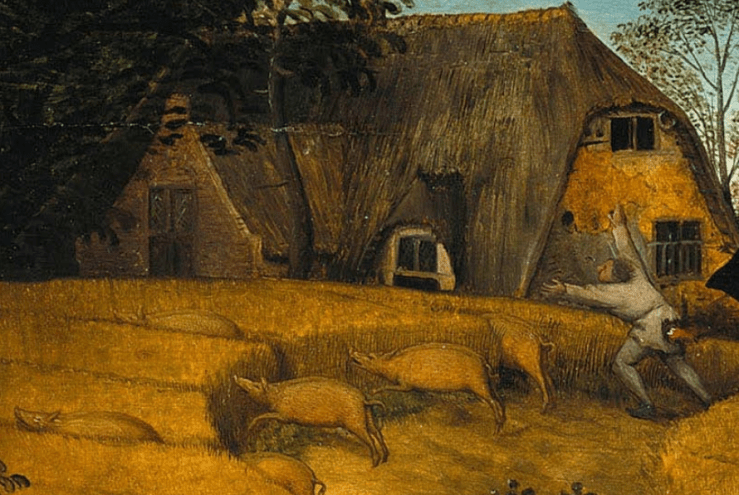
Netherlandish Proverbs (detail) — Pieter Bruegel the Elder

Screenshot 2016-06-26 at 11.16.24 AM.png

“July Stories” — Roberto Bolaño

July has been a strange month. The other day I went to the beach and I saw a woman of about thirty, pretty, wearing a black bikini, who was reading standing up. At first I thought she was about to lie down on her towel, but when I looked again she was still standing, and after that I didn’t take my eyes off her. For two hours, more or less, she read standing up, walked over to the water, didn’t go in, let the waves lap her shins, went back to her spot, kept reading, occasionally put the book down while still standing, leaned over a few times and took a big bottle of Pepsi out of a bag and drank, then picked up the book again, and, finally, without ever bending a knee, put her things away and left. Earlier the same day, I saw three girls, all in thongs, gorgeous, one of them had a tattoo on one buttock, they were having a lively conversation, and every once in a while they got in the water and swam and then they would lie down again on their mats, basically a completely normal scene, until all of a sudden, a cell phone rang, I heard it and thought it was mine until I realized it had been a while since I had a cell phone, and then I knew the phone belonged to one of them. I heard them talking. All I can say is that they weren’t speaking Catalan or Spanish. But they sounded deadly serious. Then I watched two of them get up, like zombies, and walk toward some rocks. I got up too and pretended to brush the sand off my trunks. On the rocks, I watched them talk to a huge, hideously ugly man covered in hair, in fact one of the hairiest men I’ve ever seen in my life. They knelt before him and listened attentively without saying a word, and then they went back to where their friend was waiting for them and everything went on as before, as if nothing had happened. Who are these women? I asked myself once it was dark and I had showered and dressed. One drank Pepsi. The others bowed down to a bear. I know who they are. But I don’t really know.

From Roberto Bolaño’s Between Parentheses: Essays, Articles and Speeches, 1998-2003.

Nude on Checked Cloth — Egon Schiele

egon_schiele_-_weiblicher_akt_auf_kariertem_tuch_-_1911