The Death of Zhora — Chris Thornley

tumblr_nfalzjd8l01qer2oto1_1280

Is identity a matter of fragments held together by convenient or useful narrative? (From Ann Leckie’s Ancillary Justice)

It seems very straightforward when I say “I.” At the time, “I” meant Justice of Toren, the whole ship and all its ancillaries. A unit might be very focused on what it was doing at that particular moment, but it was no more apart from “me” than my hand is while it’s engaged in a task that doesn’t require my full attention. Nearly twenty years later “I” would be a single body, a single brain.

That division, I–Justice of Toren and I–One Esk, was not, I have come to think, a sudden split, not an instant before which “I” was one and after which “I” was “we.” It was something that had always been possible, always potential. Guarded against. But how did it go from potential to real, incontrovertible, irrevocable?

On one level the answer is simple—it happened when all of Justice of Toren but me was destroyed. But when I look closer I seem to see cracks everywhere. Did the singing contribute, the thing that made One Esk different from all other units on the ship, indeed in the fleets? Perhaps. Or is anyone’s identity a matter of fragments held together by convenient or useful narrative, that in ordinary circumstances never reveals itself as a fiction? Or is it really a fiction?

I don’t know the answer. But I do know that, though I can see hints of the potential split going back a thousand years or more, that’s only hindsight. The first I noticed even the bare possibility that I–Justice of Toren might not also be I–One Esk, was that moment that Justice of Toren edited One Esk’s memory of the slaughter in the temple of Ikkt. The moment I—“I”—was surprised by it.

It makes the history hard to convey. Because still, “I” was me, unitary, one thing, and yet I acted against myself, contrary to my interests and desires, sometimes secretly, deceiving myself as to what I knew and did. And it’s difficult for me even now to know who performed what actions, or knew which information. Because I was Justice of Toren. Even when I wasn’t. Even if I’m not anymore.

A longish passage from Ann Leckie’s novel Ancillary Justice. I’ve put the language that particularly interests me in boldface, but I think the language around it should pique as much interest as any blurb.

I checked out the audiobook on the recommendation of the novelist Adam NovyAncillary Justice won like all the sci-fi awards a few years ago so you may know about it (I don’t read enough contemporary fiction in general, so it wasn’t really on my radar). The book is a fun, baroque space opera, a critique of imperial politics, and a headfuck for anyone addicted to gendered pronouns. Justice of Toren is a spaceship, by the way.

Subject 41 — Chris Thornley

tumblr_n7m5d4wvkk1qer2oto1_1280


Chris Thornley (aka Raid 71) channeling Milton Glaser’s iconic Dylan poster in this illustration of Tetsuo of Katsuhiro Otomo’s Akira.

Melancholia (detail) — Albrecht Dürer

Screenshot 2016-03-16 at 10.14.49 AM

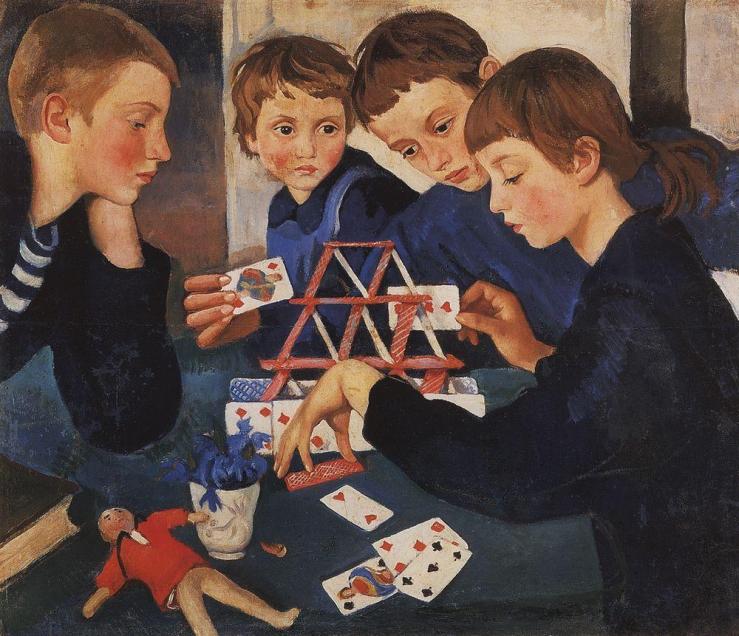
House of Cards — Zinaida Serebriakova

house-of-cards-1919

Melancholia (detail) — Albrecht Dürer

Screenshot 2016-03-14 at 4.06.45 PM

I want nothing to do with politicians. Their hearts wither away and die out of their bodies (Nathaniel Hawthorne)

March 15th.–I pray that in one year more I may find some way of escaping from this unblest Custom House; for it is a very grievous thraldom. I do detest all offices,–all, at least, that are held on a political tenure. And I want nothing to do with politicians. Their hearts wither away and die out of their bodies. Their consciences are turned to india-rubber, or to some substance as black as that, and which will stretch as much. One thing, if no more, I have gained by my custom house experience,–to know a politician. It is a knowledge which no previous thought or power of sympathy could have taught me, because the animal, or the machine rather, is not in nature.

Nathaniel Hawthorne’s journal entry for March 15th, 1840. He left the Custom House the same year.

Assassination of Julius Caesar — Vasily Surikov

assassination-of-julius-caesar

Melancholia (detail) — Albrecht Dürer

Screenshot 2016-03-14 at 4.01.47 PM

Prometheus’ Regret — Kevin Sloan

prometheus_-regret-by-kevin-sloan

All the Pie and Coffee in Twin Peaks

Melancholia (detail) — Albrecht Dürer

Screenshot 2016-03-13 at 3.53.58 PM

Three Books

img_1707

The Enchanted Wanderer and Other Stories by Nikolai Leskov. English translation by Richard Pevear and Larissa Volokhonsky. First edition hardback from Knopf’s Borzoi imprint. Jacket design by Peter Mendelsund. There are still a few tales in here that I haven’t read, most notably the titular novella.

img_1705

The Silmarillion by J.R.R. Tolkien (and arguably, Christopher Tolkien, whose edits gave the book shape and form). 1983 first American edition trade paperback by Houghton Mifflin. No designer credited, which is a damn shame because I love this book cover. This is maybe the first book I recall buying with my own money.

img_1706

Miruna, A Tale by Bogdan Suceavă. Translated from the Romanian by Alistair Ian Blyth. 2014 trade paperback by Twisted Spoon Press. Cover design by Dan Myer. A strange and remarkable novella set in the Carpathians that moves time and history into fantasy storytelling.

Sunday in La Rochelle — Francine van Hove

8547992421_7eea8aa805_b

“Unmasking a Confidence Trickster” — Franz Kafka

“Unmasking a Confidence Trickster”

by

Franz Kafka

English translation by the Muirs


At last, about ten o’clock at night, I came to the doorway of the fine house where I was invited to spend the evening, after the man beside me, whom I was barely acquainted with and who had once again thrust himself unasked upon me, had marched me for two long hours around the streets.

“Well!” I said, and clapped my hands to show that I really had to bid him goodbye. I had already made several less explicit attempts to get rid of him. I was tired out.

“Are you going straight in?” he asked. I heard a sound in his mouth that was like the snapping of teeth.

“Yes.”

I had been invited out, I told him when I met him. But it was to enter a house where I longed to be that I had been invited, not to stand here at the street door looking past the ears of the man before me. Nor to fall silent with him, as if we were doomed to stay for a long time on this spot. And yet the houses around us at once took a share in our silence, and the darkness over them, all the way up to the stars. And the steps of invisible passers-by, which one could not take the trouble to elucidate, and the wind persistently buffeting the other side of the street, and a gramophone singing behind the closed windows of some room-they all announced themselves in this silence, as if it were their own possession for the time past and to come.

And my companion subscribed to it in his own name and–with a smile–in mine too, stretched his right arm up along the wall and leaned his cheek upon it, shutting his eyes.

But I did not wait to see the end of that smile, for shame suddenly caught hold of me. It had needed that smile to let me know that the man was a confidence trickster, nothing else. And yet I had been months in the town and thought I knew all about confidence tricksters, how they came slinking out of side streets by night to meet us with outstretched hands like tavernkeepers, how they haunted the advertisement pillars we stood beside, sliding round them as if playing hide-and-seek and spying on us with at least one eye, how they suddenly appeared on the curb of the pavement at cross streets when we were hesitating! I understood them so well, they were the first acquaintances I had made the town’s small taverns, and to them I owed my first inkling of a ruthless hardness which I was now so conscious of, everywhere on earth, that I was even beginning to feel it in myself. How persistently they blocked our way, even when we had long shaken ourselves free, even when, that is, they had nothing more to hope for! How they refused to give up, to admit defeat, but kept shooting glances at us that even from a distance were still compelling! And the means they employed were always the same: they planted themselves before us, looking as large as possible, tried to hinder us from going where we purposed, offered us instead a habitation in their own bosoms, and when at last all our balked feelings rose in revolt they welcomed that like an embrace into which they threw themselves face foremost.

And it had taken me such a long time in this man’s company to recognize the same old game. I rubbed my finger tips together to wipe away the disgrace. My companion was still leaning there as before, still believing himself a successful trickster, and his self-complacency glowed pink on his free cheek.

“Caught in the act!” said I, tapping him lightly on the shoulder. Then I ran up the steps, and the disinterested devotion on the servants’ faces in the hall delighted me like an unexpected treat. I looked at them all, one after another, while they took my greatcoat off and wiped my shoes clean.

With a deep breath of relief and straightening myself to my full height I then entered the drawing room.

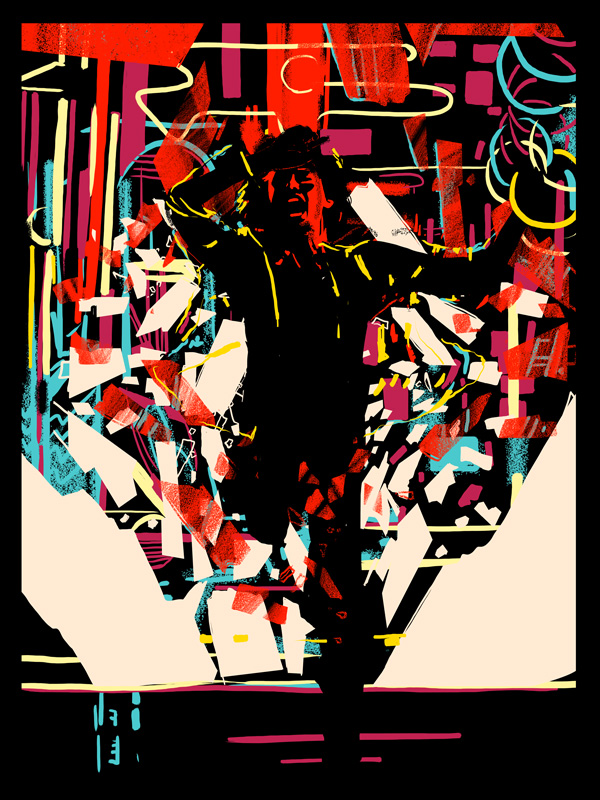
Melancholia (detail) — Albrecht Dürer

Screenshot 2016-03-12 at 12.54.29 PM

From “Reflections on American Violence” by Richard Hofstadter

I reread Richard Hofstadter’s remarkable essay “Reflections on American Violence” this morning. The essay was first published as “The Future of American Violence” in Harper’s in April of 1970 and as the introduction to American Violence: A Documentary History, a book edited by Hofstadter and Michael Wallace. You can read the whole thing at The Baffler. First three paragraphs:

The United States, it has been said, has a history but not a tradition of domestic violence. A history, because violence has been frequent, voluminous, almost commonplace in our past. But not precisely a tradition, for two reasons: First, our violence lacks both an ideological and a geographical center; it lacks cohesion; it has been too various, diffuse, and spontaneous to be forged into a single, sustained, inveterate hatred shared by entire social classes. Second, we have a remarkable lack of memory where violence is concerned and have left most of our excesses a part of our buried history. . . .

For historians violence is a difficult subject, diffuse and hard to cope with. It is committed by isolated individuals, by small groups, and by large mobs; it is directed against individuals and crowds alike; it is undertaken for a variety of purposes (and at times for no discernible rational purpose at all), and in a variety of ways ranging from assassinations and murders to lynchings, duels, brawls, feuds, and riots; it stems from criminal intent and from political idealism, from antagonisms that are entirely personal and from antagonisms of large social consequence. Hence it has been hard to conceive of violence as a subject at all. . . .

Today we are not only aware of our own violence; we are frightened by it. We are now quite ready to see that there is far more violence in our national heritage than our proud, sometimes smug, national self-image admits of. Our violence frightens us, as it frightens others, because in our singular position uncontrolled domestic violence coincides with unparalleled national power, and thus takes on a special significance for the world. It is not only shocking but dangerous for a primary world power to lose three of its most important and valuable public leaders within a few years, and with them to lose an immeasurable part of its political poise. Violence in Colombia or Guatemala is of life-or-death concern to Colombians and Guatemalans. Violence in the United States has become of life-or-death concern to everyone. It is, again, disturbing to many Americans that the recent outbreaks coincided with the most sustained economic boom we have ever had. Although the American creed has been built upon the efficacy of riches, it has now become alarmingly clear that some of our social discontents, instead of being relieved by prosperity, are exacerbated by it. Although Americans are richer than ever, they have not found a way to buy themselves out of trouble.

Read the rest of “Reflections on American Violence”