Geological Evolution — Salvador Dali

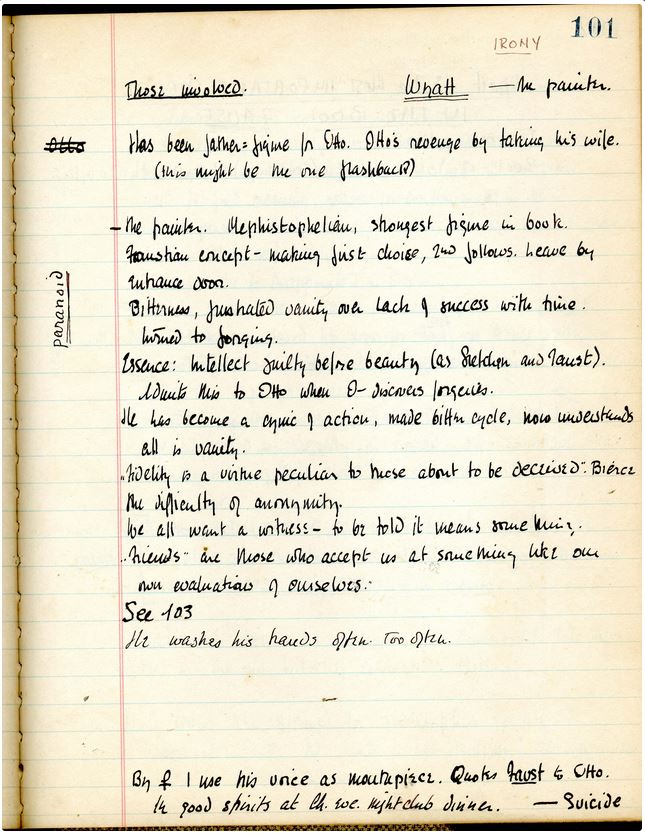
“Those involved. Wyatt — A painter” — William Gaddis’s autograph notes for The Recognitions

irony

More great stuff from Washington University’s Modern Literature Collection.


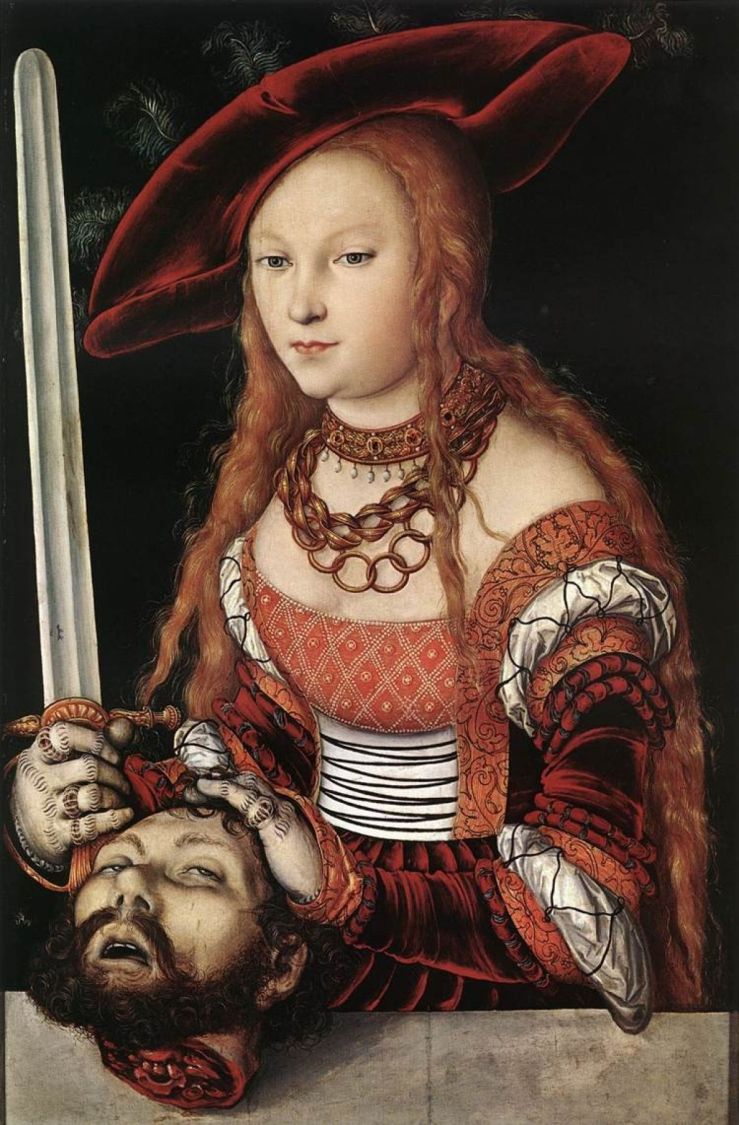
Judith with the Head of Holofernes — Lucas Cranach the Elder

10550_tumblr_vp_kdu_rto_oo

“I was simply trying to write about people” — Faulkner on the origins of “A Rose for Emily”

William Faulkner: Yes, sir.

Unidentified participant: Sir, it has been argued that “A Rose for Emily” is a criticism of the North, and others have argued saying that it is a criticism of the South. Now, could this story, shall we say, be more properly classified as a criticism of the time?

William Faulkner: Now that I don’t know because I was simply trying to write about people. The writer uses environment—what he knows—and if there’s a symbolism in which the—the lover represented the North and the—and the—the woman who murdered him represents the South, I don’t say that’s not valid and not there, but it was no intention of the writer to—to say, “Now let’s see, I’m going to write a piece in which I will—will use a symbolism for the North and another symbol for the South,” that he was simply writing about people, a story which he thought was—was tragic and true because it—it came out of the—out of the human heart, of human aspiration, the human—the conflict of—of conscience with—with glands, with the Old Adam. It was a conflict not between the North and South so much as between, well, you might say, God and Satan.
Yes, sir.

Unidentified participant: Sir, just a little more on that thing. You say it’s a conflict between God and Satan. Well, I don’t quite understand what—what you mean there. Who is—did one represent the […]?

William Faulkner: The conflict was—was in Miss Emily, that she knew that you do not murder people. She was—she had been trained that—that—that you do not take a lover, you marry. You don’t take a lover. She had broken all the—the—the laws of her tradition, her background, and she had finally broken the law of God, too, which says you do not take human life. And she knew she was doing wrong, and that’s why her—her own life was wrecked. Instead of having murdered one lover, and then to go on and—and take another and when she used him up to murder him, she was expiating her crime.
Yes, ma’am.

Unidentified participant: But can’t a person like Miss Emily, though she did do all the things that she had been taught not to, and being a sensitive sort of a woman, it was sure to have told on her, but do you think it’s fair to feel pity for her because, in a way, she made her adjustment, and it seemed to have wound up in a happy sort of a way—certainly tragic—but maybe it suited her just fine.

William Faulkner: Yes, it may have, but then I don’t think that—that one should withhold pity simply because the—the subject of the pity, object of the pity, is pleased and satisfied. I think the—the pity is in—in the—the human striving against its own nature, against its own conscience. That’s what deserves the pity. It’s not the fate of the individual. It’s man in conflict with his heart or with his fellows or with his environment. That’s—that’s what deserves the pity. It’s not that the man suffered or that he fell off the house or was run over by the train. It’s that he was—that man is trying to do the best he can with his—his desires and impulses, against his—his own moral conscience and the— the conscience of—the social conscience of—of his time and his place, the—the little town he must live in, the family he’s a part of.

Via/audio.

Reading a Book — Felice Casorati

tumblr_msbssc4MqC1rrnekqo1_1280

The Forbidden Spark — Adrian Borda

the_forbidden_spark-1

Falstaff in the Laundry Basket — Henry Fuseli

“A Sweet Tail (Gypsies)” — Gertrude Stein

“A Sweet Tail (Gypsies)”

by

Gertrude Stein

Curves.

Hold in the coat. Hold back ladders and a creation and nearly sudden extra coppery ages with colors and a clean voice gyp hoarse. Hold in that curl with a good man. Hold in cheese. Hold in cheese. Hold in cheese.

A cool brake, a cool brake not a success not a re-sound a re-sound and a little pan with a yell oh yes so yet change, famous, a green a green colored oak, a handsome excursion, a really handsome log, a regulation to exchange oars, a regulation or more press more precise cold pieces, more yet in the teeth within the teeth. This is the sun in. This is the lamb of the lantern with chalk. With chalk a shadow shall be a sneeze in a tooth in a tin tooth, a turned past, a turned little corset, a little tuck in a pink look and with a pin in, a pin in.

Win lake, eat splashes dig salt change benches.

Win lake eat splashes dig salt change benches.

Can in.

Come a little cheese. Come a little cheese and same same tall sun with a little thing to team, team now and a bass a whole some gurgle, little tin, little tin soak, soak why Sunday, supreme measure. Continue reading ““A Sweet Tail (Gypsies)” — Gertrude Stein”

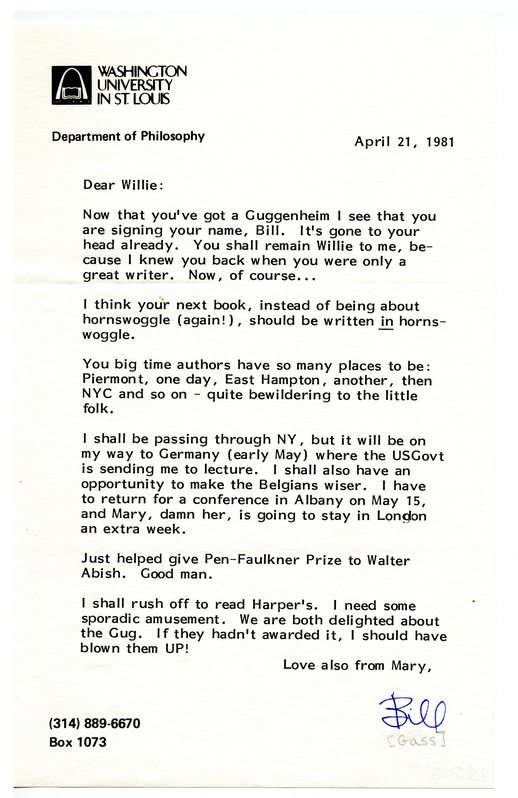
“Dear Willie” — William H. Gass Writes to William Gaddis

dear

From Washington University’s marvelous Modern Literature Collection.


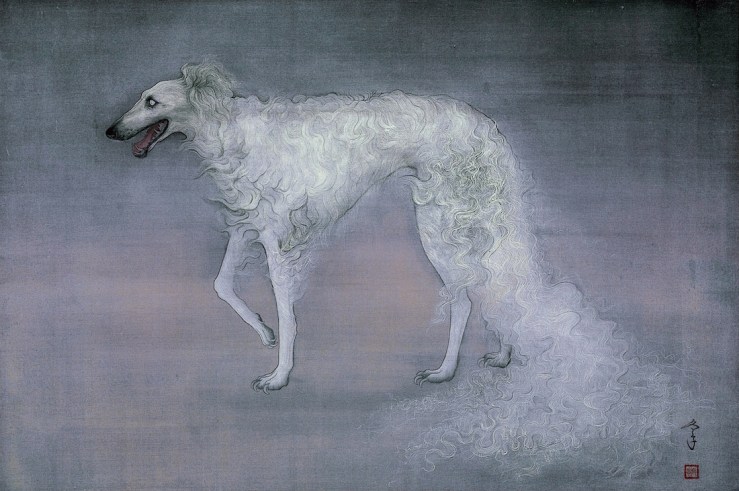
The Cut Long-Term Experiment — Matsui Fuyuko

wo04

The Novel Reader — Antoine Wiertz

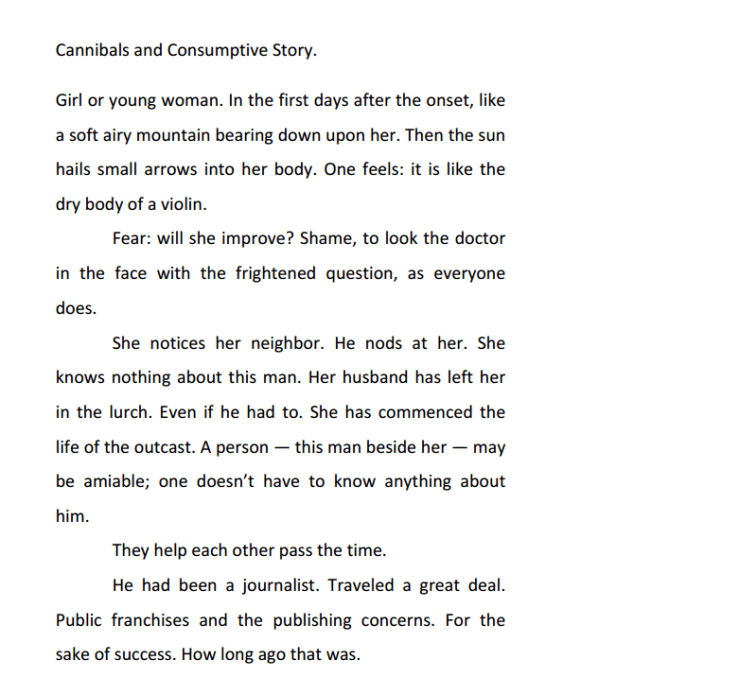
Cannibals (Excerpt) — Robert Musil

cannibalsRead more excerpts from Robert Musil’s short prose in the winter issue of Hyperion, which features all kinds of intriguing stuff, including Rainer Maria Rilke, Valery on Nietzsche, Fredrico Fellini answers “Why Satyricon?” and much more.


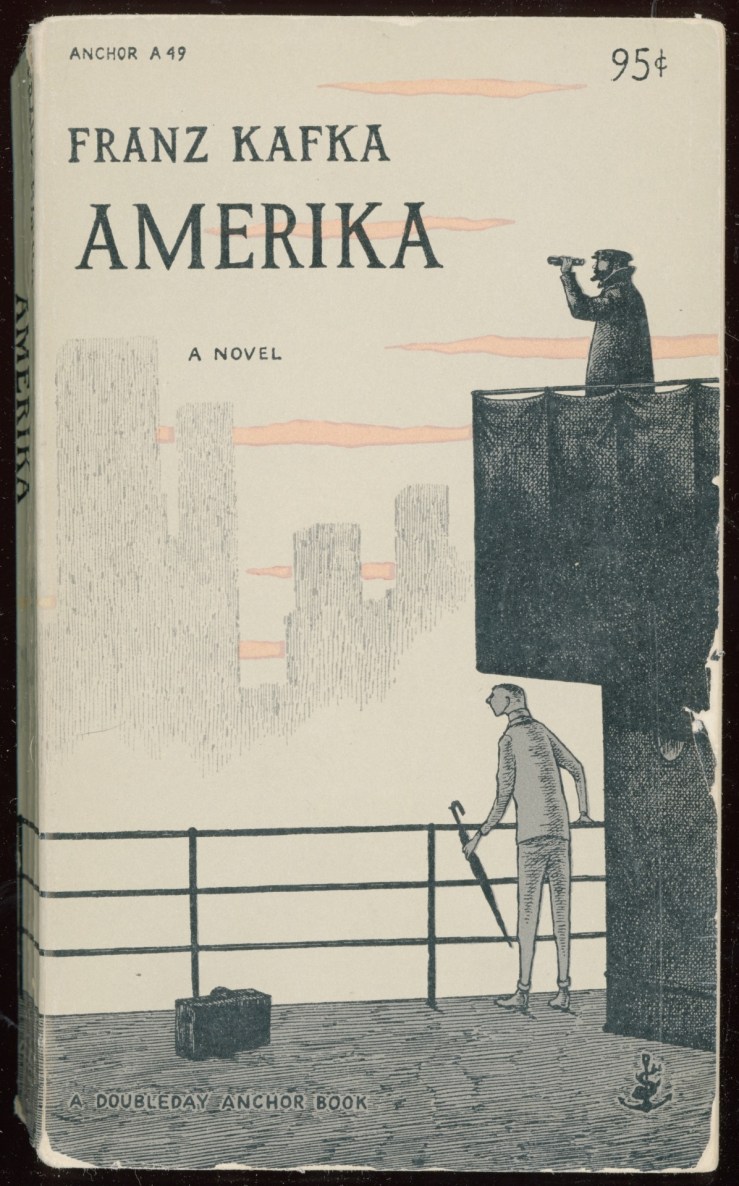
Gorey’s Kafka

tumblr_nhw07dGxn01s9jvclo1_1280

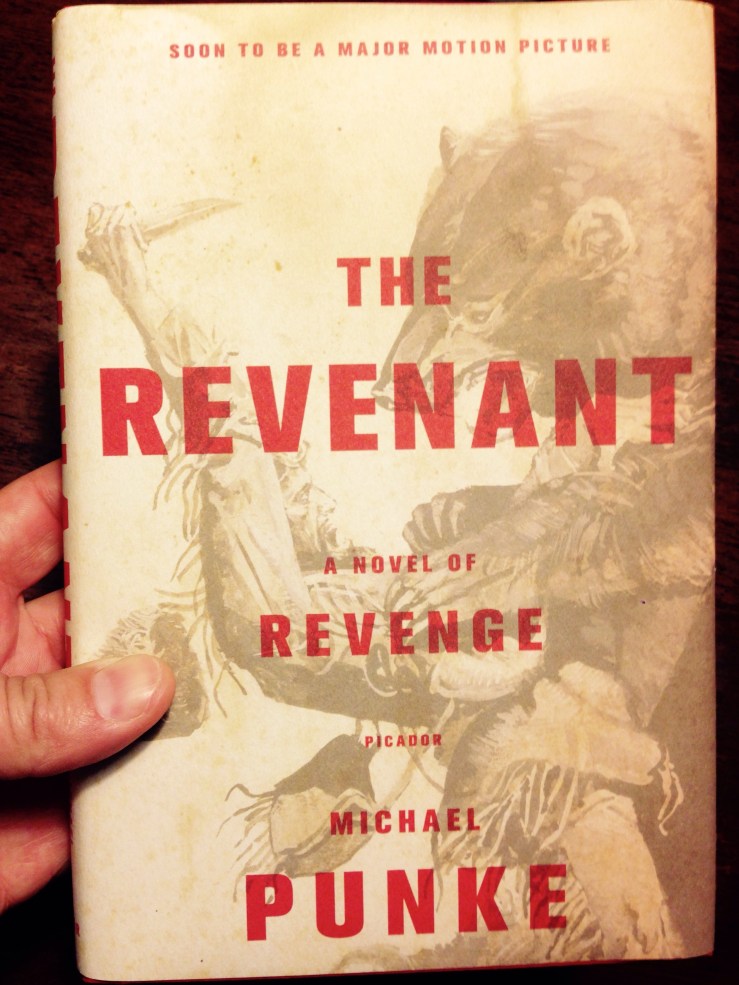
The Revenant (Book acquired some time in December, 2014)

2015/01/img_4851.jpg

Michael Punke’s novel (of revenge!) The Revenant is being adapted into an upcoming Iñárritu film, and consequently getting the hardback reissue treatment. The Wikipedia entry:

The Revenant is an upcoming American westernthriller film produced and directed by Alejandro González Iñárritu. The screenplay, adapted from Michael Punke’s 2003 novel of the same name, was written by González Iñárritu and Mark L. Smith and is partially based in the life of frontiersman Hugh Glass. The film is set to star Leonardo DiCaprio, Tom Hardy, Will Poulter, and Domhnall Gleeson.

Development of the film began in August 2001 when Akiva Goldsman purchased Punke’s manuscript with the intent of producing the film. The film was originally set to be directed by Park Chan-wook with Samuel L. Jackson in mind to star, and later by John Hillcoat with Christian Bale in negotiations to star. Both directors left the project, and González Iñárritu signed on to direct in August 2011. In April 2014, after several delays in production due to other projects, González Iñárritu confirmed that he was beginning work on The Revenantand that DiCaprio would play the lead role. Principal photography began in October 2014, and is scheduled to last 80 days.

I still haven’t seen Birdman.

Wong Kar Wai in Conversation with Martin Scorsese

Woman Reading in the Reeds, Saint-Jacut-de-la-mer — Edouard Vuillard

Édouard Vuillard - Woman Reading in the Reads, Saint-Jacut