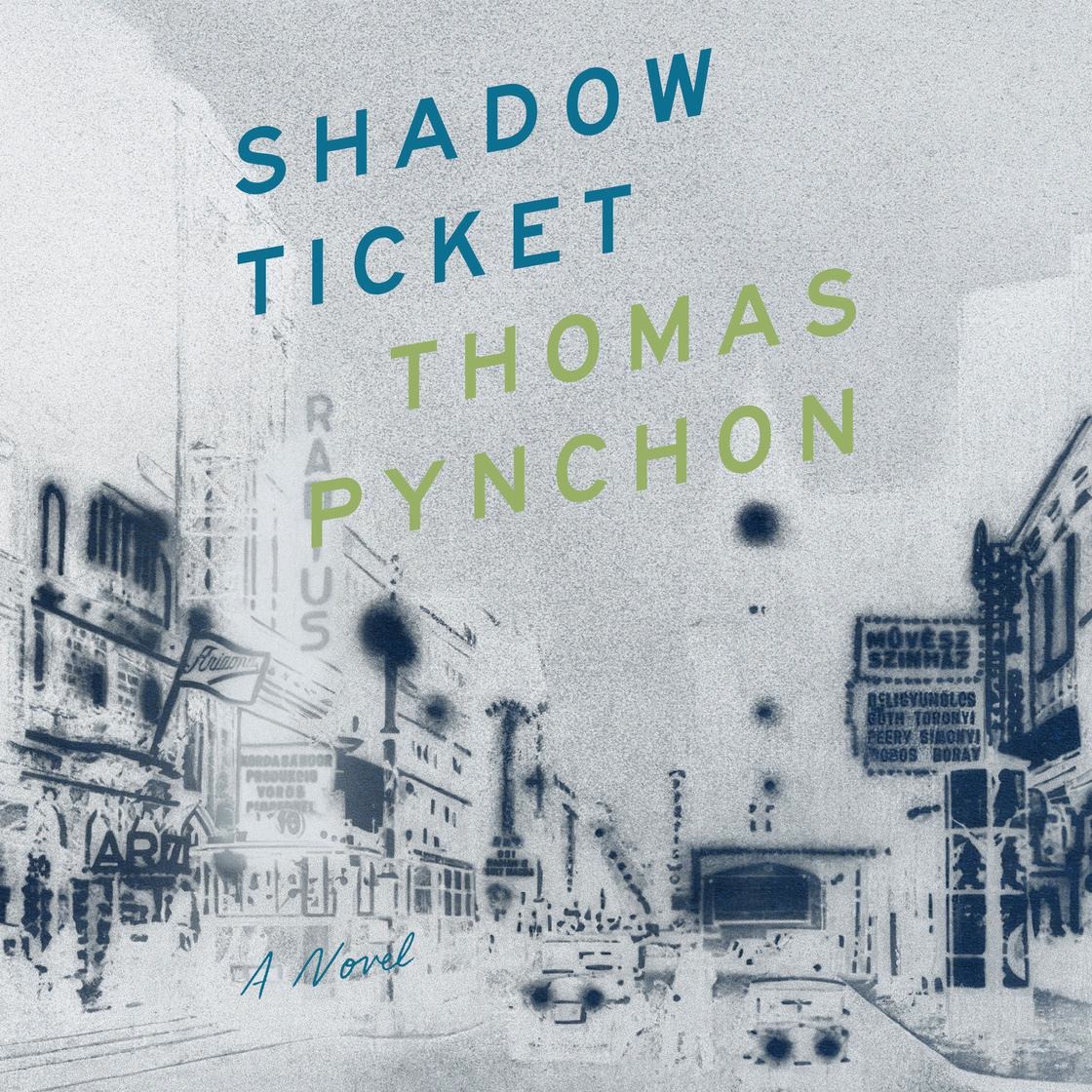
Sunsets to chase | Notes on Ch. 39, the last chapter of Thomas Pynchon’s Shadow Ticket

Notes on Chapters 1-7 | Glows in the dark.

Notes on Chapters 8-14 | Halloween all the time.

Notes on Chapters 15-18 | Ghostly crawl.

Notes on Chapters 19-20 | The needs of cold capitalist reality and those of adjoining ghost worlds come into rude contact.

Notes on Chapters 21-23 | Phantom gearbox.

Notes on Chapters 24-26 | Idiots get respect out here, they’re believed to be in touch with invisible forces.

Notes on Chapters 27-29 | We’re in for some dark ages, kid.

Notes on Chapters 30-32 | Some occult switchwork.

Notes on Chapters 33-34 | The dead ride fast.

Notes on Chapters 35-36 | Ghost city.

Notes on Chapters 37-38 | Our racket happens to be exile.


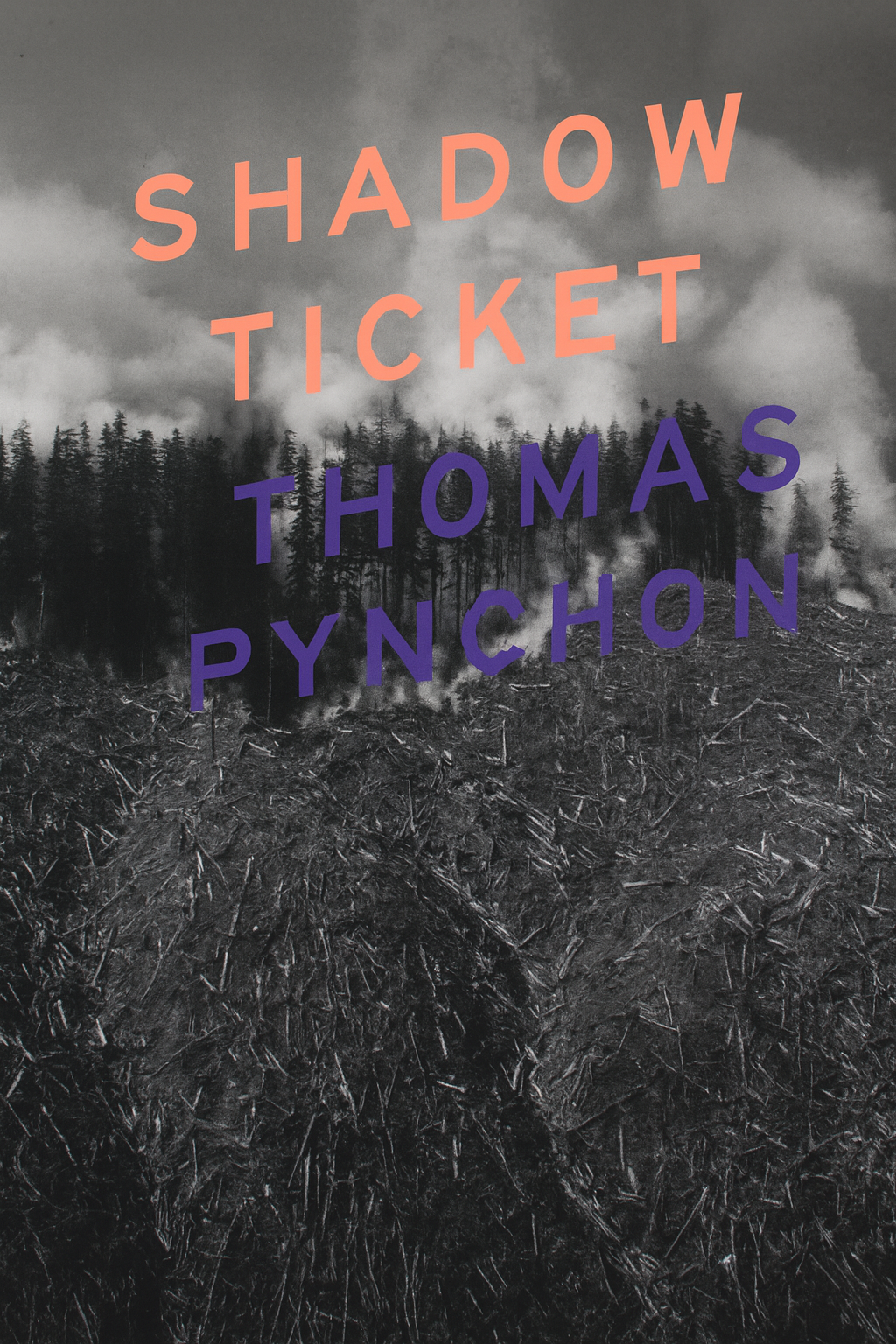
The last chapter of Shadow Ticket has three movements: one for Bruno, the novel’s erstwhile villain; one for Hicks, its anti-hero finding his way to becoming a hero; and one for Hicks’s young protege Skeet, who’s been sidelined Stateside and not present in the novel’s second, European half.

We begin the finale on the phantom submarine the Vampire Squid, “Somewhere out beyond the western edge of the Old World.” Shadow Ticket will end with the promise of a new edge of the New World.

Bruno Airmont, one-time dairy gangster, believes he’s headed home. The sub encounters a bizarre behemoth, “a statue hundreds of meters high, of a masked woman draped in military gear less ceremonial than suited to action in the field [wearing] an openwork visor of some darkly corroded metal protecting, some say hiding, her identity.” The full description of this statue is beautiful and strange, and culminates with the melancholic note that her visage recalls “somebody we knew once a long time ago.” 

“Statue of Liberty,” guesses Bruno, which, okay. I mean, that’s a reasonable guess I guess.

The image Pynchon conjures of a surreal, armed Lady Liberty recalls the opening of Franz Kafka’s unfinished first novel Amerika, which begins with its hero entering the New York Harbor and encountering “the Statue of Liberty, which he had been observing for some time, as if in a sudden burst of sunlight. The arm with the sword now reached aloft, and about her figure blew the free winds” (trans. Mark Harman).

In the Pynchonverse, “It’s the U.S. but not exactly the one you left. There’s exile and there’s exile” for Bruno: “There is no Statue of Liberty, Bruno, no such thing, not where you’re going.”

Bruno’s episode–and the Vampire Squid’s—ends with a Dickinson dash: “Whatever counter-domain of exile this is they have wandered into, they will be headed not back into any sunrise but west, toward a frontier as yet only suspected, as the days sweep over them—”

The Vampire Squid is another bilocated ghost ship, like the Stupendica on which Hicks voyaged to Europe. In Against the Day, the Stupendica splits into two ships — its shadow double the Emperor Maximilian is off to war. Recall that the Vampire Squid is a reformed U-boat, set out on a “new career of nonbelligerence.” Shadow Ticket might be cynical about redemption, but it also posits second chances — even if those chances take the quester into unknown counter-domains of exile.


Ch. 39’s second movement is a scant few lines. Hicks, exiled to Europe, panics a bit and realizes “that what he thought mattered to him is now foreclosed.” Terike pulls up on her bike, teaches him the Hungarian phrase csókolj meg, and our boy is on another adventure, another romance. It’s a nice conclusion for Hicks — who, it’s worth noting, has not committed a single act of violence in the novel.


The real conclusion of Shadow Ticket is epistolary, a letter to “Hicksie” from his old pal Skeet Wheeler. Skeet’s “On the hop,” staying clear of “Paddy wagons, dogcatcher nets, arrest warrants, the works,” lamenting that there are “Not so many places to hide as there were.” Here again is a theme of Shadow Ticket: there’s only freedom on foot, on the run, on the hop. To escape the net, Skeet plans to head West with Zinnia, the gal who gave him a glow-in-the-dark watch back in Chapter 1: “There’s supposed to be plenty of work out on the Coast.” That would be the West Coast of course.

Skeet offers a wrap-up of the Wisconsin cast of Shadow Ticket, including Against the Day’s hero Lew Basnight, who agrees to give Skeet and “Zin the fare out to California.” Basnight advises the young couple in a mode that’s not so much benediction as it is ominous prophecy, warning of “forks in the road, close shaves, mistakes he wished he didn’t make.”

Basnight warns Skeet of California’s American promises: “Eternal youth, big Hollywood playpen, whatsoever—but someday they’ll lose that innocence. They’ll find out.”

“Maybe they’ll keep finding new ways to be innocent,” rejoins Skeet, to which Basnight replies: “Better if somebody tells you now—innocent and not guilty ain’t always the same.”

Skeet concedes he’s not sure what that riddle means, but figures he’ll solve it in time; for now, he writes to Hicks, it’s “Time to put them street kiddie days behind me.” Time to grow up, or at least to make a motion towards it.

The novel ends with Skeet en route to California via the Santa Fe Chief: “Right now, we’ve got a couple of sunsets to chase.” Like the crew of the Vampire Squid, Skeet and Zin are headed “not back into any sunrise but west, toward a frontier as yet only suspected.” 

And while Pynchon’s conclusion follows a signal trope of US American literature — namely the promise of a new start Out West — I think there’s more here than the urge that Huck expresses at the end of Adventures of Huckleberry Finn, when he promises to “light out for the Territory ahead of the rest” to avoid the “sivilizin'” domesticity represented by Aunt Sally. Skeet’s Westward movement isn’t pure escapism or the fantasy of Manifest Destiny. It isn’t a rejection of domestic responsibility in lieu of a new frontier but rather a utopian dream of “finding new ways to be innocent,” even as he puts those “kiddie days behind.”

Lew Basnight, veteran of Against the Day‘s fantasia/nightmare of nineteenth-century history, provides a tempering wisdom to cool Skeet’s American Dream: “innocent and not guilty ain’t always the same.” Perhaps, like the narrator back in Ch. 35 documenting Hicks and Daphne’s last encounter, Basnight understands that the characters in Shadow Ticket are floating “in the last minutes of a break that will seem so wonderful and peaceable and carefree” before the horrors of WWII. Again, Shadow Ticket is a dance number, a chronological breeze floating between Pynchon’s titans Against the Day and Gravity’s Rainbow.

For me, the ending is sweet and then bittersweet and then bitter and then sweet again. We know Hicks will likely never see Skeet again — but he might. We know that this is probably Pynchon’s last novel — but maybe it isn’t.

And we know that Zoyd Wheeler is the hero of Pynchon’s California novel Vineland, and we know that Skeet’s last name is Wheeler. My presumption is that Skeet and Zinnia are Zoyd’s parents, and I presume it because I like to think that the Pynchonverse, although large and containing multitudes (and bilocations of every stripe) is somehow cozily discrete.

I should probably distill my thoughts on Shadow Ticket into a compact, “proper” review, but I’ve sat with the novel now for two months, reading it twice, and really, really enjoying it. I never expected to get another Pynchon novel; it’s a gift. I loved its goofy Gothicism; I loved its noir-as-red-herring-genre-swap conceit; I loved even its worst puns (even “sofa so good”). I loved that Pynchon loves these characters, even the ones he might not have had the time or energy to fully flesh out — this is a book that, breezy as it reads, feels like a denser, thicker affair. And even if he gives us doom on the horizon in the impending horrors of genocide and atomic death, Pynchon ends with the hopeful image of two kids chasing sunsets. Great stuff.
The needs of cold capitalist reality and those of adjoining ghost worlds come into rude contact | Notes on Thomas Pynchon’s Shadow Ticket, Ch. 19-20

Notes on Chapters 1-7 | Glows in the dark.

Notes on Chapters 8-14 | Halloween all the time.

Notes on Chapters 15-18 | Ghostly crawl.


Chapter 19:

Last time we checked on hero Hicks McTaggart, our P.I. was in NYC, unwillingly sent there by his intelligence agency, U-Ops. A “a needle full of something in the chloral hydrate family” sends Hicks out on the Atlantic, on the “ocean liner Stupendica. The Stupendica is presumably the same ship, or a version of the ship, from Pynchon’s opus Against the Day. In the “Bilocations” section, the Stupendica bifurcates (or  doubles?), engendering a second ship, the Emperor Maximilian, which departs on its own timeline to other bellicose adventures.

Aboard this particularStupendica, Shanghaied Hicks revives to a “seagoing-type tomato” named “Glow Tripforth del Vasto…here on assignment for Hep Debutante magazine, sending in a series of articles on how to be a Jazz Age adventuress on a Depression budget.”

Glow’s name immediately recalls Shadow Ticket’s motif of “glow in the dark” images and monster movie irradiation. The name “Glow Tripforth” (she married into the del Vasto name) also echoes “Geli Tripping,” the beautiful young witch who takes up with Tyrone Slothrop in Gravity’s Rainbow.

Indeed, much in seafaring Chapter 19 seems to echo some of Gravity’s Rainbow’s nautical (and casino) episodes. The Stupendica isn’t the Anubis of GR, but, with its “grinning stewards, uniformed juveniles years corrupted, American sorority girls, [and] exiled royalty” it offers another version of Pynchon’s ship of foolish fun.

And just as Pynchon delighted in Gravity’s Rainbow giving his totem Slothrop costume changes, so too does Hicks get a new suit, a garish “‘Midnight aubergine and electric kumquat…not perhaps as understated a look as one might wish.’ Though in fact, as the Gumshoe’s Manual points out, quite useful if you want eyewitnesses to be focused more on the suit than the mug happens to be in it.” Glamour, as in magic, is a recurring theme in Shadow Ticket, and this theme only intensifies as Hicks heads east to Ole Europe, where we meet more characters who disguise themselves via peacocking distractions.

Pynchon renders the Stupendica as a drunken anarchic playground where “different classes of passenger all … shuffle together” fueled by “Champagne Cocktails, Sidecars, French 75s, Jack Roses, and Ward Eights [that] flow without interruption.” Lotta spirits on this ship!

In this carnivalesque atmosphere, Hicks is approached by Alf and Philippa Quarrender; he claims to be a retired Lt. Commander in the British Royal Navy, but Hicks, brighter than these spies (yeah, spoiler) realize, detects “an air of international monkey business, maybe even some kind of espionage racket, hard at work” in the story they’re selling. The Quarrenders test Hicks a bit on his susceptibility to fascist/Nazi tendencies, and in one of the novel’s least subtle gags, Alf feigns shock to learn from Hicks that U.S. political operatives have ties to the mob in America: “But Al Capone, I say— Republicans and gangsters? How can such things be?” (Pynchon’s stand-in “Hicks blinks once, maybe twice” at this reaction.)

The chapter ends with some more monkey business with people who may not be what they seem, sweet Glow and her “ex- or possibly current husband, Porfirio del Vasto,” an autogyro dealer who may or may not have a murderous streak and who may or may not be a jewel thief. But he does share with Hicks that the word on the street is that folks believe Hicks is “an American gangster, being deported to somewhere in Eastern Europe. Traveling in the custody of Lieutenant-Commander and Mrs. Quarrender, of the British Intelligence, currently under contract to forces unnamed.”


Chapter 20:

So Hicks confronts the Quarrenders: “Seems Alf and Pips have been out on a worldwide scouting expedition to find recruits for the Secret Intelligence” and have likely picked up a “number of code breakers [who] have recently found themselves at loose ends after the Black Chamber was shut down, on Halloween of 1929, just after the stock market crashed.”

There’s a lot I could riff on here — the reference to cryptoanalytics; the will to mill meaning from chaos, finding the visible in the invisible; the rise of national intelligence agencies — but it’s really Pynchon’s reference to Halloween I most want to foreground here. Shadow Ticket is a stealth Gothic novel. Or not really a Gothic novel, per se, but maybe a novel about Gothicism in relation to technology, or, more specifically, communication technology — ways of knowing, ways of sending, ways of communicating. Pynchon chooses to highlight a Gothic aesthetic in the lines above, pinning them to the economic-political historicity of the U.S. at the end of the 1920s. This Gothicism intensifies over the next few chapters, as our hero P.I. heads East into Old Europe. Is Hicks a U.S. Modern? A hayseed hick? Something else?

Either way, the sophisticated, aristocratic Quarrenders do condescend to Hicks’s midwestern naivete. Our P.I. hopes aloud that things will get back to “normal” soon, to which Pips replies: “Things will never go back to the way they were, it’ll all just keep getting more, what the Chinese call, ‘interesting.’” Alf is even more frank: “Take up shooting.” Later in the chapter, Alf delivers one of several theses dispersed in Shadow Ticket:

“It’s a strange time we’re in just now…one of those queer little passageways behind the scenery, where popes make arrangements with Fascists and the needs of cold capitalist reality and those of adjoining ghost worlds come into rude contact…many have been quick to blame it on the War, on the insupportable weight of so many dead, so many wrongs still unresolved.'”

The next war is coming.

Again, I want to situate Shadow Ticket as a bridge novel between two of Pynchon’s masterpieces. Read it after Against the Day and before Gravity’s Rainbow. (Or read it however you like.)

Alf’s concern with “so many wrongs still unresolved” finds psychical manifestation on the decadent Stupendica, where “Passageways long after hours clamor with what sounds like an immense unsleeping crowd, not to be explained away by corridor acoustics or the unceasing friction of the sea.” It’s a ghost ship, baby: “‘Not too many of them exactly visible,’ Alf speculates, ‘yet still wandering the ship at will, in and out of spaces both authorized and forbidden.'” Alf suggests these spirits haunt from “a hope no longer quite sure and certain that injustices would be addressed and all come right in the end.”

The seagoing chapters of Shadow Ticket continue to echo Gravity’s Rainbow; prompted by Alf’s ghost talk, Hicks remembers “séances and so forth going on all the time” at a “spiritualist camp” he visited in summers at his “mother’s side of the family…Hicks and his friends used to hang around…hoping to see ghosts or other supernatural visitors.” The immediate recall here is to the séance scene early in Gravity’s Rainbow, but the bigger pull is to Pynchon’s overall concern with how we know what we know and how we don’t know what we don’t know — a concern that can fit neatly into a term like “paranoia,” but also manifests in attention to the paranormal or supernatural or the metaphysical.

Or, in terms Pynchon repeats in his novels, the visible and the invisible—what glows in the dark? Consider the epigraph to Shadow Ticket (from Bela Lugosi’s character in The Black Cat): “Supernatural, perhaps. Baloney…perhaps not.” Now compare it to the epigraph Pynchon gives for Against the Day (attributed to Thelonious Monk: “It’s always night, or we wouldn’t need light.” And then, far messier in its layered levels of irony, Pynchon’s epigraph to Gravity’s Rainbow, from Nazi-to-NASA rocketmensch Wernher von Braun: “Nature does not know extinction; all it knows is transformation. Everything science has taught me, and continues to teach me, strengthens my belief in the continuity of our spiritual existence after death.” But how can you know?

Pip is skeptical of all of Alf’s intuitions — “a sighting of uncertain luminosity, or a wordless voice that might be more than wind strumming the guy wires of the radio masts,” for example. The skepticism is doubled in the crew and passengers of the Stupendica, some of whom give over to “paranoid suspicions the liner is being tracked by a mysterious submarine.” Like Alf’s ghosts, “Some see it, some don’t.” 

Hicks doesn’t ever see the submarine — presumably the same U-13 he didn’t see back in Chapter 8, when it picked up Stuffy Keegan. Hicks does, however, communicate with Stuffy, or someone claiming to be Stuffy (“Don’t sound like you”) over the radio. Throughout the novel, different characters warn Hicks about a variety of wonderful dangers: bombs and guns and dames and gangsters and an impending world war — but Stuffy gives the gumshoe a warning that he feels in his flat feet:

“‘…back in Milwaukee, freedom, nobody thought much about it, we just figured hey, a free country ain’t it and left it at that. But—’ this being about the point Hicks begins to feel warning signs from his feet—’the real thing, what if that’s only when they’re comin after you for somethin? But they haven’t caught you yet. So for a while, as long as you can stay on the run, that’s the only time you’re really free?'”

Is that freedom though?

“I don’t know why Against the Day hasn’t been banned” | Ishmael Reed on Thomas Pynchon

I don’t know why Against the Day hasn’t been banned. In one of the most remarkable scenes penned by an American writer, Pynchon cites events that the anti-woke crowd would want deleted. Referring to the Blacks and Filipinos, Mexicans and hillbillies who are present in that scene, the character Lew Basnight “gradually understood that what everybody here had in common was having survived some cataclysm none of them spoke about directly — a bombing, a massacre perhaps at the behest of the U.S. government.” Those with prominent media megaphones today are denying that such cataclysms took place.

Ishmael Reed on one of his favorite Thomas Pynchon novels. The extract is from a piece in The New York Times on different writers and artists sharing their “favorite pinch of Pynchon.” William Gibson’s riff is especially nice too–he singles out Father Rapier’s sermon on They/we systems in Gravity’s Rainbow. Don DeLillo contributes a loose haiku. I didn’t read the remarks of Homer and Lisa Simpson.

Thomas Pynchon’s Recipe for the Crocodile, a Traditional Anarchist Cocktail

“I’ll be in the bar,” said Reef. Yzles-Bains was in fact one of the few places on the continent of Europe where a sober Anarchist could find a decent Crocodile—equal amounts of rum, absinthe, and the grape spirits known as trois-six—a traditional Anarchist favorite, which Loïc the bartender, a veteran of the Paris Commune, claimed to have been present at the invention of.

A cocktail recipe from Thomas Pynchon’s novel Against the Day. (More on trois-six here; good luck finding real absinthe).

Bonus recipe: Kit Traverse’s drink invention:

“‘Love in the Shadows of Pera,’ ” Kit said. “It’s just Creme de Menthe and beer.”

Culte de la mayonnaise (Thomas Pynchon)

THE NEXT TIME he saw Pléiade Lafrisée was at a café-restaurant off the Place d’Armes. It would not occur to him until much later to wonder if she had arranged the encounter. She was in pale violet peau de soie, and a hat so beguiling that Kit was only momentarily surprised to find himself with an erection. It was still early in the study of these matters, only a few brave pioneers like the Baron von Krafft-Ebing had dared peep into the strange and weirdly twilit country of hat-fetishism—not that Kit noticed stuff like that ordinarily, but it happened actually to be a gray toque of draped velvet, trimmed with antique guipure, and a tall ostrich plume dyed the same shade of violet as her dress. . . .

“This? One finds them in every other midinette’s haunt, literally for sous.”

“Oh. I must’ve been staring. What happened to you the other night?”

“Come. You can buy me a Lambic.”

The place was like a museum of mayonnaise. This being just at the height of the culte de la mayonnaise then sweeping Belgium, oversize exhibits of the ovoöleaginous emulsion were to be encountered at every hand. Heaps of Mayonnaise Grenache, surrounded by plates of smoked turkey and tongue, glowed redly as if from within, while with less, if any, reference to actual food it might have been there to modify, mountains of Chantilly mayonnaise, swept upward in gravity-impervious peaks insubstantial as cloud, along with towering masses of green mayonnaise, basins of boiled mayonnaise, mayonnaise baked into soufflés, not to mention a number of not entirely successful mayonnaises, under some obscure attainder, or on occasion passing as something else, dominated every corner.

“How much do you know of La Mayonnaise?” she inquired.

He shrugged. “Maybe up to the part that goes ‘Aux armes, citoyens’—”

But she was frowning, earnest as he had seldom seen her. “La Mayonnaise,” Pléiade explained, “has its origins in the moral squalor of the court of Louis XV—here in Belgium the affinity should not be too surprising. The courts of Leopold and Louis are not that different except in time, and what is time? Both monumentally deluded men, maintaining their power through oppression of the innocent. One might usefully compare Cleo de Mérode and the marquise de Pompadour. Neuropathists would recognize in both kings a desire to construct a self-consistent world to live inside, which allows them to continue the great damage they are inflicting on the world the rest of us must live in.

“The sauce was invented as a new sensation for jaded palates at court by the duc de Richelieu, at first known as mahonnaise after Mahon, the chief port of Minorca, the scene of the due’s dubious ‘victory’ in 1756 over the illfated Admiral Byng. Basically Louis’s drug dealer and pimp, Richelieu, known for opium recipes to fit all occasions, is also credited with the introduction into France of the cantharides, or Spanish fly.” She gazed pointedly at Kit’s trousers. “What might this aphrodisiac have in common with the mayonnaise? That the beetles must be gathered and killed by exposing them to vinegar fumes suggests an emphasis on living or recently living creatures—the egg yolk perhaps regarded as a conscious entity—cooks will speak of whipping, beating, binding, penetration, submission, surrender. There is an undoubtedly Sadean aspect to the mayonnaise. No getting past that.”

Kit was a little confused by now. “It always struck me as kind of, I don’t know . . . bland?”

“Until you look within. Mustard, for example, mustard and cantharides, n’estce pas? Both arousing the blood. Blistering the skin. Mustard is the widelyknown key to resurrecting a failed mayonnaise, as is the cantharides to reviving broken desire.”

“You’ve been thinking about mayonnaise a lot, mademoiselle.”

“Meet me tonight,” a sudden fierce whisper, “out at the Mayonnaise Works, and you shall perhaps understand things it is given only to a few to know. There will be a carriage waiting.” She pressed his hand and was gone in a mist of vetiver, abruptly as the other evening.

A passage from Thomas Pynchon’s novel Against the Day; I don’t think you need any context to appreciate this passage.


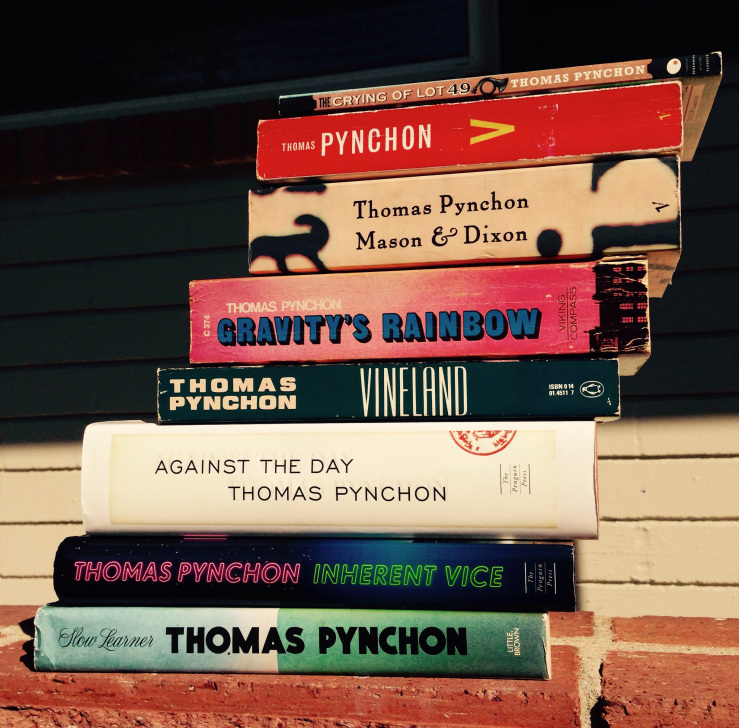
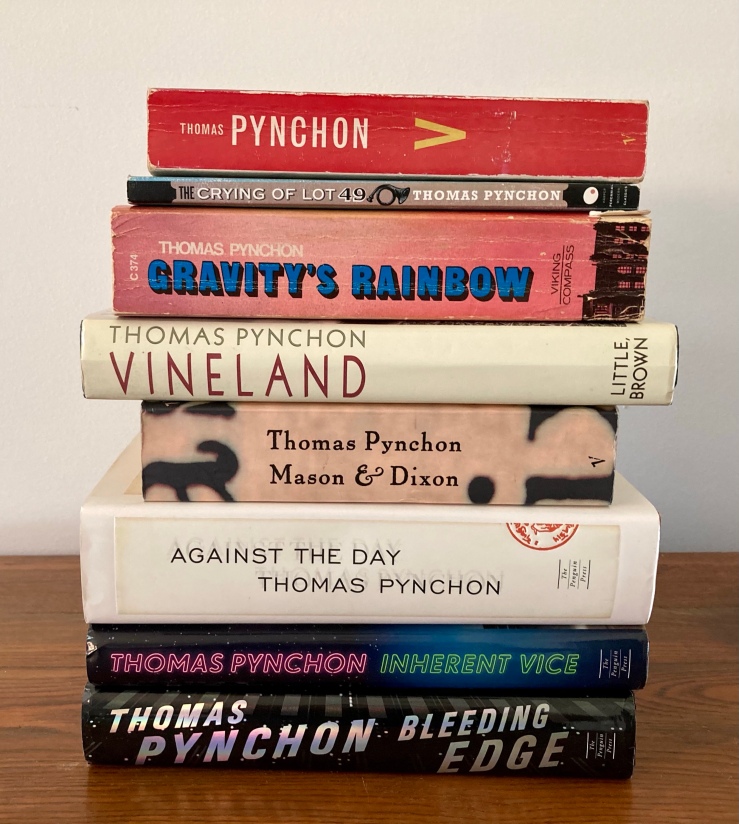
A few sentences on every Thomas Pynchon novel to date

Today, 8 May 2022, is Thomas Ruggles Pynchon’s 85th birthday. Some of us nerds celebrate the work of one of the world’s greatest living authors with something called Pynchon in Public Day. In the past I’ve rounded up links to Pynchon stuff on Biblioklept and elsewhere. To celebrate, here are short riffs on Pynchon’s eight novels:

V. (1963)

I reread Pynchon’s first novel for the first time last year and found it far more achieved than I had remembered. For years I’ve always recalled it as a dress rehearsal for the superior and more complex Gravity’s Rainbow. And while V. certainly points in GR’s direction, even sharing some characters, it’s nevertheless its own entity. I first read V. as a very young man, and as I recall, thought it scattershot, zany, often very funny, but also an assemblage of set pieces that fail to cohere. Rereading it two decades later I can see that there’s far more architecture to its plot, a twinned, yoyoing plot diagrammed in the novel’s title. The twin strands allow Pynchon to critique modernism on two fronts, split by the world wars that mark the first half of the twentieth century. It’s a perfect starting point for anyone new to Pynchon, and its midpoint chapter, “Mondaugen’s Story,” is as good as anything else he’s written.

The Crying of Lot 49 (1966)

Pynchon’s shortest novel is not necessarily his most accessible: Crying is a dense labyrinth to get lost in. At times Pynchon’s second novel feels like a parody of L.A. detective noir (a well he’d return to in Inherent Vice), but there’s plenty of pastiche going on here as well. For example, at one point we are treated to a Jacobean revenge play, The Courier’s Tragedy, which serves as a kind of metatextual comment on the novel’s plot about a secret war between secret armies of…letter carriers. The whole mailman thing might seem ridiculous, but Pynchon’s zaniness is always doubled in sinister paranoia: The Crying of Lot 49 is a story about how information is disseminated, controlled, and manipulated. Its end might frustrate many readers. We never get to hear the actual crying of lot 49 (just as we never discover the “true” identity of V in V.): fixing a stable, centered truth is an impossibility in the Pynchonverse.

Gravity’s Rainbow (1973)

Unbelievably rich, light, dark, cruel, loving, exasperating, challenging, and rewarding, Pynchon’s third novel is one of a handful of books that end up on “difficult novel” lists that is actually difficult. The difficulty though has everything to do with how we expect a novel to “happen” as we read—Gravity’s Rainbow is an entirely new thing, a literature that responds to the rise of mass media as modernist painters had to respond to the advent of photography and moving pictures. The key to appreciating and enjoying Gravity’s Rainbow, in my estimation, is to concede to the language, to the plasticity of it all, with an agreement with yourself to immediately reread it all.

Vineland (1990)

It took Pynchon a decade and a half to follow up Gravity’s Rainbow. I was a boy when Vineland came out—it was obviously nowhere on my radar (I think my favorite books around this time would probably have been The Once and Future King, The Lord of the Rings trilogy, and likely a ton of Dragonlance novels). I do know that Vineland was a disappointment to many fans and critics, and I can see why. At the time, novelist David Foster Wallace neatly summed it up in a letter to novelist Jonathan Franzen: “I get the strong sense he’s spent 20 years smoking pot and watching TV.” Vineland is angry about the Reagan years, but somehow not angry enough. The novel’s villain Brock Vond seems to prefigure the authoritarian police detective Bigfoot Bjornsen of Inherent Vice, but Pynchon’s condemnation of Vond never quite reconciles with his condemnation of the political failures of the 1960s.  Vineland is ultimately depressing and easily my least-favorite Pynchon novel, but it does have some exquisite prose moments.

Mason & Dixon (1997)

If Mason & Dixon isn’t Pynchon’s best book, it has to be 1A to Gravity’s Rainbow’s 1. The novel is another sprawling epic, a loose, baggy adventure story chronicling Charles Mason and Jeremiah Dixon’s Enlightenment effort to survey their bit of the Western World. Mason & Dixon presents an initial formal challenge to its reader: the story is told in a kind of (faux) 18th-century vernacular. Diction, syntax, and even punctuation jostle the contemporary ear. However, once you tune your ear to the (perhaps-not-quite-so-trustworthy) tone of Rev. Wicks Cherrycoke (who tells this tall tall tale), Mason & Dixon somehow becomes breezy, jaunty, even picaresque. It’s jammed with all sorts of adventures: the talking Learned English Dog, smoking weed with George Washington, Gnostic revelations, Asiatic Pygmies who colonize the missing eleven days lost when the British moved from the Julian to the Gregorian calendar…Wonderful stuff. But it’s really the evocation of a strange, hedged, incomplete but loving friendship that comes through in Mason & Dixon.

Against the Day (2006)

Oof. She’s a big boy. At over a thousand pages, Against the Day is Pynchon’s longest novel. Despite its size, I think Against the Day is the best starting point for Pynchon. It offers a surprisingly succinct and clear summation of his major themes, which might be condensed to something like: resist the military-industrial-entertainment-complex, while also showing off his rhetorical power. It’s late period Pynchon, but the prose is some of his strongest stuff. The songs are tight, the pastiche is tighter, and the novel’s epic sweep comes together in the end, resolving its parodic ironies with an earnest love that I believe is the core of Pynchon’s worldview. I forgot to say what it’s about: It’s about the end of the nineteenth century, or, more accurately, the beginning of the twentieth century.

Inherent Vice (2009)

Inherent Vice is a leaner work than its two predecessors, but could stand to be leaner still. The book pushes towards 400 pages but would probably be stronger at 200—or 800. I don’t know. In any case, Inherent Vice is a goofy but sinister stoner detective jaunt that frags out as much as its protagonist, PI Doc Sportello. Paul Thomas Anderson’s film adaptation finds its way through those fragments to an end a bit different from Pynchon’s original (which is closer to an echo of the end of The Crying of Lot 49)—PTA’s film finds its emotional resolution in the restoration of couple—not the main couple, but adjacent characters—an ending that Pynchon pulled in his first novel V.

Bleeding Edge (2013)

While Bleeding Edge was generally well received by critics, it’s not as esteemed as his major works. I think that the novel is much, much better than its reputation though (even its reputation among Pynchon fans). Pynchon retreads some familiar plot territory—this is another detective novel, like Crying and Inherent Vice—but in many ways he’s doing something wholly new here: Bleeding Edge is his Dot Com Novel, his 9/11 Novel, and his New York Novel. It’s also probably his domestic novel, and possibly (dare I?) his most autobiographical, or at least autobiographical in the sense of evoking life with teenagers in New York City, perhaps drawing on material from his own life with wife and son in the city. It’s good stuff, but I really hope we get one more.

[Ed. note–Biblioklept ran a version of this post on 8 May 2021.]

A gathering impossible/General merriment (From Pynchon’s Against the Day)

A DAY OR TWO LATER, Lew went up to Carefree Court. The hour was advanced, the light failing, the air heated by the Santa Ana wind. Palm trees rattled briskly, and the rats in their nests up there hung on for dear life. Lew approached through a twilit courtyard lined with tileroofed bungalows, stucco archways, and the green of shrubbery deepening as the light went. He could hear sounds of glassware and conversation.

From the swimming pool came sounds of liquid recreation—feminine squeals, deep singlereed utterances from high and low divingboards. The festivities here this evening were not limited to any one bungalow. Lew chose the nearest, went through the formality of ringing the doorbell, but after waiting a while just walked in, and nobody noticed.

It was a gathering impossible at first to read, even for an old L.A. hand like Lew—society ladies in flapper-rejected outfits from Hamburger’s basement, real flappers in extras’ costumes—Hebrew headdresses, belly-dancing outfits, bare feet and sandals—in from shooting some biblical extravaganza, sugar daddies tattered and unshaven as street beggars, freeloaders in bespoke suits and sunglasses though the sun had set, Negroes and Filipinos, Mexicans and hillbillies, faces Lew recognized from mug shots, faces that might also have recognized him from tickets long cold he didn’t want to be reminded of, and here they were eating enchiladas and hot dogs, drinking orange juice and tequila, smoking cork-tip cigarettes, screaming in each others’ faces, displaying scars and tattoos, recalling aloud felonies imagined or planned but seldom committed, cursing Republicans, cursing police federal state and local, cursing the larger corporate trusts, and Lew slowly began to get a handle, for weren’t these just the folks that once long ago he’d spent his life chasing, them and their cousins city and country? through brush and up creek-beds and down frozen slaughterhouse alleyways caked with the fat and blood of generations of cattle, worn out his shoes pair after pair until finally seeing the great point, and recognizing in the same instant the ongoing crime that had been his own life—and for achieving this self-clarity, at that time and place a mortal sin, got himself just as unambiguously dynamited.

He gradually understood that what everybody here had in common was having survived some cataclysm none of them spoke about directly—a bombing, a massacre perhaps at the behest of the U.S. government. . . .

“No it wasn’t Haymarket.”

“It wasn’t Ludlow. It wasn’t the Palmer raids.”

“It was and it wasn’t.” General merriment.

—Thomas Pynchon’s novel Against the Day.


A few sentences on every Thomas Pynchon novel to date

Today, 8 May 2021, is Thomas Ruggles Pynchon’s 84th birthday. Some of us nerds celebrate the work of one of the world’s greatest living authors with something called Pynchon in Public Day. In the past I’ve rounded up links to Pynchon stuff on Biblioklept and elsewhere. Last year, that weird pandemic year, I finally finished all of Pynchon’s novels. I’d been “saving” Bleeding Edge for a while, but broke down and read it that spring. Having read all eight Pynchon novels (a few more than once), I’ll offer some quick scattershot thoughts.

V. (1963)

I reread Pynchon’s first novel for the first time last month and found it far more achieved than I had remembered. For years I’ve always recalled it as a dress rehearsal for the superior and more complex Gravity’s Rainbow. And while V. certainly points in GR’s direction, even sharing some characters, it’s nevertheless its own entity. I first read V. as a very young man, and as I recall, thought it scattershot, zany, often very funny, but also an assemblage of set pieces that fail to cohere. Rereading it two decades later I can see that there’s far more architecture to its plot, a twinned, yoyoing plot diagrammed in the novel’s title. The twin strands allow Pynchon to critique modernism on two fronts, split by the world wars mark the first half of the twentieth century. It’s a perfect starting point for anyone new to Pynchon, and its midpoint chapter, “Mondaugen’s Story,” is as good as anything else he’s written.

The Crying of Lot 49 (1966)

Pynchon’s shortest novel is not necessarily his most accessible: Crying is a dense labyrinth to get lost in. At times Pynchon’s second novel feels like a parody of L.A. detective noir (a well he’d return to in Inherent Vice), but there’s plenty of pastiche going on here as well. For example, at one point we are treated to a Jacobean revenge play, The Courier’s Tragedy, which serves as a kind of metatextual comment on the novel’s plot about a secret war between secret armies of…letter carriers. The whole mailman thing might seem ridiculous, but Pynchon’s zaniness is always doubled in sinister paranoia: The Crying of Lot 49 is a story about how information is disseminated, controlled, and manipulated. Its end might frustrate many readers. We never get to hear the actual crying of lot 49 (just as we never discover the “true” identity of V in V.): fixing a stable, centered truth is an impossibility in the Pynchonverse.

Gravity’s Rainbow (1973)

Unbelievably rich, light, dark, cruel, loving, exasperating, challenging, and rewarding, Pynchon’s third novel is one of a handful of books that end up on “difficult novel” lists that is actually difficult. The difficulty though has everything to do with how we expect a novel to “happen” as we read—Gravity’s Rainbow is an entirely new thing, a literature that responds to the rise of mass media as modernist painters had to respond to the advent of photography and moving pictures. The key to appreciating and enjoying Gravity’s Rainbow, in my estimation, is to concede to the language, to the plasticity of it all, with an agreement with yourself to immediately reread it all.

Vineland (1990)

It took Pynchon a decade and a half to follow up Gravity’s Rainbow. I was a boy when Vineland came out—it was obviously nowhere on my radar (I think my favorite books around this time would probably have been The Once and Future King, The Lord of the Rings trilogy, and likely a ton of Dragonlance novels). I do know that Vineland was a disappointment to many fans and critics, and I can see why. At the time, novelist David Foster Wallace neatly summed it up in a letter to novelist Jonathan Franzen: “I get the strong sense he’s spent 20 years smoking pot and watching TV.” Vineland is angry about the Reagan years, but somehow not angry enough. The novel’s villain Brock Vond seems to prefigure the authoritarian police detective Bigfoot Bjornsen of Inherent Vice, but Pynchon’s condemnation of Vond never quite reconciles with his condemnation of the political failures of the 1960s.  Vineland is ultimately depressing and easily my least-favorite Pynchon novel, but it does have some exquisite prose moments.

Mason & Dixon (1997)

If Mason & Dixon isn’t Pynchon’s best book, it has to be 1A to Gravity’s Rainbow’s 1. The novel is another sprawling epic, a loose, baggy adventure story chronicling Charles Mason and Jeremiah Dixon’s Enlightenment effort to survey their bit of the Western World. Mason & Dixon presents an initial formal challenge to its reader: the story is told in a kind of (faux) 18th-century vernacular. Diction, syntax, and even punctuation jostle the contemporary ear. However, once you tune your ear to the (perhaps-not-quite-so-trustworthy) tone of Rev. Wicks Cherrycoke (who tells this tall tall tale), Mason & Dixon somehow becomes breezy, jaunty, even picaresque. It’s jammed with all sorts of adventures: the talking Learned English Dog, smoking weed with George Washington, Gnostic revelations, Asiatic Pygmies who colonize the missing eleven days lost when the British moved from the Julian to the Gregorian calendar…Wonderful stuff. But it’s really the evocation of a strange, hedged, incomplete but loving friendship that comes through in Mason & Dixon.

Against the Day (2006)

Oof. She’s a big boy. At over a thousand pages, Against the Day is Pynchon’s longest novel. Despite its size, I think Against the Day is the best starting point for Pynchon. It offers a surprisingly succinct and clear summation of his major themes, which might be condensed to something like: resist the military-industrial-entertainment-complex, while also showing off his rhetorical power. It’s late period Pynchon, but the prose is some of his strongest stuff. The songs are tight, the pastiche is tighter, and the novel’s epic sweep comes together in the end, resolving its parodic ironies with an earnest love that I believe is the core of Pynchon’s worldview. I forgot to say what it’s about: It’s about the end of the nineteenth century, or, more accurately, the beginning of the twentieth century.

Inherent Vice (2009)

Inherent Vice is a leaner work than its two predecessors, but could stand to be leaner still. The book pushes towards 400 pages but would probably be stronger at 200—or 800. I don’t know. In any case, Inherent Vice is a goofy but sinister stoner detective jaunt that frags out as much as its protagonist, PI Doc Sportello. Paul Thomas Anderson’s film adaptation finds its way through those fragments to an end a bit different from Pynchon’s original (which is closer to an echo of the end of The Crying of Lot 49)—PTA’s film finds its emotional resolution in the restoration of couple—not the main couple, but adjacent characters—an ending that Pynchon pulled in his first novel V.

Bleeding Edge (2013)

While Bleeding Edge was generally well received by critics, it’s not as esteemed as his major works. I think that the novel is much, much better than its reputation though (even its reputation among Pynchon fans. Pynchon retreads some familiar plot territory—this is another detective novel, like Crying and Inherent Vice—but in many ways he’s doing something wholly new here: Bleeding Edge is his Dot Com Novel, his 9/11 Novel, and his New York Novel. It’s also probably his domestic novel, and possibly (dare I?) his most autobiographical, or at least autobiographical in the sense of evoking life with teenagers in New York City, perhaps drawing on material from his own life with wife and son in the city. It’s good stuff, but I really hope we get one more.


Culte de la mayonnaise (Thomas Pynchon)

THE NEXT TIME he saw Pléiade Lafrisée was at a café-restaurant off the Place d’Armes. It would not occur to him until much later to wonder if she had arranged the encounter. She was in pale violet peau de soie, and a hat so beguiling that Kit was only momentarily surprised to find himself with an erection. It was still early in the study of these matters, only a few brave pioneers like the Baron von Krafft-Ebing had dared peep into the strange and weirdly twilit country of hat-fetishism—not that Kit noticed stuff like that ordinarily, but it happened actually to be a gray toque of draped velvet, trimmed with antique guipure, and a tall ostrich plume dyed the same shade of violet as her dress. . . .

“This? One finds them in every other midinette’s haunt, literally for sous.”

“Oh. I must’ve been staring. What happened to you the other night?”

“Come. You can buy me a Lambic.”

The place was like a museum of mayonnaise. This being just at the height of the culte de la mayonnaise then sweeping Belgium, oversize exhibits of the ovoöleaginous emulsion were to be encountered at every hand. Heaps of Mayonnaise Grenache, surrounded by plates of smoked turkey and tongue, glowed redly as if from within, while with less, if any, reference to actual food it might have been there to modify, mountains of Chantilly mayonnaise, swept upward in gravity-impervious peaks insubstantial as cloud, along with towering masses of green mayonnaise, basins of boiled mayonnaise, mayonnaise baked into soufflés, not to mention a number of not entirely successful mayonnaises, under some obscure attainder, or on occasion passing as something else, dominated every corner.

“How much do you know of La Mayonnaise?” she inquired.

He shrugged. “Maybe up to the part that goes ‘Aux armes, citoyens’—”

But she was frowning, earnest as he had seldom seen her. “La Mayonnaise,” Pléiade explained, “has its origins in the moral squalor of the court of Louis XV—here in Belgium the affinity should not be too surprising. The courts of Leopold and Louis are not that different except in time, and what is time? Both monumentally deluded men, maintaining their power through oppression of the innocent. One might usefully compare Cleo de Mérode and the marquise de Pompadour. Neuropathists would recognize in both kings a desire to construct a self-consistent world to live inside, which allows them to continue the great damage they are inflicting on the world the rest of us must live in.

“The sauce was invented as a new sensation for jaded palates at court by the duc de Richelieu, at first known as mahonnaise after Mahon, the chief port of Minorca, the scene of the due’s dubious ‘victory’ in 1756 over the illfated Admiral Byng. Basically Louis’s drug dealer and pimp, Richelieu, known for opium recipes to fit all occasions, is also credited with the introduction into France of the cantharides, or Spanish fly.” She gazed pointedly at Kit’s trousers. “What might this aphrodisiac have in common with the mayonnaise? That the beetles must be gathered and killed by exposing them to vinegar fumes suggests an emphasis on living or recently living creatures—the egg yolk perhaps regarded as a conscious entity—cooks will speak of whipping, beating, binding, penetration, submission, surrender. There is an undoubtedly Sadean aspect to the mayonnaise. No getting past that.”

Kit was a little confused by now. “It always struck me as kind of, I don’t know . . . bland?”

“Until you look within. Mustard, for example, mustard and cantharides, n’estce pas? Both arousing the blood. Blistering the skin. Mustard is the widelyknown key to resurrecting a failed mayonnaise, as is the cantharides to reviving broken desire.”

“You’ve been thinking about mayonnaise a lot, mademoiselle.”

“Meet me tonight,” a sudden fierce whisper, “out at the Mayonnaise Works, and you shall perhaps understand things it is given only to a few to know. There will be a carriage waiting.” She pressed his hand and was gone in a mist of vetiver, abruptly as the other evening.

A passage from Thomas Pynchon’s novel Against the Day; I don’t think you need any context to appreciate this passage.


Three potential starting points for reading Thomas Pynchon

image1

Today is Pynchon in Public Day, so here are three books that I think may make good entry points for those interested in, but perhaps unnecessarily daunted by, Thomas Pynchon. My intuition is that many readers’ first experiences reading Pynchon may have been like mine: I read The Crying of Lot 49 as a college assignment, found it bewildering and baffling, and despite understanding almost none of it, I then attempted Gravity’s Rainbow (the key word is attempted (failed will also do in a pinch)).

Many readers start with The Crying of Lot 49 because it’s short. While I like the novel (I wrote about it here), it’s also extraordinarily dense, a box so crammed with jokes and japes that some fail to spring out at full force. Lot 49 is a much better reading experience after you’ve read more of Pynchon.

Lots of readers new to Pynchon plunge into Gravity’s Rainbow, probably because it’s famous. I love love love Gravity’s Rainbow, but along with Mason & Dixon (which may be my favorite Pynchon novel), I do not think it is a good starting place for Pynchon. Gravity’s Rainbow is a rich, ringing vortex, a seven-hundred-and-something pager that almost necessitates that its reader immediately reread it. Gravity’s Rainbow is a very funny and very tragic book, and I think it is the work of genius that its reputation suggests—but it’s also one of the few books I can think of that get put on lists of Big Difficult Novels that is, actually, Difficult.

So here are my suggestions for starting places for Pynchon.

img_2195

Against the Day, 2006.

Okay. So maybe you’re saying, Waitisn’t that one, like, really long? Reader, you’re correct. At 1,085 pages Against the Day is Pynchon’s longest novel to date. But it’s also one of his most accessible, and, most importantly, it offers a condensation of Pynchon’s Big Ideas and Big Themes. (I wrote a list of 101 possible descriptors for Against the Day, if you’re interested in a short take; I also riffed on the book at some length in a series of posts).

img_2194

V., 1963.

V. is Thomas Pynchon’s first novel. It’s also the first Pynchon novel I read and loved and (possibly) understood. Like Against the DayV. lays out many of the themes and styles (and even a character or two) that appear elsewhere Pynchon’s oeuvre. In a loose sense, V. feels like a dress rehearsal for Gravity’s Rainbow. Oh, it’s also pretty discursive—in fact, you can read chunks of it almost as short stories. In fact, here’s a good way to break into Pynchon: Get V., and read Ch. 9–it stands on its own as a long short story, the tale of Kurt Mondaugen—and colonialism, siege paranoia, dark dread, etc.

img_2197

Inherent Vice, 2009.

I’ve heard Inherent Vice dismissed as “Pynchon lite,” which may be true—I’ve read the book twice now and if its shaggy threads connect, I can’t see it (unlike, say, Gravity’s Rainbow, which resolves like a complicated math problem). Still, Inherent Vice makes a nice gateway drug to Pynchon—it’s funny and loose, and even though it rambles through an enormous cast of characters and settings, it’s ultimately far, far more contained than sprawling novels like Mason & Dixon and Gravity’s Rainbow. Paul Thomas Anderson’s film adaptation also makes an interesting visual counterpart to the novel—which it somehow simultaneously condenses and expands. Inherent Vice—the novel—also seems to me a kind of bookend or sequel to The Crying of Lot 49. (I wrote a bit about that here).

Last thought: Ignore my suggestions. Pick any novel that interests you by Pynchon and dive in. Don’t get too frustrated if you’re not sure what’s going on. A lot of the time, that’s the point of it all. Enjoy it.

[Ed. note–Biblioklept ran a version of this post on 8 May 2016].

A gathering impossible / General merriment (From Pynchon’s Against the Day)

A DAY OR TWO LATER, Lew went up to Carefree Court. The hour was advanced, the light failing, the air heated by the Santa Ana wind. Palm trees rattled briskly, and the rats in their nests up there hung on for dear life. Lew approached through a twilit courtyard lined with tileroofed bungalows, stucco archways, and the green of shrubbery deepening as the light went. He could hear sounds of glassware and conversation.

From the swimming pool came sounds of liquid recreation—feminine squeals, deep singlereed utterances from high and low divingboards. The festivities here this evening were not limited to any one bungalow. Lew chose the nearest, went through the formality of ringing the doorbell, but after waiting a while just walked in, and nobody noticed.

It was a gathering impossible at first to read, even for an old L.A. hand like Lew—society ladies in flapper-rejected outfits from Hamburger’s basement, real flappers in extras’ costumes—Hebrew headdresses, belly-dancing outfits, bare feet and sandals—in from shooting some biblical extravaganza, sugar daddies tattered and unshaven as street beggars, freeloaders in bespoke suits and sunglasses though the sun had set, Negroes and Filipinos, Mexicans and hillbillies, faces Lew recognized from mug shots, faces that might also have recognized him from tickets long cold he didn’t want to be reminded of, and here they were eating enchiladas and hot dogs, drinking orange juice and tequila, smoking cork-tip cigarettes, screaming in each others’ faces, displaying scars and tattoos, recalling aloud felonies imagined or planned but seldom committed, cursing Republicans, cursing police federal state and local, cursing the larger corporate trusts, and Lew slowly began to get a handle, for weren’t these just the folks that once long ago he’d spent his life chasing, them and their cousins city and country? through brush and up creek-beds and down frozen slaughterhouse alleyways caked with the fat and blood of generations of cattle, worn out his shoes pair after pair until finally seeing the great point, and recognizing in the same instant the ongoing crime that had been his own life—and for achieving this self-clarity, at that time and place a mortal sin, got himself just as unambiguously dynamited.

He gradually understood that what everybody here had in common was having survived some cataclysm none of them spoke about directly—a bombing, a massacre perhaps at the behest of the U.S. government. . . .

“No it wasn’t Haymarket.”

“It wasn’t Ludlow. It wasn’t the Palmer raids.”

“It was and it wasn’t.” General merriment.

—Thomas Pynchon’s novel Against the Day. Happy Labor Day.


“…the amazing, world-reversing night of Fourth of July Eve 1899″ (Pynchon’s Against the Day)

For years after, there were tales told in Colorado of the amazing, world-reversing night of Fourth of July Eve 1899. Next day’d be full of rodeos, marching bands, and dynamite explosions—but that night there was man-made lightning, horses gone crazy for miles out into the prairie, electricity flooding up through the iron of their shoes, shoes that when they finally came off and got saved to use for cowboy quoits, including important picnic tourneys from Fruita to Cheyenne Wells, why they would fly directly and stick on to the spike in the ground, or to anything else nearby made of iron or steel, that’s when they weren’t collecting souvenirs on their way through the air—gunmen’s guns came right up out of their holsters and buck knives out from under pants legs, keys to traveling ladies’ hotel rooms and office safes, miners’ tags, fencenails, hairpins, all seeking the magnetic memory of that long-ago visit. Veterans of the Rebellion fixing to march in parades were unable to get to sleep, metallic elements had so got to humming through their bloodmaps. Children who drank the milk from the dairy cows who grazed nearby were found leaning against telegraph poles listening to the traffic speeding by through the wires above their heads, or going off to work in stockbrokers’ offices where, unsymmetrically intimate with the daily flow of prices, they were able to amass fortunes before anyone noticed. .

A passage from Thomas Pynchon’s novel Against the Day.

Three potential starting points for reading Thomas Pynchon

image1

Today is Pynchon in Public Day, so here are three books that I think may make good entry points for those interested in, but perhaps unnecessarily daunted by, Thomas Pynchon. My intuition is that many readers’ first experiences reading Pynchon may have been like mine: I read The Crying of Lot 49 as a college assignment, found it bewildering and baffling, and despite understanding almost none of it, I then attempted Gravity’s Rainbow (the key word is attempted (failed will also do in a pinch)).

Many readers start with The Crying of Lot 49 because it’s short. While I like the novel (I wrote about it here), it’s also extraordinarily dense, a box so crammed with jokes and japes that some fail to spring out at full force. Lot 49 is a much better reading experience after you’ve read more of Pynchon.

Lots of readers new to Pynchon plunge into Gravity’s Rainbow, probably because it’s famous. I love love love Gravity’s Rainbow, but along with Mason & Dixon (which may be my favorite Pynchon novel), I do not think it is a good starting place for Pynchon. Gravity’s Rainbow is a rich, ringing vortex, a seven-hundred-and-something pager that almost necessitates that its reader immediately reread it. Gravity’s Rainbow is a very funny and very tragic book, and I think it is the work of genius that its reputation suggests—but it’s also one of the few books I can think of that get put on lists of Big Difficult Novels that is, actually, Difficult.

So here are my suggestions for starting places for Pynchon.

img_2195

Against the Day, 2006.

Okay. So maybe you’re saying, Waitisn’t that one, like, really long? Reader, you’re correct. At 1,085 pages Against the Day is Pynchon’s longest novel to date. But it’s also one of his most accessible, and, most importantly, it offers a condensation of Pynchon’s Big Ideas and Big Themes. (I wrote a list of 101 possible descriptors for Against the Day, if you’re interested in a short take; I also riffed on the book at some length in a series of posts).

img_2194

V., 1963.

V. is Thomas Pynchon’s first novel. It’s also the first Pynchon novel I read and loved and (possibly) understood. Like Against the DayV. lays out many of the themes and styles (and even a character or two) that appear elsewhere Pynchon’s oeuvre. In a loose sense, V. feels like a dress rehearsal for Gravity’s Rainbow. Oh, it’s also pretty discursive—in fact, you can read chunks of it almost as short stories. In fact, here’s a good way to break into Pynchon: Get V., and read Ch. 9–it stands on its own as a long short story, the tale of Kurt Mondaugen—and colonialism, siege paranoia, dark dread, etc.

img_2197

Inherent Vice, 2009.

I’ve heard Inherent Vice dismissed as “Pynchon lite,” which may be true—I’ve read the book twice now and if its shaggy threads connect, I can’t see it (unlike, say, Gravity’s Rainbow, which resolves like a complicated math problem). Still, Inherent Vice makes a nice gateway drug to Pynchon—it’s funny and loose, and even though it rambles through an enormous cast of characters and settings, it’s ultimately far, far more contained than sprawling novels like Mason & Dixon and Gravity’s Rainbow. Paul Thomas Anderson’s film adaptation also makes an interesting visual counterpart to the novel—which it somehow simultaneously condenses and expands. Inherent Vice—the novel—also seems to me a kind of bookend or sequel to The Crying of Lot 49. (I wrote a bit about that here).

Last thought: Ignore my suggestions. Pick any novel that interests you by Pynchon and dive in. Don’t get too frustrated if you’re not sure what’s going on. A lot of the time, that’s the point of it all. Enjoy it.

[Ed. note–Biblioklept ran a version of this post on 8 May 2016].

Three Books (that are good starting points for reading Thomas Pynchon)

Today is Pynchon in Public Day, so today’s Three Books blog offers three books that I think may make good entry points for those interested in, but perhaps unnecessarily daunted by, Thomas Pynchon. My intuition is that many readers’ first experiences reading Pynchon may have been like mine: I read The Crying of Lot 49 as a college assignment, found it bewildering and baffling, and despite understanding almost none of it, I then attempted Gravity’s Rainbow (the key word is attempted (failed will also do in a pinch)).

Many readers start with The Crying of Lot 49 because it’s short. While I like the novel (I wrote about it here), it’s also extraordinarily dense, a box so crammed with jokes and japes that some fail to spring out at full force. Lot 49 is a much better reading experience after you’ve read more of Pynchon.

Lots of readers new to Pynchon plunge into Gravity’s Rainbow, probably because it’s famous. I love love love Gravity’s Rainbow, but along with Mason & Dixon (which may be my favorite Pynchon novel), I do not think it is a good starting place for Pynchon. Gravity’s Rainbow is a rich, ringing vortex, a seven-hundred-and-something pager that almost necessitates that its reader immediately reread it. Gravity’s Rainbow is a very funny and very tragic book, and I think it is the work of genius that its reputation suggests—but it’s also one of the few books I can think of that get put on lists of Big Difficult Novels that is, actually, Difficult.

So here are my suggestions for starting places for Pynchon.

img_2195

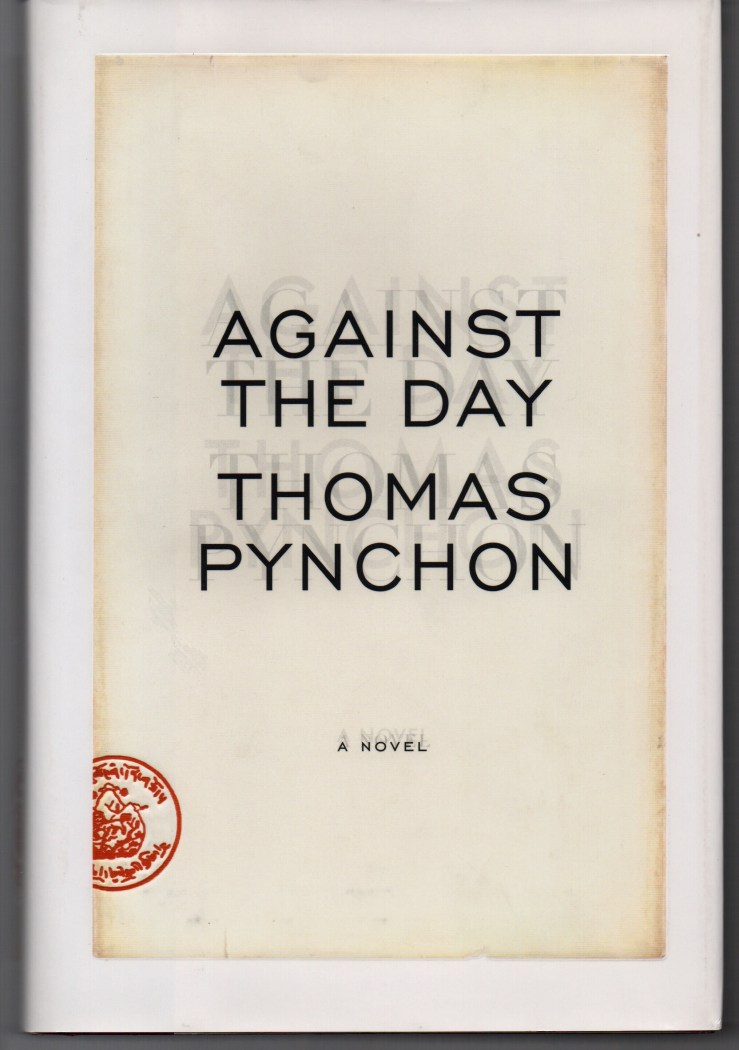
Against the Day by Thomas Pynchon. First edition Penguin hardback, 2006. Jacket design my Michael Ian Kaye.

Okay. So maybe you’re saying, Waitisn’t that one, like, really long? Reader, you’re correct. At 1,085 pages Against the Day is Pynchon’s longest novel to date. But it’s also one of his most accessible, and, most importantly, it offers a condensation of Pynchon’s Big Ideas and Big Themes. (I wrote a list of 101 possible descriptors for Against the Day, if you’re interested in a short take; I also riffed on the book at some length in a series of posts).

img_2194

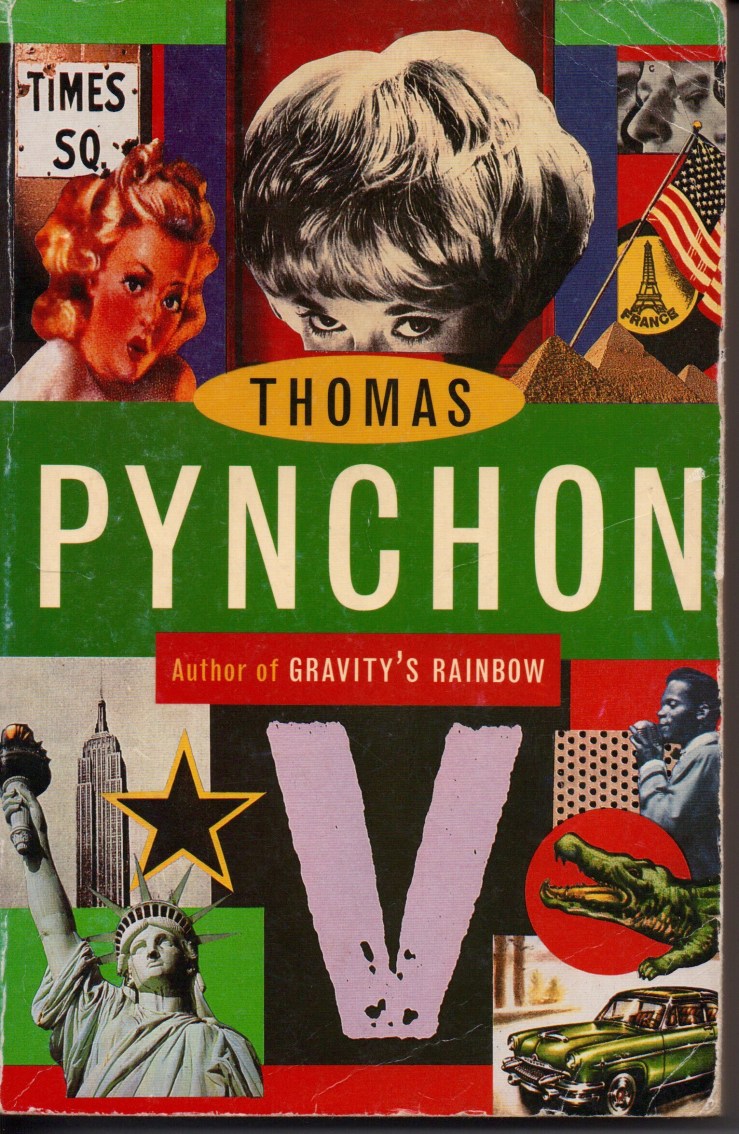
V. by Thomas Pynchon. Vintage UK trade paperback edition (1995). Cover by Paul Burgess.

V. is Thomas Pynchon’s first novel. It’s also the first Pynchon novel I read and loved and (possibly) understood. Like Against the DayV. lays out many of the themes and styles (and even a character or two) that appear elsewhere Pynchon’s oeuvre. In a loose sense, V. feels like a dress rehearsal for Gravity’s Rainbow. Oh, it’s also pretty discursive—in fact, you can read chunks of it almost as short stories. In fact, here’s a good way to break into Pynchon: Get V., and read Ch. 9–it stands on its own as a long short story, the tale of Kurt Mondaugen—and colonialism, siege paranoia, dark dread, etc.

img_2197

Inherent Vice by Thomas Pynchon. First edition hardback, Penguin, 2009. Jacket design by Tal Goretsky and Darren Haggar; image credited to Darshan Zenith and Cruiser Art.

I’ve heard Inherent Vice dismissed as “Pynchon lite,” which may be true—I’ve read the book twice now and if its shaggy threads connect, I can’t see it (unlike, say, Gravity’s Rainbow, which resolves like a complicated math problem). Still, Inherent Vice makes a nice gateway drug to Pynchon—it’s funny and loose, and even though it rambles through an enormous cast of characters and settings, it’s ultimately far, far more contained than sprawling novels like Mason & Dixon and Gravity’s Rainbow. Paul Thomas Anderson’s film adaptation also makes an interesting visual counterpart to the novel—which it somehow simultaneously condenses and expands. Inherent Vice—the novel—also seems to me a kind of bookend or sequel to The Crying of Lot 49. (I wrote a bit about that here).

Last thought: Ignore my suggestions. Pick any novel that interests you by Pynchon and dive in. Don’t get too frustrated if you’re not sure what’s going on. A lot of the time, that’s the point of it all. Enjoy it.

“…the amazing, world-reversing night of Fourth of July Eve 1899″ (Pynchon’s Against the Day)

For years after, there were tales told in Colorado of the amazing, world-reversing night of Fourth of July Eve 1899. Next day’d be full of rodeos, marching bands, and dynamite explosions—but that night there was man-made lightning, horses gone crazy for miles out into the prairie, electricity flooding up through the iron of their shoes, shoes that when they finally came off and got saved to use for cowboy quoits, including important picnic tourneys from Fruita to Cheyenne Wells, why they would fly directly and stick on to the spike in the ground, or to anything else nearby made of iron or steel, that’s when they weren’t collecting souvenirs on their way through the air—gunmen’s guns came right up out of their holsters and buck knives out from under pants legs, keys to traveling ladies’ hotel rooms and office safes, miners’ tags, fencenails, hairpins, all seeking the magnetic memory of that long-ago visit. Veterans of the Rebellion fixing to march in parades were unable to get to sleep, metallic elements had so got to humming through their bloodmaps. Children who drank the milk from the dairy cows who grazed nearby were found leaning against telegraph poles listening to the traffic speeding by through the wires above their heads, or going off to work in stockbrokers’ offices where, unsymmetrically intimate with the daily flow of prices, they were able to amass fortunes before anyone noticed. .

A passage from Thomas Pynchon’s novel Against the Day.

List of Possible Descriptors for Thomas Pynchon’s Novel Against the Day

  1. Study of light and non-light
  2. Byzantine mosaic
  3. Codex of visible and invisible
  4. Musical comedy
  5. Daffy
  6. Anarchist golf
  7. Photograph—the posing of, the taking of, the development of, the product of, the negative of, the future of, the past of, the continuous present of, the potential of…
  8. Revenge story
  9. Spy game
  10. Study of physical and metaphysical
  11. Likely too long for most readers
  12. Advent of modernity
  13. Kaleidoscopic
  14. Alternate history of labor unions
  15. Math discussion
  16. Alternate reality exercises
  17. Invisible portraits, invisible landscapes
  18. Epic romance
  19. Flight log
  20. Hat fetishes
  21. Overstuffed
  22. Hallucinogenic
  23. Endless digression
  24. Maps and legends
  25. Underappreciated
  26. Flaneur’s game
  27. International intrigue
  28. Love story
  29. Lust story
  30. Series of ever-changing vectors
  31. Polyglossic carnival
  32. Sprawling
  33. Doppelgangers and the women who love them
  34. Vaudeville routine
  35. Infinite jest
  36. Over the sky, under the desert, into the center of the earth
  37. Boys’ adventure story
  38. Girls’ adventure story
  39. Post-Victorian sci-fi
  40. Acronyms!
  41. Zingers
  42. Mayonnaise history
  43. Magic trick
  44. Exiles
  45. Time travel calisthenics
  46. Art history
  47. Stamp collection
  48. Lumpy
  49. Like a surreal version of the game of Risk
  50. Genre mash-up
  51. Dream factory
  52. Gilded Age fallout
  53. Unwieldy
  54. Sentimental
  55. Ironic
  56. Holy Grail quest
  57. Whatever word is the most intense and accurate opposite of sparse
  58. Robber barons and the men who hate them
  59. Ever bilocating plot lines unfolding and retangling in the direction of increasing entropy
  60. Pulp fiction
  61. Invisible ink
  62. Flip side of a tapestry, its ragged threads exposed
  63. Salad of utopian visions
  64. Confusing
  65. Vision through Iceland spar
  66. Critique of capitalism
  67. Disappearing act
  68. Polyphonic spree
  69. Moving pictures
  70. Deconstruction of family values
  71. Drunken cavalcade of dick jokes
  72. Rage against the machine
  73. Time travelogue
  74. All-you-can-think
  75. Anti-war tract
  76. Explosions!
  77. Seance
  78. Shaggy ______________
  79. Critique of oligarchy
  80. Jazz improvisation
  81. Polyamory-positive
  82. Coffee-positive
  83. Meta-something-or-other
  84. Cricket with no scorekeeper
  85. 1,085 pages in hardback
  86. Often fuzzy, bilocated, discursive—full of flashforwards and flashbacks and side flashes
  87. Sexy sex sex
  88. Funhouse maze with smoke and mirrors
  89. High adventure
  90. Dictionary of mysticism
  91. Scathing analysis of Manifest Destiny
  92. Simultaneously heavy and light, profound and sophomoric
  93. “What It Means to Be an American”
  94. Goofy
  95. Drug manual
  96. Positive visions of the possibilities for human coexistence
  97. Index of wonderfully bad puns
  98. Perpetual motion machine
  99. Spiralling and unspiralling riffage
  100. A zillion dime novels turned on their ears and spines and just spinning
  101. Flight toward grace

A gathering impossible/General merriment (From Pynchon’s Against the Day)

A DAY OR TWO LATER, Lew went up to Carefree Court. The hour was advanced, the light failing, the air heated by the Santa Ana wind. Palm trees rattled briskly, and the rats in their nests up there hung on for dear life. Lew approached through a twilit courtyard lined with tileroofed bungalows, stucco archways, and the green of shrubbery deepening as the light went. He could hear sounds of glassware and conversation.

From the swimming pool came sounds of liquid recreation—feminine squeals, deep singlereed utterances from high and low divingboards. The festivities here this evening were not limited to any one bungalow. Lew chose the nearest, went through the formality of ringing the doorbell, but after waiting a while just walked in, and nobody noticed.

It was a gathering impossible at first to read, even for an old L.A. hand like Lew—society ladies in flapper-rejected outfits from Hamburger’s basement, real flappers in extras’ costumes—Hebrew headdresses, belly-dancing outfits, bare feet and sandals—in from shooting some biblical extravaganza, sugar daddies tattered and unshaven as street beggars, freeloaders in bespoke suits and sunglasses though the sun had set, Negroes and Filipinos, Mexicans and hillbillies, faces Lew recognized from mug shots, faces that might also have recognized him from tickets long cold he didn’t want to be reminded of, and here they were eating enchiladas and hot dogs, drinking orange juice and tequila, smoking cork-tip cigarettes, screaming in each others’ faces, displaying scars and tattoos, recalling aloud felonies imagined or planned but seldom committed, cursing Republicans, cursing police federal state and local, cursing the larger corporate trusts, and Lew slowly began to get a handle, for weren’t these just the folks that once long ago he’d spent his life chasing, them and their cousins city and country? through brush and up creek-beds and down frozen slaughterhouse alleyways caked with the fat and blood of generations of cattle, worn out his shoes pair after pair until finally seeing the great point, and recognizing in the same instant the ongoing crime that had been his own life—and for achieving this self-clarity, at that time and place a mortal sin, got himself just as unambiguously dynamited.

He gradually understood that what everybody here had in common was having survived some cataclysm none of them spoke about directly—a bombing, a massacre perhaps at the behest of the U.S. government. . . .

“No it wasn’t Haymarket.”

“It wasn’t Ludlow. It wasn’t the Palmer raids.”

“It was and it wasn’t.” General merriment.

—Thomas Pynchon’s novel Against the Day.