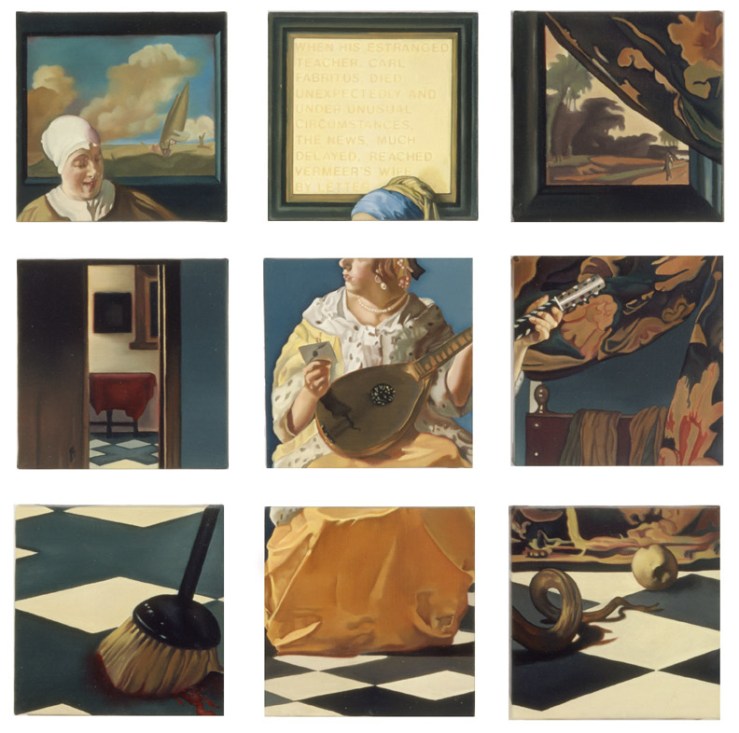
Vermeer’s Wife — Dotty Attie

368-991

Sunday Comics 

“Duchamp Is Our Misfortune,” a comic strip by Art Spiegelman. From MetaMaus (Pantheon, 2011), and originally published in the New Yorker in 2002.

Allegory of Desire from the Fourth Freedom — Marc Dennis

marc-dennis-allegory-of-desire-from-the-fourth-freedom_2014_oil-on-linen_44x52inches

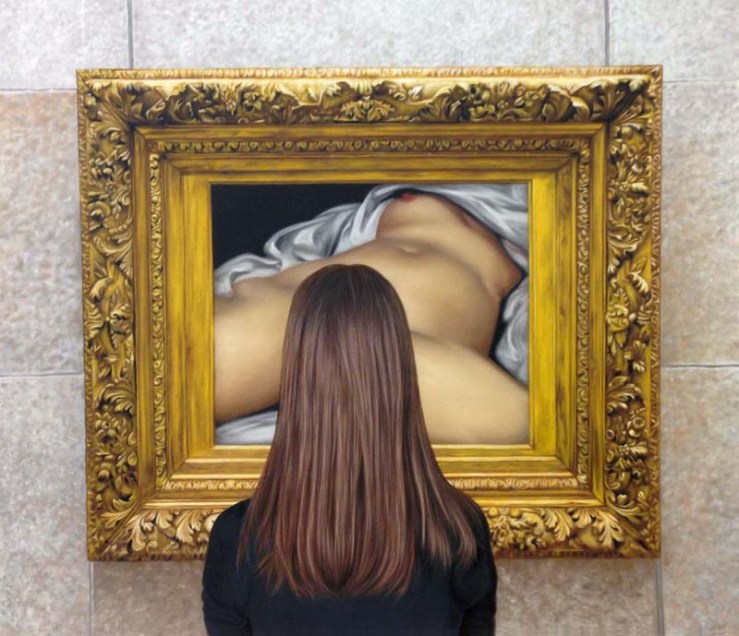
The End of the World — Marc Dennis

marc-dennis__-1-for-website

Still Life — Gregorio Sciltian

gregoriosciltian28129

Nastagio’s Breakfast — F. Scott Hess

1-2-hess_22nastagios_breakfast22

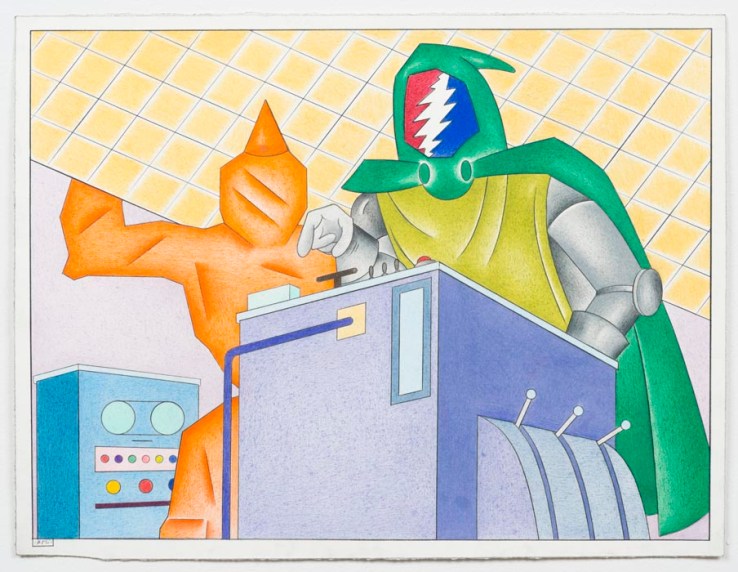
Steal Your Logo — Ryan Travis Christian

rtc14_stealyrlogo

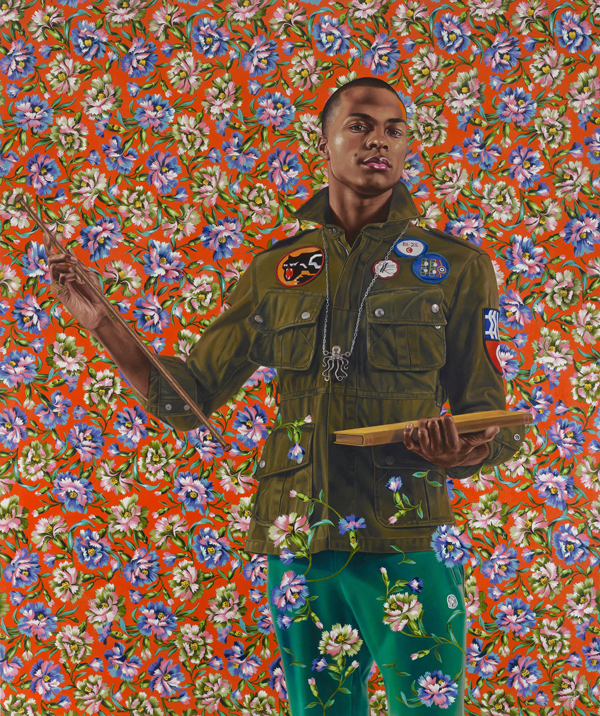
Anthony of Padua — Kehinde Wiley

el137-43-web

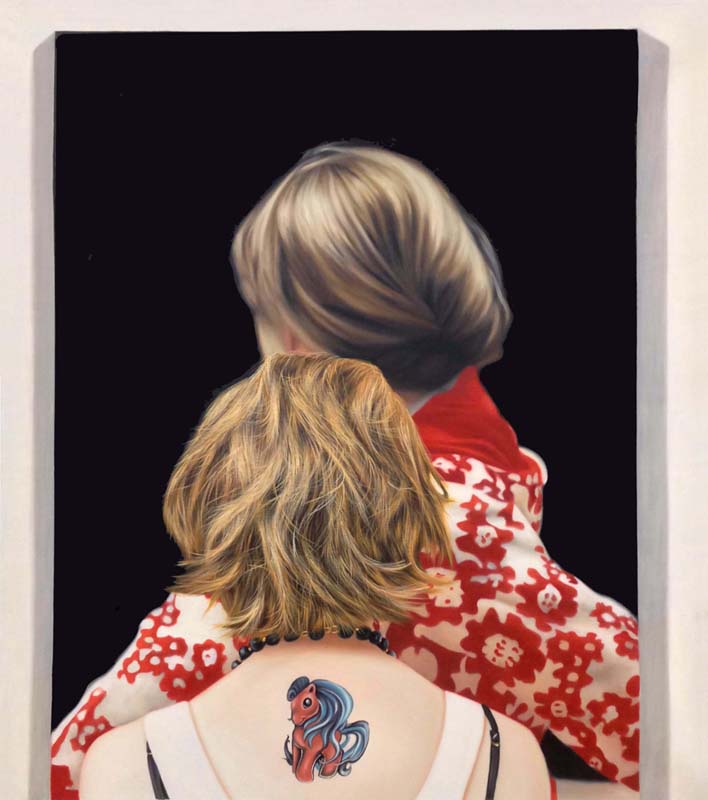
Betty, Lawyer, Pony — Marc Dennis

marc-dennis__-4-for-website

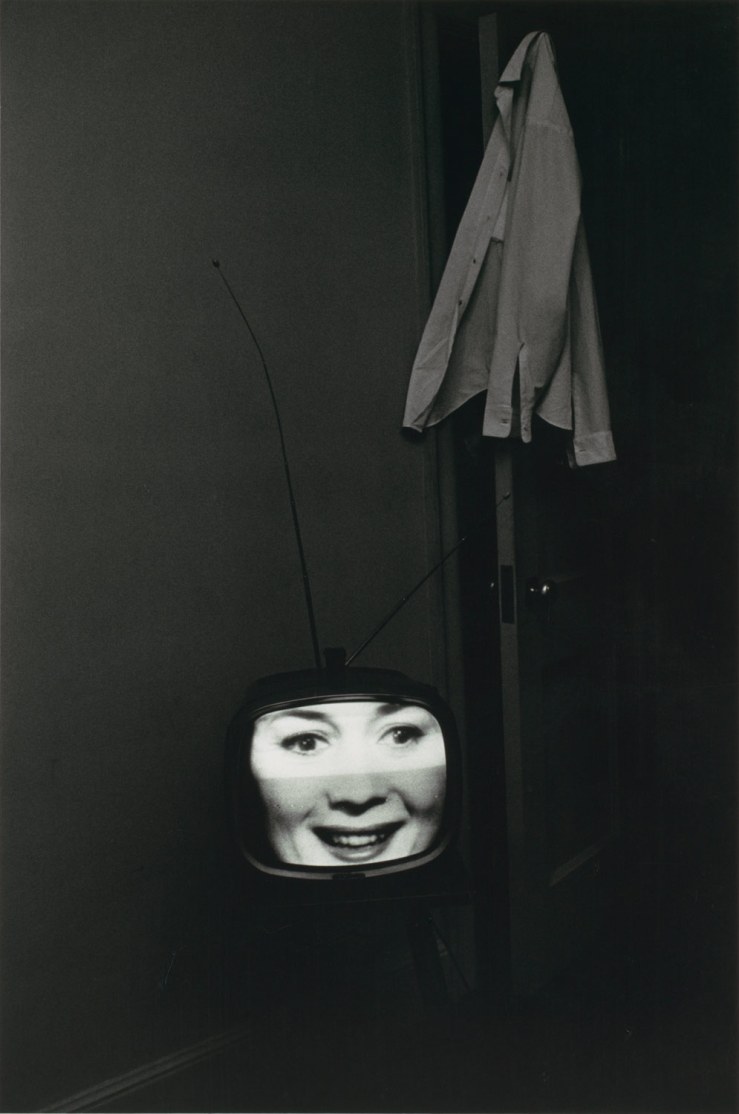
Nashville — Lee Friedlander

1995.168.2

Self Portrait with Nude — Laura Knight

self-portrait_with_a_nude_by_dame_laura_knight

The Necessity of Judgment — Marc Dennis

marc-dennis-the-necessity-of-judgment_2013_oil-on-linen_44x46-inches

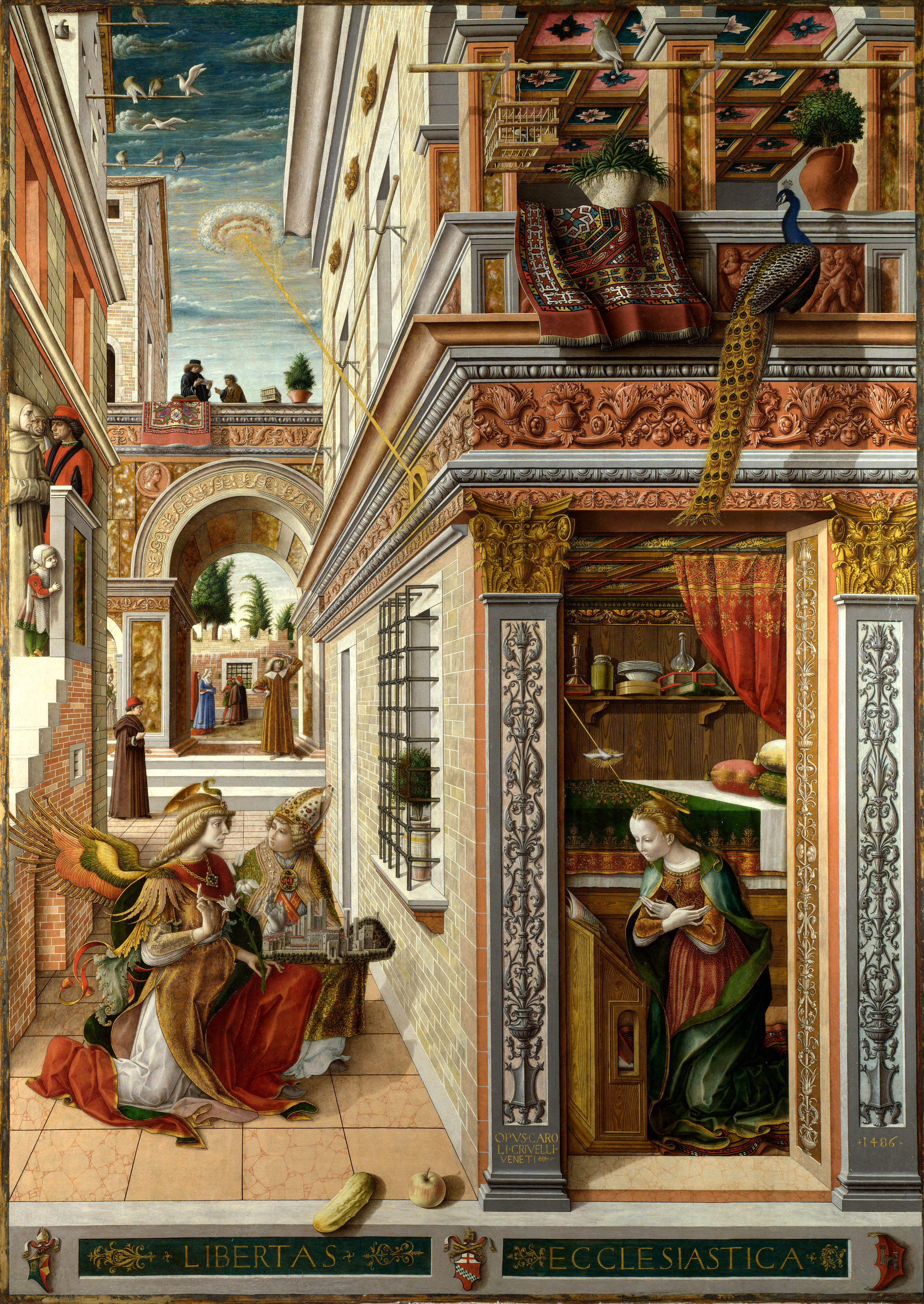
Crivelli’s Annunciation | J.G. Ballard

I am sure that a large part of the enduring mystery of the Renaissance masterpieces in the National Gallery was due to the absence of the explanatory matter that now drains away much of the strangeness and poetry of the Old Masters. I would stare at Crivelli’s Annunciation, charmed by the peacocks, loaves of bread and other incongruous items, the passer-by reading a book on the bridge and the Virgin in her jewel box of a house. I was forced to use my own imagination to stitch these elements into a master narrative that made some kind of sense, rather than read an extended wall caption and be solemnly told that the peacock was a symbol of eternal life. Perish the thought, and let the exquisite bird be itself, and nothing more or less than itself. What could be more natural, and more mysterious, than a peacock and a loaf of bread appearing on the scene to celebrate the forthcoming birth of the Saviour?

From J.G. Ballard’s autobiography Miracles of Life.

“A sublime murkiness and original pent fury” | Walt Whitman on Millet’s Paintings

The Diggers, Jean-Francois Millet

April 18.—Went out three or four miles to the house of Quincy Shaw, to see a collection of J. F. Millet’s pictures. Two rapt hours. Never before have I been so penetrated by this kind of expression. I stood long and long before “the Sower.” I believe what the picture-men designate “the first Sower,” as the artist executed a second copy, and a third, and, some think, improved in each. But I doubt it. There is something in this that could hardly be caught again—a sublime murkiness and original pent fury. Besides this masterpiece, there were many others, (I shall never forget the simple evening scene, “Watering the Cow,”) all inimitable, all perfect as pictures, works of mere art; and then it seem’d to me, with that last impalpable ethic purpose from the artist (most likely unconscious to himself) which I am always looking for. To me all of them told the full story of what went before and necessitated the great French revolution—the long precedent crushing of the masses of a heroic people into the earth, in abject poverty, hunger—every right denied, humanity attempted to be put back for generations—yet Nature’s force, titanic here, the stronger and hardier for that repression—waiting terribly to break forth, revengeful—the pressure on the dykes, and the bursting at last—the storming of the Bastile—the execution of the king and queen—the tempest of massacres and blood. Yet who can wonder?

Could we wish humanity different? Could we wish the people made of wood or stone? Or that there be no justice in destiny or time?

The true France, base of all the rest, is certainly in these pictures. I comprehend “Field-People Reposing,” “the Diggers,” and “the Angelus” in this opinion. Some folks always think of the French as a small race, five or five and a half feet high, and ever frivolous and smirking. Nothing of the sort. The bulk of the personnel of France, before the revolution, was large-sized, serious, industrious as now, and simple. The revolution and Napoleon’s wars dwarf’d the standard of human size, but it will come up again. If for nothing else, I should dwell on my brief Boston visit for opening to me the new world of Millet’s pictures. Will America ever have such an artist out of her own gestation, body, soul?
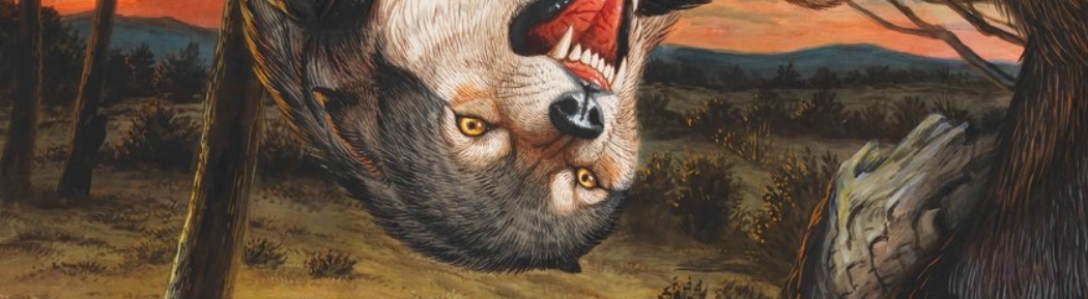
—From Walt Whitman’s journal of 1881


“A picture has no meaning but its beauty, no message but its joy” (Oscar Wilde)

We never know what an artist is going to do.  Of course not.  The artist is not a specialist.  All such divisions as animal painters, landscape painters, painters of Scotch cattle in an English mist, painters of English cattle in a Scotch mist, racehorse painters, bull-terrier painters, all are shallow.  If a man is an artist he can paint everything.

The object of art is to stir the most divine and remote of the chords which make music in our soul; and colour is indeed, of itself a mystical presence on things, and tone a kind of sentinel.

Am I pleading, then, for mere technique?  No.  As long as there are any signs of technique at all, the picture is unfinished.  What is finish?  A picture is finished when all traces of work, and of the means employed to bring about the result, have disappeared.

In the case of handicraftsmen—the weaver, the potter, the smith—on their work are the traces of their hand.  But it is not so with the painter; it is not so with the artist.

Art should have no sentiment about it but its beauty, no technique except what you cannot observe.  One should be able to say of a picture not that it is ‘well painted,’ but that it is ‘not painted.’

What is the difference between absolutely decorative art and a painting?  Decorative art emphasises its material: imaginative art annihilates it.  Tapestry shows its threads as part of its beauty: a picture annihilates its canvas: it shows nothing of it.  Porcelain emphasises its glaze: water-colours reject the paper.

A picture has no meaning but its beauty, no message but its joy.  That is the first truth about art that you must never lose sight of.  A picture is a purely decorative thing.

From Oscar Wilde’s “Lecture to Art Students,” 1883.

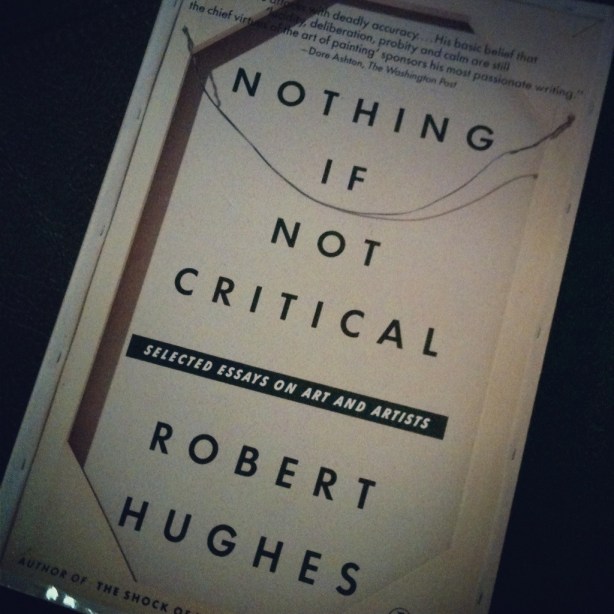
Robert Hughes’s Nothing If Not Critical (Book Acquired, 10.1.2012)

20121001-200452.jpg

Collection of Robert Hughes essays, Nothing If Not Critical.

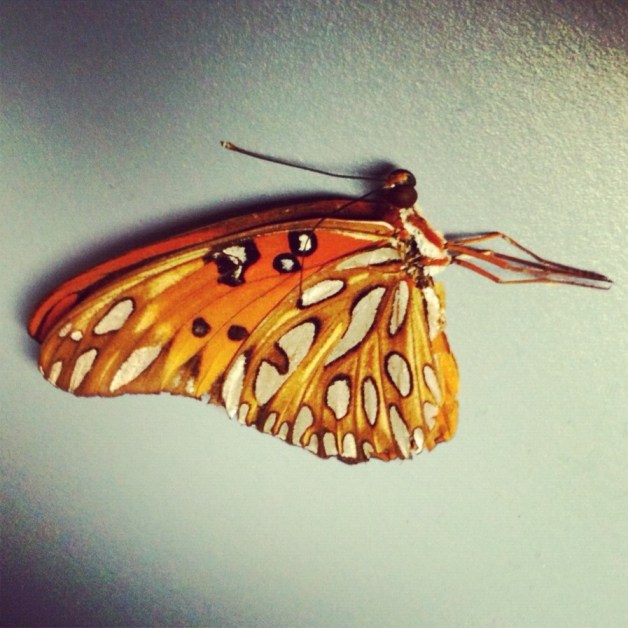
I also found this butterfly on the ground an hour before finding the book:

20121001-200501.jpg