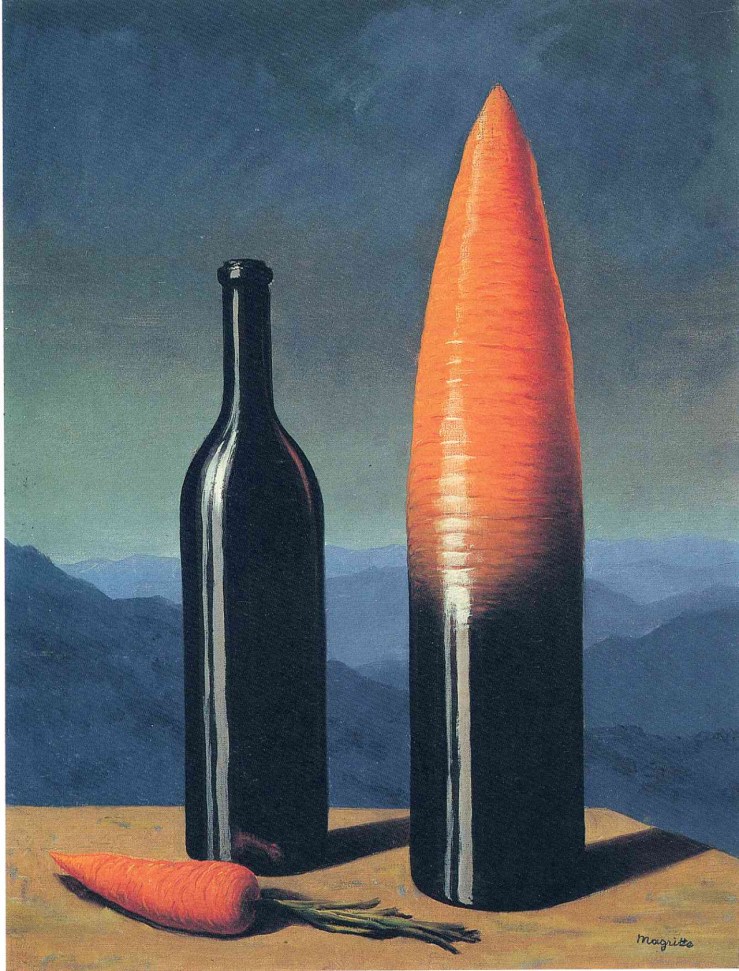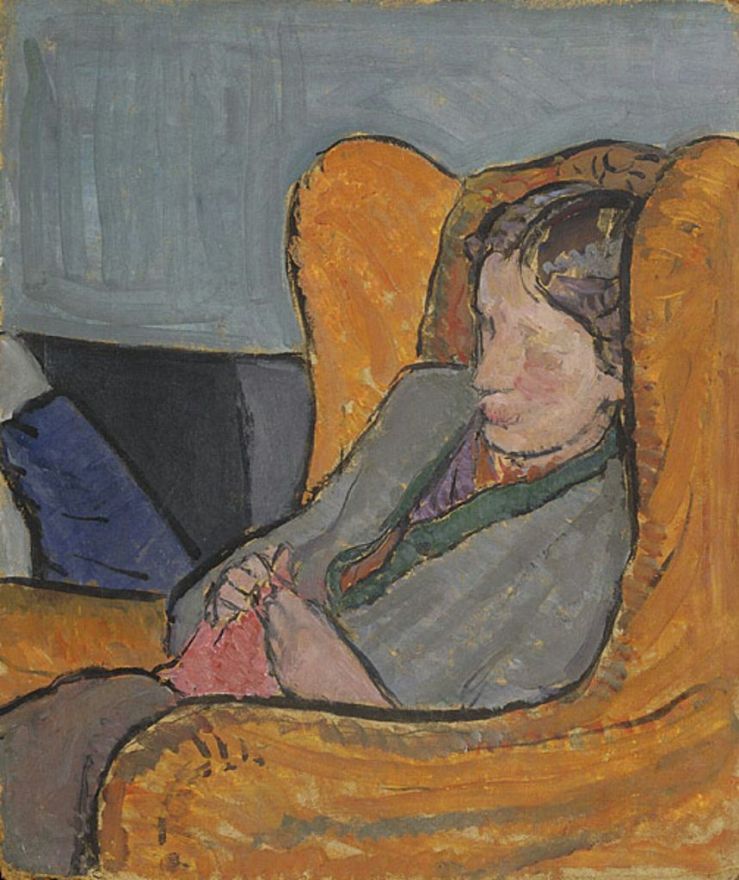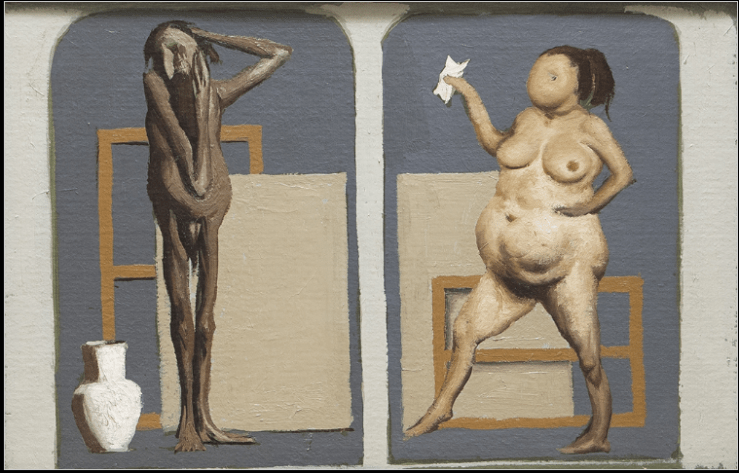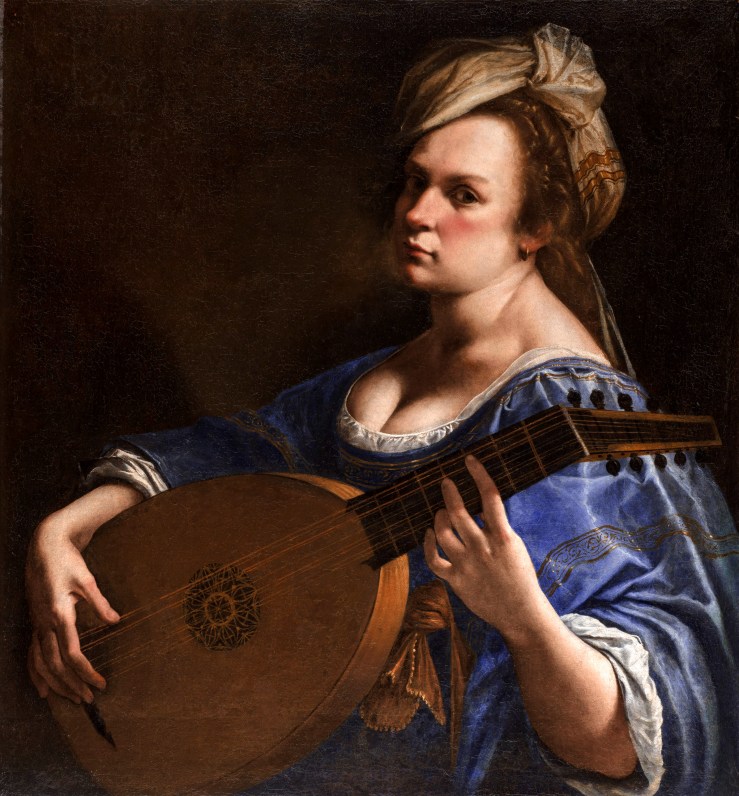
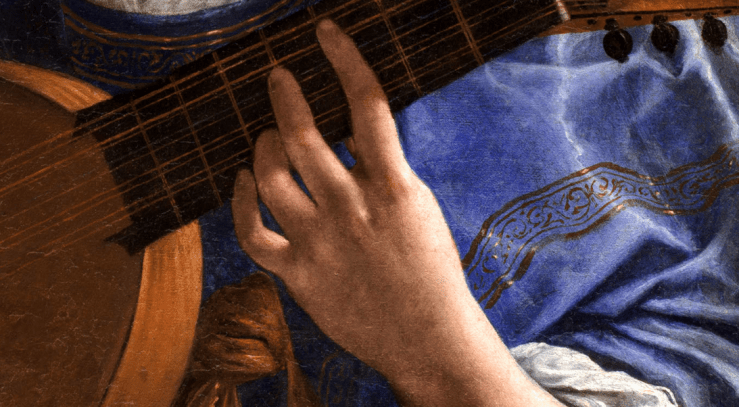
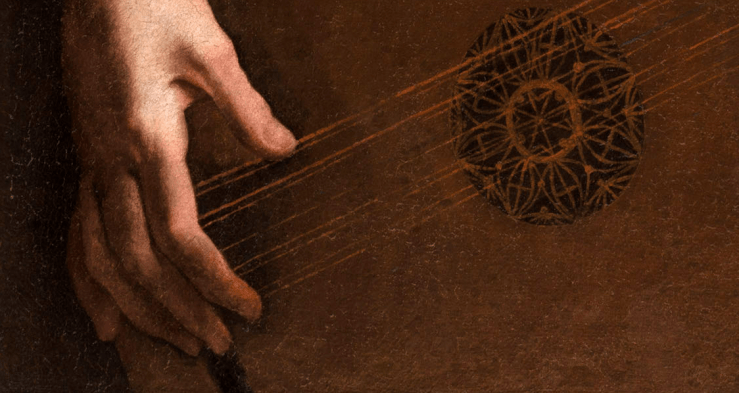
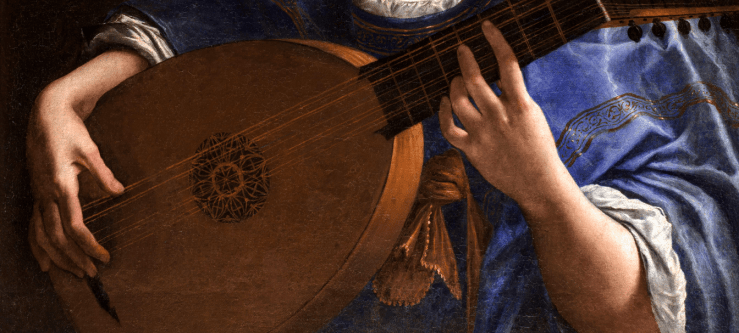
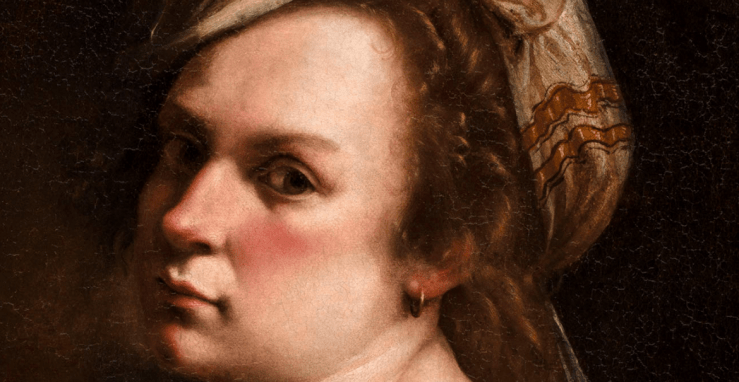
Autoritratto come suonatrice di liuto (Self-Portrait as a Lute Player), 1615-1617 by Artemisia Gentileschi (1593-1653).
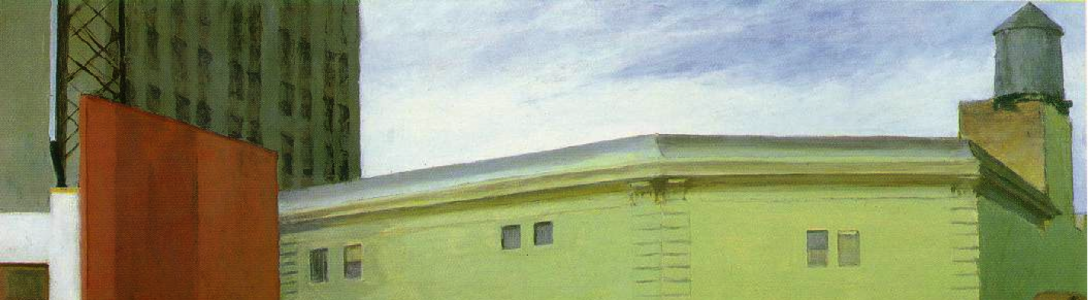
Autoritratto come suonatrice di liuto (Self-Portrait as a Lute Player), 1615-1617 by Artemisia Gentileschi (1593-1653).


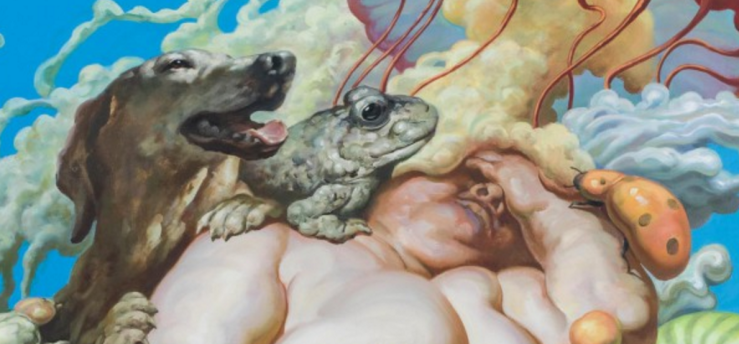


Paradise No. 16, 2014 by Fu Lei (b. 1958).
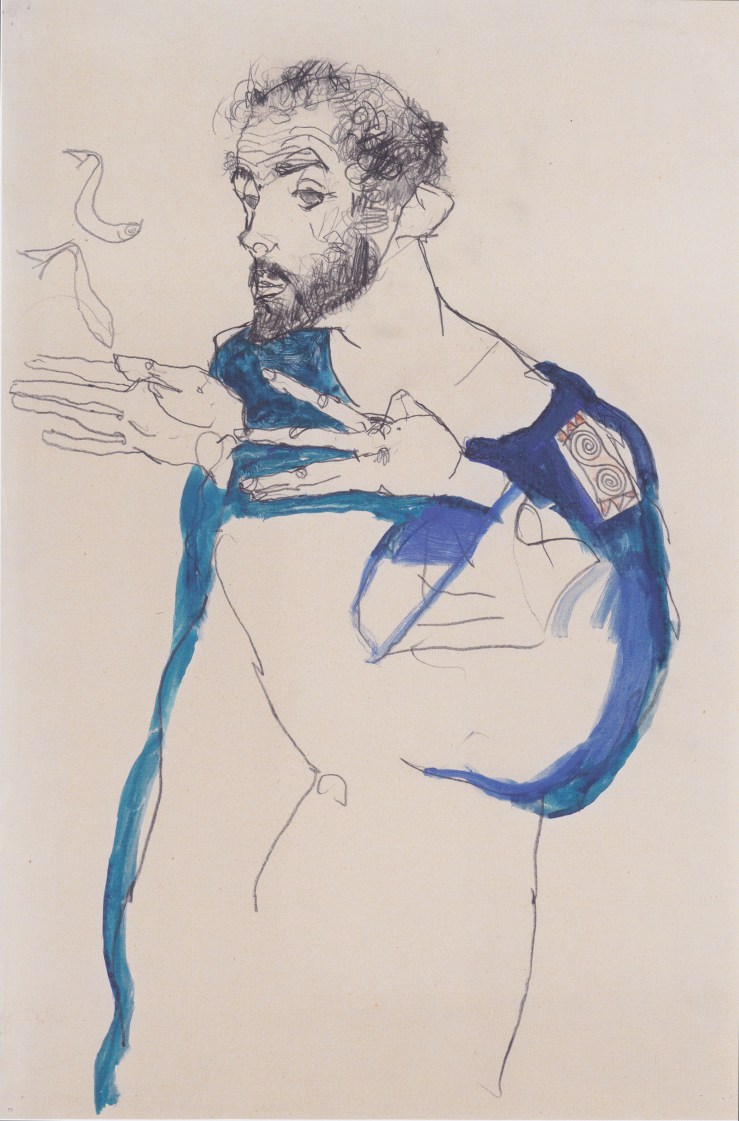
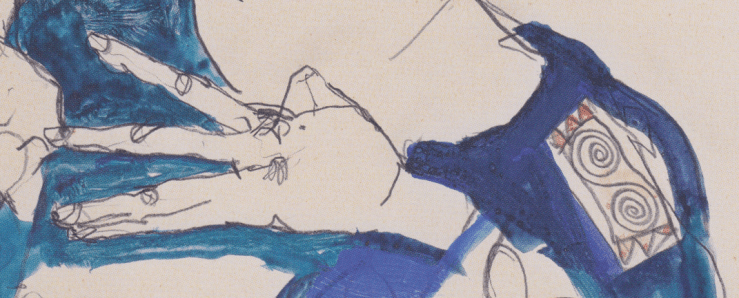

Gustav Klimt im blauen Malerkittel (Gustav Klimt in His Blue Painters Smock), 1913 by Egon Schiele (1890-1918).


Spring, 1573 by Giuseppe Arcimboldo (1526 or 1527 – 1593).



RIP Bernie Wrightson, 1948-2017






March 15th.–A week ago we went to the Vatican, to the halls of sculpture. They commence by a very long narrow gallery, the first part of which is devoted principally to inscriptions, inserted into or fastened upon the walls–on the right hand, pagan, on the left, Christian. All along the gallery of inscriptions there are sarcophagi, vases, torsos, capitals of columns, cippi, and various bas-reliefs of fine workmanship–cornices, and specimens of everything picked up and dug up about Rome. The second part of the gallery contains busts, and figures of heroes, gods, goddesses, emperors, philosophers, poets, children, and women. Here is the colossal head of Minerva, with the strange black eyes and black lashes, while the rest is snowy marble–the grand, colossal, sitting figure of Tiberius, with the civic crown. He seems to have been carved out for a god, though he became unworthy even of the name of man. Here also is the newly-discovered and only true Cicero. The Cicero that has hitherto been called the orator, is now supposed to be his brother, who was a soldier. It is only a year ago that this was found. It is very satisfactory–a refined, intellectual, penetrating head, with a mouth of wonderful beauty. Its authenticity is proved by its exact resemblance to a medal in the Vatican, inscribed with his name, and which the long-accepted Cicero does not at all resemble. It is delightful really to have seen Cicero. Here, too, is the celebrated young Augustus, of a delicate, poetic, musing beauty, with a lovely mouth and a perplexed brow. The trouble on his brow seems a prophetic shadow of his anxiety, at the close of his life, to know “whether he had played his part well.”
There is also an imperial head of Julius Cæsar, as Pontifex Maximus, with a folded drapery, and another fine Cæsar, not veiled. These are both far superior to the head in the Hall of the Emperors, at the Capitol, though still like that. A baby Nero was very interesting. It is not a pretty child, but it is not evil in its expression. I was disappointed in Scipio Africanus. I expected him to be very noble. It is an earnest, strong head, and full of care, and in nero antico. Praxiteles’ charming Faun is here also,–a happy smile embodied. There is an astonishing grace in the figure, and a cheerfulness, like a sunny afternoon. I became acquainted with this ever-enchanting creation in the Capitol. He stands in an attitude of easy rest, making multitudes of curves. Sunshine on rippling water is like the gleam on his face and form. The dolce far niente was never so exquisitely expressed. He is perfect bonhommie, idealized with a thousand fine amenities. It is one of those master-pieces of antiquity, in which “the marble flows like a wave.”
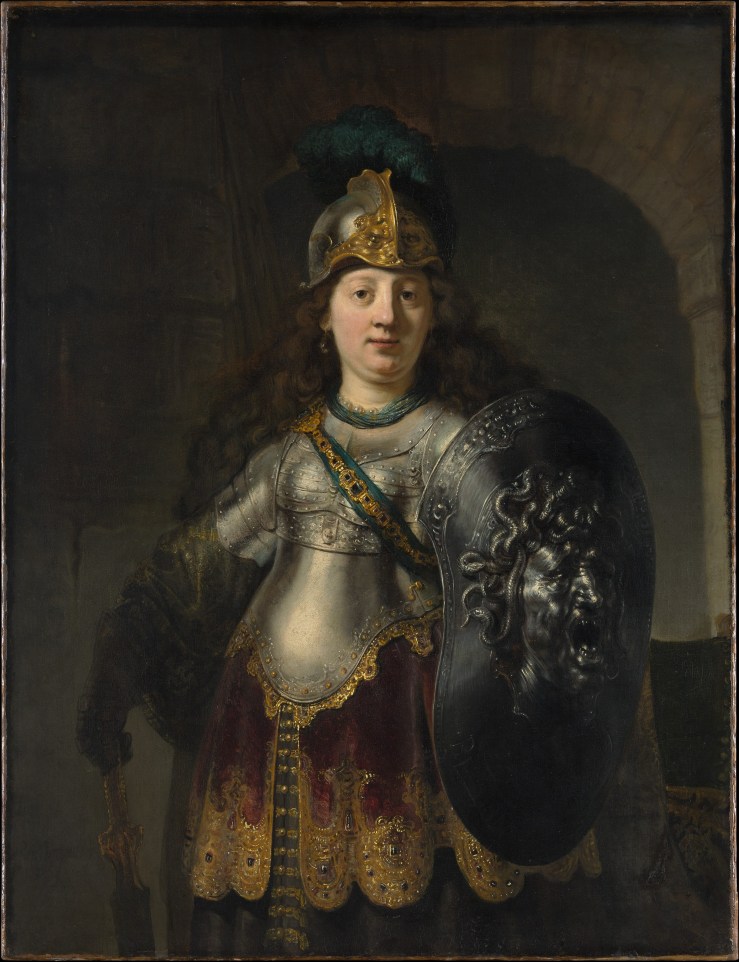
About half-way in the long gallery, the Braccio Nuovo leads off to the left,–a gallery with mosaic floor, and marble columns and arched niches, in which full-length statues stand–and half-columns of red, oriental granite, surmounted with busts: If it were not for what they contain, the halls of the Vatican would be visited for their own intrinsic splendor and state. But who minds the setting of diamonds? In the Braccio Nuovo is the Minerva Medica, which alone is worthy of a pilgrimage to Rome. I had never heard of this “statue in America, and first saw a cast of it, a very fine cast of it, in the Crystal Palace last autumn, pointed out to us by Mr. Silsbee, who greatly estimated it. Even then, in the disguise, and through the obstruction of plaster, it seemed to me the most majestic expression of profound and pensive” thought I had ever imagined. The plaster was as much as I could comprehend at first, and I am glad I saw it first; and now to see the marble is a privilege, for which I trust I am sufficiently thankful. There is a grand sorrow in the countenance and air, but it is the sorrow of an immortal–the pensiveness of profound insight–not a human emotion. The drapery is in fine folds, and falls round the feet in solemn flow. The expression is entirely introspective. The features are of perfect beauty, of a very high order of beauty–with no prettiness. She is the sister of the Apollo Belvedere. He is all immortal action, while Minerva is immortal Thought, and both heroic.
From Nathaniel Hawthorne’s journal entry for March 15th, 1858. Collected in the “Roman Notebook” of Notes in England and Italy.

In a word, what I think is that there are two wrong ways of thinking of a possible political use for literature. The first is to claim that literature should voice a truth already possessed by politics; that is, to believe that the sum of political values is the primary thing, to which literature must simply adapt itself. This opinion implies a notion of literature as ornamental and superfluous, but it also implies a notion of politics as fixed and self-confident: an idea that would be catastrophic. I think that such a pedagogical function for politics could only be imagined at the level of bad literature and bad politics.
The other mistaken way is to see literature as an assortment of eternal human sentiments, as the truth of the human language that politics tends to overlook, and that therefore has to be called to mind from time to time. This concept apparently leaves more room for literature, but in practice it assigns it the task of confirming what is already known, or maybe of provoking in a naïve and rudimentary way, by means of the youthful pleasures of freshness and spontaneity. Behind this way of thinking is the notion of a set of established values that literature is responsible for preserving, the classical and immobile idea of literature as the depository of a given truth. If it agrees to take on this role, literature confines itself to a function of consolation, preservation, and regression – a function that I believe does more harm than good.
From Italo Calvino’s essay “Right and Wrong Uses of Political Uses of Literature.” Translation by Patrick Creagh. Collected in The Uses of Literature.