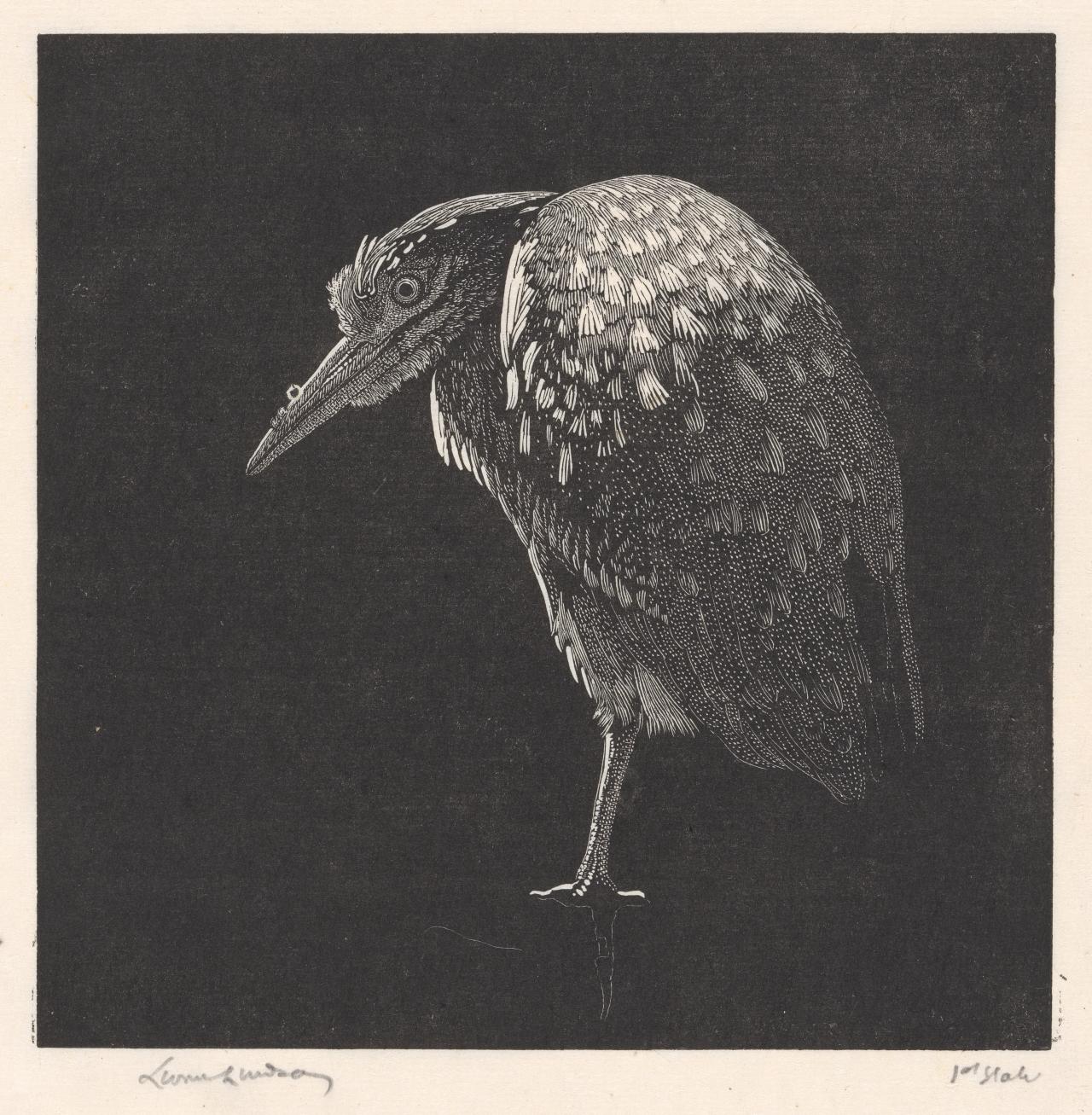
The Night Heron — Lionel Lindsay

The Night Heron, 1935 by Lionel Lindsay (1874-1961)

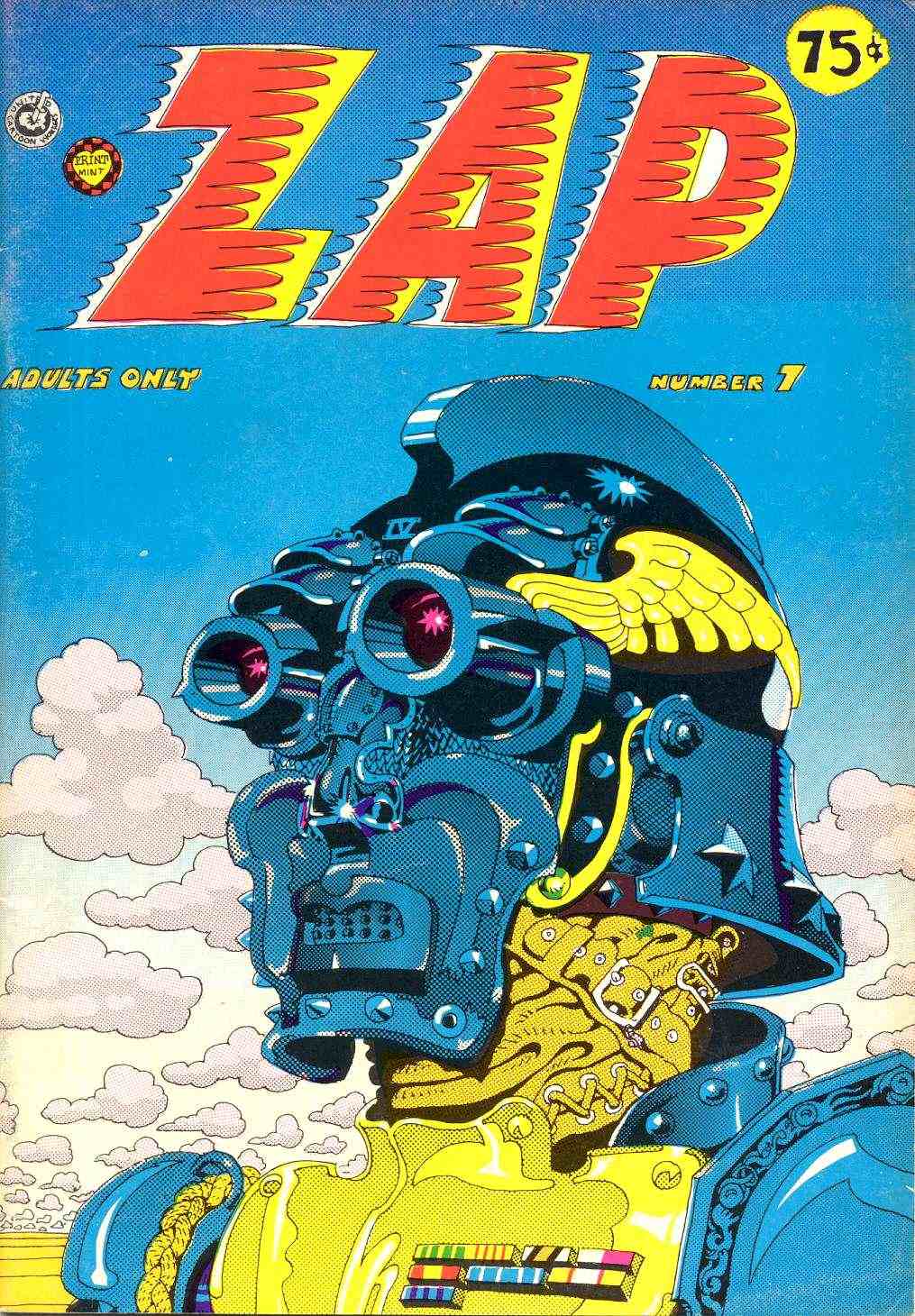
Sunday Comix

Cover art for ZAP Comix #7 by Spain Rodriguez, 1973

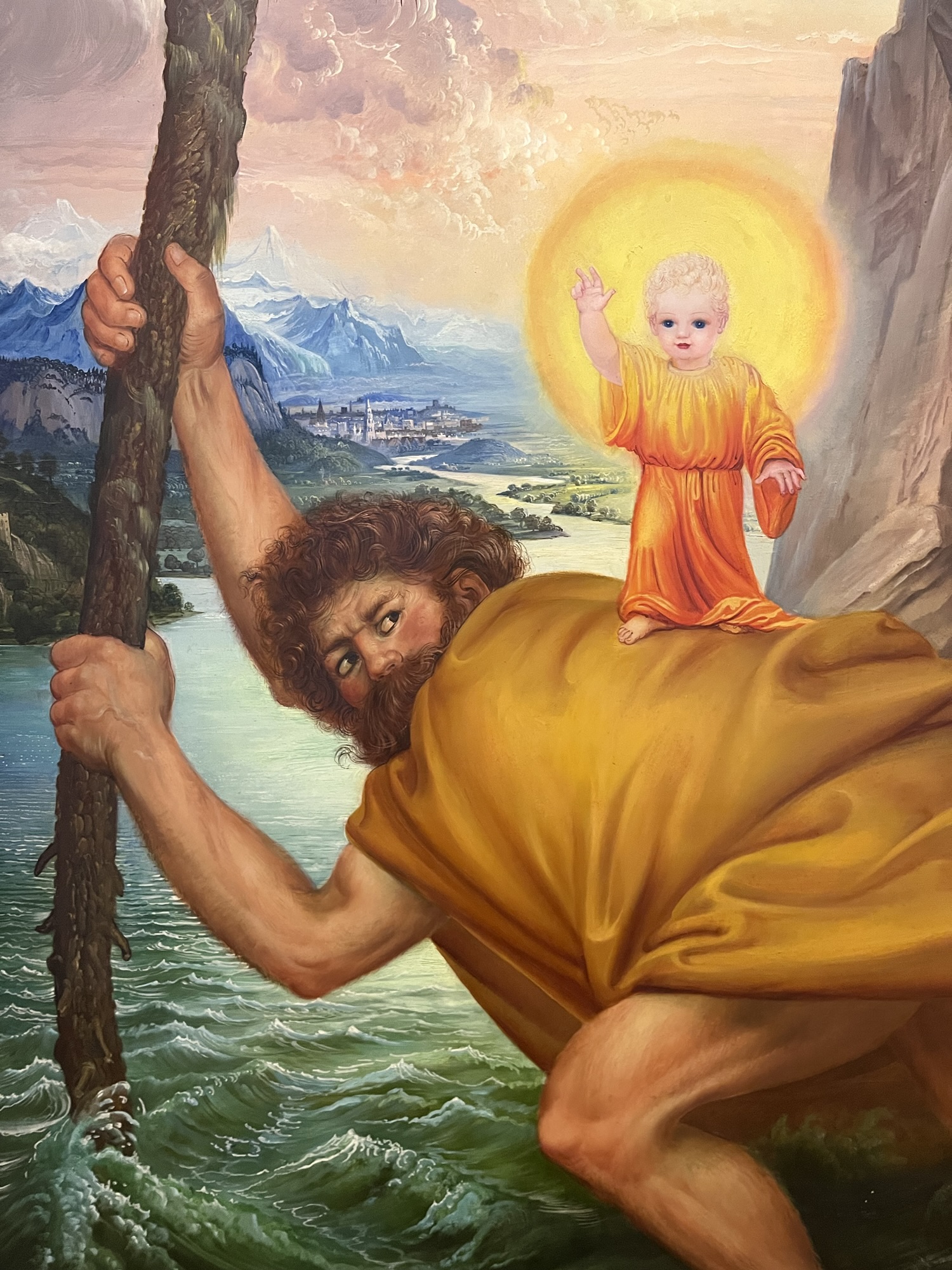
Saint Christopher (Detail) — Otto Dix

Saint Christopher (detail), 1938 by Otto Dix (1891-1969)

In the Echo Chamber — Leonor Fini

tumblr_mmy4qers8x1qzse0lo1_1280

In the Echo Chamber by Leonor Fini (1908-1996)

“Titian Paints a Sick Man” — Roberto Bolaño

“Titian Paints a Sick Man”

by

Roberto Bolaño

translated by Natasha Wimmer


At the Uffizi, in Florence, is this odd painting by Titian. For a while, no one knew who the artist was. First the work was attributed to Leonardo and then to Sebastiano del Piombo. Though there’s still no absolute proof, today the critics are inclined to credit it to Titian. In the painting we see a man, still young, with long dark curly hair and a beard and mustache perhaps slightly tinged with red, who, as he poses, gazes off toward the right, probably toward a window that we can’t see, but still a window that somehow one imagines is closed, yet with curtains open or parted enough to allow a yellow light to filter into the room, a light that in time will become indistinguishable from the varnish on the painting.

1

The young man’s face is beautiful and deeply thoughtful. He’s looking toward the window, if he’s looking anywhere, though probably all he sees is what’s happening inside his head. But he’s not contemplating escape. Perhaps Titian told him to turn like that, to turn his face into the light, and the young man is simply obeying him. At the same time, one might say that all the time in the world stretches out before him. By this I don’t mean that the young man thinks he’s immortal. On the contrary. The young man knows that life renews itself and that the art of renewal is often death. Intelligence is visible in his face and his eyes, and his lips are turned down in an expression of sadness, or maybe it’s something else, maybe apathy, none of which excludes the possibility that at some point he might feel himself to be master of all the time in the world, because true as it is that man is a creature of time, theoretically (or artistically, if I can put it that way) time is also a creature of man.

2

In fact, in this painting, time — sketched in invisible strokes — is a kitten perched on the young man’s hands, his gloved hands, or rather his gloved right hand which rests on a book: and this right hand is the perfect measure of the sick man, more than his coat with a fur collar, more than his loose shirt, perhaps of silk, more than his pose for the painter and for posterity (or fragile memory), which the book promises or sells. I don’t know where his left hand is.

How would a medieval painter have painted this sick man? How would a non-figurative artist of the twentieth century have painted this sick man? Probably howling or wailing in fear. Judged under the eye of an incomprehensible God or trapped in the labyrinth of an incomprehensible society. But Titian gives him to us, the spectators of the future, clothed in the garb of compassion and understanding. That young man might be God or he might be me. The laughter of a few drunks might be my laughter or my poem. That sweet Virgin is my friend. That sad-faced Virgin is the long march of my people. The boy who runs with his eyes closed through a lonely garden is us.

From Between Parentheses.

A Scene on Mont Salève, Switzerland, after a Drinking Session — Jens Juel

A Scene on Mont Salève, Switzerland, after a Drinking Session, 1778 by Jens Juel (1745–1802)

Untitled (Detail) — Eduardo Kingman

Untitled (Detail), 1964 by Eduardo Kingman (1913-1997)

Sunday Comix

From “Rude Interlude” by Robert E. Armstrong, Mickey Rat #4, 1982.

“Painter and Magician” — Alice Rahon

“Painter and Magician”

by

Alice Rahon

From Surrealist Women: An International Anthology (ed. Penelope Rosemont). The text is from the catalog, Alice Rahon, Willard Gallery, New York, 1951


In earliest times painting was magical; it was the key to the invisible. In those days the value of a work lay in its powers of conjuration, a power that talent alone could not achieve. Like the shaman, the sibyl, and the wizard, the painter had to make himself humble, so that he could share in the manifestation of spirits and forms. The rhythm of our life today denies the primordial principle of painting; conceived in contemplation, the emotional content of of the picture cannot be perceived without contemplation.

The invisible speaks to us, and the world it paints takes the form of apparitions; it awakens in each of us that yearning for the marvelous and shows us the way back to it—the way that is the great conquest of childhood, and which is lost to us with the rational concepts of education.

Perhaps we have seen the Emerald City in some faraway dream that belongs to the common emotional fund of man. Entering by the gate of the Seven Colors, we travel along the Rainbow.


Self-Portrait, 1951 by Alice Rahon (1916 – 1987)

Night Walkers — Salman Toor

Night Walkers, 2022 by Salman Toor (b. 1983)

Seated Female Nude — Ivan Albright

Seated Female Nude, c. 1933 by Ivan Albright (1897-1983)

Five environmental comix from Ron Cobb for Earth Day

Early Spring — Max Klinger

Early Spring, 1897 by Max Klinger (1857-1920)

To Study the Numbers — Leonora Carrington

To Study the Numbers, 1941 by Leonora Carrington (1917 – 2011)


Maggie Umber’s Chrysanthemum Under the Waves blends horror, surrealism, and poetic fragmentation into a haunting vision of the uncanny

Maggie Umber calls the nine pieces collected in Chrysanthemum Under the Waves “comics,” so I will call them comics too. The term “comics” has long encompassed a wide range of visual storytelling techniques, resisting attempts to confine it to rigid structures, and Chrysanthemum Under the Waves shows the form’s expansive potential, blending horror, surrealism, and poetic fragmentation to tap into the alienation, paranoia, and repression that lurks under the surface of everyday life.

The stories here resist conventional narrative logic, which will likely confound any reader expecting something traditional. Umber eschews the common building blocks of the medium: there are no speech bubbles, no thought balloons, no panels stacking up into a coherent sequence. In fact, the few pages that use multiple panels feel like an anomaly. Most of the work in Chrysanthemum is confined to single, expansive images. Yet, these full-page spreads do not recall the bombastic splash pages of Jack Kirby or other Golden Age comics. Instead, they underscore the inherent incompleteness of storytelling. No artwork, no story, can ever present a full picture of reality—there are always gaps, always gutters. And in these gaps, dread and unease fester.

Umber’s comics aren’t so much about exploring the fragmentation of storytelling; rather, they showcase it as an aesthetic choice. It’s a choice that generates a palpable tension, a constant refusal to return to any resolution. There is no resolving tonic chord here. The uncanny permeates these pages—not in the sense of something foreign intruding upon the familiar, but as if the familiar itself has been subtly warped. Maybe this horror is “real,” maybe it’s not—but what is certain is its presence. The world Umber paints is one of perpetual strangeness, captured in black-and-white, shaded with grays. Pen and ink, printmaking, and watercolor all blur together in a form that makes us feel the unease before we can even articulate it.

And while Umber’s work is refreshing in its uniqueness, it is by no means sui generis, but rather part of  a clear tradition. As Umber notes in her introduction, Chrysanthemum started as a one-off “adaptation” of Shirley Jackson’s 1949 story “The Tooth.” If you have read “The Tooth” (and if you haven’t, do yourself a favor and resolve that problem) — if you have read “The Tooth,” you will likely recognize the uncanny unease that permeates Chrysanthemum. In her intro, Umber identifies James Harris as the agent of this unease: “James Harris snuck up on me when I was distracted by other things.” James Harris is a strange character who wanders in and out of not only “The Tooth,” but several of the other stories in Jackson’s The Lottery. Indeed, the original subtitle of The Lottery was not and Other Stories, but rather The Adventures of James Harris. This is the James Harris of the 17th century ballad “The Daemon Lover”; he is also the oblique star of Chrysanthemum Under the Waves. Look and you will find him in each of Umber’s tales, sliding like a shadow in and out of panels and gaps.

You will find so much more there as well–there are direct allusions to Goya’s Caprichos and Black Paintings, as well as nods to Toulouse-Lautrec and Sylvia Plath. There’s also a strong echo of Jackson’s American Gothic precursors and successors: Nathaniel Hawthorne, Edgar Allan Poe, Emily Dickinson, David Lynch, Kathy Acker — and, far less famously, Jason Schwartz. Chrysanthemum Under the Waves most reminded me of Schwartz’s prose-poem John the Posthumous, so much so that I read it again to confirm my notion.

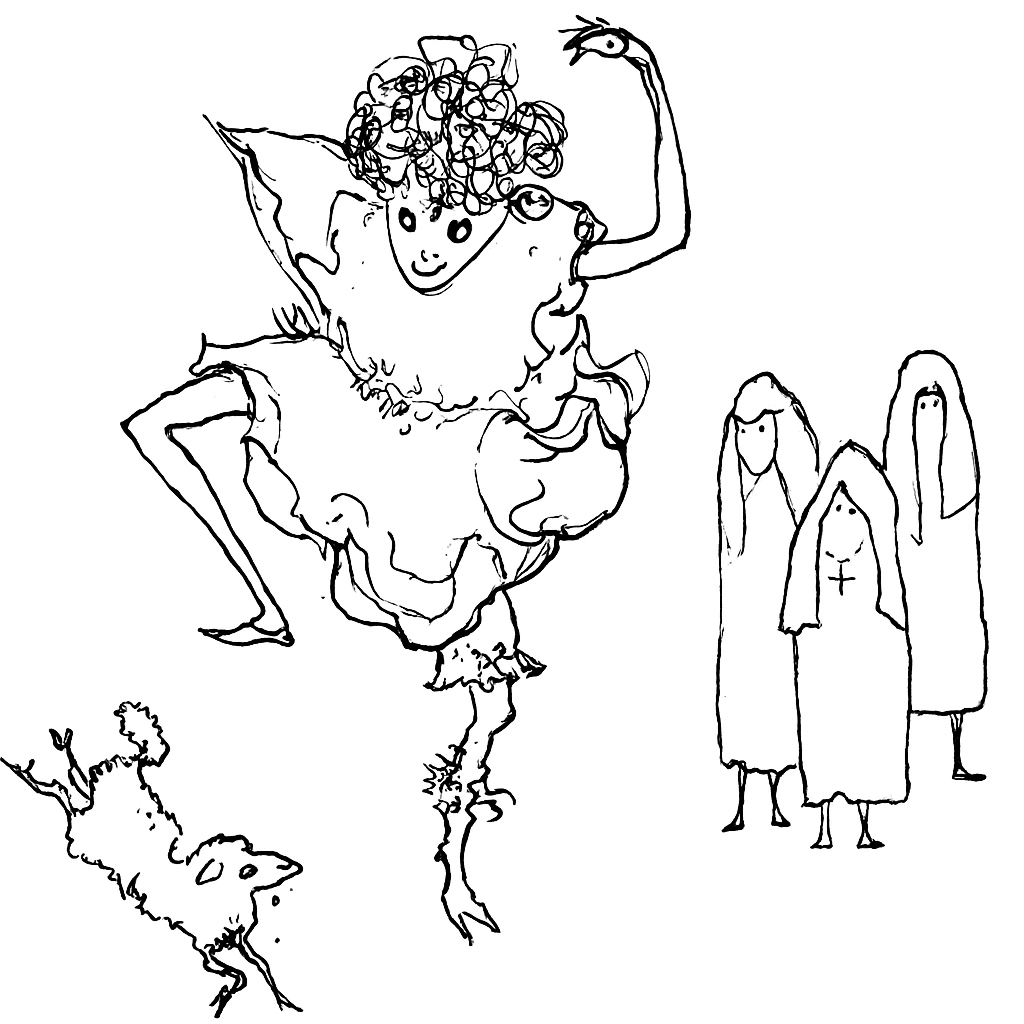
I’ve failed to remark so far on the apparent plots of the tales here. I found myself arrested by the ominous vibes in my first readings, and I still could not pin down a summary. At the same time, I feel that Umber clearly knows “what’s happening” in her stories, even if she keeps that information in the gaps and margins, out of the panel, but still, maybe, hidden in the pictures. The lead story, “Those Fucking Eyes,” is a collision of horror and beauty, twisting the artist’s gaze  into something self-possessed and austere. “Rine” plays with fragmentation and distortion while evoking a ghostly presence. We get a gentleman caller, a broken bridge, a bouquet of flowers that flickers between reality and illusion. “Intoxicated” takes on a Gothic Toulouse-Lautrec aesthetic, unraveling into surreal rage and rejection. “The Devil Is a Hell of a Dancer” retells the “James Harris” ballad; it’s the first time written language infiltrates one of the stories.

The title track, “Chrysanthemum” is a surreal noir fantasia punctured by a cup of coffee, with daemon lover James Harris hovering menacingly in the background. It seems to reinterpret Shirley Jackson as does the aforementioned “The Tooth” — itself a revision of Charlotte Perkins Gilman’s suffocating 1892 classic, “The Yellow Wall-Paper.” The shortest comic, “There Is Water” unfolds like a koan, enigmatic and meditative. Standout “The Witch” returns to Goya but also channels the American Gothic vein. The piece might be a nightmare one of Hawthorne’s characters endures. There are clouds, castles, dreams, doors, flickering horror. Is that a witch burning? And do the flames morph into a glimpse of Goya’s Saturn, only to resolve into the shadowed face of a woman? Shadows and erasures pulse through the imagery. It is both the strongest and longest piece in the collection. The book ends with “The Rock,” another riff on the the ballad “James Harris.” It’s a fitting end, conclusive but elusive. What remains rattles: unsettled, open, and always strange.

Chrysanthemum Under the Waves is a haunting, layered work that defies easy categorization. Umber’s pieces blend literary, artistic, and Gothic influences into a unique vision that expands the possibilities her chosen medium’s conventions. With its distinctive style and  careful attention to space and detail, Chrysanthemum Under the Waves is a compelling read. Highly recommended.

March — Alex Colville

march-1979.jpg!Large.jpg

March, 1979 by Alex Colville (1920-2013)

Simpatía — Remedios Varo 

Simpatía (La rabia del gato) (Sympathy, the Cat’s Rage), 1955 by Remedios Varo (1908-1963)