The Scottish novelist and artist Alasdair Gray died today, one day after his 85th birthday.
Gray’s first novel, 1981’s Lanark, is one of the strangest and most memorable novels I’ve ever read. Part dystopian fantasy, part realist autofiction, part Kafkaesque anti-quest, and part Künstlerroman, Lanark deconstructs the traditional novel, braiding multiple narratives into a complex, sharp, satirical epic.
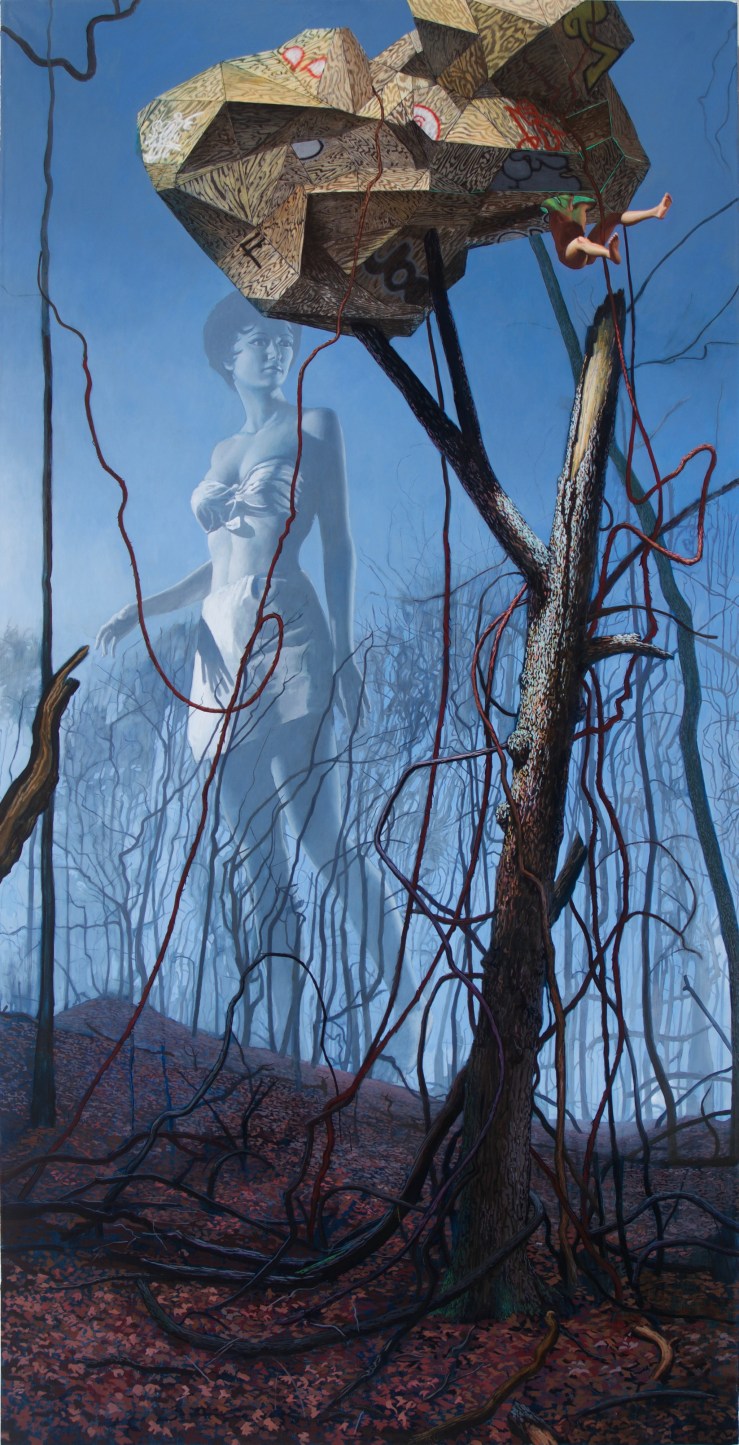
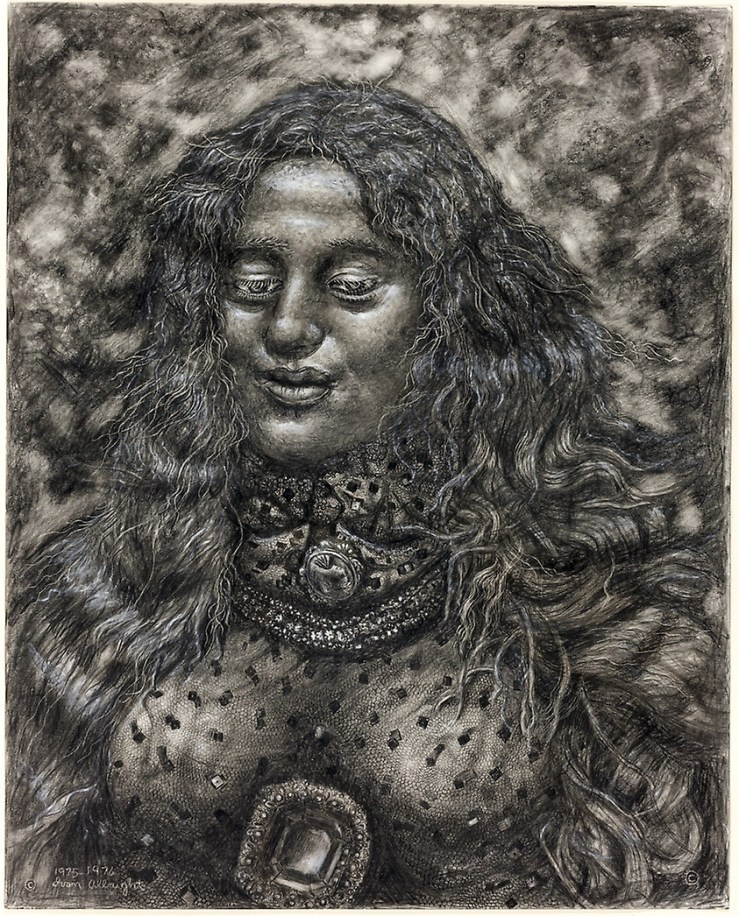
Lanark included original artwork by Gray, a trend that would continue over the course of his career as a novelist. Gray was trained as a muralist, and if I ever make it to Glasgow I plan to see his murals.
Gray’s art of course adorns his follow-up to Lanark, 1984’s 1982, Janine, a challenging novel of debauchery. 1982, Janine is conceptually, formally, and typographically challenging, a kind of answer to Finnegans Wake, and like Joyce’s big weird fun hard novel, Gray’s sophomore jaunt is a jam I return to again and again without the hope of truly ever finishing. 1982, Janine also has the best blurb I think I’ve ever read—you can watch Gray read it in this 1993 STV documentary about Gray (around 15:34)—
The Gray Matter also features Gray discussing his novels and reading from them, as well as his art. It makes a neat primer to the Gray’s work, and while I’m no expert—just a big fan of those first two novels and his art, to be clear—I think it does a nice job of letting the artist speak about his art.
I’ll close by reiterating that Lanark has stuck with me in a way that most novels don’t. It might seem a daunting read at nearly 600 pages (not to mention its four-book structure, which begins with Book Three before going to Books One and Two and then concluding with Four—and, oh the books are formally/stylistically varied)—but Lanark might be the cult novel you’ve been missing from your life.
I’m reading Ishmael Reed’s 2011 novel Juice! right now. The narrator, a version of Reed, is a cartoonist whose comix on the O.J. Simpson case cost him his career and family. It’s not a comic, but it’s comic, and I love it.
Reed and Reed’s narrator repeatedly evoke George Herriman’s Krazy Kat strips, and I’ve returned to their slapstick surreal ebullience. There’s an ecstatic nihilism to Krazy Kat (or do I mean nihilistic ecstasy?), a radical absurdity that seems to both diagnose and describe Our Big Dumb Zeitgeist of 2019 in the most perfectly oblique way. The strip’s (il)logic runs on a strange Dada engine, crashing into both sensibility and decorum. It’s a wonderful anarchist romp. I have no idea if there was some new Krazy Kat compendium that came out in 2019, but Herriman’s strip is the best critique of 2019 I can think of. (Also: Read more Ishmael Reed.)
Speaking of: Drew Lerman’s collection Snake Creek reverberates with the spirit of Krazy Kat mixed and mushed with the apocalypse ghost swamp of Walt Kelly’s Pogo, along with tinges of Garfield Goes Total Nihilist. (Who am I kidding? Garfield was always a total nihilist.) Lerman’s shaky strips approximate our own shaky days and shaky daze, evoking a Florida fit to sink into its own wild psychosphere.
I loved Rat Time by Keiler Roberts. I missed one of my nephew’s baseball games because I started reading it one Saturday morning and then lied about having to do something work-related—like an emergency—because I wanted to finish up Rat Time instead. It made me feel Warm (& Fuzzy), despite how dry Roberts’ humor is. (Desiccant dry, folks.) Roberts’ autofiction is utterly real.
I also really admired Ben Passmore’s comic Sports Is Hell, a send-up of American massculture that simultaneously stings and enlivens its reader. The novel takes place during the aftermath of a Super Bowl featuring a Kaepernickesque (Kaepernesque?) star player. The Big Game devolves into a Big Riot, with its heroes fighting their way through the madness—think Walter Hill’s film The Warriors by way of George Herriman’s Krazy Kat. I hope Ishmael Reed will read it.