1. Try to understand what the author wished to do, and do not blame him for not achieving what he did not attempt.
2. Give him enough direct quotation—at least one extended passage—of the book’s prose so the review’s reader can form his own impression, can get his own taste.
3. Confirm your description of the book with quotation from the book, if only phrase-long, rather than proceeding by fuzzy precis.
4. Go easy on plot summary, and do not give away the ending. (How astounded and indignant was I, when innocent, to find reviewers blabbing, and with the sublime inaccuracy of drunken lords reporting on a peasants’ revolt, all the turns of my suspenseful and surpriseful narrative! Most ironically, the only readers who approach a book as the author intends, unpolluted by pre-knowledge of the plot, are the detested reviewers themselves. And then, years later, the blessed fool who picks the volume at random from a library shelf.)
5. If the book is judged deficient, cite a successful example along the same lines, from the author’s ouevre or elsewhere. Try to understand the failure. Sure it’s his and not yours?
To these concrete five might be added a vaguer sixth, having to do with maintaining a chemical purity in the reaction between product and appraiser. Do not accept for review a book you are predisposed to dislike, or committed by friendship to like. Do not imagine yourself a caretaker of any tradition, an enforcer of any party standards, a warrior in an idealogical battle, a corrections officer of any kind. Never, never (John Aldridge, Norman Podhoretz) try to put the author “in his place,” making him a pawn in a contest with other reviewers. Review the book, not the reputation. Submit to whatever spell, weak or strong, is being cast. Better to praise and share than blame and ban. The communion between reviewer and his public is based upon the presumption of certain possible joys in reading, and all our discriminations should curve toward that end.
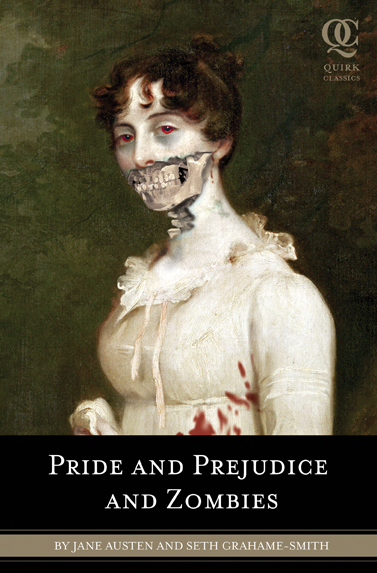
The blurb on the back of Pride and Prejudice and Zombies brazenly declares that Seth Grahame-Smith’s addition of zombie-fighting action to Austen’s classic “transforms a masterpiece of world literature into something you’d actually want to read.” Perhaps the blurb’s brag is just a bit of cheeky fun; after all, Austen’s staid survey of manners and mores is a perennial favorite, coming in second to only The Lord of the Rings in a recentBBC poll of British readers, as well as topping a similar poll in Australia. Clearly, people not only want to read it, they actually do, and in large numbers each year. There’s even been enough interest in it for a not-that-bad movie update just a few years ago. So it’s hardly as if Pride and Prejudice is a corpse in need of resuscitation. This begs the question: What nuances and comments does Grahame-Smith have to add? Not much, we’re afraid.
The most interesting aspect of Pride and Prejudice and Zombies is its concept, a promise for weird laughs and sick kicks neatly summed up in its fantastically morbid cover. Grahame-Smith doesn’t so much re-imagine Pride, but simply stuff a murderous host of zombies into Austen’s romance. These “unmentionables,” as the polite Regency society folks call them, wage a war on good stolid Englishmen. Fortunately Mr. Bennet has trained his daughters, led by feisty Elizabeth, in the ways of the ninja. Between matchmaking, letter-writing, polite dances, and furtive glances at Mr. Darcy, the Bennet sisters slice up zombies left and right with their katanas. The press-release for Pride and Prejudice and Zombies claims that the book retains 85% of Austen’s original, and no major plot points are changed or missing. Instead, the reader is subjected to seemingly purposeless bouts of zombie fighting after every scene. Of course, to decry these fights as purposeless seems silly; after all, when you pick up a book called Pride and Prejudice and Zombies, you expect zombies, don’t you?
Grahame-Smith’s premise sounds like great good fun in theory, but it turns out that adding zombies and ninjas to a classic beloved romance is neither terribly engaging or interesting. We love zombies at Biblioklept, but the most effective zombie tales–28 Days Later, Night of the Living Dead, Dawn of the Dead–work beyond horror and serve also as a form of social commentary or even satire. Grahame-Smith seems to miss, or even ignore, any opportunity to comment on, criticize, or otherwise inform the novel he’s cannibalizing. Instead, his additions convey the energy, wit, and sophistication of a one-note SNL sketch. The premise gets old fast, and it becomes increasingly confusing who this novel is for. It’s unlikely to appeal to most Austen fans, as it provides no real comment on her methods, plotting, or characterization, and as far as a zombies-and-ninjas riff goes, it’s pretty standard fare. Ultimately, it seems like more of a conversation piece than something you’d actually read for enjoyment, a little coffee table book that might evoke some interest. Flick through the amusing illustrations, chuckle, and move on.
Pride and Prejudice and Zombies is available soon from Quirk Books.
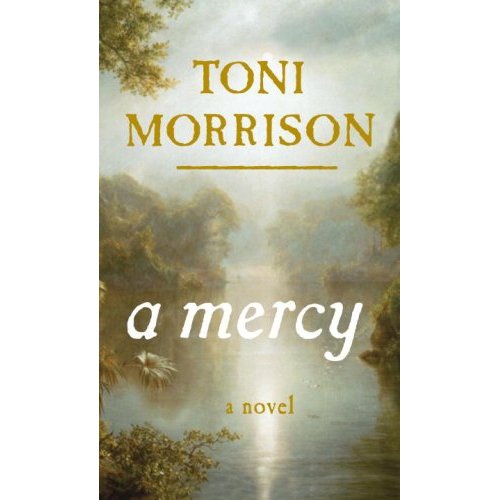
With her latest novel A Mercy, Toni Morrison offers up more evidence of why she is possibly America’s greatest living author. As in earlier works like Sula, Song of Solomon, and Beloved, in A Mercy Morrison examines the strange intersections of race and geography, family and culture, memory and storytelling. And like those great novels before it, at the center of A Mercy (a center, mind you that Morrison frequently works to decenter) is that great post-modern question: what is identity?
The late-seventeenth-century America of A Mercy is at once paradoxically both alien and familiar. This America is seemingly wild and free and unconstrained, yet the land–purchased with the blood of the native Indians–is worked by slaves and indentured servants. The freedom to be viciously intolerant of anyone else’s religion abounds. A lazy eye might get you burned for a witch. Life is cheap and difficult, but there is also much beauty here, and for a time, the makeshift family of characters who populate A Mercy seems happy enough. Morrison’s genius in this novel, however, is to only present these moments of contentment and happiness in fragments, interspersed between each of her character’ desires for freedom, future, family, and ultimately, self. We see glimpses of one character’s joys or sufferings through the eyes of another character, a technique that builds and layers and enriches a narrative where, honestly, very little happens. A farmer-turned-trader gets sick and dies, never finishing the house he was building. Then his wife gets sick, and sends her young slave to get the blacksmith, a free black man, who she believes can heal her. By the time he arrives, she’s better, but her ersatz family is forever sundered. Summarized, the linear plot sounds thin, but the depth of storytelling around Morrison’s deceptively simple story is marvelous. Morrison achieves this depth via the different voices and perspectives that propel her novel.
The voice of the young enslaved girl Florens initiates the novel with the enigmatic opening line, “Don’t be afraid.” Her opening command both engages and disorients (and, sign of a great novel, begs to be read again after completing the book). “Stranger things happen all the time everywhere,” she recognizes, before asking “One question is who is responsible? Another is can you read?” Right away, Morrison tells us this a novel about how to read, where to find cause, and possibly, how to create one’s own agency in a world that makes slaves and servants–or food–out of almost everybody.
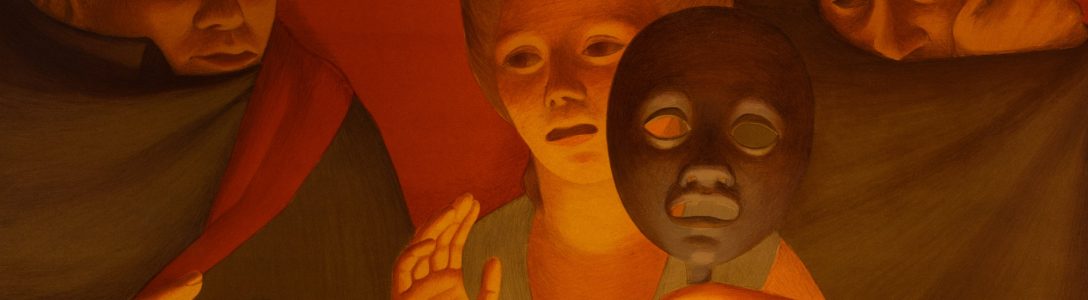
William Blake - Europe Supported by Africa and America (1796)
This question of agency runs throughout each of the chapters that alternate with Florens’s first person narrative. There’s Jacob Vaark, who takes Florens as part of a debt owed him by a fading aristocrat. Vaark is disgusted at the aristocrat’s lavish lifestyle, and although the slave trade repels him – “God help me if this is not the most wretched business” – he agrees to take Florens at the pleading of her mother (Florens will be haunted forever by what she interprets as abandonment). Vaark is, however, smitten by the slaver’s elaborate house and vows to build one just as grand. His attempt to build a castle from his own labor in the New World, a castle free from any title or rank or order is his own claim to agency. There’s also the voice of his wife Rebekkah, who spends her chapter in a pox-ridden fever dream that dips and floats and weaves through time and space. Her father essentially sells her mail-order to Jacob. She leaves the dirty, crowded Old World on a dirty, crowded ship. Stuck in dark steerage, she makes a community with a group of whores, “Women of and for men,” who, in transit, exist in a strange uncomfortable comfort, a “blank where a past did not haunt nor a future beckon.” Rebekkah will attempt to forge another strange, transitory family when she arrives in America. She grows quickly to love Jacob; soon, she even loves Lina, the enslaved Indian girl Jacob buys for both pity and service. Lina and Rebekkah forge an alliance, weathering the death of the Vaark’s children, as well as Jacob’s extended absences as he expands his trade. They are less ready to accept another foundling, Sorrow, who Jacob brings home (solely for pity); a little bit crazy (“daft”), she spends much of the novel mysteriously pregnant. However, Lina quickly warms to Florens, treating her as her own daughter, even if Rebekkah will not. Also there are Scully and Willard, two indentured servants who may never gain their freedom. Willard imagines the family they all comprise: “A good-hearted couple (parents), and three female servants (sisters, say) and them helpful sons.” But it’s not family, or community, or the idea of a country that A Mercy will validate. Instead, the novel suggests these concepts are ultimately transitory–like a passage over the Atlantic–and that there can only be a claiming of self.
Throughout the book, some characters gain agency, others die trying, and several lose themselves to grief and loss. But it’s Florens’s narrative that binds the text. She grows from a lovesick kid, desperate to please everyone, to a realized person with a conscious sense of her self. “The beginning begins with the shoes,” she says. “When a child I am never able to abide being barefoot and always beg for shoes, anybody’s shoes.” By the end of the novel she can go barefoot, free, in a sense, the soles of her feet “hard as cypress” – and this New World requires hard soles. And even if Morrison suggests that we need to learn to walk, hard-soled on our own feet, there is a great pleasure–a sad, sometimes sour, shocking pleasure–to be gained in walking for just a little while in these characters’ shoes. Very highly recommended.
I give up. I don’t know how to review The Savage Detectives.
Everyonetoldme I was supposed to love this book, but I didn’t. There, that’s a review. Not a good review, but there. I can’t remember a book ever taking me so long to finish or a book that I put down so often. When I truly love a book, I am moved. Often physically. Sometimes I have to stand up to read a book, I’m so moved. That’s a good book. (I never had to stand up during The Savage Detectives, although I often had to force myself to read thoroughly and not just skim). When I truly love a book, I’m a little sad and deflated when it’s over. I know a book is great if I’m compelled to go back and immediately reread sections. (Again, with Detectives, this didn’t happen). But it looks like I’m trashing the book. I shouldn’t. It has a lot going for it.
I read the first 140 pages, the journal entries of young Garcia Madero, in a blur. Funny and passionate, Madero’s voice explodes with the immediacy and intensity of youth. He joins up with the visceral realists, a group of anti-establishment poets (who no one cares about). Led by two enigmatic outsiders, Ulises Lima and Arturo Belano, the visceral realists gripe about the state of Mexican and Latin American literature, screw around, and argue with each other (no one else will listen to them). Madero paints Mexico City in the mid-1970s as vibrant, a place full of poetry and art. He becomes a biblioklept, God bless him (yet he ethically agrees not to steal from a poor old blind bookseller). He writes poems. He has sex. He runs away from home, sort of. There’s a breathless energy to Madero’s narrative that makes the book hard to put down, and the first section of The Savage Detectives, “Mexicans Lost in Mexico” culminates in one of the book’s most exciting events. Madero, Lima, and Belano help a young girl named Lupe escape from her belligerent pimp. Then, that portion of the story unresolved, the narrative shifts dramatically.
In the second section, “The Savage Detectives,” we are treated to, or subjected to, or made to endure, or made to navigate–pick your verb, please–over 450 pages of (one-sided) interviews spanning 20 years. Some of the interviewees appear consistently throughout this section, like Amadeo Salvatierra, who helps Lima and Belano in their quest to find the lost original visceral realist, Cesárea Tinajero. Other voices only pop up once to tell a weird story about Lima or Belano–or more accurately, a weird story about themselves with Lima or Belano playing bit parts. Some of these stories, like Lima’s strange time in a Tel Aviv prison, or Belano’s tenure as a national park guard in France are great; other times they are painfully tedious or repetitive (you know, like real life).
Technically, The Savage Detectives is quite an achievement. The myriad stories in the book’s main section represent the fragmented narratives that might compose a person’s life–a series of perspectives that others have about us, views that can never add up to a unified truth. The bulk of these stories are very much about poetry, art, and travel. Like Joyce’s Ulysses, Detectives is a peripatetic novel, full of specific locations and very, very explicit directions (Joyce famously claimed that were Dublin destroyed in a catastrophe, it could be rebuilt based on his novel; the same seems true for Bolaño’s Mexico City). Also like Ulysses, Detectives is an epic about the banal, ordinary things that fill our lives: jobs and eating and getting to places and having one’s friendships sour and being disappointed and so on. Lots and lots of “and so on.” This isn’t to say that there aren’t moments of heroism and adventure–saving kids from satanic caves, stow-away sea voyages, and dodging bullets from Liberian rebels make for interesting narrative peaks. However, most of the novel remains rooted in a realism that is often dreadfully visceral in its painstaking replication of just how depressing a life could be. As the seventies and eighties turn into the nineties, things get more bleak and more depressing for Lima and Belano. And it all adds up to an incomplete picture (literally; check out the last page of the book if you don’t believe me).
By the time we return to Madero’s journals in the third and final part of the novel, “The Sonora Desert,” the sadness and deflation of the previous section infects and tints every aspect of the narrative. Lima and Belano, with Madero and Lupe in tow, search desperately for the forgotten poet Cesárea Tinajero. Their search works as a pitiful parallel to “The Savage Detectives” section, a comment on the elusive nature of identity, and the strange disappointments that punctuate our expectations. Even the novel’s climactic ending seems understated after the monolithic middle section. And while this deflationary technique is undoubtedly a carefully considered conceit on Bolaño’s part, the payoff for the reader–this reader anyway–did not merit the effort and concentration that the book required. Or, to put it another way, after hours of time invested, I was unmoved.
As ravereviews of the English translation of his last novel 2666 begin seeping out of the critical woodwork (this month’s Harper’s has devoted a full four pages to the book), it seems that Bolaño will top most critics’ lists again this year. At over 900 pages and reportedly full of grim, bleak violence, it’s hard to imagine 2666 will be any easier to get through, and as FS&G summarily ignored our requests for a review copy, there’s no pressing obligation, I suppose. The critical praise heaped on 2666 this year will surely lead interested readers to The Savage Detectives. I think Mark Twain’s infamous note at the beginning of The Adventures of Huckleberry Finn would provide the best warning to these potential readers: “Persons attempting to find a motive in this narrative will be prosecuted; persons attempting to find a moral in it will be banished; persons attempting to find a plot in it will be shot.” While no serious critic could dismiss Bolaño’s lyrical skill and complex control of the many voices that populate Detectives, I think a number of readers–serious readers–would not be wrong for considering the tome a bit overrated.
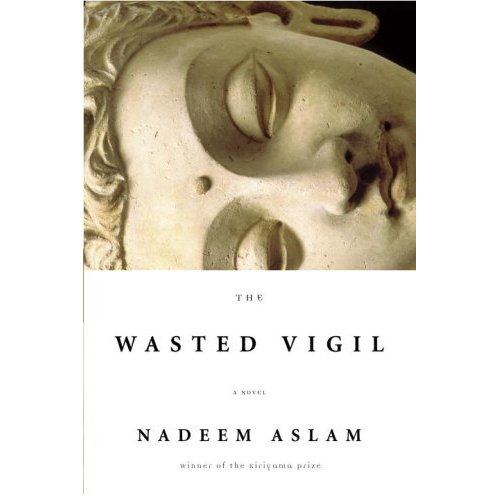
Nadeem Aslam’s new novel The Wasted Vigil ambitiously attempts to contextualize three decades of conflict in Afghanistan through the lives of its three main characters: Marcus, an English doctor living near Tora Bora, whose Afghani wife was killed by the Taliban, Lara, a Russian woman searching for her missing brother who disappeared during the Soviet invasion, and David, the ex-CIA operative tortured by his past. There’s also the young Islamic fundamentalist Casa, who dreams of jihad–possibly the novel’s most interesting character. Aslam weaves these stories together in a meditation on art and war, beauty and violence, and family and politics, never shying away from the brutality of a good stoning or elective amputation.
The Wasted Vigil works best when Aslam restrains his language and communicates in a more journalistic style. These moments are few and far between, however; most of the time, Aslam is overly concerned with explicitly announcing every allusion and broadly indicating the critical or aesthetic importance of even the slightest of his characters’ actions. Aslam’s prose is far more satisfying when he backs away from overblown, overwritten sentences and simply lets his readers figure out what’s going on for themselves. That said, Aslam can certainly turn an artful phrase–it’s just that artful phrase piled upon artful phrase becomes showy, even tacky. Restraint allows prose to build rhythmically and payoff meaningfully, but there isn’t enough restraint here.
Of course, Aslam’s subject matter is hardly restrained. Afghanistan is a place of remarkable violence and brutality, but also a place rich with history and culture. Perhaps Aslam’s editors believed his audience deserved an overtly complex representation of Afghanistan, and perhaps they are right in this belief. After all, the country has been very much in the background of the West’s political conscience for the past decade (translating in to big success for other books about Afghanistan, notably Khaled Hosseini’s The Kite Runner). Undoubtedly, there are a great many who will enjoy The Wasted Vigil. Those fascinated with Afghanistan and its sad, strange, violent history will have more than enough to mull over in this elaborate, intelligent, thoughtful novel.
The Wasted Vigil is now available in hardback from Knopf.
John Leonard, a widely influential and enduringly visible cultural critic known for the breadth of his knowledge, the depth of his inquiries and the lavish passion of his prose, died on Wednesday in Manhattan. He was 69 and lived in Manhattan. . . .
As a critic, Mr. Leonard was far less interested in saying yea or nay about a work of art than he was in scrutinizing the who, the what and the why of it. His writing opened a window onto the contemporary American scene, examining a book or film or television show as it was shaped by the cultural winds of the day.
Amid the thicket of book galleys he received each week, Mr. Leonard often spied glimmers that other critics had not yet noticed. He was known as an early champion of a string of writers who are now household names, among them Mary Gordon, Maxine Hong Kingston and the Nobel Prize winners Toni Morrison and Gabriel García Márquez.
Mr. Leonard’s prose was known not only for its erudition, but also for its sheer revelry in the sounds and sentences of English. Stylistic hallmarks included wit, wordplay, a carefully constructed acerbity and a syntax so unabashedly baroque that some readers found it overwhelming. The comma seemed to have been invented expressly for him.
I’ve subscribed to Harper’s for about a decade now, and in that time John Leonard’s “New Books” column has been not only one of my favorite features of the magazine, but also an inspirational guide on how to review a book. Leonard knew how to show why a book mattered; he also knew how to capture the essence of not just the plot but the author’s style in just a few short lines–something that’s really, really tough to do. I read one of Leonard’s last reviews, a write up of Toni Morrison’s latest A Mercy in this month’s Harper’s, just last Monday to a group of my high school students who were interested in Morrison’s work. The review made one of them say: “I want to read that book.” I think there is no higher compliment for any critic. John Leonard will be missed.
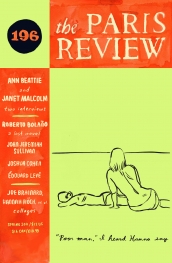
Mathias B. Freese’s slim collection of short stories, Down to a Sunless Sea, relays the weird, miserable, and even sometimes ghoulish existences of people you might pass on the street everyday. The stories read like psychological case studies, and there’s frequently a strange distance between the clinical detachment of the prose and the depressed or depraved sentiment expressed by the narrator. At times the effect is painful, as in “Herbie,” where the titular protagonist’s rage at his abusive father spills over into Oedipal violence. Elsewhere, the stories take on a wry surrealist humor. Freese’s knack for dissonance evinces in “Juan Peron’s Hands,” where a grave robber pines for a head but settles for hands. Far closer to home is “Young Man,” where Freese distills an entire life to a few bitter pages, exploring the modern disconnect between thought, action and identity.
I can’t be who I am in real life, so I can be who I am in thought, but who I am in thought is not who I am in deed, so I live between what is and what should be, and this serves to make sharper the cleavage–the crevices are clearly marked.
One of my favorites in the collection, “Arnold Schwarzenegger’s Father Was a Nazi,” disconcertingly (and humorously) condenses American obsession with celebrity into a fantasy ski trip, complete with the oddly sorta-prescient line: “I might even run for president if I can lose this accent” (the story was originally published in 1991). It is probably the deformed voyeur hero of “I’ll Make It, I Think” who delivers the closest thing to a mantra for these characters:
I’m not hurting anyone. So what if my morning shorts are sticky. I’m a good person. The outside, for sure, is a shambles–that’s not completely true, but I’ve made my point. Inside is fucked up some, but I’ll make it, I think.
Down to a Sunless Sea, for all its monsters and perverts and manic depressives, is never cruel in its darkness or unsympathetic in its distance. Freese creates real people here, and if we laugh at their pain, we’re laughing with them. Highly recommended.
“The book started out a lot more like a big happy Love Boat episode, then 9/11 (and all that followed) happened and blew it in a new direction.”–Chris Adrian (McSweeney’s interview)
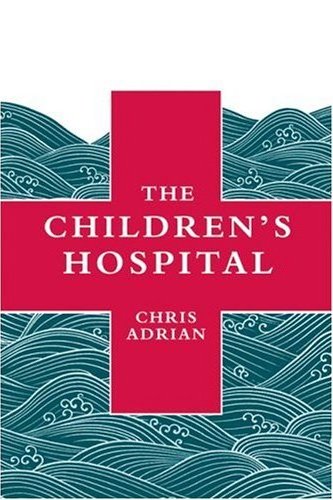
Chris Adrian’s 2006 novel The Children’s Hospital begins with the end of the world. A flood of (excuse me) biblical proportions drowns every living thing on earth with the exception of a children’s hospital which has been specially engineered with the aid of an angel to withstand both the flood as well as life at sea. The residents of the newly nautical hospital–doctors, med students, specialists, nurses, some 699 sick children, portions of their families and sundry others–must navigate an uncertain future drenched in despair and loss. Their mission of helping the ill is the only thing that sustains them–initially.
Central to the story is Jemma Claflin, a mediocre third-year med student with a haunted past. Years before the deluge, each member of her family and her long-term boyfriend died in a horrific way, leaving Jemma unable to love, let alone believe in a positive future. However, as the book progresses, it becomes apparent that Jemma will have to best her fear and become the hero of this epic novel.
I really, really enjoyed The Children’s Hospital. Adrian’s writing communicates a stirring mix of immediacy and pathos, tempered in a cynical humor that sharply bites at any hint of sentimentality. Despite its 615 pages, epic scale, and use of multiple narrative viewpoints, The Children’s Hospital never sprawls into logorrhea–Adrian holds the plot reins tightly at all times, sparingly measuring details which accrue neatly to an affecting payoff. The middle 200 page section of this book is easily the best thing I’ve read in the past few years. I actually had to stand up to read it–the highest Biblioklept endorsement there is. Yes folks–if you have to stand up to read it, it’s truly excellent stuff.
You can read the entirety of Chris Adrian’s short story “A Better Angel” here.