Herman Melville’s Whale Steaks

In Chapter LXIV of Herman Melville’s Moby-Dick, Stubb, second mate of the Pequod, demands whale steaks for dinner. He’s not happy with how the cook has prepared the steaks though, complaining they are too tender and overdone — his taste is closer to the sharks who are making a racket outside the ship–

“Cook,” said Stubb, rapidly lifting a rather reddish morsel to his mouth, ” don’t you think this steak is rather overdone? You’ve been beating this steak too much, cook; it’s too tender. Don’t I always say that to be good, a whalesteak must be tough? There are those sharks now over the side, don’t you see they prefer it tough and rare? What a shindy they are kicking up! Cook, go and talk to ’em; tell ’em they are welcome to help themselves civilly, and in moderation, but they must keep quiet. Blast me, if I can hear my own voice. Away, cook, and deliver my message. Here, take this lantern,” snatching one from his sideboard; ” now, then, go and preach to ’em! “

Stubb then instructs the cook on the best way to prepare whale steaks, a process involving a hot live coal. Oh, and he likes his fins pickled and his flukes soused–

“Well then, cook, you see this whale-steak of yours was so very bad, that I have put it out of sight as soon as possible; you see that, don’t you? Well, for the future, when you cook another whale-steak for my private table here, the capstan, I’ll tell you what to do so as not to spoil it by overdoing. Hold the steak in one hand, and show a live coal to it with the other; that done, dish it; d’ye hear? And now to-morrow, cook, when we are cutting in the fish, be sure you stand by to get the tips of his fins; have them put in pickle. As for the ends of the flukes, have them soused, cook. There, now ye may go.”

The Strange and Disorienting World of Authors’ Personal Libraries

Craig Fehrman’s new article “Lost Libraries” (at The Boston Globe) provides a fascinating overview of how author libraries — that is, the books, usually heavily annotated, that authors own — find their way into archives, and why those archives matter. Fehrman begins by detailing the strange case of recently-deceased novelist David Markson, whose personal library was kinda sorta reassembled by fans after a reader named Annecy Liddell bought Markson’s (cleverly-annotated) copy of Don DeLillo’s White Noise–

The news of Liddell’s discovery quickly spread through Facebook and Twitter’s literary districts, and Markson’s fans realized that his personal library, about 2,500 books in all, had been sold off and was now anonymously scattered throughout The Strand, the vast Manhattan bookstore where Liddell had bought her book. And that’s when something remarkable happened: Markson’s fans began trying to reassemble his books. They used the Internet to coordinate trips to The Strand, to compile a list of their purchases, to swap scanned images of his notes, and to share tips. (The easiest way to spot a Markson book, they found, was to look for the high-quality hardcovers.) Markson’s fans told stories about watching strangers buy his books without understanding their origin, even after Strand clerks pointed out Markson’s signature. They also started asking questions, each one a variation on this: How could the books of one of this generation’s most interesting novelists end up on a bookstore’s dollar clearance carts?

Fehrman g0es on to point out that–

David Markson can now take his place in a long and distinguished line of writers whose personal libraries were quickly, casually broken down. Herman Melville’s books? One bookstore bought an assortment for $120, then scrapped the theological titles for paper. Stephen Crane’s? His widow died a brothel madam, and her estate (and his books) were auctioned off on the steps of a Florida courthouse. Ernest Hemingway’s? To this day, all 9,000 titles remain trapped in his Cuban villa.

Why does this matter? As Fehrman notes, “authors’ libraries serve as a kind of intellectual biography.” And while universities do their best to archive these materials, as Fehrman’s article reveals, much of what gets saved is left to chance. For instance, how did David Foster Wallace’s personal library get to the Harry Ransom Archive?

When Wallace’s widow and his literary agent, Bonnie Nadell, sorted through his library, they sent only the books he had annotated to the Ransom Center. The others, more than 30 boxes’ worth, they donated to charity. There was no chance to make a list, Nadell says, because another professor needed to move into Wallace’s office. “We were just speed skimming for markings of any kind.”

“—the bitter lapse into everyday life—the hideous dropping off of the veil” — Or, We Return from Vacation

After five five fun-filled (mostly) sun-soaked days on Florida’s glorious Gulf Coast, Biblioklept returns from July 4th reveries. I found time to finish Adam Langer’s The Thieves of Manhattan–full review forthcoming, but now, I’m still in a lazy-loungy mood: so, links and vids and so forth–

First, I ripped my title from Edgar Allan Poe’s “The Fall of the House of Usher,” which you obviously knew of course, gentle reader, because of course you’ve read it, but maybe you haven’t seen Jan Svankmajer’s 1981 film adaptation. Creepy stop motion that completely dispenses with actors. Ignore the subtitles.

Another great little film I saw this weekend is Oliver Laric’s Versions (2010), an essay that playfully updates Walter Benjamin’s “The Work of Art in the Age of Mechanical Reproduction.” Watch Versions. A choice line–perhaps appropriated?–from Laric’s essay: “There is more work in interpreting interpretations than in interpreting things and more books about books than any other subject.”

Still on film: watched John Huston’s 1956 adaptation of Moby-Dick on a lazy post-July 4th demi-hangover. Melville’s novel is unfilmable, really, but Huston’s effort isn’t half bad, although the tone of “high adventure” and the downright jaunty soundtrack hardly fit the grisly images of whale killing that permeate the work. The climax doesn’t really read as big as it should either. Key scene: Orson Welles delivers Father Mapple’s sermon–

Finally, I listened to a good chunk of the audiobook of David Mitchell’s new novel The Thousand Autumns of Jacob de Zoet. Good stuff so far (great stuff, really), and a full review forthcoming, but for now, here’s Dave Eggers’s review.

The Squid and the Whale

Late last year, we wrote about Matt Kish’s project to illustrate Herman Melville’s Moby-Dick, one page at a time. Kish’s work is still going strong (in fact it looks better than ever) and he’s very close to the half way mark. We love this recent piece, an image to accompany page 273 —

...previous to that connexion, the short-warp goes through sundry mystifications too tedious to detail.

Keep it up!

Size Matters

I went to my favorite local bookstore this afternoon and for reasons beyond me I was compelled to pick up Jonathan Littell’s divisive 2009 novel The Kindly Ones, a massive tome running to almost 1000 pages in its trade paperback edition. Okay. The reasons I bought it are not completely beyond me: they mostly stem from Paul La Farge’s essay “A Scanner Darkly,” published in the May, 2009 issue of The Believer. Previous Believer feature essays have led to me picking up excellent books by writers I’d never heard of, including 2666 and The Rings of Saturn. Anyway, the book is massive, and I don’t really have time to read it any time soon. There is a hobbit-sized stack of review copies lingering by my nightstand, more arriving all the time, not to mention the books I habitually pick up weekly. Which, more often than not, tend to be pretty big like, uh, The Kindly Ones.

Why is this? Why the attraction to big books? In his essay included at the end of Bolaño’s 2666, Ignacio Echevarría cites a passage from the book where literature professor Amalfitano wonders that:

Now even bookish pharmacists are afraid to take on the great, imperfect, torrential works, books that blaze paths into the unknown. They choose the perfect exercises of the great masters. Or what amounts to the same thing: they want to watch the great masters spar, but they have no interest in real combat, when the great masters struggle against something that terrifies us all, that something that cows us and spurs us on, amid blood and mortal wounds and stench.

The “bookish pharmacist” in question has explained that he favors the preciseness of “Bartleby” over Moby-Dick, the polish of The Metamorphosis over The Trial. Amalfitano, Bolaño’s stand-in, points out that it takes “the great, imperfect, torrential works” to “blaze paths into the unknown.” Put another way, the masters need space; space to overflow, make errors, experiment, joust with other masters, play in and with time. Obviously, the passage (as Echevarría and a million other critics have noted) is a defense for the sprawl of 2666 itself, but I think it speaks to why many readers are drawn to the big books. They can be ragged and overflowing but they also have more room to take the measure of spirit, soul, life. They can evoke this world and others. They can be grand.

Not to say that the smaller books can’t do this in turn. Denis Johnson’s Jesus’ Son is masterful in its precision and humor. But Tree of Smoke is the better book. David Foster Wallace’s Infinite Jest trumps everything else the man wrote. White Noise is more manageable than (and perhaps superior to) Underworld, but the bigger book allows Don DeLillo the space he needs to explore so much of American history and American psyche. And these are just contemporary examples. There’s James Joyce and Marcel Proust, Dostoevsky and Tolstoy. Sterne. Cervantes. Supply your own names.

But I also love novellas and those long short stories of strange size like Joyce’s “The Dead” or, yes, “Bartleby” (sidebar: Really, what is “Bartleby”? A long short story? A short novella? What is it?). There’s something pure and refreshing about them, especially when consumed quickly, especially when consumed between a few of those long books. And a confession: I love it when review copies come in that hover around 200 pages, particularly when the novel is the writer’s first or second. There’s a glut, a horrendous, miserable glut, of first-time novelists who feel they must say everything about everything in 380 or 450 or, God forbid, 500+ pages. It’s really too much. I suppose the rule, if there has to be a rule (there doesn’t) is impossibly simple (and perhaps just impossible): if you’re going to write a really, really big book, make sure it’s addictive, compulsive reading. I’m not sure if The Kindly Ones is great art or a potboiler posing as art, but I am pretty certain that its length alone, for whatever reason, is part of its attraction.

Matt Kish Illustrates Moby-Dick, One Page at a Time

So, I’m on my fourth trip through Herman Melville’s masterpiece, Moby-Dick, courtesy of an excellent unabridged audio version read with aplomb, gusto, humor, and great pathos by the late character-actor William Hootkins. I’ll’ go out on a limb and suggest that Hootkins’s reading is so nuanced and attuned to Ishmael’s voice and Melville’s purpose that it would make a great starting point for anyone (unnecessarily) daunted by Melville’s big book.

I’ve been enjoying the book more than ever this time, in part because, knowing its themes, plot, and tone, I can relax a bit more and enjoy its nuance and humor, its weird little nooks and crannies. I’m also really digging Matt Kish’s mixed-media illustrations for the book. Kish is illustrating each page of his 552 page Signet Classics Edition–the same edition I used for a graduate seminar years ago. Kish’s art is fresh, fun, and invigorating; it’s also quite thoughtful in its interpretation of Melville’s text, and never fussy. You can check out an easy-to-use visual index here, or visit his blog here.

Page 046 : "...and from the shuddering cold and blackness of the sea, the whale came breeching up

There Is No Quality in This World that Is Not What It Is Merely by Contrast

I was thinking about this passage when I awoke very cold this morning. Here’s one of our favorite narrators ever, Ishmael, in Herman Melville’s Moby-Dick, explaining why you have to be just a little bit cold to appreciate the snug warmth of a bed on a frozen morning:

We felt very nice and snug, the more so since it was so chilly out of doors; indeed out of bed-clothes too, seeing that there was no fire in the room. The more so, I say, because truly to enjoy bodily warmth, some small part of you must be cold, for there is no quality in this world that is not what it is merely by contrast. Nothing exists in itself. If you flatter yourself that you are all over comfortable, and have been so a long time, then you cannot be said to be comfortable any more. But if, like Queequeg and me in the bed, the tip of your nose or the crown of your head be slightly chilled, why then, indeed, in the general consciousness you feel most delightfully and unmistakably warm. For this reason a sleeping apartment should never be furnished with a fire, which is one of the luxurious discomforts of the rich. For the height of this sort of deliciousness is to have nothing but the blanket between you and your snugness and the cold of the outer air. Then there you lie like the one warm spark in the heart of an arctic crystal.

Will Eisner’s Adaptation of Herman Melville’s Moby-Dick

moby_dick_cv_300

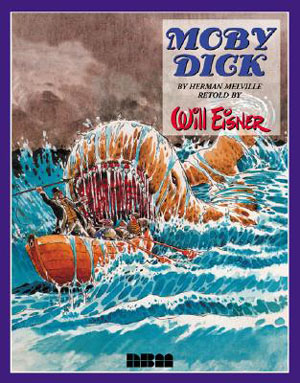
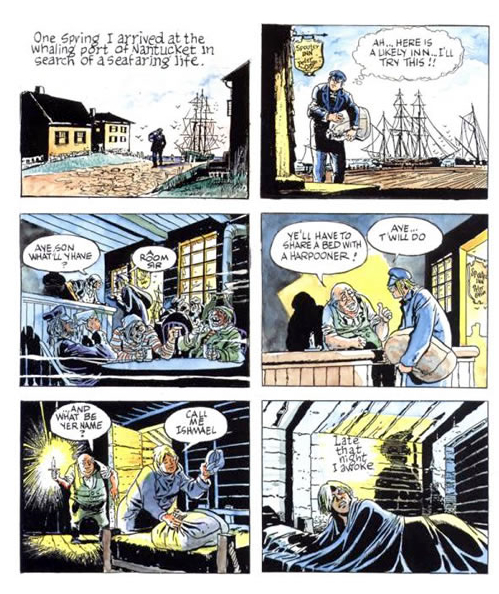
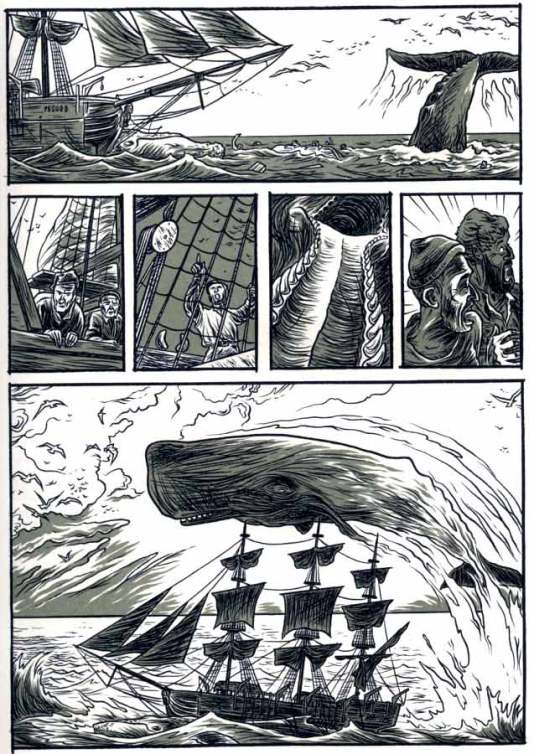
Will Eisner’s adaptation of Herman Melville’s Moby-Dick was one of his last works, completed in 2001 just four years before his death. While no comic book adaptation can match Ishmael’s expansive voice, Eisner’s work here does capture the spirit of adventure and the wish for communion that underpins Melville’s tome. We think it would make a great introduction for younger readers to Melville’s massive book, and will surely interest older readers apprehensive of Moby-Dick. Great stuff.

Eisner Moby-DickMore here.

Summer Reading List: Tales of Adventure

Indulge yourself this summer by taking a fantastic voyage–literary or literally. To help you get started, check out the following tales of adventure.

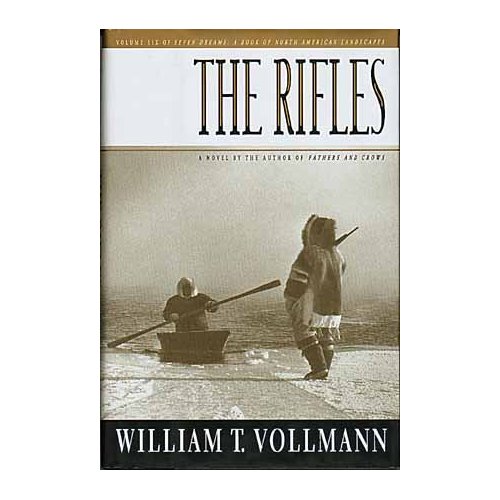
William Vollman’s The Rifles, part of his as-yet-unfinished Seven Dreams series is a brilliant engagement of history, colonialism, identity, and all of those Big Profound Issues that we so adore in our modern literature. It’s also a really cool adventure story, the tale of John Franklin’s nineteenth-century exploration of Inuit territory. Sad, beautiful, breathtaking.

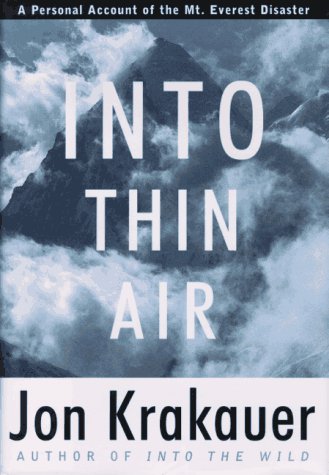
If you prefer your adventure tales uncomplicated by postmodern gambits, check out John Krakauer’s Into Thin Air, a journalistic account of the writer’s 1996 ascent of Mt. Everest, and the disasters that befell his expedition. The word “harrowing” fits well, gentle readers.

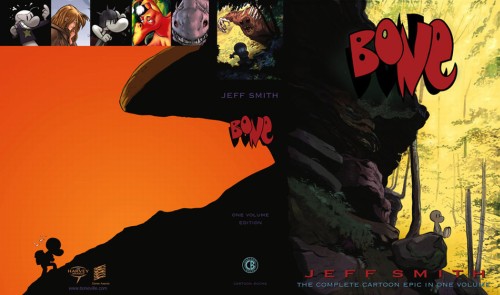
On the lighter-but-not-too-much-lighter side, Jeff Smith’s self-published comic Bone is fantastic; even better, you can get the entire 1300 page run of the whole series in Bone: One Volume Edition. We use the word “delightful” here in an absolutely unpejorative sense, friends: the adventures of Fone Bone, his cousins Phoney Bone and Smiley Bone, and Thorn, Granma Rose, and the Red Dragon are epic in scope yet retain an honest humor that will keep in the most cynical folks laughing. A major literary accomplishment that has been unjustly overlooked.

Also somewhat overlooked is Herman Melville’s Benito Cereno. In Bone, protagonist Fone Bone lugs around a massive copy of Melville’s masterpiece Moby-Dick everywhere he goes–and while that book is undoubtedly a desert island classic, Benito Cereno is an underappreciated gem of a tale. Revealing the strange secret at the heart of this book would spoil it, so suffice to say that the short novel enigmatically investigates slavery and colonialism in ways that beg for closer analysis. Good stuff.

Perhaps, though, you beg for the real thing. In that case, we recommend Ultimate Adventures (from Rough Guides) for all your camel-trekking-in-the-Sahara, rock-climbing-at-Joshua-tree, Pacuare-River-rafting needs. Beautiful photography and tantalizing descriptions are coupled with informative “Need to Know” sections that spell out the who-what-when-where-and-how that will help you get your adventure under way.

Also in the exploratory vein, Where to Go When: The Americas, from DK’s Eyewitness Travel, serves as a kind of travel almanac–the kind that makes you wish you were very, very rich with an excess of free time. If that were the case, you’d be spending nine days in May on the Amazon River, spotting pink river dolphins, gorgeous macaws, and darling squirrel monkeys instead of reading this blog right now. Even if you’re not excessively rich with nothing more pressing to do other than trek the Alaskan fjords, The Americas is fun daydreaming material–perhaps the realist response to Vollman’s Seven Dreams. In any case, Ultimate Adventures and The Americas both come out at the end of this summer, giving you plenty of time to plan that awesome adventure getaway for next year.

Alphabet Soup: I

1831s.jpg

I is for Ishmael, narrator of Herman Melville’s Moby-Dick, a story about whaling/wailing. Ishmael’s narrative is an attempt to transform his pain and loss into some kind of meaningful human connection–to try to measure the incomprehensible and to put the ineffable into words. He’s a lovable guy, something of an eccentric in his time, who makes good friends with his strange bedfellow Queequeg. Of course, the whole thing ends in disaster, a disaster that Ishmael alone bears witness to, like one of Job’s servants returning to the master.

Also, I think that the great white whale, Moby Dick, is like a symbol or something.

infinitejest.jpg

I is also for Incandenza, Hal, the would-be tennis prodigy, secret stoner, and eidetically gifted prescriptive grammarian who is–along with Don Gately (somehow unjustly skipped over in installments D and G)–the protagonist of David Foster Wallace’s mammoth novel Infinite Jest. Hal is a sensitive kid, the son of a mad scientist filmmaker/tennis academy founder, who kinda sorta haunts both the novel as well as the Enfield Tennis Academy. Writing this makes me wish for a free month (i.e. no grad school) to re-read IJ, just so that I could take another crack at why Hal comes down with the howling fantods. Plenty of theories here.

Leviathan–Jens Harder

Jens Harder’s Leviathan is a graphic novel in the truest sense. Harder uses scratchy but fluid images to tell the story of a mystical whale who battles a giant squid, saves Noah’s ark, attacks the Pequod, wreaks havoc on a cruise ship, and eventually battles an armada of anachronisms. The only text Harder employs in Leviathan are excerpts and quotes from a variety of sources including the Bible and a host of philosophers; the bulk of quotes come from Melville’s Moby-Dick. Just as that novel begins with an “Etymology” followed by a section called “Extracts,” Harder begins with a section called “Leviathanology,” a collection of quotes about leviathans from the likes of Hobbes, Milton, and the book of Job. These quotes inform the story of Leviathan, connecting the whale to a sublime and unknowable mystery that Harder will explore. Harder’s surreal images often invert notions of “proper” space and time, giving the whale an awesome significance, but also positing the beast as something that denies signification. By eschewing the traditional forms of graphic storytelling, which rely on speech bubbles and clear-cut panel transitions, Harder is able to capture something that is essentially too large to capture. This book works. Highly recommended.

leviathan.jpg

Alphabet Soup–Our Favorite Literary Characters (Part One)

A is for Antigone, the incestuous product of Oedipus and his mama Jocasta. In Sophocles’ play of the same name, Antigone is punished for burying the body of her exiled brother Polynices. Like her papa Oedipus, Antigone pushes the limits of cultural boundaries and the conflicts that duty to one’s family and the gods present to social order. Good, tragic stuff.

A is also for Alice, the heroine of not one but two Lewis Carroll classics, Alice’s Adventures in Wonderland and Through the Looking-Glass, and What Alice Found There. Full of logic puzzles, cryptic satire, and good old fashioned nonsense, Alice’s adventures work on a range of levels that appeal to both children and adults. She explores altered states and missing signifiers while flirting with death and madness in a surreal dreamworld. (Fans of Carroll’s twisty logic will surely delight in Douglas Hofstadter’s Gödel, Escher, Bach: an Eternal Golden Braid).

B is for Bartleby the scrivener, the eponymous non-hero of my favorite Herman Melville short story. Bartleby is hired by a wealthy lawyer to copy texts, a job at which he excels. But whenever Bartleby is asked to do something other than copy letters, he always replies “I would prefer not to.” This answer incenses the other employs and bewilders the lawyer. Eventually Bartleby stops doing any task, but somehow always remains around the office, almost like a ghost. Just what exactly Bartleby is meant to symbolize is up for grabs–Melville’s text is rich with possible interpretations. Every time I read this one, I get a new perspective. Read the full text here.

B is also for Billy Budd, yet another Melville character. Maybe you read Billy Budd in high school (it made me scratch my head quite a bit my Junior year). Billy Budd is a foundling who grows into the type of man admired by all. When he joins the crew of a ship, he is lovingly called “Baby Budd” by his fellow sailors. However, when he encounters his embittered superior Claggart, his innocence is put to the test; Claggart accuses young Budd of plotting mutiny. Billy is literally struck dumb by the accusation, and he responds by striking Claggart, inadvertently killing him. For this crime he is put to death and revered as a Christ-like figure by the crew. Like the story of Bartleby, Billy Budd resists easy decoding. Simply put, this is a great novella to come back to more than once.

C is for Chinaski. Henry Chinaski was the alter-ego Charles Bukowski used to represent himself in his books. Chinaski was a macho coward, a drunken gambler who was always chasing ladies and losing jobs. Chinaski was (bizarrely) the ideal imagined self for Bukowski, full of faults and shortcomings and egotistical brutality. I recently watched the documentary Bukowski: Born into This. One memorable scene goes something like this: the filmmaker (this is in the early 70s, when the filmmaker first begins shooting the footage that becomes Born into This) follows Bukowski from L.A. to San Francisco, where he’s giving a poetry reading. Bukowski gets drunk on the plane, makes an ass of himself, is a moron at the reading, is a bumbling idiot, etc, etc. However Bukowski writes up the whole event very differently in his Open City column, “Notes of a Dirty Old Man”–he paints a picture of himself having to help this idiot camera guy out; he says the filmmaker is a lost fool. When the filmmaker runs into Bukowski, he’s upset; he says: “Don’t you realize that I have film of the whole thing? I’ve got you drunk on film, looking like a fool!” Bukowski replies: “Fuck you! When I write, I’m the hero of my shit!” So that’s Chinaski: the hero of Bukowski’s shit.

C is also for Calliope, the protagonist of Jeffrey Eugenides’ 2002 novel Middlesex. To be honest, I thought the second half of the novel was weak (in fact I thought the end was downright awful), and Eugenides’ writing was surprisingly rote, even hackneyed at times (I use the adverb “surprisingly” as I was under the impression that he was something different based on friends’ reviews of The Virgin Suicides, which I never read). Nevertheless, poor cursed Calliope is a complex and at times enthralling character to follow. No one realizes Calliope is a hermaphrodite until she (Cal is raised as a girl) turns fourteen and shit gets weird. The gender study implications are interesting here, but what I found truly fascinating about the novel was the way that Eugenides used Calliope as a muse for genetic history; the character is essentially a complex and conflicting comment on the clashing paradigms of different ages and different spaces. Boys and girls, Turks and Greeks, blacks and whites, rich and poor, hippies and squares–as the name of the novel implies, there is never a definite and simple space where identity can rest.