I’m psyched about this one—Uncreative Writingby Kenneth Goldsmith, who you may know as UbuWeb. Here’s the description from the publisher, Columbia UP—
Can techniques traditionally thought to be outside the scope of literature, including word processing, databasing, identity ciphering, and intensive programming, inspire the reinvention of writing? The Internet and the digital environment present writers with new challenges and opportunities to reconceive creativity, authorship, and their relationship to language. Confronted with an unprecedented amount of texts and language, writers have the opportunity to move beyond the creation of new texts and manage, parse, appropriate, and reconstruct those that already exist.
In addition to explaining his concept of uncreative writing, which is also the name of his popular course at the University of Pennsylvania, Goldsmith reads the work of writers who have taken up this challenge. Examining a wide range of texts and techniques, including the use of Google searches to create poetry, the appropriation of courtroom testimony, and the possibility of robo-poetics, Goldsmith joins this recent work to practices that date back to the early twentieth century. Writers and artists such as Walter Benjamin, Gertrude Stein, James Joyce, and Andy Warhol embodied an ethos in which the construction or conception of a text was just as important as the resultant text itself. By extending this tradition into the digital realm, uncreative writing offers new ways of thinking about identity and the making of meaning.
Barry McCrea’s In the Company of Strangers: Family and Narrative in Dickens, Conan Doyle, Joyce, and Proust is one of the more engaging works of literary criticism I’ve seen in some time. And while I’m interested in McCrea’s subjects (the weird lines between the Victorian era and modernism, family and marriage plots, Dickens and Joyce, etc.), it’s the clarity of his writing that I find most impressive. Clear, frank writing is too rare in current literary criticism. Here’s McCrea describing his project—
This book argues that the formal innovations of the high-modernist novel are inseparable from a fundamental rethinking of how family ties are formed and sustained. Genealogy was thematically and structurally central to the English nineteenth-century novel. In the Company of Strangers shows how the formal strategies employed by Joyce and Proust grow out of an attempt to build a fully coherent narrative system that is not rooted in the genealogical family. Modernism’s rejection of the familiar and cultivation of the strange, in other words, are inseparable from its abandonment of the family and embrace of the bond with the stranger as an alternative to it.
[In the Company of Strangers] offers a reassessment of the relationship between the modernists and their Victorian predecessors, suggesting that the key precursor to this queer model of narrative can be located, paradoxically, in the genealogical obsession of the English nineteenth-century novel. Far from representing a clean break with the Victorian family novel, the radical narrative formalism of high modernism exploits the potential of an alternative queer plot that was already present as a formal building block in the nineteenth-century novel.
McCrea’s queer theory lens is keenly attuned to the homoerotic content present in the novels he examines, but his critical gaze is ultimately more interested in how “queer time” functions as an organizing principle throughout the structure of these narratives. McCrea argues that this queer model of time is a central and defining characteristic of literary modernism. The agent (or one agent) of queer time is “the stranger,” the character who figuratively threatens (and paradoxically defines) the family. McCrea points out that the typical Victorian marriage plot resolves the problem of the stranger by incorporating him or her into the family as a point of narrative resolution. In contrast, in “the queer modernist narrative strategies of Ulysses and the Recherche, the stranger rivals and ultimately usurps the family plot.”
McCrea sifts through family plots (and the strangers who would challenge or queer them) in Dickens (Oliver Twist, Bleak House, Great Expectations), Arthur Conan Doyle’s Sherlock Holmes stories, Ulysses (“a queer family epic”), and Proust’s big book. In the Company of Strangers constantly scrutinizes the ways that family organizes narrative (and narrative organizes family). The book also analyzes what “urban literature” might mean, examining what it means to live in proximity to one’s fellows, and the ways in which urban living necessitate ad hoc families.
In the Company of Strangers does a lovely job of tracing the strange currents that run from Victorian lit to modernism and beyond—currents that extend from our conceptions of family itself, and indeed, our conceptions of life and an end to life. McCrea’s writing is precise, supported by a close textual readings, and if I didn’t always agree with his conclusions, he achieved what every critic ought to aim for: he made me want to read the books he was writing about again.
There’s a silly little article at Slate today about “overrated” books. The article collects a decent survey of critics and writers discussing the “great books” that they find boring, difficult to read, or otherwise overrated. There are a few tomes I agree with on the list—I am proud that I read all of Tess of the D’Ubervilles in the 10th grade, unlike most of my peers who, undoubtedly wiser than I, resorted to Cliffs Notes, but Hardy’s book was the biggest chore of my young reading life. There are plenty of books targeted in the article that may be overrated, but that doesn’t mean that they are bad or terrible books. But Slate is always quick to post a catchy, “provocative” headline, no doubt intended to generate hits; indeed, they’re almost as bad as Huffington Post, which has published similar articles in the past, including this recent execrable example of “literary criticism,” “Bad Classics: Books We Think Are Overrated.” Huffington Post’s list is ridiculous, taking weak stabs at Waiting for Godot, Moby-Dick, and that most sacred of cows, Ulysses.
Joyce’s big book shows up on the Slate list too. I’ll be the first to admit that the book is likely overrated, held in perhaps too high esteem by those who haven’t read it, and the academic industry it has produced does its reputation no favors among a general reading public. But it’s not a “bad classic.” It’s a beautiful, moving, and, yes, important book, and because of its status, both in the academy and in popular culture, it has become yet another easy target for contrarians. From the Slate piece, here’s Daniel Mendelsohn of the NYRB, explaining why Ulysses is inauthentic and has never “persuaded” him —-
. . . it’s as if Joyce were both the author of his book and the future comp lit grad student who’s trying to decipher it. Indeed, it’s small wonder that Ulysses has become the bible of academic lit departments; it seems to have been practically written for literary theorists. (Dubliners, by contrast, is a book for “ordinary readers”—a term I use admiringly.)
I understand that Ulysses’ place in the academy can be terribly frustrating, but Mendelsohn’s critique strikes me as populist rubbish; it’s more an attack on the reputation of the book than the book itself. But I don’t really care; I mean, Mendelsohn is entitled to his opinion, which I’m sure is well-informed.
What I’m ultimately concerned about here is the potential effect that pieces like these at Slate and Huffington Post (and similar sites) can have on a reading public. How freeing to be told by the experts that Ulysses or Moby-Dick or Gravity’s Rainbow is not worth my time! I can get back to those Swedish crime novels now, or those vampire books written at a 4th grade reading level, or, better yet, fuck books. I’m sure there are spoiled rotten housewives throwing chardonnay at each other on TV.
Author Elif Batuman also didn’t care for Ulysses, but she offers the most sensible response in the entire article—-
Like many people, I enjoy learning which canonical books are unbeloved by which contemporary writers. However, I don’t think participants in such surveys ought to blame either themselves (“I’m so lazy/uneducated”) or the canonical books (“Ulysses is so overrated”). My view is that the right book has to reach you at the right time, and no person can be reached by every book. Literature is supposed to be beautiful and/or necessary—so if at a given time you don’t either enjoy or need a certain book, then you should read something else, and not feel guilty about it.
Canonical books I did not enjoy include The Iliad and The Sound and the Fury, and, although I did read Ulysses with some degree of technical interest, it wasn’t fun for me. I maintain that this doesn’t reflect badly on Homer, Faulkner, Joyce, or me.
I think Batuman’s tone and approach is perfect here; I also admire her complete avoidance of playing those favorite games of internet writers: swiping at sacred cows and trying to point out that the emperor is naked. Instead, Batuman acknowledges the inherent fun in articles like the one she’s participating in and then quickly points out that reading is not a contest. She saliently points out that “the right book has to reach you at the right time, and no person can be reached by every book.” To my shame, a younger version of myself wrote some nasty things about William Faulkner on this blog, suggesting that he was the most overrated American writer of all time. I took it all back, of course, and now would rate Light in August and Go Down, Moses as two of my favorite books. I am happy that I read Go Down, Moses at the right time—like Batuman says, timing is a huge factor in how a reader receives a book.
It seems to me that articles like the ones at Slate and HuffPo are symptomatic of an empty populism sweeping through much of America today. I am in no way suggesting that the writers and critics in the surveys are practitioners or purveyors of empty populism; rather, their estimable talents have been circumscribed by engines of culture-production (and culture-absorption) to absolve an increasingly distracted populace from even making a pretense of reading some really great and important books. Articles like these engender slapdash and shallow thinking, licensing poseurs to make claims about books they’ve failed to read. Even worse, these kinds of surveys provide ammunition to the those who hold the word “elite” as an insult. I am not suggesting that articles like these will undo the Western canon, or that they signal the death of the novel, or an end to complex reading — but they certainly don’t help.
Umberto Eco: The list is the origin of culture. It’s part of the history of art and literature. What does culture want? To make infinity comprehensible. It also wants to create order — not always, but often. And how, as a human being, does one face infinity? How does one attempt to grasp the incomprehensible? Through lists, through catalogs, through collections in museums and through encyclopedias and dictionaries. There is an allure to enumerating how many women Don Giovanni slept with: It was 2,063, at least according to Mozart’s librettist, Lorenzo da Ponte. We also have completely practical lists — the shopping list, the will, the menu — that are also cultural achievements in their own right.
SPIEGEL: Should the cultured person be understood as a custodian looking to impose order on places where chaos prevails?
Eco: The list doesn’t destroy culture; it creates it. Wherever you look in cultural history, you will find lists. In fact, there is a dizzying array: lists of saints, armies and medicinal plants, or of treasures and book titles. Think of the nature collections of the 16th century. My novels, by the way, are full of lists.
SPIEGEL: Accountants make lists, but you also find them in the works of Homer, James Joyce and Thomas Mann.
Eco: Yes. But they, of course, aren’t accountants. In “Ulysses,” James Joyce describes how his protagonist, Leopold Bloom, opens his drawers and all the things he finds in them. I see this as a literary list, and it says a lot about Bloom. Or take Homer, for example. In the “Iliad,” he tries to convey an impression of the size of the Greek army. At first he uses similes: “As when some great forest fire is raging upon a mountain top and its light is seen afar, even so, as they marched, the gleam of their armour flashed up into the firmament of heaven.” But he isn’t satisfied. He cannot find the right metaphor, and so he begs the muses to help him. Then he hits upon the idea of naming many, many generals and their ships.
SPIEGEL: But, in doing so, doesn’t he stray from poetry?
Eco: At first, we think that a list is primitive and typical of very early cultures, which had no exact concept of the universe and were therefore limited to listing the characteristics they could name. But, in cultural history, the list has prevailed over and over again. It is by no means merely an expression of primitive cultures. A very clear image of the universe existed in the Middle Ages, and there were lists. A new worldview based on astronomy predominated in the Renaissance and the Baroque era. And there were lists. And the list is certainly prevalent in the postmodern age. It has an irresistible magic.
In his dream HCE, as we shall now call him, tries to make the whole of history swallow up his guilt for him. His initials are made to stand for the generality of sinful man, and they are expanded into slogans like “Here Comes Everybody” and “Haveth Childers Everywhere”. After all, sexual guilt presupposes a certain creative, or procreative, vitality, and a fall only comes to those who are capable of an erection. The unquenchable vitality appears in “our Human Conger Eel” (despite the “down, wantons, down” of the eel-pie-maker in King Lear); the erector of great structures is seen in “Howth Castle and Environs”. From the point of view of the ultimate dreamer of the dream, though (the author himself), “HCE” has a structural task to perform. As a chemical formula (H2CE3) or as a genuine vocable (“hec” or “ech” or even “Hecech”) it holds the dream down to its hero, is sewn to it like a monogram-HCE: his dream. But HCE has, so deep is his sleep, sunk to a level of dreaming in which he has become a collective being rehearsing the collective guilt of man. Man falls, man rises so that he can fall again; the sequence of falling and rising goes on till doomsday. The record of this, expressed in the lives of great men, in the systems they make and unmake and remake, is what we call history.
Happy Mother’s Day! Sure, it’s a marketing scam, but we all love moms, right?
Fascinating moms populate literary fiction, and there’s no shortage of great baddies, evil stepmothers, and distant headcases in our favorite literature—but we thought we’d focus instead on some of the moms that seem to be, you know, really great moms.
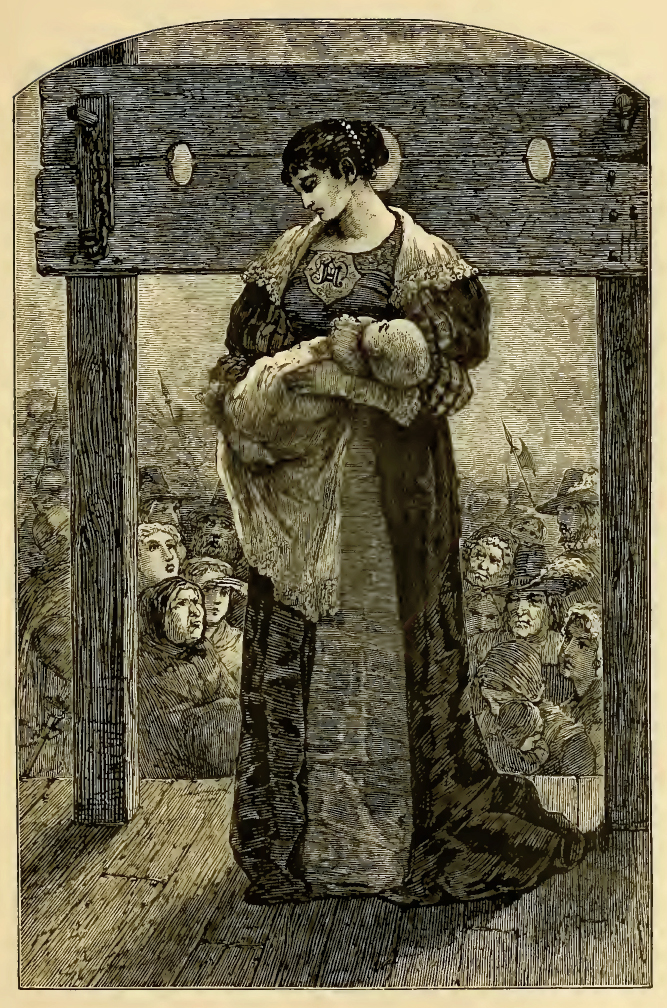
"Hester Prynne & Pearl before the stocks", an illustration by Mary Hallock Foote from an 1878 edition of The Scarlet Letter
1. Hester Prynne, The Scarlet Letter (Nathaniel Hawthorne)
Hester Prynne is a bundle of contradictions—sin and salvation, radical freedom and reactionary repression, hope and despair—all bound to a deeply patriarchal society that had to control women’s bodies at all turns. Fortunately, there’s no analog for the Puritans’ judgmental, shame-based behavior in our own society (har har). Hester and her daughter Pearl, living in a cottage outside of Boston, are outside the dominant social order. It’s a form of punishment that paradoxically frees the pair, allowing Pearl to grow into a kind of nature spirit—impish and willful, to be sure, but also artistic and able to express herself. Although Pearl is the human doubling of Hester’s titular letter, she’s ultimately no badge of shame, but rather a treasure in her mother’s eyes.
2. Penelope, The Odyssey (Homer et al.)
Patient Penelope weaving and unweaving her husband’s shroud—is she the faithful wife, waiting for Odysseus who’s having adventures asea? Or is she cunningly keeping her son safely alive from the predatory suitors who would certainly want to get him out of the way ASAP. Penelope is an extraordinary and ambiguous figure, but one thing is clear: she loves her son Telemachus.
3. Molly Bloom, Ulysses (James Joyce)
Speaking of Penelope . . . Molly might not be the most faithful wife, but damn if she isn’t a hot mama.
4. Ma Joad, The Grapes of Wrath (John Steinbeck)
Ma Joad never gets a first name in Grapes—she’s an elemental matriarchal force that keeps the family together against every kind of pain. The final scene of this novel is utterly amazing. When Rose of Sharon’s daughter dies in childbirth, Ma Joad directs the mother to nurse a man dying from hunger. All the while, a flood of epic proportions looms. Ma Joad’s determination to live transcends Darwinian impulses here; against the backdrop of infanticide, economic and social genocide, and natural disaster, she still directs her family to a loving, Emersonian course of action.
5. Grendel’s mother, Grendel (John Gardner)
In John Gardner’s fabulous retelling of the Beowulf saga from Grendel’s POV, we find a deeply alienated young man who, try as he might, cannot communicate with the plants and animals around him. Grendel should be a thing of nature, but he is a thinking thing, a thing with a conscience, a soul. He can understand men but they cannot understand him. In one of the book’s saddest conceits, Grendel cannot communicate through speech with his mother, who in many senses seems a creature apart from him. Gardner here dramatizes the radical alienation that all children must feel at some point for their mothers, an alterity grounded in the paradox that, hey, your mom gave birth to you—you came out of her, metaphorically, sure, but also, like, really. Even though Mama Grendel can’t speak to her son, she protects and lovingly cares for him, splitting a few skulls here and there in the process. Motherhood is tough.
William Carlos Williams on James Joyce (from Our Exagmination Round His Factification for Incamination of Work in Progress, a symposium on Finnegans Wake)—
Joyce maims words. Why? Because meanings have been dulled, then lost, then perverted by their connotations (which have grown over them) until their effect on teh mind is no longer what it was when they were fresh, but grows rotten as poi — though we may get to like poi.
Meanings are perverted by time and chance — but kept perverted by academic observance and intention. At worst they are inactive and get only the static value of anything, which retains its shape but is dead. All words, all sense of being is gone out of them. Or trained into them by the drill of the deadly minded. Joyce is restoring them.
One of my favorite passages in Ulysses (it’s from the “Cyclops” chapter, episode 12). Hilarious–
He wore a long unsleeved garment of recently flayed oxhide reaching to the knees in a loose kilt and this was bound about his middle by a girdle of plaited straw and rushes. Beneath this he wore trews of deerskin, roughly stitched with gut. His nether extremities were encased in high Balbriggan buskins dyed in lichen purple, the feet being shod with brogues of salted cowhide laced with the windpipe of the same beast. From his girdle hung a row of seastones which dangled at every movement of his portentous frame and on these were graven with rude yet striking art the tribal images of many Irish heroes and heroines of antiquity, Cuchulin, Conn of hundred battles, Niall of nine hostages, Brian of Kincora, the Ardri Malachi, Art MacMurragh, Shane O’Neill, Father John Murphy, Owen Roe, Patrick Sarsfield, Red Hugh O’Donnell, Red Jim MacDermott, Soggarth Eoghan O’Growney, Michael Dwyer, Francy Higgins, Henry Joy M’Cracken, Goliath, Horace Wheatley, Thomas Conneff, Peg Woffington, the Village Blacksmith, Captain Moonlight, Captain Boycott, Dante Alighieri, Christopher Columbus, S. Fursa, S. Brendan, Marshal Mac-Mahon, Charlemagne, Theobald Wolfe Tone, the Mother of the Maccabees, the Last of the Mohicans, the Rose of Castille, the Man for Galway, The Man that Broke the Bank at Monte Carlo, The Man in the Gap, The Woman Who Didn’t, Benjamin Franklin, Napoleon Bonaparte, John L. Sullivan, Cleopatra, Savourneen Deelish, Julius Caesar, Paracelsus, sir Thomas Lipton, William Tell, Michelangelo, Hayes, Muhammad, the Bride of Lammermoor, Peter the Hermit, Peter the Packer, Dark Rosaleen, Patrick W. Shakespeare, Brian Confucius, Murtagh Gutenberg, Patricio Velasquez, Captain Nemo, Tristan and Isolde, the first Prince of Wales, Thomas Cook and Son, the Bold Soldier Boy, Arrah na Pogue, Dick Turpin, Ludwig Beethoven, the Colleen Bawn, Waddler Healy, Angus the Culdee, Dolly Mount, Sidney Parade, Ben Howth, Valentine Greatrakes, Adam and Eve, Arthur Wellesley, Boss Croker, Herodotus, Jack the Giantkiller, Gautama Buddha, Lady Godiva, The Lily of Killarney, Balor of the Evil Eye, the Queen of Sheba, Acky Nagle, Joe Nagle, Alessandro Volta, Jeremiah O’Donovan Rossa, Don Philip O’Sullivan Beare. A couched spear of acuminated granite rested by him while at his feet reposed a savage animal of the canine tribe whose stertorous gasps announced that he was sunk in uneasy slumber, a supposition confirmed by hoarse growls and spasmodic movements which his master repressed from time to time by tranquillising blows of a mighty cudgel rudely fashioned out of paleolithic stone.
(And yes, we know we posted this before, but not on St. Patrick’s Day!)
My third (complete) trip through James Joyce’s Ulysses finds me just as (or even more than) stunned as the previous two journeys, a bit (very much) unequal to properly reviewing the book, but this time with an easy out — I listened to an unabridged, full cast audio recording. The aforementioned “easy out” is resting on the received greatness and goodness (and evilness) of the book, which I will hardly contend with and heartily endorse (and do very little real critical work to support my endorsement). Ulysses is fantastic. But what about this audio recording?
First thing’s first — I listened to, absorbed, choked up at, guffawed about, cackled around, and generally loved RTÉ’s 1982 dramatized, soundtracked, sound-effected, lovingly detailed recording of Ulysses, a work crammed with voices to match (if perhaps not equal) Joyce’s big fat work. This recording is not as widely available as LibriVox’s (free) full cast production or Jim Norton’s Naxos reading, but, after sampling both, I’d argue that it’s better. The Irish players bring sensitivity and humor to their roles, but beyond that pathos, the energy of RTÉ’s troupe is what really makes the book sing. Leopold Bloom gets his own voice, as does Stephen Dedalus and Molly (and all the characters). This innovation propels the narrative forward with dramatic power, and clarifies the oh-so indirectness of Joyce’s free indirect style, making the plot’s pitfalls and pratfalls more distinct and defined. There are songs (and dances) and music (and musing) and humming (and hemming and hawing and reverb). There is chanting and chawing and brouhaha. There is chaos and calamity and confusion. There is brilliance and peace and transcendence. It’s all very good, great, wonderful.
So: Who is a full cast unabridged audio recording of Ulysses for? Say, for instance, can someone who’s never read Ulysses listen to this instead?
I don’t know.
Here’s what I think though: Ulysses begs to be read aloud, is musical, soundical. Beyond obvious chapters like episode 11, “Sirens,” an overtly musical interlude that actually hurt my throat the first (second?) time I read it (even though I read it that time silently) — beyond the obvious musicality of “Sirens,” Ulysses hums and thrums and bristles and thumps with lively, vocal, melodious, rhythmic energy, pulses in sound and vision. The full cast reading, to cling to a hoary cliché, brings this sound and vision to life, animating Joyce’s words with a just vitality. But I’ve tripped into details, put carts before horses — the prime advantage for an audio recording of Ulysses to newbies is probably how clearly (and audibly, ahem) it delineates the book’s plot. But —
At the same time, I think anyone reading the book for the first time will want to read it along with the audio recording. Read along as in literally read along with, or, more likely read first or after — chapter by chapter that is. Yes, I think, yes, that’s what I’d recommend (lagersoaked now as my brain might be) — read a chapter first, then listen, then read another (or reread). Rinse. Lather. Repeat.
The Cast at Work
Now I retreat to that ugly bastard of literary criticism, reader response shtick, the stuff of fellows who can’t make real claims on the work itself but rather hide behind how the book made me feel and think and blah blah blah. Sorry. I break myself against Ulysses. And it’s not even the book, truth be told (to trot out another hoary cliché) — I’ve reviewed books here that sought to rival Ulysses, books that undoubtedly contend with it — it’s more the critical tradition that accompanies Ulysses that daunts me. But enough. Anyone who wishes to read pages of graduate school work on the subject, written by moi, may apply below. Suffice to say for now that I loved loved loved listening to this audio recording.
Perhaps because I was so familiar (or familiar enough) with Joyce’s themes at this reading/auditing, I was able to relax during this odyssey through Joyce’s epic. To put it another way, I felt no need to be “on” — to pick up allusions, to grasp at threads — and trip over them. Instead, I found a human dimension to Joyce’s work, one I’d felt there before, but perhaps not fully experienced (I am not claiming that I have fully experienced Ulysses). I laughed. I angered. I spit. I snarled. I cried (yes, I cried; at the mention of Rudy at the end of “Circes,” and then, again, at the end of the novel, just a bit, when I felt (felt) Molly’s love for her husband). There might have been a stirring at the loins.
I found a confirmation of my favorite episodes: “Circe,” foremost, an apocalyptic carnival brought to a bristling boil in the Irish cast’s capable choir. The aforementioned “Sirens” sings of course; far more pleasant, really, to hear than read. “Telemachus,” sure, who can nay-say an opener like that, although it’s really just the opener to the prelude to the real opener “Calypso” — great stuff. What earthy joy to meet Bloom. “Hades” — a sad treat. “Aeolus” — a funny treat, windily rebounding in vim and vigor and vigorous vim. The library episode — “Scylla and Charybdis” — I’ve always thought of it as Hamlet and Stephen, or grandfathers and ghosts — becomes clearer in the voices of RTÉ’s cast. Clearer not in the sense of: “Now I understand what Stephen’s getting at,” but clearer in the sense: “Now I see where Stephen sees what he is not quite sure he is getting at.” That chapter on pig-headed closemindedness, “The Cyclops” — a triumph, a magnitude, a bold chuckle. And “Penelope.” Well, yes, great stuff.
It’s more remarkable, I suppose, the ways in which RTÉ’s recording illuminated those chapters I’d struggled with, those that had made me yawn. The first, tedious, purposefully clichéd half of “Nausica” tried my patience (get back to Bloom!) — but the actress who reads it highlights the chapter’s tedium, its commonplaces — even as it/she rushes to that juicy climax. “Proteus”: far more manageable than I’d remembered. And “The Oxen of the Sun” (aka that chapter that I never really read properly) — well, with a full band of nasty drunken med students, a bold narrator (and a sympathetic nurse), this stumbling rock becomes a springboard to the madness I so love (and have loved) in “Circe.” In the once-trying catechism of “Ithaca,” the actors find a rhythmic bounce, a dry crunching that explodes in the wet gush of “Penelope.” And didn’t I say, yes, great stuff.
What this audio recording does best is humanize Joyce’s characters. While there is never a doubt that they are set against their mythotypical forebears, I found in Joyce’s characters this time a deep specificity, a concreteness of place, a realness. I found no need to situate a Bloom-as-Odysseus correspondence. Molly did not have to be an earth goddess. Stephen was freed from the burden of Hamlet. Sure, metempsychosis was in play, but it was a backdrop, not a foregrounding, determining analytical program. I think the audio recording helped transmit this humanity, a humanity that was always there, obscured by the clutter of critical tradition.
An economic summary (perhaps) of Ulysses. From “Ithaca”–
Compile the budget for 16 June 1904. DEBIT
1 Pork Kidney
1 Copy FREEMAN’S JOURNAL
1 Bath And Gratification
Tramfare
1 In Memoriam Patrick Dignam
2 Banbury cakes
1 Lunch
1 Renewal fee for book
1 Packet Notepaper and Envelopes
1 Dinner and Gratification
1 Postal Order and Stamp
Tramfare
1 Pig’s Foot
1 Sheep’s Trotter
1 Cake Fry’s Plain Chocolate
1 Square Soda Bread
1 Coffee and Bun
Loan (Stephen Dedalus) refunded
BALANCE
L. s. d.
0—0—3
0—0—1
0—1—6
0—0—1
0—5—0
0—0—1
0—0—7
0—1—0
0—0—2
0—2—0
0—2—8
0—0—1
0—0—4
0—0—3
0—0—1
0—0—4
0—0—4
1—7—0
0-17—5
2-19—3
CREDIT
Cash in hand
Commission recd. Freeman’s Journal
Loan (Stephen Dedalus)
Another passage from Ulysses, this one from “Ithaca”–
Were they indefinitely inactive?
At Stephen’s suggestion, at Bloom’s instigation both, first Stephen, then Bloom, in penumbra urinated, their sides contiguous, their organs of micturition reciprocally rendered invisible by manual circumposition, their gazes, first Bloom’s, then Stephen’s, elevated to the projected luminous and semiluminous shadow.
Similarly?
The trajectories of their, first sequent, then simultaneous, urinations were dissimilar: Bloom’s longer, less irruent, in the incomplete form of the bifurcated penultimate alphabetical letter, who in his ultimate year at High School (1880) had been capable of attaining the point of greatest altitude against the whole concurrent strength of the institution, 210 scholars: Stephen’s higher, more sibilant, who in the ultimate hours of the previous day had augmented by diuretic consumption an insistent vesical pressure.
What different problems presented themselves to each concerning the invisible audible collateral organ of the other?
To Bloom: the problems of irritability, tumescence, rigidity, reactivity, dimension, sanitariness, pilosity.
To Stephen: the problem of the sacerdotal integrity of Jesus circumcised (I January, holiday of obligation to hear mass and abstain from unnecessary servile work) and the problem as to whether the divine prepuce, the carnal bridal ring of the holy Roman catholic apostolic church, conserved in Calcata, were deserving of simple hyperduly or of the fourth degree of latria accorded to the abscission of such divine excrescences as hair and toenails.
A passage from “Circe,” my favorite chapter of Ulysses–
BLOOM: Shoot him! Dog of a christian! So much for M’Intosh!
(A cannonshot. The man in the macintosh disappears. Bloom with his sceptre strikes down poppies. The instantaneous deaths of many powerful enemies, graziers, members of parliament, members of standing committees, are reported. Bloom’s bodyguard distribute Maundy money, commemoration medals, loaves and fishes, temperance badges, expensive Henry Clay cigars, free cowbones for soup, rubber preservatives in sealed envelopes tied with gold thread, butter scotch, pineapple rock, billets doux in the form of cocked hats, readymade suits, porringers of toad in the hole, bottles of Jeyes’ Fluid, purchase stamps, 40 days’ indulgences, spurious coins, dairyfed pork sausages, theatre passes, season tickets available for all tramlines, coupons of the royal and privileged Hungarian lottery, penny dinner counters, cheap reprints of the World’s Twelve Worst Books: Froggy And Fritz (politic), Care of the Baby (infantilic), 50 Meals for 7/6 (culinic), Was Jesus a Sun Myth? (historic), Expel that Pain (medic), Infant’s Compendium of the Universe (cosmic), Let’s All Chortle (hilaric), Canvasser’s Vade Mecum (journalic), Loveletters of Mother Assistant (erotic), Who’s Who in Space (astric), Songs that Reached Our Heart (melodic), Pennywise’s Way to Wealth (parsimonic). A general rush and scramble. Women press forward to touch the hem of Bloom’s robe. The Lady Gwendolen Dubedat bursts through the throng, leaps on his horse and kisses him on both cheeks amid great acclamation. A magnesium flashlight photograph is taken. Babes and sucklings are held up.)
THE WOMEN: Little father! Little father!
THE BABES AND SUCKLINGS:
Clap clap hands till Poldy comes home,
Cakes in his pocket for Leo alone.
(Bloom, bending down, pokes Baby Boardman gently in the stomach.)
BABY BOARDMAN: (Hiccups, curdled milk flowing from his mouth) Hajajaja.
BLOOM: (Shaking hands with a blind stripling) My more than Brother! (Placing his arms round the shoulders of an old couple) Dear old friends! (He plays pussy fourcorners with ragged boys and girls) Peep! Bopeep! (He wheels twins in a perambulator) Ticktacktwo wouldyousetashoe? (He performs juggler’s tricks, draws red, orange, yellow, green, blue, indigo and violet silk handkerchiefs from his mouth) Roygbiv. 32 feet per second. (He consoles a widow) Absence makes the heart grow younger. (He dances the Highland fling with grotesque antics) Leg it, ye devils! (He kisses the bedsores of a palsied veteran) Honourable wounds! (He trips up a fit policeman) U. p: up. U. p: up. (He whispers in the ear of a blushing waitress and laughs kindly) Ah, naughty, naughty! (He eats a raw turnip offered him by Maurice Butterly, farmer) Fine! Splendid! (He refuses to accept three shillings offered him by Joseph Hynes, journalist) My dear fellow, not at all! (He gives his coat to a beggar) Please accept. (He takes part in a stomach race with elderly male and female cripples) Come on, boys! Wriggle it, girls!
Hamlet is a human being, but he is a son only. Ulysses is son to Laertes, but he is father to Telemachus, husband to Penelope, lover of Calypso, companion in arms of the Greek warriors around Troy and King of Ithaca. He was subjected to many trials, but with wisdom and courage came through them all. Don’t forget that he was a war dodger who tried to evade military service by simulating madness. He might never have taken up arms and gone to Troy, but the Greek recruiting sergeant was too clever for him and, while he was ploughing the sands, placed young Telemachus in front of his plough. But once at the war the conscientious objector became a jusqu’auboutist. When the others wanted to abandon the siege he insisted on staying till Troy should fall.
A jusqu’auboutist is one who sticks it out to the end.
This is one of my favorite passages in Ulysses (it’s from the “Cyclops” chapter, episode 12). Hilarious–
He wore a long unsleeved garment of recently flayed oxhide reaching to the knees in a loose kilt and this was bound about his middle by a girdle of plaited straw and rushes. Beneath this he wore trews of deerskin, roughly stitched with gut. His nether extremities were encased in high Balbriggan buskins dyed in lichen purple, the feet being shod with brogues of salted cowhide laced with the windpipe of the same beast. From his girdle hung a row of seastones which dangled at every movement of his portentous frame and on these were graven with rude yet striking art the tribal images of many Irish heroes and heroines of antiquity, Cuchulin, Conn of hundred battles, Niall of nine hostages, Brian of Kincora, the Ardri Malachi, Art MacMurragh, Shane O’Neill, Father John Murphy, Owen Roe, Patrick Sarsfield, Red Hugh O’Donnell, Red Jim MacDermott, Soggarth Eoghan O’Growney, Michael Dwyer, Francy Higgins, Henry Joy M’Cracken, Goliath, Horace Wheatley, Thomas Conneff, Peg Woffington, the Village Blacksmith, Captain Moonlight, Captain Boycott, Dante Alighieri, Christopher Columbus, S. Fursa, S. Brendan, Marshal Mac-Mahon, Charlemagne, Theobald Wolfe Tone, the Mother of the Maccabees, the Last of the Mohicans, the Rose of Castille, the Man for Galway, The Man that Broke the Bank at Monte Carlo, The Man in the Gap, The Woman Who Didn’t, Benjamin Franklin, Napoleon Bonaparte, John L. Sullivan, Cleopatra, Savourneen Deelish, Julius Caesar, Paracelsus, sir Thomas Lipton, William Tell, Michelangelo, Hayes, Muhammad, the Bride of Lammermoor, Peter the Hermit, Peter the Packer, Dark Rosaleen, Patrick W. Shakespeare, Brian Confucius, Murtagh Gutenberg, Patricio Velasquez, Captain Nemo, Tristan and Isolde, the first Prince of Wales, Thomas Cook and Son, the Bold Soldier Boy, Arrah na Pogue, Dick Turpin, Ludwig Beethoven, the Colleen Bawn, Waddler Healy, Angus the Culdee, Dolly Mount, Sidney Parade, Ben Howth, Valentine Greatrakes, Adam and Eve, Arthur Wellesley, Boss Croker, Herodotus, Jack the Giantkiller, Gautama Buddha, Lady Godiva, The Lily of Killarney, Balor of the Evil Eye, the Queen of Sheba, Acky Nagle, Joe Nagle, Alessandro Volta, Jeremiah O’Donovan Rossa, Don Philip O’Sullivan Beare. A couched spear of acuminated granite rested by him while at his feet reposed a savage animal of the canine tribe whose stertorous gasps announced that he was sunk in uneasy slumber, a supposition confirmed by hoarse growls and spasmodic movements which his master repressed from time to time by tranquillising blows of a mighty cudgel rudely fashioned out of paleolithic stone.
From Stephen Dedalus’s strange thesis on Shakespeare in episode 9 of James Joyce’s Ulysses–
— And the sense of property, Stephen said. He drew Shylock out of his own long pocket. The son of a maltjobber and moneylender he was himself a cornjobber and moneylender, with ten tods of corn hoarded in the famine riots. His borrowers are no doubt those divers of worship mentioned by Chettle Falstaff who reported his uprightness of dealing. He sued a fellowplayer for the price of a few bags of malt and exacted his pound of flesh in interest for every money lent. How else could Aubrey’s ostler and callboy get rich quick? All events brought grist to his mill. Shylock chimes with the jewbaiting that followed the hanging and quartering of the queen’s leech Lopez, his jew’s heart being plucked forth while the sheeny was yet alive: Hamlet and Macbeth with the coming to the throne of a Scotch philosophaster with a turn for witchroasting. The lost armada is his jeer in Love’s Labour Lost. His pageants, the histories, sail fullbellied on a tide of Mafeking enthusiasm. Warwickshire jesuits are tried and we have a porter’s theory of equivocation. The Sea Venture comes home from Bermudas and the play Renan admired is written with Patsy Caliban, our American cousin. The sugared sonnets follow Sidney’s. As for fay Elizabeth, otherwise carrotty Bess, the gross virgin who inspired The Merry Wives of Windsor, let some meinherr from Almany grope his life long for deephid meanings in the depths of the buckbasket.
I think you’re getting on very nicely. Just mix up a mixture of theolologicophilolological. Mingo, minxi, mictum, mingere.


 Barry McCrea’s In the Company of Strangers: Family and Narrative in Dickens, Conan Doyle, Joyce, and Proust is one of the more engaging works of literary criticism I’ve seen in some time. And while I’m interested in McCrea’s subjects (the weird lines between the Victorian era and modernism, family and marriage plots, Dickens and Joyce, etc.), it’s the clarity of his writing that I find most impressive. Clear, frank writing is too rare in current literary criticism. Here’s McCrea describing his project—
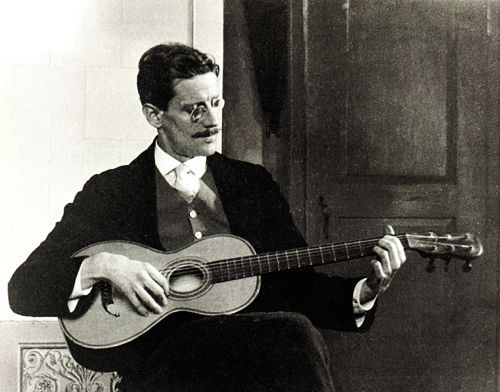 My third (complete) trip through James Joyce’s Ulysses finds me just as (or even more than) stunned as the previous two journeys, a bit (very much) unequal to properly reviewing the book, but this time with an easy out — I listened to an unabridged, full cast audio recording. The aforementioned “easy out” is resting on the received greatness and goodness (and evilness) of the book, which I will hardly contend with and heartily endorse (and do very little real critical work to support my endorsement). Ulysses is fantastic. But what about this audio recording?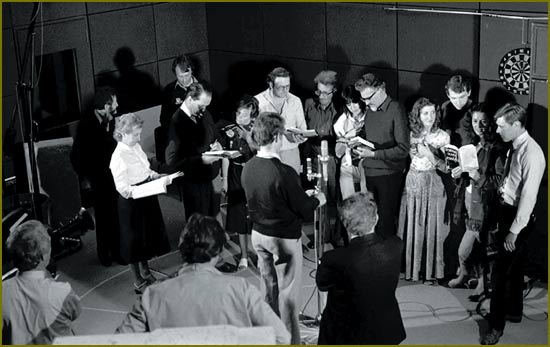
 Biblioklept