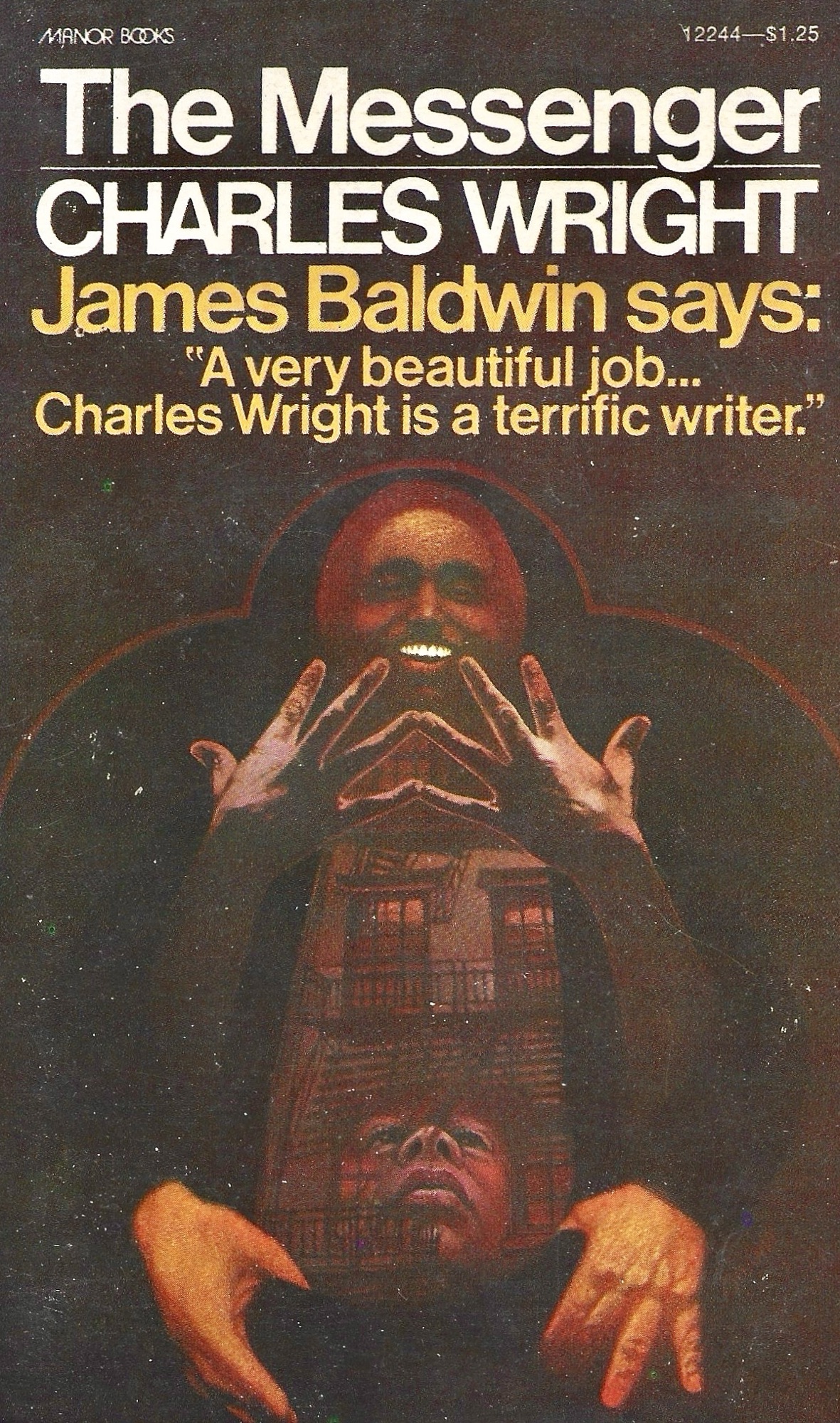
Mass-market Monday | Charles Wright’s The Messenger

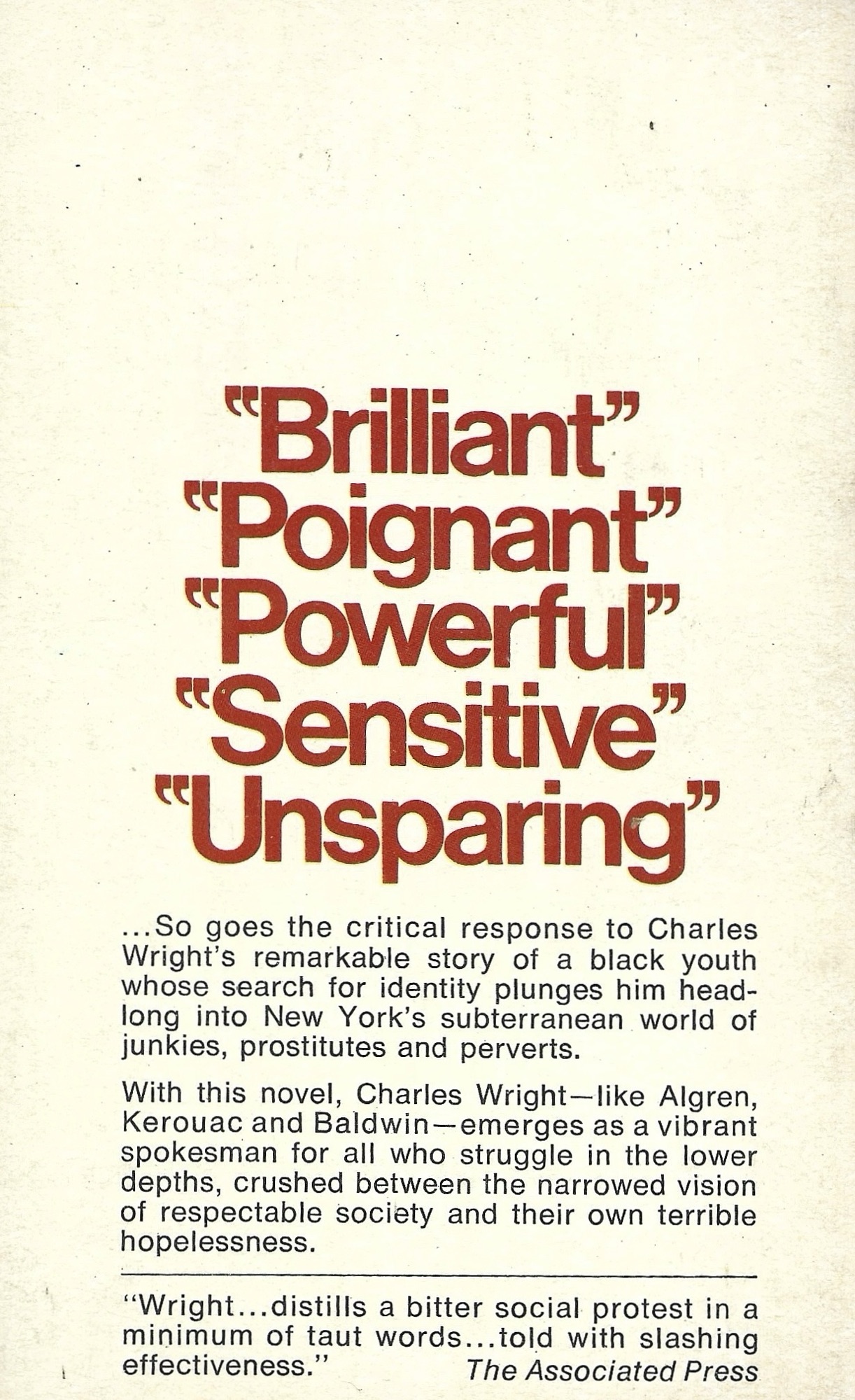
The Messenger, Charles Wright. Manor Books (1974). No cover artist or designer credited. 217 pages.

Charles Wright (not to be confused with Charles Wright or Charles Wright) published three novels between 1963 and 1973. His second novel, The Wig (1966) is an under-read, underappreciated gem—a tragicomic satire employing sharp distortions and cartoony edges. Wright’s first novel, The Messenger, is perhaps a bit too beholden to Richard Wright (to whom it is dedicated (along with Billie Holiday))—but many readers may prefer its raw realism to The Wig’s zany (and often crushing) zigs and zags. His last published novel, Absolutely Nothing to Get Alarmed About, is the most accomplished and singular of the trio—fragmentary, polyglossic, kaleidoscopic, messy. The trio remains in print as an omnibus with an introduction by Ishmael Reed. Read Reed on reading Wright.

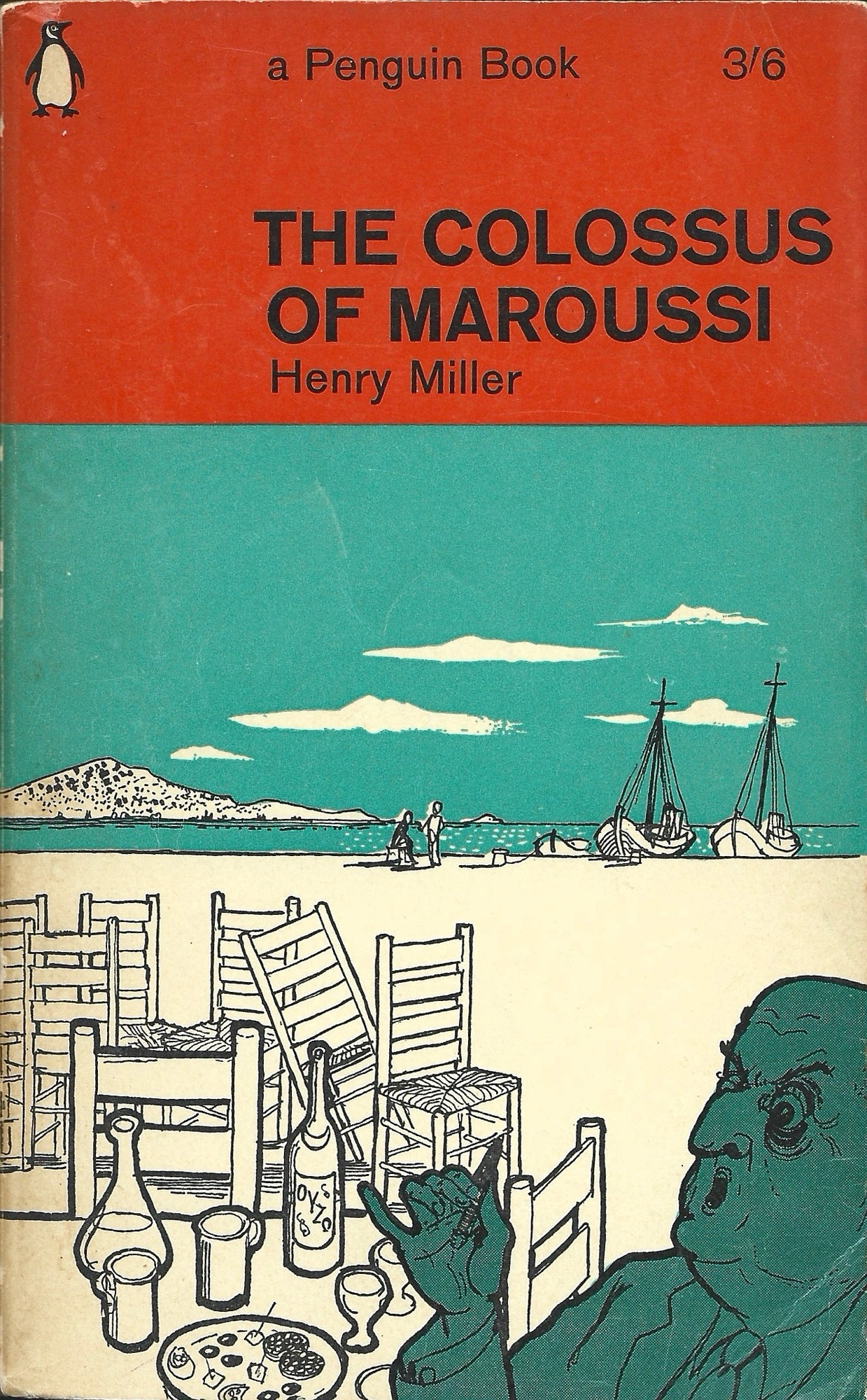
Mass-market Monday | Henry Miller’s The Colossus of Maroussi

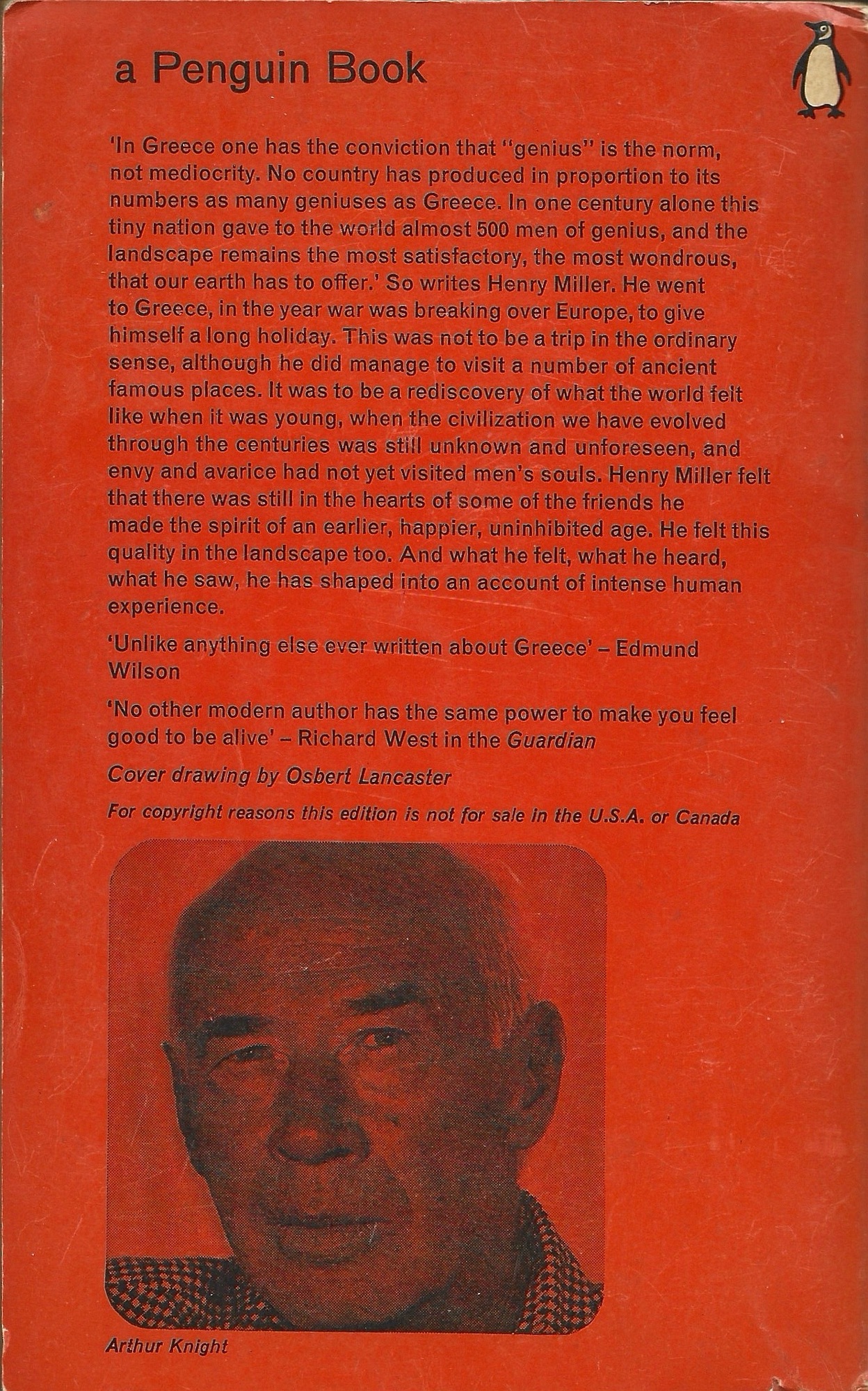
The Colossus of Maroussi, Henry Miller. Penguin Books (1964). Cover Osbert Lancaster. 248 pages.

From Miller’s The Colossus of Maroussi (1941):

At Arachova Ghika got out to vomit. I stood at the edge of a deep canyon and as I looked down into its depths I saw the shadow of a great eagle wheeling over the void. We were on the very ridge of the mountains, in the midst of a convulsed land which was seemingly still writhing and twisting. The village itself had the bleak, frostbitten look of a community cut off from the outside world by an avalanche. There was the continuous roar of an icy waterfall which, though hidden from the eye, seemed omnipresent. The proximity of the eagles, their shadows mysteriously darkening the ground, added to the chill, bleak sense of desolation. And yet from Arachova to the outer precincts of Delphi the earth presents one continuously sublime, dramatic spectacle. Imagine a bubbling cauldron into which a fearless band of men descend to spread a magic carpet. Imagine this carpet to be composed of the most ingenious patterns and the most variegated hues. Imagine that men have been at this task for several thousand years and that to relax for but a season is to destroy the work of centuries. Imagine that with every groan, sneeze or hiccough which the earth vents the carpet is grievously ripped and tattered. Imagine that the tints and hues which compose this dancing carpet of earth rival in splendor and subtlety the most beautiful stained glass windows of the mediaeval cathedrals. Imagine all this and you have only a glimmering comprehension of a spectacle which is changing hourly, monthly, yearly, millennially. Finally, in a state of dazed, drunken, battered stupefaction you come upon Delphi. It is four in the afternoon, say, and a mist blowing in from the sea has turned the world completely upside down. You are in Mongolia and the faint tinkle of bells from across the gully tells you that a caravan is approaching. The sea has become a mountain lake poised high above the mountaintops where the sun is sputtering out like a rum-soaked omelette. On the fierce glacial wall where the mist lifts for a moment someone has written with lightning speed in an unknown script. To the other side, as if borne along like a cataract, a sea of grass slips over the precipitous slope of a cliff. It has the brilliance of the vernal equinox, a green which grows between the stars in the twinkling of an eye.

Seeing it in this strange twilight mist Delphi seemed even more sublime and awe-inspiring than I had imagined it to be. I actually felt relieved, upon rolling up to the little bluff above the pavilion where we left the car, to find a group of idle village boys shooting dice: it gave a human touch to the scene. From the towering windows of the pavilion, which was built along the solid, generous lines of a mediaeval fortress, I could look across the gulch and, as the mist lifted, a pocket of the sea became visible—just beyond the hidden port of Itea. As soon as we had installed our things we looked for Katsimbalis whom we found at the Apollo Hotel—I believe he was the only guest since the departure of H. G. Wells under whose name I signed my own in the register though I was not stopping at the hotel. He, Wells, had a very fine, small hand, almost womanly, like that of a very modest, unobtrusive person, but then that is so characteristic of English handwriting that there is nothing unusual about it.

By dinnertime it was raining and we decided to eat in a little restaurant by the roadside. The place was as chill as the grave. We had a scanty meal supplemented by liberal portions of wine and cognac. I enjoyed that meal immensely, perhaps because I was in the mood to talk. As so oft en happens, when one has come at last to an impressive spot, the conversation had absolutely nothing to do with the scene. I remember vaguely the expression of astonishment on Ghika’s and Katsimbalis’ faces as I unlimbered at length upon the American scene. I believe it was a description of Kansas that I was giving them; at any rate it was a picture of emptiness and monotony such as to stagger them. When we got back to the bluff behind the pavilion, whence we had to pick our way in the dark, a gale was blowing and the rain was coming down in bucketfuls. It was only a short stretch we had to traverse but it was perilous. Being somewhat lit up I had supreme confidence in my ability to find my way unaided. Now and then a flash of lightning lit up the path which was swimming in mud. In these lurid moments the scene was so harrowingly desolate that I felt as if we were enacting a scene from Macbeth. “Blow wind and crack!” I shouted, gay as a mud-lark, and at that moment I slipped to my knees and would have rolled down a gully had not Katsimbalis caught me by the arm. When I saw the spot next morning I almost fainted.

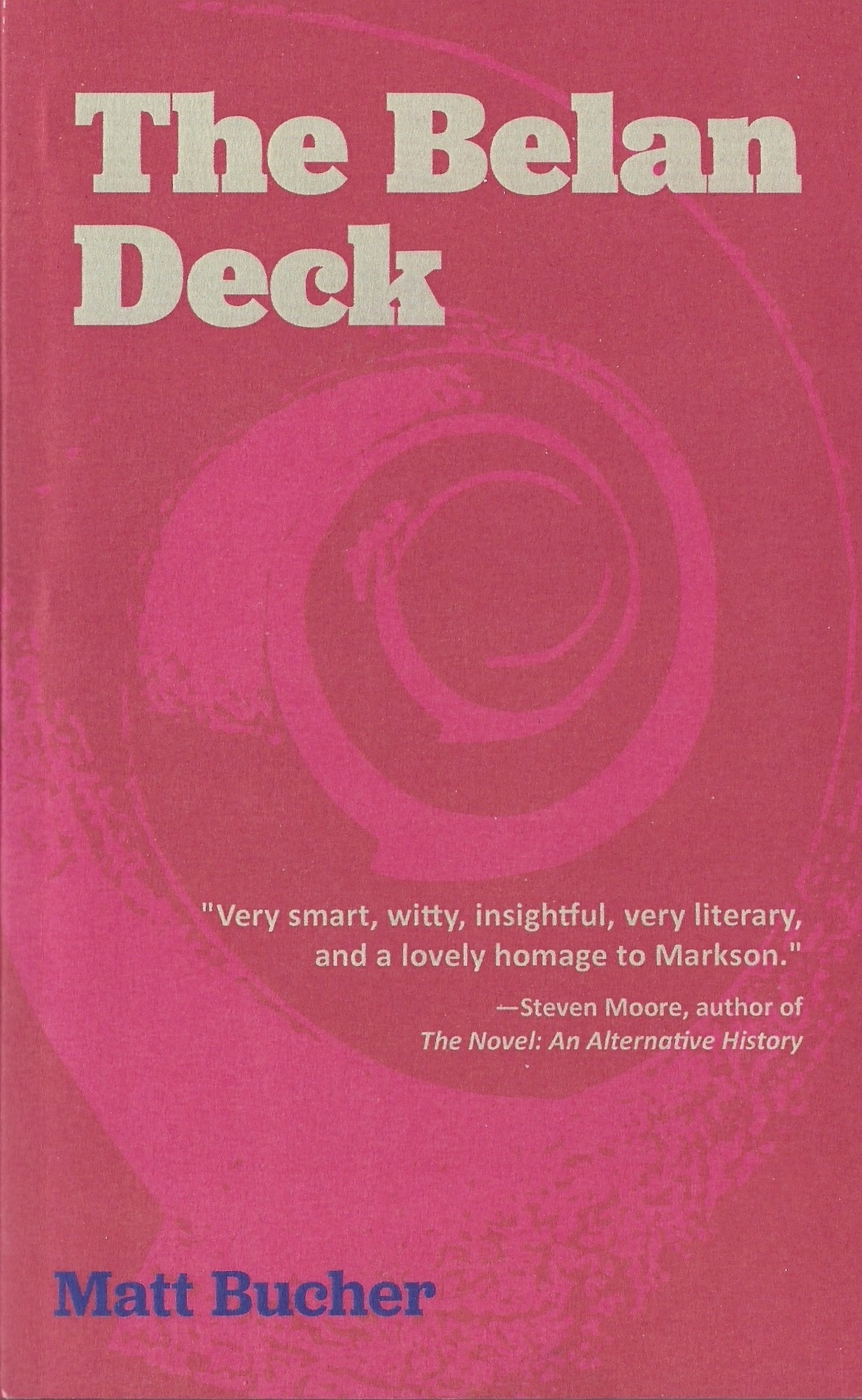
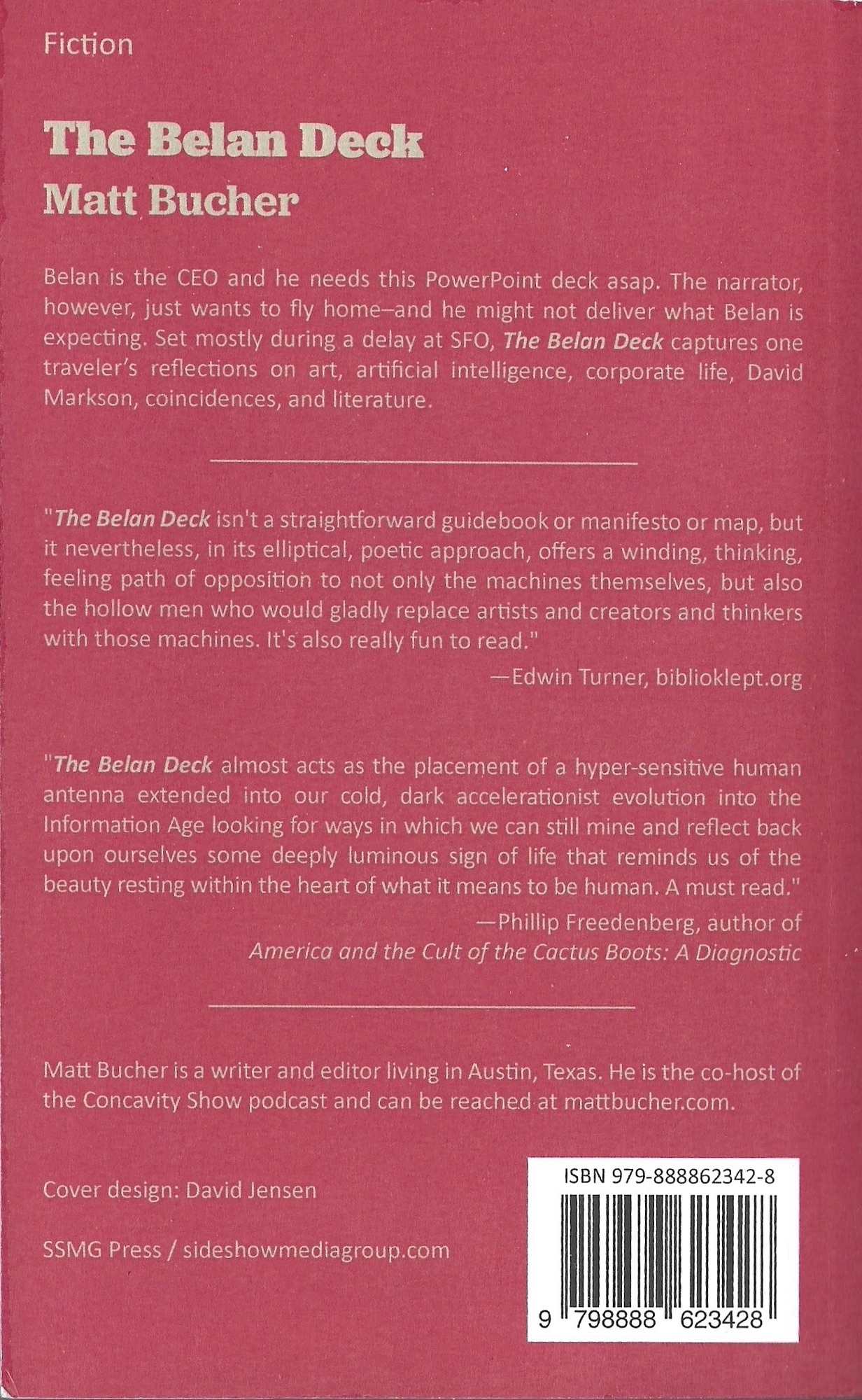
Mass-market Monday | Matt Bucher’s The Belan Deck

The Belan Deck, Matt Bucher. SSMG Press (2023; second printing). Cover design by David Jensen. 119 pages.

My review of The Belan Deck.

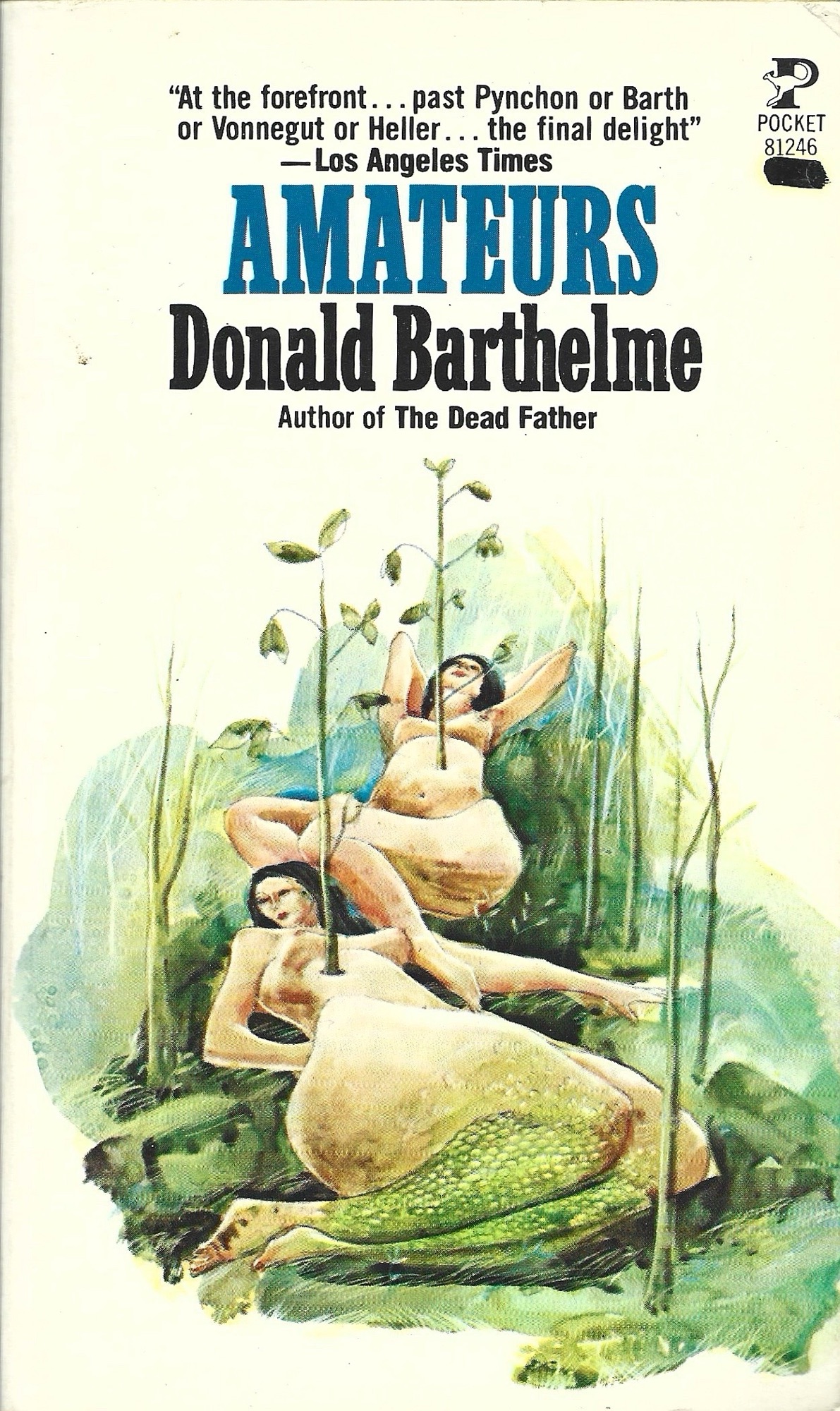
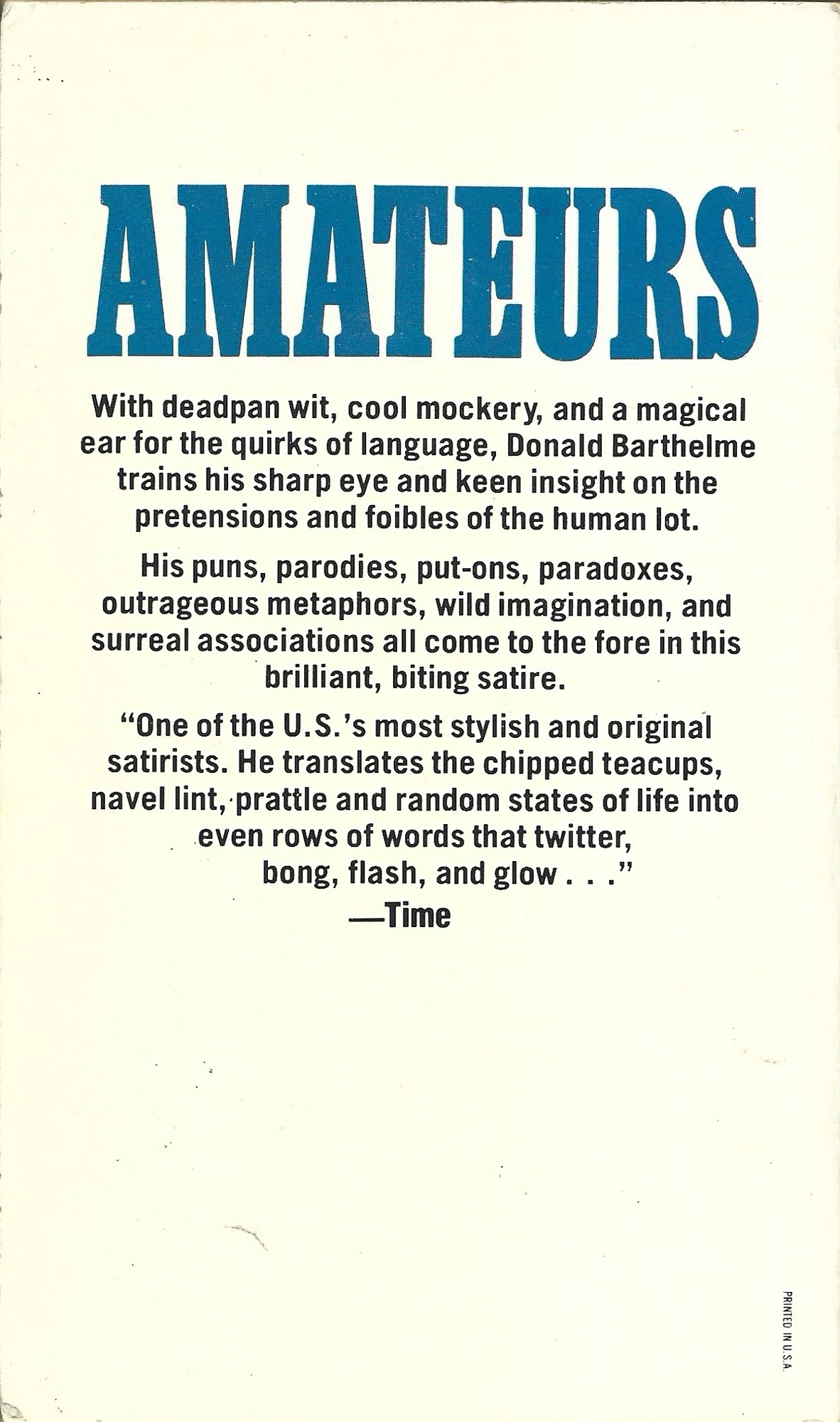
Mass-Market Monday | Donald Barthelme’s Amateurs

Amateurs, Donald Barthelme. Kangaroo Pocket Books (1977). No cover artist or designer credited. 207 pages.

I’ve written a few times about my slow acquisition of someone else’s library. This person lives in Perry, Florida, a small panhandle town south of Tallahassee, and I guess he drives into Jacksonville at least once a year to sell books at the bookstore I frequent. I’ve talked to the bookstore’s owner about him a few times. Sometimes, I’ll spot a spine and think, Yeah, his name and address are going to be stamped on the inside cover. And there it was this Friday when I picked up his mass-market edition of Amateurs. His by-now familiar habit of checking off volumes by the same author is on display here too. He also put neat pencil dashes by some of the stories in Amateurs, including my favorite from the collection, “Some of Us Had Been Threatening Our Friend Colby.” He also checked off “The Educational Experience,” which, in this Kangaroo edition of Amateurs, sadly fails to include Barthelme’s collage illustrations that accompanied the piece when it first ran in Harper’s


Continue reading “Mass-Market Monday | Donald Barthelme’s Amateurs” →

Mass-market Monday | Chester Himes’ A Rage in Harlem

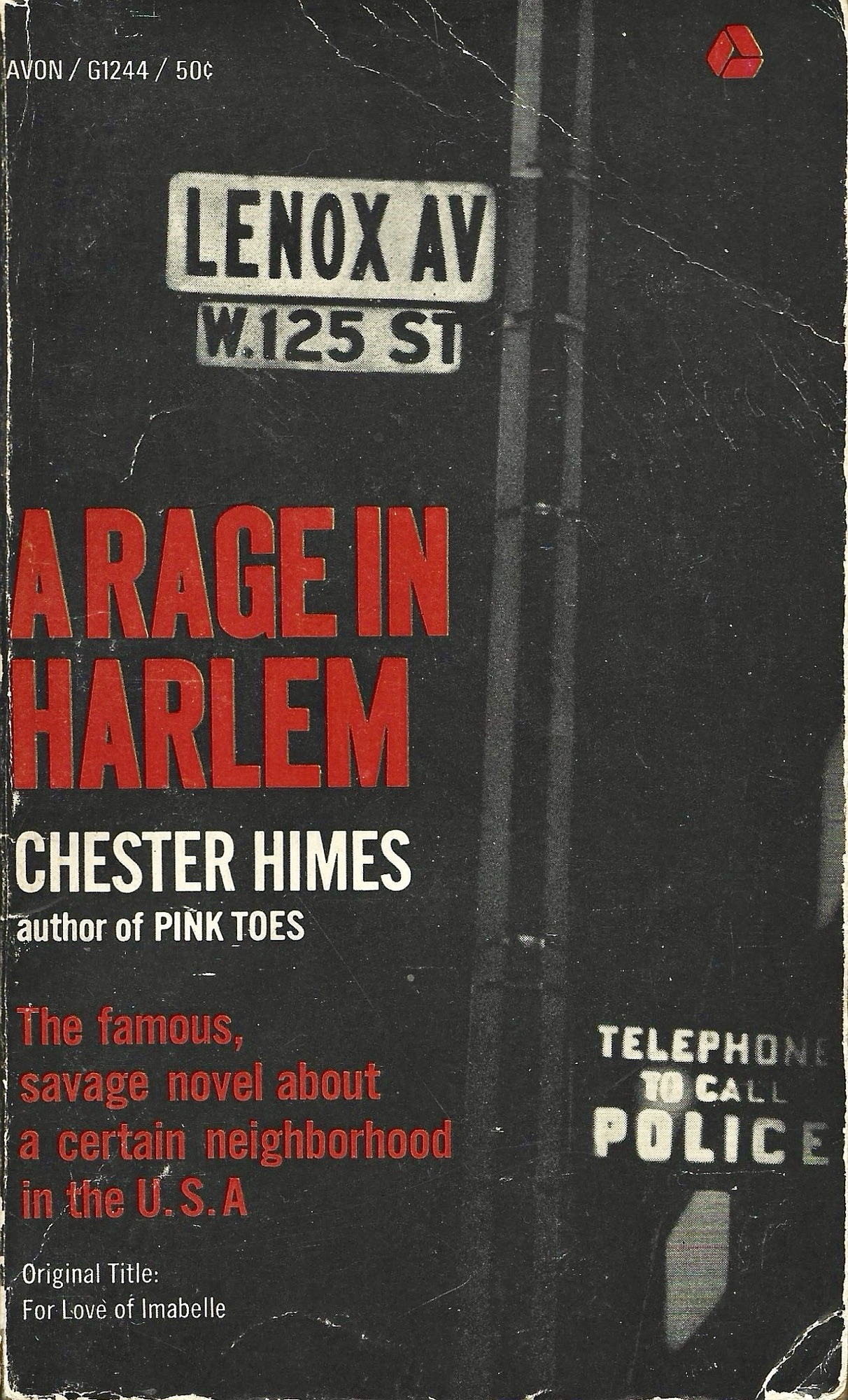
A Rage in Harlem, Chester Himes. Avon Books (1965). No cover artist or designer credited. 192 pages.

Himes’ A Rage in Harlem is a quick, mean, sharp read. I came to Himes via Ishmael Reed, who wrote of the author in a 1991 LA Times review of Himes’ Collected Stories,

James Baldwin, another proud and temperamental genius, said that if he hadn’t left the United States he would have killed someone. The same could be said of Chester Himes, the intellectual and gangster who left the United States for Europe in the 1950s. He achieved fame abroad with his Harlem detective series, which are remarkable for their macabre comic sense and wicked and nasty wit so brilliantly captured in Bill Duke’s A Rage in Harlem.

Mass-market Monday | Guillermo Cabrera Infante’s Three Trapped Tigers

Three Trapped Tigers, G. Cabrera Infante. Translated by Donald Gardner and Suzanne Jill Levine with Guillermo Cabrera Infante. Avon Bard (1985). No cover artist or designer credited. 473 pages.

A busy buzzy book honking and howling and hooting, I am loving loving loving Three Trapped Tigers—it sings and shouts and hollers. The novel starts with a  polyglossic emcee announcing the parade of honorable horribles who will strut through the novel (if it is indeed a “novel”). Very funny, very engrossing, grand stuff, love it.

Here’s Salman Rushdie, reviewing the novel in the LRB back in 1981 (he’s just fumbled around answering “What is this crazy book actually about?”:

So much for the plot. (Warning: this review is about to go out of control.) What actually matters in Three Trapped Tigers is words, language, literature, words. Take the title. Originally, in the Cuban, they were three sad tigers, Tres tristes tigres, the beginning of a tongue-twister. For Cabrera, phonetics always come before meaning (correction: meaning is to be found in phonetic associations), and so the English title twists the sense in order to continue twisting the tongue. Very right and improper. Then there is the matter of the huge number of other writers whose influence must be acknowledged: Cabrera Infante calls them, reverently, Fuckner and Shame’s Choice. (He is less kind to Stephen Spent and Green Grams, who wrote, as of course you know, Travels with my Cant.) Which brings us to the novel’s most significant character, a sort of genius at torturing language called Bustrofedon, who scarcely appears in the story at all, of whom we first hear when he’s dying, but who largely dominates the thoughts of all the Silvestres and Arsenios and Codacs he leaves behind him. This Bustromaniac (who is keen on the bustrofication of words) gives us the Death of Trotsky as described by seven Cuban writers – a set of parodies whose point is that all the writers described are so pickled in Literature that they can’t take up their pens without trying to wow us with their erudition. Three Trapped Tigers, like Bustrofedon’s whole life, is dedicated to a full frontal assault on the notion of Literature as Art. It gives us nonsense verses, a black page, a page which says nothing but blen blen blen, a page which has to be read in the mirror: Sterne stuff. But it also gives us Bustrolists of ‘words that read differently in the mirror’: Live/evil, drab/bard, Dog/God; and the Confessions of a Cuban Opinion Eater; and How to kill an elephant: aboriginal method ... the reviewer is beginning to cackle hysterically at this point, and has decided to present his opinion in the form of puns, thus: ‘The Havana night may be dark and full of Zorro’s but Joyce cometh in the morning.’ Or: ‘Despite the myriad influences, Cabrera Infante certainly paddles his own Queneau.’

Mass-market Monday | Samuel R. Delany’s Empire Star

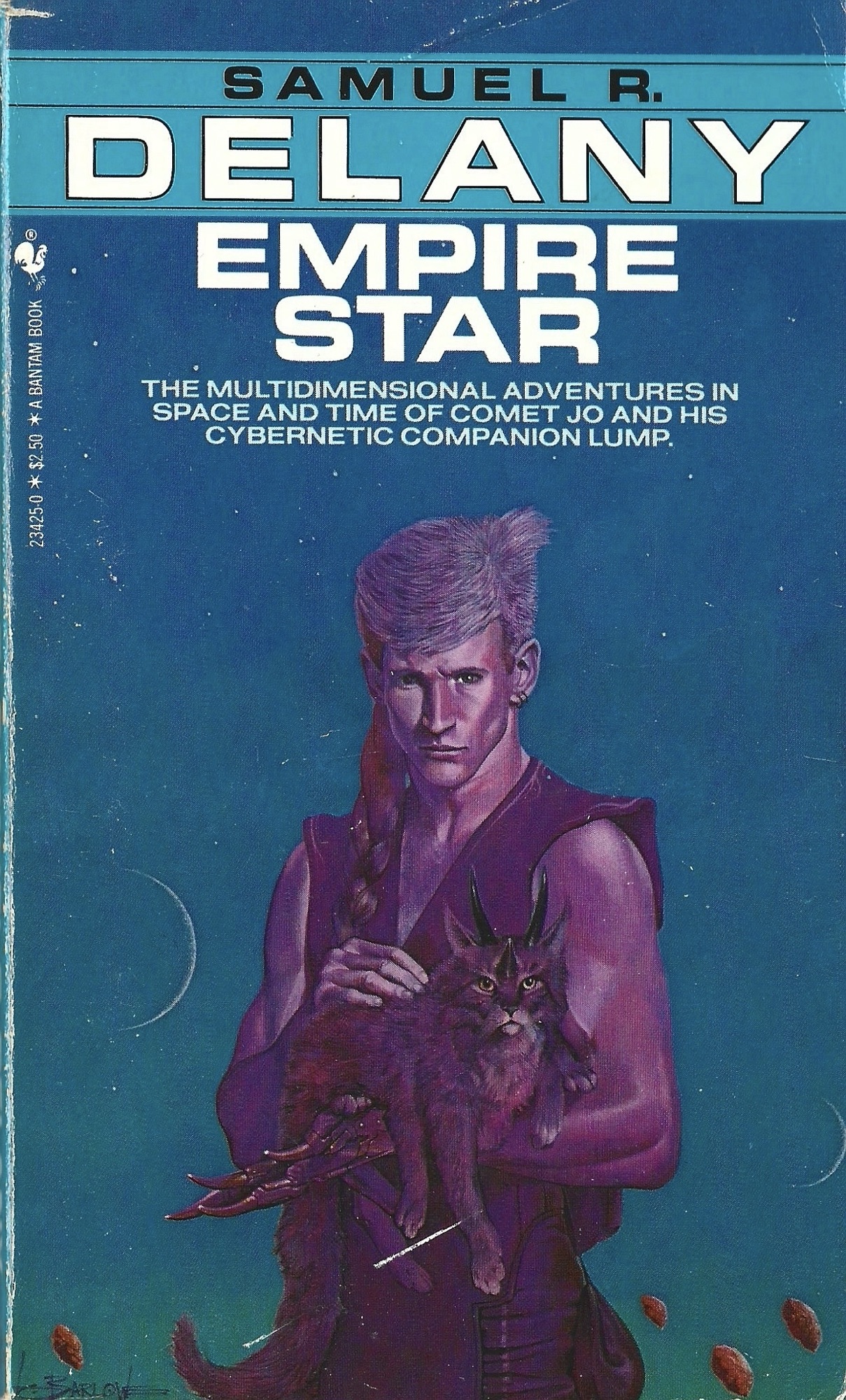
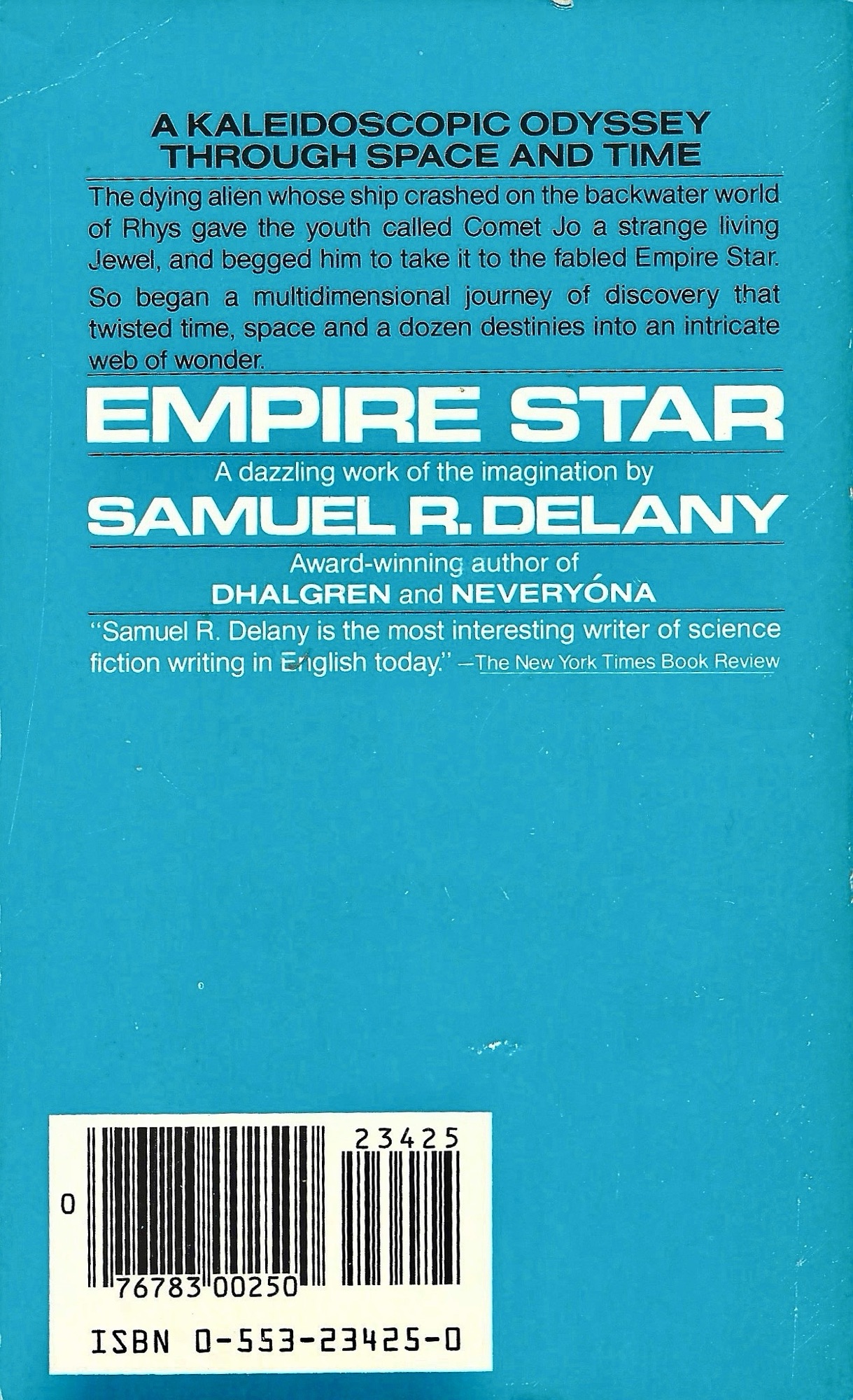
Empire Star, Samuel R. Delany. Bantam Books (1983). No cover artist credited. 132 pages.

Although he is not formally credited, the cover artist is Wayne Barlowe. I still haven’t read Delany’s 1966 novella, but I think I might read it this weekend.

Mass-market Monday | Muriel Spark’s The Girls of Slender Means

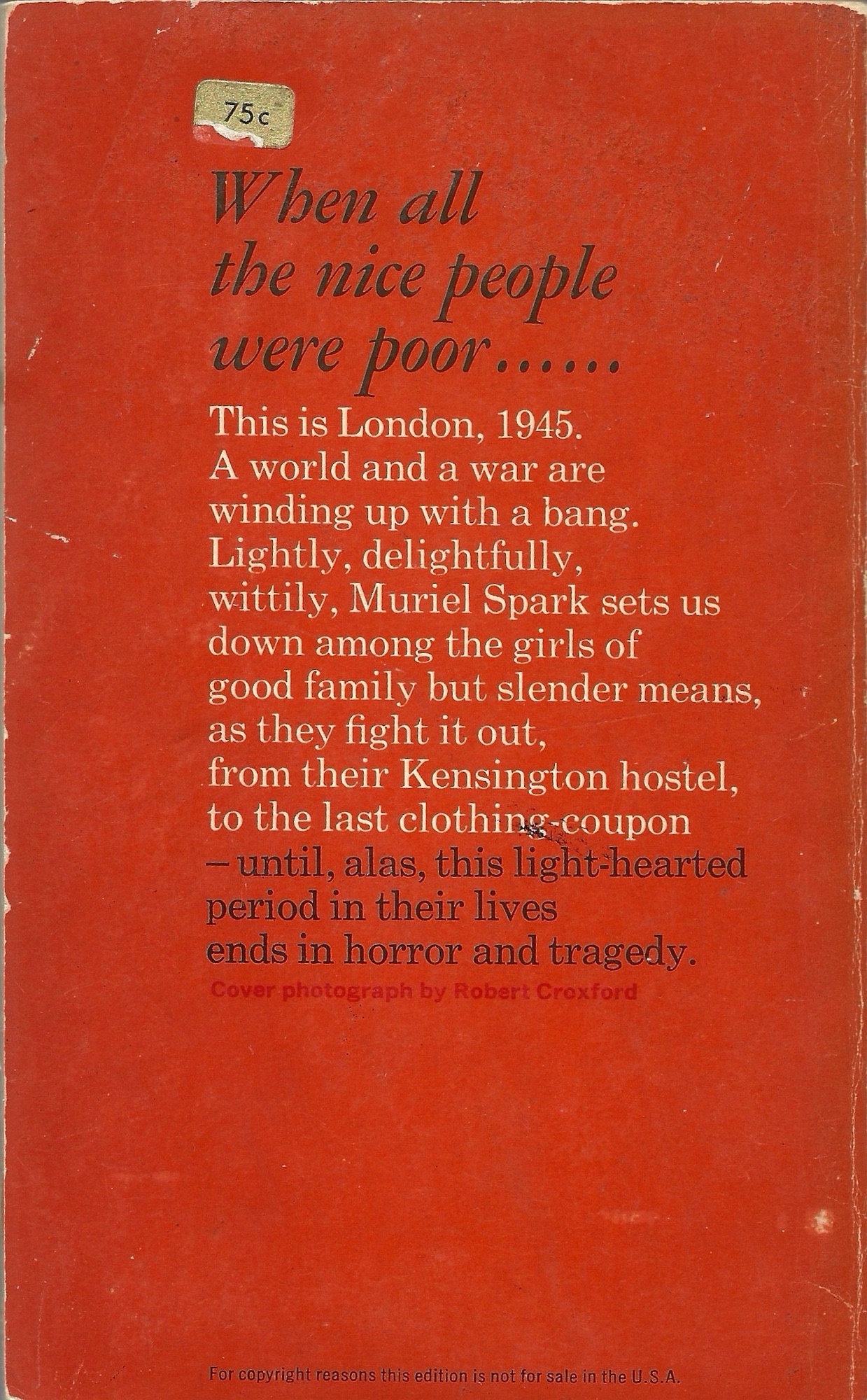
The Girls of Slender Means, Muriel Spark. Penguin Books (1966). Cover photograph by Robert Croxford. 142 pages.

From a thing a wrote back in 2020:

Slender Means unself-consciously employs postmodern techniques to paint a vibrant picture of what the End of the War might feel like. The climax coincides with the bombings of Hiroshima and Nagasaki, the title takes on a whole new meaning, and the whole thing unexpectedly ends in a negative religious epiphany.

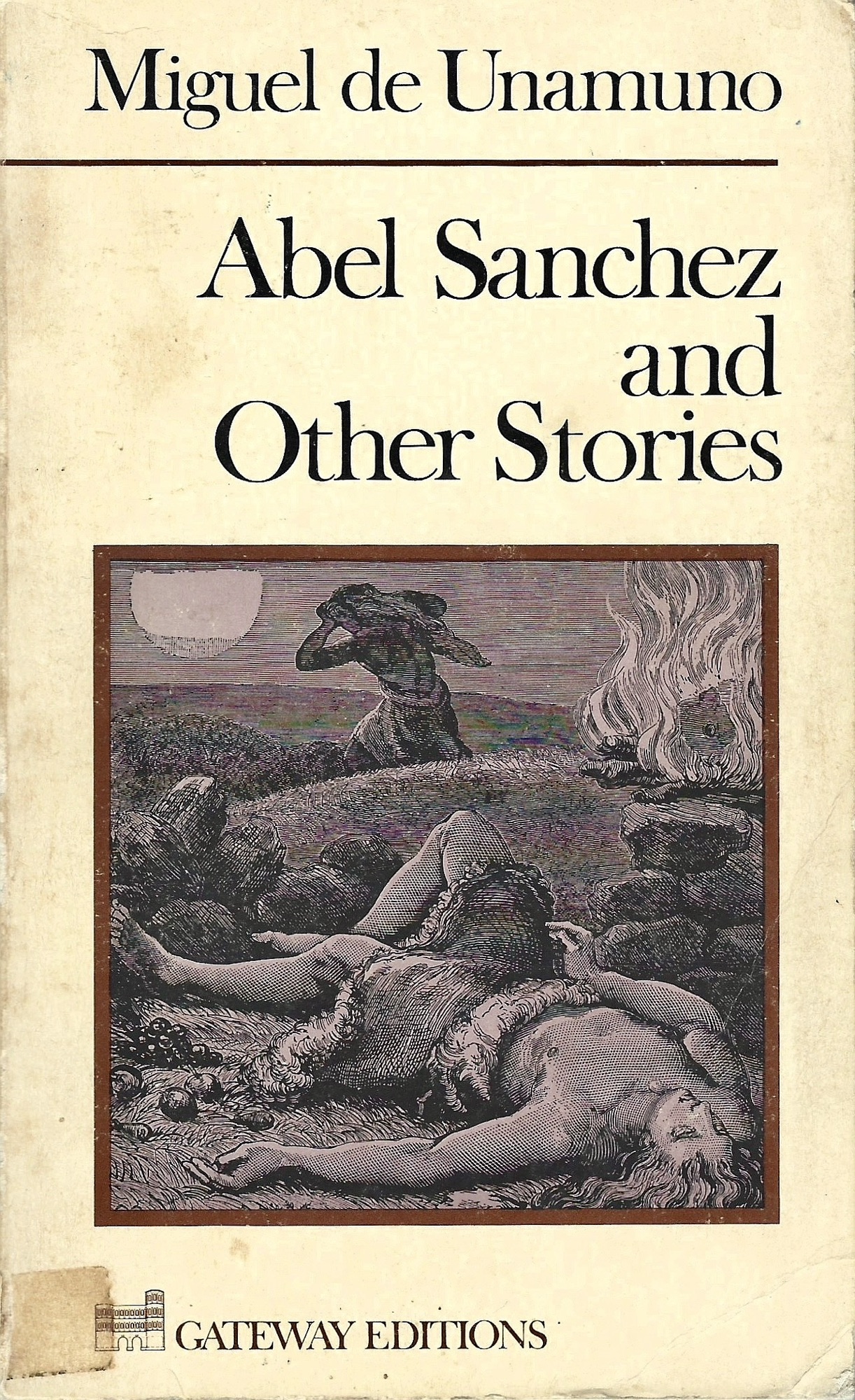
Mass-market Monday | Miguel de Unamuno’s Abel Sanchez and Other Stories

Abel Sanchez and Other Stories, Miguel de Unamuno. Translated by Anthony Kerrigan. Regnery Gateway (1956). No cover designer or artist credited; cover image credited to the Bettman Archive. 267 pages.

I wrote a bit about the collection back in February:

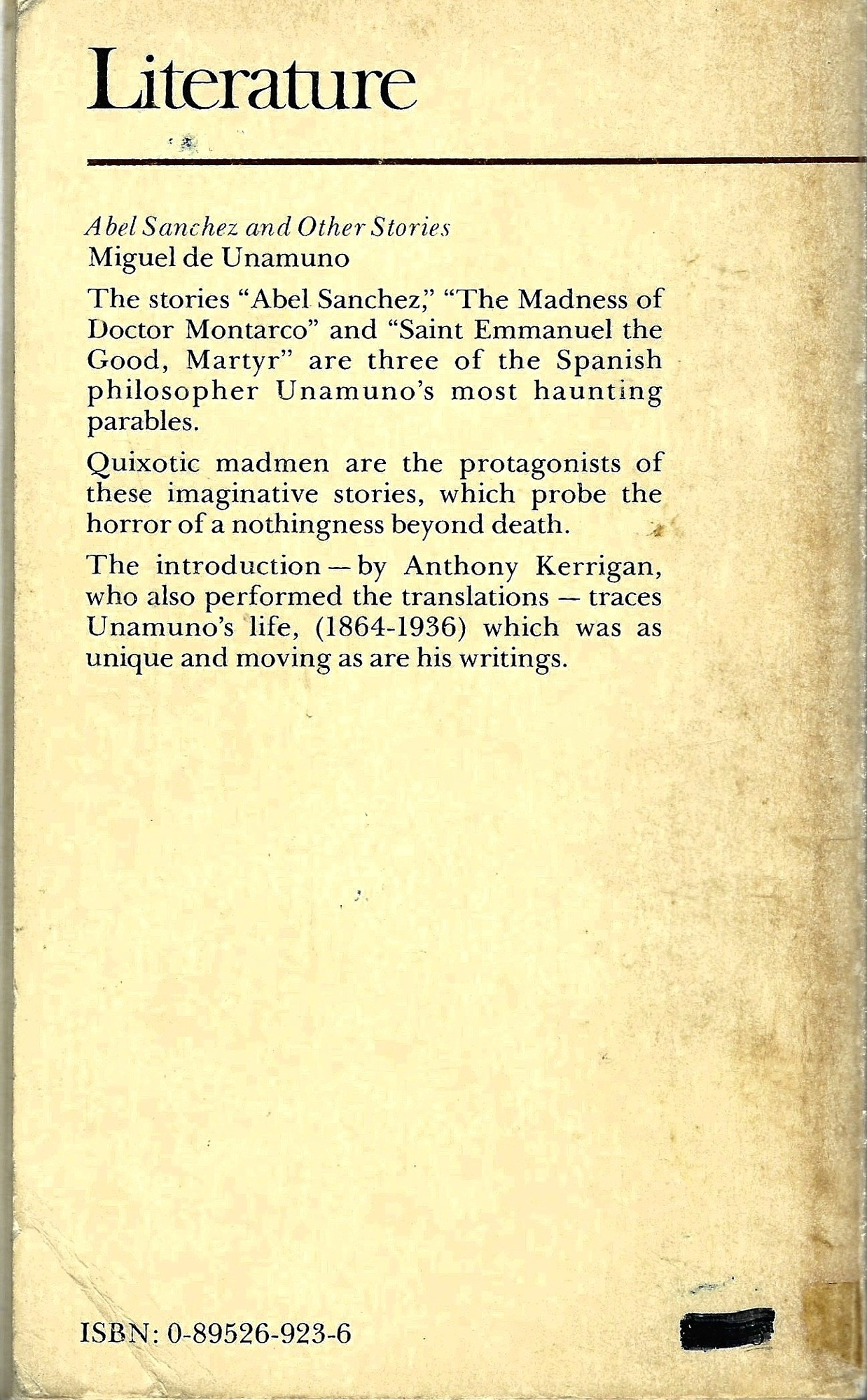
A few weeks ago, I picked up Anthony Kerrigan’s translation of Miguel de Unamuno’s Abel Sanchez and Other Stories based on its cover and the blurb on its back. I wound up reading the shortest of the three tales, “The Madness of Dr. Montarco,” that night. The story’s plot is somewhat simple: A doctor moves to a new town and resumes his bad habit of writing fiction. He slowly goes insane as his readers (and patients) query him about the meaning of his stories, and he’s eventually committed to an asylum. The tale’s style evokes Edgar Allan Poe’s paranoia and finds an echo in Roberto Bolaño’s horror/comedy fits. The novella that makes up the bulk of the collection is Abel Sanchez, a Cain-Abel story that features one of literature’s greatest haters, a doctor named Joaquin who grows to hate his figurative brother, the painter Abel. Sad and funny, this 1917 novella feels contemporary with Kafka and points towards the existentialist novels of Albert Camus. (I’m saving the last tale, “Saint Manuel Bueno, Martyr,” for a later day.)

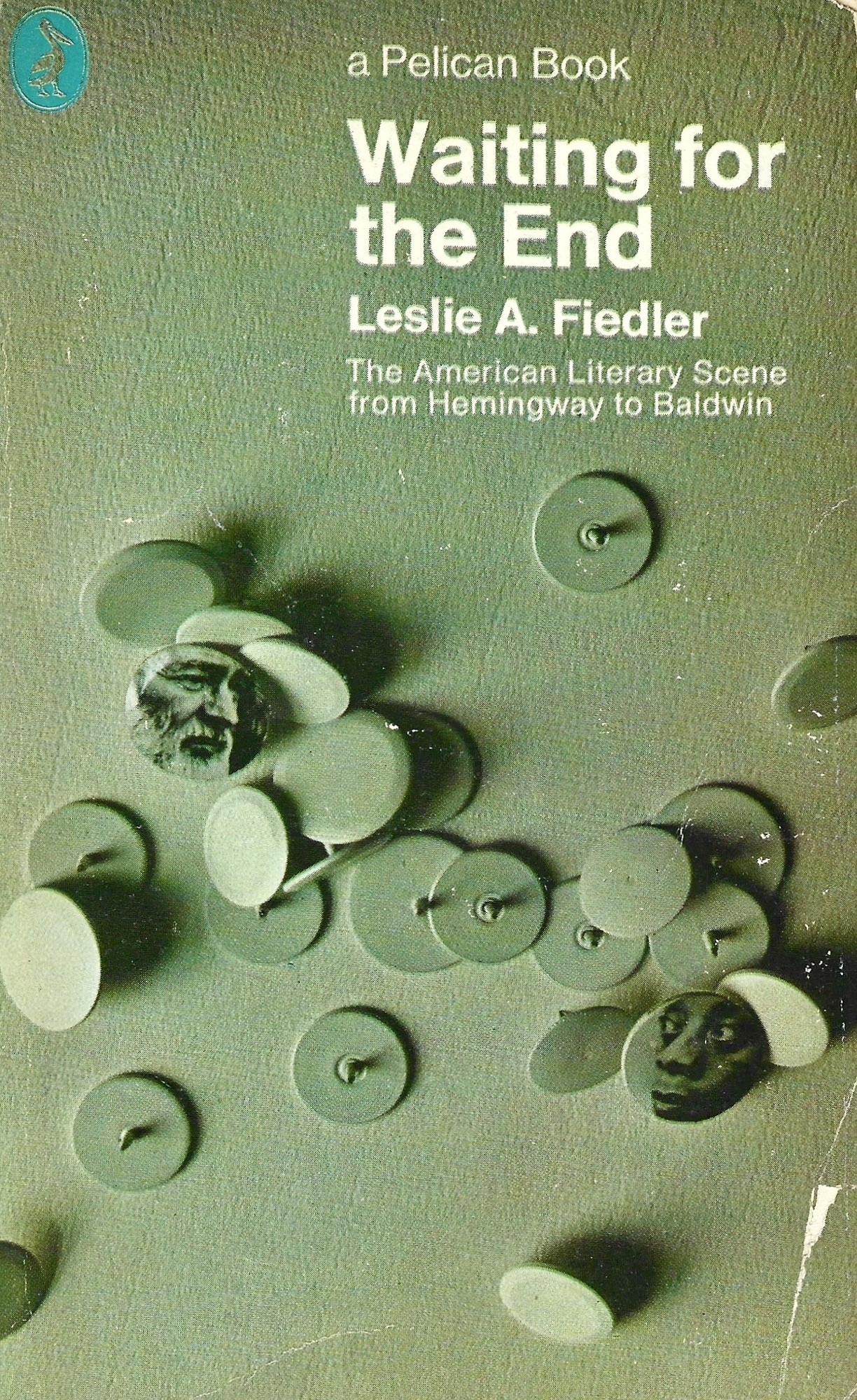
Mass-market Monday | Leslie A. Fiedler’s Waiting for the End

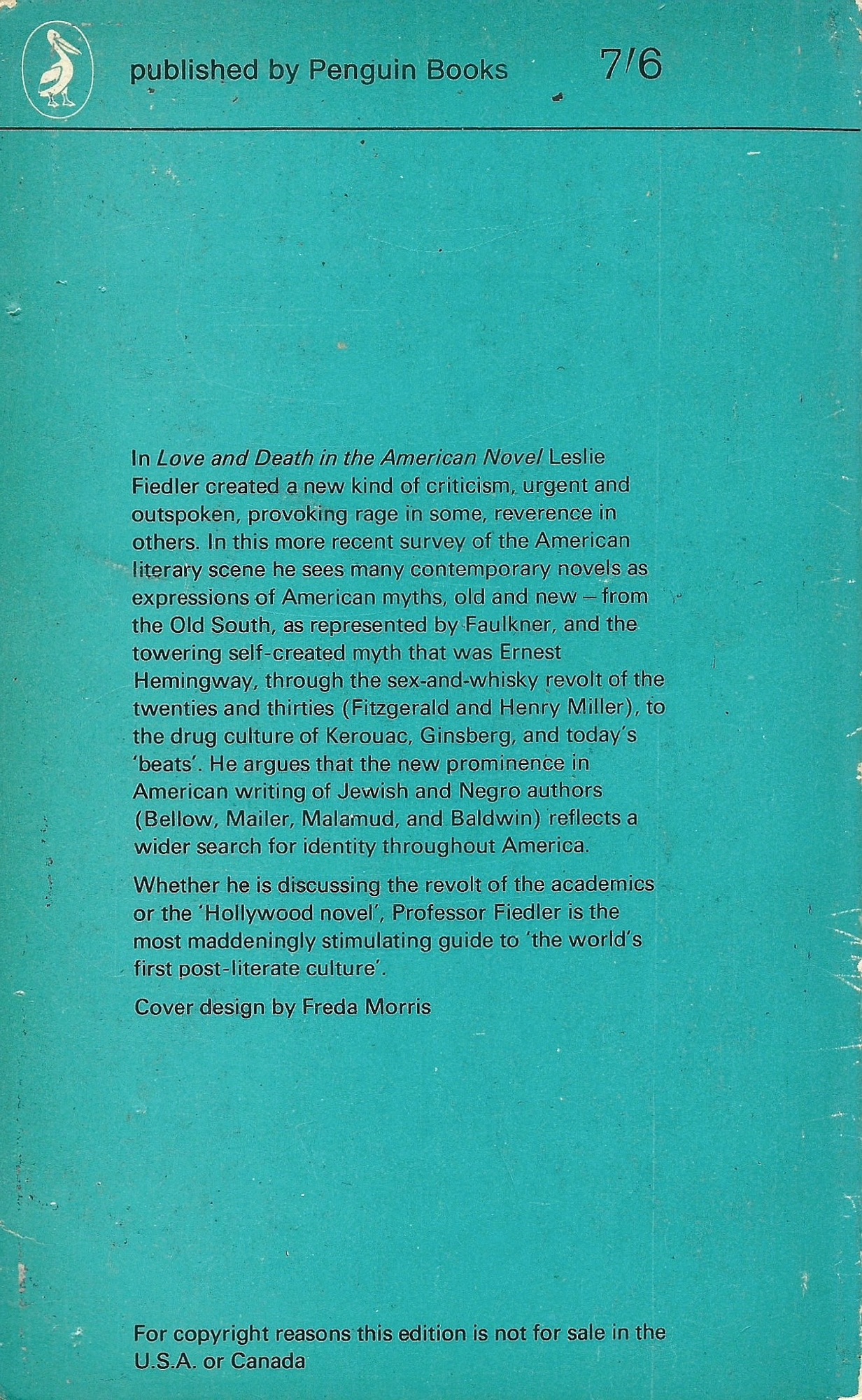
Waiting for the End, Leslie A. Fiedler. Penguin Books, Pelican imprint (1967). Cover design by Freda Morris. 274 pages.

From a riff a few years back:

Fiedler begins with the (then-recent) deaths of Hemingway and Faulkner. Fiedler uses the deaths of these “old men” to riff on the end of Modernism, although he never evokes the term. Neither does he use the term “postmodernism” in his book, although he edges towards it in his critiques of kitsch and middlebrow culture, and especially in his essay “The End of the Novel.” In parts of the book, he gets close to describing, or nearing a description of, an emergent postmodernist literature (John Barth and John Hawkes are favorite examples for Fiedler), but ultimately seems more resigned to writing an elegy for the avant garde. Other aspects of Waiting for the End, while well-intentioned, might strike contemporary ears as problematic, as the kids say, but Fiedler’s sharp and loose style are welcome over stodgy scholarship. Ultimately, I find the book compelling because of its middle position in its take on American literature. It’s the work of a critic seeing the beginnings of something that hasn’t quite emerged yet—but his eye is trained more closely on what’s disappearing into the past.

Mass-market Monday | Ignácio de Loyola Brandão’s Zero

Zero, Ignácio de Loyola Brandão. Translated by Ellen Watson. Avon Bard (1983). No cover artist or designer credited. 317 pages.

A very strange fragmentary hallucinatory novel. A few pages:

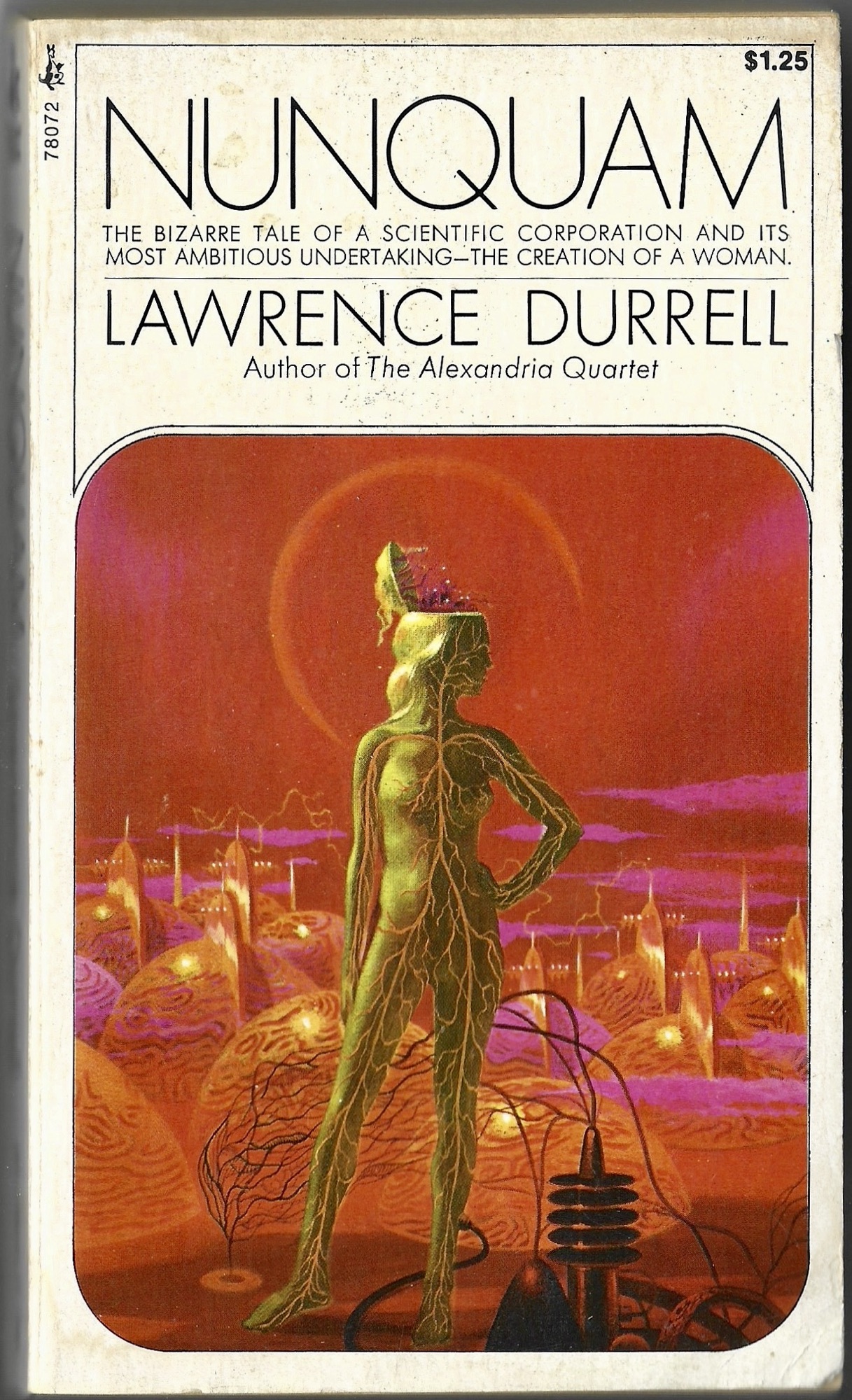
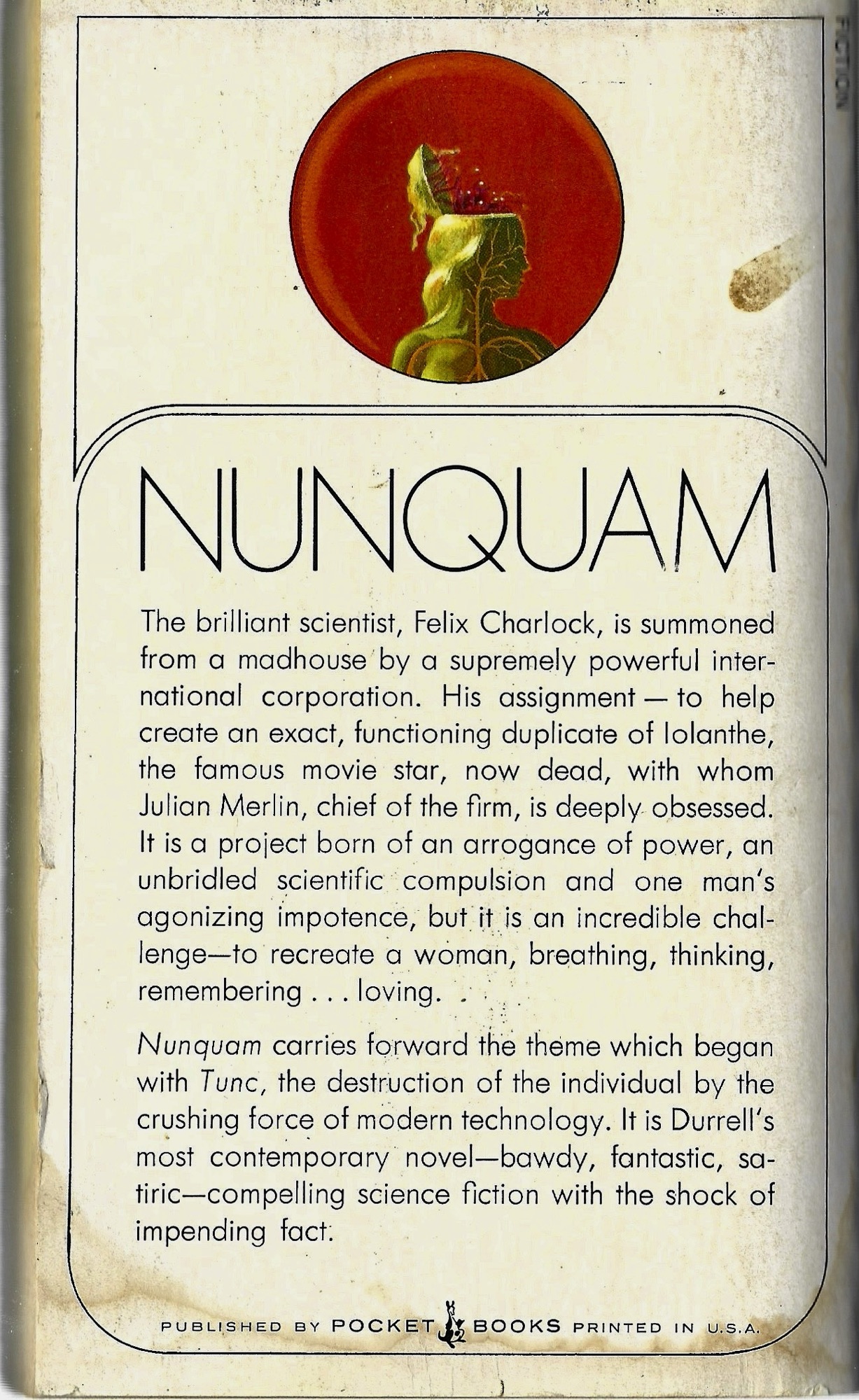
Mass-market Monday | Lawrence Durrell’s Nunquam

Nunquam, Lawrence Durrell. Pocket Books (1971). No cover artist or designer credited. 258 pages.

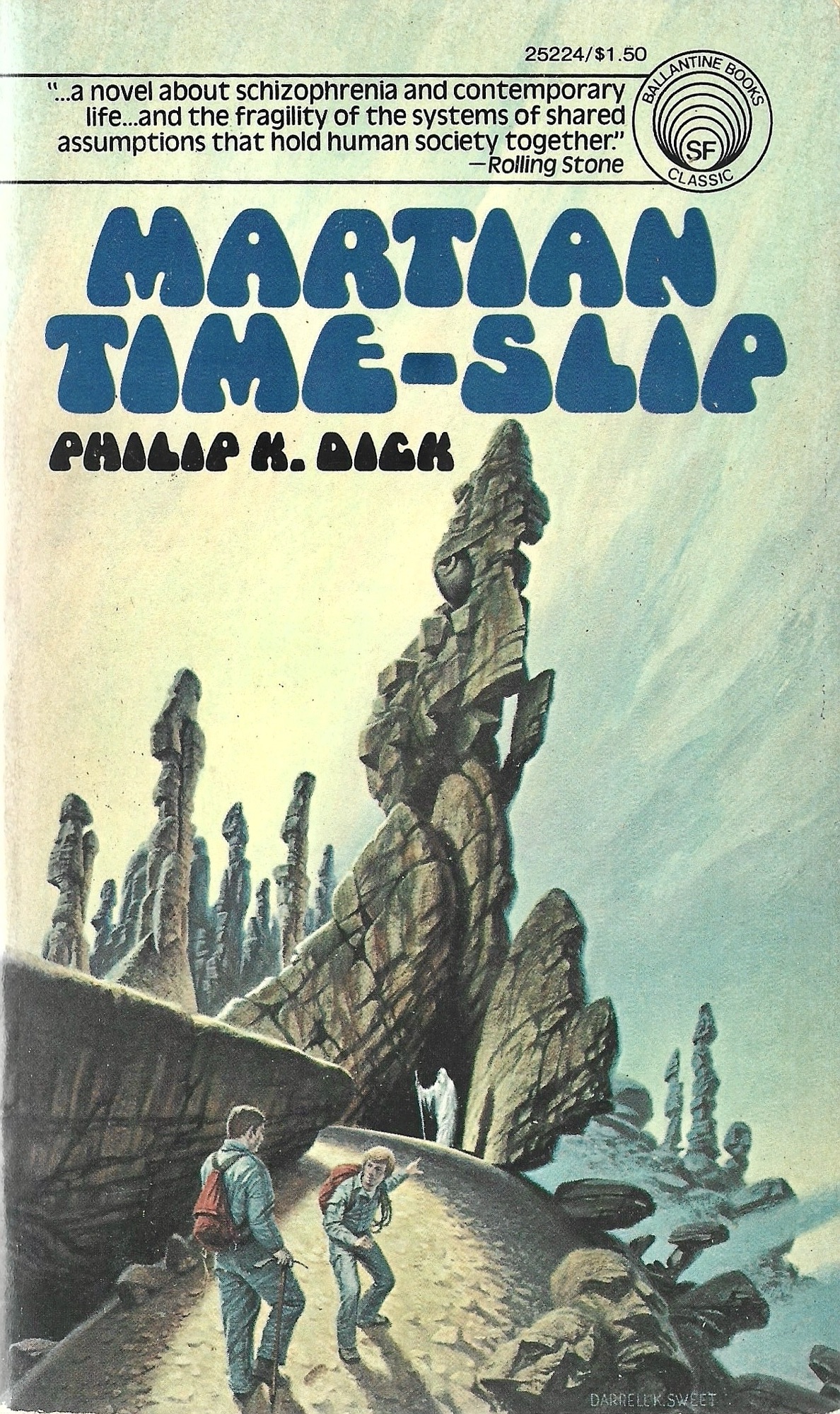
Mass-market Monday | Philip K. Dick’s Martian Time-Slip

Martian Time-Slip, Philip K. Dick. Ballantine Books, second printing (1976). Cover art by Darrell K. Sweet. 220 pages.

I riffed on the novel a decade ago, writing,

Time-Slip rockets into rhetorical reverberation, cycling its final chapters into a strange decay. The timeslips jar the reader’s narrative perception—Hey wait, didn’t I already read this?—unsettling expectations, and ultimately suggesting that this Martian Time-Slip is just one version of Martian Time-Slip. That there are other timelines, distorted, slipped.


Mass-market Monday | Robert Coover’s The Origin of the Brunists

The Origin of the Brunists, Robert Coover. Banatm Books Edition (1978). No cover designer credited. 534 pages.

This Bantam reprint of Coover’s first novel coincided with their mass-market paperback publication of The Public Burning.

I wrote a bit on The Origin of the Brunists a few years back. From that riff:

Coover’s metafiction always points back at its own origin, its own creation, a move that can at times take on a winking tone, a nudging elbow to the reader’s metaphorical ribs—Hey bub, see what I’m doing here? Coover’s metafictional techniques often lead him and his reader into cartoon landscapes, where postmodernly-plastic characters bounce manically off realistic contours. The best of Coover’s metafictions (like “The Babysitter,” 1969) tease their postmodern plastic into a synthesis of character, plot, and theme. However, in  large doses Coover’s metafictions can tax the reader’s patience and will—the simplest example that comes to mind is “The Hat Act” (from Pricksongs & Descants, 1969), a seemingly-interminable  Möbius loop that riffs on performance, trickery, and imagination. (And horniness).

I’m dwelling on Coover’s metafictional myth-making because I think of it as his calling card. And yet Origin of the Brunists bears only the faintest traces of Coover’s trademark metafictionalist moves (mostly, so far anyway, by way of its erstwhile hero, the journalist Tiger Miller). Coover’s debut reads rather as a work of highly-detailed, highly-descriptive realism, a realism that pushes its satirical edges up against the absurdity of modern American life. It reminds me very much of William Gass’s first novel Omensetter’s Luck (1966) and John Barth’s first two novels, The Floating Opera (1956) and The End of the Road (1958). (Barth heavily revised both of the novels in 1967). There’s a post-Faulknerian style here, something that can’t rightly be described as modern or postmodern. These novels distort reality without rupturing it in the way that the authors’ later works do. Later works like Barth’s Chimera (1973), Gass’s The Tunnel (1995), and Coover’s The Public Burning (1977) dismantle genre structures and tropes and rebuild them in new forms.

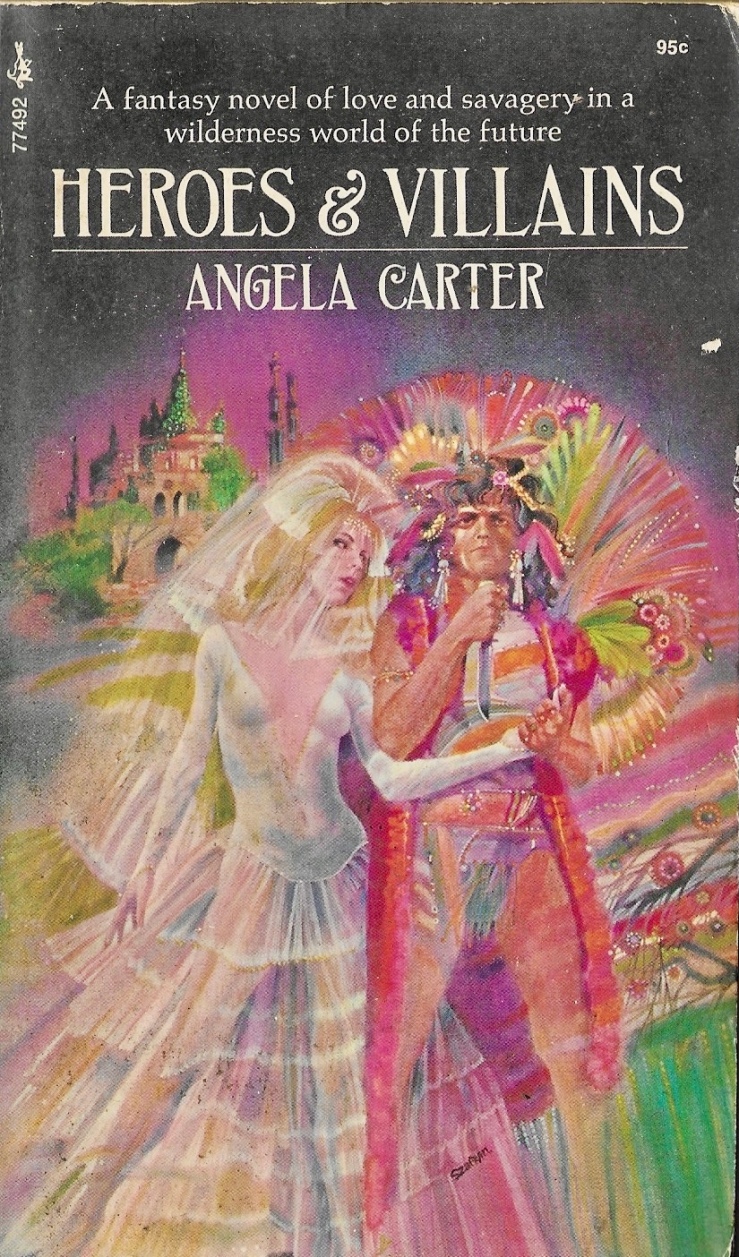
Mass-market Monday | Angela Carter’s Heroes and Villains

Heroes and Villains, Angela Carver. Pocket Books Edition (1972). No cover artist credited. 176 pages.

While no cover designer or artist for this edition of Angela Carter’s 1969 novel Heroes and Villains, I’m pretty certain that the work is by Gene Szafran.

I wrote briefly on the novel in 2020:

One of Carter’s earlier novels, Heroes and Villains takes place in a post-apocalyptic world where caste lines divide the Professors, the Barbarians, and the mutant Out People. After her Professor stronghold is raided, Marianne is…willingly abducted?…by the barbarian Jewel. Marianne goes to live with the Barbarians, and ends up in a weird toxic relationship with Jewel, marked by rape and violence. Heroes and Villains throws a lot in its pot—what is consent? what is civilization? what is language?—but it’s a muddled, psychedelic mess in the end.

Mass-market Monday | Robert Coover’s The Public Burning

The Public Burning, Robert Coover. Banatm Books Edition (1978). No cover designer credited. 661 pages.

A 1977 Book Ends column in The New York Times offers a fairly succinct blurb for The Public Burning:

The Public Burning is a blend of fact and fantasy, using dozens of real and fictional names. Among the real persons named in this “metafiction” are President Eisenhower, Senator Joseph McCarthy, J. Edgar Hoover, Billy Graham, Norman Vincent Peale, Edward Teller, Walt Disney, Cecil B. DeMille, former prosecuting attorney Irving Saypol and Judge Irving Kaufman. About one‐half of the novel narrated by Vice President Richard M. Nixon…

The Book Ends piece, which appeared a few months before the book’s publication (and notes the difficulties the book found securing a publisher brave enough to put it out), includes a brief interview with Coover about The Public Burning:

“I had the idea for the book 11 years ago. I thought it would be a novella and not a book of over 500 pages. I felt that the event was something that had been repressed. If you mentioned the Rosenberg case, people were turned off or young persons didn’t know what it had been all about.

“Their execution — plus the prevalence of old‐fashioned American hoopla—gave me the central metaphor for the book. In 1968, I was looking for a narrator. After Nixon was elected President, he served that purpose. He had been a participant in the background of the Rosenberg case. As President, he was powerful, pious and pompous. I needed a clown act to intersperse with the circus act. And so Nixon became the clown. Clowns are sympathetic when you get to know them.”

The Public Burning was the first book I read by Coover, and I read it when I was too young to fully appreciate it; I think I simply wasn’t soaked enough in its history. Revisiting it, even in brief today, reminded me that it’s likely as relevant as ever, and that its diagnoses of the first half of America’s twentieth century is up there with Gravity’s Rainbow or J. R.

Mass-market Monday | Billy Budd, Sailor and Other Stories by Herman Melville

Billy Budd, Sailor and Other Stories by Herman Melville, Herman Melville. No collection editor credited. Bantam Books (1989). No cover designer credited. Cover is a detail of Ships and an Approaching Storm Off Owl’s Head, Maine, 1860 by Fitz Hugh Lane. 278 pages.

I read Bartleby in 10th grade and took up I prefer not to as a mantra that I’d throw at poor dear Ms. Hall any time she asked me to do something I didn’t want to do, which was often. I never returned the book at the end of the year. I’m not sure if there is another book in the household, apart from old children’s books, I suppose, that I have read so many times.

I wrote about Bartleby here.

I wrote about Benito Cereno here.

Here is Billy Budd, but just the punctuation:

, , – , – – ‘ – . , , – , . ” ” . , – , . . , , – ‘ ( ) , . . ; , . ; , , . , , . . – – , , – – . . , – – , , , , , , – . , . . . ; ; . – – , , – – , ” , ” ” ” , . , , . . , , , , . , , , , – , , , – , . ‘ , – – – , . . . ; , , . , ‘ – . . , – , , . ‘ , ‘ , . , , . , , . , – – ” . ” – – – – , – , . , , , , , – – , . , . , , . , , . . , ‘ , , ‘ , , , – , . – . ; , , , . ‘ . , – . , , , , , , . , ; : ” , , ‘ . ” ” , , ” , ; ” , . . ” ” , ‘ , . . , – . , , . . ; . ; , . ; , – . , , , ‘ , ‘ , – , . – – , , – – . , – , – – – – . . , . , . , , . , , – – , . . ‘ , ; . ; ‘ . , , – – . , , – – , , . , , ‘ ; ! ” . ” , ” , ; ” , , ! – – – – – , ” ‘ . ” ! ‘ , . , . ; ; , , , , . – – ‘ ? , ” ‘ , ” ; , – – – – ! – – , ” , ” ‘ – . – . , . , – – ‘ . ” . , , – – . – ‘ ; ‘ . – ‘ . ‘ , , , , , , , . , ‘ , – – , – – ; , , – . , , ” – , – – . ” ” , ! ” , , . , ‘ . ; . ‘ , , . , , , , , ‘ , , , . . . , . , , , , . , , , . – – – . , – – . : ‘ ; , – , . , ; , , , , , , . – , ‘ , . ; , , , , , , . , – ; . , , , , . , ‘ – . . – . – . . , , . . , , , , – ‘ , – ; , , , , ; . – – – , , . , , , , , ” , , ‘ . ” ” ‘ ? – – ? ” ” , . ” , , ” ? ” ” , . ‘ . ” ” ? , ” ; ” , . ‘ , ; . ” , , – , , , . . , , , , . ; , , . – , ‘ . , , , – , , ” ‘ – , ” . , ” ‘ – , ” ? ; , , , ; . , , . ‘ , , , , , ‘ . – , , , . , , , – ‘ , , , : – – ” , , , , ? ” ; , ‘ , . , , ; , . , – , , , , , . , , . , , – – . , . ‘ . . – , ‘ , , , . , . . . , , . . – . ; – – – – – , – – – , , ; , ‘ . , . – – – – – , , : ” , ‘ ‘ ! ” ‘ ; ( . . . ) ” . ” , . . , , . , . – , . , , – – – – , ; , , – – – – . , , ; . , . , – – , , , – – , . , , : , , , , . , , – . – . . , . – . – , , , , , . , , ‘ , , , , , , , , . , , , , ‘ , , , , , . , – , . , , , , ; , . , ‘ – , ‘ , , , . , , ; ; ; , , , , , . , , . – – . , , , – – , – – . ; , , , . , . , ‘ ” . ” , , , . , ; , , , , . , . . , , , , , , , , . , , , , . , , – , , , ; , . , . , . : , , – , , ; : , ; , , , , , . – . . . , , , . – , . , . , , , . , . , , , ; , , . – ‘ , – . , , , , . , . , , , , ‘ , ‘ – , . , , . ‘ , , , . – – , , . ; . – – . , , : , , – , ; ‘ , , , , , , , ” ‘ , . ” , ‘ , , , ” , ; , ! ” , ‘ , , , . , . – , . ‘ , , . . , , . , , – , . , ; – – , , , , , . – – , , , . . , , , , . , , . , , , , , . , : ” , . , ” ( ) ” . , ‘ ‘ ? , ‘ – ? ” ; ‘ , . , , . ‘ . , – . ‘ , – . – , . , . , – – . – . , , – ‘ , . , – – , ; – – – , . , , . . ; ; , ‘ , . . , . . ; , , – . , , , ‘ , . , , . . ; , . – – – – ‘ ‘ . , , . , , – – . ‘ , , , , ; , , ; . ‘ – – – , – , , – , . , – . , . , ‘ – , , . , , , , , , ; , ; , , . : – , , . . , ‘ , . , . , , ‘ , . . ‘ , . – , – – . , , , ; . ‘ – – ‘ ‘ . – , , – – – , – – . , , , , , , , – – ‘ , , . , , , ; – – . ‘ – , , , ; , , . ‘ , ‘ , , , – . – . , , , , ‘ , , . ‘ . , . . – . , , – , . , , , ; , . ‘ , ; ‘ , . . , ‘ – , . , ? , . . ” , ? ” . ” , , , ‘ . ” , . – , . , , . , – – , – . ; , , , , , ‘ . – , ‘ . , – , ‘ ” – – – – . ” – , . , , , – ‘ , ? , ‘ ; , , , – – , , ; . , . . . ‘ , , , , , , , . , , – ; , ‘ , , . . , , , – , – , . , . , ‘ . , , ” , , . ” , , , ” , ” ( – – – ) ” . ” ” ! ” , ; ” ? , . ” ” ? ” ; , ” , , . ” ” , . . . ” ” ‘ ‘ , . ” , , . ; – , , , . , – , . ‘ – – . , , , , , – . , – – , , , . , , , . . , , , , , , ” , ! ! ” . , , , , ‘ . . , ” , ” ; , , , ; , ” , ! ” ” , ? ” . , , – – – – , – – . , , , , ; – . , , , ” ! ” – – ? , , , , , ? – ‘ , ‘ ” ” ? , , ‘ , ? , , , , , . , , , ‘ – – – , , . . , , , , . , , , ? – . , . ‘ . ? , . ” . ” . , , , ” , – – – – ‘ . . , , – – – , , ” ” – – , . ” ” , ” , ” – – – , , , , . ” ” , , . , , , . , , , . . . . ‘ . . ? . ” . . , , , . , . , , : ” : . ” ‘ , ‘ . . . , , , . , , . . . . . . . , . . : ‘ , , . : , . , , , ; , – , , , , – – – – . , , , , ” . ” , , , ? , ? ? ? , , ; ; , , . , . , . ? ” ” ? , , – . – – . , , , . ‘ , , , , . , . ; ‘ , , , , . – . , – – , , , , , . , , . ? , , ? . , . , . ‘ . , , ‘ . ‘ . , , , , . , , , , , . , – – . , , – – . ! , – – , , . , ‘ ; , ; ‘ , , . , , . , , . , , . , – – – ‘ – ‘ . – – , – – , – – , ‘ . , , , , . ‘ . – , , , , , . ‘ – – – – – – – , , , , . – – , , – – , – – , – – ; ( ) . , ‘ . , . , ; , , . ; ? ‘ ? , , ” , ” . ‘ , , , , , , ; , . . . , – – ‘ ; – ; , , . , , . , . ; , , , . – , , – ‘ , , . , – ; , . – , , , , , ” , ; . ‘ . , ” ; . – – ; , , , , . . , . , , . , , , , , , – – ; , – , ‘ ; , , , , – , . . ; – . ‘ . , , , . ” ! , ” ; ” , ‘ ? , ! ” ; , . , , . : ” , . ‘ . – – – ‘ – – – – ? ” ” ? ” , . ” , ! ” , ” ” ; ; ” , , , ‘ – – ” , : ” – – – , ‘ – – , , – – ! ” , , ; , , ” – ‘ ‘ – – – ! ” – . ” , ‘ ? ” – ‘ . ; ” , , ? , – – . ” ” , ” , ; ” . ” ” , ? ” , – , ; ” ‘ ! ” . , ‘ , ‘ , , – , , , , , – , . . ; . , , , . ? , ? ? . , – , . ‘ , , . , . . , – , , . , , . – – – , ; , , . , . , , , , . ‘ , , , , , . , , – , , , , . . , . , – . , , , , – , . . , , ; , , , . , . ‘ , ; , , ” ‘ , ? ” ” ? ” . ” , . ” ” , ” , ” ? ” ” , . ‘ – , ‘ – ! ” , , , , , ‘ , ‘ , , , . . , ‘ – – , , ‘ , ” . ” . . , . , – . ‘ , . , , , . ; ‘ . , , , , . ? – , – – – , , , ‘ , . , . , ; , ; , , . , , . . ‘ . , , , , , . , , ; ; – – – , – – , . , – , , , – – – , ; . . , , , , , . , . ‘ – , ; – , . . , , . , , , , . , , , , . . , , . ‘ , . . – – . . , ” – . ” , , . , . . – – , , ; , . , ‘ , , ‘ – , , , , – – , . ‘ , – , , , . , ‘ , , ‘ – , . ‘ , , , . ( ) , , , . , – . , , ‘ . , . , , ‘ . , – – – – , – ; , . . – – – – – . ( – – ) , , . , , , , , , . , , , – . . ‘ , , . – , . , , – – , , – , – – , . – – – . – – ; , , , . , , ‘ , . ‘ – ‘ , , , – – . , . , , , . , , , , ” ? , – – ? ” , , , , , . , , , , , , , , ‘ . : ” , ; . ” , . ( ) , . , . , , , , , . , , . , ‘ ‘ . , . , , : ” , , ‘ – – ” ” ! ” , , , . . , – , . , – , . . , , . , – , , , , ‘ . , , , , , , , . . , ‘ – , , , , . : ” . . ” ” . , – ” ” , ” ; ” – – – – , ‘ , ‘ ? ” ” , ; , . , . ‘ , ‘ ‘ ? – . . – – . ” , , ‘ . ‘ , , . ‘ – – , , , , ‘ , ; , . ‘ , , ‘ , , ‘ – , , , . – – , , , . , ” ‘ , ” , ‘ . ‘ ” – , ” ‘ , : ” , – – , ? , . , ” , ” . , , – – – – . ” ” , ! ” , . , – – – – – , , , . , , . ‘ , ; . , – – – ‘ – – , – – , – . , – , – ‘ , , . – – – – . . , , , ‘ . , – – . , ; . , – . – , , ‘ – ; ‘ ; ‘ , ‘ ; ; , ‘ . , . , ” – – , ‘ ? ” ” , . ” , ” . ! ” , ” . ” ‘ – , – . . ” ? ” ” , . ” ” . . . . . , . . . – – – – , , , . ” , , , . . , ‘ . ‘ : , , , . ‘ . . – – . ” , , ” ; ” , . – – , – – – , ; ” . – , , , . . , – . . ‘ , , . , . ; – . ” , ! ” , ‘ , ” ! . ” ; ; , , , , – ; , , . ‘ , , ‘ . , , , ” , . , . ” , , ‘ , – – , . , , , . ‘ , , – – – ; , . , . ” , ” , ” ! , . ” . , . . . . , ? ; . , , . – ( ) , . . – – , , ” . ” . ” , ” , ” . . ” – – – , – – , , ‘ , , ” , , ” . , – , . ‘ , . ‘ . ” ? ” . ” . . ” ‘ , , . , , . , ‘ , , – – ” ! ! ” ‘ , , , . . , – – ” ! ! ” , , . , . ” ; , ” , ” ” ( ) ” , ” . , , . ” , ” – – ” . – . , . , ” , ” . ” . , , ? – , , . , , , , . . ? , . ? , , . . . ; ‘ . . . ? , ? . . , , ‘ . . , , , . . , , – – – . . , , . ; , , . . , , – . ‘ , , . , ; , , , , . . , , – , , , . . , , – ; . ‘ , . . – . , , , , . ‘ , ‘ . , , . , , , , . – – , , , , . – , . , , . , , , , , ‘ . , , , . . , ‘ , . , , – ; – , , ‘ . – . , , , , , , , ‘ – , – . , ‘ . , . , , , ” . ? ” . : ” . , – – . ‘ . ” ” , , ” , . ” , ! ” , . – , , ” , . – – . . . . , , , ! ” – , , ‘ – – ‘ , ” , . ” ( , ‘ ) ‘ . . . ; ‘ – . ‘ – – – – – , , ; , , , . . ” , ” . ” – – . , , ? ” ‘ , , , , . , , . , . ” . ? ? , ” . ” . , ‘ , , . – – , , ‘ , ‘ . ” , , , . , . , ‘ . . ; : ” – – ‘ , – – , , . ” ” , ” ; ” . , ; , , ‘ , ‘ . ? – – – – – , ” . ” ‘ , – – . ” , , , . , , , . , ” , ” , , ” , , . ” ; , , , , ” , . ” – – – – – , – – , , . , ‘ , . , . , , , – . ‘ , , . , – – ; , ‘ ; . . , – , . . , , . , , , ‘ . : ” , ; , , , , – – – – , , , – – – . , ? , . , , . , . , , . ” : ? . . : ? , , – – ‘ , ? ‘ ? – , ? – – ? . , , . . ? , . , , ‘ , ‘ ? , – . ? . , . . . . ? , . : , . ” . . . ? , ‘ , . ” , ; . ” , , . , , ? ” , . , ; , . ” , . – – – – – ‘ – , . , , , . – ” ” , , ” , ” . . ” ” , . , . . ? . – – . ‘ – – – – . , . ‘ – , , ? . . ‘ , , . , . , ‘ , . ‘ – . ” , , – – – – . ; – – . ” ” ? ” , , . ” , , . , ” ( ‘ ) ” – ; ; ? – – – – , . , ‘ , , . , . . ? . . ? . – – – . . , – – . , . , , , . , , . . , . ” , – , . ‘ . , , , , , , . , – , , – – ‘ – ‘ . . . – – , – , , – . . . , . , . , – , . , ” – . . , . , ‘ . – . ” , – , . , , . – , – – – – – . ; . . – , – – – – . – – , . ‘ . ‘ . , . . . ‘ . , , . , , , ‘ . , , , , . . , , , ‘ , . ‘ . , , . , ; , . ‘ – – ; , ; – – . – , , , . ; , , – – . – , ; – , . . ; – – ; ; . . , . ‘ ‘ . , , . . , , , . ‘ – . , , , – – . , . , , ‘ , , – – – ‘ – , . , , . ‘ – – – . , . ; ‘ . . . – – . ; , – , ‘ , . ‘ , , , . . – . , – – – , , ; , , . ‘ , , , ‘ . . , , – . – ( , , ) , ‘ . , – , – . . – , . . – . – , ‘ . , , ‘ , ‘ – – . . , . , – , . ‘ , . , , , , , , ‘ , . . , , , , , . , . , ; , . . , , – . , , ; , , , , . , , , , ( – ) , , , , , ” ” ( ) ” ? ? ” ‘ , , – . , , – ; . , ; – – . – – – ‘ . , . . ‘ . . , ; , ; , . , – , , ; . ‘ ( ) . , , . , – – . , . ? ; . , – , , – – – . , , . , . . , . ‘ . . , , – – , – – . – , – , . , , . – – , – – – . – . , – . , – . – , . , . , . ‘ , . . , , , – – ” ! ” – – – ‘ ; – , , ‘ . , ‘ , – – ” ! ” , . , , ‘ – , – ‘ . , , , . , ‘ , , , ; , , . , – , , ‘ , . , , , , ” – , ” – – , , , , ” , . . – – ‘ – – , . – – – – . ” ” , ? ” ” , . . ” ” , , ? ” ” . , . – , . , , . ‘ , , – – , – – , ? ” ” . ” ” , . , . ” ” , , ” , ” ‘ , ? ” ” , . , – : – – – . , – – , . , ” , ” – . , . ” . , ‘ , . – , ; , . – , ‘ . , , ‘ ‘ . , . ” , , . ” – , ; , . , – – – . – , ‘ . , ‘ , , – , – ‘ , . . . , , – , , . , – . , – , . , – – ‘ – ; – , ‘ , . , . . , , . . – , . , , ‘ . , – , ; , . , , . , , . ” , ” , ” , ; – . ” . , . – . ‘ . , , , , . . – , . – ‘ . . ; . . ‘ , . . – , . – – . , , , ‘ , , , – ; , ( ) – . – , . ; , , – – ‘ . – . . , . , . , . . , , . , , – – ” , . ” , ‘ , – , , ‘ , . , , , , . , ‘ , , , . : – – ” . . . . , ‘ – – , ‘ , ; , , – . ” , ‘ , . ” , , – , , – , , , ‘ . , & , . , , , . , . ” . . . . . . ” , , . . . , – . – – , – . . ‘ , , . , . , . , , , , , , ; , . ‘ . – ‘ , . – – : – ! ‘ ; ‘ ‘ . – ‘ – , – – – – – , ‘ , ‘ . , , , ; , . , , . ‘ – – ‘ . , ; , , ! . – – ‘ ? ‘ ; . ? ? , ? ; ‘ . – – ! ‘ , . . . ‘ , . , , ‘ . . , ? , , , .