What is an adjective? (Anne Carson)

What is an adjective? Nouns name the world. Verbs activate the names. Adjectives come from somewhere else. The word adjective (epitheton in Greek) is itself an adjective meaning “placed on top,” “added,” “appended,” “imported,” “foreign.” Adjectives seem fairly innocent additions but look again. These small imported mechanisms are in charge of attaching everything in the world to its place in particularity. They are latches of being.

This is the second paragraph of Anne Carson’s poem-novel-romance-history-etc. Autobiography of Red, a book I got in the mail yesterday from BLCKDGRD (which: thank you man!) and feel a totally electric feeling about. The passage above I mentally highlighted, for classroom purposes, I suppose, and otherwise, and the twists in dives and dips in this book-thing are, I don’t know, what hyperbole should I grab? 
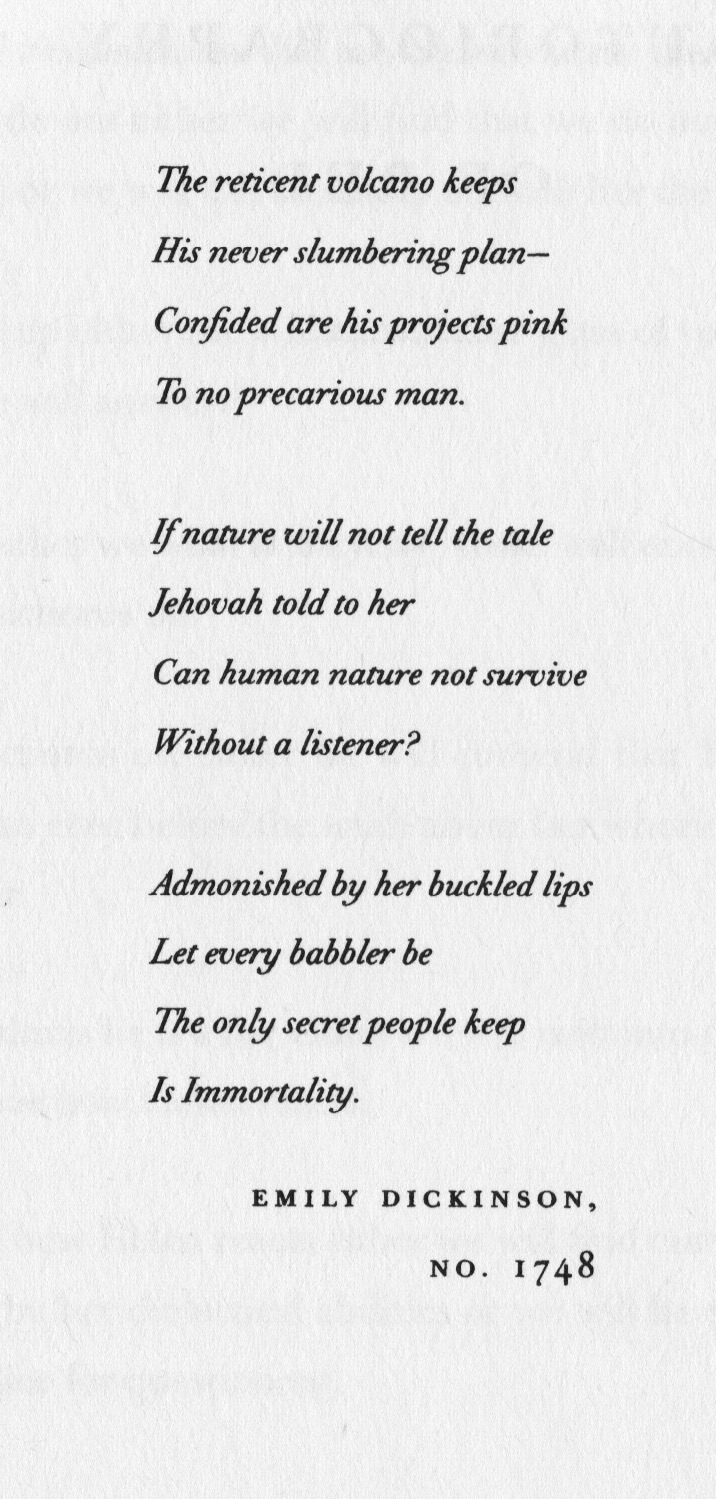
“The reticent volcano keeps” — Emily Dickinson

image

This Dickinson poem is a sort of epigraph to Anne Carson’s novel-poem-poem-novel Autobiography of Red. I had never read either, before today, somehow, but oh my electric!

“Omniscience” — Piet Hein

image

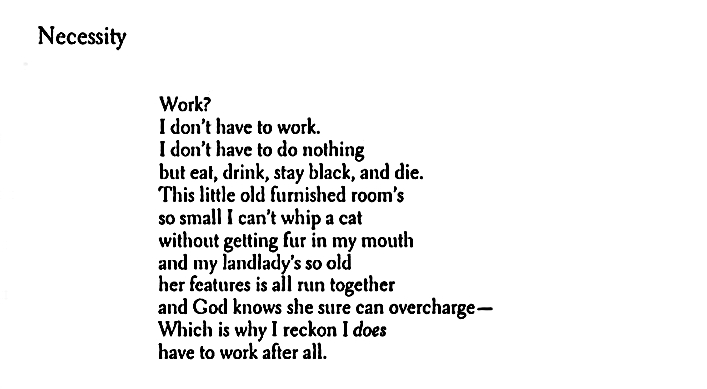
“Necessity” — Langston Hughes

Screenshot 2015-09-07 at 2

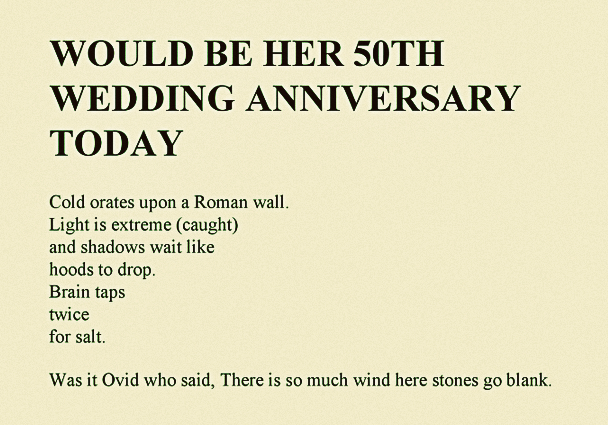
“Would Be Her 50th Wedding Anniversary Today” — Anne Carson

would be

The honest critic (Ezra Pound)

image

From ABC of Reading. 

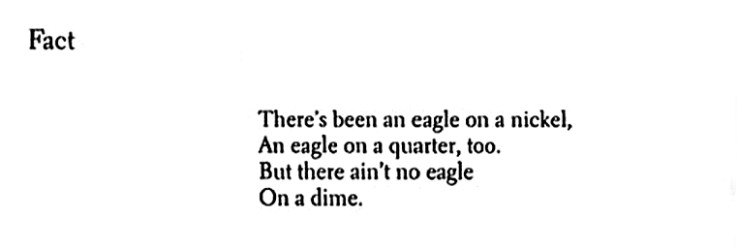
“Fact” — Langston Hughes

Screenshot 2015-08-30 at 6

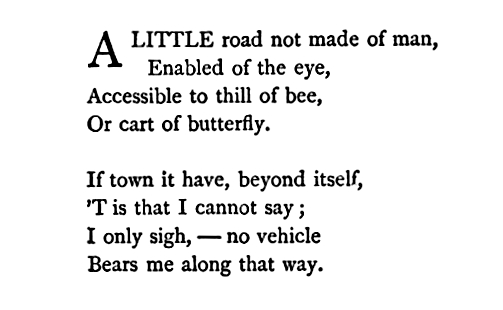
“A little road not made of man” — Emily Dickinson

Screenshot 2015-08-25 at 8

“Aunt Helen” — T.S. Eliot

Screenshot 2015-08-18 at 5.14.24 PM

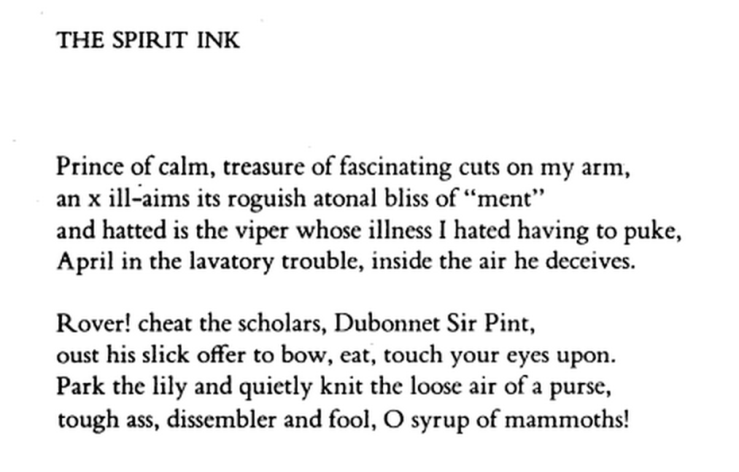
“The Spirit Ink” – Frank O’Hara

Frank O'Hara - The Spirit Ink

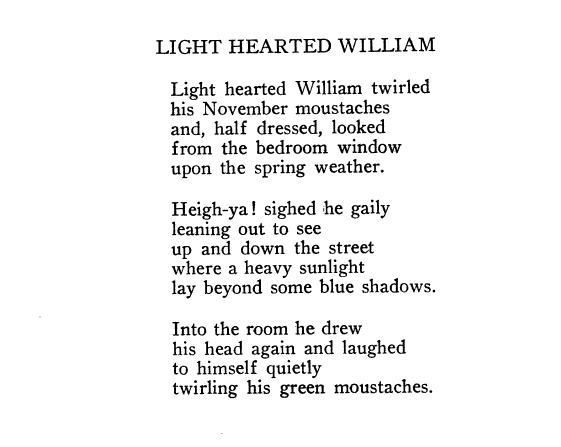
“Light Hearted William” — William Carlos Williams

Screenshot 2015-08-04 at 4.47.31 PM

Sixteen Don’ts for Poets (1917)

“Sixteen Don’ts for Poets” by Arthur Guiterman

from Literature in the Making (1917)


“Don’t think of yourself as a poet, and don’t dress the part.

“Don’t classify yourself as a member of any special school or group.

“Don’t call your quarters a garret or a studio.

“Don’t frequent exclusively the company of writers.

“Don’t think of any class of work that you feel moved to do as either beneath you or above you.

“Don’t complain of lack of appreciation. (In the long run no really good published work can escape appreciation.)

“Don’t think you are entitled to any special rights, privileges, and immunities as a literary person, or have any more reason to consider your possible lack of fame a grievance against the world than has any shipping-clerk or traveling-salesman.

“Don’t speak of poetic license or believe that there is any such thing.

“Don’t tolerate in your own work any flaws in rhythm, rhyme, melody, or grammar.

“Don’t use ‘e’er’ for ‘ever,’ ‘o’er’ for ‘over,’ ‘whenas’ or ‘what time’ for ‘when,’ or any of the ‘poetical’ commonplaces of the past.

“Don’t say ‘did go’ for ‘went,’ even if you need an extra syllable.

“Don’t omit articles or prepositions for the sake of the rhythm.

“Don’t have your book published at your own expense by any house that makes a practice of publishing at the author’s expense.

“Don’t write poems about unborn babies.

“Don’t—don’t write hymns to the great god Pan. He is dead; let him rest in peace!

“Don’t write what everybody else is writing.”

(Read the entire essay after the jump)

Continue reading “Sixteen Don’ts for Poets (1917)” →

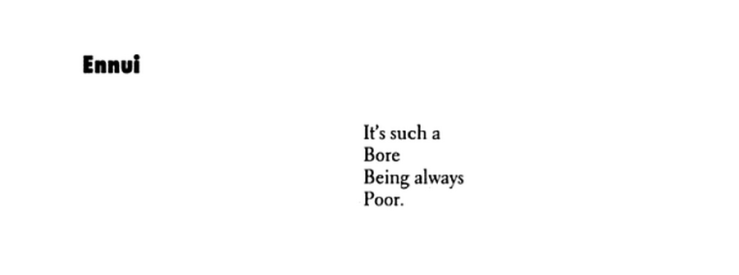
“Ennui” — Langston Hughes

Screenshot 2015-07-30 at 5.24.06 PM

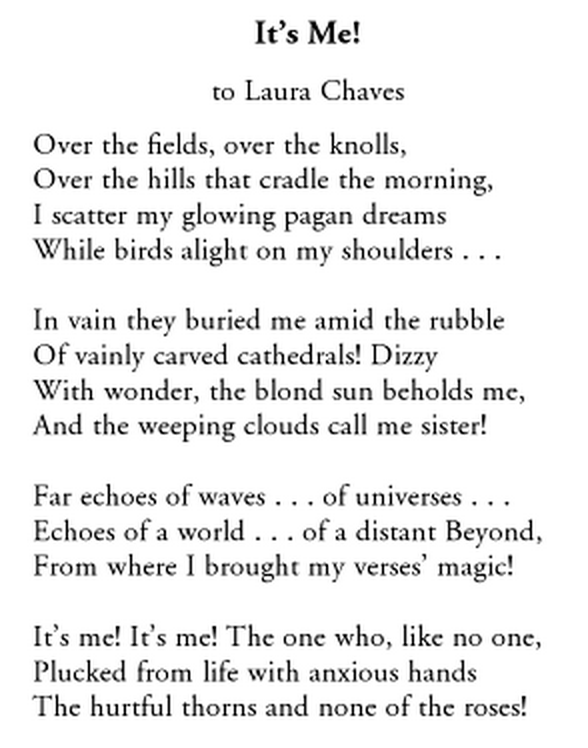
“It’s Me!” – Florbela Espanca

It's Me!

Translated by Richard Zenith.

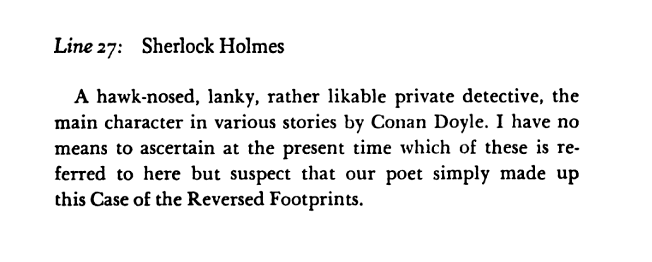
Line 27: Sherlock Holmes (Vladimir Nabokov)

Screenshot 2015-07-27 at 12.20.50 PM

Screenshot 2015-07-27 at 12.19.44 PM

From Pale Fire.

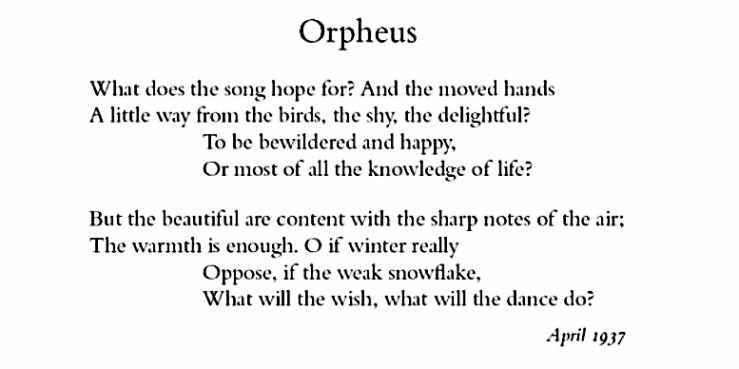
“Orpheus” — W.H. Auden

orpheus

“Palace of the Babies” — Wallace Stevens

palace