“Sweeney Among the Nightingales” — T.S. Eliot

“Sweeney Among the Nightingales” by T.S. Eliot

Apeneck Sweeney spreads his knees
Letting his arms hang down to laugh,
The zebra stripes along his jaw
Swelling to maculate giraffe.

The circles of the stormy moon
Slide westward toward the River Plate,
Death and the Raven drift above
And Sweeney guards the hornèd gate.

Gloomy Orion and the Dog
Are veiled; and hushed the shrunken seas;
The person in the Spanish cape
Tries to sit on Sweeney’s knees

Slips and pulls the table cloth
Overturns a coffee-cup,
Reorganized upon the floor
She yawns and draws a stocking up;

The silent man in mocha brown
Sprawls at the window-sill and gapes;
The waiter brings in oranges
Bananas figs and hothouse grapes;

The silent vertebrate in brown
Contracts and concentrates, withdraws;
Rachel née Rabinovitch
Tears at the grapes with murderous paws;

She and the lady in the cape
Are suspect, thought to be in league;
Therefore the man with heavy eyes
Declines the gambit, shows fatigue,

Leaves the room and reappears
Outside the window, leaning in,
Branches of wisteria
Circumscribe a golden grin;

The host with someone indistinct
Converses at the door apart,
The nightingales are singing near
The Convent of the Sacred Heart,

And sang within the bloody wood
When Agamemnon cried aloud,
And let their liquid droppings fall
To stain the stiff dishonoured shroud.


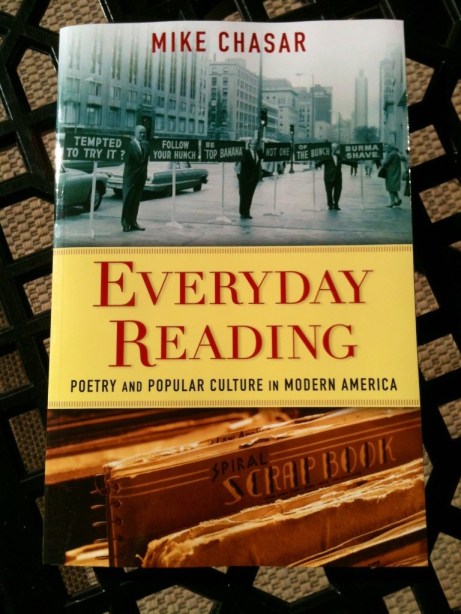
Everyday Reading: Poetry and Popular Culture in America (Book Acquired, Sometime in December of 2012)

20130105-110115.jpg

I got a little lax with these “books acquired” posts at the end of last year—chalk it up to end of semester deadlines and meetings, family-oriented holiday stuff, and an awful illness. Anyway–

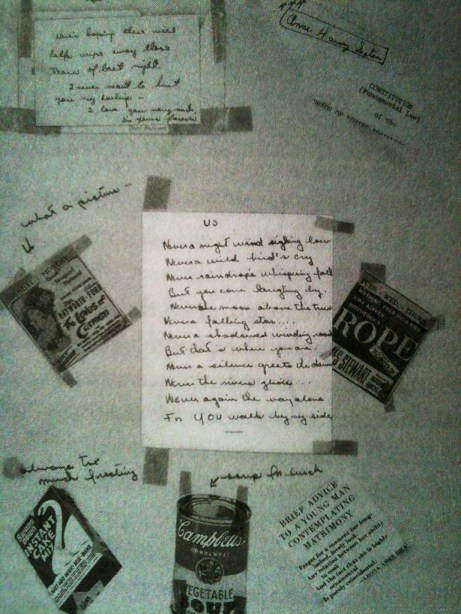
Mike Chasar’s Everyday Reading: Poetry and Popular Culture in Modern America, new from Columbia University Press is pretty cool: it’s kind of a dialogic study of how poetry evinces (or infiltrates or collides or emerges from or is bound by) a variety of popular media. Some of the most fascinating chapters dwell on scrapbooking. Here’s Columbia U of P’s blurb:

Exploring poetry scrapbooks, old-time radio show recordings, advertising verse, corporate archives, and Hallmark greeting cards, among other unconventional sources, Mike Chasar casts American poetry as an everyday phenomenon consumed and created by a vast range of readers. He shows how American poetry in the first half of the twentieth century and its reception helped set the stage for the dynamics of popular culture and mass media today.

Poetry was then part and parcel of American popular culture, spreading rapidly as the consumer economy expanded and companies exploited its profit-making potential. Poetry also offered ordinary Americans creative, emotional, political, and intellectual modes of expression, whether through scrapbooking, participation in radio programs, or poetry contests. Reenvisioning the uses of twentieth-century poetry, Chasar provides a richer understanding of the innovations of modernist and avant-garde poets and the American reading public’s sophisticated powers of feeling and perception.

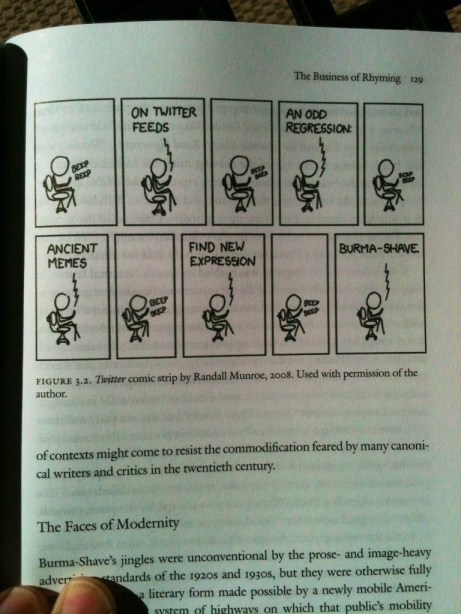
A couple of snaps from the book—pics of pages from one of those scrapbooks—

20130105-110232.jpg

20130105-110245.jpg

And—

20130105-110159.jpg

“Emily Dickinson” — Wendy Cope

“Emily Dickinson” by Wendy Cope:

Higgledy-piggledy
Emily Dickinson
Liked to use dashes
Instead of full stops.

Nowadays, faced with such
Idiosyncrasy,
Critics and editors
Send for the cops.

“Old and New Year Ditties” — Christina Rossetti

“Old and New Year Ditties” by Christina Rossetti

I

New Year met me somewhat sad:
Old Year leaves me tired,
Stripped of favourite things I had
Baulked of much desired:
Yet farther on my road to-day
God willing, farther on my way.

New Year coming on apace
What have you to give me?
Bring you scathe, or bring you grace,
Face me with an honest face;
You shall not deceive me:
Be it good or ill, be it what you will,
It needs shall help me on my road,
My rugged way to heaven, please God.

II

Watch with me, men, women, and children dear,
You whom I love, for whom I hope and fear,
Watch with me this last vigil of the year.
Some hug their business, some their pleasure-scheme;
Some seize the vacant hour to sleep or dream;
Heart locked in heart some kneel and watch apart.

Watch with me blessèd spirits, who delight
All through the holy night to walk in white,
Or take your ease after the long-drawn fight.
I know not if they watch with me: I know
They count this eve of resurrection slow,
And cry, “How long?” with urgent utterance strong.

Watch with me Jesus, in my loneliness:
Though others say me nay, yet say Thou yes;
Though others pass me by, stop Thou to bless.
Yea, Thou dost stop with me this vigil night;
To-night of pain, to-morrow of delight:
I, Love, am Thine; Thou, Lord my God, art mine.

III

Passing away, saith the World, passing away:
Chances, beauty and youth sapped day by day:
Thy life never continueth in one stay.
Is the eye waxen dim, is the dark hair changing to grey
That hath won neither laurel nor bay?
I shall clothe myself in Spring and bud in May:
Thou, root-stricken, shalt not rebuild thy decay
On my bosom for aye.
Then I answered: Yea.

Passing away, saith my Soul, passing away:
With its burden of fear and hope, of labour and play;
Hearken what the past doth witness and say:
Rust in thy gold, a moth is in thine array,
A canker is in thy bud, thy leaf must decay.
At midnight, at cockcrow, at morning, one certain day
Lo, the Bridegroom shall come and shall not delay:
Watch thou and pray.
Then I answered: Yea.

Passing away, saith my God, passing away:
Winter passeth after the long delay:
New grapes on the vine, new figs on the tender spray,
Turtle calleth turtle in Heaven’s May.
Though I tarry wait for Me, trust Me, watch and pray:
Arise, come away, night is past and lo it is day,
My love, My sister, My spouse, thou shalt hear Me say.
Then I answered: Yea.
 

“New Year’s Eve” / “New Year’s Night” — D.H.Lawrence

Two poems by D.H. Lawrence:

“New Year’s Eve”—

There are only two things now,
The great black night scooped out
And this fire-glow.

This fire-glow, the core,
And we the two ripe pips
That are held in store.

Listen, the darkness rings
As it circulates round our fire.
Take off your things.

Your shoulders, your bruised throat!
Your breasts, your nakedness!
This fiery coat!

As the darkness flickers and dips,
As the firelight falls and leaps
From your feet to your lips!

“New Year’s Night”—

Now you are mine, to-night at last I say it;
You’re a dove I have bought for sacrifice,
And to-night I slay it.

Here in my arms my naked sacrifice!
Death, do you hear, in my arms I am bringing
My offering, bought at great price.

She’s a silvery dove worth more than all I’ve got.
Now I offer her up to the ancient, inexorable God,
Who knows me not.

Look, she’s a wonderful dove, without blemish or spot!
I sacrifice all in her, my last of the world,
Pride, strength, all the lot.

All, all on the altar! And death swooping down
Like a falcon. ’Tis God has taken the victim;
I have won my renown.


“The Tuft of Kelp” — Herman Melville

“The Tuft of Kelp” by Herman Melville—

All dripping in tangles green,
Cast up by a lonely sea
If purer for that, O Weed,
Bitterer, too, are ye?

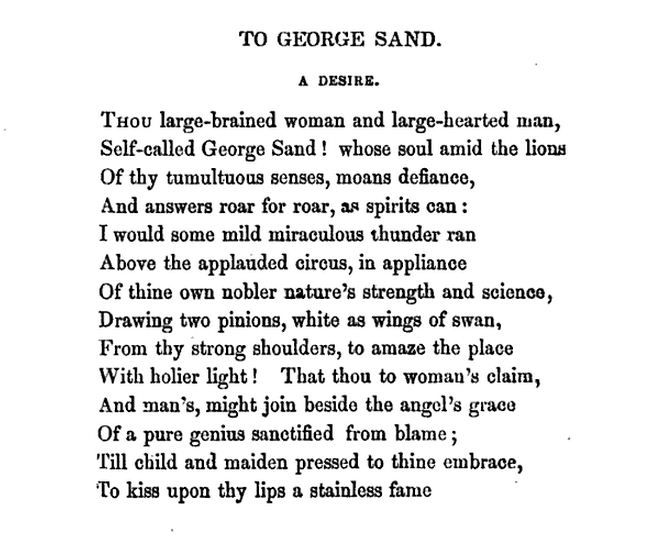
“To George Sand (A Desire)” — Elizabeth Barrett Browning

ebb

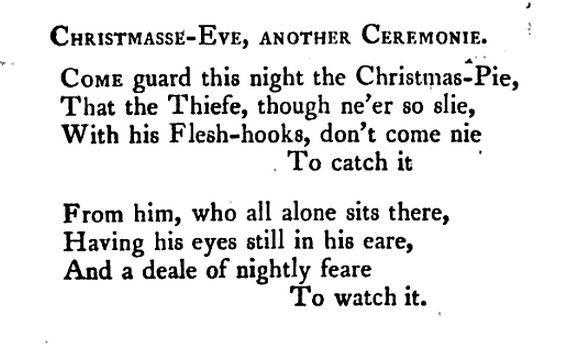
“Christmasse-Eve, Another Ceremonie” — Robert Herrick

herrick

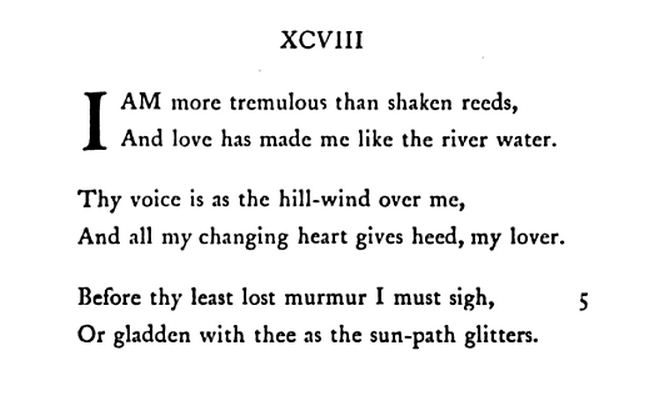
“I am more tremulous than shaken reeds” — Sappho

saph

“Pain in Pleasure” — Elizabeth Barrett Browning

pip

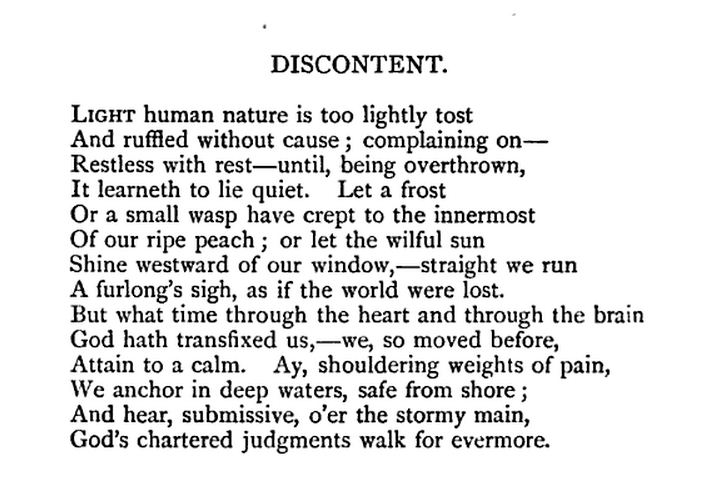
“Discontent” — Elizabeth Barrett Browning

ebb

A Wassailing Poem from Robert Herrick

herrick2

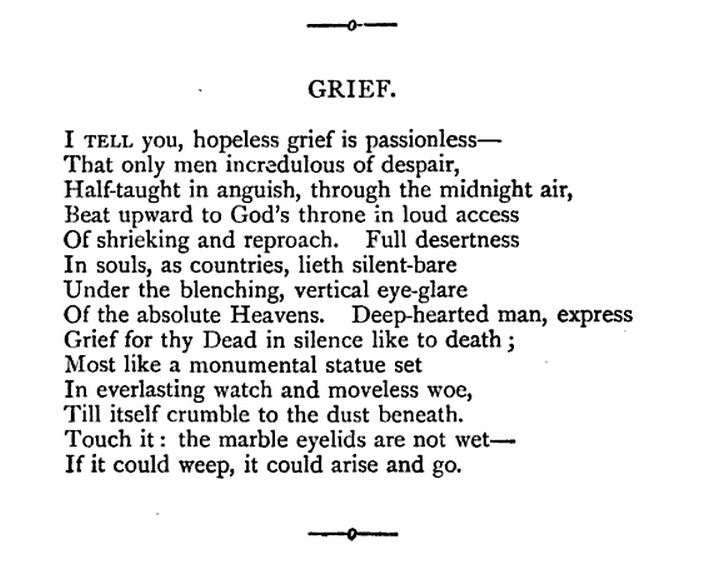
“Grief” — Elizabeth Barrett Browning

grief

“What inn is this?” — Emily Dickinson

ed

“Stone Is Not Stone” — Carson McCullers

“Stone Is Not Stone” by Carson McCullers–

There was a time when stone was stone
And a face on the street was a finished face.
Between the Thing, myself and God alone
There was an instant symmetry.
Since you have altered all my world this trinity is twisted:

Stone is not stone
And faces like the fractioned characters in dreams are incomplete
Until in the child’s inchoate face
I recognize your exiled eyes.
The soldier climbs the glaring stair leaving your shadow.
Tonight, this torn room sleeps
Beneath the starlight bent by you.

“Meditatio” — Ezra Pound

“Meditatio,” Ezra Pound

When I carefully consider the curious habits of dogs
I am compelled to conclude
That man is the superior animal.

When I consider the curious habits of man
I confess, my friend, I am puzzled.

Theodor Adorno Shows Off His Sexy Legs