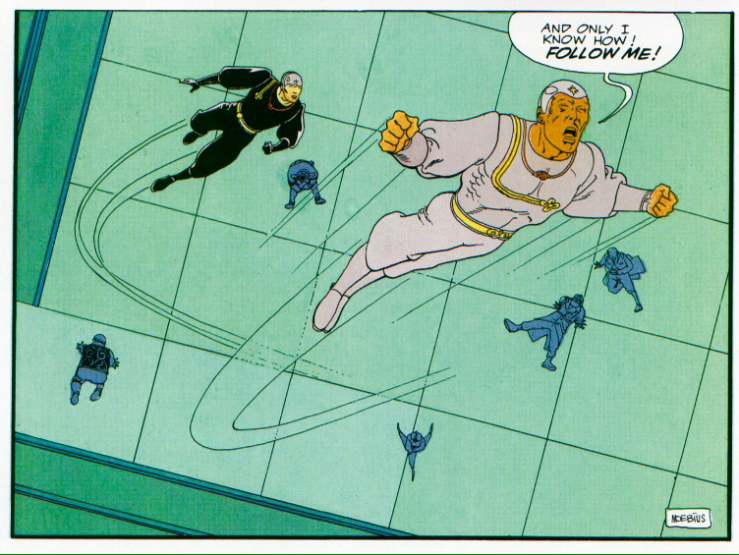
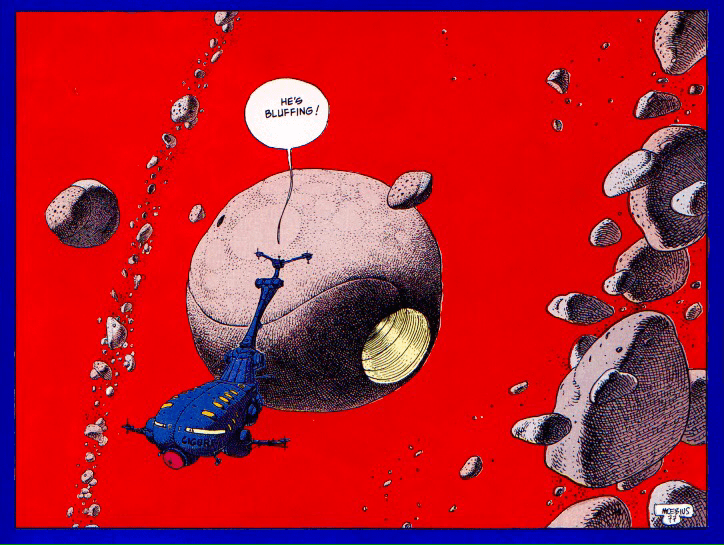
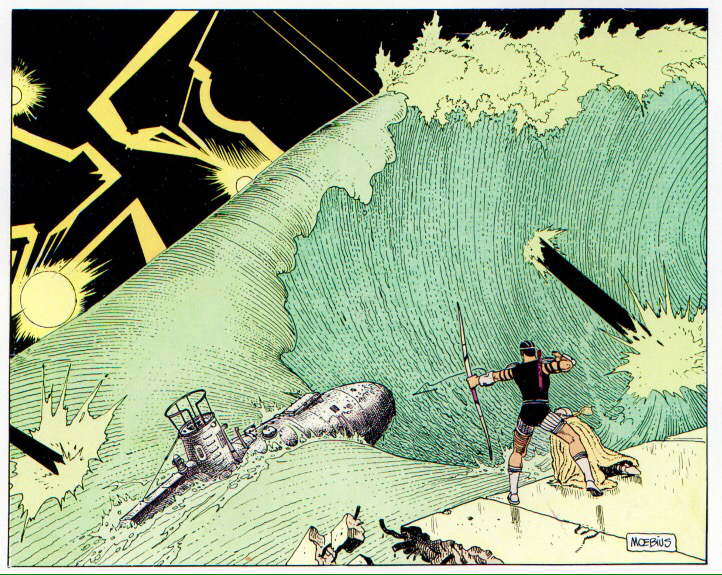
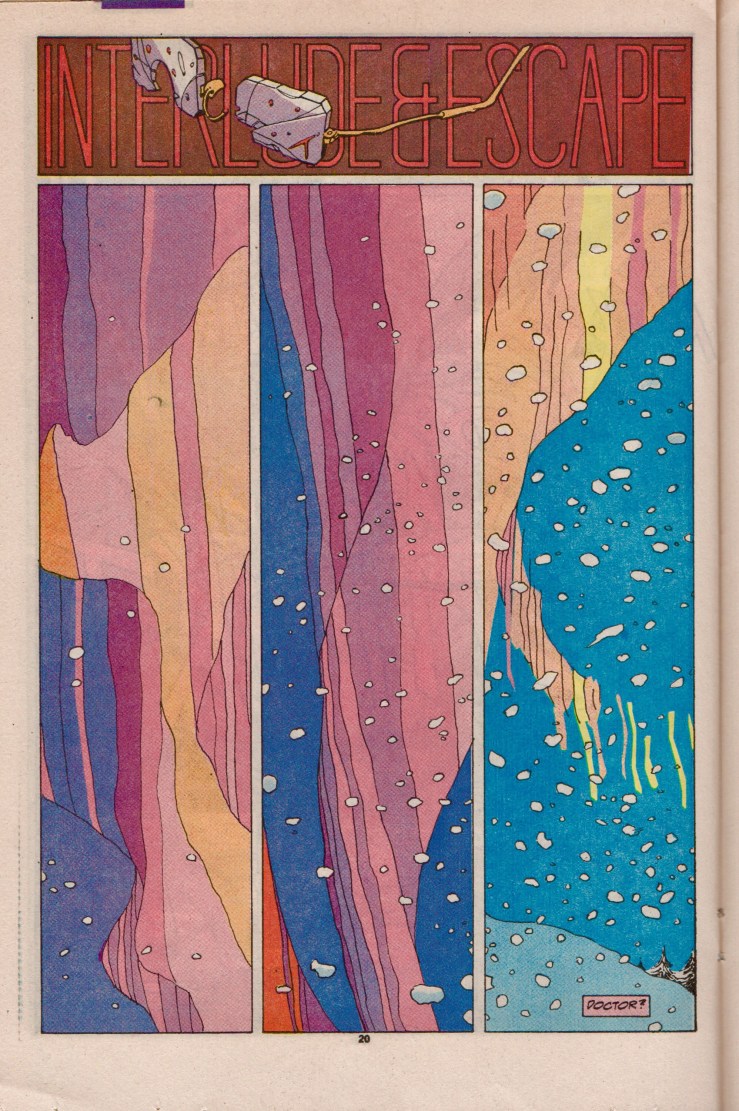
Three (noncontiguous, nonconsecutive, unrelated) panels by Moebius from various comics in Moebius 3: The Airtight Garage (Epic Comics/Marvel).

Three (noncontiguous, nonconsecutive, unrelated) panels by Moebius from various comics in Moebius 3: The Airtight Garage (Epic Comics/Marvel).
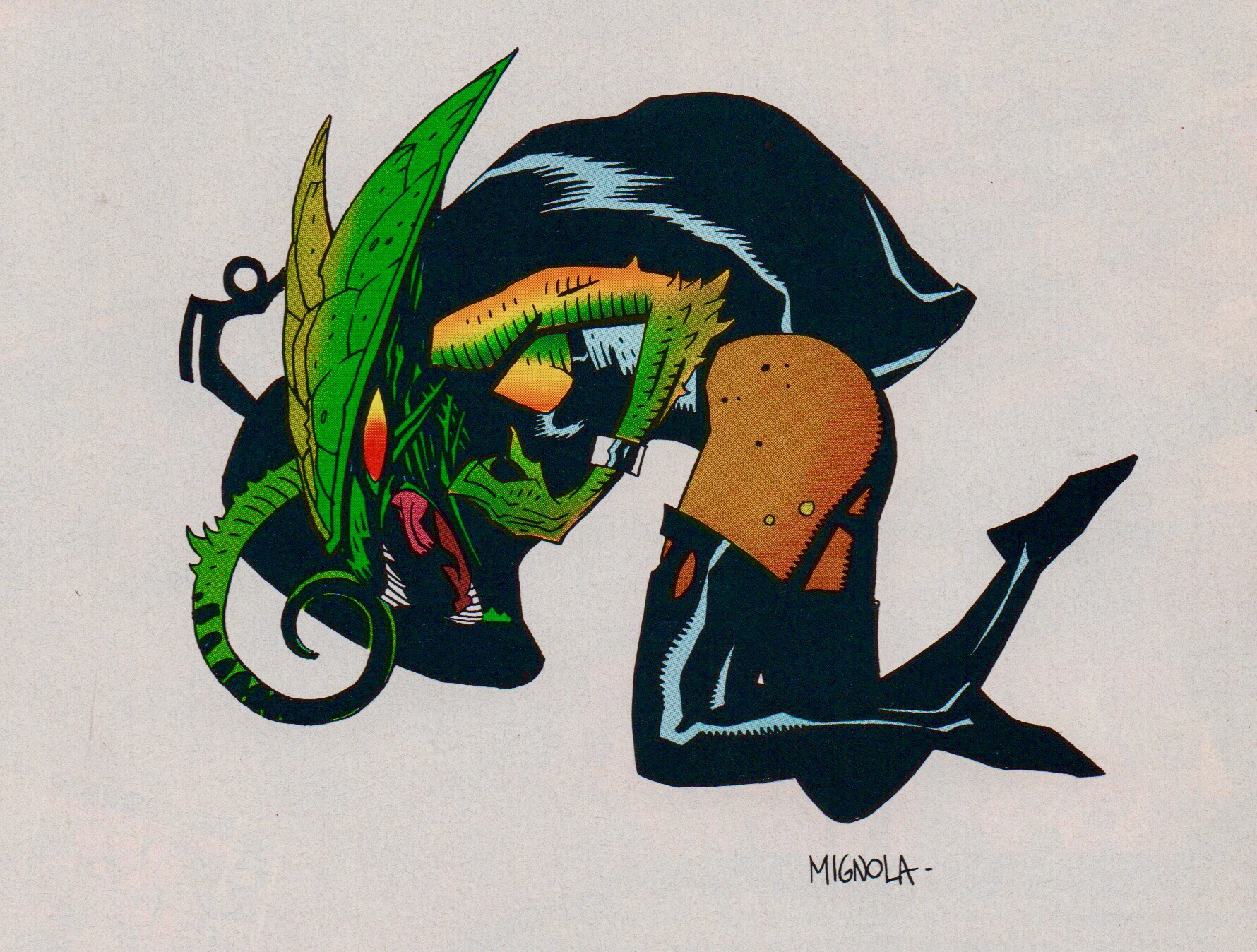
I was a huge fan of Chris Claremont’s 1980’s run on Uncanny X-Men. I’m not sure how well the comics have aged, because I have a hard time looking at them without my nostalgia lenses on. When I sold most of my comic book collection in the early 1990s, I couldn’t bear to part with most of the Claremont issues (although I did sell a few books that were particularly highly-valued—over-valued, really. I bought a Fender guitar with the money, a Bullet. Anyway). I even kept a bunch of Marvel’s concurrent reprint series, Classic X-Men (also stylized as X-Men Classic). I’ve still got a handful of the issues that Mike Mignola did covers for—he was (and is) one of my favorite stylists.
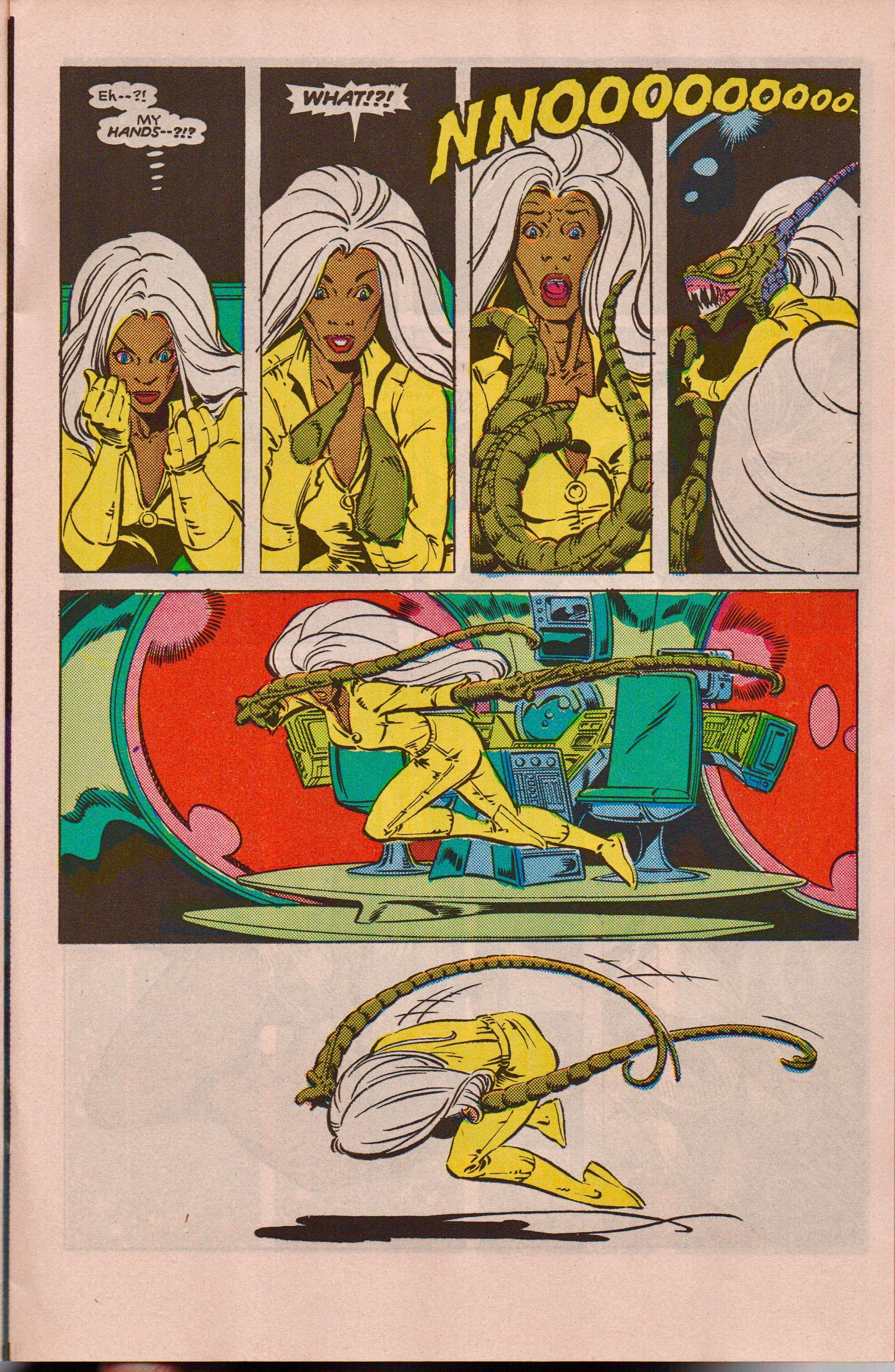
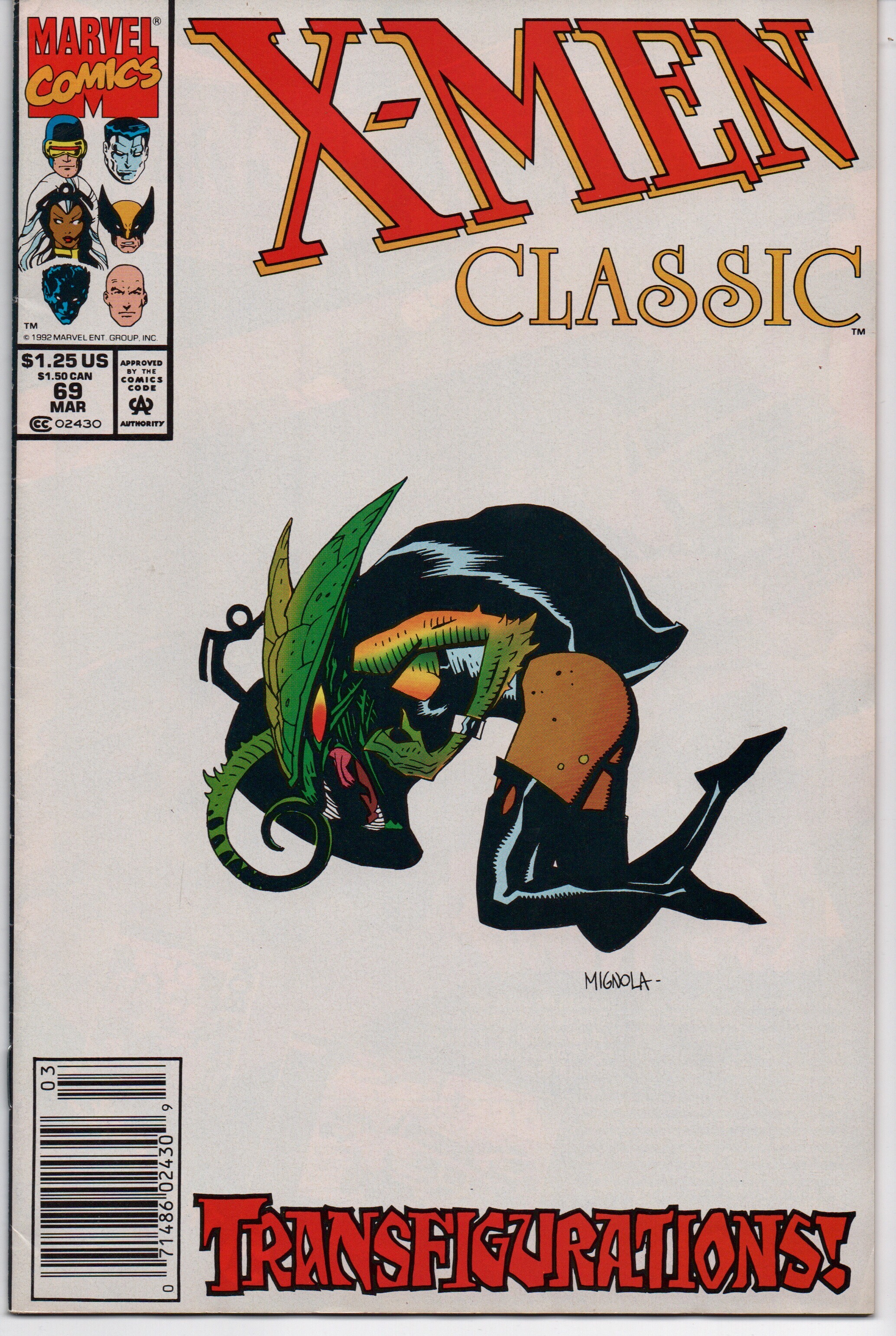
Anyway, the image of Storm above is Mignola’s cover for X-Men Classic #69, March, 1992. The issue reprints Uncanny X-Men #165—script by Claremont, natch, with art by Paul Smith and Bob Wiacek and colors by Lynn Varley. Here’s the page that Mignola took his cover queue from:
And here’s the full cover:
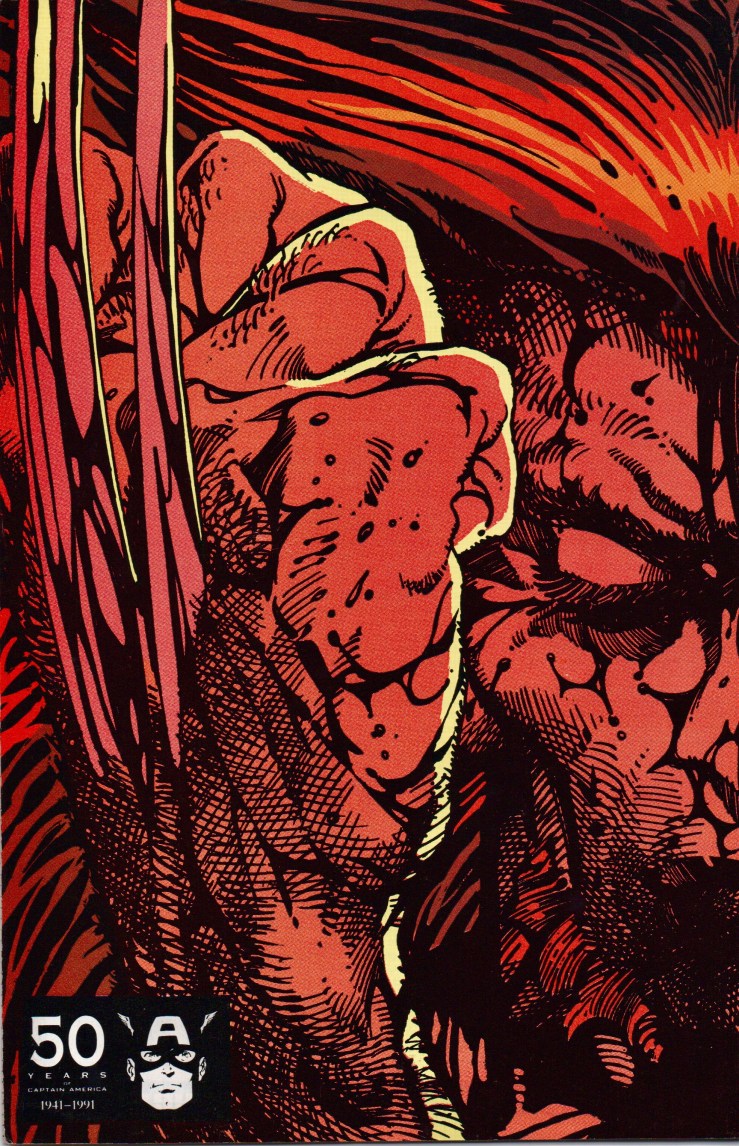
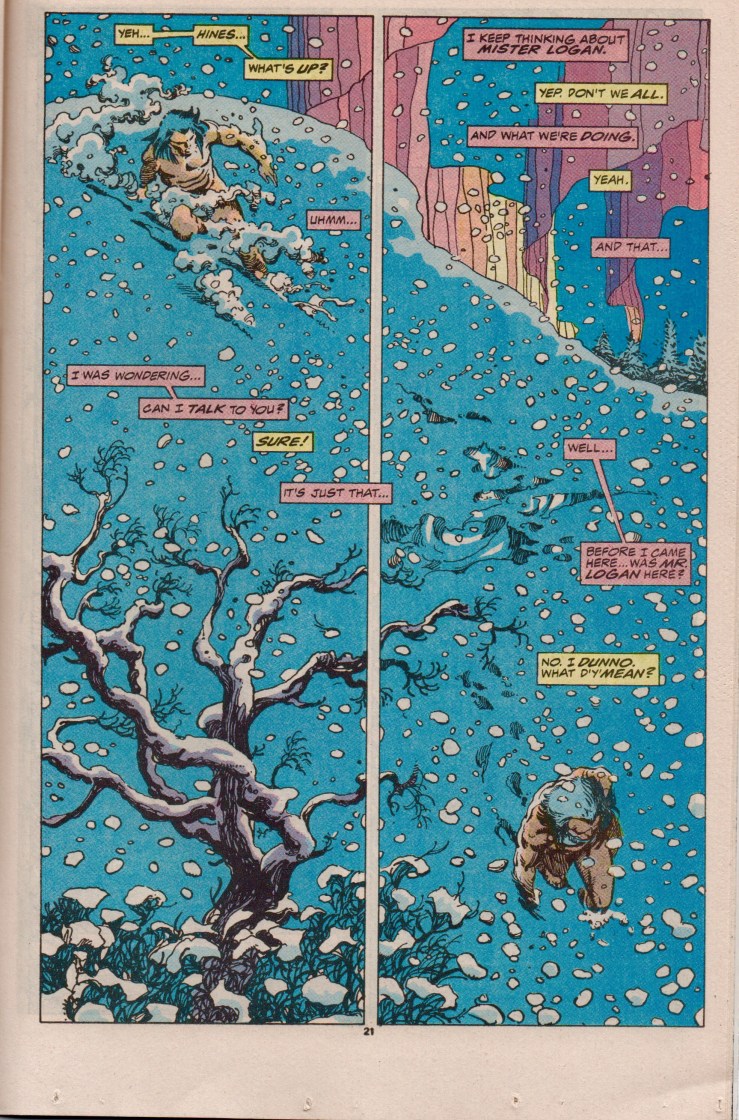
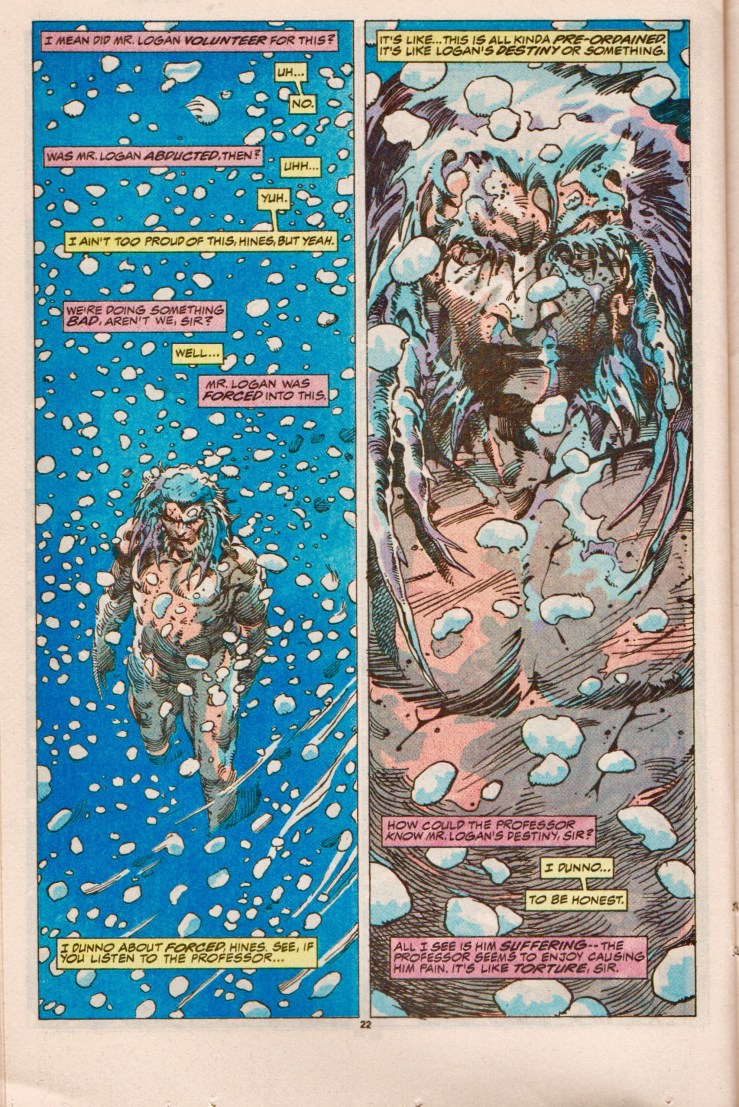
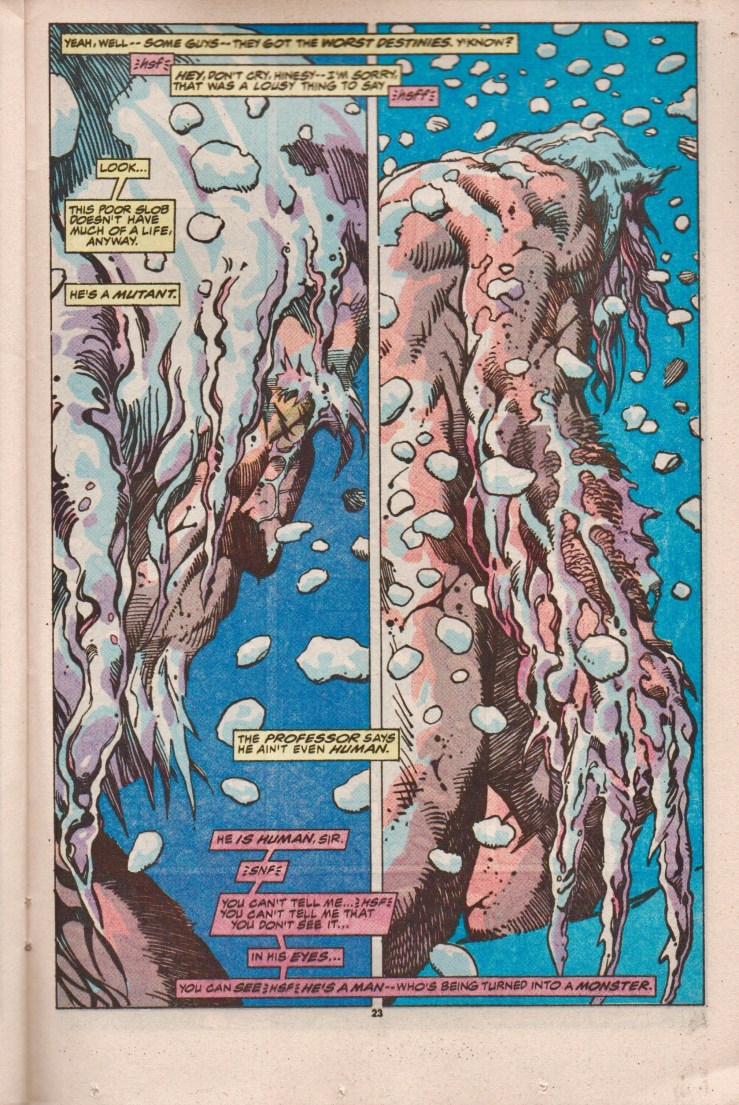
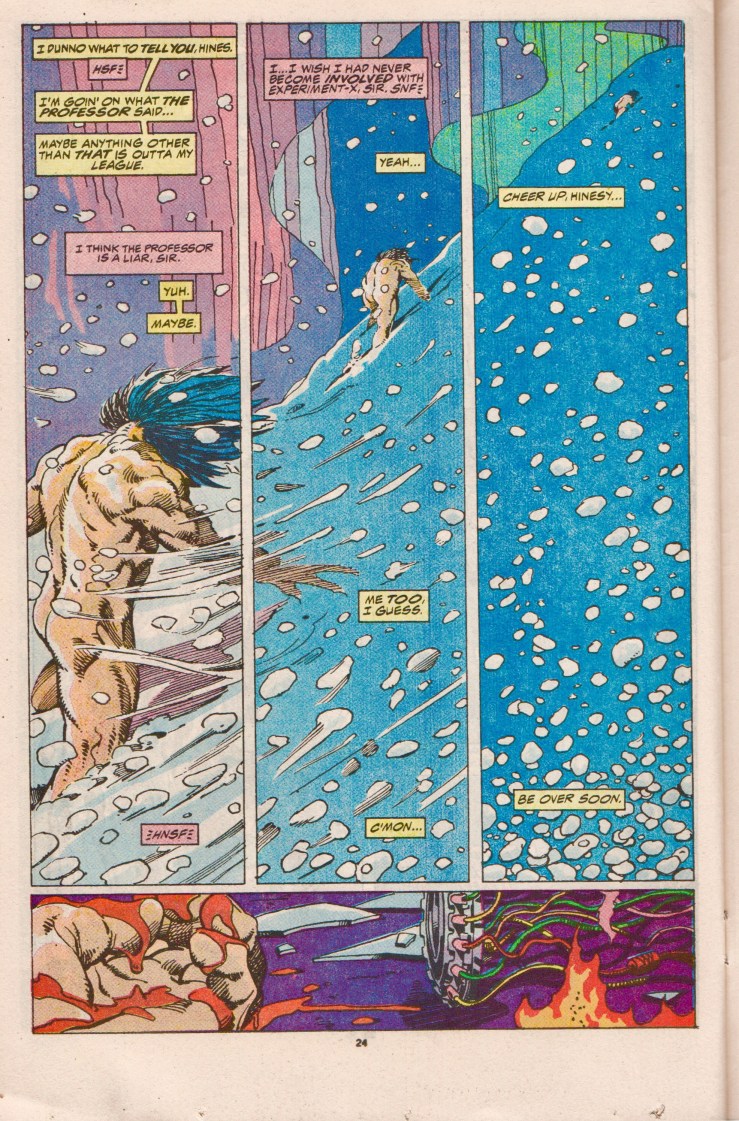

The denouement of Barry Windsor-Smith’s Weapon X origin story. From Marvel Comics Presents #84, September, 1991. BWS was the author, penciller, inker, and colorist of the series. He also did a lot of the lettering. One of my favorite comics when I was a kid.

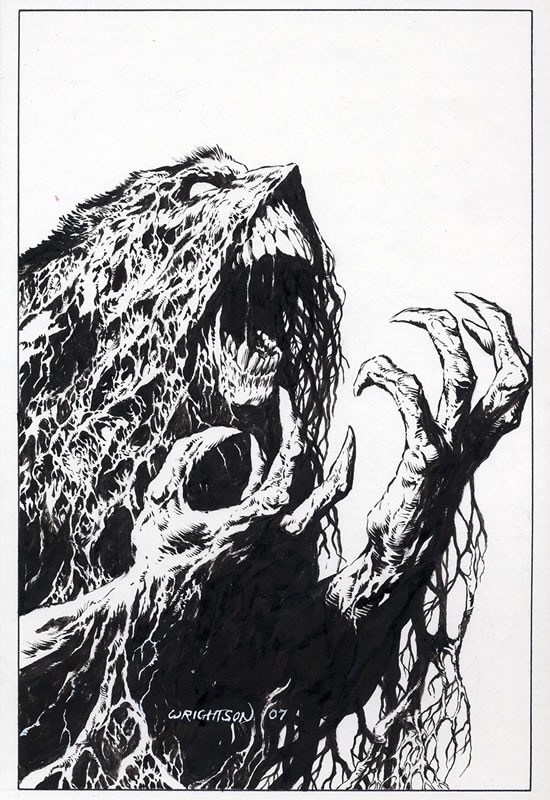
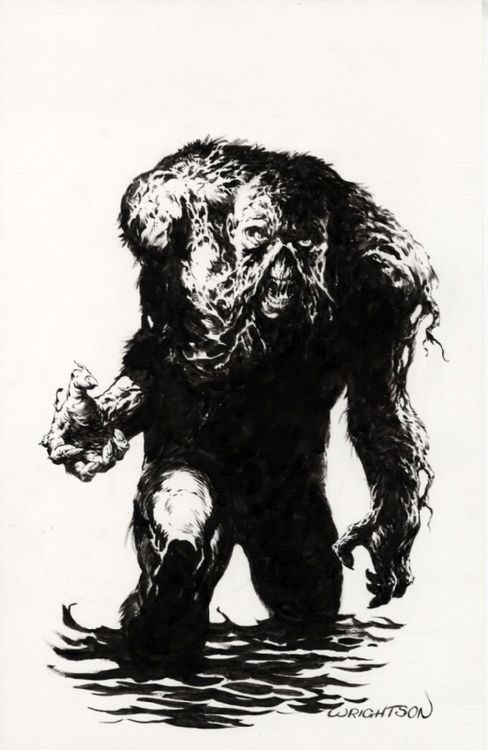
RIP Bernie Wrightson, 1948-2017
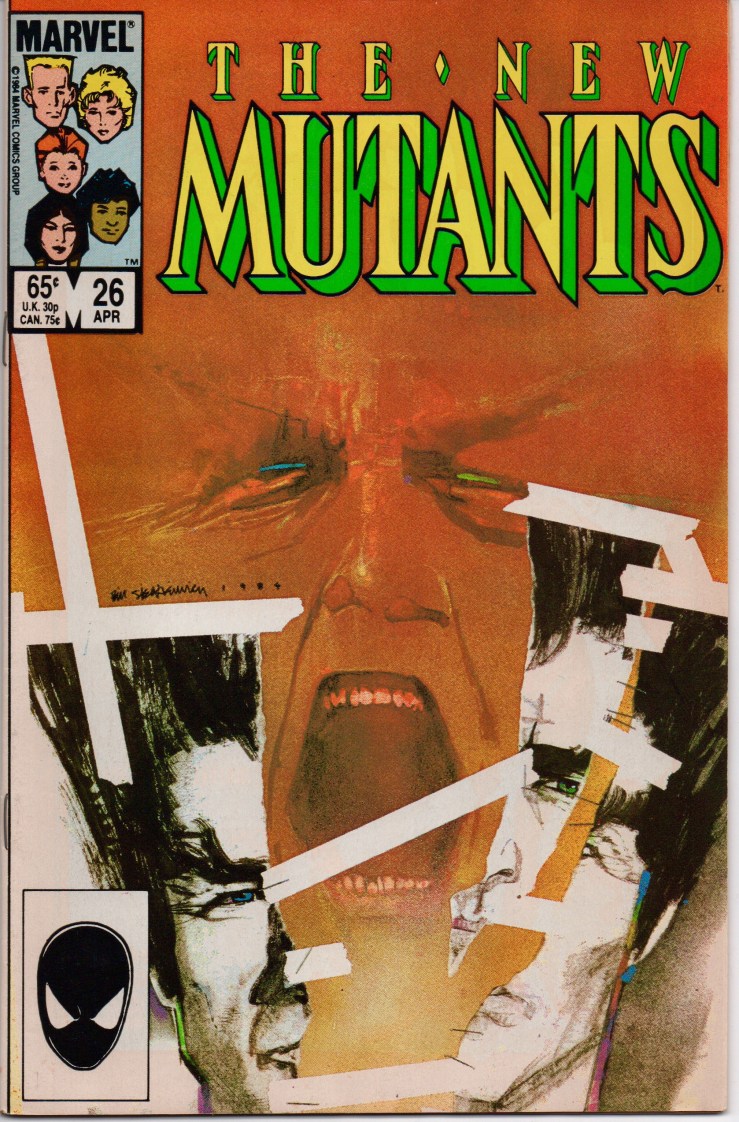
I had no interest in watching the Legion television show.
Bill Sienkiewicz is my favorite comic book artist of all time.
I like Sienkiewicz so much I can spell his last name correctly without looking it up. I like Sienkiewicz so much that he was the first artist I featured when I first started this silly Sunday Comics thing last year.
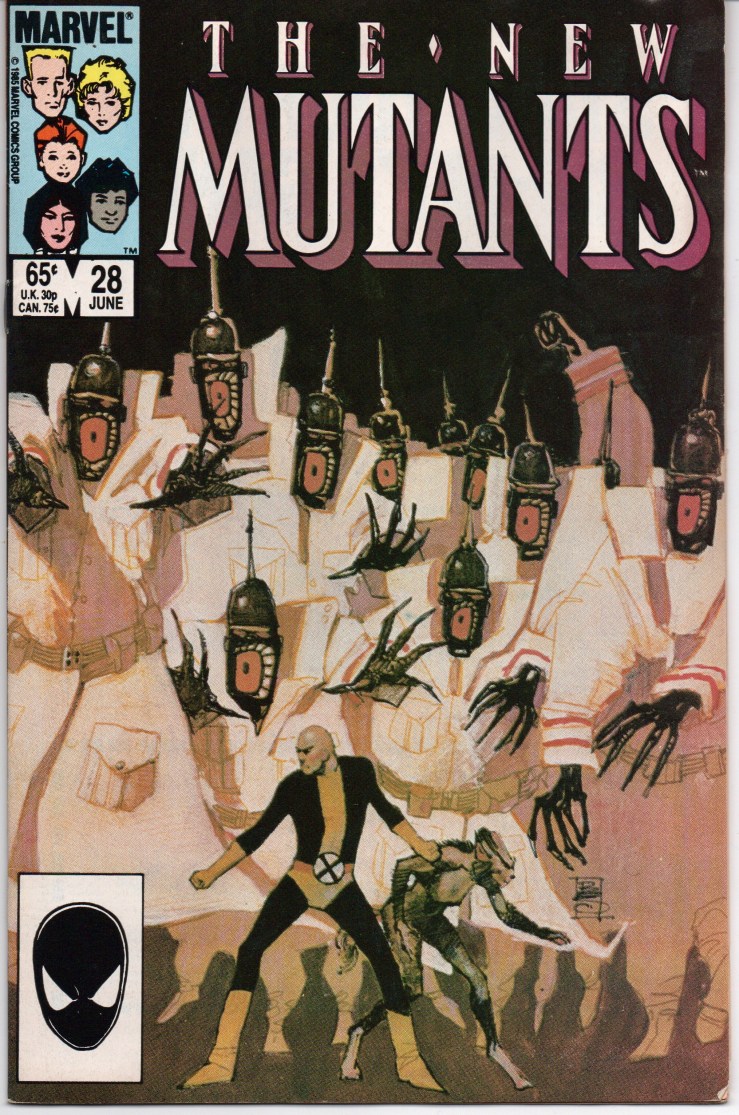
Sienkiewicz, along with Chris Claremont, created the character of David Haller (“Legion,” Professor X’s son). David first appeared in the last page of The New Mutants #25, Marvel Comics, March, 1985. (The issue is about the underrated duo Cloak & Dagger).
The New Mutants was/is my favorite childhood comic book. (By which I mean: Sienkiewicz’s run on The New Mutants was/is my favorite childhood comic book).
Here’s David’s début:
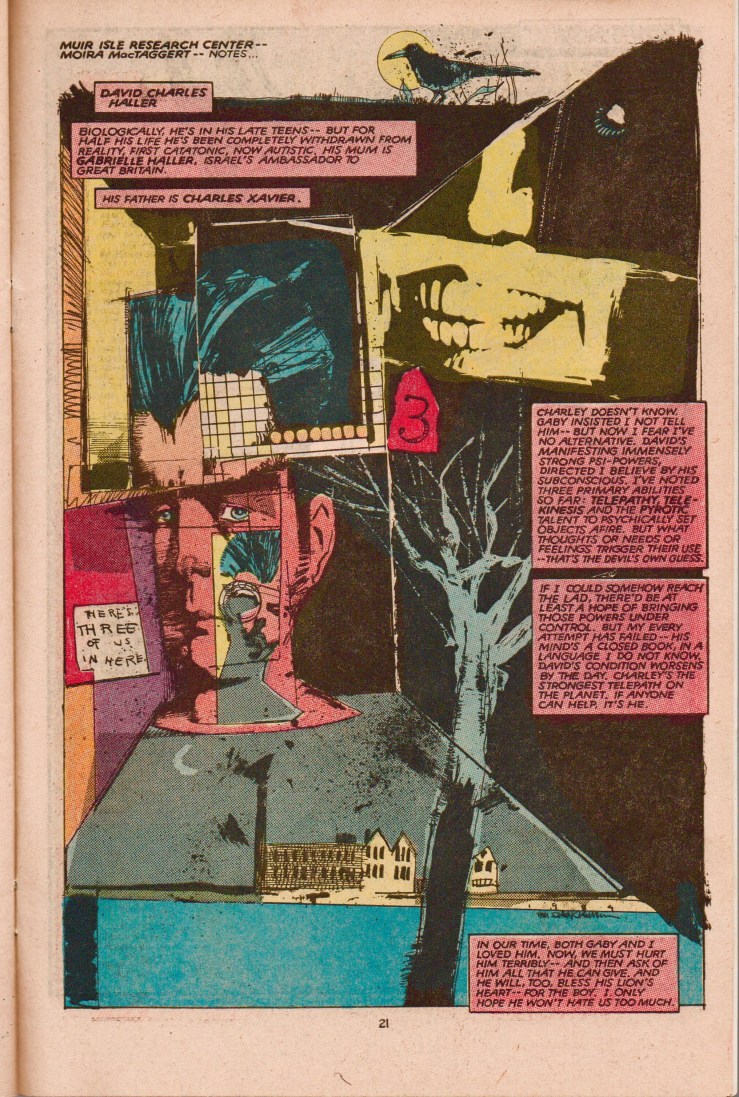
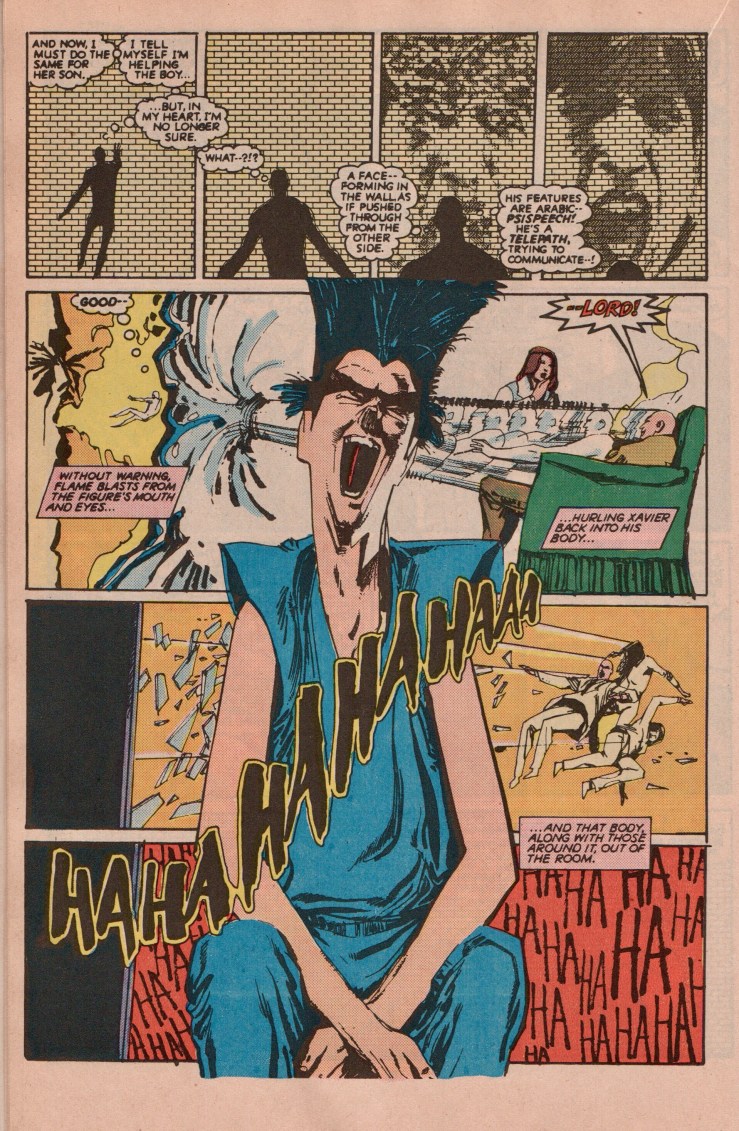
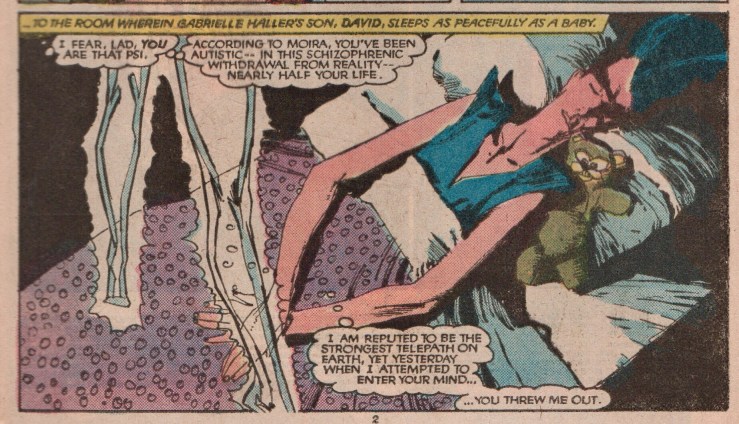
The next three issues of The New Mutants (27-29) tell the Legion story line.
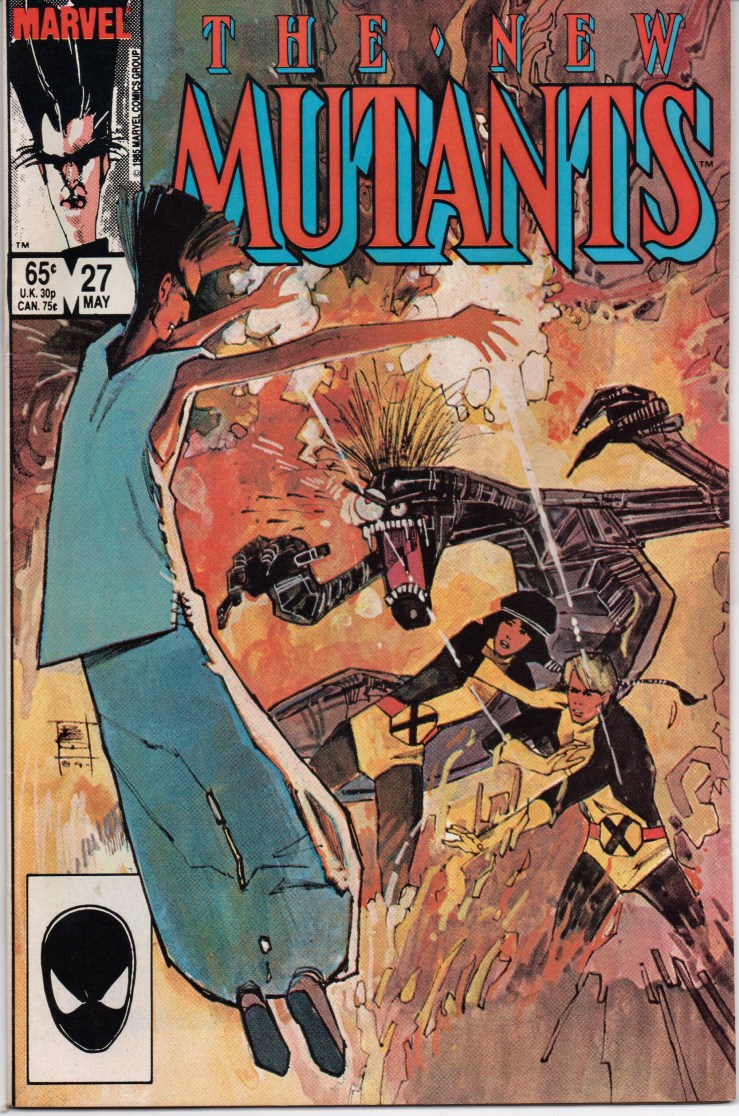
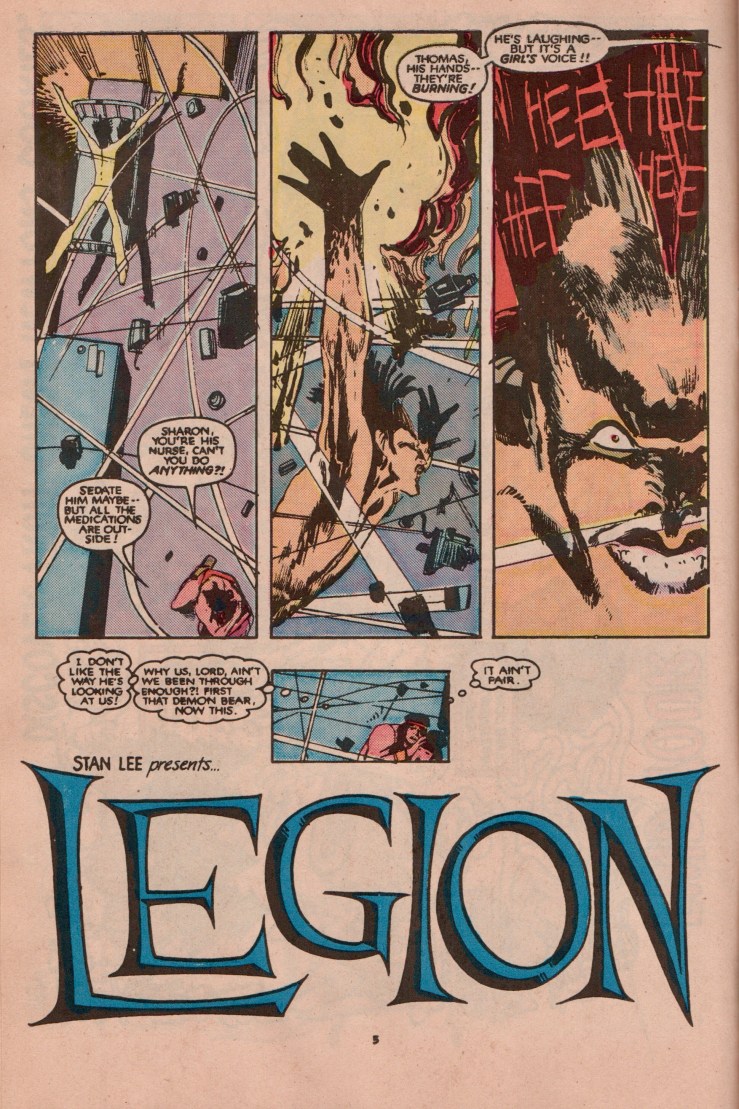 I recall liking the Legion story of The New Mutants, although it never stood out as strongly as The Demon Bear Saga, or the issues where Magneto took over The New Mutants’ leadership. But that isn’t why I had no interest in watching the Legion television show.
I had no interest in watching the Legion television show because every single Marvel television show that I’ve seen so far has been boring, or garbage, or boring garbage. And don’t even get me started on the execrable X-Men films, which have squandered so many good storylines. (Although I thought Deadpool was great, which sort of counts as an X-Men film, and I do have an interest in seeing Logan).
Anyway, after a few critics and authors I admire tweeted that Legion was, like, actually really good/excellent/thrilling/etc., I looked up the show, and saw that the showrunner and creator is Noah Hawley. That’s the dude who did FX’s Fargo, another TV show I was also wary of which also turned out to be excellent.
So, over the past four nights, I’ve watched the first four episodes of Legion. (I’ll watch the fifth tonight).
The show is fantastic.
It’s the first “superhero” show I’ve seen that succeeds not just in its script, casting, and themes, but aesthetically as well. Hawley smuggles in references to the original New Mutants run in a way that doesn’t feel like fanservice—but the other reference points here go past comic books and into film: Legion openly steals from Charlie Kaufman, Michel Gondry, Alfonso Cuaron, and Wes Anderson. (I mean this as a compliment). Hell, there’s something Pynchonesque about the show too, in its themes of paranoia, its treatment of the concept of reality, its streak of dark but somehow zany humor, and its subversive sexiness.
The casting for Legion is pretty great too. The guy who played the guy who died in the car crash on Downton Abbey so he could leave that show and get better shows does an admirable job as David. The temptation would be to play David as batshit crazy, but the portrayal is measured, often archly comical, and ultimately sympathetic. (Shit, I just looked that guy’s name up—I saw him on a web episode of High Maintenance as a stay-at-home dad who enjoyed wearing women’s clothes and thought he was great, but also thought, Damn, hope Matthew Crawley can get some higher-profile gigs—anyway, that dude, Dan Stevens, is in that new Disney live action Beauty and the Beast film with Hermione Hogwarts, so I guess he’s doing fine).
Where was I? Oh, casting—yeah, there are solid performances here. Aubrey Plaza plays a dead junkie who may or may not be a ghost in David’s head. Jean Smart (aka my least favorite Designing Woman) plays the not-Moira MacTaggart/not-Prof. X character Melanie Bird. Smart was smart in the second season of Hawley’s other FX show, Fargo, which also featured Rachel Keller, who is basically the second lead on Legion as Sydney Barrett (not subtle, I know), David’s untouchable girlfriend. And the show basically had me when Bill Irwin showed up. Like I said, it’s great stuff.
Probably my favorite thing about the show so far though is that it doesn’t seem particularly interested in being anyone’s franchise. It stays true to the paranoid spirit of mid-eighties Claremont X-Men, and seamlessly combines plot and aesthetics in a way that a show about a telepathic and telekinetic mutant would have to to succeed. It’s also dark without being self-serious or self-important. (So many superhero films and shows fail utterly here).
Anyway, I’ve loved the first few episodes, and even if the showrunners fuck it all up, hey, it’s just TV, right?

From “A Halo of Flies,” The Saga of the Swamp Thing #30, November 1984. Art by Stephen Bissette with guest inks by Alfredo Alcala; coloring by Tatjana Wood.
I’m still really enjoying my re-read of Alan Moore’s run on Swamp Thing. There’s a cinematic quality to the work, evident in its (often-reserved) pacing, its attention to basic concepts like time and place (it’s astounding frankly how many “superhero” comics pay zero attention to basics like scale or the relationships between physical objects), and its framing of panels. I love how the single-page “Swamp Thing” illustration shows up near the end of this particular issue—like a long cold opening in a film or TV show.

A Krazy Kat strip by George Herriman. The scan is from Krazy Kat by George Herriman, Henry Holt and Company, 1946.
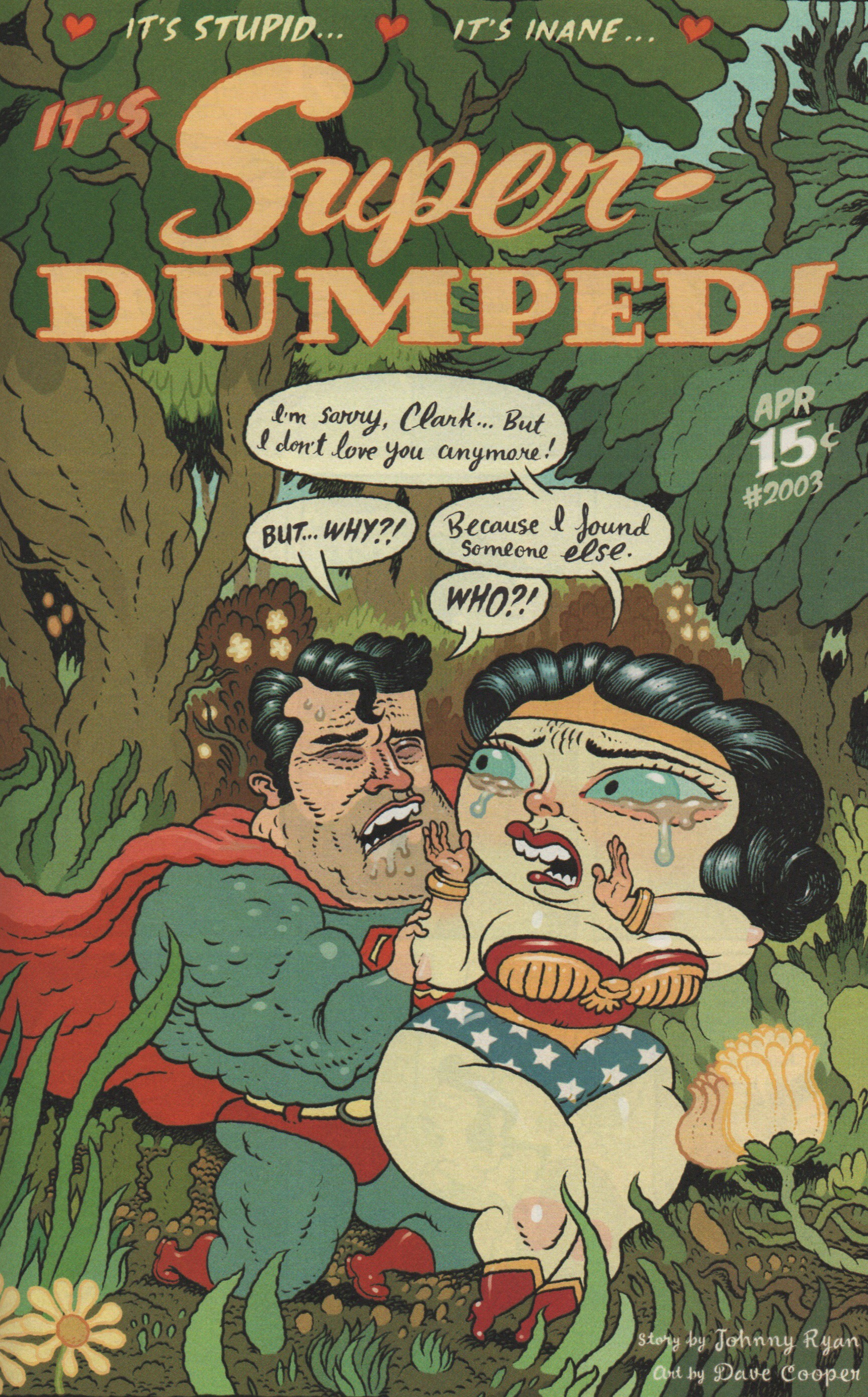
Art by Dave Cooper. From Bizarro World, DC Comics, 2005.

Art by Simon Bisley from Batman-Judge Dredd: Judgment on Gotham. (1991, DC Comics; written by Alan Grant and John Wagner).


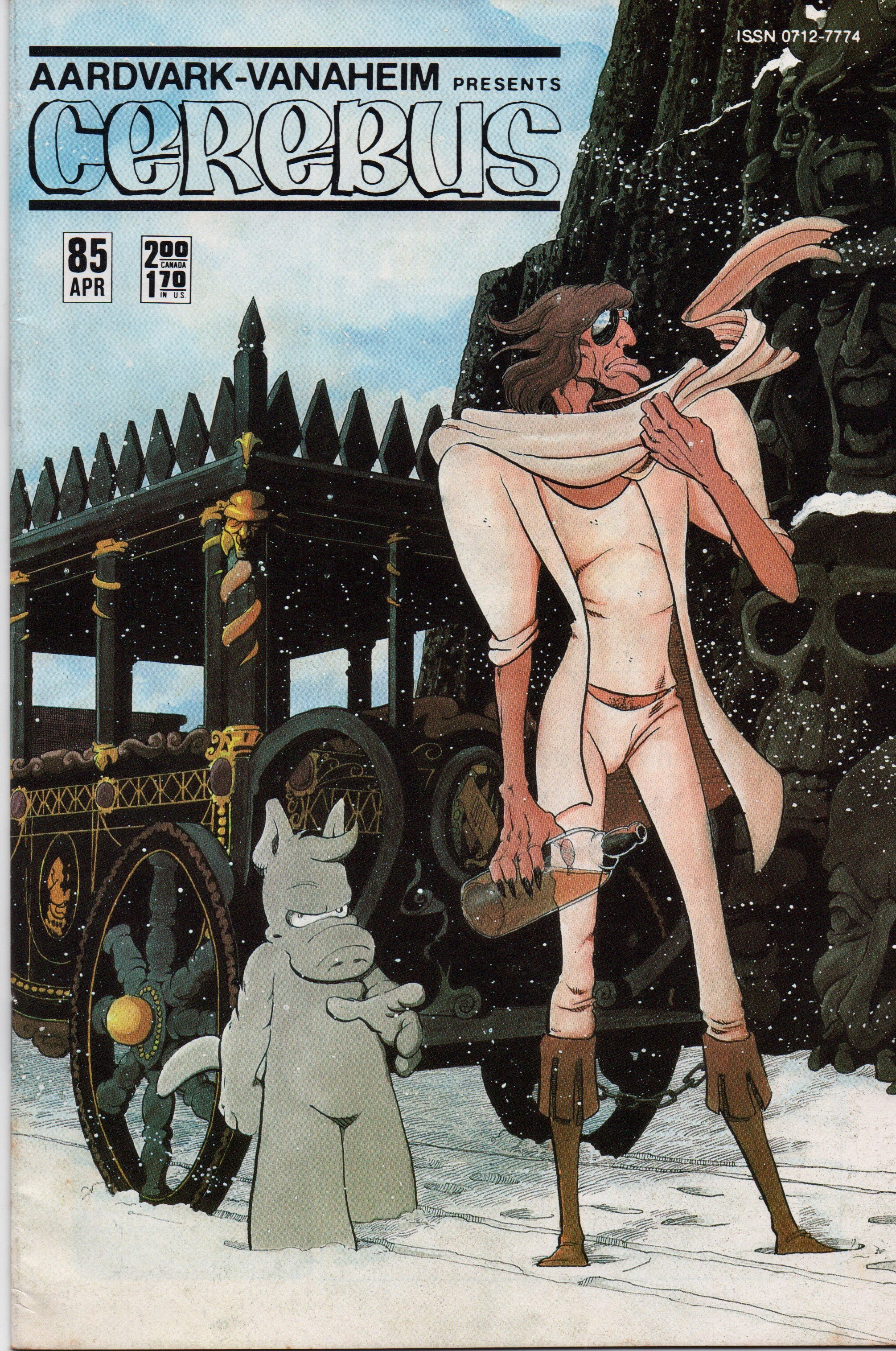
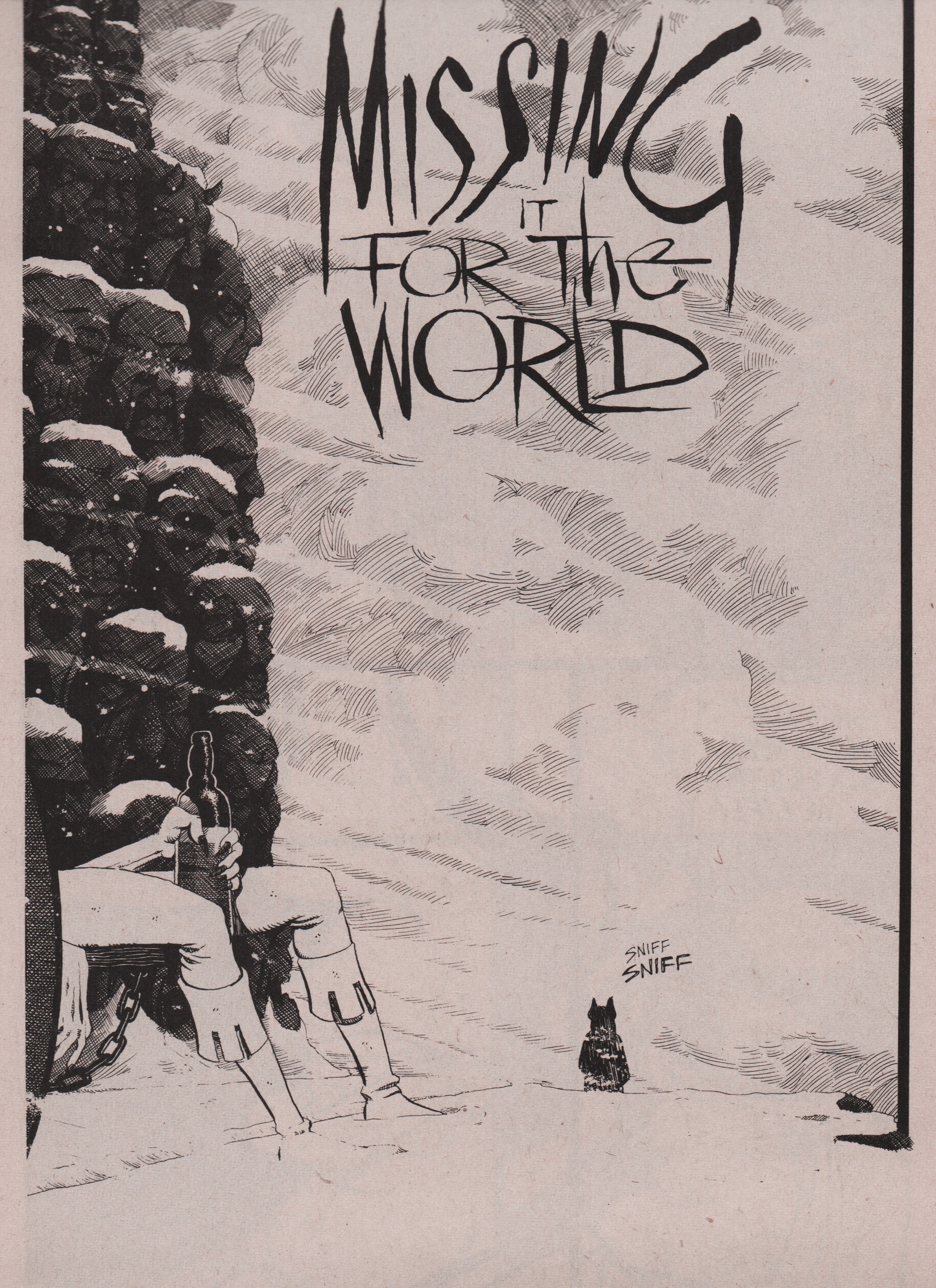
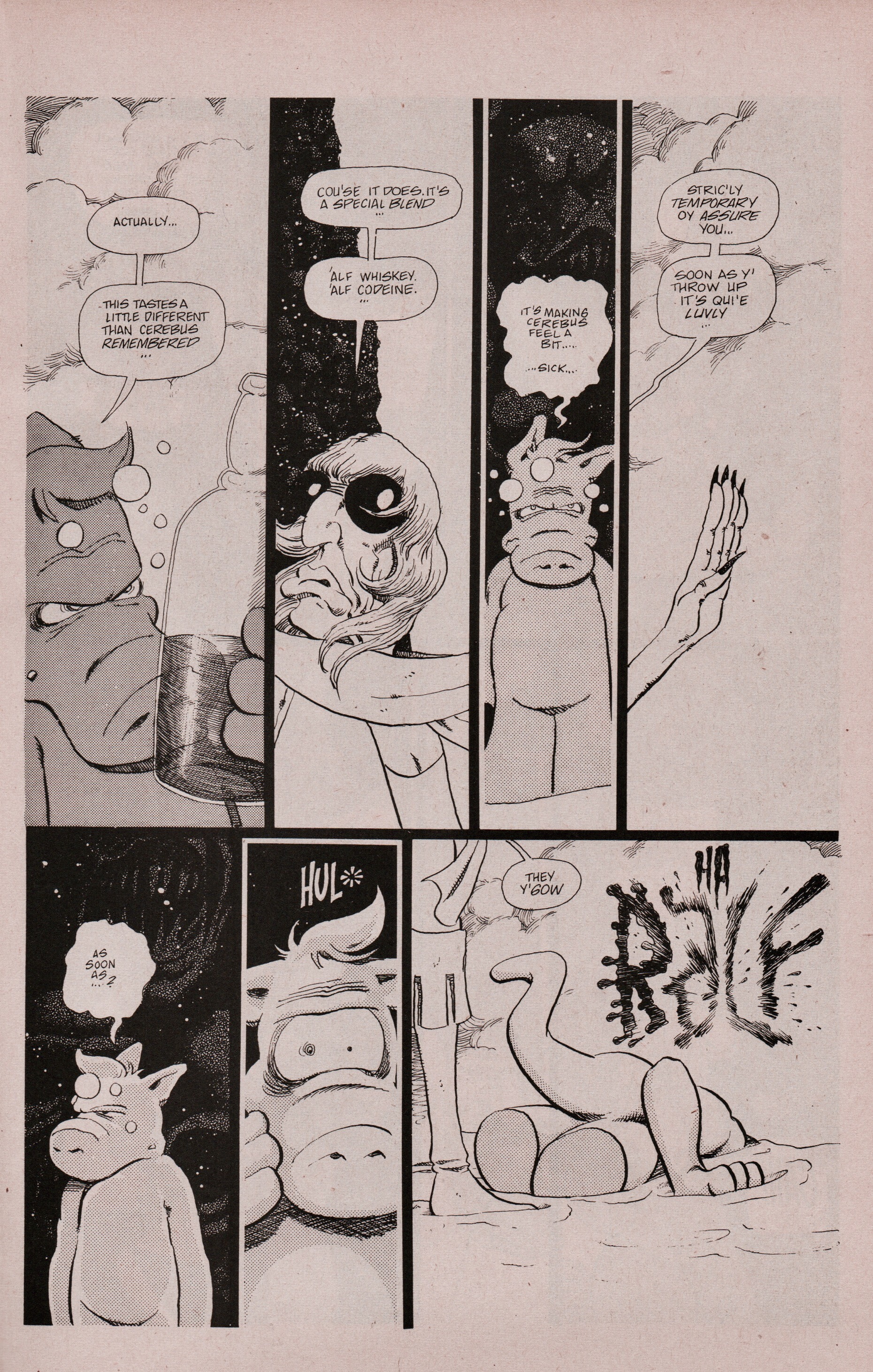
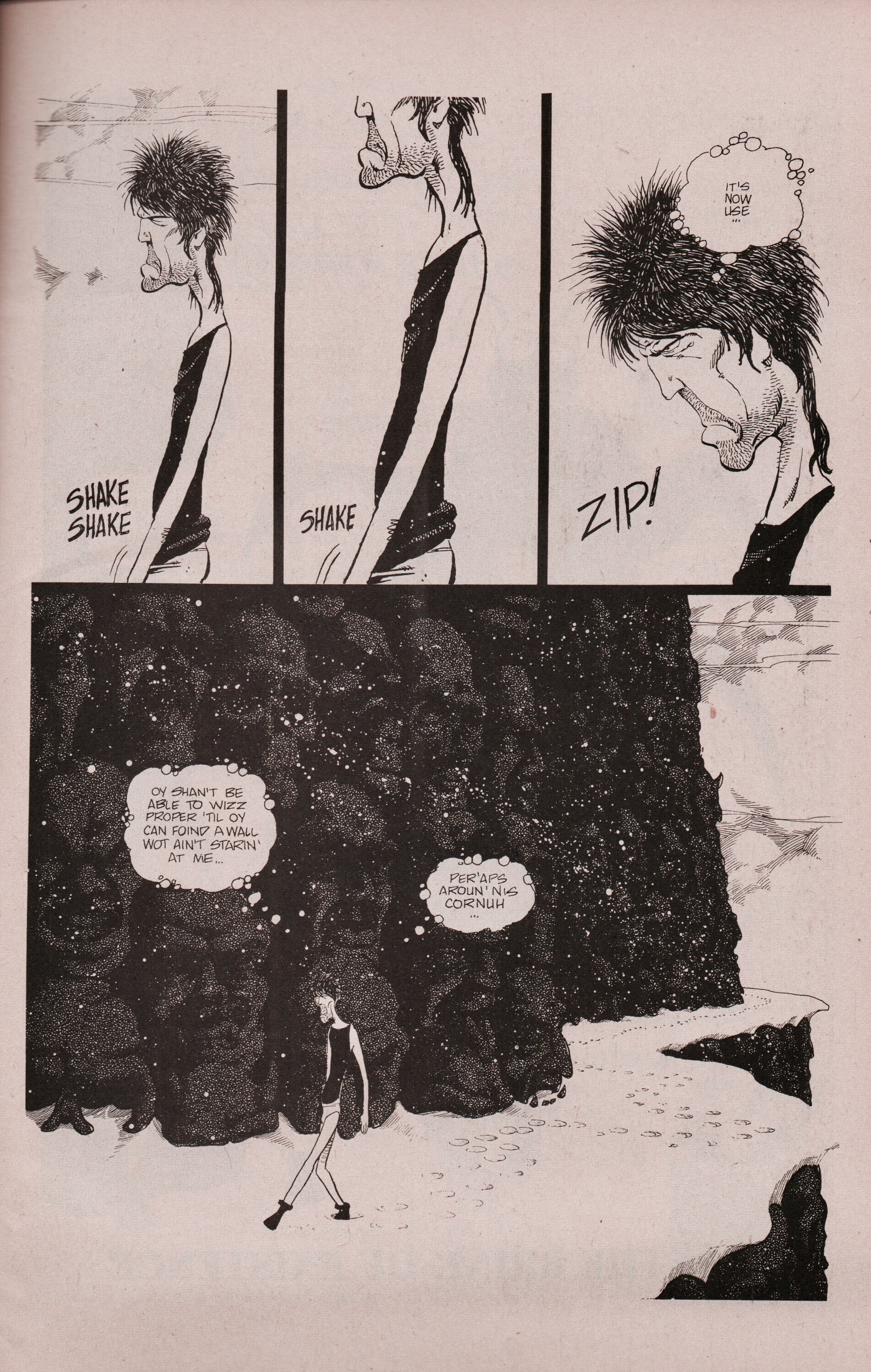
Cerebus #85, April 1986 (Aardvark Vanaheim), by Dave Sim and Gerhard. This was the first Cerebus back issue I bought (in like ’91 or ’92). It’s near the beginning of Church & State II (which is to say, in the middle of Church & State, which is to say, in the middle of the best parts of Cerebus). The issue introduces Sim’s parodies of Mick and Keith (um, Mick n’ Keef); Prince Mick shares codeine-laced whiskey with Cerebus. Vomiting, hallucination, and friendship ensue.
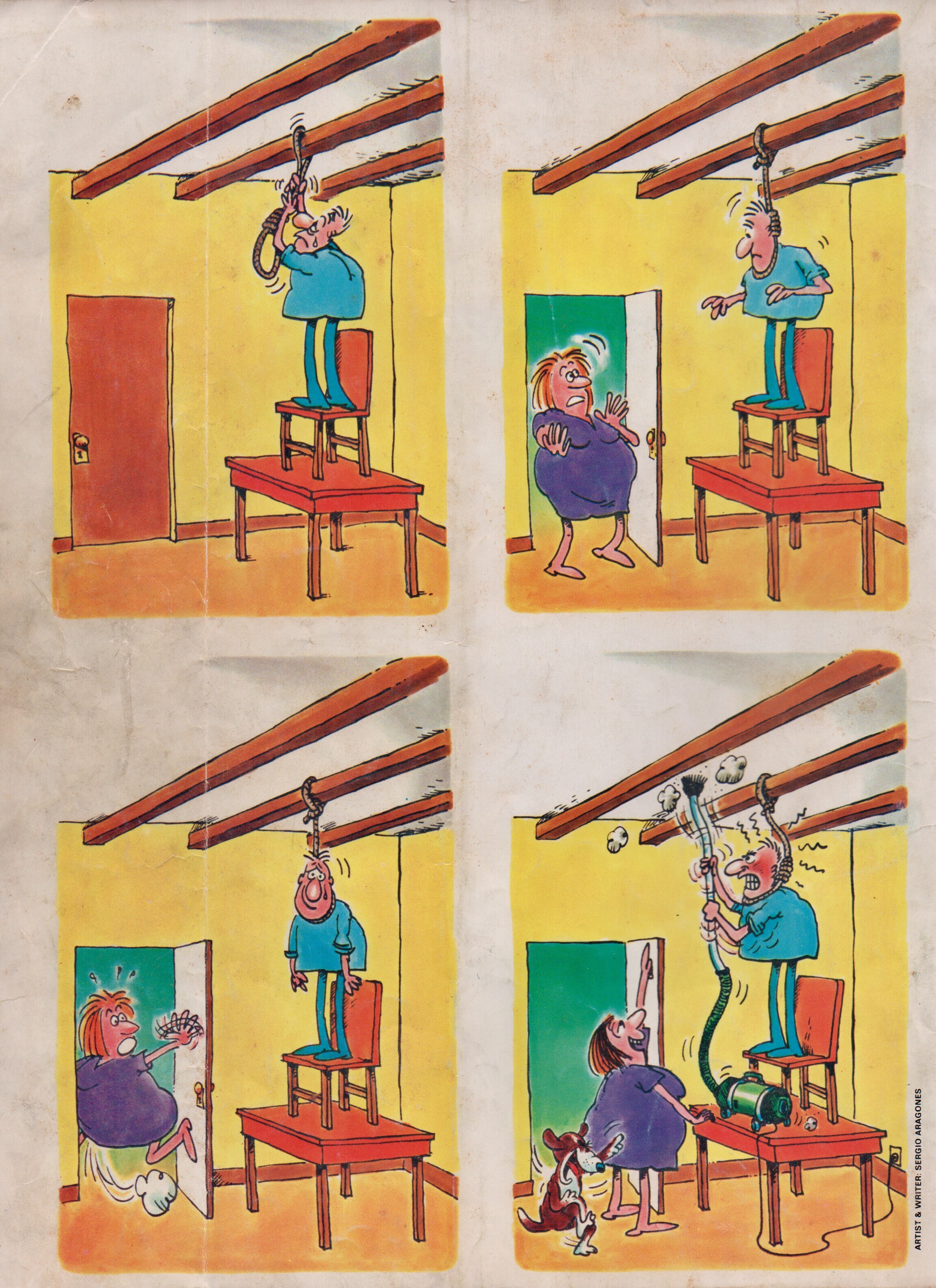
A morbid Sergio Aragones strip from the back cover of the 1987 Xmas Super Special of Mad Magazine (Australian edition). Here’s the front cover, also by Aragones:

“Duchamp Is Our Misfortune,” a comic strip by Art Spiegelman. From MetaMaus (Pantheon, 2011), and originally published in the New Yorker in 2002.
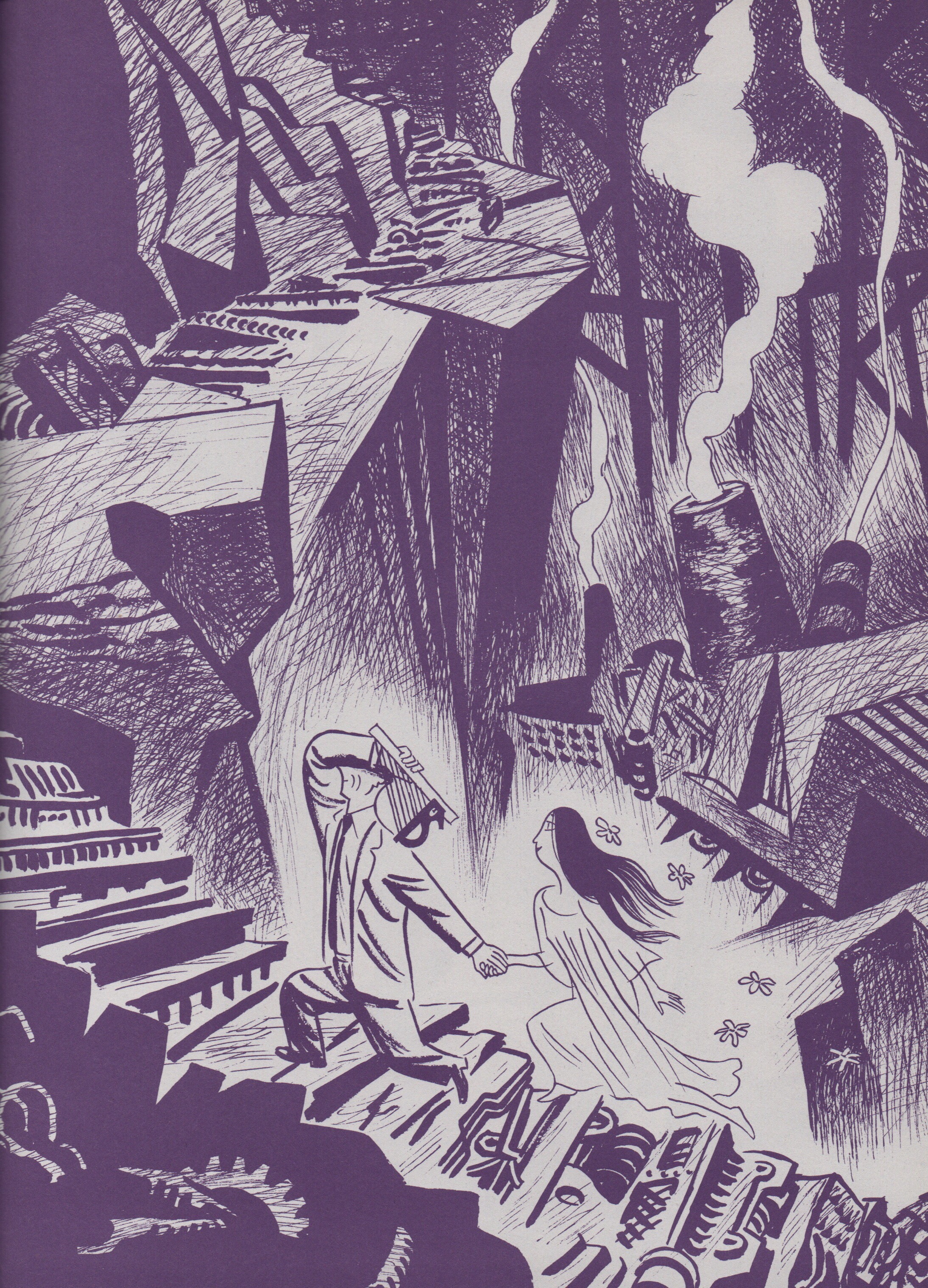
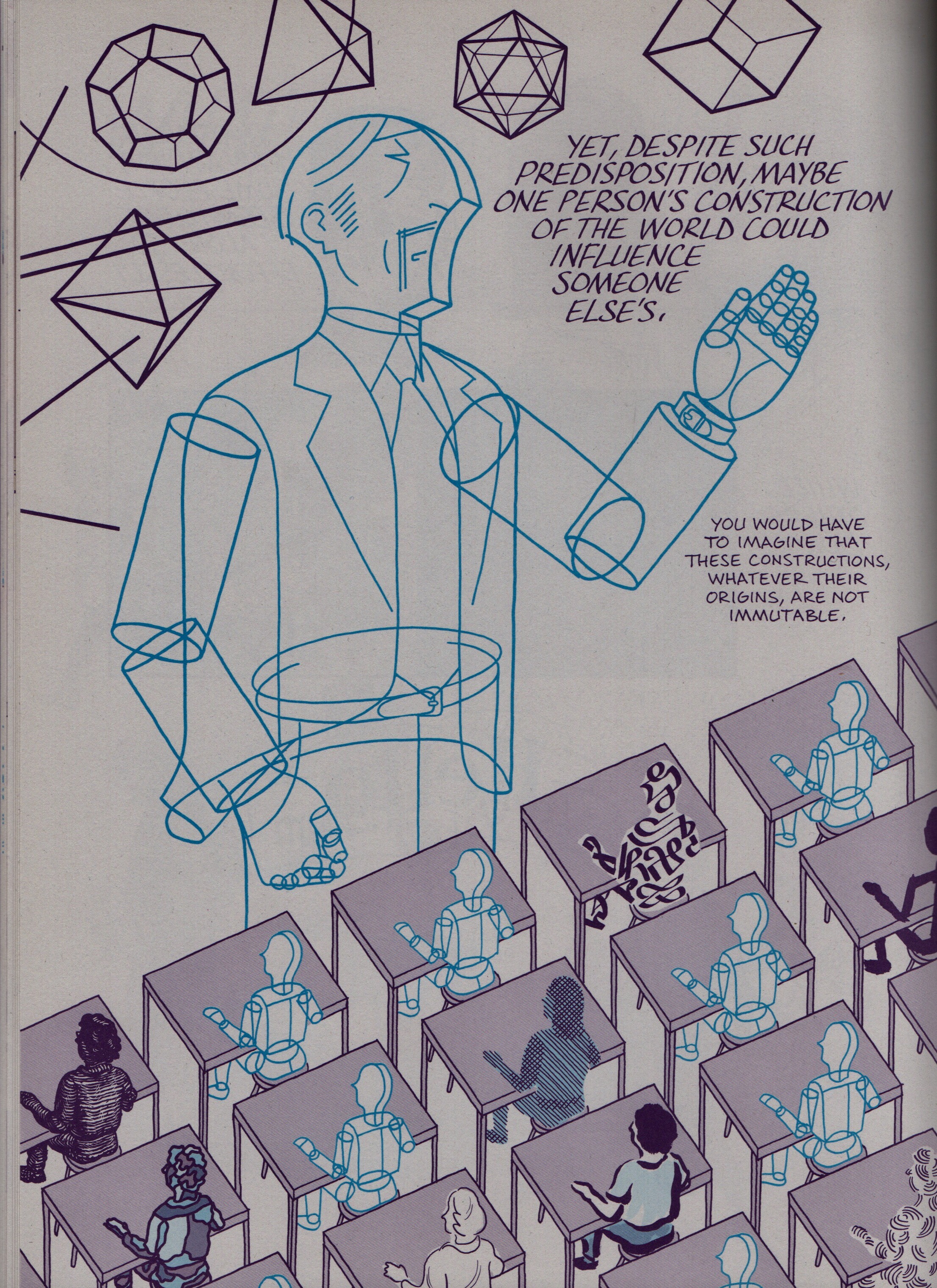
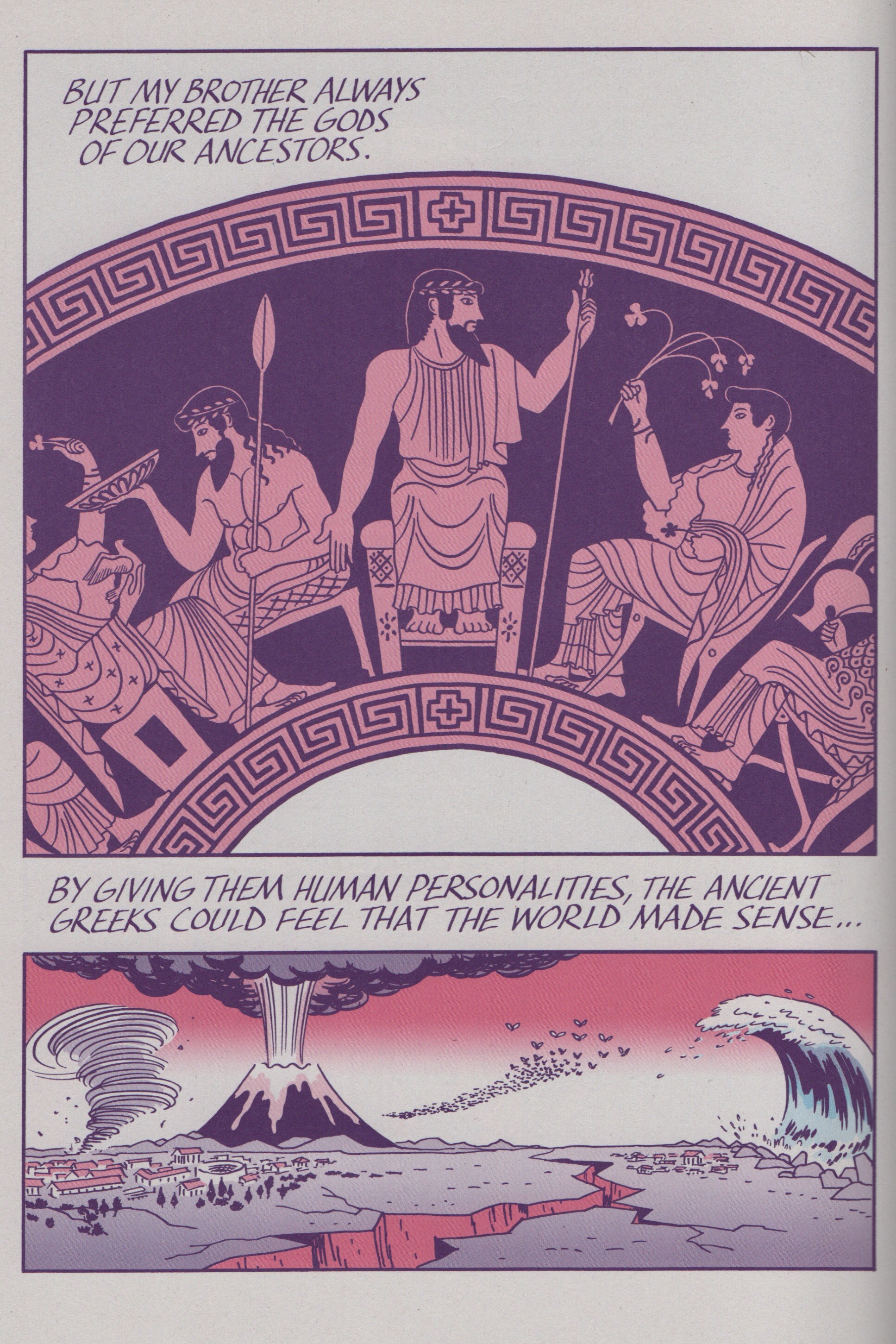
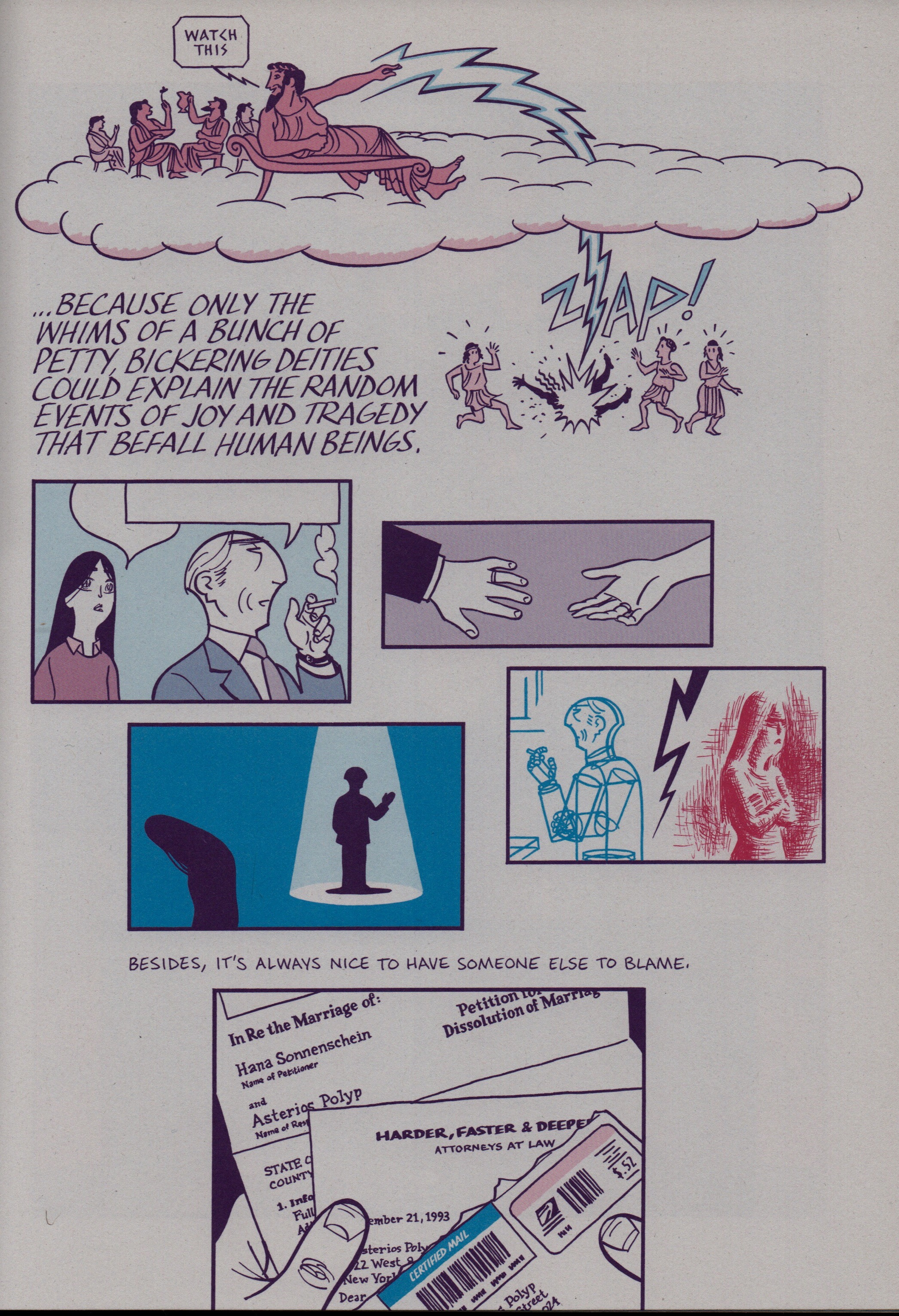
Pages from David Mazzuchelli’s novel Asterios Polyp (Pantheon, 2009).
I reviewed the novel in October of 2009. Here is that review in full:
Let’s get a few things straight from the get-go: David Mazzuchelli’s graphic novel Asterios Polyp is a masterpiece, an unequivocal advancement of its medium, and an unqualified joy to read. It’s also not only one of the best books we’ve read this year, but also this decade. While such breathless enthusiasm might seem suspect, even a cursory look over Asterios Polyp will reveal that Mazzucchelli has produced a fully-realized work, one that fundamentally reimagines what a graphic novel is, and how it might be read.
Asterios Polyp is a boorish, solipsistic “paper architect” and tenured professor (none of his designs have ever actually been built) whose life goes to shambles after his sensitive wife Hana leaves him. The novel opens with a lightning strike that literally destroys everything that Asterios owns. He grabs three key items–his father’s old lighter, a magnetically-powered watch he bought as a child, and a Swiss Army knife he found on the beach–and hits the road, heading into the great, normal Midwest, where he takes a job as an auto mechanic (in a lovely scene, Asterios the autodidact, after accepting his new job, heads to the library to learn auto repair in an hour). Asterios’s kindly boss Stiff and his hippie wife Ursula take in the poor soul/arrogant prick. As the plot unfolds, Mazzucchelli contrasts Asterios’s past, full of faculty cocktail parties, affairs with grad students, and highbrow conversations, with his incremental rebirth into a more concrete world. “Be not simply good; be good for something,” said Henry David Thoreau–a lesson that Asterios slowly learns as he finally applies his skill and genius to real-world applications, like building a tree house for the couple’s son and creating a solar-powered Cadillac. Asterios’s emergence as a fully-realized human being contrasts sharply with hist past. Although he clearly loved his wife Hana, he was unable to appreciate her as anything other than a prop in relation to himself–how she complimented him, added to him, reflected on him. The flashback scenes with Hana are keenly realistic and loaded with genuine pathos. They are the heart of the novel. Continue reading “Sunday Comics”

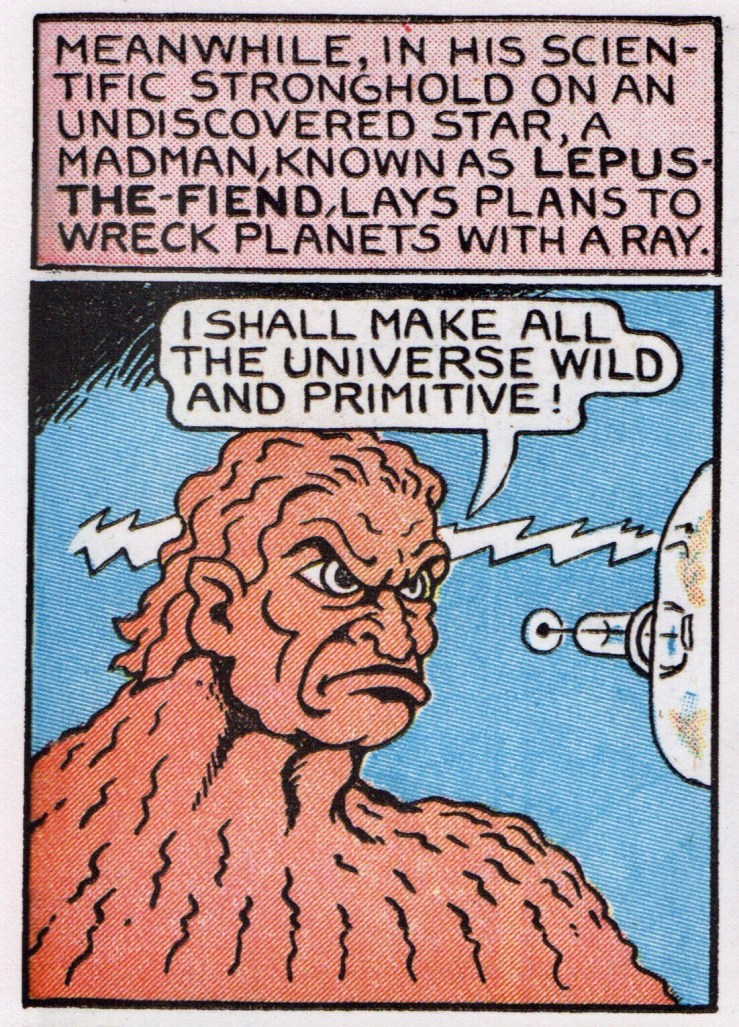
Panels this week from Fletcher Hanks (from I Shall Destroy All the Civilized Planets!, Fantagraphics Books, 2007).


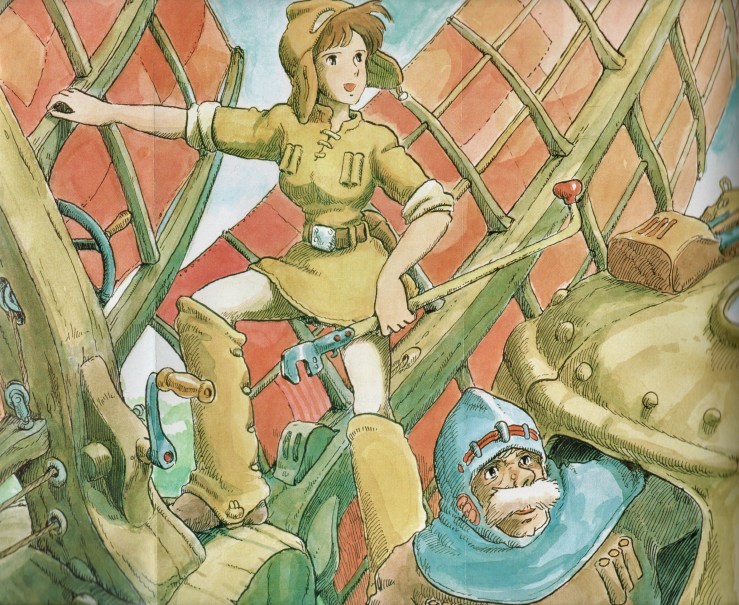
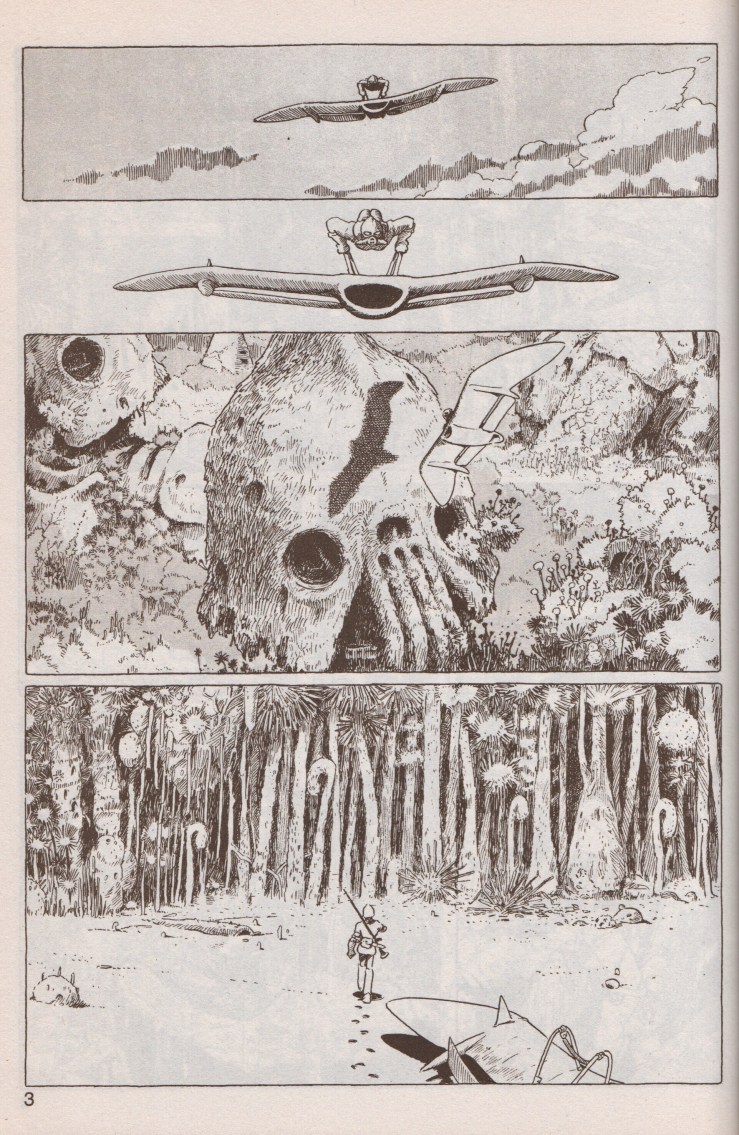
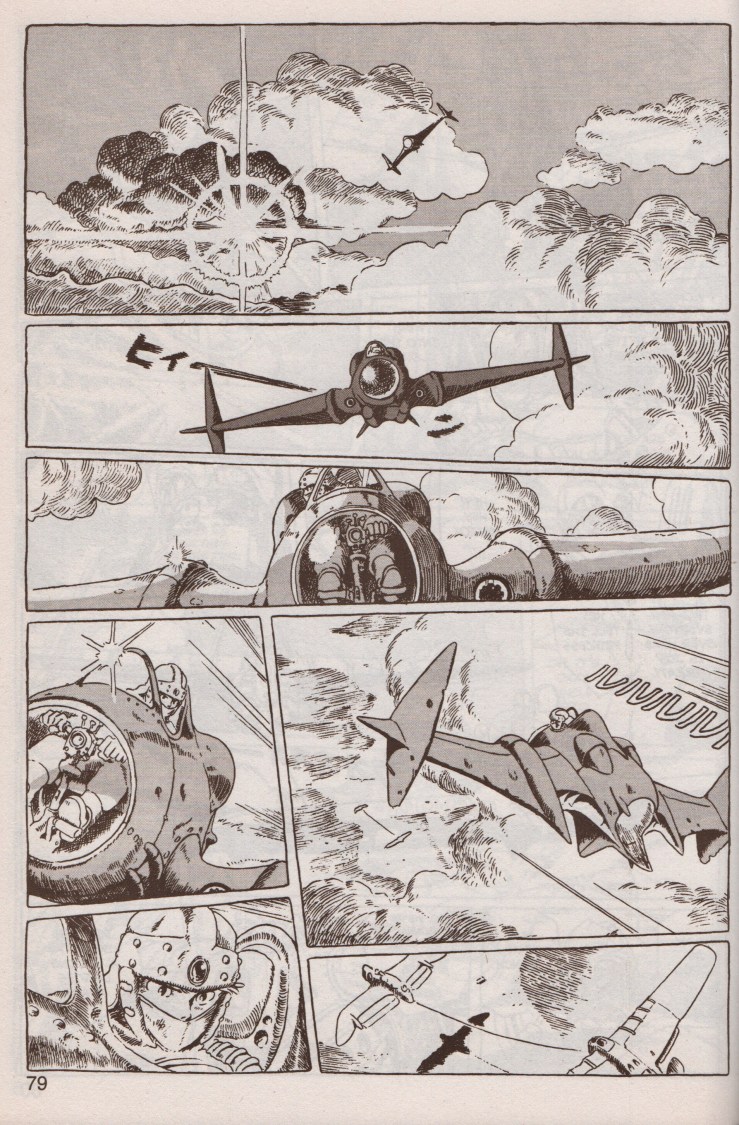
From Nausicaa of the Valley of the Wind, Vol. I by Hayao Miyazaki. VIZ Media English language edition.

