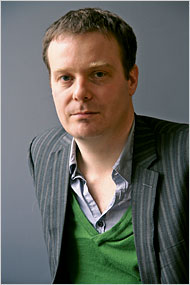
The Guardian published a great profile of Tom McCarthy today. Topics include Freud, the avant-garde, archeology, and his forthcoming novel C. From the article, here’s McCarthy on his book’s setting:
“It’s the great period of emergent technology,” McCarthy explains. “The book is set between 1898 – when Marconi was doing some of his earliest experiments – and 1922, which is the year the BBC was founded, and also the great year of modernism: The Waste Land and Ulysses. I wanted C to be a kind of archaeology of literature. But I think all ‘proper’ literature always has been an archaeology of other literature. The task for contemporary literature is to deal with the legacy of modernism. I’m not trying to be modernist, but to navigate the wreckage of that project.”
The Guardian has also run a review of C. Biblioklept’s review runs tomorrow. It was a struggle to write–it’s always a struggle to review a book you absolutely love. You always end up sounding a bit too breathless.
Great essay today at The Guardian from Tom McCarthy, author of Remainder and the the forthcoming, highly-anticipated C. McCarthy discusses technology, modernity, and literature, mulling over writers like Blake, Cervantes, Shelley, Joyce, and Ballard. He also talks about some of the research that went into C. From his essay:
C takes place, specifically, between 1898 and 1922. The dates aren’t accidental: they mark the period between Marconi’s early short-distance radio experiments and the founding of that centralised state broadcaster of entertainment, news and propaganda that we still know as the BBC. In 1922, Britain was erecting, in its colonial territory Egypt, the first long-distance pylons of its proposed imperial wireless chain – and as it went about this, it lost Egypt, which gained independence in February of that year. For ancient Egyptians, “pylons” were gateways to the underworld: these modern ones came to symbolise bereavement on a national scale. In November, also in Egypt, Howard Carter disinterred what would become the most famous family crypt of all time. 1922 was also modernism’s annus mirabilis, seeing the publication of The Waste Land, in which voices, dialogues and even weather reports drift in and out of audibility as its author-operator fiddles with his literary dial – and Ulysses, a huge textual switchboard in which the themes of death and media are plugged into each other time and again.
Surplus Matters has reprinted last week’s edition of The Sunday Times interview with/profile of Tom McCarthy about his new novel C, our favorite new novel of 2010 (The Sunday Times is not free, so thank you, Surplus Matters). The author of the article, Robert Collins, situates McCarthy’s C as an indirect answer to David Shields’s argument in Reality Hungerthat the successful modern novel must be a synthesis or remix. We’ve been critical of Shields’s argument, which ultimately rests on aesthetic assumptions that allow Shields to pick what texts will count in his reality canon. To put it another way, great works of literature, from Homer to Ovid to Shakespeare to Henry Miller have always been appropriating and recontextualizing the texts that came before them. McCarthy’s C doesn’t respond to Shields’s would-be manifesto; it obliterates it, following in the (counter)tradition of Joyce, Woolf, Faulkner, and William Burroughs, writers who navigated the treacherous straits of history, art, representation, and reality. C is rich and inventive, telling the life story of Serge Carrefax in the early part of the 20th century. We follow Serge through his strange youth, where he experiments with wireless technology, to the skies of WWI, where he maps the terrain below him; we follow him through his drug-soaked twenties in the ’20s and eventually to the tombs of Egypt. C isn’t a response to the demands of a marketplace that increasingly demands gimmicky concepts and reality-soaked memoirs; instead, to use McCarthy’s term, C plugs into the reservoir of literature that precedes it. From the article:
If McCarthy — as [Zadie] Smith has suggested — presents a radically fresh prospect for the future of the novel, it is probably, paradoxically, because he has instinctively ignored contemporary literature almost completely. He would argue, in fact, that it is only by immersing oneself in all that has gone before that any contemporary novelist has even the faintest chance of coming up with something new. “I don’t think most writers, most commercial middlebrow writers, are doing that,” he says. “I think they’ve become too aligned with mainstream media culture and its underlying aesthetic of ‘self-expression’. I see what I’m doing as simply plugging literature into other literature. For me, that’s what literature’s always done. If Shakespeare finds a good speech in an older version of Macbeth or Pliny, he just rips it and mixes it. It’s like DJing.”
Finished Tom McCarthy’s newest novel Clast night. It doesn’t come out until this autumn–and I’ll post, y’know, a long, detailed review then–but for now–
The book is tremendous. You should start looking forward to it now. Great, great stuff. Loved it. Will read it again. Very highly recommended. You get the idea.
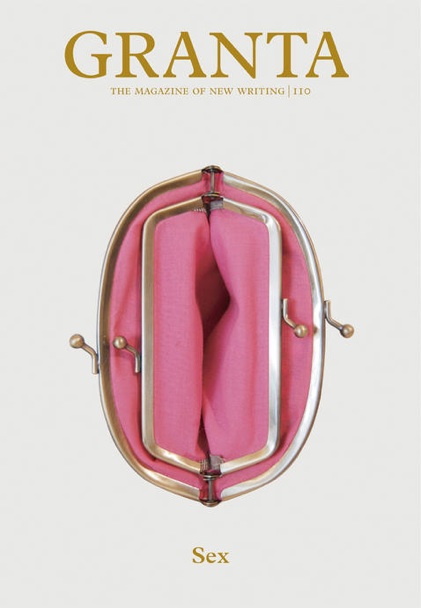
Subtly titled Sex, issue 110 of the long-running literary journal Granta hits stands this week, and it looks like a doozy. There’s a story by Roberto Bolaño called “The Redhead” about “a disturbing encounter between an eighteen-year-old girl and a narcotics cop.” Charming. No description for Tom McCarthy’s “The Spa,” but presumably it will involve sex, and Dave Eggers’s drawings “Four Animals Contemplating Sex” promises to be self-descriptive. Lots of other stuff too, of course. Order Granta 110here. The journal has also produced short videos for four of the pieces in Sex, all directed by Luke Seomore and Joseph Bull. You can see them at the oh-so-cleverly titled website This is not a purse; the vid for Bolaño’s “The Redhead” is embedded below.

 The Guardian published a great profile of Tom McCarthy today. Topics include Freud, the avant-garde, archeology, and his forthcoming novel C. From the article, here’s McCarthy on his book’s setting: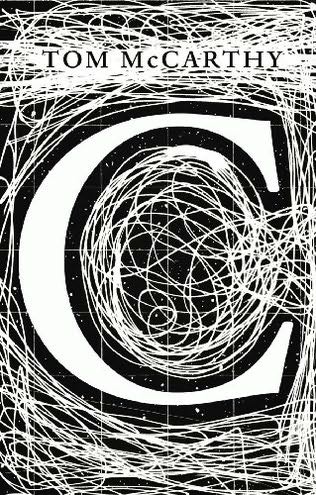

 Biblioklept