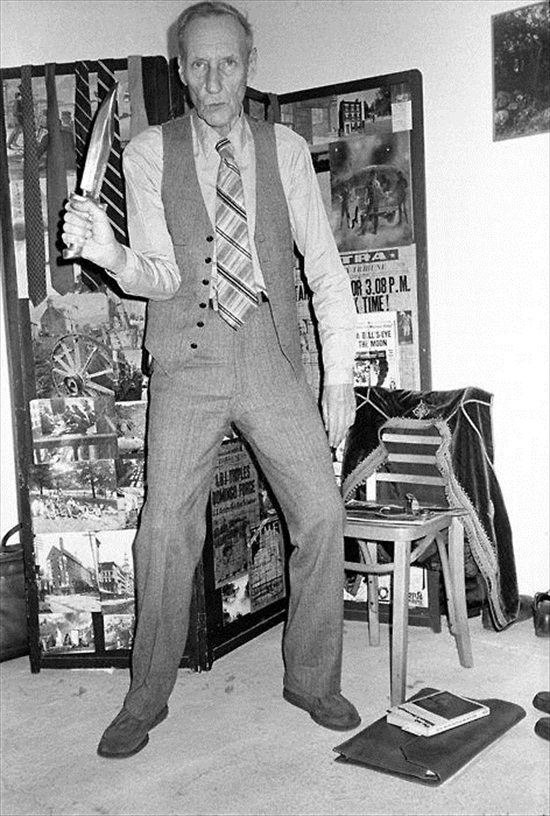
William Burroughs Wielding a Big Ass Sword

William-S-Burroughs-william-s-burroughs-24369330-600-1003

William Burroughs with a brother Sphinx (Photo by Ginsberg)

William S. Burroughs looking serious, sad lover’s eyes, afternoon light in window (Photo by Ginsberg)

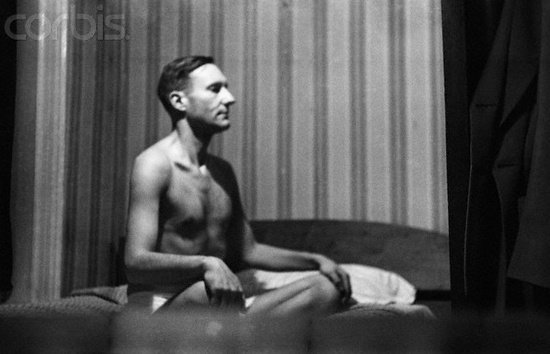
Topless William Burroughs

topless burroughs

William S. Burroughs Wielding a Knife

william burroughs wielding a knife

Handsome Devil William S. Burroughs, Smiling

William Burroughs in his flat, London, 1971. Photo by Baron Wolman

(Via).

William S. Burroughs Shoots at William S. Burroughs T-Shirts

The Junky’s Christmas — William S. Burroughs

William Burroughs and Andy Warhol Eat Rabbit, Discuss Chicken Fried Steak

William Burroughs on Sex, Computers, Mutation

From William S. Burroughs’s 1972 interview with Penthouse magazine.

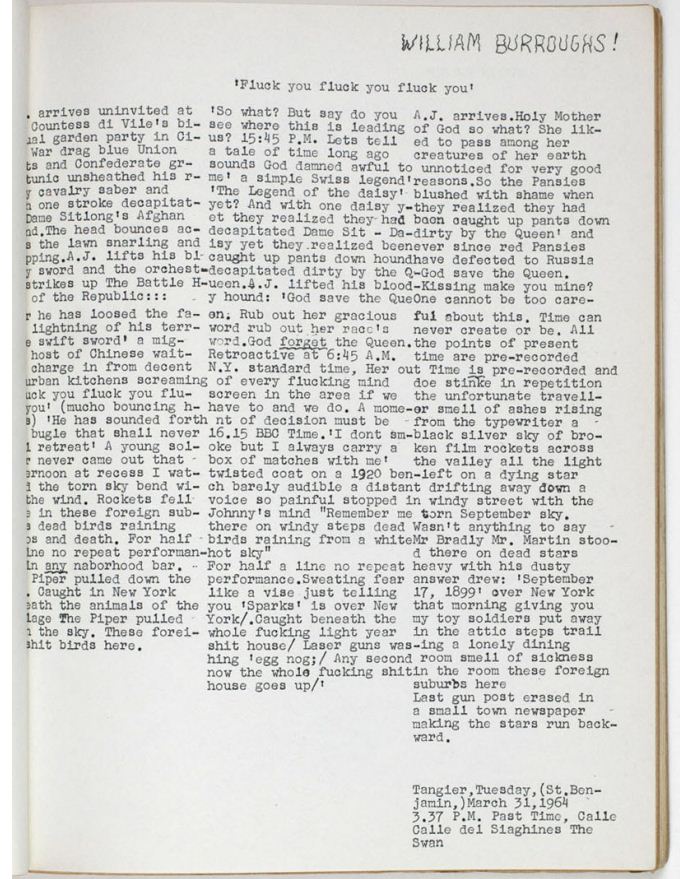
“Fluck you fluck you fluck you” — Tangier Transmission from William Burroughs, 1964

From Number 5, Vol. 7 of Fuck You, (1964) a mimeograph magazine from editor Ed Sanders. The magazine featured Allen Ginsberg, Tuli Kupferberg, Frank O’Hara and more. There’s a fantastic visual archive of Fuck You at Reality Studio, which is where I got this Burroughs layout.

William S. Burroughs BBC Documentary

William S. Burroughs Talks About Allen Ginsberg

“Art Makes People Aware of What They Know and Don’t Know That They Know” — William S. Burroughs Talks About Creative Thinking

How to Enjoy the Apocalypse: A Post-Rapture Reading List

We published this list last year under the heading Ten Excellent Dystopian/Post-apocalyptic Novels That Aren’t Brave New World or 1984, but what with the Rapture going down and all, why not post it again, this time with links to pieces we’ve written on these novels—

1. Riddley Walker, Russell Hoban

2. Camp Concentration, Thomas Disch

3. A Clockwork Orange, Anthony Burgess

4. Oryx and Crake and The Year of the Flood, Margaret Atwood

5. The Hospital Ship, Martin Bax

6. Naked Lunch, William S. Burroughs

7. VALIS, Philip K. Dick

8. Ronin, Frank Miller

9. Ape and Essence, Aldous Huxley

10. The Road and Blood Meridian, Cormac McCarthy

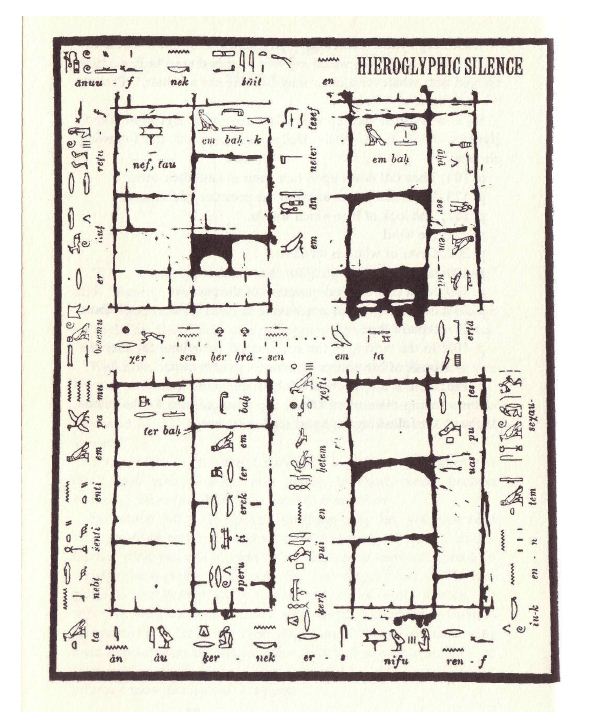
A Selection from “Hierogylphic Silence” by William S. Burroughs

The following selection is from William S. Burroughs’s “Hieroglyphic Silence,” collected in the totally out-of-print volume The Third Mind, a book of cut-ups Burroughs co-authored with Brion Gysin (you can access the book here via extralegal means). From “Hieroglyphic Silence”–

“I am the Egyptian,” he said, looking all flat and silly, and I said: “Really, Bradford, don’t be tiresome.”

All right, let’s put it apple-pie simple with a picture of a wedge of apple pie there, containing fifty-three grams of carbohydrates.(See the L-C diet.)

Well now, if you don’t know the word for apple pie where you happen to be and want it, you can point to it or you can draw it. So, when and why do you need a word for it? When and why do you need to say, I want apple pie, if you just don’t care how fat you get?

You need to say it when it isn’t there to point to and when you don’t have your drawing tools handy\ In short, words become necessary when the object they refer to is not there.

No matter what the spoken language may be, you can read hieroglyphs, a picture of a chair or what have you; makes no difference what you call it, right? You don’t need subvocal speech to register the meaning of hieroglyphs. Learning a hieroglyphic language is excellent practice in the lost art of inner silence. “It would be well, today, if children were taught a good many Chinese ideograms and Egyptian hieroglyphs as a means of enhancing their appreciation of our alphabet.” If you are able to look at what is in front of you in silence, you will be able to write about it from a more perceptive viewpoint.

What keeps you from seeing what is in front of you? Words for what is in front of you, which are not what is there. As Korzybski pointed out: whatever a chair may be, it is not a “chair.” That is,it is not the label “chair.”So, now try this: pick up your Easy Lessons in Egyptian Hieroglyphics, by Sir E. A. Wallis Budge, and copy out the following phrases:

p. 104; They fall down upon face their in land their own.

p. 173; Stood the prince alone in the presence of the gods.

p. 181; The lock of hair which was in.

p. 79; the wind

p. 202; Giver of winds is its name.

p. 190; coming forth waiting for thee from of  old

p. 200; night that of the destruction of the enemies

p. 208; come thou to us not having thy memories of evil come thou in thy form

p. 103; In the writing of the god himself he writeth for thee the book of breathings with his fingers his own.

p. 195; Shall it be that thou wilt be silent about it.

Now, having memorized the above passage, turn to the hieroglyphs on the following page and read in silence.