Aldous Huxley, Deckle Edges, Weird Books, and a Dead McSweeney

Odds n’ ends:

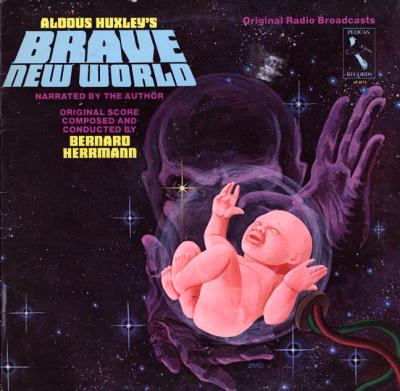
Via Swen’s Weblog — download mp3s of Aldous Huxley narrating Brave New World. Music by Bernard Herrman, who you, of course, will remember from his work with Alfred Hitchcock. That cover alone is more fun than a game of Centrifugal Bumble-puppy.

At The Millions — C. Max Magee waxes aesthetic (and perhaps nostalgic) on deckle-edge pages.

From Abe Books — Spend some time in their Weird Book Room.

The Guardian reports — Timothy McSweeney has died. Apparently, Dave Eggers decided to name his quarterly literary journal after some dude who wrote weird letters to his mom whose maiden name was the same. According to McSweeney’s family, holmes was a painter of some talent: “The canvasses he leaves behind are filled with haunting and beautiful imagery. They are also filled with a palpable desire – to be heard, to connect, to be understood better by others and himself.”

All Known Zora Neale Hurston WPA Recordings

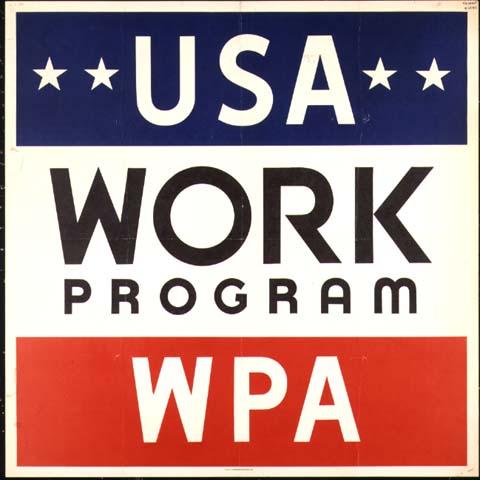
Check out this tidy collection of all known Zora Neale Hurston audio recordings from the 1930s, when the writer put her anthropology degree to work collecting Florida folklore as part of the Works Progress Administration. (We recommend “Tampa” for some good puerile fun (Tampans may be unamused)).

“I Guess My Work All These Years Has Been about Living in Dangerous Times” — Don DeLillo Interviewed on NPR

Driving to work this morning in the dark dolorous haze appropriate to a post-Super Bowl Monday, I was more than a little surprised to catch Steve Innskeep interview Don DeLillo on Morning Edition. If you missed the interview, which focuses on DeLillo’s latest, Point Omega, you can listen to it or download it from Morning Edition‘s site. The usually-taciturn DeLillo is particularly reflective, even generous in this interview. “I guess my work all these years has been about living in dangerous times” he says, “and part of this danger has been what the media reports, and how it changes our perceptions.” It’s also kinda strange to hear his voice, which seems frailer and more awkward than I would have imagined. Very cool interview.

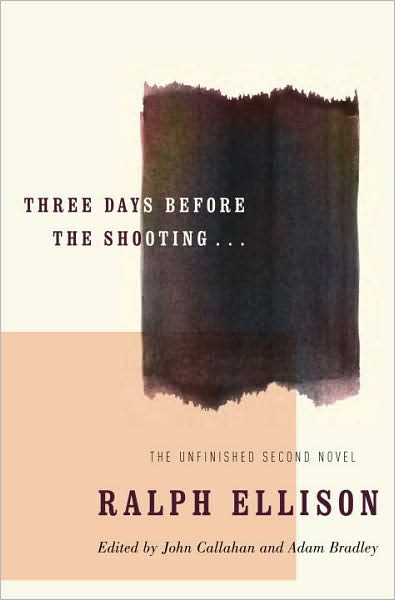
Three Days Before the Shooting . . . — Beginning Ralph Ellison’s Posthumous Second Novel

In 1952, Ralph Ellison secured his place in the American literary canon with the publication of his picaresque verbal tour de force, Invisible Man. He never published another novel in his lifetime. Five years after his death in 1994 saw the publication of Juneteenth, a book cobbled together from the sundry drafts that Ellison had spent over forty years crafting and revising. Those papers ran to over 2000 pages. Now, editors John F. Callahan and Adam Bradley have made good on the promise to release an expanded version of Ellison’s proposed second novel. That effort, new in hardback this month from Random House’s Modern Library series, is Three Days Before the Shooting . . ., a massive, complex, and perplexing volume running to 1101 pages — not including editors’ notes, chronology, prefaces, and introductions.

I usually eschew introductions (or at least read them after I’ve read the text proper) in the hopes of not having my reading colored by some critic’s own thoughts, but in the case of Three Days, with its bulk, with its mystery, it seemed necessary to see what Callahan and Bradley had to say. What, exactly, would I be reading? How was it put together? Is there a real novel here? Our esteemed editors point out that:

. . . one might reasonably have expected to find among [Ellison’s] papers a single manuscript very near to completion, bearing evidence of the difficult choices he had made during the protracted period of the novel’s composition. One might have expected, perhaps, F. Scott Fitzgerald’s The Last Tycoon, a fragmented with a clearly drafted, clearly delineated beginning and middle, whose author’s notes and drafts pointed toward two or three endings, each of which followed and resolved the projected novel as a whole. Or, to cite a more contemporary example, it might have resembled Roberto Bolaño’s 2666; upon its posthumous publication in 2008, Bolaño’s editor remarked that, had the author lived to see it through to publication, “its dimensions, its general content would by no means have been very different from what they are now.” In the extreme, one might have expected something like James Joyce’s Finnegans Wake, a glorious mess of a novel that defies the very generic restraints of the form.

Callahan and Bradley pose these novels only as examples to contrast Ellison’s work as “something else entirely: a series of related narrative fragments, several of which extend to over three hundred manuscript pages in length, that appear to cohere without truly completing one another.” There’s a fun laundry list of where and on what Ellison composed the work, including the various types of paper he used and the different machines on which he wrote. The logistics are important from an editors perspective, of course, and as an interested reader it’s fascinating to see how Callahan and Bradley put all of Ellison’s disparate sources together. But what becomes most apparent in their general introduction to the work is that, even as he was always writing, Ellison was stalling, hoping to revise his novel in light of social changes–only, those social changes were happening relatively rapidly. It took Ellison over eight years to produce and edit Invisible Man, a novel that brilliantly captures American identity in the postwar era. For his second novel, Ellison clearly wanted to engage in such a critique again, but the rapidity of social and cultural change seems to have outpaced his ability to write and edit. He satisfied his public and the literary establishment by publishing excerpts of the novel (eight in total, all reproduced in Three Days), but most of his writing career, at least in terms of publishing, was spent writing (and revising) essays and critiques.

Still. Forty years and only eight published snippets? Really? Our fearless editors seem exasperated themselves, writing, “The longer one puzzles over what Ellison left behind, the more maddening it seems that he did not simply will himself to bring the book to a close, that he didn’t find his way to that ‘meaningful form’ he sought.” And there is so much narrative here; Ellison’s major concern — beyond revising in light of cultural and social upheaval — was simply fitting his pieces into a coherent whole. Not that there isn’t a plot. To borrow again from our generous editors:

The basic plot of Ellison’s novel as it emerges in these manuscripts centers upon the connection, estrangement, and reconciliation of two characters. The one is a black jazzman-turned-preacher named Alonzo Hickman, the other a racist ‘white’ New England Senator named Adam Sunraider, formerly known as Bliss–a child of indeterminate race whom Hickman had raised from infancy to adolescence. The action of the novel concerns Hickman’s efforts to stave off Sunraider’s assassination at the hands of the Senator’s own estranged son, a young man named Severen.

Callahan and Bradley go on to point out that, of course, this is simply the bare bones of the plot; that Three Days teems with characters and voices and motifs and strange little riffs. So far, my reading of the book upholds this assertion–and also suggests that the best way to enjoy this book is simply to dive right in. Yeah, that’s right. Ignore all the context. Skip Callahan and Bradley’s prefatory material completely–it’s well-written, highly informative, and will get right in your way. Just start at page one and enjoy Ellison’s rhythm, his inimitable language, his bizarre sense of humor and his deep pathos.

The book opens with a prologue that details a visit Hickman and his congregation make to Washington, D.C. three days before the shooting of Senator Sunraider. They attempt to warn him but are blocked at all turns. Book One then opens immediately with that assassination attempt, seen from the perspective of a journalist named McIntyre who narrates Book One in first-person. The first few chapters are set in the panicked claustrophobia of the post-shooting Senate where police detain everyone present. These chapters detail the strange rumors that circulate about Sunraider, including

. . . the rumor that for a time during his youth the Senator had been the leader of an organization which wore black hoods and practiced obscene ceremonials with the ugliest and most worn-out prostitutes they could find. Like certain motorcycle gangs of today they also engaged in acts of violence and hooliganism and were accused of torturing people — derelicts and such. They were also said to have distributed Christmas baskets and comic books to the poor.

What a great punchline. These early episodes made me laugh out loud at least three times. They’re also rather unsettling, and, more than anything, intriguing. In short, so far the book compels reading, and it’s hard to believe that such inspired riffs won’t add up to greater things. Our editors warn that the book doesn’t so much “end” as simply “stop,” but, right now, I’m fine with that. Ellison fans who don’t own this will want to pick it up forthwith; anyone daunted by its size, scope, or the context of its creation might miss some really great writing. More to come.

Bright Star — Campion Does Keats

So I finally got around to watching Jane Campion’s Bright Star last night, a film that quietly studies the final years of Romantic poet John Keats and his relationship with Fanny Brawne. When Keats moves next door to the Brawnes, eldest daughter Fanny, a talented seamstress and flighty flirt, soon becomes intrigued by the poet. Keats, with his love for beauty and truth, represents a world of greater depth than the wits and dandies who usually attempt to court Brawne. Their relationship is, of course, doomed from the outset. Perpetually broke Keats doesn’t have the moolah or means to properly engage Brawne in marriage, but that doesn’t stop the pair from undertaking a furtive, pensive love affair, carried out in long walks on the heath and passionate letters. Oh, and Keats gets sick and dies at 25. That shouldn’t be a spoiler if you’ve studied your Romantics properly, now should it?

Both Abbie Cornish who plays Brawne and Ben Whishaw who plays Keats are excellent in their understatement and reserve, but the standout turn in the movie comes from actor Paul Schneider (from NBC’s Parks & Recreation) who plays Keats’s bankrolling friend Charles Armitage Brown. Brown is a lesser poet whose love and envy of Keats leads him to vex Brawne and Keats’s love at every turn, plaguing them with doubt, and that enemy of Romance, Reason. Schneider invests his character with a boorish charm that never veers into the rote tropes that afflict modern romance film. It’s emblematic of the Campion’s film in a way: Bright Star has every opportunity to devolve into a mundane exercise in doomed romance or a stuffy period piece, but under Campion’s delicate care it manages to match the depth of its subject matter.

Campion wrote the screenplay, presumably using letters from the principals as her primary source. She honors her viewers’ intelligence — far too rare these days — by never cobbling her plot together with easy exposition or forced narrative developments, and it’s that sense of history that lends the film authenticity. Cornish’s Brawne is a protagonist whose personality transformations read as real, and Whishaw’s Keats is never a cartoonish mystic or a moody caricature, but a fully-drawn human. Campion also has the good judgment to let her cinematography convey her story, letting gorgeous shots of the English countryside and cloistered chambers alike convey the mood and rhythm of her story. At times, Bright Star‘s beautiful camerawork recalls Terrence Malick, another director who allows film to “happen” to the viewer as an evocative experience rather than a spoon-feeding. Campion also shows considerable restraint with the film’s wonderful score, never allowing it to color a scene unduly when her actors can do a great job on their own. Bright Star avoids all of the pitfalls that might afflict a period piece, and does a far better job handling the subject of Romantic poetry than a movie has any right to. The film is hardly for everyone (sorry guys, no Jason Statham), but it’s very, very good. Recommended.

Historic Photos of Florida Ghost Towns

Historic Photos of Florida Ghost Towns, new from Turner Publishing, pairs beautiful black and white archival photos with detailed commentary by Steve Rajtar to offer a counter-narrative to the traditional history of Florida. Florida’s history is often told in terms of exponential growth, focusing on the Sunshine State’s ecological bounty as a reason for immigration and tourism. Ghost Towns takes a look at the many historical sites in Florida that were destroyed, absorbed, or abandoned as the state bounded to modernity. Rajtar and his editors have organized the book around all the different ways that a town might become a ghost town, including economic (company closings, plantation declines, railroad expansion), sociopolitical (absorption, abandonment, government mandates), and natural (fires, floods, hurricanes).

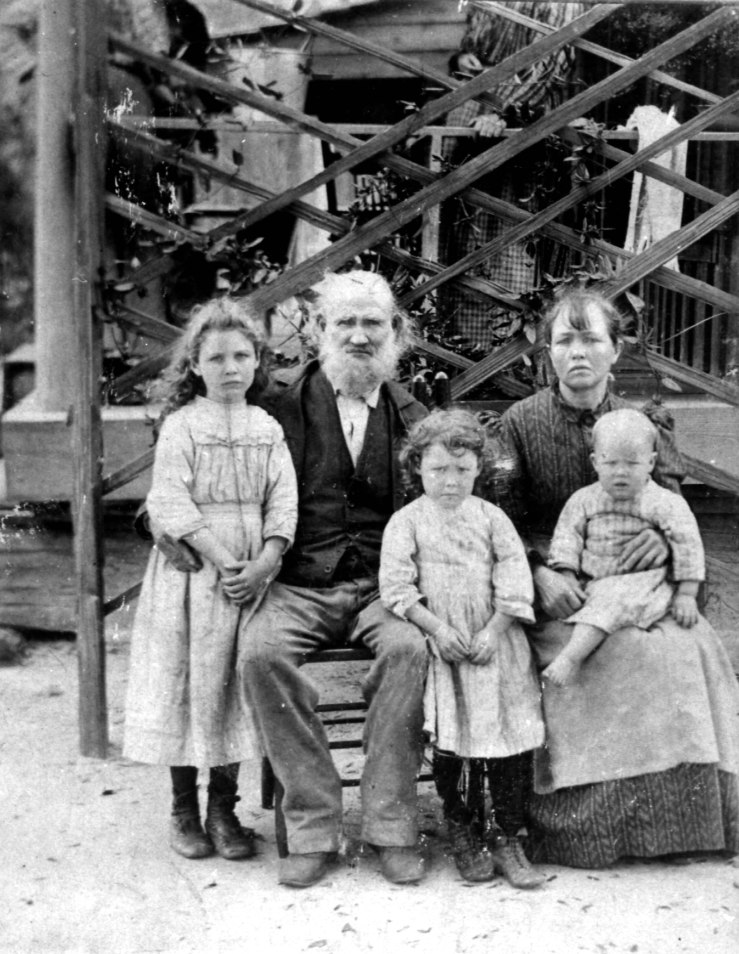
Appropriate for its title, there’s something haunting about many of the images in the book. Like all images from the past, they speak for what no longer exists, but there’s something melancholy here too. Take for example this 1897 image of the Lamb family from the ironically-named plantation township of Hopewell. Their dour expressions communicate a sense of the difficulties of an agrarian life in Florida over a century ago — more Marjorie Kinnan Rawlings than Miami Vice. What happened to these people after their farms collapsed? Where are their descendants today?

Historic Photos of Florida Ghost Towns will be a welcome addition to any Florida history buff’s library, as well as a handsome book for any Floridian’s coffee table. It’s also a worthy document to testify to an an alternate and often overlooked element of Florida history. Florida has a rich, storied past, and Ghost Towns helps to honor that. As the state heads into an uncertain future, the book also might make some of us reappraise our own cities’ chances of withstanding the test of time. Recommended.

David Peace’s Red Riding Film Adaptations Debut in the US

The film adaptations of David Peace‘s Red Riding quartet make their American debut this weekend. The films look pretty cool — kinda like Zodiac. The screen adaptations drop the 1977 segment of Peace’s original quartet, opting instead for the trilogy treatment. You can read Manohla Dargis’s detailed review for The New York Times here and Keith Phipps favorable review at the AV Club here. Trailer:

Occupied City — David Peace

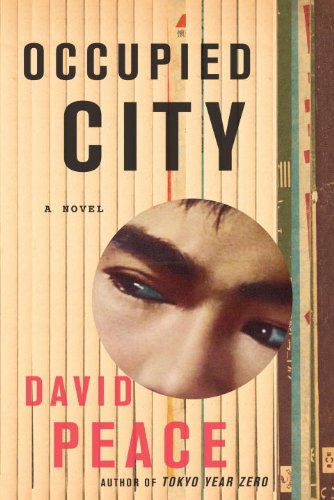
“You want to know what happened, yes?” an old detective asks near the beginning of Occupied City. “No? You want to know the truth? Make up your mind! Which do you want to know; what happened, or the truth?” This preoccupation of “what happened” vs. “the truth” fuels the central tension in David Peace’s new novel, a postmodern noir exercise set in the desolation of 1948 Tokyo. Based on the true story of the Teikoku Bank Massacre, Occupied City investigates the postwar slaying of twelve bank employees who were poisoned by a man dressed (perhaps) as a government official. There’s a parenthetical “perhaps” around just about everything in Peace’s book; he cites Akutagawa Ryunosuke’s short stories “In a Grove” and “Rashomon” (as well as Kurosawa’s film adaptation of that story) as inspirations for the structure of Occupied City.

And rightly so. The few witnesses who survived the massacre get to tell “what happened”; their testimony is combined in a pastiche of sources including official government documents, a detective’s notes, newspaper reports, and personal and professional letters from an obsessed American Lieutenant Colonel. There’s a classically-neutral narrator whose reportorial rationality is undercut at every turn by the interceding lamentations of a Beckettian speaker dipping into madness. And there are the dead, the victims who cry out to be seen as more than just victims. Peace’s techniques are somehow both stochastic and tightly controlled at the same time, as he weaves the disparate voices through his tale to square the different perspectives of “what happened” in an attempt to reach “the truth.” Peace’s language frequently vacillates between elliptical and elusive abstraction and the visceral immediacy one would expect from a detective novel. The verbal tics add up to a visual poetry, as Peace’s repetitions, redaction, strike-throughs, and columns reinvigorate a genre that too-often relies on stodgy convention. For many readers, this eclectic style will be at times challenging or even come off as pretentious, but those who submit to Peace’s tumult of language are in for quite a ride.

Occupied City is a smart, well-researched historical thriller that recalls the verbal grit and energy of James Ellroy, who Peace interviewed earlier thie year. Like Ellory, Peace’s detectives investigate the seamy gaps in history from myriad perspectives, prodding readers into violent alien territory. And like Ellroy’s work, there’s no easy “truth” at the bottom of this book, but there are plenty of unsettling questions. Occupied City is a stark, bewildering challenge from a writer who deserves a wider audience. Recommended.

Occupied City is new in hardback from Knopf this week.

“If We Do This as a Conversation, It Will Be Easier for Me” — David Foster Wallace

David Foster Wallace’s 2003 interview on German TV station ZDF has been viewable for awhile in its full 84 minute glory, but it’s only just now been uploaded to YouTube in more digestible and manageable 10 minute chunks.

Everything Ravaged, Everything Burned — Wells Tower

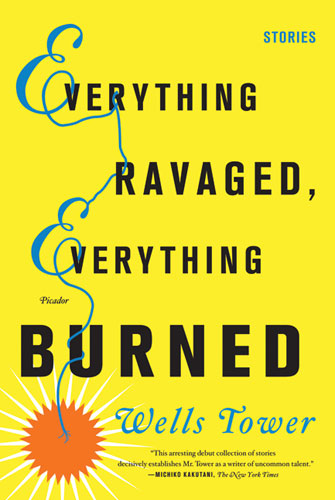
Wells Tower’s Everything Ravaged, Everything Burned takes its title from the name of the final story in the collection, but the phrase is also an apt descriptor for the underlying themes that most of these stories explore. Tower’s world is a neatly drawn parallel reality populated by down-on-their-luck protagonists who we always root for, despite our better judgment, even as they inadvertently destroy whatever vestiges of grace are bestowed upon them.

There’s Bob Monroe in “The Brown Coast,” who has “perpetrated three major fuckups that would be a long time in smoothing over.” He’s lost his wife and his job, but he finds a measure of solace in adding fish to an aquarium–until that project is ravaged. There’s the father of “Down through the Valley” — estranged against his will — who attempts to make nice by driving his ex’s injured new husband home from a New Age retreat. The poor guy, like so many of the characters here, stumbles into one bad situation after another. He’s not the only dad here — there are plenty of fathers in Everything Ravaged, and there’s also a strong undercurrent of Oedipal rage. In “Leopard,” (written in that rare beast, the second-person), Tower explores the psyche of an angry pre-adolescent boy who hates his dickish stepfather. When the lad discovers a flier warning that a pet leopard is on the loose, he fantasizes that the creature will solve his problem. The teenage lead of “Wild America” — the only female protagonist in the book — lives with the shame of having “tried to stab her shy father with a nail file.” In “The Brown Coast,” Bob calls his home to find that his Uncle has taken up with his wife. “Executors of Important Energies” brims with Oedipal tension, as a failed inventor has to come to terms with his father’s dementia. He’s had to live most of his life in ambivalence over his stepmother, who splits the age difference between him and his father:

The particulars weren’t absolutely clear, but I had a hunch that somewhere around my sixteenth birthday, he was going to take me out to a desert overlook where the sun was going down and announce that he was giving Lucy to me, along with his Mustang fastback, along with some Schlitz, and maybe a cassette tape that was nothing but “Night Moves” by Bob Seger and the Silver Bullet Band.”

If “Night Moves” is the dream, Seger’s “Beautiful Loser” is the reality for most of the characters in Everything Ravaged, Everything Burned. And Tower’s world is strangely beautiful, an evocatively drawn portrait of the little rural pockets that permeate the American Southeast. Sure, there’s a story set in New York City, and “Everything Ravaged, Everything Burned” is about Vikings in the Dark Ages, but for the most part Tower sticks to the weird, unstable borders between civilization and wilderness. It’s a world where seemingly peripheral characters all of a sudden fall into the narrative as essential players; it’s a violent world–and an engrossing one.

“Retreat” might be the finest of the stories here. It tells the story of two long-warring brothers who try, at least on the surface, to make amends. The protagonists (or, more rightly mutual antagonists) are typical of Tower: rough and physical, but also prone to moodiness and obsessive self-reflection. There are two versions of the story, initially published in issues 23 and 30 of McSweeney’s. The one published here is the later version, told from the perspective of the more financially-prosperous brother (the first is told from the viewpoint of the less well-off brother. Both brothers are total assholes). We kinda sorta wish that both versions were included in the collection, because they’ve come to form a composite story in our mind, but hey, you can’t always get what you want. “Retreat” unfurls in muscular, organic prose, bristling with fresh metaphors and similes. Great stuff.

Tower is a writing talent that we’ve been following for awhile now, and Everything Ravaged, Everything Burned is the sort of book that makes you want to track down the stray stories not collected here (a good starting place for those interested: “Raw Water” in McSweeney’s 32). And while we’ll never knock the short story as a lesser form, surely this man has a novel waiting in the wings. We’d love to read it. We very highly recommend Everything Ravaged, Everything Burned.

Everything Ravaged, Everything Burned is available today in trade paperback from Picador.

David Peace on Occupied City

We’re currently reading–and really enjoying–David Peace’s Occupied City, a dark and bewildering account of the 1948 Teikoku Bank Massacre in Tokyo. Peace’s book gets its American debut later this week from Knopf. We’ll run a proper review then. For now, here’s Peace discussing the project, his difficulty in writing it, the crime’s contemporary resonance in modern Japan, and how he stole from Rashomon:

“William Burns” — Roberto Bolaño

Hey! Check it out: new (well, new as these things go) fiction from Roberto Bolaño. The New Yorker has published a selection called William Burns,” which may or may not be (but we’re thinking probably is) an excerpt from a longer work, one that will probably come out in the nearish future. Chris Andrews translates. “William Burns” tells the story of the eponymous Californian, a “laid-back guy who never lost his cool,” who seems to be a private investigator entrusted to protect two women from a killer. The story builds in typical Bolaño fashion: plenty of sinister, Lynchian ambiance punctuated by strange humor, with a good shot of banality to smooth things out. Our favorite passage:

If I were a dog, I thought resentfully, these women would show me a bit more consideration. Later, after I realized that none of us were feeling sleepy, they started talking about children, and their voices made my heart recoil. I have seen terrible, evil things, sights to make a hard man flinch, but, listening to the women that night, my heart recoiled so violently it almost disappeared. I tried to butt in, I tried to find out if they were recalling scenes from childhood or talking about real children in the present, but I couldn’t. My throat felt as if it were packed with bandages and cotton swabs.