Bright Star — Campion Does Keats

So I finally got around to watching Jane Campion’s Bright Star last night, a film that quietly studies the final years of Romantic poet John Keats and his relationship with Fanny Brawne. When Keats moves next door to the Brawnes, eldest daughter Fanny, a talented seamstress and flighty flirt, soon becomes intrigued by the poet. Keats, with his love for beauty and truth, represents a world of greater depth than the wits and dandies who usually attempt to court Brawne. Their relationship is, of course, doomed from the outset. Perpetually broke Keats doesn’t have the moolah or means to properly engage Brawne in marriage, but that doesn’t stop the pair from undertaking a furtive, pensive love affair, carried out in long walks on the heath and passionate letters. Oh, and Keats gets sick and dies at 25. That shouldn’t be a spoiler if you’ve studied your Romantics properly, now should it?

Both Abbie Cornish who plays Brawne and Ben Whishaw who plays Keats are excellent in their understatement and reserve, but the standout turn in the movie comes from actor Paul Schneider (from NBC’s Parks & Recreation) who plays Keats’s bankrolling friend Charles Armitage Brown. Brown is a lesser poet whose love and envy of Keats leads him to vex Brawne and Keats’s love at every turn, plaguing them with doubt, and that enemy of Romance, Reason. Schneider invests his character with a boorish charm that never veers into the rote tropes that afflict modern romance film. It’s emblematic of the Campion’s film in a way: Bright Star has every opportunity to devolve into a mundane exercise in doomed romance or a stuffy period piece, but under Campion’s delicate care it manages to match the depth of its subject matter.

Campion wrote the screenplay, presumably using letters from the principals as her primary source. She honors her viewers’ intelligence — far too rare these days — by never cobbling her plot together with easy exposition or forced narrative developments, and it’s that sense of history that lends the film authenticity. Cornish’s Brawne is a protagonist whose personality transformations read as real, and Whishaw’s Keats is never a cartoonish mystic or a moody caricature, but a fully-drawn human. Campion also has the good judgment to let her cinematography convey her story, letting gorgeous shots of the English countryside and cloistered chambers alike convey the mood and rhythm of her story. At times, Bright Star‘s beautiful camerawork recalls Terrence Malick, another director who allows film to “happen” to the viewer as an evocative experience rather than a spoon-feeding. Campion also shows considerable restraint with the film’s wonderful score, never allowing it to color a scene unduly when her actors can do a great job on their own. Bright Star avoids all of the pitfalls that might afflict a period piece, and does a far better job handling the subject of Romantic poetry than a movie has any right to. The film is hardly for everyone (sorry guys, no Jason Statham), but it’s very, very good. Recommended.

Historic Photos of Florida Ghost Towns

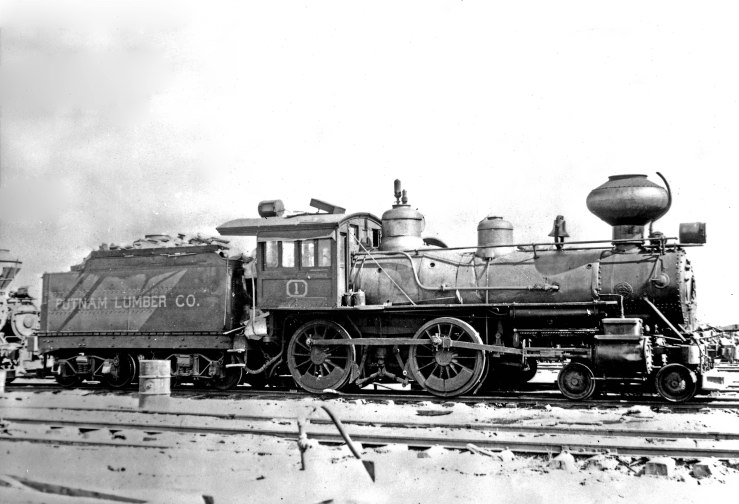
Historic Photos of Florida Ghost Towns, new from Turner Publishing, pairs beautiful black and white archival photos with detailed commentary by Steve Rajtar to offer a counter-narrative to the traditional history of Florida. Florida’s history is often told in terms of exponential growth, focusing on the Sunshine State’s ecological bounty as a reason for immigration and tourism. Ghost Towns takes a look at the many historical sites in Florida that were destroyed, absorbed, or abandoned as the state bounded to modernity. Rajtar and his editors have organized the book around all the different ways that a town might become a ghost town, including economic (company closings, plantation declines, railroad expansion), sociopolitical (absorption, abandonment, government mandates), and natural (fires, floods, hurricanes).

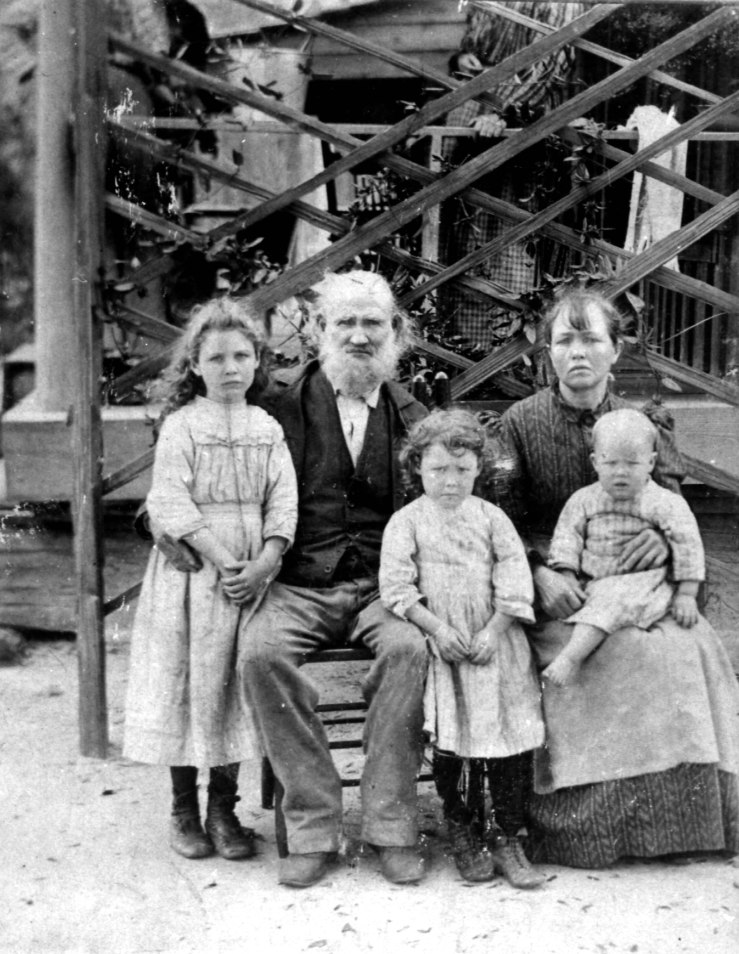
Appropriate for its title, there’s something haunting about many of the images in the book. Like all images from the past, they speak for what no longer exists, but there’s something melancholy here too. Take for example this 1897 image of the Lamb family from the ironically-named plantation township of Hopewell. Their dour expressions communicate a sense of the difficulties of an agrarian life in Florida over a century ago — more Marjorie Kinnan Rawlings than Miami Vice. What happened to these people after their farms collapsed? Where are their descendants today?

Historic Photos of Florida Ghost Towns will be a welcome addition to any Florida history buff’s library, as well as a handsome book for any Floridian’s coffee table. It’s also a worthy document to testify to an an alternate and often overlooked element of Florida history. Florida has a rich, storied past, and Ghost Towns helps to honor that. As the state heads into an uncertain future, the book also might make some of us reappraise our own cities’ chances of withstanding the test of time. Recommended.

David Peace’s Red Riding Film Adaptations Debut in the US

The film adaptations of David Peace‘s Red Riding quartet make their American debut this weekend. The films look pretty cool — kinda like Zodiac. The screen adaptations drop the 1977 segment of Peace’s original quartet, opting instead for the trilogy treatment. You can read Manohla Dargis’s detailed review for The New York Times here and Keith Phipps favorable review at the AV Club here. Trailer:

Occupied City — David Peace

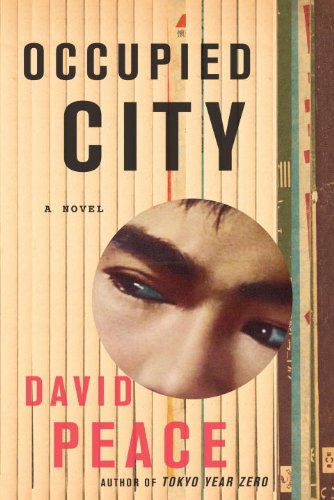
“You want to know what happened, yes?” an old detective asks near the beginning of Occupied City. “No? You want to know the truth? Make up your mind! Which do you want to know; what happened, or the truth?” This preoccupation of “what happened” vs. “the truth” fuels the central tension in David Peace’s new novel, a postmodern noir exercise set in the desolation of 1948 Tokyo. Based on the true story of the Teikoku Bank Massacre, Occupied City investigates the postwar slaying of twelve bank employees who were poisoned by a man dressed (perhaps) as a government official. There’s a parenthetical “perhaps” around just about everything in Peace’s book; he cites Akutagawa Ryunosuke’s short stories “In a Grove” and “Rashomon” (as well as Kurosawa’s film adaptation of that story) as inspirations for the structure of Occupied City.

And rightly so. The few witnesses who survived the massacre get to tell “what happened”; their testimony is combined in a pastiche of sources including official government documents, a detective’s notes, newspaper reports, and personal and professional letters from an obsessed American Lieutenant Colonel. There’s a classically-neutral narrator whose reportorial rationality is undercut at every turn by the interceding lamentations of a Beckettian speaker dipping into madness. And there are the dead, the victims who cry out to be seen as more than just victims. Peace’s techniques are somehow both stochastic and tightly controlled at the same time, as he weaves the disparate voices through his tale to square the different perspectives of “what happened” in an attempt to reach “the truth.” Peace’s language frequently vacillates between elliptical and elusive abstraction and the visceral immediacy one would expect from a detective novel. The verbal tics add up to a visual poetry, as Peace’s repetitions, redaction, strike-throughs, and columns reinvigorate a genre that too-often relies on stodgy convention. For many readers, this eclectic style will be at times challenging or even come off as pretentious, but those who submit to Peace’s tumult of language are in for quite a ride.

Occupied City is a smart, well-researched historical thriller that recalls the verbal grit and energy of James Ellroy, who Peace interviewed earlier thie year. Like Ellory, Peace’s detectives investigate the seamy gaps in history from myriad perspectives, prodding readers into violent alien territory. And like Ellroy’s work, there’s no easy “truth” at the bottom of this book, but there are plenty of unsettling questions. Occupied City is a stark, bewildering challenge from a writer who deserves a wider audience. Recommended.

Occupied City is new in hardback from Knopf this week.

“If We Do This as a Conversation, It Will Be Easier for Me” — David Foster Wallace

David Foster Wallace’s 2003 interview on German TV station ZDF has been viewable for awhile in its full 84 minute glory, but it’s only just now been uploaded to YouTube in more digestible and manageable 10 minute chunks.

Everything Ravaged, Everything Burned — Wells Tower

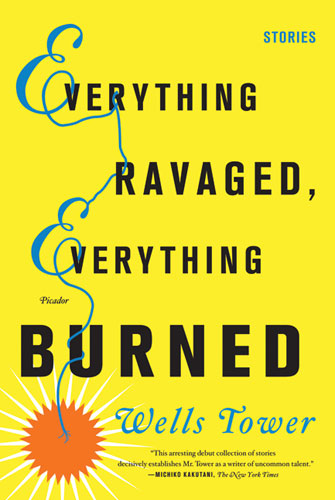
Wells Tower’s Everything Ravaged, Everything Burned takes its title from the name of the final story in the collection, but the phrase is also an apt descriptor for the underlying themes that most of these stories explore. Tower’s world is a neatly drawn parallel reality populated by down-on-their-luck protagonists who we always root for, despite our better judgment, even as they inadvertently destroy whatever vestiges of grace are bestowed upon them.

There’s Bob Monroe in “The Brown Coast,” who has “perpetrated three major fuckups that would be a long time in smoothing over.” He’s lost his wife and his job, but he finds a measure of solace in adding fish to an aquarium–until that project is ravaged. There’s the father of “Down through the Valley” — estranged against his will — who attempts to make nice by driving his ex’s injured new husband home from a New Age retreat. The poor guy, like so many of the characters here, stumbles into one bad situation after another. He’s not the only dad here — there are plenty of fathers in Everything Ravaged, and there’s also a strong undercurrent of Oedipal rage. In “Leopard,” (written in that rare beast, the second-person), Tower explores the psyche of an angry pre-adolescent boy who hates his dickish stepfather. When the lad discovers a flier warning that a pet leopard is on the loose, he fantasizes that the creature will solve his problem. The teenage lead of “Wild America” — the only female protagonist in the book — lives with the shame of having “tried to stab her shy father with a nail file.” In “The Brown Coast,” Bob calls his home to find that his Uncle has taken up with his wife. “Executors of Important Energies” brims with Oedipal tension, as a failed inventor has to come to terms with his father’s dementia. He’s had to live most of his life in ambivalence over his stepmother, who splits the age difference between him and his father:

The particulars weren’t absolutely clear, but I had a hunch that somewhere around my sixteenth birthday, he was going to take me out to a desert overlook where the sun was going down and announce that he was giving Lucy to me, along with his Mustang fastback, along with some Schlitz, and maybe a cassette tape that was nothing but “Night Moves” by Bob Seger and the Silver Bullet Band.”

If “Night Moves” is the dream, Seger’s “Beautiful Loser” is the reality for most of the characters in Everything Ravaged, Everything Burned. And Tower’s world is strangely beautiful, an evocatively drawn portrait of the little rural pockets that permeate the American Southeast. Sure, there’s a story set in New York City, and “Everything Ravaged, Everything Burned” is about Vikings in the Dark Ages, but for the most part Tower sticks to the weird, unstable borders between civilization and wilderness. It’s a world where seemingly peripheral characters all of a sudden fall into the narrative as essential players; it’s a violent world–and an engrossing one.

“Retreat” might be the finest of the stories here. It tells the story of two long-warring brothers who try, at least on the surface, to make amends. The protagonists (or, more rightly mutual antagonists) are typical of Tower: rough and physical, but also prone to moodiness and obsessive self-reflection. There are two versions of the story, initially published in issues 23 and 30 of McSweeney’s. The one published here is the later version, told from the perspective of the more financially-prosperous brother (the first is told from the viewpoint of the less well-off brother. Both brothers are total assholes). We kinda sorta wish that both versions were included in the collection, because they’ve come to form a composite story in our mind, but hey, you can’t always get what you want. “Retreat” unfurls in muscular, organic prose, bristling with fresh metaphors and similes. Great stuff.

Tower is a writing talent that we’ve been following for awhile now, and Everything Ravaged, Everything Burned is the sort of book that makes you want to track down the stray stories not collected here (a good starting place for those interested: “Raw Water” in McSweeney’s 32). And while we’ll never knock the short story as a lesser form, surely this man has a novel waiting in the wings. We’d love to read it. We very highly recommend Everything Ravaged, Everything Burned.

Everything Ravaged, Everything Burned is available today in trade paperback from Picador.

David Peace on Occupied City

We’re currently reading–and really enjoying–David Peace’s Occupied City, a dark and bewildering account of the 1948 Teikoku Bank Massacre in Tokyo. Peace’s book gets its American debut later this week from Knopf. We’ll run a proper review then. For now, here’s Peace discussing the project, his difficulty in writing it, the crime’s contemporary resonance in modern Japan, and how he stole from Rashomon:

“William Burns” — Roberto Bolaño

Hey! Check it out: new (well, new as these things go) fiction from Roberto Bolaño. The New Yorker has published a selection called William Burns,” which may or may not be (but we’re thinking probably is) an excerpt from a longer work, one that will probably come out in the nearish future. Chris Andrews translates. “William Burns” tells the story of the eponymous Californian, a “laid-back guy who never lost his cool,” who seems to be a private investigator entrusted to protect two women from a killer. The story builds in typical Bolaño fashion: plenty of sinister, Lynchian ambiance punctuated by strange humor, with a good shot of banality to smooth things out. Our favorite passage:

If I were a dog, I thought resentfully, these women would show me a bit more consideration. Later, after I realized that none of us were feeling sleepy, they started talking about children, and their voices made my heart recoil. I have seen terrible, evil things, sights to make a hard man flinch, but, listening to the women that night, my heart recoiled so violently it almost disappeared. I tried to butt in, I tried to find out if they were recalling scenes from childhood or talking about real children in the present, but I couldn’t. My throat felt as if it were packed with bandages and cotton swabs.

WSJ Interviews Don DeLillo

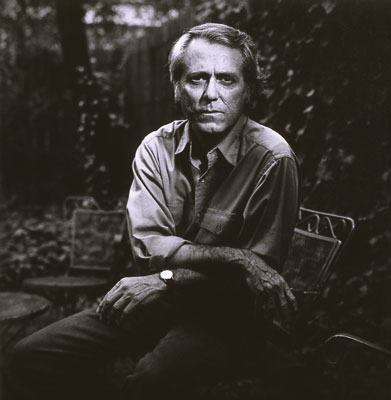
The Wall Street Journal has published an interview with Don DeLillo where the reclusivish author discusses the genesis of his new novella, Point Omega. From the interview:

The Wall Street Journal: How did this book evolve?

Don DeLillo: The idea began in the same place where the novel begins — in the sixth floor gallery at the Museum of Modern Art — and at the same time, summer of 2006. I wandered in and there was “24 Hour Psycho,” which I found very interesting to watch and to think about. In fact, I returned two or three times after that, and by the third visit I was fairly certain I wanted to write something about it — the idea of time and motion and the sense of self-conscious seeing, because everything happens in such slow motion and because the imagery is somewhat familiar from the movie itself. I began to wonder about such things, about how we see and what we see, and what we miss seeing when we’re looking at things in a more conventional format. And I decided finally that I wasn’t going to risk writing a piece of nonfiction because I’m not a philosopher or a physicist and I could not study time in the matter that seemed to be warranted. So I placed a character in the gallery and began from there.

The Wall Street Journal seems to be on a streak when it comes to interviewing authors who typically avoid interviews–Cormac McCarthy talked with the financial magazine late last year. Maybe we should scour their archives more closely–who knows, maybe there’s a secret Salinger interview stashed away somewhere.

Point Omega — Don DeLillo

Don DeLillo’s latest work Point Omega takes an oblique, subtle, and unnerving tackle at themes of time, perception, family, and, ultimately, personal apocalypse. It’s not a particularly fun book nor does it yield any direct answers, but it’s also a rewarding, engaging, and often challenging read.

Point Omega pretends to be a novel about two subjects: the Iraq War and film. Its narrator Jim Finley is an experimental filmmaker who travels to the Arizona desert in an attempt to convince aging intellectual Richard Elster to participate in a film comprised solely of one long, unedited take of Elster talking about whatever he likes. Although Finley repeatedly claims that Elster can talk about whatever he chooses to in the film, it’s clear that that the younger man wishes for the subject to be Elster’s involvement in the planning of the Iraq War, a sort of mea culpa from the intellectual elite who rolled over to the Bush administration. Elster’s involvement was essentially to provide academic credibility to the invasion:

He was the outsider, a scholar with an approval rating but no experience in government. He sat at a table in a secure conference room with the strategic planners and military analysts. He was there to conceptualize, his words, in quotes, to apply overarching ideas and principles to such matters as troop deployment and counter-insurgency. He was cleared to read classified manuscripts, he said, and he listened to the chatter of the resident experts, the metaphysicians in the intelligence agencies, the fantasists in the Pentagon.

Elster becomes disillusioned with the whole process soon; he comes to realize the hollowness of his role and soon moves to the desert. “He’d exchanged all that for space and time,” writes DeLillo, announcing his theme. Later in the novella, Elster claims that the geologic time of the desert allows him to feel, “Time falling away . . . Time becoming slowly older. Enormously old. Not day by day. This is deep time, epochal time.” He contrasts this “deep time” with the time of cities:

It’s all embedded, the hours and minutes, words and numbers everywhere, he said, train stations, bus routes, taxi meters, surveillance cameras. It’s all about time, dimwit time, inferior time, people checking watches and other devices, other reminders. This is time draining out of our lives. Cities were built to measure time, to remove time from nature. There’s an endless counting down, he said. When you strip away all the surfaces, when you see into it, what’s left is terror. This is the thing that literature is meant to cure. The epic poem, the bedtime story.

Elster appears concerned that humanity is approaching Teilhard’s omega point, the maximum level of complexity of consciousness toward which the universe is evolving. He concedes that this idea might be “a case of language that’s struggling toward some idea our experience.” For Elster, the omega point is inevitable and leads to either “a sublime transformation of mind and soul or some worldly convulsion.” Ultimately, his viewpoint seems nihilistic: he’d rather human beings somehow be transformed into stones, be somehow absorbed into a new time, a geologic time.

The obsession with time and film literally wraps the book in two short chapters called “Anonymity” (a prologue) and “Anonymity 2” (an epilogue (or a prescient epitaph, perhaps?)). Both sections describe a man who spends all of his time at MOMA’s presentation of Douglas Gordon’s videowork 24 Hour Psycho, a silent showing of Hitchcock’s Psycho over 24 hours. Neither section is narrated by Finley, although it later becomes clear that he–along with other principals in the story–is present at the showing. The unnamed man whose consciousness permeates these chapters finds his own omega point in the crawling pace of the film. 24 Hour Psycho divorces itself from the healing powers that stories give us, the power to narrativize all the gaps and crevices of life. It’s no longer the medicine that Elster suggests literature (or film) might be. It now exists outside of narrative cohesion and somehow resonates with the purity or transcendence of geologic time.

Fortunately, DeLillo is gracious enough to his readers to not attempt replicating the pace of geologic time in his book. Point Omega is particularly slim–under 120 pages in hardback–and reads with a the conciseness and clarity which has been a hallmark of DeLillo’s style. As perhaps the signal writer of post-postmodernism (whatever that means), DeLillo continues to engage and anticipate new and emerging forms of alienation, and he does so without gimmicks or trickery, just the purity of considered ideas. Point Omega works best when he allows those ideas some room to breathe; the late-night scotch-soaked dialogues between Elster and Finley are some of the finest passages of the book and it’s a pity there aren’t more of them.

But it seems like we’ve digressed from some of our starting points, doesn’t it? Many critics will call Point Omega DeLillo’s “Iraq War novel,” which is a mistake akin to calling Underworld a book about baseball or White Noise a book about Hitler. The war is merely an entry point to the greater, more personal tragedy that underlies the book, a tragedy that will perhaps make Elster reassess his own value system. We won’t name the trauma at the core of the book–to do so might spoil a twist in a book largely devoid of conventional concrete plotting–but it is worth noting that DeLillo optimizes suspense and tension as the novel builds to its own omega point. While many will feel left cold by the book’s ultimately ambiguous invocation of personal calamity, we found in it a meaningful counterpoint to Elster’s explicit commentary on time and identity. DeLillo’s novel, in the end, requires an intellectual–or perhaps, dare we say spiritual–leap. Point Omega is hardly a satisfying read, but that’s kind of the point, isn’t it? Highly recommended.

Point Omega is available February 2nd, 2010 from Scribner.

A Few Thoughts on The Catcher in the Rye

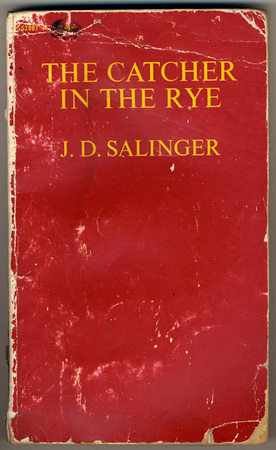
J.D. Salinger’s The Catcher in the Rye is a great read. It’s also a great way for a reader to measure how he or she has changed over the years. Like many (very, very many) readers, I cut my literary teeth on The Catcher in the Rye. I was probably 15 when I first read the book and I sympathized wholly with Holden Caulfield. Like most teens, I was selfish and insular and thought that I was special and unique in my alienation. I was also pretty sure the world was filled with phonies and fakes, and I was determined not to become one of them when I grew up. I must’ve read it three or four times in high school, maybe more.

I was in college, maybe 19 or 20 when I read the book again. Oddly, or perhaps not oddly, I had converted (or masked) my cynicism–always an unearned pose of world-weariness for a teen–into a resolute idealism (the earnestness of which was always undercut by a generational infection of irony, of course). I could now peer into Catcher‘s great irony; I could see that Holden was a big phony too, maybe the biggest in the novel, that he was as cruel as anyone else in the book, and that his obsession with the innocence of youth was not a virtue but a sort of blindness, an ideological defense mechanism rooted in adolescent wish fulfillment. In fact, as an undergrad I begin to see the underlying themes of pedophilia that permeated Salinger’s work. They were minor and covert, to be sure, but also a bit unsettling. I’m sure I read at least twice in college, once for an English class and once on my own. I might’ve read it more than twice.

I read the book again in my mid-twenties, inspired perhaps by Will Smith’s monologue in the film adaptation of John Guare’s play Six Degrees of Separation. Here’s the monologue, where Smith’s character (who, spoiler, turns out to be a big phony) tries to explain why so many psychos and killers find justification for their mad agendas in Catcher:

At this point, I was detached enough from my own teen years to be somewhat disturbed by Holden’s behavior. I found him arrogant and clueless and largely unsympathetic. It was the end of the novel in particular that pointed toward psychopathic tendencies: Holden’s wish to “catch” all the kids who will “fall” from innocence, purity, spontaneity, whatever–this looked more to me now like a symptom of narcissistic personality disorder than the mark of tragic hero. I haven’t read the book since then.

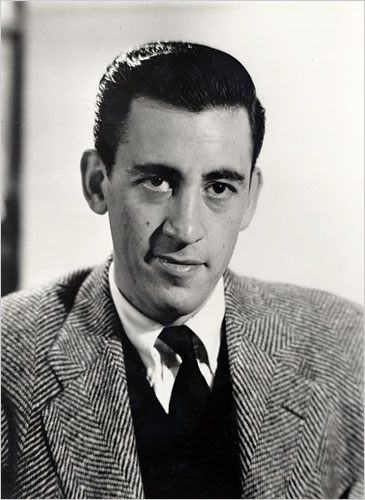
Now that Salinger’s dead, like many fans, I’m excited. I’m excited to see what’s been stacking up in Salinger’s retreat in Cornish all these years. Given the inscrutability of later work like Seymour: An Introduction and the fact that Salinger wrote solely for his own pleasure in later years, it’s difficult to even imagine what the unpublished work will look like–if we even get to see it. In any case, it seems unlikely that any posthumous work of Salinger’s will ever penetrate the national literary consciousness (and conscience) the way Catcher has. I have a stack of galleys by my bed that measures close to four feet, but I think I’m going to put aside some time to see how Catcher measures up after all these years–or, rather, how I measure up to it.

Robin in the Rye

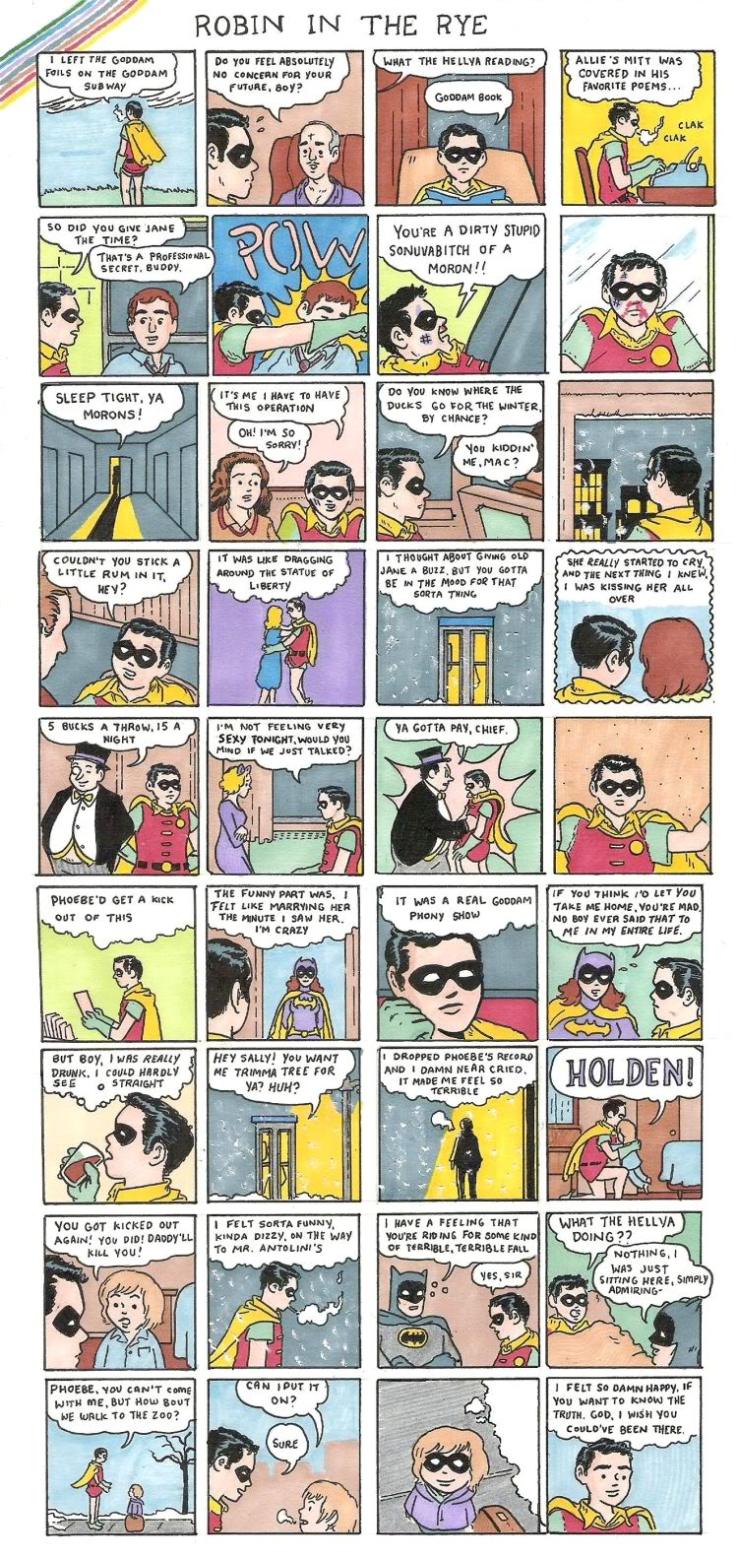
An oldie but a goodie. Andrew Lorenzi‘s “Robin in the Rye” channels J.D. Salinger via R. Sikoryak.

RIP J.D. Salinger

DeLillo Goes Psycho

Okay. We admit that’s a stupid headline. Anyway.

We dove into our review copy of Don DeLillo’s latest novel (it’s really a novella, despite claims made by its cover and press materials) Point Omega last night. It opens with a protracted scene of a man at the 2006 MOMA showing of Douglas Gordon’s videowork, 24 Hour Psycho. Gordon’s project, first presented in Glasgow and Berlin in 1993, slows Alfred Hitchock’s classic Psycho to a crawl, stretching the entire film over 24 hours.

DeLillo’s description:

The slightest camera movement was a profound shift in space and time but the camera was not moving now. Anthony Perkins is turning his head. It was like whole numbers. The man could count the gradations in the movement of Anthony Perkins’ head. Anthony Perkins turns his head in five incremental movements rather than one continuous motion. It was like bricks in a wall, clearly countable, not like the flight of an arrow or a bird. Then again it was not like or unlike anything. Anthony Perkins’ head swiveling over time on his long thin neck.

Ah, DeLillo — “it was not like or unlike anything” — redact your own similes. There’s also this classic DeLilloian line in the episode, somehow both concise and oblique: “The film made him feel like someone watching a film.” Maybe watching this 35 second YouTube clip of 24 Hour Psycho will make you feel like someone watching a 35 second YouTube clip of 24 Hour Psycho.

Jane Bites Back — Michael Thomas Ford

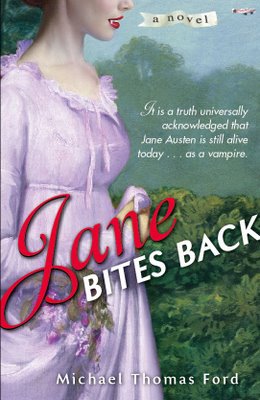
In Michael Thomas Ford’s novel Jane Bites Back, Jane Austen (you know, the Jane Austen) is an incognito vampire/bookstore clerk in upstate New York. Poor Jane is trying to get a new novel published (under a pseudonym, of course), but she suffers scores of rejection letters for her new work. Even worse is the horror of the Jane Austen industry, which, under the auspices of public domain laws, clutters Jane’s own bookshop with awful books that, like, don’t “get” the Austen oeuvre (in the climactic scene of the book’s opening chapter, Vampire Jane gets some measure of revenge by consuming the boorish author of an execrable volume entitled Waiting for Mr. Darcy). Of course, there’s got to be a plot, so Jane does get an offer for a book deal, one that’s complicated by accusations of plagiarism and other woes. To make matters worse, her old lover Lord Byron shows up (yeah, Byron, duh. How else would Jane Austen catch the vampirism?) There are other ghosts of literary past who show up, too, but why spoil surprises?

Jane Bites Back reveres its subject, Jane Austen, even as it blatantly cashes in on the very trend that it satirizes. The book’s program shouldn’t be confused with the absurdity behind Sense and Sensibility and Seamonsters (which we liked) or the wackiness of Pride and Prejudice and Zombies (which we didn’t like), but it does adhere to the same sense of fun. Ford seems to delight in corny, over the top passages, and we’ll take it for granted that his literary tongue is in his cheek when he writes a paragraph like:

When his hand cupped her breasts she gasped, and when his mouth touched her skin she felt her knees buckle. He caught her, sweeping her up in his arms and carrying her to the bed. He placed her atop the sheets and stepped back. She watched through half-closed eyes as he removed his clothes. His chest was lean, his skin pale as milk. When stepped from his trousers she glanced briefly at his manhood before looking away.

His “manhood”?! Jeez, we hope this is parody. In any case, we were laughing. (Sidenote: How does this stack up against the sex scenes in the Twilight books? Are there sex scenes in the Twilight books? What Biblioklept reader will even admit to having read Twilight?)

Ford’s style is, on the whole, redolent with the tropes of YA fiction–not that Jane Bites Back is necessarily YA–but there’s not a challenging sentence in the book, which may or may not be a compliment for the writer. Clear, lucid writing is difficult to do. Still, we tend to value ambiguity around here; being perplexed and furious is a good reaction from time to time. Jane Bites Back reads with an anonymous speed that’s not particularly invigorating.

If we were really feeling adventurous today, we might wax heavy on the all the implications, meta- and otherwise, of a book that purports to criticize the Austen fad while at the same time indulging in it…but we’re not feeling up to it. There’s also a neat Venn diagram in all of this: vampires, Jane Austen, feminism (yeah, there are feminist themes here. Did we forget to mention them? Sorry). Suffice to say that any reader whose ears perk up at the notion of “Jane Austen + vampires” will not be disappointed in this book.

Jane Bites Back is new from Ballantine Books.

“Write the Dirty Words Big and Underline Them and Kiss Them and Hold Them for a Moment” — James Joyce’s Dirty Epistles

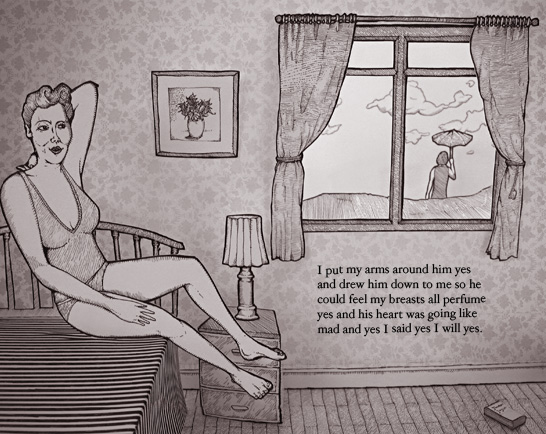
Penelope -- Itmar Lerner

Anyone who’s read the “Circe/Nighttown” chapter of James Joyce’s Ulysses knows that Joyce had more than a passing interest in masochism, gender-role reversals, scatology, and other aspects of “deviant” sexuality (we put the word in quotations in an attempt to remove it from any pejorative or judgmental connotations and at the same time recognize that Joyce aspired to shock or otherwise disrupt his audience in his depictions of sexuality). But if you want to read something really filthy, something purposefully obscene, check out Joyce’s dirty letters to his wife Nora, written over a three month period in 1909 when the couple were separated due to a business trip. Joyce shows a particular fetish for coprophilia, expresses a desire to wear his wife’s underwear, and meticulously describes his wife’s farts. Gross stuff.

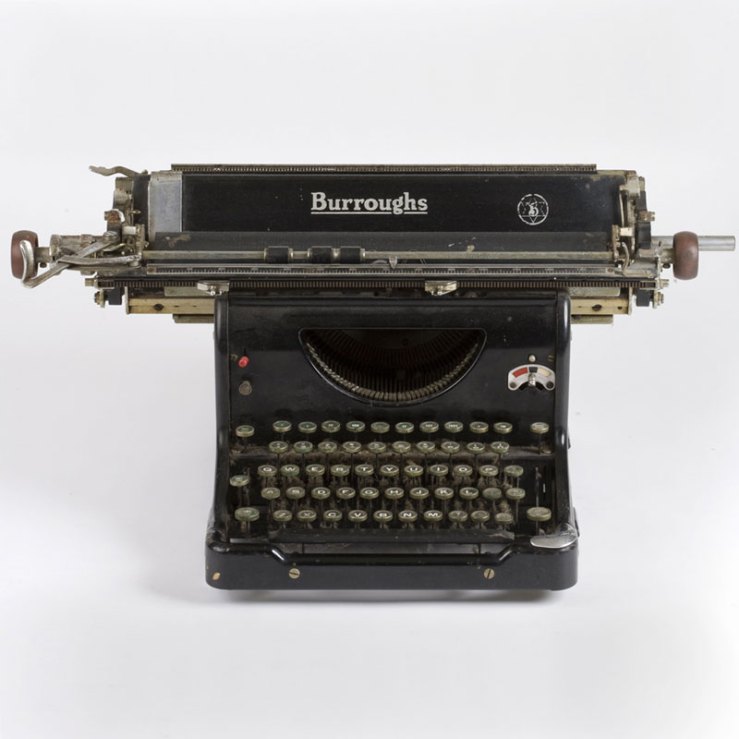
William Burroughs’s Stuff

Check out this photo series of William Burroughs’s personal effects at The Morning News. There’s also a really cool interview with the photographer Peter Ross. Great, uh, stuff.