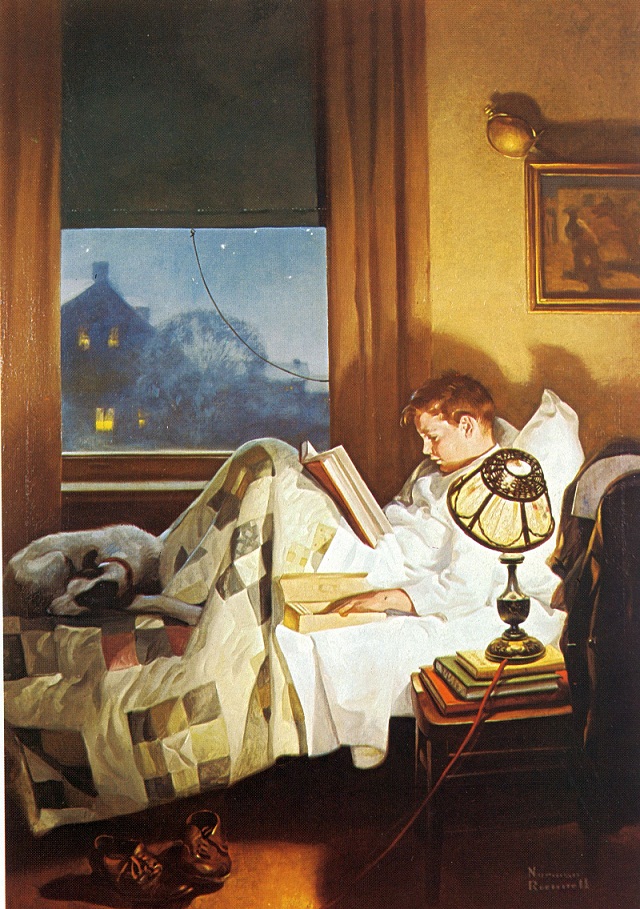
Crackers in Bed — Norman Rockwell

Robert Altman’s Nashville (Full Film)

St. George and the Dragon — Paolo Uccello

David Byrne Recalls Going to Make-out Parties

“The Five Boons of Life” — Mark Twain


“The Five Boons of Life,” a short fable from Mark Twain:

CHAPTER I

In the morning of life came a good fairy with her basket, and said:”Here are gifts. Take one, leave the others. And be wary, chose wisely; oh, choose wisely! for only one of them is valuable.”The gifts were five: Fame, Love, Riches, Pleasure, Death. The youth said, eagerly:”There is no need to consider”; and he chose Pleasure.He went out into the world and sought out the pleasures that youth delights in. But each in its turn was short-lived and disappointing, vain and empty; and each, departing, mocked him. In the end he said: “These years I have wasted. If I could but choose again, I would choose wisely.

CHAPTER II

The fairy appeared, and said:”Four of the gifts remain. Choose once more; and oh, remember-time is flying, and only one of them is precious.”The man considered long, then chose Love; and did not mark the tears that rose in the fairy’s eyes.After many, many years the man sat by a coffin, in an empty home. And he communed with himself, saying: “One by one they have gone away and left me; and now she lies here, the dearest and the last. Desolation after desolation has swept over me; for each hour of happiness the treacherous trader, Love, as sold me I have paid a thousand hours of grief. Out of my heart of hearts I curse him.”

CHAPTER III

“Choose again.” It was the fairy speaking.”The years have taught you wisdom — surely it must be so. Three gifts remain. Only one of them has any worth — remember it, and choose warily.”

The man reflected long, then chose Fame; and the fairy, sighing, went her way.Years went by and she came again, and stood behind the man where he sat solitary in the fading day, thinking. And she knew his thought:”My name filled the world, and its praises were on every tongue, and it seemed well with me for a little while. How little a while it was! Then came envy; then detraction; then calumny; then hate; then persecution. Then derision, which is the beginning of the end. And last of all came pity, which is the funeral of fame. Oh, the bitterness and misery of renown! target for mud in its prime, for contempt and compassion in its decay.”


CHAPTER IV

“Choose yet again.” It was the fairy’s voice.”Two gifts remain. And do not despair. In the beginning there was but one that was precious, and it is still here.””Wealth — which is power! How blind I was!” said the man. “Now, at last, life will be worth the living. I will spend, squander, dazzle. These mockers and despisers will crawl in the dirt before me, and I will feed my hungry heart with their envy. I will have all luxuries, all joys, all enchantments of the spirit, all contentments of the body that man holds dear. I will buy, buy, buy! deference, respect, esteem, worship — every pinchbeck grace of life the market of a trivial world can furnish forth. I have lost much time, and chosen badly heretofore, but let that pass; I was ignorant then, and could but take for best what seemed so.”Three short years went by, and a day came when the man sat shivering in a mean garret; and he was gaunt and wan and hollow-eyed, and clothed in rags; and he was gnawing a dry crust and mumbling:”Curse all the world’s gifts, for mockeries and gilded lies! And miscalled, every one. They are not gifts, but merely lendings. Pleasure, Love, Fame, Riches: they are but temporary disguises for lasting realities — Pain, Grief, Shame, Poverty. The fairy said true; in all her store there was but one gift which was precious, only one that was not valueless. How poor and cheap and mean I know those others now to be, compared with that inestimable one, that dear and sweet and kindly one, that steeps in dreamless and enduring sleep the pains that persecute the body, and the shames and griefs that eat the mind and heart. Bring it! I am weary, I would rest.”

CHAPTER V

The fairy came, bringing again four of the gifts, but Death was wanting. She said:     “I gave it to a mother’s pet, a little child. It was ignorant, but trusted me, asking me to choose for it. You did not ask me to choose.””Oh, miserable me! What is left for me?””What not even you have deserved: the wanton insult of Old Age.”
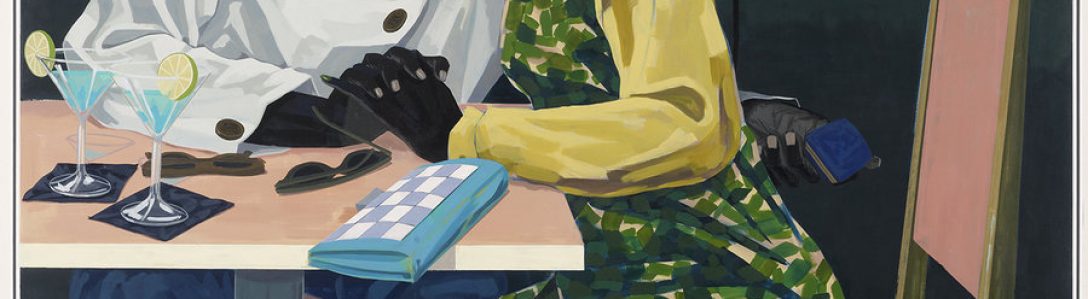
 

Woman Reading a Novel (Sketch) — Vincent van Gogh

Watch Steven Soderbergh’s Kafka (Full Film)

Flying Fox — Vincent van Gogh

Bluebeard’s Castle — Béla Bartók (Full Performance)

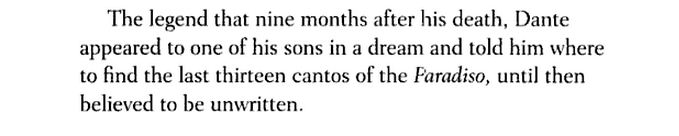
Dante Legend, as Reported by David Markson

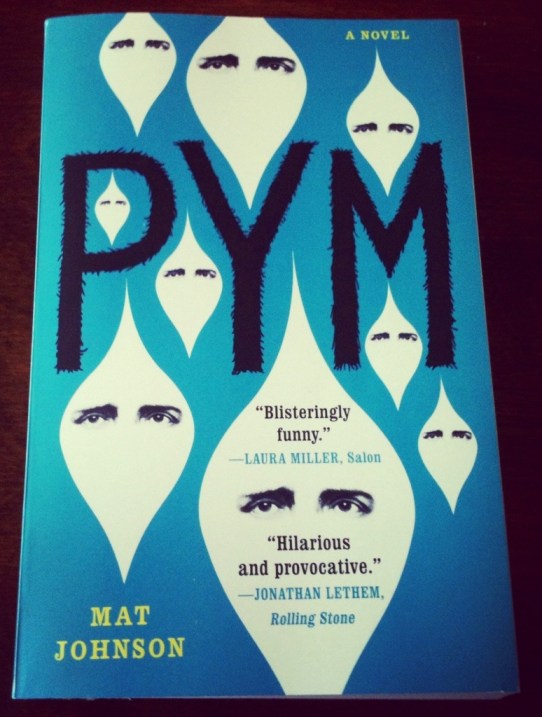
Pym (Book Acquired, 8.16.2012)


20120818-174043.jpg

I wanted to read Mat Johnson’s novel Pym when it came out last year, so I was pleased when Random House sent me a copy of the forthcoming trade paperback. Random House’s blurb:

Recently canned professor of American literature Chris Jaynes has just made a startling discovery: the manuscript of a crude slave narrative that confirms the reality of Edgar Allan Poe’s strange and only novel,The Narrative of Arthur Gordon Pym of Nantucket. Determined to seek out Tsalal, the remote island of pure and utter blackness that Poe describes, Jaynes convenes an all-black crew of six to follow Pym’s trail to the South Pole, armed with little but the firsthand account from which Poe derived his seafaring tale, a bag of bones, and a stash of Little Debbie snack cakes. Thus begins an epic journey by an unlikely band of adventurers under the permafrost of Antarctica, beneath the surface of American history, and behind one of literature’s great mysteries.


By Reading — David Burliuk

The Temptation of St. Anthony (Detail) — Matthias Grünewald

Werner Herzog’s Wheel of Time (Full Documentary)

List with No Name #4

  1. A Tale of Two Cities
  2. Robinson Crusoe
  3. The Iliad
  4. Maggie: A Girl of the Streets
  5. Tender Is the Night
  6. Catch-22
  7. Native Son

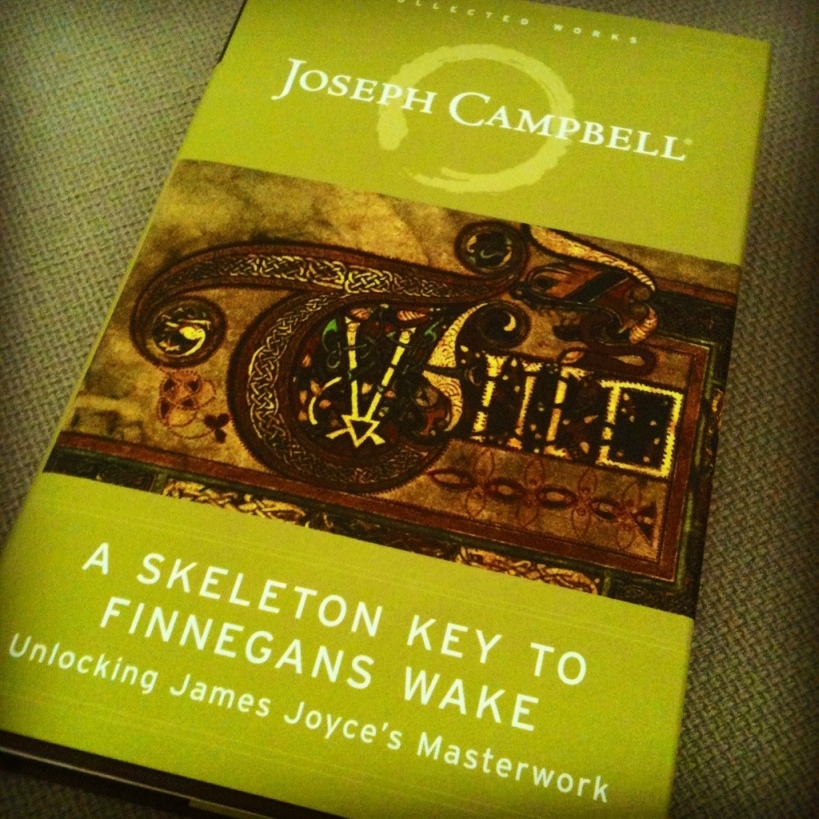
A Skeleton Key to Finnegans Wake (Book Acquired, 8.18.2012)


20120818-174214.jpg

A few weeks ago, for some reason beyond my ken, I stumbled into Finnegans Wake, read on the gentle glow of my Kindle Fire. I’ve been poking into the book for years now, but that particular night I read it with an ease—not an ease of understanding, but an ease of spirit, or of mind. Or ear, really. I had fun with it. I went back each night since then, sometimes only going through a page or two before slipping into slumbers.

Anyway, I’ve been searched for a used copy of Joseph Campbell’s Skeleton Key to the Wake for years, but I finally just broke down and ordered a new copy through my bookstore.  My plan is to read Finnegans Wake next year. It’s not a plan, so much as something I’ve just typed.


“John Mortonson’s Funeral” — Ambrose Bierce

“John Mortonson’s Funeral,” a very short story by Ambrose Bierce

John Mortonson was dead: his lines in ‘the tragedy “Man”‘ had all been spoken and he had left the stage.

The body rested in a fine mahogany coffin fitted with a plate of glass. All arrangements for the funeral had been so well attended to that had the deceased known he would doubtless have approved. The face, as it showed under the glass, was not disagreeable to look upon: it bore a faint smile, and as the death had been painless, had not been distorted beyond the repairing power of the undertaker. At two o’clock of the afternoon the friends were to assemble to pay their last tribute of respect to one who had no further need of friends and respect. The surviving members of the family came severally every few minutes to the casket and wept above the placid features beneath the glass. This did them no good; it did no good to John Mortonson; but in the presence of death reason and philosophy are silent.

As the hour of two approached the friends began to arrive and after offering such consolation to the stricken relatives as the proprieties of the occasion required, solemnly seated themselves about the room with an augmented consciousness of their importance in the scheme funereal. Then the minister came, and in that overshadowing presence the lesser lights went into eclipse. His entrance was followed by that of the widow, whose lamentations filled the room. She approached the casket and after leaning her face against the cold glass for a moment was gently led to a seat near her daughter. Mournfully and low the man of God began his eulogy of the dead, and his doleful voice, mingled with the sobbing which it was its purpose to stimulate and sustain, rose and fell, seemed to come and go, like the sound of a sullen sea. The gloomy day grew darker as he spoke; a curtain of cloud underspread the sky and a few drops of rain fell audibly. It seemed as if all nature were weeping for John Mortonson.

When the minister had finished his eulogy with prayer a hymn was sung and the pall-bearers took their places beside the bier. As the last notes of the hymn died away the widow ran to the coffin, cast herself upon it and sobbed hysterically. Gradually, however, she yielded to dissuasion, becoming more composed; and as the minister was in the act of leading her away her eyes sought the face of the dead beneath the glass. She threw up her arms and with a shriek fell backward insensible.

     The mourners sprang forward to the coffin, the friends followed, and as the clock on the mantel solemnly struck three all were staring down upon the face of John Mortonson, deceased.

They turned away, sick and faint. One man, trying in his terror to escape the awful sight, stumbled against the coffin so heavily as to knock away one of its frail supports. The coffin fell to the floor, the glass was shattered to bits by the concussion.

From the opening crawled John Mortonson’s cat, which lazily leapt to the floor, sat up, tranquilly wiped its crimson muzzle with a forepaw, then walked with dignity from the room.