“Tao Lin” — Michael Kimball

Tao Lin was born in Flagstaff, AZ. He had a very busy childhood that involved practicing the piano a lot. When he was 5, Tao remembers writing little books and selling them to his mother for 50¢. When Tao was small, his neighbor had a rabbit farm and sold them for money. Being near that changed Tao, and, because of it, he talks less shit about people publicly and makes fewer grand pronouncements.

Growing up, Tao played kickball and baseball and basketball in the neighborhood, but not at school. When he was 10, he was playing poker with his neighbor and bet his entire coin collection. The neighbor won and Tao picked up his coin collection and ran back to his house and locked the door. The neighbor knocked a lot and said things like this: “Just give me half. I won’t be angry.”

Tao kept practicing the piano until he no longer owned a piano that worked. Then, at New York University, he studied journalism, but he would have studied creative writing if there had been a program. His sophomore year, he broke up with his girlfriend and then decided to focus really hard on writing. After that, Tao wrote and published a few books. As Tao has noted in interviews, his writing expresses crippling loneliness, severe depression, and the arbitrary nature of the universe. Also, Tao enjoys repeatedly looking at Statcounter, Sales Rank Express, Facebook, Gmail, Twitter, and Tumblr. When a number changes, he feels like something has happened. His job is to promote himself to ensure money will come to him 2-3 years from now, and then even after that.

Everything is just something Tao does. It can be either good or bad depending on the way he thinks about it. Once, Tao thought about peeing in an empty FYXX energy drink bottle and selling it on eBay. Another time, after he ran out of money, Tao sold 10% shares of his second novel to six different people for $2,000 per share. He will never get another real job for the rest of his life. Tomorrow, Tao would like to eat only raw vegan foods.

Update : Tao published some more books. He also married Megan Boyle and they later separated.

“Tao Lin” is part of Michael Kimball’s new book Michael Kimball Writes Your Life Story (On a Postcard), which is new from Mud Luscious Press. Interview and review forthcoming. This piece is republished with the kind permission of the author.
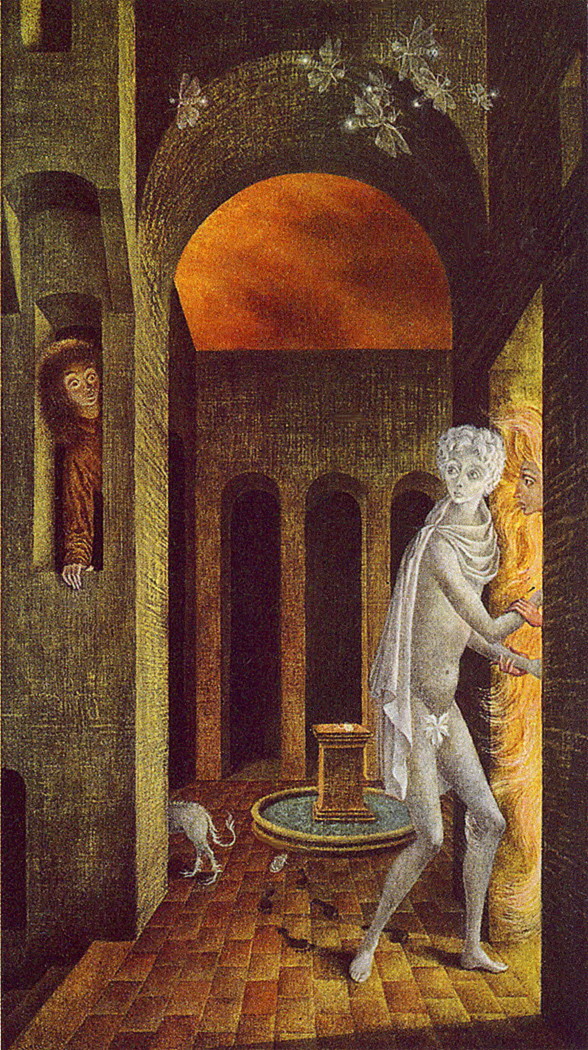
 

Abut — Remedios Varo

abut

“Art” — Ralph Waldo Emerson

“Art” by Ralph Waldo Emerson

Because the soul is progressive, it never quite repeats itself, but in every act attempts the production of a new and fairer whole. This appears in works both of the useful and the fine arts, if we employ the popular distinction of works according to their aim either at use or beauty. Thus in our fine arts, not imitation but creation is the aim. In landscapes the painter should give the suggestion of a fairer creation than we know. The details, the prose of nature he should omit and give us only the spirit and splendor. He should know that the landscape has beauty for his eye because it expresses a thought which is to him good; and this because the same power which sees through his eyes is seen in that spectacle; and he will come to value the expression of nature and not nature itself, and so exalt in his copy the features that please him. He will give the gloom of gloom and the sunshine of sunshine. In a portrait he must inscribe the character and not the features, and must esteem the man who sits to him as himself only an imperfect picture or likeness of the aspiring original within.

What is that abridgment and selection we observe in all spiritual activity, but itself the creative impulse? for it is the inlet of that higher illumination which teaches to convey a larger sense by simpler symbols. What is a man but nature’s finer success in self-explication? What is a man but a finer and compacter landscape than the horizon figures,—nature’s eclecticism? and what is his speech, his love of painting, love of nature, but a still finer success,—all the weary miles and tons of space and bulk left out, and the spirit or moral of it contracted into a musical word, or the most cunning stroke of the pencil?

But the artist must employ the symbols in use in his day and nation to convey his enlarged sense to his fellow-men. Thus the new in art is always formed out of the old. The Genius of the Hour sets his ineffaceable seal on the work and gives it an inexpressible charm for the imagination. As far as the spiritual character of the period overpowers the artist and finds expression in his work, so far it will retain a certain grandeur, and will represent to future beholders the Unknown, the Inevitable, the Divine. No man can quite exclude this element of Necessity from his labor. No man can quite emancipate himself from his age and country, or produce a model in which the education, the religion, the politics, usages and arts of his times shall have no share. Though he were never so original, never so wilful and fantastic, he cannot wipe out of his work every trace of the thoughts amidst which it grew. The very avoidance betrays the usage he avoids. Above his will and out of his sight he is necessitated by the air he breathes and the idea on which he and his contemporaries live and toil, to share the manner of his times, without knowing what that manner is. Now that which is inevitable in the work has a higher charm than individual talent can ever give, inasmuch as the artist’s pen or chisel seems to have been held and guided by a gigantic hand to inscribe a line in the history of the human race. This circumstance gives a value to the Egyptian hieroglyphics, to the Indian, Chinese and Mexican idols, however gross and shapeless. They denote the height of the human soul in that hour, and were not fantastic, but sprung from a necessity as deep as the world. Shall I now add that the whole extant product of the plastic arts has herein its highest value, as history; as a stroke drawn in the portrait of that fate, perfect and beautiful, according to whose ordinations all beings advance to their beatitude? Continue reading ““Art” — Ralph Waldo Emerson”

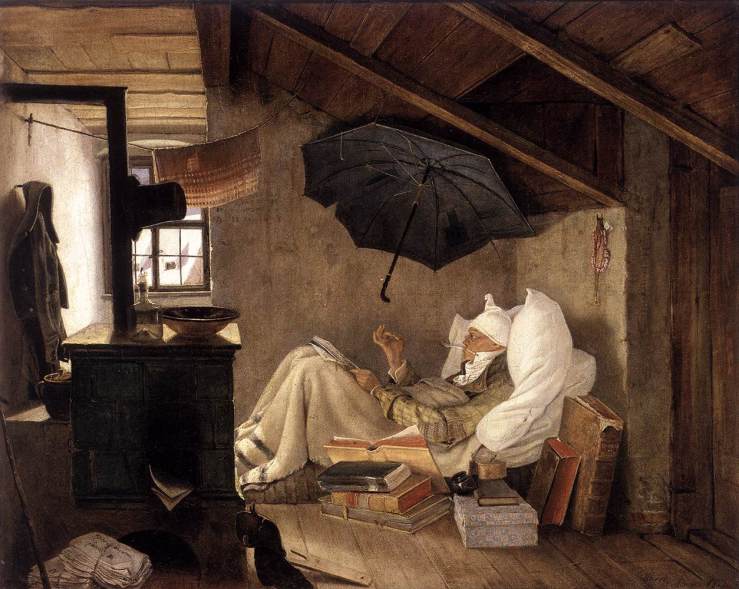
The Poor Poet — Carl Spitzweg

the-poor-poet-1837

Naked — Mike Leigh (Full Film)

“In Honor of Friendship” — Nietzsche

Capture

Benjamin Black’s Vengeance (Book Acquired, 3.06.2013)

20130308-110039.jpg

Vengeance, the latest in Benjamin Black’s Quirke series. From Janet Maslin’s New York Times review last year:

Vengeance” once again leads Quirke into his favorite kind of trouble: “yet another morass of human cupidity and deceit,” involving the deaths of powerful men and the foxy insolence of their glamorous widows. It breaks no new ground.

But why should Benjamin Black tamper with a winning formula? The crimes aren’t graphic or even terribly central. And the detecting questions don’t count for much. The books are far more notable for malaise, atmospherics, sexual chemistry and vast amounts of swirling tobacco smoke and mind-muddling alcohol, without which justice could apparently never prevail.

Vengeance is new in trade paperback from Picador.


Against the Day — Luc Tuymans

“On Being Idle” — Jerome K. Jerome

“On Being Idle” by Jerome K. Jerome

Now, this is a subject on which I flatter myself I really am au fait. The gentleman who, when I was young, bathed me at wisdom’s font for nine guineas a term—no extras—used to say he never knew a boy who could do less work in more time; and I remember my poor grandmother once incidentally observing, in the course of an instruction upon the use of the Prayer-book, that it was highly improbable that I should ever do much that I ought not to do, but that she felt convinced beyond a doubt that I should leave undone pretty well everything that I ought to do.

I am afraid I have somewhat belied half the dear old lady’s prophecy. Heaven help me! I have done a good many things that I ought not to have done, in spite of my laziness. But I have fully confirmed the accuracy of her judgment so far as neglecting much that I ought not to have neglected is concerned. Idling always has been my strong point. I take no credit to myself in the matter—it is a gift. Few possess it. There are plenty of lazy people and plenty of slow-coaches, but a genuine idler is a rarity. He is not a man who slouches about with his hands in his pockets. On the contrary, his most startling characteristic is that he is always intensely busy.

It is impossible to enjoy idling thoroughly unless one has plenty of work to do. There is no fun in doing nothing when you have nothing to do. Wasting time is merely an occupation then, and a most exhausting one. Idleness, like kisses, to be sweet must be stolen. Continue reading ““On Being Idle” — Jerome K. Jerome”

Cubby Controller — David Jien

David_Jien_Cubby_Controller_2012_2097_412

Gates of Heaven — Errol Morris (Full Documentary)

“Witch Wife” — Edna St. Vincent Millay

witchwife

Self-Portrait in the Green Bugatti — Tamara de Lempicka

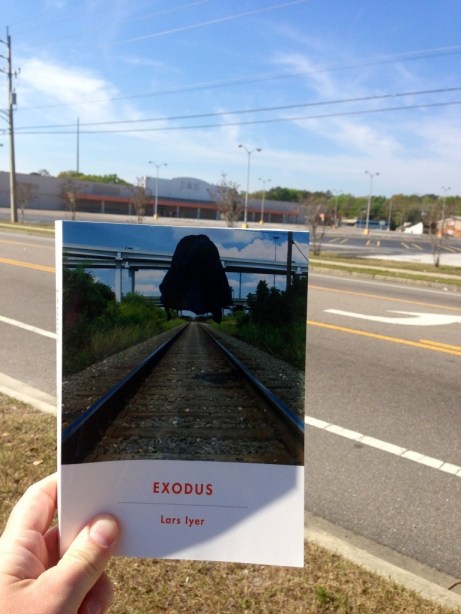
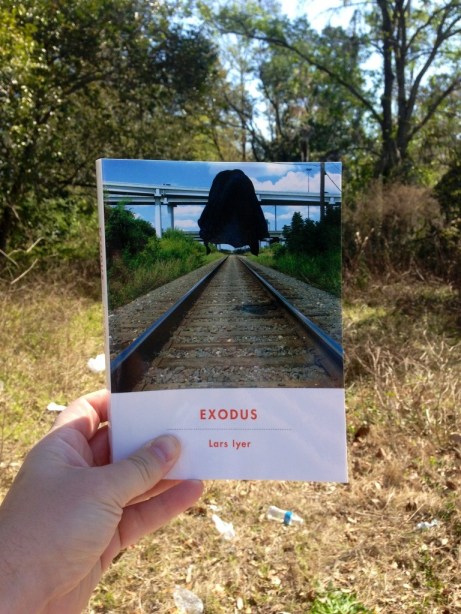
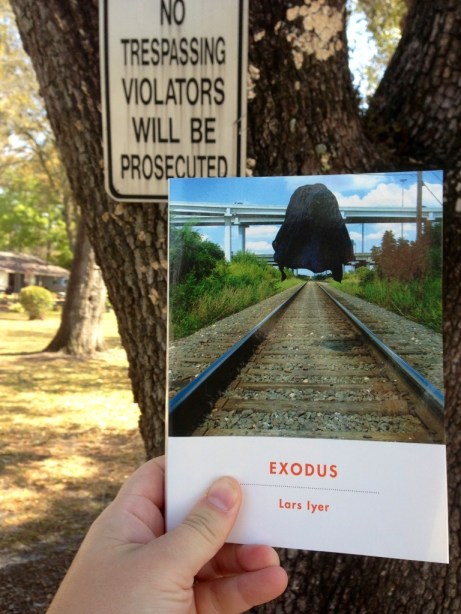
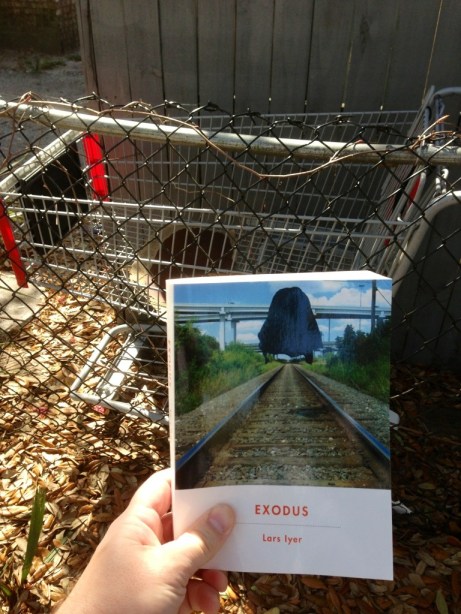
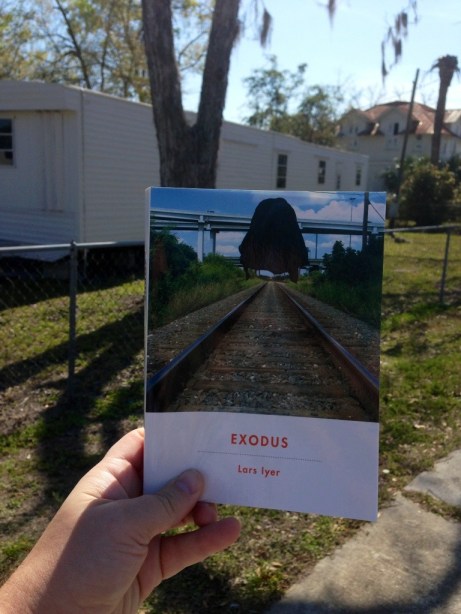
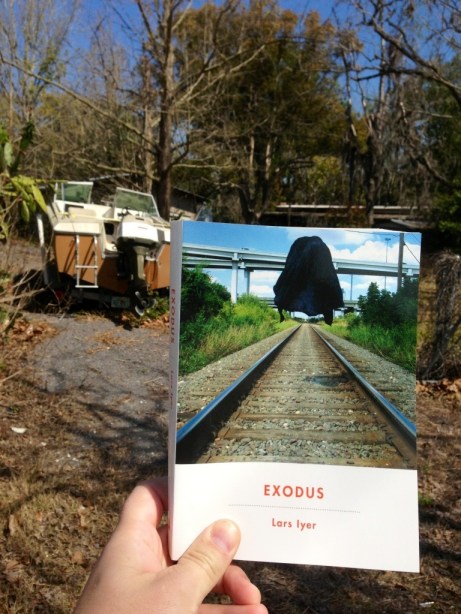
This Is Not a Review of Lars Iyer’s Exodus

20130309-113841.jpg
Exodus with Trash and Sticks
20130309-113851.jpg
Exodus with Stream
20130309-113900.jpg
Exodus with Abandoned Kmart
20130309-113937.jpg
Exodus with Empty Patriotic Chairs Facing Little League Baseball Game
20130309-114003.jpg
Exodus with Empty Lot with Litter
20130309-114013.jpg
Exodus with Canadian Geese and Retention Pond
20130309-114024.jpg
Exodus with No Trespassing Sign
20130309-114035.jpg
Exodus with Stray Shopping Cart Behind Dumpster
20130309-114047.jpg
Exodus with Immobile Mobile Home
20130309-114100.jpg
Exodus with Boat
20130309-114110.jpg
Exodus with Cacti
20130309-114126.jpg
Exodus with Clapboard Church

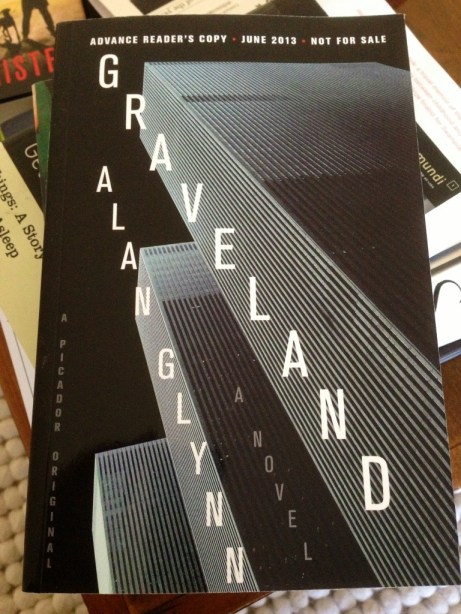
Graveland (Book Acquired, 2.28.2013)

20130308-110013.jpg

Graveland, a thriller from Alan Glynn, comes out this summer. Here’s publisher Picador’s blurb:

On a bright Saturday morning, a Wall Street investment banker is shot dead while jogging in Central Park. Later that same night, one of the savviest hedge-fund managers in the city is gunned down outside a restaurant. Are these killings a coordinated terrorist attack, or just a coincidence? Investigative journalist Ellen Dorsey has a hunch they’re neither, and her obsessive attention to detail leads her to an unexpected conclusion. Days later, when an attempt is made on the life of another CEO, the story blows wide open—and Ellen’s theory is confirmed. Racing to stay ahead of the curve, she soon encounters Frank Bishop, a recession-hit architect, whose daughter’s disappearance is tied to the murders.

Set deep in a shadow world of crooked business deals and radical politics, Alan Glynn’s Graveland is a mind-blowing thriller.

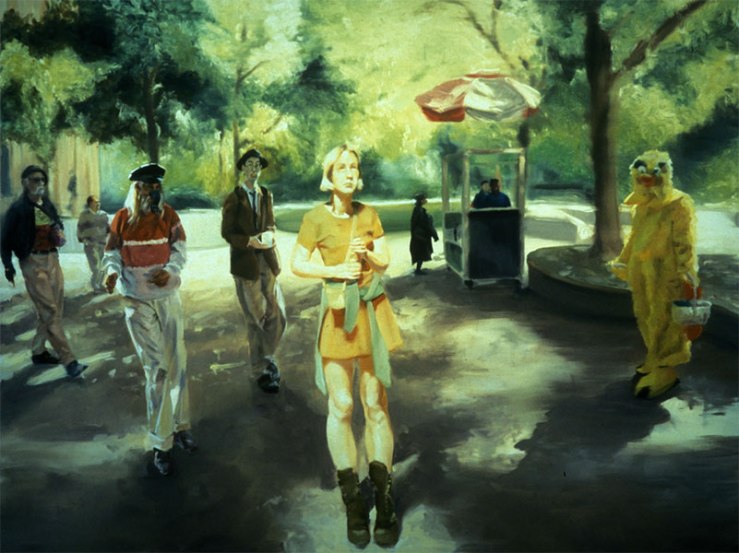
So She Moved into the Light — Eric Fischl

so-she-moved-into-the-light