Morning Sunshine — Karoly Ferenczy

Portrait of Franz Kafka — Carl Köhler

A Wrecked Sugar Refinery — John Singer Sargent

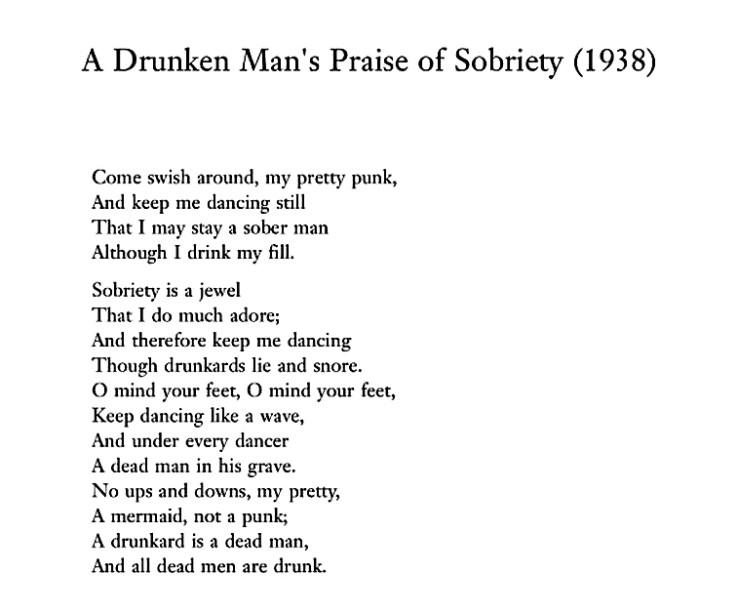
“A Drunken Man’s Praise Of Sobriety” — W.B. Yeats

yeats

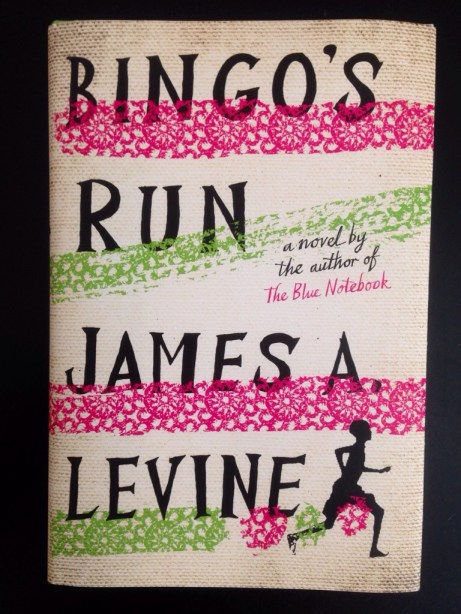
Bingo’s Run (Book Acquired, 12.16.2013)

20131219-100419.jpg

Bingo’s Run by James A. Levine is new in hardback from Random House in January of 2014. Their blurb:

Meet Bingo, the greatest drug runner in the slums of Kibera, Nairobi, and maybe the world. A teenage grifter, often mistaken for a younger boy, he faithfully serves Wolf, the drug lord of Kibera. Bingo spends his days throwing rocks at Krazi Hari, the prophet of Kibera’s garbage mound, “lipping” safari tourists of their cash, and hanging out with his best friend, Slo-George, a taciturn fellow whose girth is a mystery to Bingo in a place where there is never enough food. Bingo earns his keep by running “white” to a host of clients, including Thomas Hunsa, a reclusive artist whose paintings, rooted in African tradition, move him. But when Bingo witnesses a drug-related murder and Wolf sends him to an orphanage for “protection,” Bingo’s life changes and he learns that life itself is the “run.”

A modern trickster tale that draws on African folklore, Bingo’s Run is a wildly original, often very funny, and always moving story of a boy alone in a corrupt and dangerous world who must depend on his wits and inner resources to survive

Five from Félix Fénéon

five

Michelangelo’s Grocery List

ACI67584

Portrait of Félix Fénéon — Paul Signac

Bookworm’s Michael Silverblatt with William Gass (1998)

“The Poem That Took The Place Of A Mountain” — Wallace Stevens

“The Poem That Took The Place Of A Mountain” by Wallace Stevens

There it was, word for word,
The poem that took the place of a mountain.

He breathed its oxygen,
Even when the book lay turned in the dust of his table.

It reminded him how he had needed
A place to go to in his own direction,

How he had recomposed the pines,
Shifted the rocks and picked his way among clouds,

For the outlook that would be right,
Where he would be complete in an unexplained completion:

The exact rock where his inexactness
Would discover, at last, the view toward which they had edged,

Where he could lie and, gazing down at the sea,
Recognize his unique and solitary home.


Hotel by a Railroad — Edward Hopper

The Firebird — Ivan Bilibin

“To find a lost father” (Donald Barthelme)

To find a lost father: The first problem in finding a lost father is to lose him, decisively. Often he will wander away from home and lose himself. Often he will remain at home but still be “lost” in every true sense, locked away in an upper room, or in a workshop, or in the contemplation of beauty, or in the contemplation of a secret life. He may, every evening, pick up his gold-headed cane, wrap himself in his cloak, and depart, leaving behind, on the coffee table, a sealed laundry bag in which there is an address at which he may be reached, in case of war. War, as is well known, is a place at which many fathers are lost, sometimes temporarily, sometimes forever. Fathers are frequently lost on expeditions of various kinds (the journey to the interior). The five best places to seek this kind of lost father are Nepal, Rupert’s Land, Mount Elbrus, Paris, and the agora. The five kinds of vegetation in which fathers most often lose themselves are needle-leaved forest, broad-leaved forest mainly evergreen, broad-leaved forest mainly deciduous, mixed needle-leaved and broad-leaved forest, and tundra. The five kinds of things fathers were wearing when last seen are caftans, bush jackets, parkas, Confederate gray, and ordinary business suits. Armed with these clues then, you may place an advertisement in the newspaper: Lost, in Paris, on or about February 24, a broad-leaf-loving father, 6’ 2”, wearing a blue caftan, may be armed and dangerous, we don’t know, answers to the name Old Hickory. Reward. Having completed this futile exercise, you are then free to think about what is really important. Do you really want to find this father? What if, when you find him, he speaks to you in the same tone he used before he lost himself? Will he again place nails in your mother, in her elbows and back of the knee? Remember the javelin. Have you any reason to believe that it will not, once again, flash through the seven-o’clock-in-the-evening air? What we are attempting to determine is simple: Under what conditions do you wish to live? Yes, he “nervously twiddles the stem of his wineglass.” Do you wish to watch him do so on into the last quarter of the present century? I don’t think so. Let him take those mannerisms, and what they portend, to Borneo, they will be new to Borneo. Perhaps in Borneo he will also nervously twiddle the stem of, etc., but he will not be brave enough to manufacture, there the explosion of which this is a sign. Throwing the roast through the mirror. Thrusting a belch big as an opened umbrella into the middle of something someone else is trying to say. Beating you, either with a wet, knotted rawhide, or with an ordinary belt. Ignore that empty chair at the head of the table. Give thanks.

From Donald Barthelme’s novel The Dead Father.

Blue Christmas, A Video Essay from The Criterion Collection

Death Listened to the Nightingale — Edmund Dulac

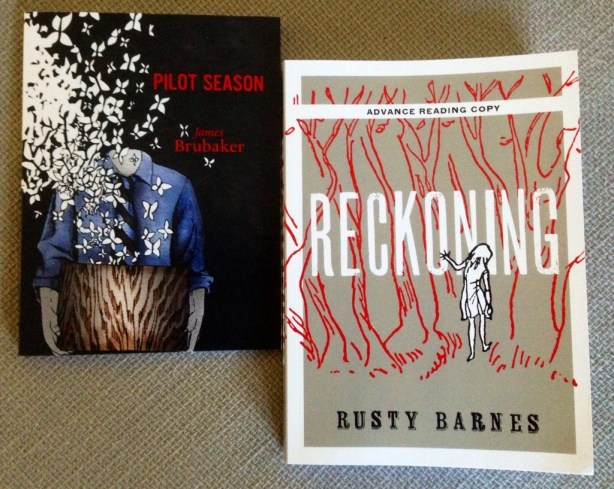
New From Indie Press Sunnyoutside: Reckoning and Pilot Season (Books Acquired, 12.11.2013)

20131219-100353.jpg

Two new handsome fellas from indie press Sunnyoutside:

James Brubaker’s Pilot Season, which I read over the past few days, is a fun little volume that is better than its thin premise suggests (blurb from the back):

Pilot Season opens with a television executive attempting to save his floundering network’s fall roster. As his own anxieties, disappointments, and alienation from his own family play out through a steady stream of absurd television pilots, we are treated to sardonic parodies of the contemporary reality show-obsessed media culture. While critiquing the cruelty and exploration of the medium, Pilot Season also manages to laud the human spirit’s ability to trump our flaws.

Pilot Season shares a strong overlap with Matthew Winston’s This Coming Fall; the central conceit of that story is a voice that blithely announces a schedule of dystopian TV shows. (I read the books more or less at the same time—both are slim enough to fit in a pocket and can be discreetly absorbed during meetings, for example).

Rusty Barnes’s Reckoning is Appalachian noir propelled by dialogue, sex, and violence. Blurb from the back:

Richard Logan begins his summer day as any fourteen-year-old might: working at a farm job bringing in hay, avoiding his hard-headed father, and hanging out with his friends. When he stumbles onto an unconscious woman in the woods, he has no idea that the process of helping her will lead him into the darkness o fa the deeply held deceits of his rural Appalachian town. Both brutal and beautiful, Reckoning shows the seams and limits of family love and community tolerance while Richard discovers where manhood truly lies.

Reckoning and Pilot Season will be released in Spring of 2014.


“The Ogre of Rashomon”

“The Ogre of Rashomon”

Retold by Yei Theodora Ozaki

Long, long ago in Kyoto, the people of the city were terrified by accounts of a dreadful ogre, who, it was said, haunted the Gate of Rashomon at twilight and seized whoever passed by. The missing victims were never seen again, so it was whispered that the ogre was a horrible cannibal, who not only killed the unhappy victims but ate them also. Now everybody in the town and neighborhood was in great fear, and no one durst venture out after sunset near the Gate of Rashomon.

Now at this time there lived in Kyoto a general named Raiko, who had made himself famous for his brave deeds. Some time before this he made the country ring with his name, for he had attacked Oeyama, where a band of ogres lived with their chief, who instead of wine drank the blood of human beings. He had routed them all and cut off the head of the chief monster.

This brave warrior was always followed by a band of faithful knights. In this band there were five knights of great valor. One evening as the five knights sat at a feast quaffing SAKE in their rice bowls and eating all kinds of fish, raw, and stewed, and broiled, and toasting each other’s healths and exploits, the first knight, Hojo, said to the others:

“Have you all heard the rumor that every evening after sunset there comes an ogre to the Gate of Rashomon, and that he seizes all who pass by?”

The second knight, Watanabe, answered him, saying:

“Do not talk such nonsense! All the ogres were killed by our chief Raiko at Oeyama! It cannot be true, because even if any ogres did escape from that great killing they would not dare to show themselves in this city, for they know that our brave master would at once attack them if he knew that any of them were still alive!”

“Then do you disbelieve what I say, and think that I am telling you a falsehood?” Continue reading ““The Ogre of Rashomon””