Watch The Lives of Brian, A Documentary About Flann O’Brien

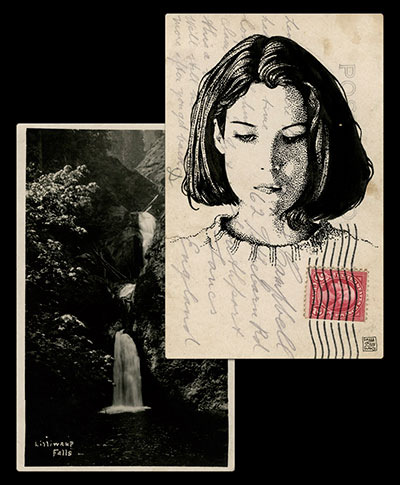
Paul Willoughby’s Twin Peaks Postcards

willoughby-audrey willoughby-donna willoughby-jocelyn willoughby-laura

From the Twin Peaks 20th Anniversary Art Exhibition.

List with No Name #46

  1. Flann O’Brien
  2. Mark Twain
  3. Daniel Defoe
  4. Iceberg Slim
  5. Edith Van Dyne
  6. Acton Bell
  7. Victoria Lucas
  8. Æ
  9. H.D.
  10. S.E. Hinton
  11. George Eliot
  12. George Sand
  13. George Orwell
  14. Toni Morrison
  15. Anne Rice
  16. Ford Madox Ford
  17. Robert Galbraith
  18. Paul Celan
  19. Boz
  20. Saki
  21. Stendahl
  22. Novalis
  23. Voltaire
  24. Lewis Carroll
  25. Franklin W. Dixon
  26. Lemony Snickett
  27. O. Henry
  28. Richard Bachman
  29. John le Carré
  30. Italo Svevo

Spring in Zimme — Emil Nolde

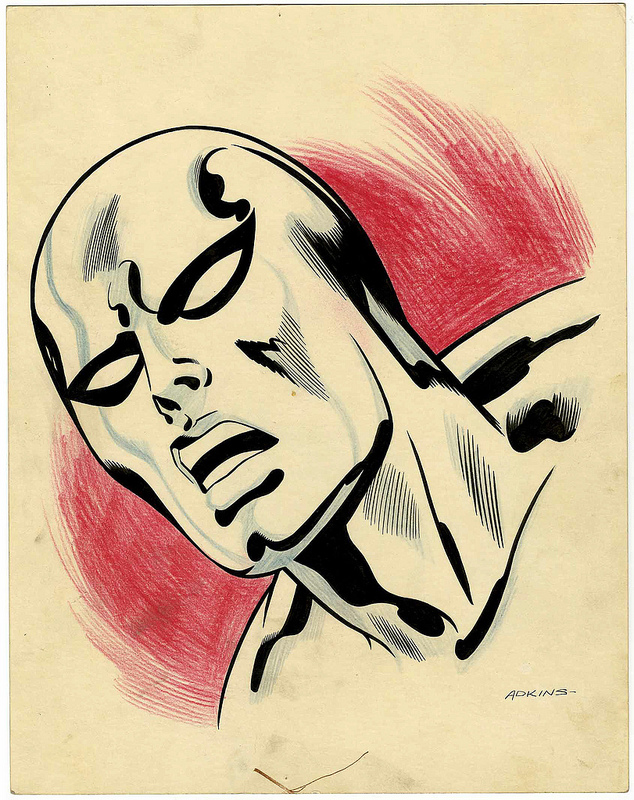
Silver Surfer — Dan Adkins

ssda

“All art constantly aspires towards the condition of music”

“The Sea” — Roberto Bolaño

20140607-153139-55899001.jpg

Americana — Charles Scheeler

To paint a rag-picker (Van Gogh)

Apparently nothing is more simple than to paint a rag-picker, a beggar or any other kind of workman; but there are no subjects which are so difficult to paint as these everyday figures. I do not think there is a single academy where one can learn to draw or paint a man digging or sowing seed, a woman hanging a pot over the fire or doing needlework. But in every city, however insignificant it may be, there is an academy with a whole selection of models for historical, Arabian, and in short, all kinds of figures, which do not exist in the real everyday world of Europe.

From a letter Vincent van Gogh wrote to his brother.

Posted in Art

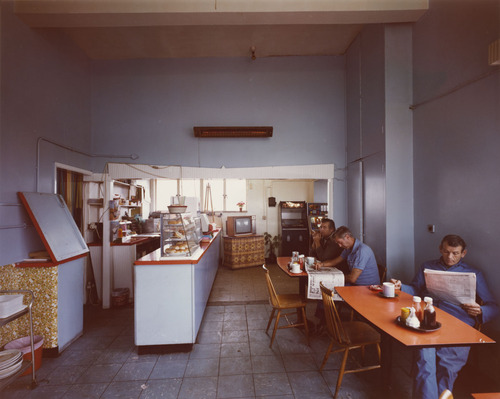
Interior, John’s Cafe, Sandy, Bedfordshire — Paul Graham

CRI_221412

The Ruling Class (Full Film)

Water — Charles Sheeler

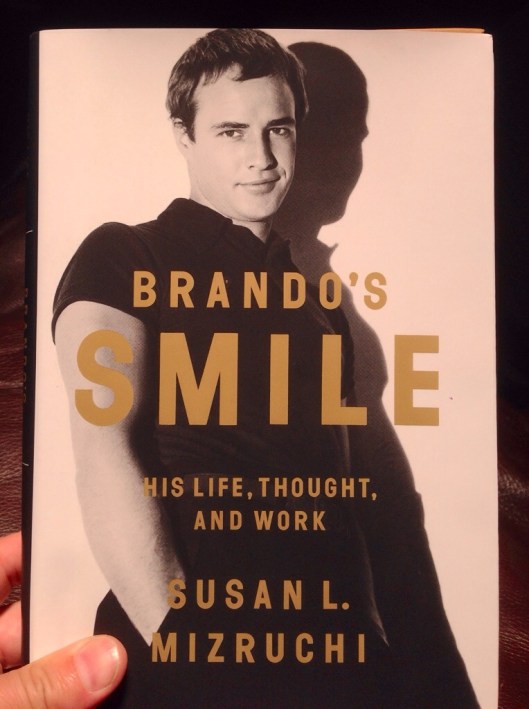
Brando’s Smile (Book Acquired, 6.02.2014)

20140604-130723-47243641.jpg

Brando’s Smile, a biography by Susan L. Mizruchi. Publisher’s blurb:

Susan Mizruchi presents the Marlon Brando you’ve never met.

When people think about Marlon Brando they think of the movie star; the hunk; the scandals. Susan L. Mizruchi finds the Brando others have missed: the man who collected four thousand books; the man who rewrote scripts, trimming his lines to make them sharper; the man who consciously used his body and employed the objects around him to create believable characters; the man who used his fame to foster Indian and civil rights. From Brando’s letters, audiotapes, and annotated screenplays and books—many never before available—Mizruchi gives us a complex person whose intelligence belies the high-school dropout. She shows how Brando’s embrace of foreign cultures and outsiders led to brilliant performances in unusual roles—a gay man, an Asian, and a German soldier—to foster empathy on a global scale and to test himself. In portraying a fuller Brando, Mizruchi portrays an even more fascinating man.

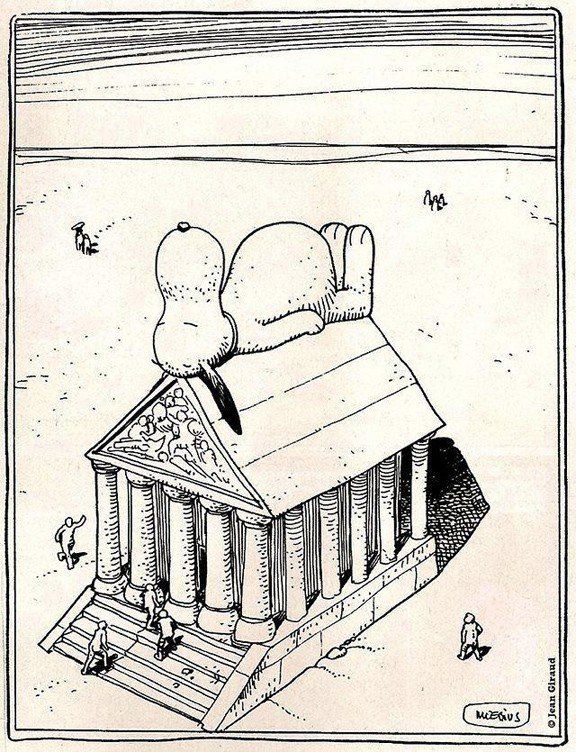
Snoopy — Moebius

snoopy

Three Girls — Egon Schiele

“Smoking as a Fine Art” — A. A. Milne

“Smoking as a Fine Art”

by

A. A. Milne

My first introduction to Lady Nicotine was at the innocent age of eight, when, finding a small piece of somebody else’s tobacco lying unclaimed on the ground, I decided to experiment with it. Numerous desert island stories had told me that the pangs of hunger could be allayed by chewing tobacco; it was thus that the hero staved off death before discovering the bread-fruit tree. Every right-minded boy of eight hopes to be shipwrecked one day, and it was proper that I should find out for myself whether my authorities could be trusted in this matter. So I chewed tobacco. In the sense that I certainly did not desire food for some time afterwards, my experience justified the authorities, but I felt at the time that it was not so much for staving off death as for reconciling oneself to it that tobacco-chewing was to be recommended. I have never practised it since.

At eighteen I went to Cambridge, and bought two pipes in a case. In those days Greek was compulsory, but not more so than two pipes in a case. One of the pipes had an amber stem and the other a vulcanite stem, and both of them had silver belts. That also was compulsory. Having bought them, one was free to smoke cigarettes. However, at the end of my first year I got to work seriously on a shilling briar, and I have smoked that, or something like it, ever since. Continue reading ““Smoking as a Fine Art” — A. A. Milne”

Woman Reading — Dana Levin