Apparent life was a succession of dull habits in which he did what was asked automatically, only resenting demands to show interest. His energy had withdrawn into imaginary worlds and he had none to waste on reality.
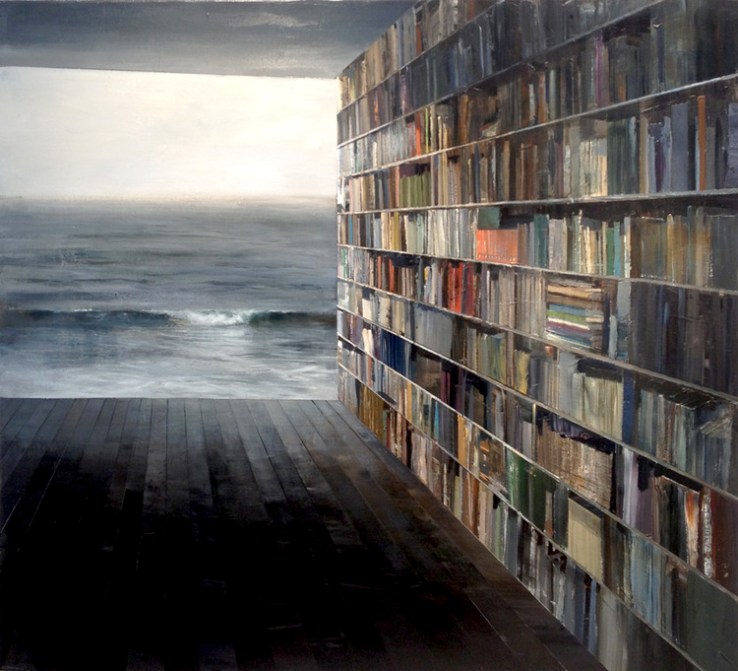
A small fertile land lay hidden in a crater made by an atomic explosion. Thaw was Prime Minister of it. He lived in an old mansion among lawns and clumps of forest on the shore of a loch ornamented with islands. The mansion was spacious, dim and peaceful. The halls were hung with his paintings, the library full of his novels and poems, there were studios and laboratories where the best minds of the day worked whenever they cared to visit him. Outside the sun was warm, bees hummed among flowers and fountains, the season was midway between summer and autumn when the trees showed their matured green and only the maples were crimson. Political work took little of his time, for the people of that country had such confidence in him that he had only to suggest a reform for it to be practised. Indeed, his main problem was to keep the land democratic, for he would have been crowned king long before if his socialist principles had not forbidden it. He looked young for a Prime Minister, being a boy in early adolescence; at the same time he had ruled that land for centuries. He was a survivor of the third world war. The poisonous radiations which had killed most of his contemporaries had, by a fluke, given him eternal youth. In two or three centuries of wandering about the shattered earth he had become leader of a small group of people who had come to trust his gentleness and wisdom. He had brought them to the crater, protected by its walls from the envy of unhappier lands, to build a republic where nobody was sick, poor or forced to live by work they hated. Unluckily his country was surrounded by barbaric lands ruled by queens and tyrants who kept plotting to conquer it and were only kept out by his courage and ingenuity. As a result he was often involved in battles, rescues, escapes, fights with monsters in the middle of arenas, and triumphal processions of shocking vulgarity which he only took part in to avoid hurting the feelings of the queens and princesses whose lives and countries he had saved. When these adventures were over he invited the main characters home to stay with him, and since he annexed the plot of every book and film which impressed him the house by the loch was always crowded with the celebrities of many different races, nations and historical phases. In the simplicity of his spacious rooms they were amazed by the quiet friendliness of a way of life more civilized than their own, and they learned the true duties of a ruler by seeing him spend an afternoon drawing the plans of a new reservoir or university. The women guests usually fell in love with him, though some of the more barbaric came to hate him for his friendly indifference, an indifference which clothed a deep shyness. He could only feel near to women when rescuing them, and often envied the villains who could humiliate or torture them. His position made it impossible to imagine doing such things himself. Yet when walking home from school or public library, these adventures filled his head and chest with such intoxicating emotions that he had to run hard to be relieved of them and often found he had come through several streets without remembering anything of the people, houses or traffic.
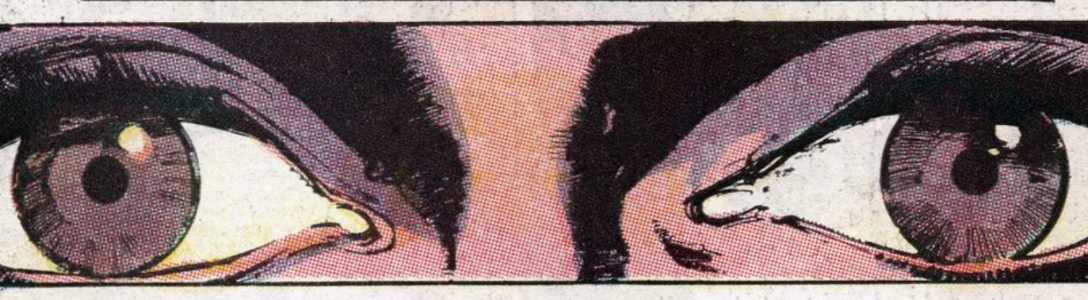
His other imaginary world was enjoyed in the genitals. It was a secret gold mine in Arizona which a gang of bandits worked by slave labour. Thaw was bandit chief and spent his time inventing and practising tortures for the slaves. The mine got outside stimulus, not from the shelves of the library but, cryptically, from American comics. He never bought these, and had courage to look at their enticing covers only when the shop contained something else he could pretend to examine, but he sometimes borrowed one at school and in the privacy of the back bedroom copied out pictures of men being whipped and branded. He kept these pictures between pages of Carlyle’s French Revolution, a book no one else was likely to open.
From Alasdair Gray’s novel Lanark.





 Biblioklept