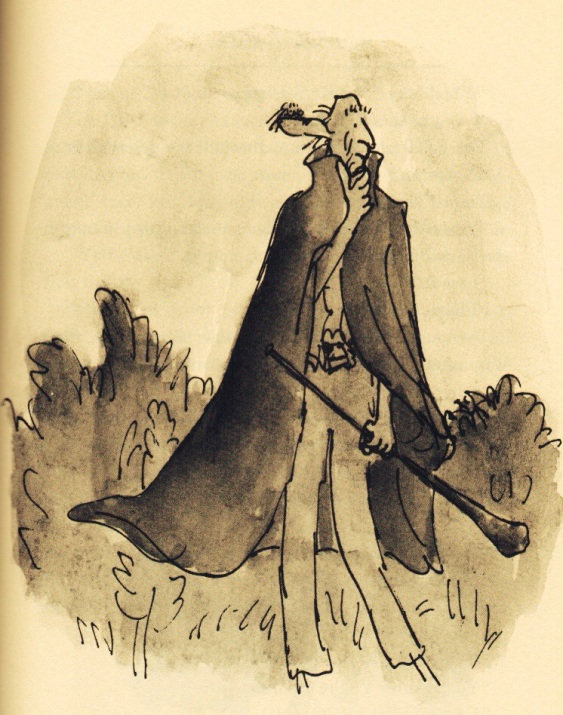
Roald Dahl’s 1982 children’s classic The BFG begins with a dedication to the author’s daughter: “For Olivia: 20th April 1955 — 17th November 1962.”
If I had noticed the dedication when I first read The BFG as a child, I certainly didn’t think about it then. The slim sad range of those dates would have meant nothing to me, eager as I was to dig into a book about child-eating giants, secure in my own childish immortality. However, when I started reading the book with my daughter, the dedication howled out to me, thoroughly coloring the lens through which I read.
Had Olivia Twenty Dahl not died from measles encephalitis at only seven, had she continued to live to be alive now, she would be approaching her sixtieth birthday. But because she died as a seven-year-old little girl, she remained a seven-year-old little girl to me, the reader, who saw her spirit under every page.
I believe she remained a seven-year-old little girl for Dahl as well—at least in the imaginative world of The BFG where she is recast as the hero Sophie. Reading The BFG, it was impossible for me not to immediately connect Sophie to Olivia, those names with their Greek roots and their long O‘s. It was also impossible for me not to connect these two girls to my own daughter Zoe, who is also seven.
(Parenthetically, I’ll admit that biographical interpretation of literature is often a terrible practice—especially when combined with a touch of reader-response criticism—and that what I am doing here is not something I think advisable, let alone commendable. And yet the central affective power for me in reading The BFG—as an adult to my little girl—rests in my inescapable intuition that Dahl wrote the book to make his daughter live again, to live forever). Continue reading “The BFG, Roald Dahl’s Love Letter to His Lost Daughter” →


 Biblioklept