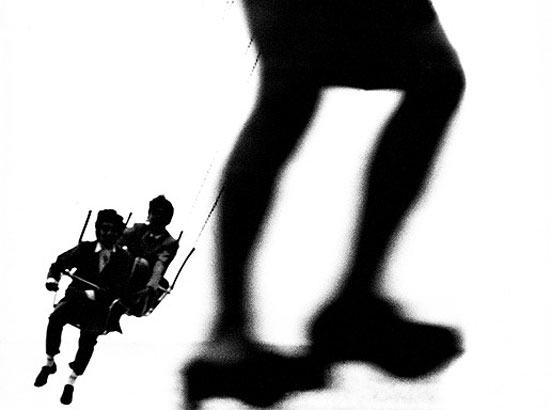
Past — Mario Giacomelli

03

The book club discusses Cormac McCarthy’s All the Pretty Horses (Kicking and Screaming)

Bride of the Wind — Oskar Kokoschka

“Pathos” — Alice Meynell

“Pathos”

by

Alice Meynell

A fugitive writer wrote not long ago on the fugitive page of a magazine: “For our part, the drunken tinker [Christopher Sly] is the most real personage of the piece, and not without some hints of the pathos that is worked out more fully, though by different ways, in Bottom and Malvolio.”  Has it indeed come to this?  Have the Zeitgeist and the Weltschmerz or their yet later equivalents, compared with which “le spleen” of the French Byronic age was gay, done so much for us?  Is there to be no laughter left in literature free from the preoccupation of a sham real-life?  So it would seem.  Even what the great master has not shown us in his work, that your critic convinced of pathos is resolved to see in it.  By the penetration of his intrusive sympathy he will come at it.  It is of little use now to explain Snug the joiner to the audience: why, it is precisely Snug who stirs their emotions so painfully.  Not the lion; they can make shift to see through that: but the Snug within, the human Snug.  And Master Shallow has the Weltschmerz in that latent form which is the more appealing; and discouraging questions arise as to the end of old Double; and Harpagon is the tragic figure of Monomania; and as to Argan, ah, what havoc in “les entrailles de Monsieur” must have been wrought by those prescriptions!  Et patatietpatata. Continue reading ““Pathos” — Alice Meynell”

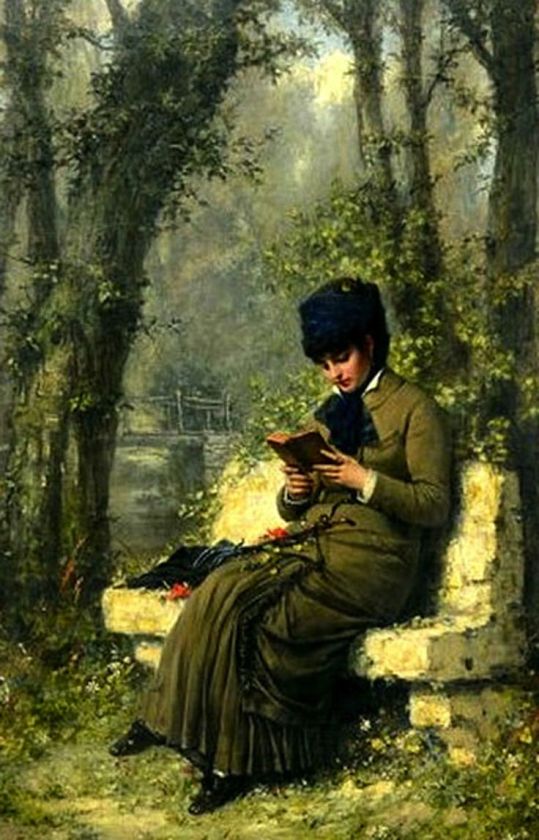
Woman Reading on a Bench — Henri Bouchet-Doumenq

femme lisant

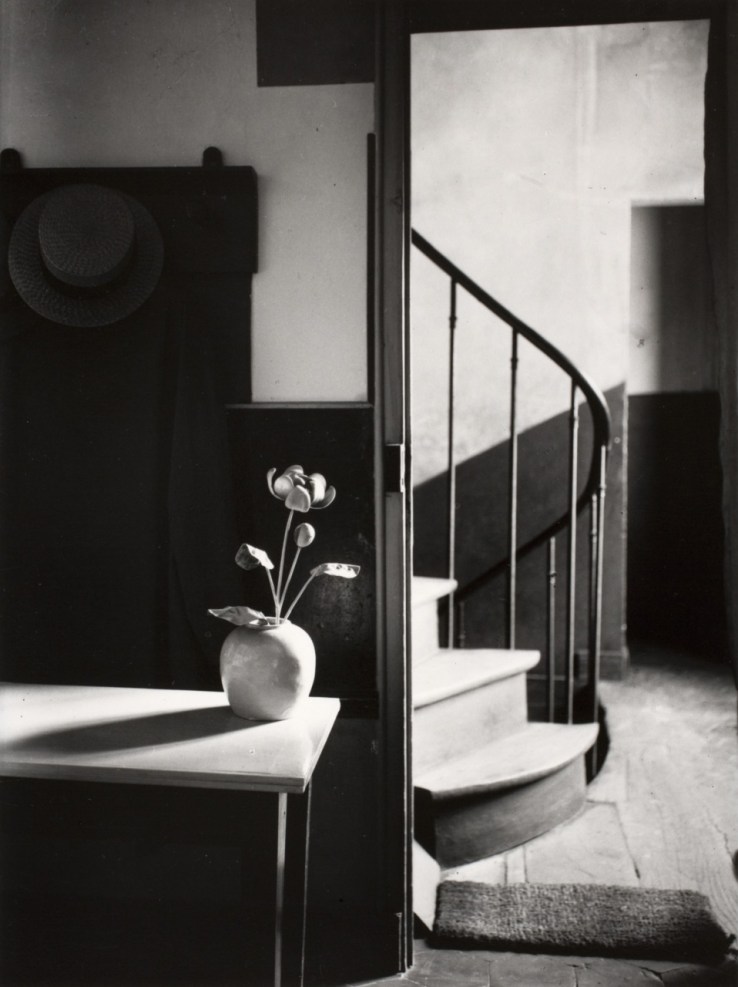
At Mondrian’s — André Kertész

kertesz

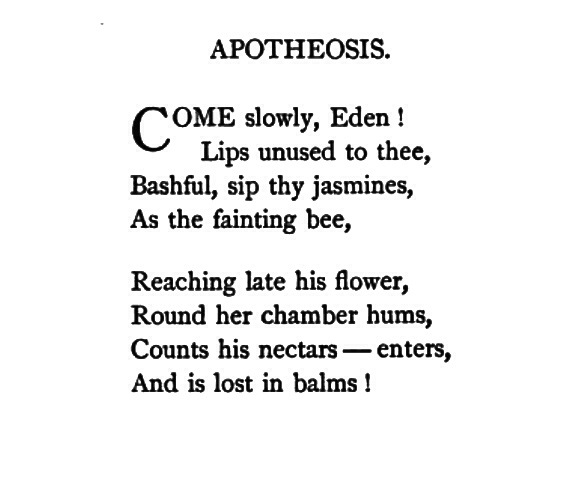
“Come slowly, Eden!” — Emily Dickinson

20140715-165144-60704673.jpg

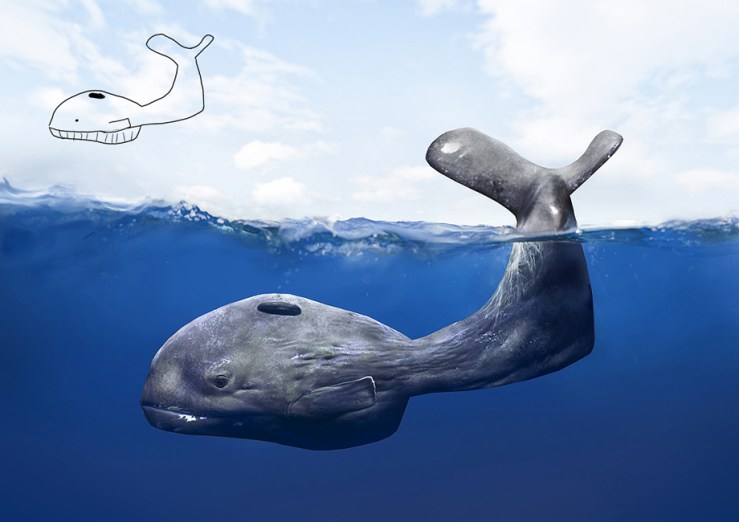
Whale — Telmo Pieper

WHALE-finnsmall

Telmo Pieper’s digital paintings, based on sketches he did when he was four.

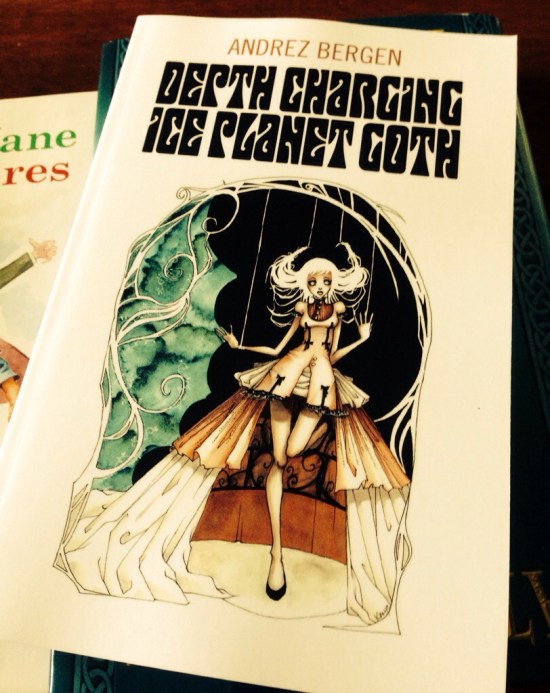
Depth Charging Ice Planet Goth (Book Acquired, 7.01.2014)

20140707-150323-54203008.jpg

Andrez Bergen’s Depth Charging Ice Planet Goth looks like a strange genre-bender; it’s new from Perfect Edge. Blurb:

She’s a disturbed, quiet girl, but Mina wants to do some good out there. It’s just that the world gets in the way. This is Australia in the 1980s, a haven for goths and loners, where a coming-of-age story can only veer into a murder mystery.

Disappointment — Stiina Saaristo

STIINA_SAARISTO_A_DRAWING_ON_DISAPPOINTMENT_2012_netti

It is difficult in life to be good, and difficult in art to portray goodness (Iris Murdoch)

INTERVIEWER

You’ve said that “one constantly takes prototypes from literature who may actually influence one’s conduct.” Could you give specific examples?

MURDOCH

Did I say that? Good heavens, I can’t remember the context. Of course, one feels affection for, or identifies with, certain fictional characters. My two favorites are Achilles and Mr. Knightley. This shows the difficulty of thinking of characters who might influence one. I could reflect upon characters in Dickens, Dostoyevsky, Tolstoy; these writers particularly come to mind—wise moralistic writers who portray the complexity of morality and the difficulty of being good.

Plato remarks in The Republic that bad characters are volatile and interesting, whereas good characters are dull and always the same. This certainly indicates a literary problem. It is difficult in life to be good, and difficult in art to portray goodness. Perhaps we don’t know much about goodness. Attractive bad characters in fiction may corrupt people, who think, So that’s OK. Inspiration from good characters may be rarer and harder, yet Alyosha in The Brothers Karamazov and the grandmother in Proust’s novel exist. I think one is influenced by the whole moral atmosphere of literary works, just as we are influenced by Shakespeare, a great exemplar for the novelist. In the most effortless manner he portrays moral dilemmas, good and evil, and the differences and the struggle between them. I think he is a deeply religious writer. He doesn’t portray religion directly in the plays, but it is certainly there, a sense of the spiritual, of goodness, of self-sacrifice, of reconciliation, and of forgiveness. I think that is the absolutely prime example of how we ought to tell a story—invent characters and convey something dramatic, which at the same time has deep spiritual significance.

From Irish Murdoch’s Paris Review interview.

The End of the Story — Marcus Stone

marcus

The Unicorns Came Down to the Sea — Kay Sage

Ten Realms Within the Body — Utagawa Kuniteru

Tainai jukkai no zu

INLAND EMPIRE — David Lynch

(I reviewed it seven years ago).

“Absinthe” — William T. Vollmann

Russia’s tales clang from the tongues of bells; and her cannons point outward. Ghosts guard the tall red notches of the Kremlin Wall. In Petersburg, the ice-clad trees of the Summer Garden aim at the stars; if necessary, every branch can be converted into an antiaircraft gun.

The largest cannon in the world frightens off Germans with its lion-face. A red star upon a tapering greenish pedestal shines ready to detonate invaders.

Below the fourteen escalators of the Congress of Nationalities, snow howls through vast, shining squares, but stills when golden domes like helmets of soldiers begin to nod and clang. (In Russia they add gold and silver to their bronze for finer sound.)

Onion-domes bristle with crosses, and within each gilded church, haloed saints stand ready to leap off the golden walls and fight. Napoleon once burned the Yellow Arsenal, but saints rushed forth from their metal-topped tombs; and afterward the arsenal’s white arched windows grew back. Then the girls decorated everything with green and yellow tiles; and electric-colored light striped the Moskva River, which is lined with regular snow-walls and tapering towers.

Read the rest of William T. Vollmann’s “Absinthe” at VICE.

The Mirror — Fairfield Porter