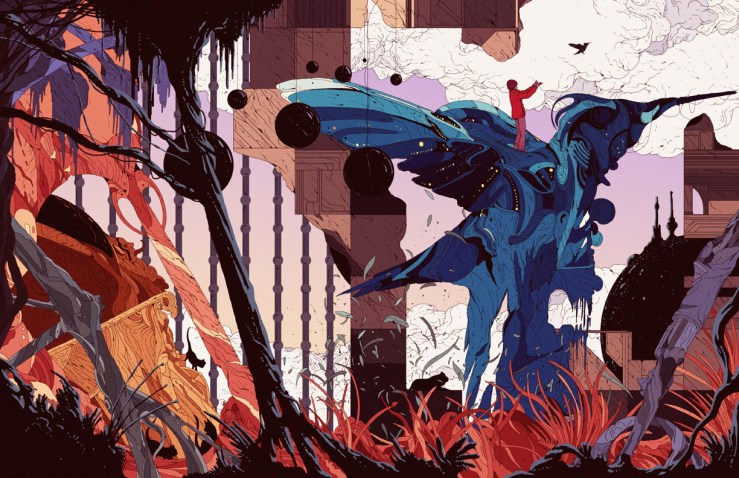
A drinking game called Prince (Gravity’s Rainbow)

One day Slothrop gets a chance to check this out. Seems Dodson-Truck is a chess fanatic. Down in the bar one afternoon he gets around to asking Slothrop if he plays.
“Nope,” lying, “not even checkers.”
“Damn. I’ve hardly had time till now for a good game.”
“I do know a game,” has something of Tantivy been sheltering inside all this time? “a drinking game, it’s called Prince, maybe the English even invented it, cause you have those princes, right? and we don’t, not that that’s wrong understand, but everybody takes a number, a-and you start off the Prince of Wales has lost his tails, no offense now, the numbers going clockwise around the table, and number two has found them, clockwise from that Prince, or whatever number he wants to call out actually, he, that’s the Prince, six or anything, see, you pick a Prince first, he starts it off, then that number two, or whoever that Prince called, sez, but first he goes, the Prince does, Wales, tails, two sir, after saying that about how that Prince of Wales has lost his tails, and number two answers, not I, sir—”
“Yes yes but—” giving Slothrop a most odd look, “I mean I’m not quite sure I really see, you know, the point to it all. How does one win?”
“Ha! How does one win, indeed. “One doesn’t win,” easing into it, thinking of Tantivy, one small impromptu counter-conspiracy here, “one loses. One by one. Whoever’s left is the winner.”
“It sounds rather negative.”
“Garçon.”


From Thomas Pynchon’s novel Gravity’s Rainbow.

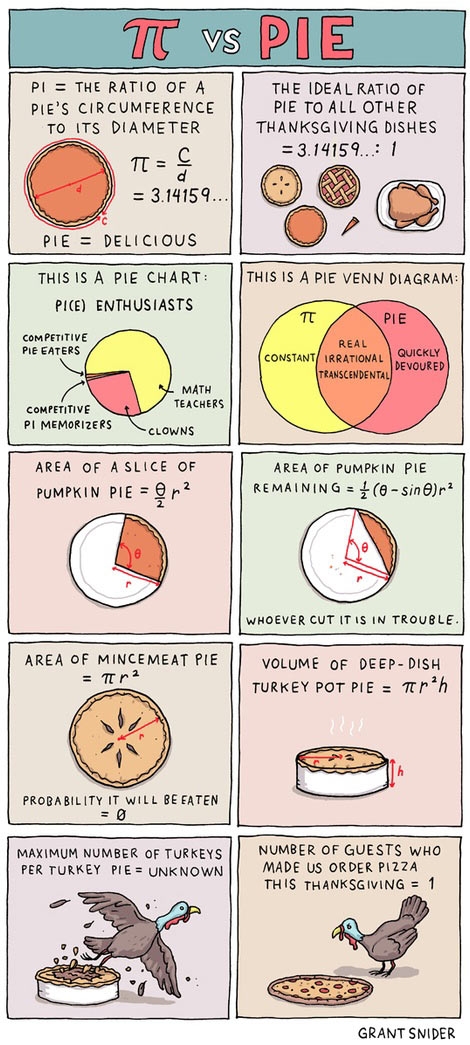
Pi vs. Pie — Grant Snider

4120130019170

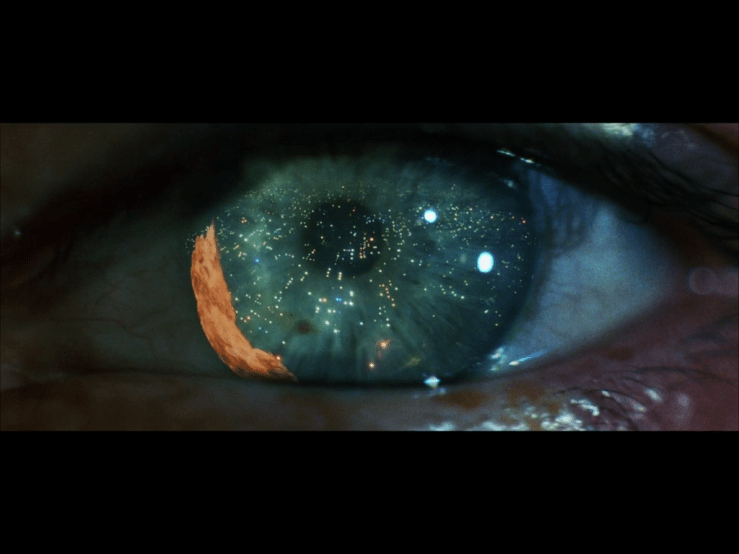
An Excerpt From An Excerpt of Han Kang’s The Vegetarian

I crammed my feet into my recently purchased shoes, which were too narrow and pinched uncomfortably, threw open the front door and ran out. I checked whether the lift was going to go all the way up to the top floor, and then dashed down three flights of stairs. Only once I’d managed to jump on the underground train as it was just about to leave did I have time to take in my appearance, reflected in the dark carriage window. I ran my fingers through my hair, did up my tie, and attempted to smooth out the creases in my shirt. My wife’s unnaturally serene face, her incongruously firm voice, surfaced in my mind.

I had a dream—she’d said that twice now. Beyond the window, in the dark tunnel, her face flitted by—her face, but unfamiliar, as though I was seeing it for the first time. However, as I had thirty minutes in which to concoct an excuse for my client that would justify my lateness, as well as putting together a draft proposal for today’s meeting, there was no time for mulling over the strange behavior of my even-stranger wife.

Having said that, I told myself that somehow or other I had to leave the office early today (never mind that in the several months since I’d switched to my new position there hadn’t been a single day where I’d got off before midnight), and steeled myself for a confrontation.

Dark woods. No people. The sharp-pointed leaves on the trees, my torn feet. This place, almost remembered, but I’m lost now. Frightened. Cold. Across the frozen ravine, a red barn-like building. Straw matting flapping limp across the door. Roll it up and I’m inside, it’s inside. A

long bamboo stick strung with great blood-red gashes of meat, blood still dripping down. Try to push past but the meat, there’s no end to the meat, and no exit. Blood in my mouth, blood-soaked clothes sucked onto my skin.

Somehow a way out. Running, running through the valley, then suddenly the woods open out. Trees thick with leaves, springtime’s green light. Families picnicking, little children running about, and that smell, that delicious smell. Almost painfully vivid. The babbling stream, people spreading out rush mats to sit on, snacking on kimbap. Barbecuing meat, the sounds of singing and happy laughter.

But the fear. My clothes still wet with blood. Hide, hide behind the trees. Crouch down, don’t let anybody see. My bloody hands. My bloody mouth. In that barn, what had I done? Pushed that red raw mass into my mouth, felt it squish against my gums, the roof of my mouth, slick with crimson blood.

Chewing on something that felt so real, but couldn’t have been, it couldn’t. My face, the look in my eyes . . . my face, undoubtedly, but never seen before. Or no, not mine, but so familiar . . . nothing makes sense. Familiar and yet not . . . that vivid, strange, horribly uncannyfeeling.
(via.)

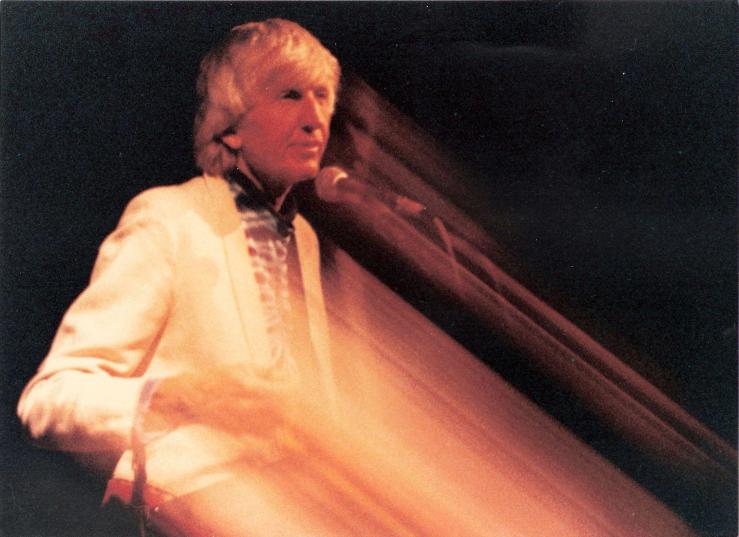
RIP Daevid Allen

Daevid_Allen_12_Selves_Kodak_photo

RIP Daevid Allen, 1938-2015


Man and Woman — Edvard Munch

Boring (John Berryman)

Los Entering the Grave — William Blake

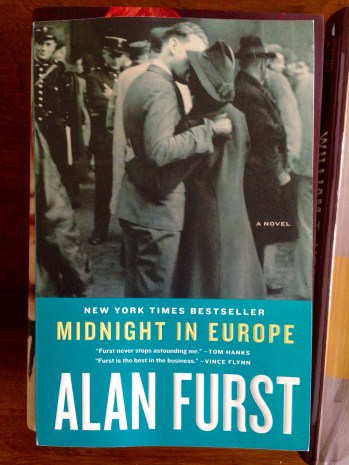
Midnight in Europe (Book acquired, some time in February 2015)

IMG_5139

Alan Furst’s Midnight in Europe is out next week in paperback from Random House. Their blurb:

Paris, 1938. As the shadow of war darkens Europe, democratic forces on the Continent struggle against fascism and communism, while in Spain the war has already begun. Alan Furst, whom Vince Flynn has called “the most talented espionage novelist of our generation,” now gives us a taut, suspenseful, romantic, and richly rendered novel of spies and secret operatives in Paris and New York, in Warsaw and Odessa, on the eve of World War II.

Cristián Ferrar, a brilliant and handsome Spanish émigré, is a lawyer in the Paris office of a prestigious international law firm. Ferrar is approached by the embassy of the Spanish Republic and asked to help a clandestine agency trying desperately to supply weapons to the Republic’s beleaguered army—an effort that puts his life at risk in the battle against fascism.

Joining Ferrar in this mission is a group of unlikely men and women: idealists and gangsters, arms traders and aristocrats and spies. From shady Paris nightclubs to white-shoe New York law firms, from brothels in Istanbul to the dockyards of Poland, Ferrar and his allies battle the secret agents of Hitler and Franco. And what allies they are: there’s Max de Lyon, a former arms merchant now hunted by the Gestapo; the Marquesa Maria Cristina, a beautiful aristocrat with a taste for danger; and the Macedonian Stavros, who grew up “fighting Bulgarian bandits. After that, being a gangster was easy.” Then there is Eileen Moore, the American woman Ferrar could never forget.

In Midnight in Europe, Alan Furst paints a spellbinding portrait of a continent marching into a nightmare—and the heroes and heroines who fought back against the darkness.

“All art constantly aspires towards the condition of a man playing a conch inside a nuclear cooling tower”

Via.

Newton’s Diary — Amy Judd

amy_judd_large_17

Portrait of a Man with an Arrow — Hans Memling

The official lie (Gravity’s Rainbow)

What did Caesar really whisper to his protégé as he fell? Et tu, Brute, the official lie, is about what you’d expect to get from them—it says exactly nothing. The moment of assassination is the moment when power and the ignorance of power come together, with Death as validator. When one speaks to the other then it is not to pass the time of day with et-tu-Brutes. What passes is a truth so terrible that history—at best a conspiracy, not always among gentlemen, to defraud—will never admit it. The truth will be repressed or in ages of particular elegance be disguised as something else. What will Rathenau, past the moment, years into a new otherside existence, have to say about the old dispensation? Probably nothing as incredible as what he might have said just as the shock flashed his mortal nerves, as the Angel swooped in…

From Thomas Pynchon’s novel Gravity’s Rainbow.

I know Leopold Bloom better than I know my own father (Umberto Eco)

It has been said that fictional characters are underdetermined that is, we know only a few of their properties while real individuals are completely determined, and we should be able to predicate of them each of their known attributes. But although this is true from an ontological point of view, from an epistemological one it is exactly the opposite: nobody can assert all the properties of a given individual or of a given species, which are potentially infinite, while the properties of fictional characters are severely limited by the narrative text and only those attributes mentioned by the text count for the identification of the character.

In fact, I know Leopold Bloom better than I know my own father. Who can say how many episodes of my father’s life are unknown to me, how many thoughts my father never disclosed, how many times he concealed his sorrows, his quandaries, his weaknesses? Now that he is gone, I shall probably never discover those secret and perhaps fundamental aspects of his being. Like the historians described by Dumas, I muse and muse in vain about that dear ghost, lost to me forever. In contrast, I know everything about Leopold Bloom that I need to know—and each time I reread Ulysses I discover something more about him.

From Umberto Eco’s essay “Some Remarks on Fictional Characters,” collected in Confessions of a Young Novelist.