[stammers, laughs]

IMG_0302

A review of Gordon Lish’s novel (spokening) Cess

image

-What is the book about?

-Language.

-I mean, like, what’s the plot?

-Okay. I’ll try. The narrator is Gordon Lish—a version of Gordon Lish, of course (Gordon!), who tells us about a cryptographic “test” his aunt, an agent for the National Reconnaissance Office, sent him in 1963.

-Why did she send him this test?

-Poor Gordon was jobless and had a wife and kids to support and-

-You mean his kid the novelist Atticus Lish?

-Please don’t interrupt; no, these, these are other kids; Atticus comes later, but Lish does write about him in Cess. Anyway-

-What does he say about Atticus?

-He writes that “Atticus is, a, you know, a writer by Christ—is a novelist, by Christ, is indeed, if I, by Keerist, may say so myself, ever so proudly so, ever so rivalrously so, a novelist of nothing less than of rank.” Okay?

-Okay.

-So: The narrator gets this “test” from his aunt and-

-What does it look like? What is it?

-It’s a long list of esoteric words.

-May I see?

-It’s a pretty long list.

-How long?

-About 170 pages, about 22 words per page.

-May I see a section then?

-Sure:

image

-Whoa!

-That’s what I thought too! In fact, I first got a digital copy from publisher OR—so I was just reading, you know, on an iPad—which is, I mean, if you can imagine, I wasn’t doing the flicking through thing, the physical browsing thing—so I had no idea that there would be this big long list of words as like, the main course. I was shocked. It was electric. Continue reading “A review of Gordon Lish’s novel (spokening) Cess”

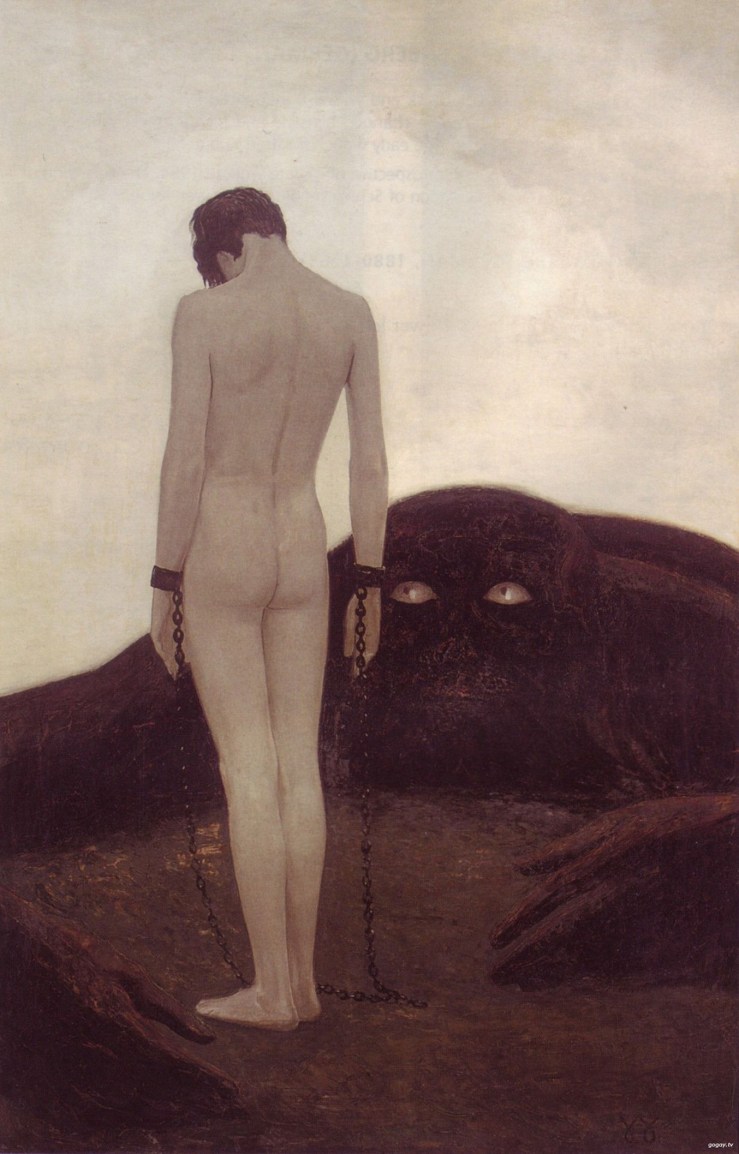
Feeling of Dependency — Sascha Schneider

wood-marble

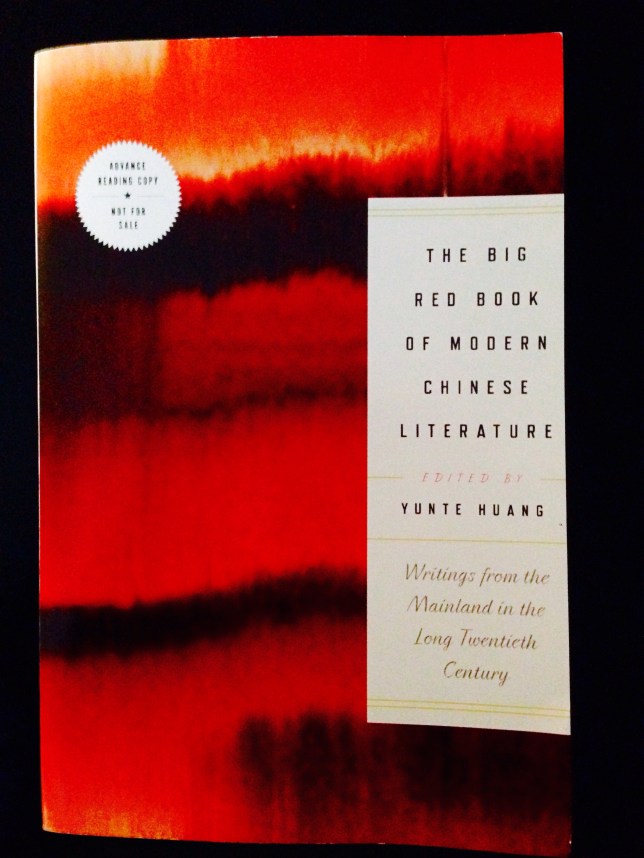
The Big Red Book of Modern Chinese Literature (Book acquired, 8.07.2015)

IMG_8270

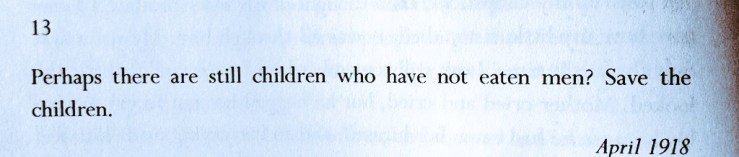
So I finally cracked into Norton’s forthcoming anthology, The Big Red Book of Modern Chinese Literature today. Knowing almost nothing of Chinese literature, I read Can Xue’s story “Hut on the Mountain” first (A+ stuff) and then went back to the beginning to read Lu Xun’s “A Madman’s Diary,” which ends with this line:IMG_8271

—like who wouldn’t want to read a story that ends that way?

Anyway, the book looks really fascinating. Editor Yunte Huang has put together a compelling mix of genres covering the last century. More to come, but here’s Norton’s blurb for now:

A panoramic literary anthology that tells the inner story of China in the twentieth century.

A search for the soul of modern China, this revelatory volume brings together significant works, in outstanding translations, from nearly fifty Chinese writers. It includes poems, essays, fiction, songs, and speeches written in an astonishing array of moods and styles, from sublime lyricism to witty surrealism to poignant documentary to the ironic, the absurd, the transgressive, and the defiant.

Reflecting on his own experience coming of age in China as a student in the time of Tiananmen, Yunte Huang provides essential context in an opening essay and in headnotes, timelines, and brief introductions to the Republican, Revolutionary, and Post-Mao eras. Both personal and authoritative, his selections make for a joyously informative read. From belles lettres to literary propaganda, from poetic revolution to pulp fiction, The Big Red Book is an eye-opening, mesmerizing, and indispensable portrait of China in the tumultuous twentieth century.

Bring me the butcher’s knife.

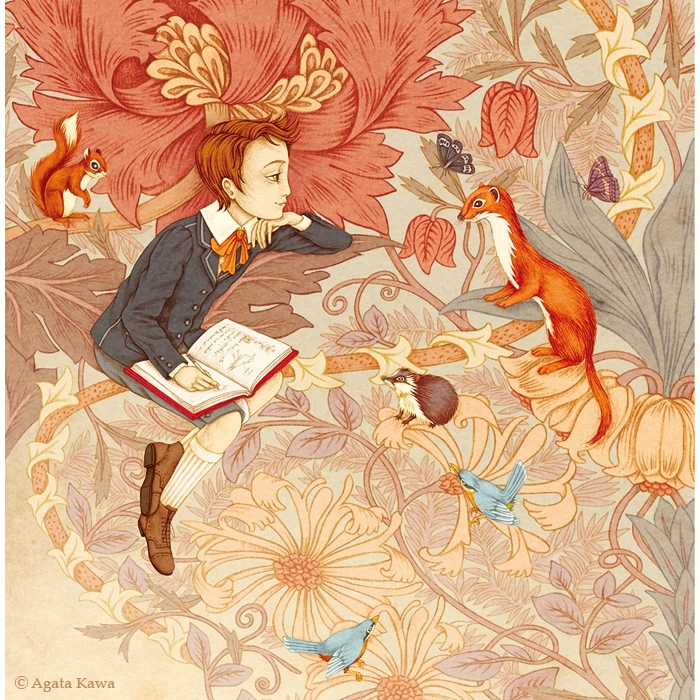
The Red Notebook — Agata Kawa

carnet04

Nathaniel Hawthorne’s journal entry for September 5th, 1838

September 5th.–I took a walk of three miles from the village, which brought me into Vermont. The line runs athwart a bridge,–a rude bridge, which crosses a mountain stream. The stream runs deep at the bottom of a gorge, plashing downward, with rapids and pools, and bestrewn with large rocks, deep and shady, not to be reached by the sun except in its meridian, as well on account of the depth of the gorgeas of the arch of wilderness trees above it. There was a stumpy clearing beyond the bridge, where some men were building a house. I went to them, and inquired if I were in Massachusetts or Vermont, and asked for some water. Whereupon they showed great hospitality, and the master-workman went to the spring, and brought delicious water in a tin basin, and produced another jug containing “new rum, and very good; and rum does nobody any harm if they make a good use of it,” quoth he. I invited them to call on me at the hotel, if they should come to the village within two or three days. Then I took my way back through the forest, for this is a by-road, and is, much of its course, a sequestrated and wild one, with an unseen torrent roaring at an unseen depth, along the roadside.

My walk forth had been an almost continued ascent, and, returning, I had an excellent view of Graylock and the adjacent mountains, at such a distance that they were all brought into one group, and comprehended at one view, as belonging to the same company,–all mighty, with a mightier chief. As I drew nearer home, they separated, and the unity of effect was lost. The more distant then disappeared behind the nearer ones, and finally Graylock itself was lost behind the hill which immediately shuts in the village. There was a warm, autumnal haze, which, I think, seemed to throw the mountains farther off, and both to enlarge and soften them.

To imagine the gorges and deep hollows in among the group of mountains,–their huge shoulders and protrusions.

“They were just beginning to pitch over the mountains, as I came along,”–stage-driver’s expression about the caravan.

A fantastic figure of a village coxcomb, striding through the bar-room, and standing with folded arms to survey the caravan men. There is much exaggeration and rattle-brain about this fellow.

A mad girl leaped from the top of a tremendous precipice in Pownall, hundreds of feet high, if the tale be true, and, being buoyed up by her clothes, came safely to the bottom.

Inquiries about the coming of the caravan, and whether the elephant had got to town, and reports that he had.

A smart, plump, crimson-faced gentleman, with a travelling-portmanteau of peculiar neatness and convenience. He criticises the road over the mountain, having come in the Greenfleld stage; perhaps an engineer.

Bears still inhabit Saddleback and the neighboring mountains and forests. Six were taken in Pownall last year, and two hundred foxes. Sometimes they appear on the hills, in close proximity to this village.

Nathaniel Hawthorne’s journal entry of September 5th, 1838.