“Ennui” — Langston Hughes

Screenshot 2015-07-30 at 5.24.06 PM

Ymir Suckles from the Cow Audhumla — Nicolai Abildgaard

display_image (1)

From H.A. Guerber’s Myths of the Norsemen (1909):

As the steam rose in clouds it again encountered the prevailing cold, and was changed into rime or hoarfrost, which, layer by layer, filled up the great central space. Thus by the continual action of cold and heat, and also probably by the will of the uncreated and unseen, a gigantic creature called Ymir or Orgelmir (seething clay), the personification of the frozen ocean, came to life amid the ice-blocks in the abyss, and as he was born of rime he was called a Hrim-thurs, or ice-giant.

“In early times,

When Ymir lived,

Was sand, nor sea,

Nor cooling wave;

No earth was found,

Nor heaven above;

One chaos all,

And nowhere grass.”

Sæmund’s Edda (Henderson’s tr.).

Groping about in the gloom in search of something to eat, Ymir perceived a gigantic cow called Audhumla (the nourisher), which had been created by the same agency as himself, and out of the same materials. Hastening towards her, Ymir noticed with pleasure that from her udder flowed four great streams of milk, which would supply ample nourishment.

All his wants were thus satisfied; but the cow, looking about her for food in her turn, began to lick the salt off a neighbouring ice-block with her rough tongue. This she continued to do until first the hair of a god appeared and then the whole head emerged from its icy envelope, until by-and-by Buri (the producer) stepped forth entirely free.

While the cow had been thus engaged, Ymir, the [4]giant, had fallen asleep, and as he slept a son and daughter were born from the perspiration under his armpit, and his feet produced the six-headed giant Thrudgelmir, who, shortly after his birth, brought forth in his turn the giant Bergelmir, from whom all the evil frost giants are descended.

“Under the armpit grew,

’Tis said of Hrim-thurs,

A girl and boy together;

Foot with foot begat,

Of that wise Jötun,

A six-headed son.”

Sæmund’s Edda (Thorpe’s tr.).

Not an apology of suicide (Nabokov’s Pale Fire)

The following note is not an apology of suicide – it is the simple and sober description of a spiritual situation.

The more lucid and overwhelming one’s belief in Providence, the greater the temptation to get it over with, this business of life, but the greater too one’s fear of the terrible sin implicit in self-destruction. Let us first consider the temptation. As more thoroughly discussed elsewhere in this commentary (see note to line 550), a serious conception of any form of afterlife inevitably and necessarily presupposes some degree of belief in Providence; and, conversely, deep Christian faith presupposes some belief in some sort of spiritual survival. The vision of that survival need not be a rational one, i.e., need not present the precise features of personal fancies or the general atmosphere of a subtropical Oriental park. In fact, a good Zemblan Christian is taught that True faith is not there to supply pictures or maps, but that it should quietly content itself with a warm haze of pleasurable anticipation. To take a homely example: little Christopher’s family is about to migrate to a distant colony where his father has been assigned to a lifetime post. Little Christopher, a frail lad of nine or ten, relies completely (so completely, in fact, as to blot out the very awareness of this reliance) on his elders’ arranging all the details of departure, passage and arrival. He cannot imagine, nor does he try to imagine, the particular aspects of the new place awaiting him but he is dimly and comfortably convinced that it will be even better than his homestead, with the big oak, and the mountain, and his pony, and the park, and the stable, and Grimm, the old groom, who has a way of fondling him whenever nobody is around. Something of this simple trust we too should have. With this divine mist of utter dependence permeating one’s being, no wonder one is tempted, no wonder one weighs on one’s palm with a dreamy smile the compact firearm in its case of suede leather hardly bigger than a castlegate key or a boy’s seamed purse, no wonder one peers over the parapet into an inviting abyss.
I am choosing these images rather casually. There are purists who maintain that a gentleman should use a brace of pistols, one for each temple, or a bare botkin (note the correct spelling), and that ladies should either swallow a lethal dose or drown with clumsy Ophelia. Humbler humans have preferred sundry forms of suffocation, and minor poets have even tried such fancy releases as vein tapping in the quadruped tub of a drafty boardinghouse bathroom. All this is uncertain and messy. Of the not very many ways known of shedding one’s body, falling, falling, falling is the supreme method, but you have to select your sill or ledge very carefully so as not to hurt yourself or others. Jumping from a high bridge is not recommended even if you cannot swim, for wind and water abound in weird contingencies, and tragedy ought not to culminate in a record dive or a policeman’s promotion. If you rent a cell in the luminous waffle, room 1915 or 1959, in a tall business center hotel browing the star dust, and pull up the window, and gently – not fall, not jump – but roll out as you should for air comfort, there is always the chance of knocking clean through into your own hell a pacific noctambulator walking his dog; in this respect a back room might be safer, especially if giving on the roof of an old tenacious normal house far below where a cat may be trusted to flash out of the way. Another popular take-off is a mountaintop with a sheer drop of say 500 meters but you must find it, because you will be surprised how easy it is to miscalculate your deflection offset, and have some hidden projection, some fool of a crag, rush forth to catch you, causing you to bounce off it into the brush, thwarted, mangled and unnecessarily alive. The ideal drop is from an aircraft, your muscles relaxed, your pilot puzzled, your packed parachute shuffled off, cast off, shrugged off – farewell, shootka (little chute)! Down you go, but all the while you feel suspended and buoyed as you somersault in slow motion like a somnolent tumbler pigeon, and sprawl supine on the eiderdown of the air, or lazily turn to embrace your pillow, enjoying every last instant of soft, deep, death-padded life, with the earth’s green seesaw now above, now below, and the voluptuous crucifixion, as you stretch yourself in the growing rush, in the nearing swish, and then your loved body’s obliteration in the Lap of the Lord. If I were a poet I would certainly make an ode to the sweet urge to close one’s eyes and surrender utterly unto the perfect safety of wooed death. Ecstatically one forefeels the vastness of the Divine Embrace enfolding one’s liberated spirit, the warm bath of physical dissolution, the universal unknown engulfing the minuscule unknown that had been the only real part of one’s temporary personality. When the soul adores Him Who guides it through mortal life, when it distinguishes His sign at every turn of the trail, painted on the boulder and notched in the fir trunk, when every page in the book of one’s personal fate bears His watermark, how can one doubt that He will also preserve us through all eternity?
So what can stop one from effecting the transition? What can help us to resist the intolerable temptation? What can prevent us from yielding to the burning desire for merging in God?

We who burrow in filth every day may be forgiven perhaps the one sin that ends all sins.
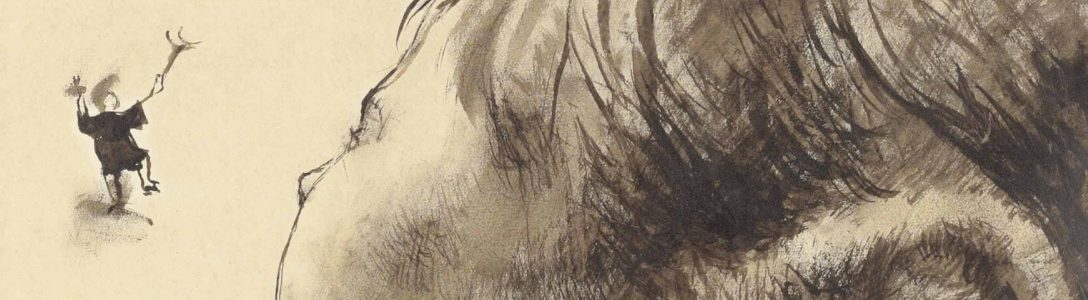
From Vladimir Nabokov’s novel Pale Fire.

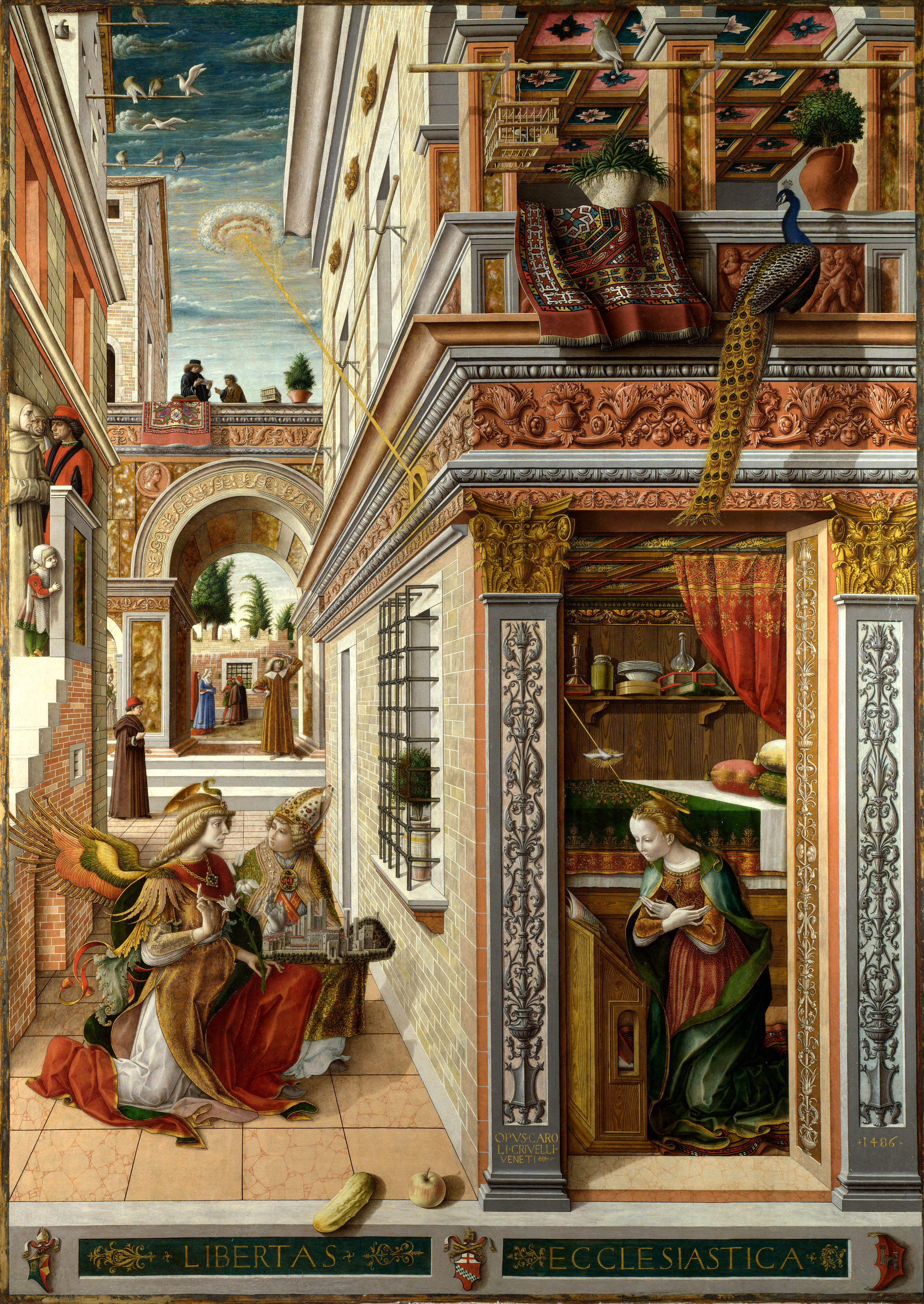
Detail from Crivelli’s Annunciation

Screenshot 2015-07-29 at 10.24.35 AM

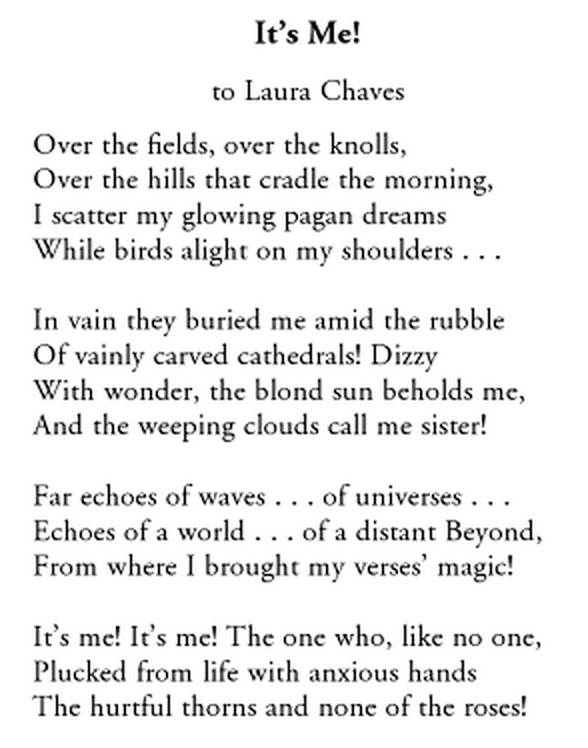
“It’s Me!” – Florbela Espanca

It's Me!

Translated by Richard Zenith.

Detail from Crivelli’s Annunciation

Screenshot 2015-07-29 at 10.03.12 AM

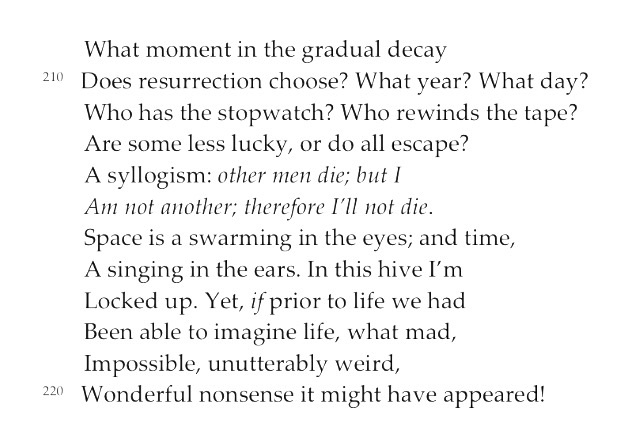
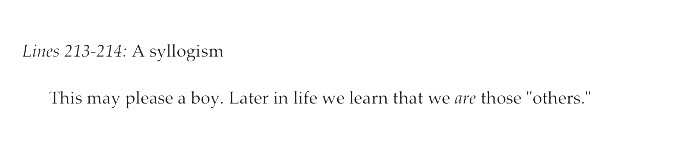
A syllogism (Vladimir Nabokov)

image image

From Vladimir Nabokov’s magnificent novel Pale Fire.

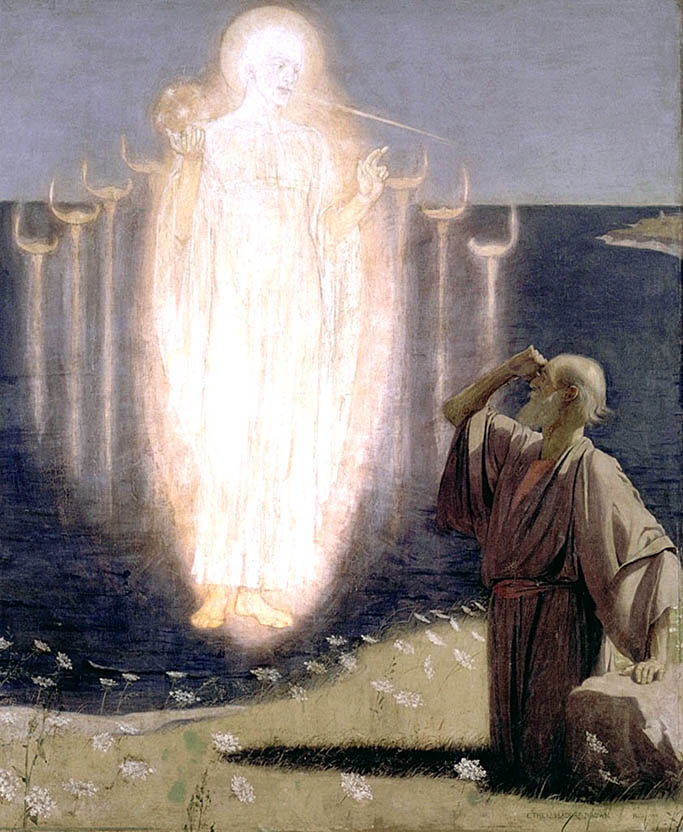
Vision of Saint John — Ethel Isadore Brown

tumblr_lyo264Nyj21qcrew2o1_1280

“Remarkable Characters” (Nathaniel Hawthorne’s July 29th, 1838 journal entry)

July 29th.–Remarkable characters:–A disagreeable figure, waning from middle age, clad in a pair of tow homespun pantaloons, and a very soiled shirt, barefoot, and with one of his feet maimed by an axe; also an arm amputated two or three inches below the elbow. His beard of a week’s growth, grim and grisly, with a general effect of black; altogether a disgusting object. Yet he has the signs of having been a handsome man in his idea, though now such a beastly figure that probably no living thing but his great dog would touch him without an effort. Coming to the stoop, where several persons were sitting, “Good morning, gentlemen,” said the wretch. Nobodyanswered for a time, till at last one said, “I don’t know whom you speak to: not to me, I’m sure” (meaning that he did not claim to be a gentleman). “Why I thought I spoke to you all at once,” replied the figure, laughing. So he sat himself down on the lower step of the stoop, and began to talk; and, the conversation being turned upon his bare feet by one of the company, he related the story of his losing his toes by the glancing aside of an axe, and with what great fortitude he bore it. Then he made a transition to the loss of his arm, and, setting his teeth and drawing in his breath, said that the pain was dreadful; but this, too, he seems to have borne like an Indian; and a person testified to his fortitude by saying that he did not suppose there was any feeling in him, from observing how he bore it. The man spoke of the pain of cutting the muscles, and the particular agony at one moment, while the bone was being sawed asunder; and there was a strange expression of remembered anguish, as he shrugged his half-limb, and described the matter. Afterwards, in a reply to a question of mine, whether he still seemed to feel the hand that had been amputated, he answered that he did always; and, baring the stump, he moved the severed muscles, saying, “There is the thumb, there the forefinger,” and so on. Then he talked to me about phrenology, of which he seems a firm believer and skilful practitioner, telling how he had hit upon the true character of many people. There was a great deal of sense and acuteness in his talk, and something of elevation in his expressions,–perhaps a studied elevation, and a sort of courtesy in his manner; but his sense had something out of the way in it; there was something wild and ruined and desperate in his talk, though I can hardlysay what it was. There was a trace of the gentleman and man of intellect through his deep degradation; and a pleasure in intellectual pursuits, and an acuteness and trained judgment, which bespoke a mind once strong and cultivated. “My study is man,” said he. And, looking at me, “I do not know your name,” he said, “but there is something of the hawk-eye about you, too.” Continue reading ““Remarkable Characters” (Nathaniel Hawthorne’s July 29th, 1838 journal entry)”

Untitled — Markus Schinwald

tumblr_m2jforxW681qdzczno1_1280

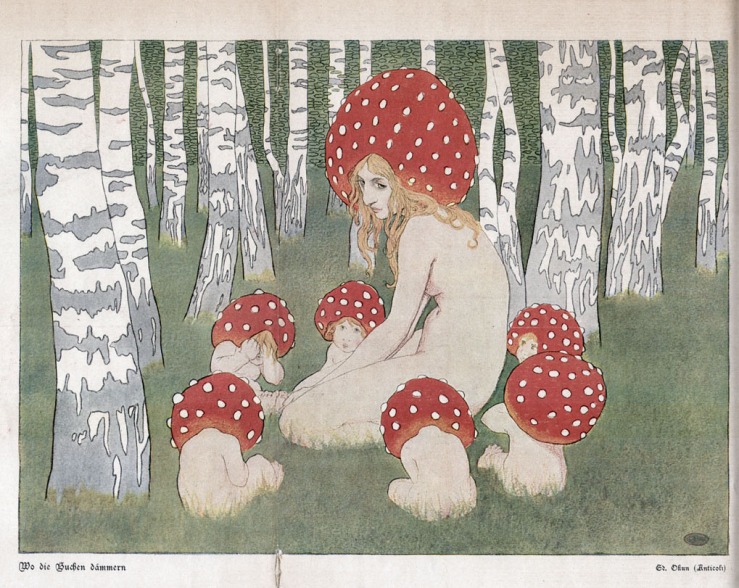
Mother Mushroom with Her Children — Edward Okun

display_image

Penguin Classics’ reissue of Jean Lartéguy’s The Centurions (Book acquired, 7.27.2015)

IMG_7840

Although I’ve been having to turn down review copies left and right lately, Penguin Classics’ reissue of Jean Lartéguy’s 1960 novel The Centurions looked to promising to pass up. Lartéguy was a soldier and a journalist—and the English translator, Xan Fielding, was a Special Operations Executive agent in WW2 (among other things).

Penguin’s blurb:

The military cult classic with resonance to the wars in Iraq and Vietnam—now back in print

When The Centurions was first published in 1960, readers were riveted by the thrilling account of soldiers fighting for survival in hostile environments. They were equally transfixed by the chilling moral question the novel posed: how to fight when the “age of heroics is over.” As relevant today as it was half a century ago, The Centurions is a gripping military adventure, an extended symposium on waging war in a new global order, and an essential investigation of the ethics of counterinsurgency. Featuring a foreword by renowned military expert Robert D. Kaplan, this important wartime novel will again spark debate about controversial tactics in hot spots around the world.

Interior with Mother Delousing Child — Pieter de Hooch

“An Apology for Idlers,” Robert Louis Stevenson’s defense of idle time

“An Apology for Idlers”
by

Robert Louis Stevenson


Boswell: We grow weary when idle.”

Johnson: That is, sir, because others being busy, we want company; but if we were idle, there would be no growing weary; we should all entertain one another.”

Just now, when every one is bound, under pain of a decree in absence convicting them of lèse-respectability, to enter on some lucrative profession, and labour therein with something not far short of enthusiasm, a cry from the opposite party who are content when they have enough, and like to look on and enjoy in the meanwhile, savours a little of bravado and gasconade.  And yet this should not be.  Idleness so called, which does not consist in doing nothing, but in doing a great deal not recognised in the dogmatic formularies of the ruling class, has as good a right to state its position as industry itself.  It is admitted that the presence of people who refuse to enter in the great handicap race for sixpenny pieces, is at once an insult and a disenchantment for those who do.  A fine fellow (as we see so many) takes his determination, votes for the sixpences, and in the emphatic Americanism, it “goes for” them.  And while such an one is ploughing distressfully up the road, it is not hard to understand his resentment, when he perceives cool persons in the meadows by the wayside, lying with a handkerchief over their ears and a glass at their elbow.  Alexander is touched in a very delicate place by the disregard of Diogenes.  Where was the glory of having taken Rome for these tumultuous barbarians, who poured into the Senate house, and found the Fathers sitting silent and unmoved by their success?  It is a sore thing to have laboured along and scaled the arduous hilltops, and when all is done, find humanity indifferent to your achievement.  Hence physicists condemn the unphysical; financiers have only a superficial toleration for those who know little of stocks; literary persons despise the unlettered; and people of all pursuits combine to disparage those who have none. Continue reading ““An Apology for Idlers,” Robert Louis Stevenson’s defense of idle time”

Detail from Crivelli’s Annunciation

Screenshot 2015-07-27 at 9.05.51 AM

Still Life with Musical Instruments — Pieter Claesz

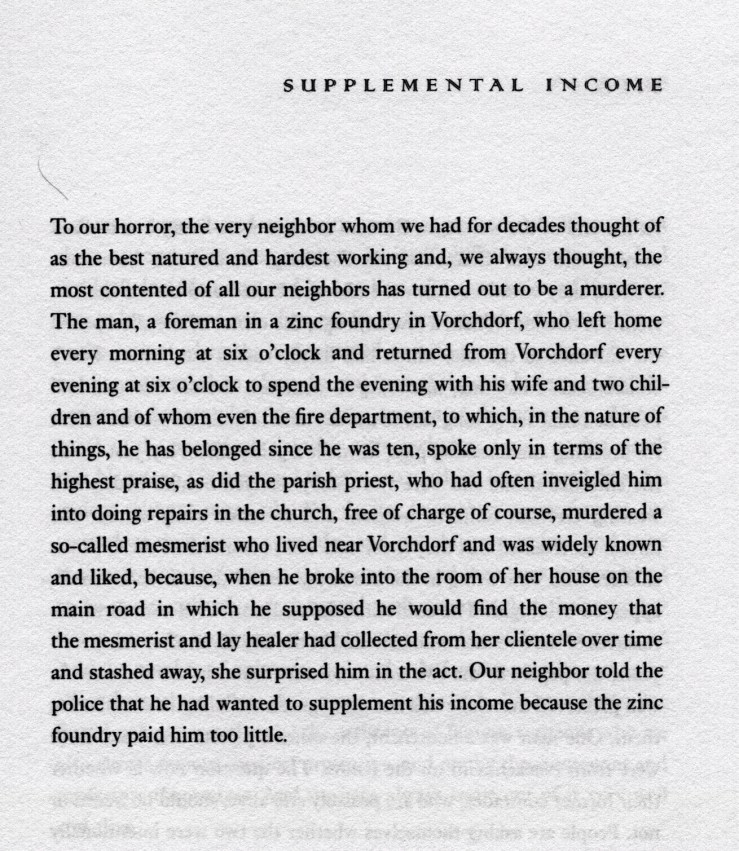
“Supplemental Income” — Thomas Bernhard

IMG_7838