What should we do without fire and death? | Nathaniel Hawthorne’s journal entry for June 9, 1853

June 9th.–Cleaning the attic to-day, here at the Wayside, the woman found an immense snake, flat and outrageously fierce, thrusting out its tongue. Ellen, the cook, killed it. She called it an adder, but it appears to have been a striped snake. It seems a fiend, haunting the house. On further inquiry, the snake is described as plaided with brown and black.

Cupid in these latter times has probably laid aside his bow and arrows, and uses fire-arms,–a pistol,–perhaps a revolver.

I burned great heaps of old letters, and other papers, a little while ago, preparatory to going to England. Among them were hundreds of letters. The world has no more such, and now they are all dust and ashes. What a trustful guardian of secret matters is fire! What should we do without fire and death?

Nathaniel Hawthorne’s journal entry for June 9, 1853. From Passages from the American Note-Books.

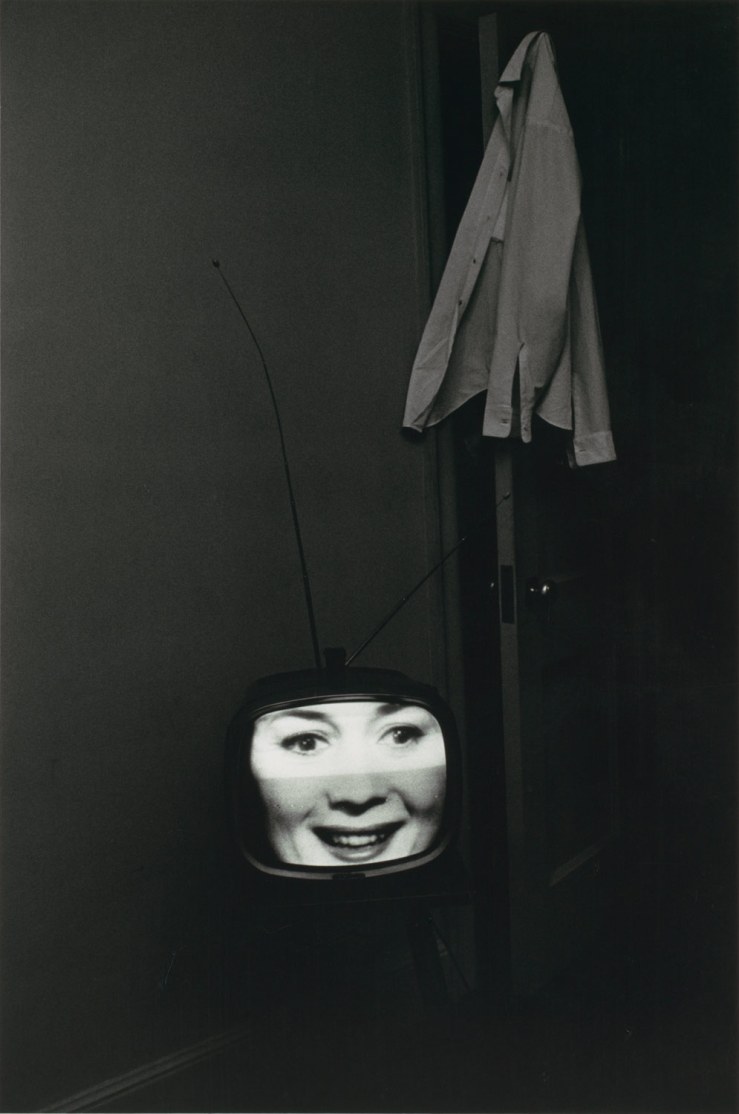
Nashville — Lee Friedlander

1995.168.2

Galatea (detail) — Raphael

Screenshot 2016-06-08 at 10.19.01 PM

A reading madman about to lose his soul to the seductions of a sentence (William H. Gass)

Stendhal’s The Red and the Black

Boston, 1943. I am about to go down to the submarine base to test out for the school there. I have come into possession of the Liveright Black and Gold edition. (What a wonderful series. I loved them all. There was Jules Romain’s The Body’s Rapture, a kooky, overwrought book, I know now, but it was sex, and it was French. There was Remy de Gourmont’s The Natural Philosophy of Love, more sex, more French. There was Balzac’s The Physiology of Marriage, more sex, more French. There was Stendhal’s own On Love, ditto. There was The Collected Works of Pierre Loüys, double dots, double ditto. There was Alexandre Dumas’s The Journal of Madame Giovanni, which was simply French, a disappointment. And The Red and the Black, like checker squares.) Anyway, I am lining up New London in my train table’s sights, and scanning the novel I have bought because of the series it is in, thinking that I’m not going to like climbing a rope through all that water, and thinking that the first chapter, a description of a small town, is commonplace, ho-hum, and will I be put in a pressure chamber at sub school like a canned tomato? When suddenly, I am suckered into Stendhal, and no longer read words (against all the rules of right reading I will later give myself), but barrel along like my own train, a runaway, holding my breath oftener and oftener, aware only of a insistently increasing tension, and it is not because I am underwater; it is because I am inside the magic of this narrative master. The Charterhouse of Parma would do exactly the same thing to me, except that I didn’t let a sub school come between us, but covered its lengthy length as nearly in one sitting as might be managed, snacking at the edge of it as though it were on a TV tray. That sort of gluttonous read is rare, and never happens to me now, when I read, because I read to write or teach or otherwise to talk, and not because I am a reading madman about to lose his soul to the seductions of a sentence.

From William H. Gass’s “Fifty Literary Pillars,” part of A Temple of Texts (2006). The essay in question is not so much an essay as it is/was a catalog to “inaugurate the International Writers Center” at Washington University.

The last sentence is what matters most to me; when I read it I nodded, or maybe didn’t nod, maybe just acquiesced in some other way, physically.

Who wouldn’t love to read like that again?

(Maybe persons young enough to not know that they are in fact reading like madpersons, seduced, etc.).

I tip my glass for gluttonous reads.

I would love to be a reading madman again, and not one who reads to write or read or otherwise talk.
 

Fossil Bright in the Sun — Kevin Peterson

kevin-peterson-05

Birthday Boy — Eric Fischl

birthday-boylarge

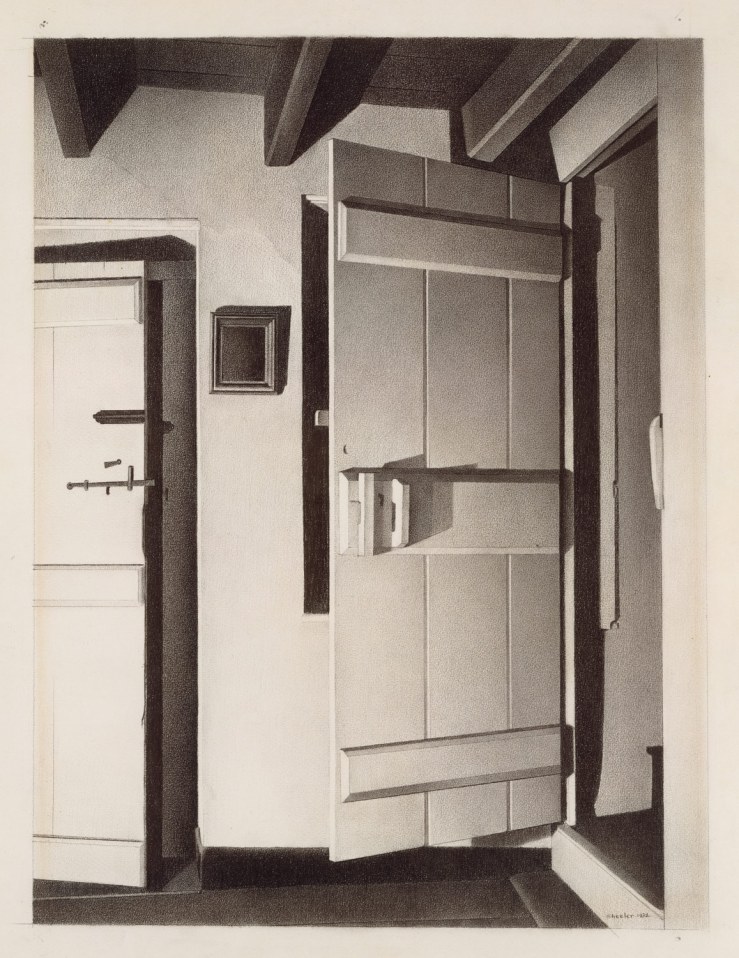
The Open Door — Charles Sheeler

hb_1992-24-7

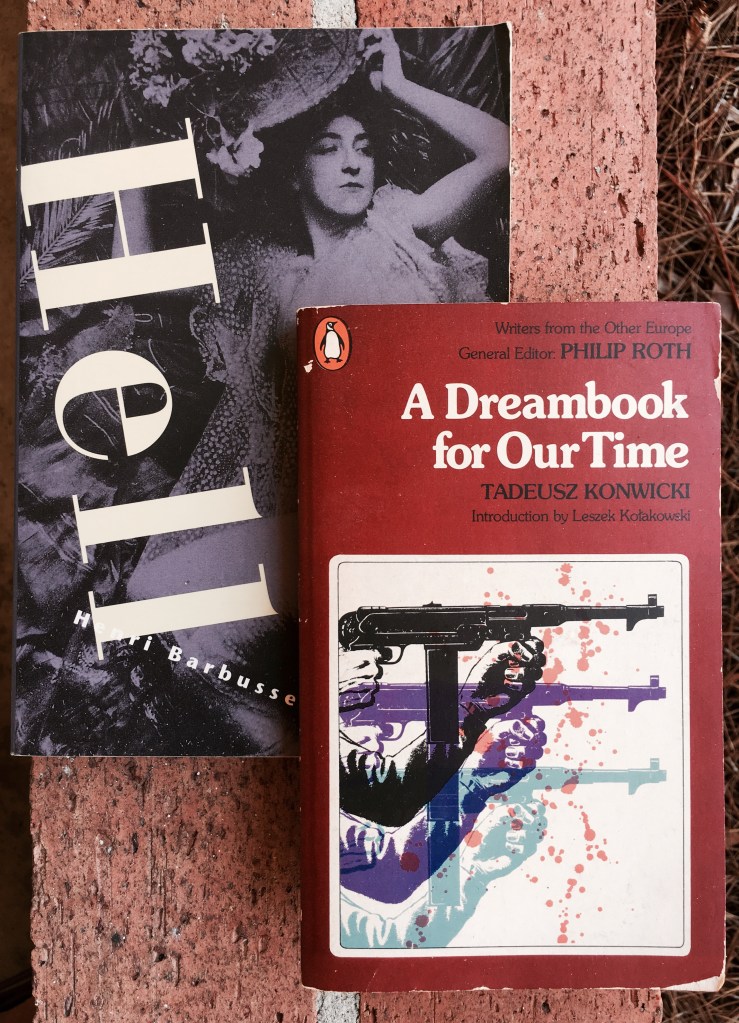
Hell/Dreambook (Books acquired, 6.07.2016)

img_2581

The Barbusse literally fell into my hands when I was pulling down a different book. I’d never heard of Hell until today but its title, cover, and blurb — “the most highly study of voyeurism” — sold me. Penguin’s Writers from Other Europe has always intrigued me and the cover alone on Tadeusz Konwicki’s A Dreambook for Our Time led to me picking it up.

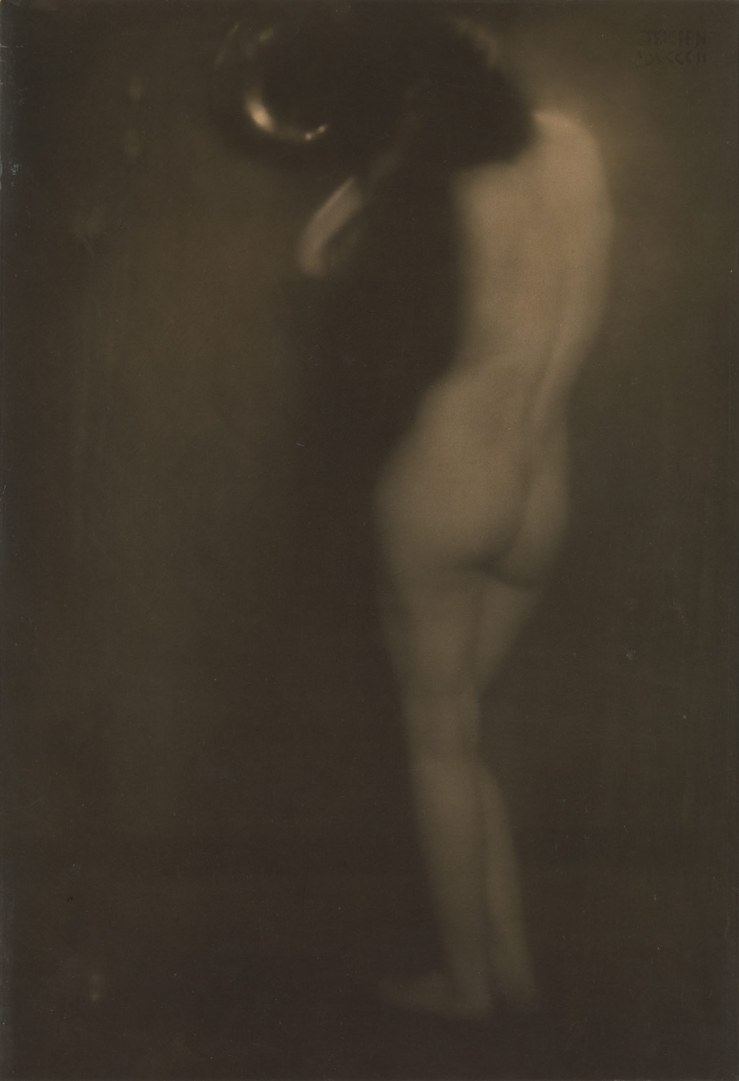
The Little Round Mirror — Edward J. Steichen

hb_33-43-32

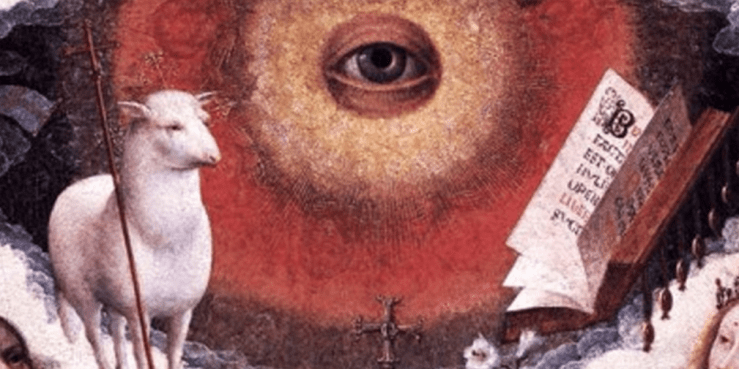
Allegory of Christianity (detail) — Jan Provoost

Screenshot 2016-06-06 at 7.08.08 PM

The Drop of Water — Rene Magritte

the-drop-of-water-19481large

Ghostly moves (From Elena Ferrante’s novel The Story of the Lost Child)

We locked ourselves in her office and sat at the computer, a kind of television with a keyboard, very different from what she had showed me and the children some time before. She pressed the power button, she slid dark rectangles into gray blocks. I waited, bewildered. On the screen luminous tremors appeared. Lila began to type on the keyboard, I was speechless. It was in no way comparable to a typewriter, even an electric one. With her fingertips she caressed gray keys, and the writing appeared silently on the screen, green like newly sprouted grass. What was in her head, attached to who knows what cortex of the brain, seemed to pour out miraculously and fix itself on the void of the screen. It was power that, although passing for act, remained power, an electrochemical stimulus that was instantly transformed into light. It seemed to me like the writing of God as it must have been on Sinai at the time of the Commandments, impalpable and tremendous, but with a concrete effect of purity. Magnificent, I said. I’ll teach you, she said. And she taught me, and dazzling, hypnotic segments began to lengthen, sentences that I said, sentences that she said, our volatile discussions were imprinted on the dark well of the screen like wakes without foam. Lila wrote, I would reconsider. Then with one key she erased, with others she made an entire block of light disappear, and made it reappear higher up or lower down in a second. But right afterward it was Lila who changed her mind, and everything was altered again, in a flash: ghostly moves, what’s here now is no longer here or is there. And no need for pen, pencil, no need to change the paper, put another sheet in the roller. The page is the screen, unique, no trace of a second thought, it always seems the same. And the writing is incorruptible, the lines are all perfectly straight, they emit a sense of cleanliness even now that we are adding the filthy acts of the Solaras to the filthy acts of half of Campania.

From Elena Ferrante’s novel The Story of the Lost Child. English translation by Ann Goldstein.

There’s a lot going on in this passage, in which the heroines of the so-called Neapolitan Novels, Elena and Lila, write an essay together using a personal computer’s word processing program (it’s the first time for Lila; I haven’t done the math here, but I think this episode might happen around 1982 or ’83). From the outset, from the earliest pages of My Brilliant Friend, Ferrante’s heroines have been preoccupied by writing, and in many ways these novels perform their own metatextual self-critiques. Not only does this passage show the experience of writing refreshed by a new technology, it also shows shows that authorship  is a shared, collaborative process, a synthesis (and fracture)—and not the act of a solitary genius. And in its final sentence, the passage points to a willed purity of writing, a stable resistance to the abjection and filth and evil that unceasingly threaten our narrator’s existence.

Self Portrait with Nude — Laura Knight

self-portrait_with_a_nude_by_dame_laura_knight

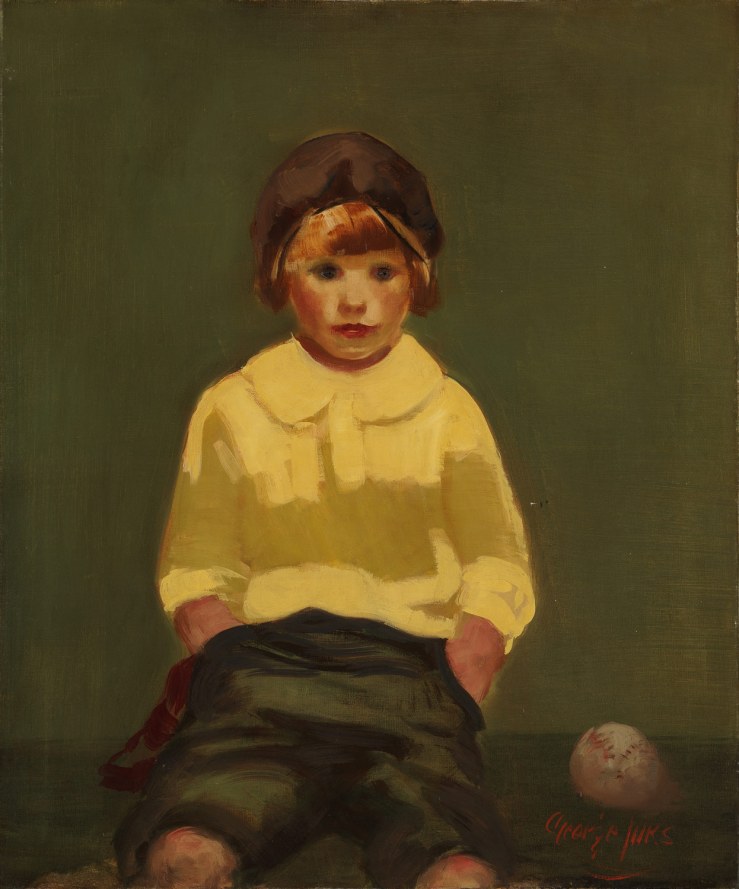
Boy with Baseball — George Luks

hb_54-10-2

Three Books

img_2567

The Sacred and Profane Love Machine by Iris Murdoch. First edition hardback, 1975 by The Book Club (Foyles Group of Book Clubs). Jacket design by Angela Maddigan.

img_2565

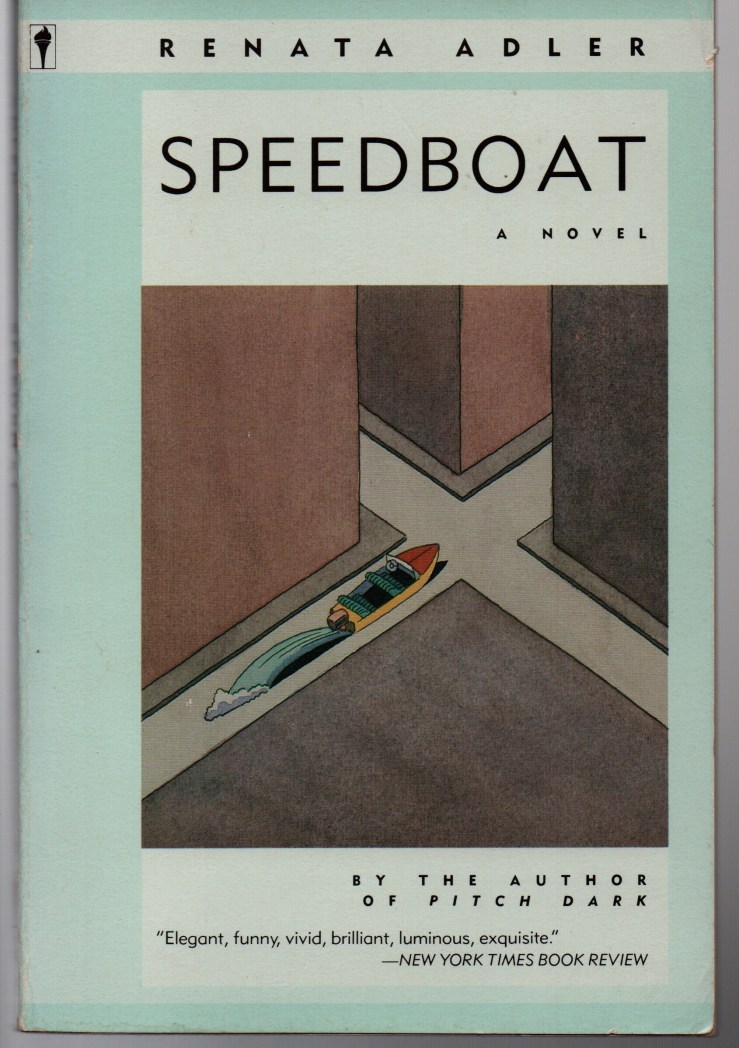
Speedboat by Renata Adler. First Perennial Library edition, 1988. Cover illustration by Steve Guarnaccia.

img_2564

Snow White by Donald Barthelme. Mass market paperback by Atheneum, 1986 (7th printing). Cover illustration by William Steig.

The Shoemaker — Jacob Lawrence

hb_46-73-2