Alla Tha’s All Right, but – June Jordan

june-jordan

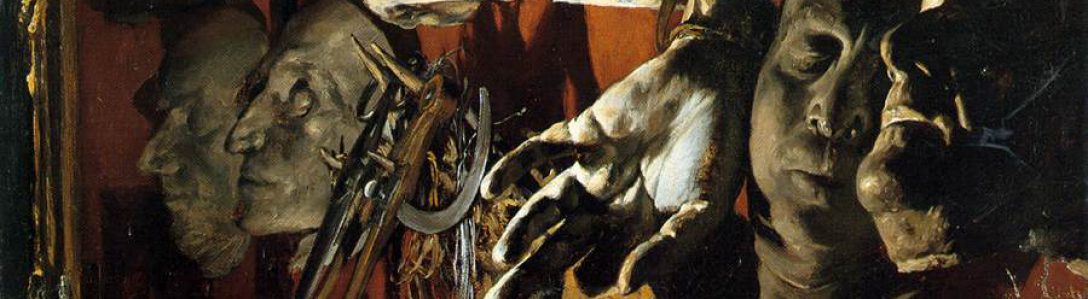
Untitled (Death Mask) — Arnulf Rainer

A U.S.A. that would die for the so-called perfect Entertainment (Infinite Jest)


The sky of U.S.A.’s desert was clotted with blue stars. Now it was deep at night. Only above the U.S.A. city was the sky blank of stars; its color was pearly and blank. Marathe shrugged. ‘Perhaps in you is the sense that citizens of Canada are not involved in the real root of the threat.’

Steeply shook the head in seeming annoyance. ‘What’s that supposed to mean?’ he said. The lurid wig of him slipped when he moved the head with any abrupt force.

The first way Marathe betrayed anything of emotion was to smooth rather too fussily at the blanket on his lap. ‘It is meaning that it will not of finality be Québecers making this kick to l’aine des Etats Unis. Look: the facts of the situation speak loudly. What is known. This is a U.S.A. production, this Entertainment cartridge. Made by an American man in the U.S.A. The appetite for the appeal of it: this also is U.S.A. The U.S.A. drive for spectation, which your culture teaches. This I was saying: this is why choosing is everything. When I say to you choose with great care in loving and you make ridicule it is why I look and say: can I believe this man is saying this thing of ridicule?’ Marathe leaned slightly forward on his stumps, leaving the machine pistol to use both his hands in saying. Steeply could tell this was important to Marathe; he really believed it.

Marathe made small emphatic circles and cuts in the air while he spoke: ‘These facts of situation, which speak so loudly of your Bureau’s fear of this samizdat: now is what has happened when a people choose nothing over themselves to love, each one. A U.S.A. that would die — and let its children die, each one — for the so-called perfect Entertainment, this film. Who would die for this chance to be fed this death of pleasure with spoons, in their warm homes, alone, unmoving: Hugh Steeply, in complete seriousness as a citizen of your neighbor I say to you: forget for a moment the Entertainment, and think instead about a U.S.A. where such a thing could be possible enough for your Office to fear: can such a U.S.A. hope to survive for a much longer time? To survive as a nation of peoples? To much less exercise dominion over other nations of other peoples? If these are other peoples who still know what it is to choose? who will die for something larger? who will sacrifice the warm home, the loved woman at home, their legs, their life even, for something more than their own wishes of sentiment? who would choose not to die for pleasure, alone?’

From David Foster Wallace’s novel Infinite Jest.


Read “The Hanging of the Schoolmarm,” new fiction from Robert Coover

Robert Coover’s short story “The Hanging of the Schoolmarm” is new in this week’s New Yorker. It’s of a piece with the last Coover story The New Yorker published, “Invasion of the Martians.”

Here are the first few paragraphs of “The Hanging of the Schoolmarm”:

The schoolmarm is playing poker in the town saloon. The stake is the saloon itself. As she is preparing to deal the cards, one of the men demands that she cut the fuckin’ deck, and she shoots him from her lap. “Sorry, but I simply cannot allow . . .”

The others tip their crumpled hats. “No, ma’am, you just go ahead and deal.”

The men of the town find the schoolmarm difficult but are awed by her refined and lofty character, and generally do what she tells them to do. The sheriff likes to say that she’s as pure as the spotless lily of the lake, though they have no lake, and there are no lilies in it. No damn lilies. The men cuss a lot—in fact, all the time—but never around the schoolmarm. Cussing doesn’t go together with the schoolmarm. It’s like salting your coffee, to put it politely.

After winning the saloon in the poker hand, the schoolmarm has the deceased removed and turns the card tables into school desks. The bar becomes an altar on Sundays, but there’s no preacher, so the schoolmarm provides temperance lectures from it, which the men are obliged to attend. In their minds, it’s still the old bar, the old saloon, so they carry along hip flasks and beef jerky to ease themselves through the unholy tedium, belching and snorting noisily.

Venus (detail) — Andy Warhol

venus

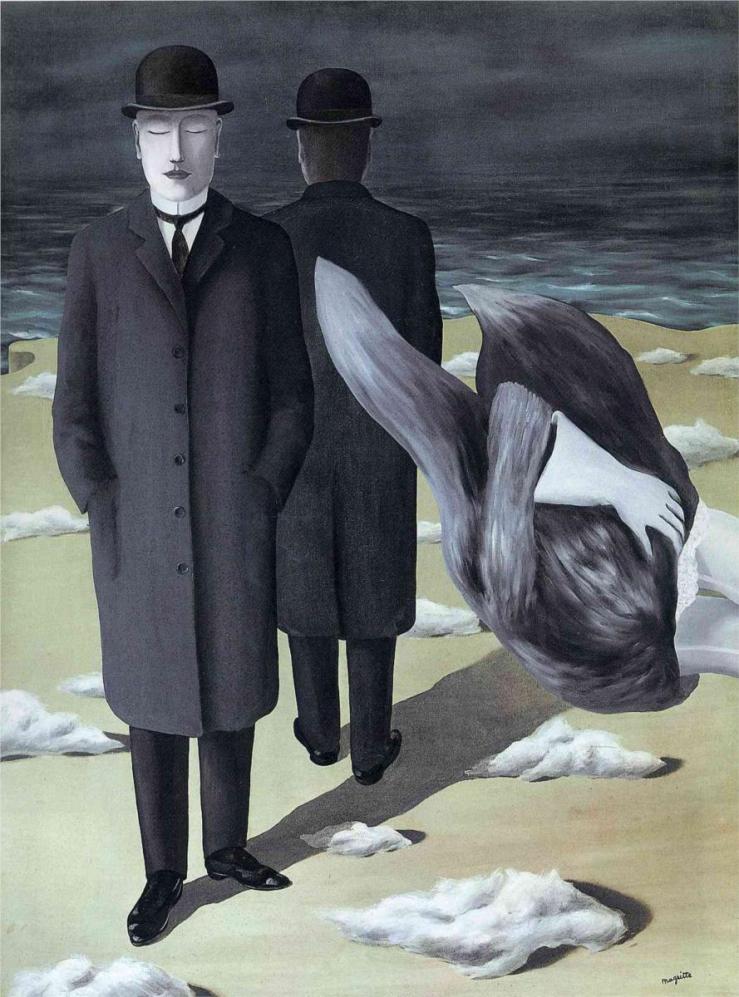
The Meaning of Night — Rene Magritte

6a3ca69f23dc4d81057c7d162a2339aa

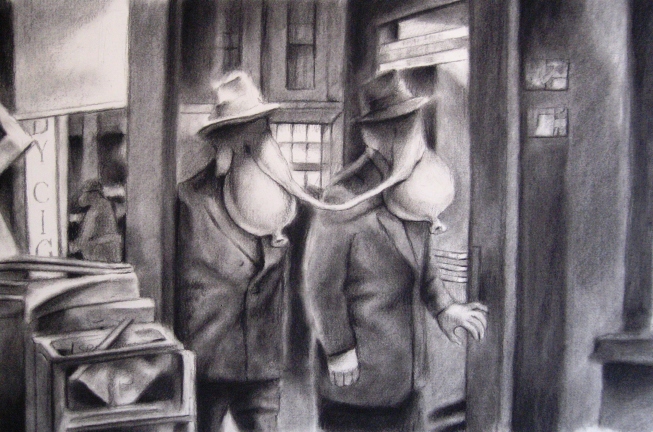
What Else Have You Got Left — Samuel Branton

np5

Sunday Comics

img_4274 img_4270

img_4271 img_4272

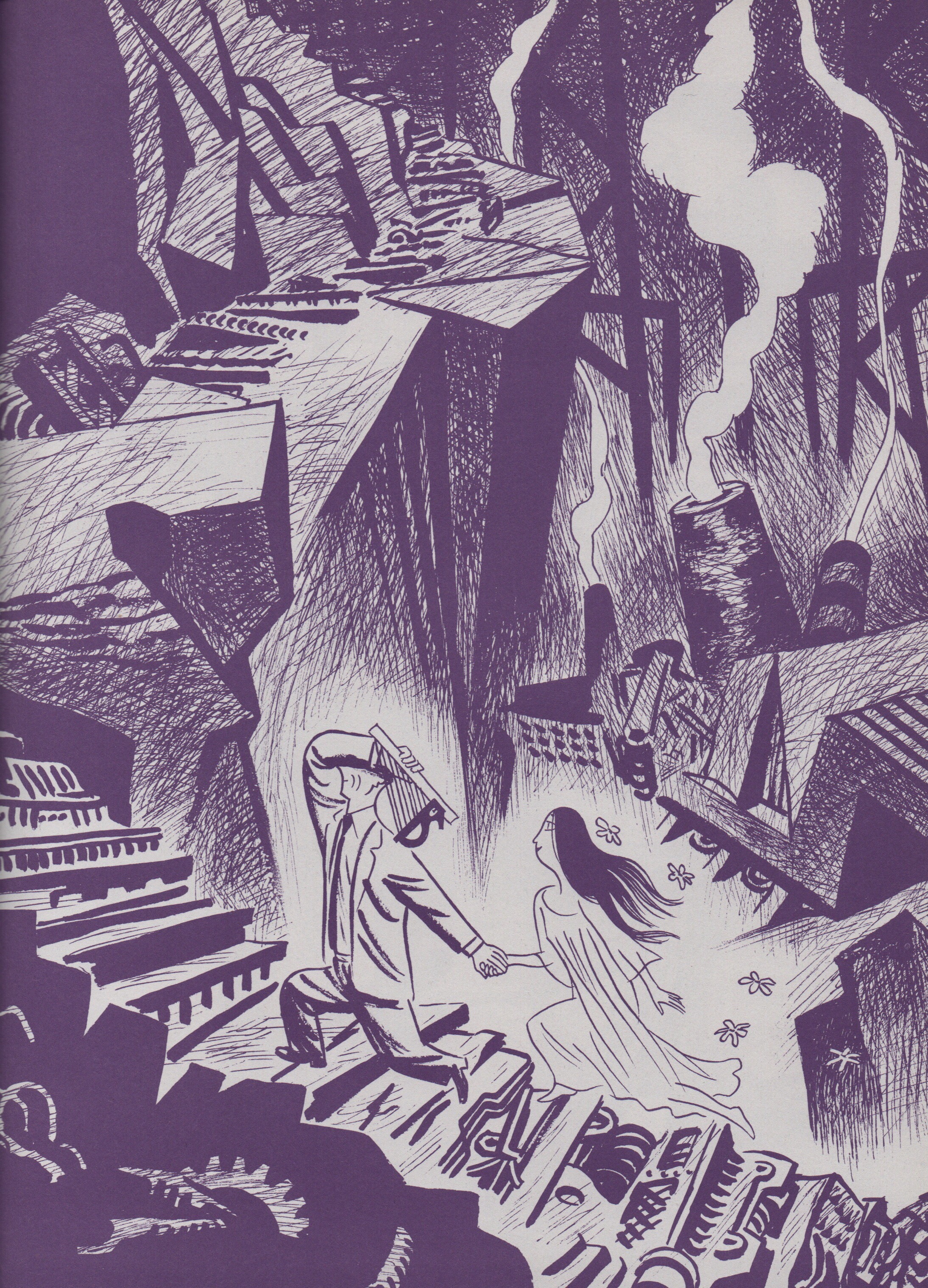
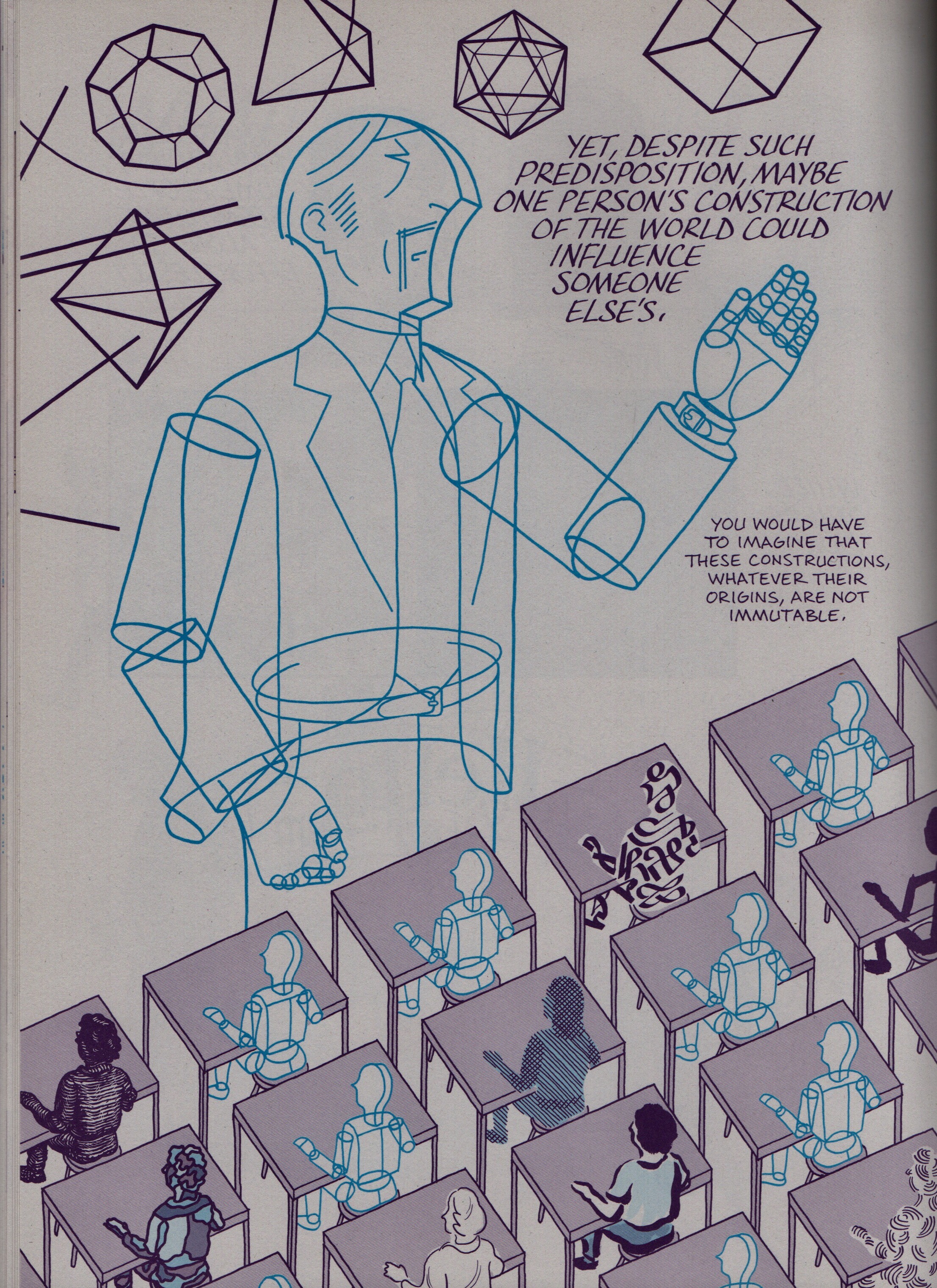
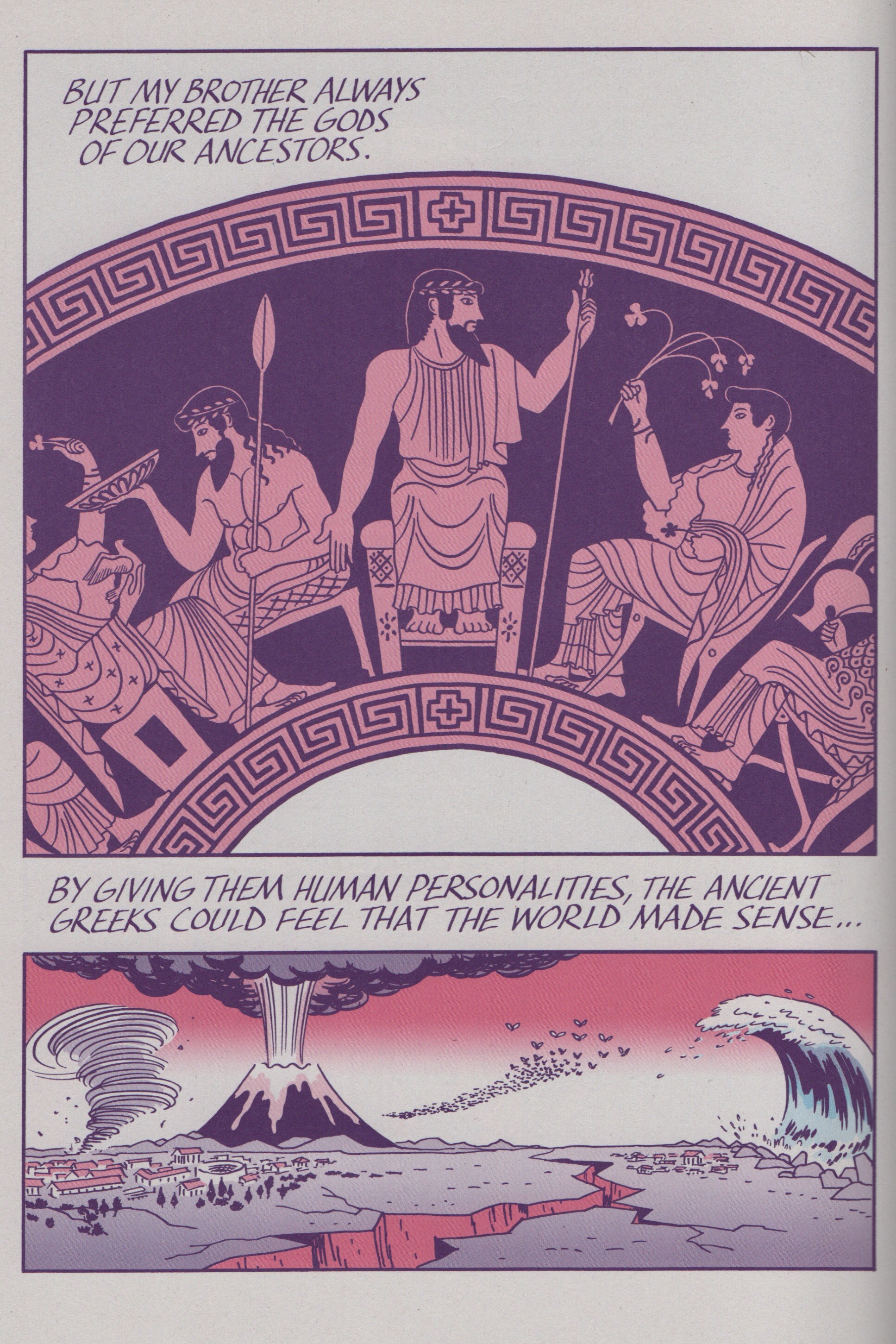
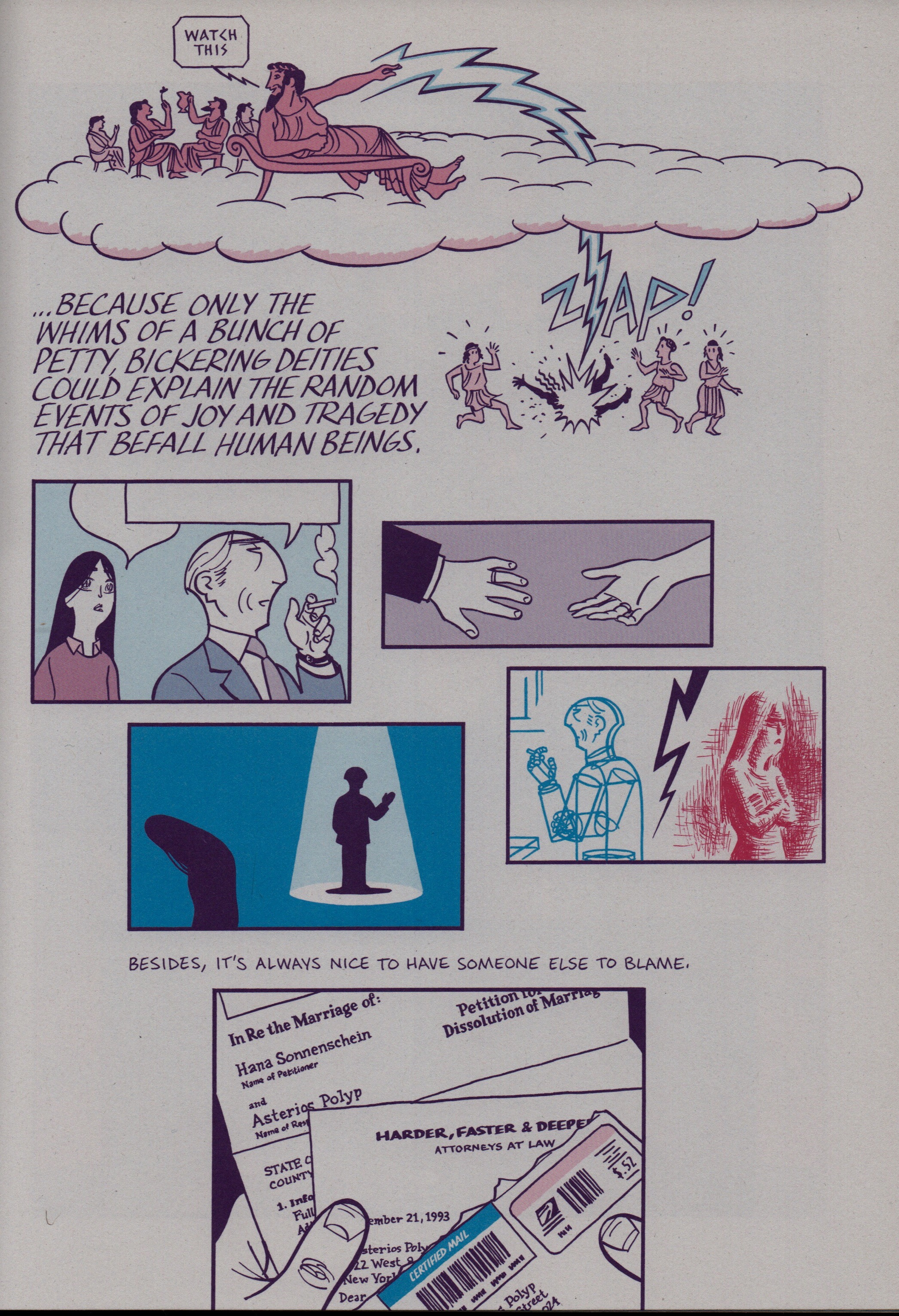
Pages from David Mazzuchelli’s novel Asterios Polyp (Pantheon, 2009).

I reviewed the novel in October of 2009. Here is that review in full:

Let’s get a few things straight from the get-go: David Mazzuchelli’s graphic novel Asterios Polyp is a masterpiece, an unequivocal advancement of its medium, and an unqualified joy to read. It’s also not only one of the best books we’ve read this year, but also this decade. While such breathless enthusiasm might seem suspect, even a cursory look over Asterios Polyp will reveal that Mazzucchelli has produced a fully-realized work, one that fundamentally reimagines what a graphic novel is, and how it might be read.

Asterios Polyp is a boorish, solipsistic “paper architect” and tenured professor (none of his designs have ever actually been built) whose life goes to shambles after his sensitive wife Hana leaves him. The novel opens with a lightning strike that literally destroys everything that Asterios owns. He grabs three key items–his father’s old lighter, a magnetically-powered watch he bought as a child, and a Swiss Army knife he found on the beach–and hits the road, heading into the great, normal Midwest, where he takes a job as an auto mechanic (in a lovely scene, Asterios the autodidact, after accepting his new job, heads to the library to learn auto repair in an hour). Asterios’s kindly boss Stiff and his hippie wife Ursula take in the poor soul/arrogant prick. As the plot unfolds, Mazzucchelli contrasts Asterios’s past, full of faculty cocktail parties, affairs with grad students, and highbrow conversations, with his incremental rebirth into a more concrete world. “Be not simply good; be good for something,” said Henry David Thoreau–a lesson that Asterios slowly learns as he finally applies his skill and genius to real-world applications, like building a tree house for the couple’s son and creating a solar-powered Cadillac. Asterios’s emergence as a fully-realized human being contrasts sharply with hist past. Although he clearly loved his wife Hana, he was unable to appreciate her as anything other than a prop in relation to himself–how she complimented him, added to him, reflected on him. The flashback scenes with Hana are keenly realistic and loaded with genuine pathos. They are the heart of the novel. Continue reading “Sunday Comics”

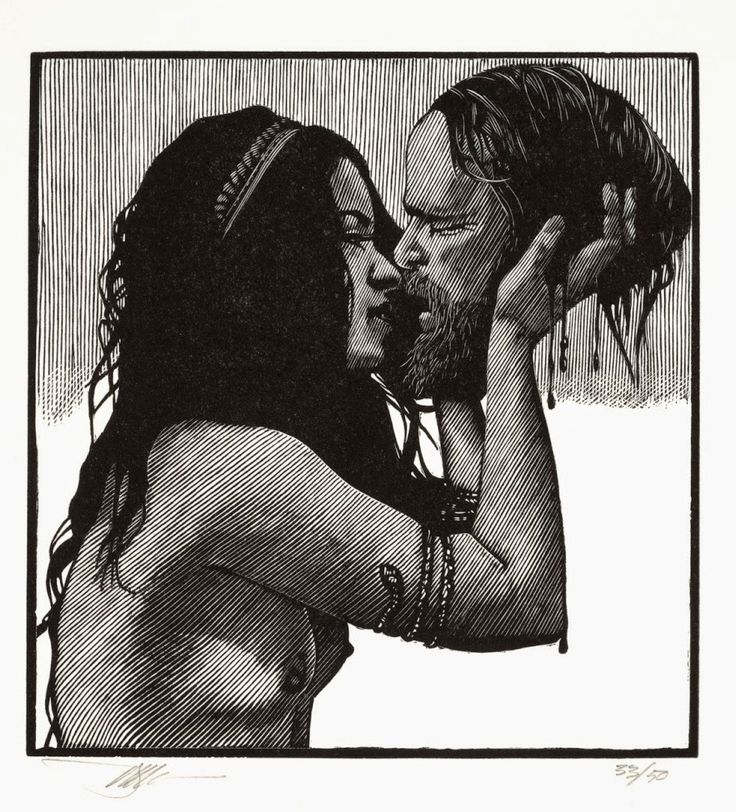
Salome — Barry Moser

8c426f2ea91a121a836d818613aa4cf5

“Titian Paints a Sick Man” — Roberto Bolaño

“Titian Paints a Sick Man”

by

Roberto Bolaño

At the Uffizi, in Florence, is this odd painting by Titian. For a while, no one knew who the artist was. First the work was attributed to Leonardo and then to Sebastiano del Piombo. Though there’s still no absolute proof, today the critics are inclined to credit it to Titian. In the painting we see a man, still young, with long dark curly hair and a beard and mustache perhaps slightly tinged with red, who, as he poses, gazes off toward the right, probably toward a window that we can’t see, but still a window that somehow one imagines is closed, yet with curtains open or parted enough to allow a yellow light to filter into the room, a light that in time will become indistinguishable from the varnish on the painting.

1

The young man’s face is beautiful and deeply thoughtful. He’s looking toward the window, if he’s looking anywhere, though probably all he sees is what’s happening inside his head. But he’s not contemplating escape. Perhaps Titian told him to turn like that, to turn his face into the light, and the young man is simply obeying him. At the same time, one might say that all the time in the world stretches out before him. By this I don’t mean that the young man thinks he’s immortal. On the contrary. The young man knows that life renews itself and that the art of renewal is often death. Intelligence is visible in his face and his eyes, and his lips are turned down in an expression of sadness, or maybe it’s something else, maybe apathy, none of which excludes the possibility that at some point he might feel himself to be master of all the time in the world, because true as it is that man is a creature of time, theoretically (or artistically, if I can put it that way) time is also a creature of man.

2

In fact, in this painting, time — sketched in invisible strokes — is a kitten perched on the young man’s hands, his gloved hands, or rather his gloved right hand which rests on a book: and this right hand is the perfect measure of the sick man, more than his coat with a fur collar, more than his loose shirt, perhaps of silk, more than his pose for the painter and for posterity (or fragile memory), which the book promises or sells. I don’t know where his left hand is.

How would a medieval painter have painted this sick man? How would a non-figurative artist of the twentieth century have painted this sick man? Probably howling or wailing in fear. Judged under the eye of an incomprehensible God or trapped in the labyrinth of an incomprehensible society. But Titian gives him to us, the spectators of the future, clothed in the garb of compassion and understanding. That young man might be God or he might be me. The laughter of a few drunks might be my laughter or my poem. That sweet Virgin is my friend. That sad-faced Virgin is the long march of my people. The boy who runs with his eyes closed through a lonely garden is us.

From Between Parentheses.
Blueprint for a Temple — Francesca Woodman

dp264181

A Balloon Site, Coventry — Laura Knight

a_balloon_site_coventry_1943_art-_iwm_art_ld_2750

“Take a Look at That Baby” — John Fahey

The Apparition in the Forest — Moritz von Schwind

3088-079

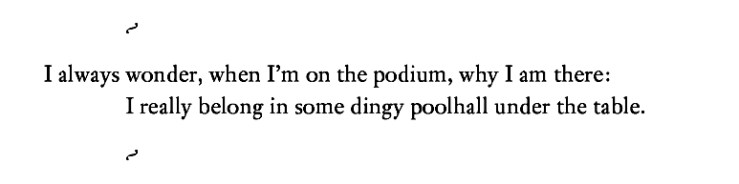
Belong (Theodore Roethke)

screenshot-2016-11-17-at-5

(From Straw for the Fire: From the Notebooks of Theodore Roethke, 1943-63).

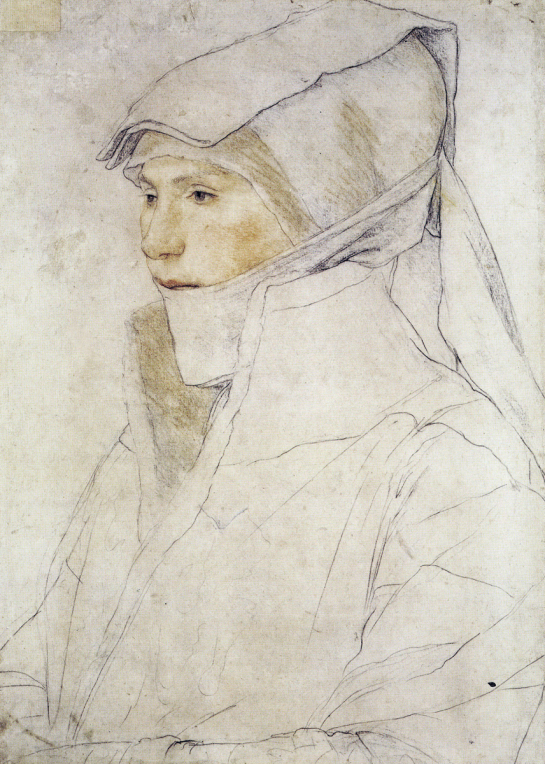
Dorothea Meyer — Hans Holbein the Younger

dorothea_meyer_chalk_drawing_by_hans_holbein_the_younger