Bulgakov, Bowles, Gass (Books acquired 31 March 2017)

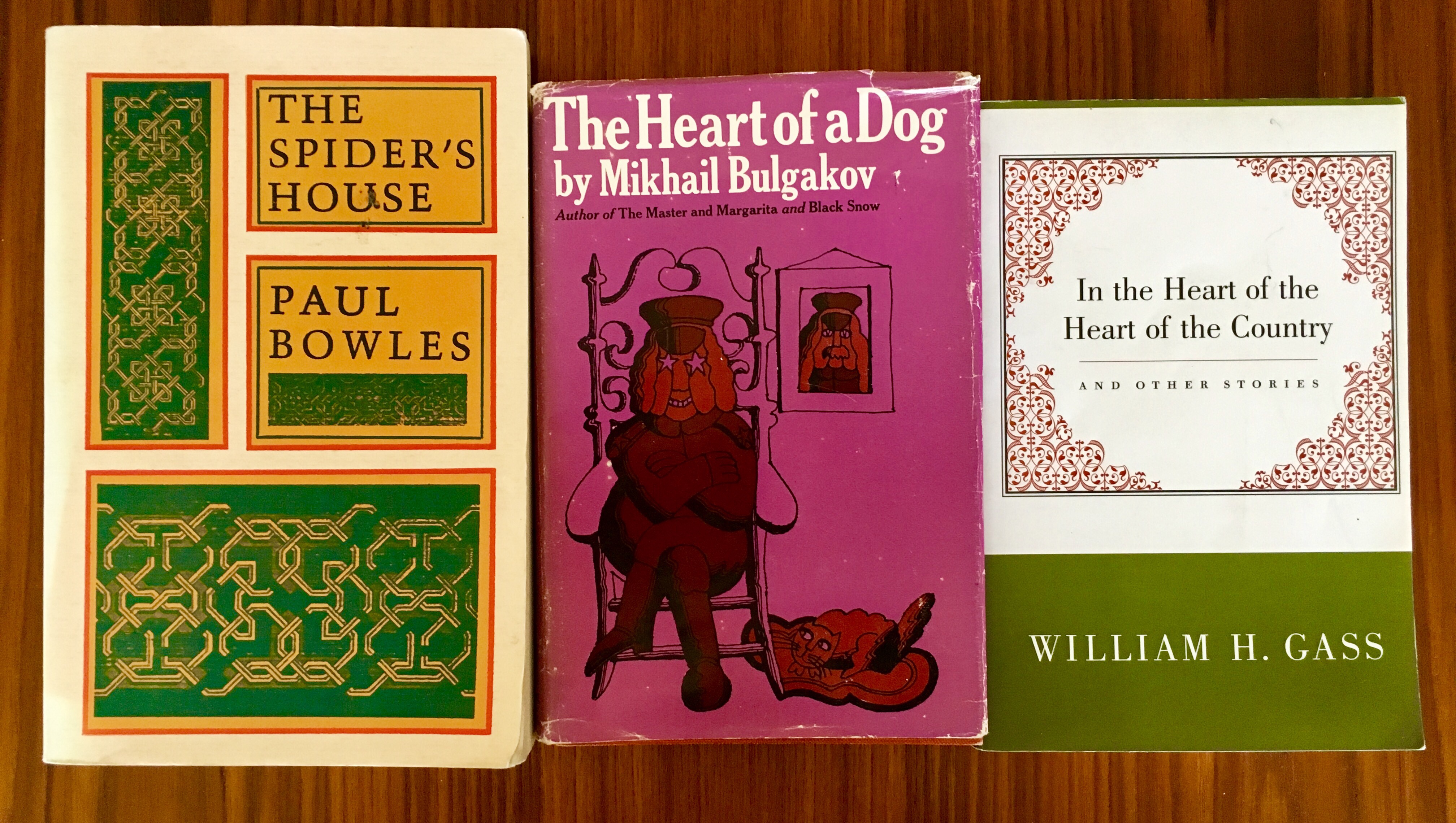
I like to shuffle around my favorite used bookstore on Fridays if I have a loose hour. This afternoon, I picked up three: A first-ed. U.S. hardback Bulgakov, an Ecco-Press-imitating-Black-Sparrow-Press Paul Bowles, and a stately-but-too-stately-too-prestigish-(as-opposed-to-“prestigious”) copy of William H. Gass’s In the Heart of the Heart of the Country. 

I read the devastating  “The Pedersen Kid,” the first novella in the In the Heart of the Heart of the Country collection of collected novellas a few years ago when I checked this book out of the library. Some helpful joker inscribed a map in this copy:

img_5637

Said joker also appended three ball pen inked cursive notes to the end of the tale:

“Coming-of age

Christ / resurrection

Oedipal”

I think I read the next story (it’s much shorter), “Mrs. Mean,” but I confess I can’t recall it right now. I do remember returning the book to the library though.

The design of the Paul Bowles Ecco Press edition of The Spider’s House kinda sorta matches the design of In the Heart of the Heart of the Heart of the Heart (Nonpareil Books, btw). I recently finished Up Above the World (after reading and being slightly-disappointed in the more-lauded debut The Sheltering Sky). I liked Up Above the World’s sinister slow-burn. My understanding is that The Spider’s House is considered superior, so we’ll see. (2017 is turning into The Year I Finally Read Paul Bowles).

Mikhail Bulgakov’s samizdat Soviet-era novel Master and Margarita has improved in my memory; reviewing my review of it a few years ago, I find that I remember it fondly, and stronger. (I wrote that it “sags at times”; I don’t remember the saggy bits, but I recall its fun effervescent evil bits).

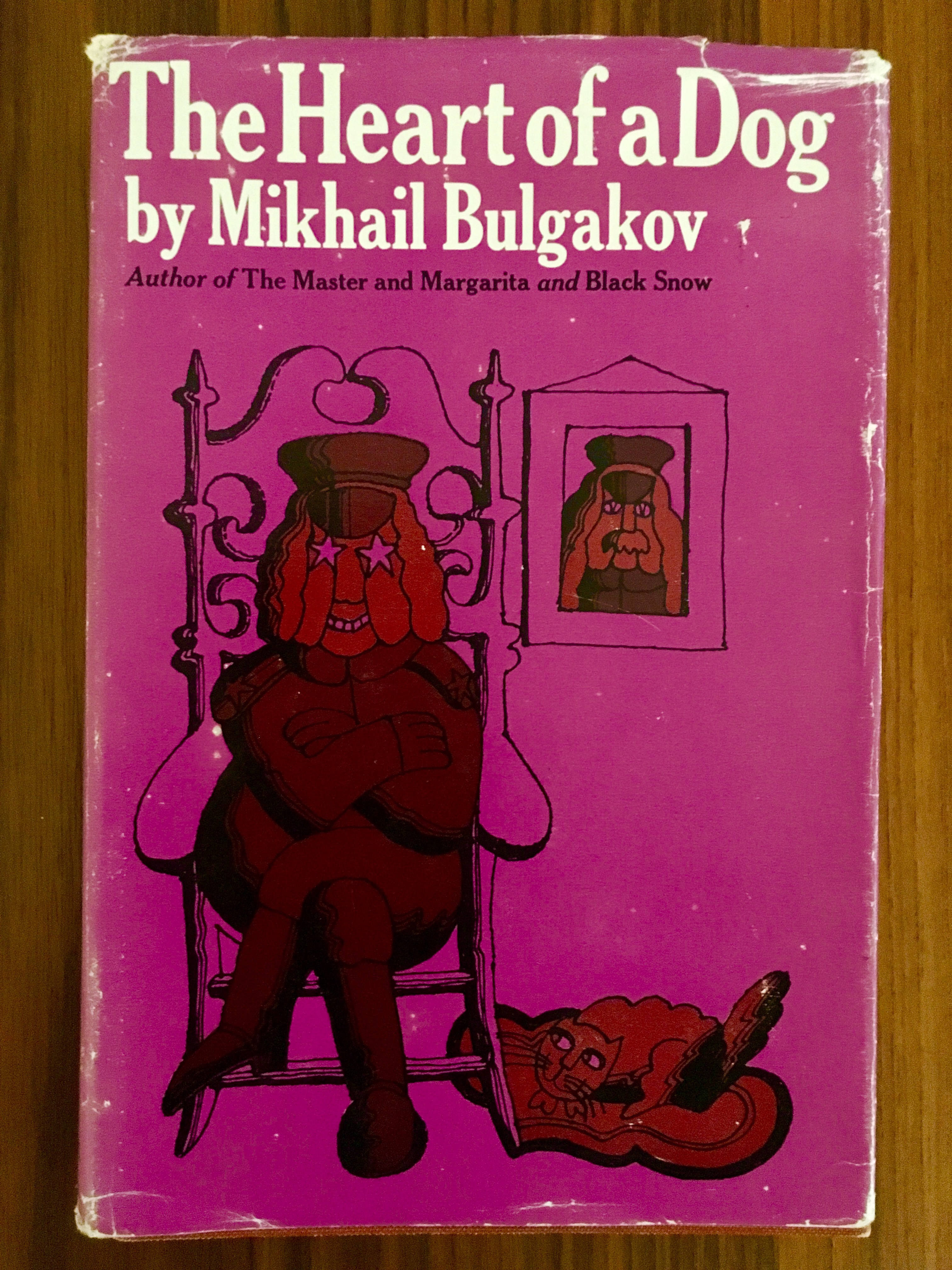
Anyway, I couldn’t pass up on this first-edition U.S. copy (1968 Harcourt, Brace & World) of Bulgakov’s novel The Heart of a Dog (English translation by Michael Glenny, with jacket design by Applebaum & Curtis, Inc.).
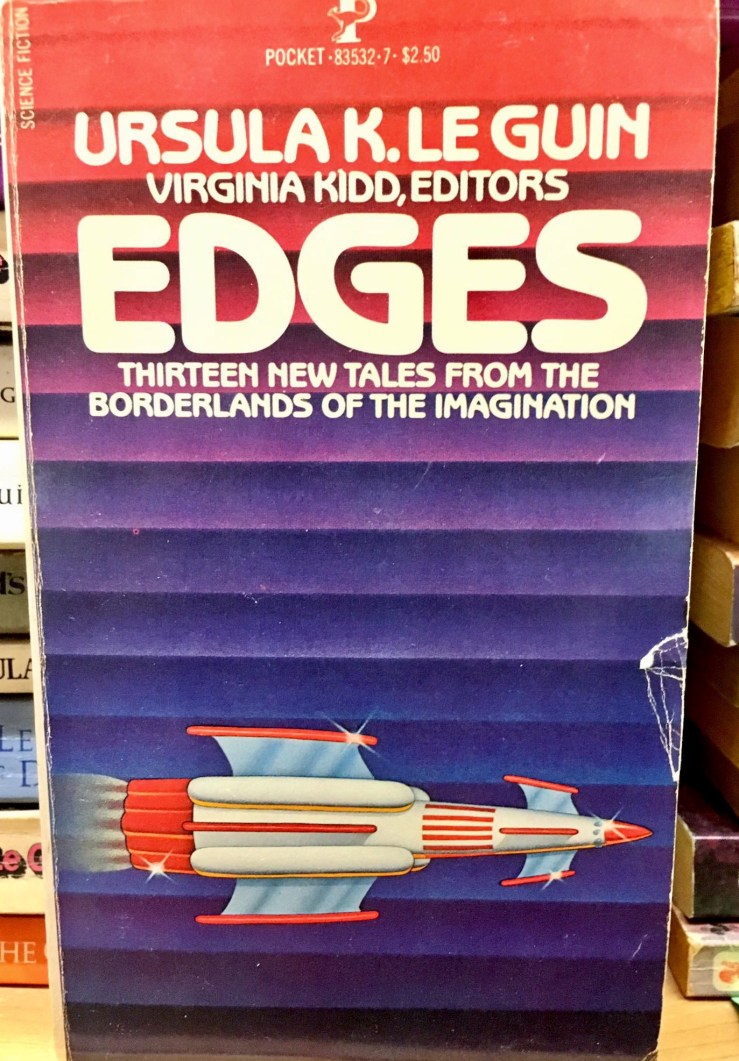
I also took note of this cover for Edges, a 1980 sci-fi anthology edited by Ursula K. Le Guin and Virginia Kidd (and featuring authors like Thomas Disch and Gene Wolfe)—but I didn’t pick it up, mostly because I didn’t particularly have any desire to read it, even though a much younger version of me out there would’ve loved to read it. I mean, I was thinking about that younger version of me out there; maybe that version—a different version of course—will find it.
img_5630

Self-Portrait under Plastic — Maria Lassnig

1972_Selbstportraet unter Plastik

Selbstporträt unter Plastik (Self-Portrait under Plastic), 1972 by Maria Lassnig (1919-2014)

Nathaniel Hawthorne’s journal entry for Friday, March 31st, 1843

Friday, March 31st, 1843.–The first month of spring is already gone; and still the snow lies deep on hill and valley, and the river is still frozen from bank to bank, although a late rain has caused pools of water to stand on the surface of the ice, and the meadows are overflowed into broad lakes. Such a protracted winter has not been known for twenty years, at least. I have almost forgotten the wood-paths and shady places which I used to know so well last summer; and my views are so much confined to the interior of our mansion, that sometimes, looking out of the window, I am surprised to catch a glimpse of houses, at no great distance, which had quite passed out of my recollection. From present appearances, another month may scarcely suffice to wash away all the snow from the open country; and in the woods and hollows it may linger yet longer. The winter will not have been a day less than five months long; and it would not be unfair to call it seven. A great space, indeed, to miss the smile of Nature, in a single year of human life. Even out of the midst of happiness I have sometimes sighed and groaned; for I love the sunshine and the green woods, and the sparkling blue water; and it seems as if the picture of our inward bliss should be set in a beautiful frame of outward nature. . . . As to the daily course of our life, I have written with pretty commendable diligence, averaging from two to four hours a day; and the result is seen in various magazines. I might have written more, if it had seemed worth while, but I was content to earn only so much gold as might suffice for our immediate wants, having prospect of official station and emolument which would do away with the necessity of writing for bread. Those prospects have not yet had their fulfilment; and we are well content to wait, because an office would inevitably remove us from our present happy home,–at least from an outward home; for there is an inner one that will accompany us wherever we go. Meantime, the magazine people do not pay their debts; so that we taste some of the inconveniences of poverty. It is an annoyance, not a trouble.

Every day, I trudge through snow and slosh to the village, look into the post-office, and spend an hour at the reading-room; and then return home, generally without having spoken a word to a human being. . . . In the way of exercise I saw and split wood, and, physically, I never was in a better condition than now. This is chiefly owing, doubtless, to a satisfied heart, in aid of which comes the exercise above mentioned, and about a fair proportion of intellectual labor.

On the 9th of this month, we left home again on a visit to Boston and Salem. I alone went to Salem, where I resumed all my bachelor habits for nearly a fortnight, leading the same life in which ten years of my youth flitted away like a dream. But how much changed was I! At last I had caught hold of a reality which never could be taken from me. It was good thus to get apart from my happiness, for the sake of contemplating it.

On the 2lst, I returned to Boston, and went out to Cambridge to dine with Longfellow, whom I had not seen since his return from Europe. The next day we came back to our old house, which had been deserted all this time; for our servant had gone with us to Boston.

From Nathaniel Hawthorne’s Passages from the American Note-Books.