“Sugar” — Gertrude Stein

“Sugar”

by

Gertrude Stein


A violent luck and a whole sample and even then quiet.

Water is squeezing, water is almost squeezing on lard. Water, water is a mountain and it is selected and it is so practical that there is no use in money. A mind under is exact and so it is necessary to have a mouth and eye glasses.

A question of sudden rises and more time than awfulness is so easy and shady. There is precisely that noise.

A peck a small piece not privately overseen, not at all not a slice, not at all crestfallen and open, not at all mounting and chaining and evenly surpassing, all the bidding comes to tea.

A separation is not tightly in worsted and sauce, it is so kept well and sectionally.

Put it in the stew, put it to shame. A little slight shadow and a solid fine furnace.

The teasing is tender and trying and thoughtful.

The line which sets sprinkling to be a remedy is beside the best cold.

A puzzle, a monster puzzle, a heavy choking, a neglected Tuesday.

Wet crossing and a likeness, any likeness, a likeness has blisters, it has that and teeth, it has the staggering blindly and a little green, any little green is ordinary.

One, two and one, two, nine, second and five and that.

A blaze, a search in between, a cow, only any wet place, only this tune.

Cut a gas jet uglier and then pierce pierce in between the next and negligence. Choose the rate to pay and pet pet very much. A collection of all around, a signal poison, a lack of languor and more hurts at ease.

A white bird, a colored mine, a mixed orange, a dog.

Cuddling comes in continuing a change.

A piece of separate outstanding rushing is so blind with open delicacy.

A canoe is orderly. A period is solemn. A cow is accepted.

A nice old chain is widening, it is absent, it is laid by.

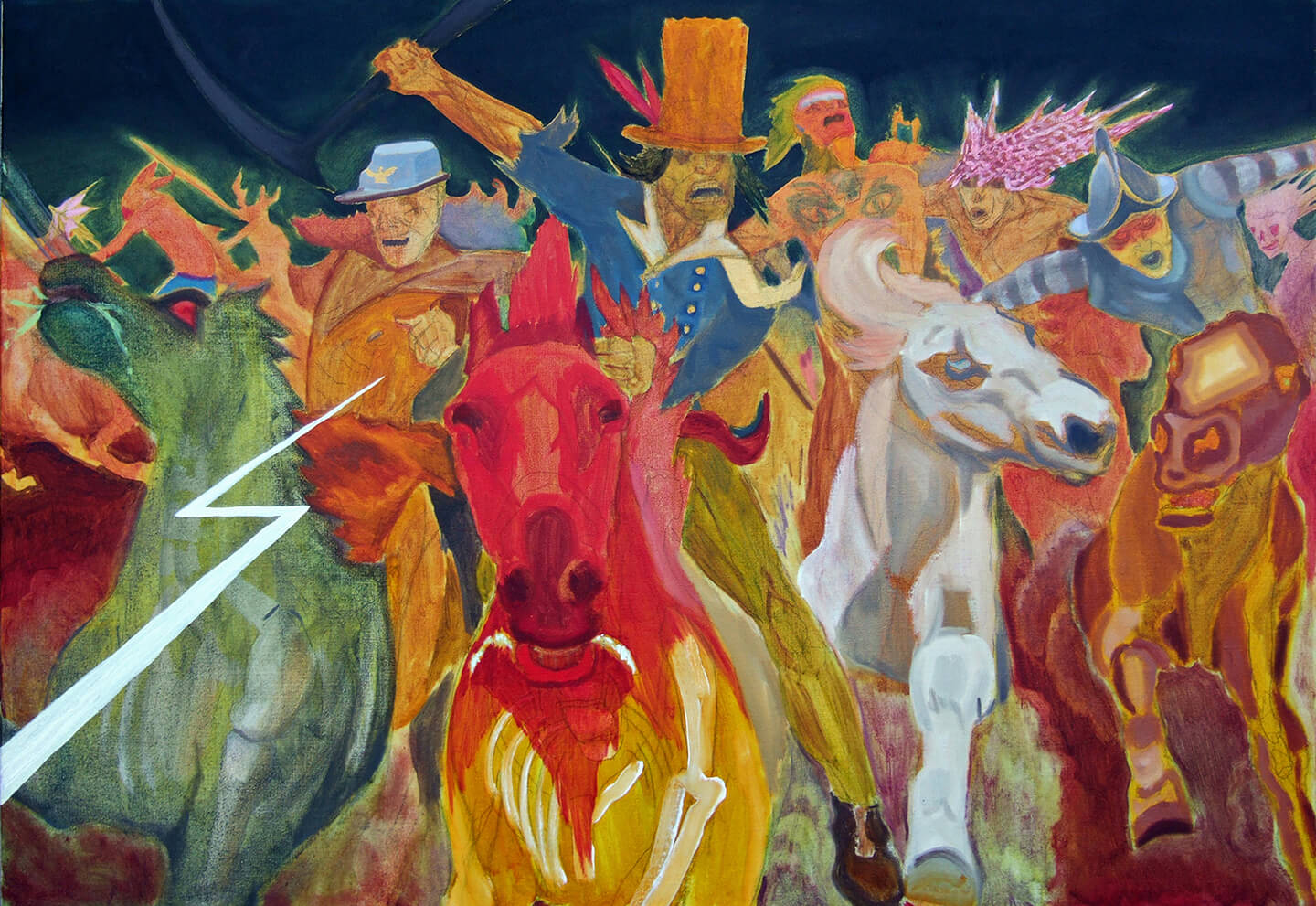
If Nancy Knew What Wearing Green and Yellow on Thursday Meant — Joe Brainard

If Nancy Knew What Wearing Green and Yellow on Thursday Meant, 1972 by Joe Brainard (1942– 1994) 

Illustration from The Holy Terrors — Jean Cocteau

Illustration from The Holy Terrors, c. 1929 by Jean Cocteau (1889–1963)

Donald Barthelme’s “The Indian Uprising,” but just the punctuation

. . , . . . . ” ? ” , , – . . ” . ” , . . . , . , , , , – . . . ” ‘ ‘ ‘ ? ” ” ? ” ” . ” ” , ” . ” , , , . ” ” ? ” ” , ” , ” . ” , , , : ? ? – . , , , , . , , , ( ) , , . , , ; ; – ; – – & , , , , , # ; – – ; , – ; ; ; ; ; , , ; – – ; , , ; . . , . . . , , , , , . . . ” , ” , ” , , , , , . , , , . . . . ” . . . , – . , , , , . , – . – . ” , ” . ” . ” , , , , , , . ” , ” . , . , – , , , . . . . , , , . – . . – – . ” , ” . ” , ” . . . , . . ( , ! ! ) . . . . . , , . . , . . , , . , , , , , , , , , . ” ? ” . ” , ” . ” . . ” ” ? ” ” , ” . ” . . . . . ” ‘ , . , , , : ” ? ” . . , . . . ” , , , . ‘ . ” . ” . ( ) , , , , . ” . ” ? ” ‘ . ” , ” . ” . , , . ” , , , , . . , . ” , ” , ” ? ” ” , ” . , , ” . . , , , # , , , , , , . , ” . , ” # . , ” , ” , , , , , , . , ” . , ” . , ” . , ” , , . . ” . , , , . – – . , . ” ! ! ” , , . . . . , , . – – , . , , , . . . , , , , , , , , . , – . . . . , . . . ! . ‘ , . – , ‘ , ? , , ‘ , ? . ( ‘ ) , ( ‘ ) . , ! , . , , , , , . . & . ” ? ” ” , ! ” . . ” ? ” , , – – , . . , , . . ” , ” . , . ” . . ” ( , ) , , , .


Donald Barthelme’s “The Indian Uprising,” but it’s just the punctuation.

Goggled Head — Elisabeth Frink

Goggled Head, 1973 by Elisabeth Frink (1930-1993)

Baudelaire kept running from pain | Kathy Acker

Posted in Art

Elizabeth Taylor’s Mrs Palfrey at the Claremont (Book acquired, late Nov. 2021)

NYRB is reprinting the last novel of Elizabeth Taylor (not that one, the other one), Mrs Palfrey at the Claremont. NYRB’s blurb:

On a rainy Sunday afternoon in January, the recently widowed Mrs. Palfrey moves to the Claremont Hotel in South Kensington. “If it’s not nice, I needn’t stay,” she promises herself, as she settles into this haven for the genteel and the decayed. “Three elderly widows and one old man . . . who seemed to dislike female company and seldom got any other kind” serve for her fellow residents, and there is the staff, too, and they are one and all lonely. What is Mrs. Palfrey to do with herself now that she has all the time in the world? Go for a walk. Go to a museum. Go to the end of the block. Well, she does have her grandson who works at the British Museum, and he is sure to visit any day.

Mrs. Palfrey prides herself on having always known “the right thing to do,” but in this new situation she discovers that resource is much reduced. Before she knows it, in fact, she tries something else.

Elizabeth Taylor’s final and most popular novel is as unsparing as it is, ultimately, heartbreaking.

William Carlos Williams’ anecdote on meeting T.S. Eliot / by Allen Ginsberg / as told to Bockris-Wylie

W.C. Williams anecdote meeting T.S. Eliot

by

Allen Ginsberg

as told to Bockris-Wylie


Note: This isn’t an article deliberately written nor an interview untouched. It’s conversation transcribed, edited punctuated and condensed by interviewers. The words are mine but the style of transcription – timing, context, punctuation, tone – is mostly by Bockris–Wiley handiwork.

Allen Ginsberg

6 February 74

I never met Eliot, I just saw him reading at the Y once. Marianne Moore was in the audience and I remember him saying, “and now I have a request from somebody to read Dry Salvages, a request which is in command, coming from so distinguished a poet as Miss Moore, as it does.” Very elegant! And then he read some poems written thirty years before.

It was nice to hear him read them in person, but it was very diplomatic, he was too stiff, or much locked in a single image, it would have been interesting if he had had a little bit of Dali’s element of Surprise. I remember I told Robert Duncan when we (Orlovsky & Kerouac) were going to go and see Dali, and Duncan very sweetly said, “Please give him my respects, and say that he has always enchanted us as the genius of surprise.”

So it would have been interesting to see Eliot pulling out some element of surprise, like coming on the stage half–naked, wearing a grape fig haircut, or coming on dressed like a bishop or some kind of pope in drag, or in an 18th-century courtiers costume, or –improvising a poem right there on the stage. Something really astounding – would have been another Eliot.

Williams had a bony-nosed dislike of Eliot, characterized by Williams statement “Eliot was such a great genius he set American poetry back thirty years.”

What really pissed Williams off, Williams once told me, they met once, (and they’ve been rivals for the aesthetic affections of Pound) — and Williams said that Eliot was introduced to him: “Oh, Dr. Williams, how marvelous to meet you. I read many of your characters, you should write more of them. I do admire the characters you’ve done.” By characters he meant the old english form, it’s an outline of a person, a social picture sketch, character of the happy warrior, etc.

Williams said, “Why that son of a bitch! I’ve never heard . . . Completely patronizing!” I think Williams objection was that Eliot was trying to interpret Williams efforts in terms of English traditionalism — Eliot’s forms and formulas and terminalogic categories – rather than acknowledge the specific thing Williams was trying to do, which was to write something uncategorically American, raw eared and Rutherford-eyed

(That’s the only meeting they ever had apparently. And I don’t think it’s been recorded anywhere.)


This text was published in The World #29, April 1974. “Bockris-Wylie” refers to a writing partnership between Victor Brockis (whose Lou Reed biography is good trashy fun) and Andrew Wylie, who later became a powerful literary agent (I have gotten multiple takedown notices from the Wylie Agency in the past.

I have done my best to replicate the original typography of The World’s piece, including their complete disrespect of the possessive apostrophe.

The Fox Cavern — Yan Pei–Ming

The Fox Cavern, 2020 by Yan Pei–Ming (b. 1960)

“After Some Lines of Goethe” — William H. Gass

Posted in Art

Hamlet — John Archibald Austen

Illustration for Shakespeare’s Hamlet, 1922 by John Archibald Austen (1886-1948)

“Early Cinema” — Elizabeth Alexander

“Early Cinema”

by

Elizabeth Alexander


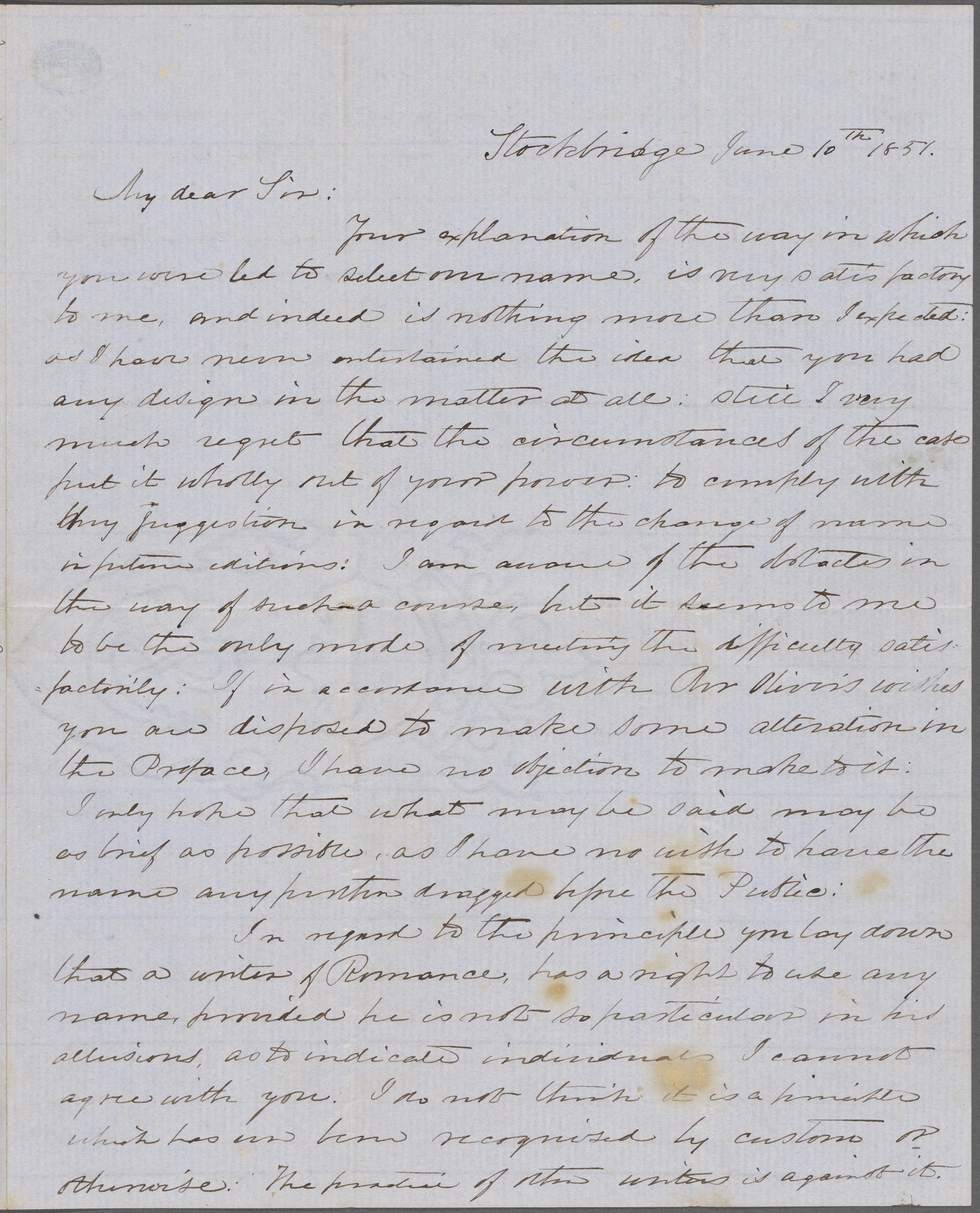
According to Mister Hedges, the custodian
who called upon their parents
after young Otwiner and young Julia
were spotted at the matinee
of Rudolph Valentino in The Sheik
at the segregated Knickerbocker Theater
in the uncommon Washington December
of 1922, “Your young ladies
were misrepresenting themselves today,”
meaning, of course, that they were passing.
After coffee and no cake were finished
and Mister Hedges had buttoned his coat
against the strange evening chill,
choice words were had with Otwiner and Julia,
shame upon the family, shame upon the race.

How they’d longed to see Rudolph Valentino,
who was swarthy like a Negro, like the finest Negro man.
In The Sheik, they’d heard, he was turbaned,
whisked damsels away in a desert cloud.
They’d heard this from Lucille and Ella
who’d put on their fine frocks and French,
claiming to be “of foreign extraction”
to sneak into the Knickerbocker Theater
past the usher who knew their parents
but did not know them.
They’d heard this from Mignon and Doris
who’d painted carmine bindis on their foreheads
braided their black hair tight down the back,
and huffed, “We’ll have to take this up with the Embassy”
to the squinting ticket taker.
Otwiner and Julia were tired of Oscar Michaux,
tired of church, tired of responsibility,
rectitude, posture, grooming, modulation,
tired of homilies each way they turned,
tired of colored right and wrong.
They wanted to be whisked away.

The morning after Mister Hedges’ visit
the paperboy cried “Extra!” and Papas
shrugged camel’s hair topcoats over pressed pajamas,
and Mamas read aloud at the breakfast table,
“No Colored Killed When Roof Caves In”
at the Knickerbocker Theater
at the evening show
from a surfeit of snow on the roof.
One hundred others dead.

It appeared that God had spoken.
There was no school that day,
no movies for months after.

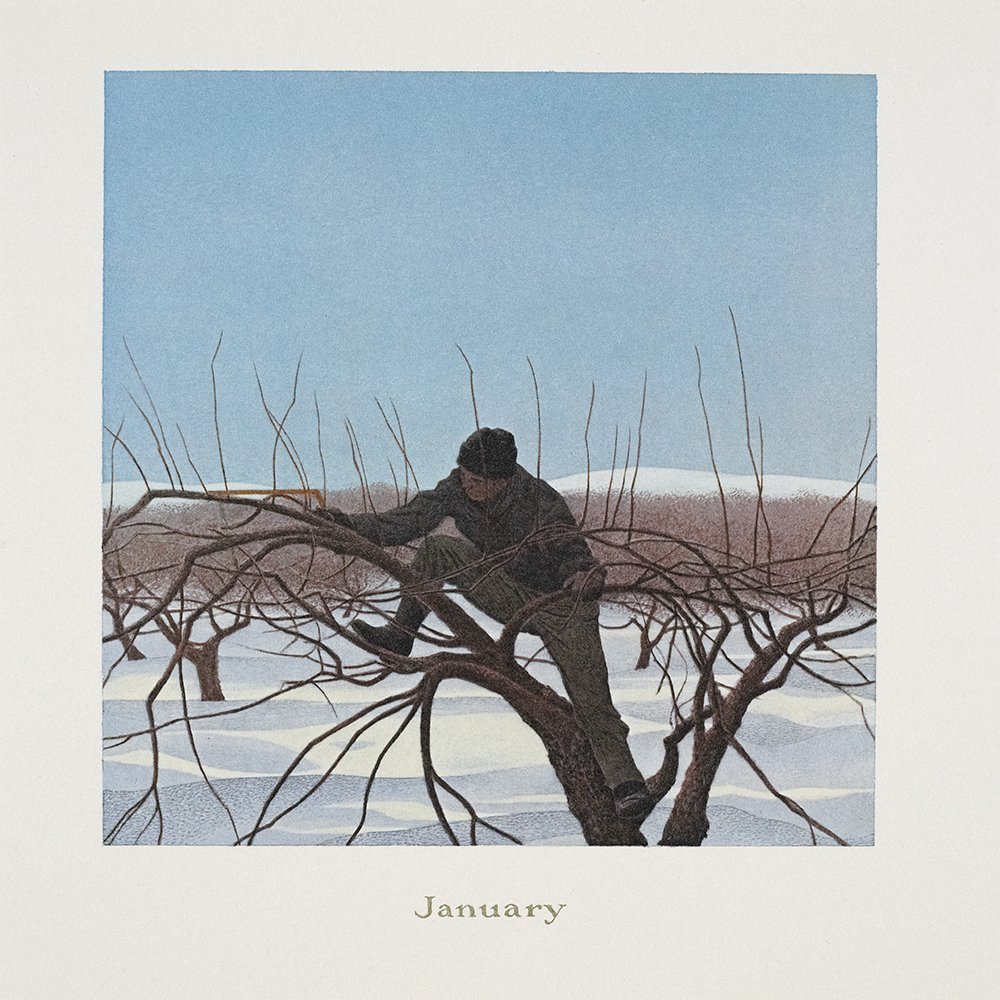
December — Alex Katz

December, 1974 by Alex Katz (b. 1927)

Read Stephen Crane’s story “The Five White Mice”

“The Five White Mice”

by

Stephen Crane


Freddie was mixing a cocktail. His hand with the long spoon was whirling swiftly, and the ice in the glass hummed and rattled like a cheap watch. Over by the window, a gambler, a millionaire, a railway conductor, and the agent of a vast American syndicate were playing seven-up. Freddie surveyed them with the ironica

l glance of a man who is mixing a cocktail.

From time to time a swarthy Mexican waiter came with his tray from the rooms at the rear, and called his orders across the bar. The sounds of the indolent stir of the city, awakening from its siesta, floated over the screens which barred the sun and the inquisitive eye. From the far-away kitchen could be heard the roar of the old French chef, driving, herding, and abusing his Mexican helpers.

A string of men came suddenly in from the street. They stormed up to the bar. There were impatient shouts. “Come, now, Freddie, don’t stand there like a portrait of yourself. Wiggle!” Drinks of many kinds and colors—amber, green, mahogany, strong and mild—began to swarm upon the bar, with all the attendants of lemon, sugar, mint, and ice. Freddie, with Mexican support, worked like a sailor in the provision of them, sometimes talking with that scorn for drink and admiration for those who drink which is the attribute of a good barkeeper.

At last a man was afflicted with a stroke of dice-shaking. A herculean discussion was waging, and he was deeply engaged in it, but at the same time he lazily flirted the dice. Occasionally he made great combinations. “Look at that, would you?” he cried proudly. The others paid little heed. Then violently the craving took them. It went along the line like an epidemic, and involved them all. In a moment they had arranged a carnival of dice-shaking, with money penalties and liquid prizes. They clamorously made it a point of honor with Freddie that he too should play, and take his chance of sometimes providing this large group with free refreshment. With bent heads, like football players, they surged over the tinkling dice, jostling, cheering, and bitterly arguing. One of the quiet company playing seven-up at the corner table said profanely that the row reminded him of a bowling contest at a picnic. Continue reading “Read Stephen Crane’s story “The Five White Mice””

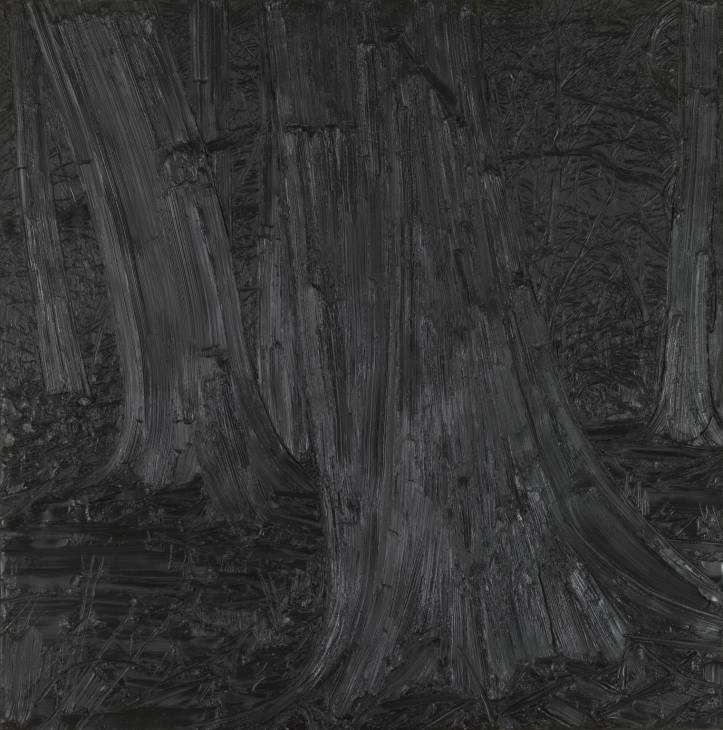
28.2.86 (3) — Gerhard Richter


28.2.86 (3), 1986 by Gerhard Richter (b. 1932)

Coxcomb not to die in it | Stephen Crane

We picture the world as thick with conquering and elate humanity, but here, with the bugles of the tempest pealing, it was hard to imagine a peopled earth. One viewed the existence of man then as a marvel, and conceded a glamour of wonder to these lice which were caused to cling to a whirling, fire-smote, ice-locked, disease-stricken, space-lost bulb. The conceit of man was explained by this storm to be the very engine of life. One was a coxcomb not to die in it.

From Stephen Crane’s long short story/short novella “The Blue Hotel,” which I reread this afternoon, and which I think is a rather perfect specimen.

Study of a Boy — Thomas Sword Good

Study of a Boy by Thomas Sword Good (1789-1872)