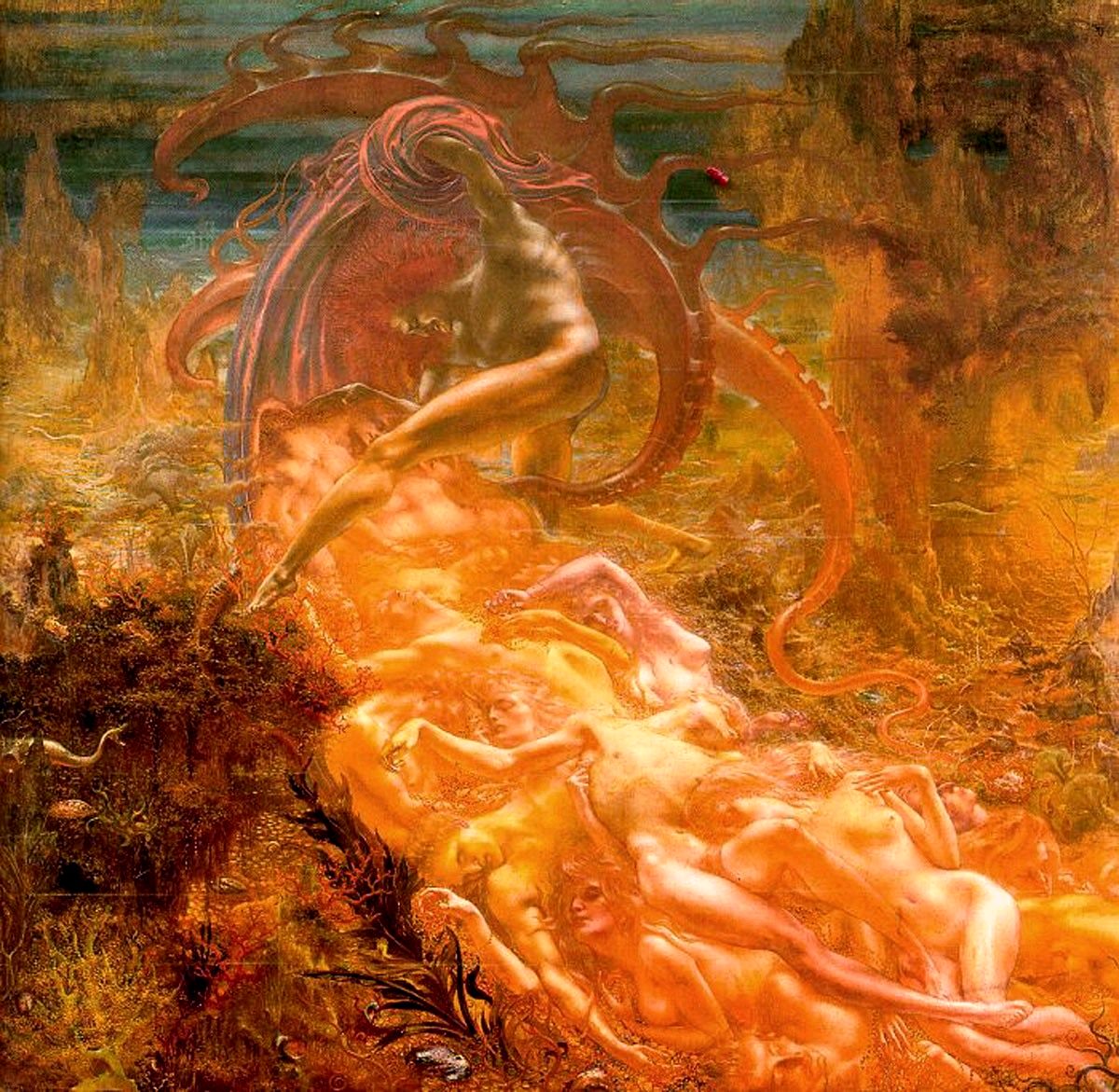
Moonsiren — Leonora Carrington

tumblr_llug6mAJKX1qcnlh2o1_1280

That queerly persistent U.S. myth that cynicism and naïveté are mutually exclusive (Infinite Jest)

It’s of some interest that the lively arts of the millennial U.S.A. treat anhedonia and internal emptiness as hip and cool. It’s maybe the vestiges of the Romantic glorification of Weltschmerz, which means world-weariness or hip ennui. Maybe it’s the fact that most of the arts here are produced by world-weary and sophisticated older people and then consumed by younger people who not only consume art but study it for clues on how to be cool, hip — and keep in mind that, for kids and younger people, to be hip and cool is the same as to be admired and accepted and included and so Unalone. Forget so-called peer-pressure. It’s more like peer-hunger. No? We enter a spiritual puberty where we snap to the fact that the great transcendent horror is loneliness, excluded encagement in the self. Once we’ve hit this age, we will now give or take anything, wear any mask, to fit, be part-of, not be Alone, we young. The U.S. arts are our guide to inclusion. A how-to. We are shown how to fashion masks of ennui and jaded irony at a young age where the face is fictile enough to assume the shape of whatever it wears. And then it’s stuck there, the weary cynicism that saves us from gooey sentiment and unsophisticated naïveté. Sentiment equals naïveté on this continent (at least since the Reconfiguration). One of the things sophisticated viewers have always liked about J. O. Incandenza’s The American Century as Seen Through a Brick is its unsubtle thesis that naïveté is the last true terrible sin in the theology of millennial America. And since sin is the sort of thing that can be talked about only figuratively, it’s natural that Himself’s dark little cartridge was mostly about a myth, viz. that queerly persistent U.S. myth that cynicism and naïveté are mutually exclusive. Hal, who’s empty but not dumb, theorizes privately that what passes for hip cynical transcendence of sentiment is really some kind of fear of being really human, since to be really human (at least as he conceptualizes it) is probably to be unavoidably sentimental and naïve and goo-prone and generally pathetic, is to be in some basic interior way forever infantile, some sort of not-quite-right-looking infant dragging itself anaclitically around the map, with big wet eyes and froggy-soft skin, huge skull, gooey drool. One of the really American things about Hal, probably, is the way he despises what it is he’s really lonely for: this hideous internal self, incontinent of sentiment and need, that pules and writhes just under the hip empty mask, anhedonia. 

—From David Foster Wallace’s novel Infinite Jest.

Little Nemo Visits the Moon — Winsor McCay

Little_Nemo_moon

Romancing the Casserole — Mary Pratt

“The Egg,” a short story by Sherwood Anderson

“The Egg”

by

Sherwood Anderson


My father was, I am sure, intended by nature to be a cheerful, kindly man. Until he was thirty-four years old he worked as a farmhand for a man named Thomas Butterworth whose place lay near the town of Bidwell, Ohio. He had then a horse of his own and on Saturday evenings drove into town to spend a few hours in social intercourse with other farmhands. In town he drank several glasses of beer and stood about in Ben Head’s saloon–crowded on Saturday evenings with visiting farmhands. Songs were sung and glasses thumped on the bar. At ten o’clock father drove home along a lonely country road, made his horse comfortable for the night and himself went to bed, quite happy in his position in life. He had at that time no notion of trying to rise in the world.

It was in the spring of his thirty-fifth year that father married my mother, then a country schoolteacher, and in the following spring I came wriggling and crying into the world. Something happened to the two people. They became ambitious. The American passion for getting up in the world took possession of them.

It may have been that mother was responsible. Being a schoolteacher she had no doubt read books and magazines. She had, I presume, read of how Garfield, Lincoln, and other Americans rose from poverty to fame and greatness and as I lay beside her–in the days of her lying-in–she may have dreamed that I would someday rule men and cities. At any rate she induced father to give up his place as a farmhand, sell his horse and embark on an independent enterprise of his own. She was a tall silent woman with a long nose and troubled grey eyes. For herself she wanted nothing. For father and myself she was incurably ambitious.

The first venture into which the two people went turned out badly. They rented ten acres of poor stony land on Griggs’s Road, eight miles from Bidwell, and launched into chicken raising. I grew into boyhood on the place and got my first impressions of life there. From the beginning they were impressions of disaster and if, in my turn, I am a gloomy man inclined to see the darker side of life, I attribute it to the fact that what should have been for me the happy joyous days of childhood were spent on a chicken farm. Continue reading ““The Egg,” a short story by Sherwood Anderson”

“Final Curve” — Langston Hughes

final curve

Ishmael Reed/Nell Zink (Books acquired, 6.24.2015)

image

Went to my favorite bookstore today to get a copy of The Borrowers for my daughter and to replace a copy of Ishmael Reed’s Mumbo Jumbo, which I bought last month, read, and then gave away to a friend. I still aim to write something about it on the blog (hence replacing it), but short term: The book is extraordinary—metatextual, intratextual, very, very funny, filled with erudite citations and scathing humor. I can’t believe I hadn’t read it until now.

So, as I went to replace the copy I’d bought in May with the same edition, I spied this mass market paperback edition, which kinda sorta matches the copy of Yellow Back Radio Broke-Down—which hey look at that cover, how could I not pick it up?

image

I also found a copy of Nell Zink’s novel The Wallcreeper, which I’ve heard good things about from smart people.

Gothic Novel — Georgy Kurasov

Georgy Kurasov Gothic Novel 40 x 30

Seated Figure of Summer — Giuseppe Arcimboldo

Dragonfish (Book acquired, 6.20.2015)

IMG_7132

Vu Tran’s novel Dragonfish is forthcoming in hardback from W.W. Norton. Their blurb:

Robert, an Oakland cop, still can’t let go of Suzy, the enigmatic Vietnamese wife who left him two years ago. Now she’s disappeared from her new husband, Sonny, a violent Vietnamese smuggler and gambler who’s blackmailing Robert into finding her for him. As he pursues her through the sleek and seamy gambling dens of Las Vegas, shadowed by Sonny’s sadistic son, “Junior,” and assisted by unexpected and reluctant allies, Robert learns more about his ex-wife than he ever did during their marriage. He finds himself chasing the ghosts of her past, one that reaches back to a refugee camp in Malaysia after the fall of Saigon, as his investigation soon uncovers the existence of an elusive packet of her secret letters to someone she left behind long ago. Although Robert starts illuminating the dark corners of Suzy’s life, the legacy of her sins threatens to immolate them all.

Vu Tran has written a thrilling and cinematic work of sophisticated suspense and haunting lyricism, set in motion by characters who can neither trust each other nor trust themselves. This remarkable debut is a noir page-turner resonant with the lasting reverberations of lives lost and lives remade a generation ago.

The Finery of the Storm — Rene Magritte

“The Midsummer Fires” (from Sir James George Frazer’s The Golden Bough)

“The Midsummer Fires”by Sir James George Frazerfrom The Golden BoughBUT THE SEASON at which these firefestivals have been most generally held all over Europe is the summer solstice, that is Midsummer Eve (the twenty-third of June) or Midsummer day (the twenty-fourth of June). A faint tinge of Christianity has been given to them by naming Midsummer Day after St. John the Baptist, but we cannot doubt that the celebration dates from a time long before the beginning of our era. The summer solstice, or Midsummer Day, is the great turning-point in the sun’s career, when, after climbing higher and higher day by day in the sky, the luminary stops and thenceforth retraces his steps down the heavenly road. Such a moment could not but be regarded with anxiety by primitive man so soon as he began to observe and ponder the courses of the great lights across the celestial vault; and having still to learn his own powerlessness in face of the vast cyclic changes of nature, he may have fancied that he could help the sun in his seeming decline—could prop his failing steps and rekindle the sinking flame of the red lamp in his feeble hand. In some such thoughts as these the midsummer festivals of our European peasantry may perhaps have taken their rise. Whatever their origin, they have prevailed all over this quarter of the globe, from Ireland on the west to Russia on the east, and from Norway and Sweden on the north to Spain and Greece on the south. According to a mediæval writer, the three great features of the midsummer celebration were the bonfires, the procession with torches round the fields, and the custom of rolling a wheel. He tells us that boys burned bones and filth of various kinds to make a foul smoke, and that the smoke drove away certain noxious dragons which at this time, excited by the summer heat, copulated in the air and poisoned the wells and rivers by dropping their seed into them; and he explains the custom of trundling a wheel to mean that the sun, having now reached the highest point in the ecliptic, begins thenceforward to descend.

The main features of the midsummer fire-festival resemble those which we have found to characterise the vernal festivals of fire. The similarity of the two sets of ceremonies will plainly appear from the following examples.

A writer of the first half of the sixteenth century informs us that in almost every village and town of Germany public bonfires were kindled on the Eve of St. John, and young and old, of both sexes, gathered about them and passed the time in dancing and singing. People on this occasion wore chaplets of mugwort and vervain, and they looked at the fire through bunches of larkspur which they held in their hands, believing that this would preserve their eyes in a healthy state throughout the year. As each departed, he threw the mugwort and vervain into the fire, saying, “May all my ill-luck depart and be burnt up with these.” At Lower Konz, a village situated on a hillside overlooking the Moselle, the midsummer festival used to be celebrated as follows. A quantity of straw was collected on the top of the steep Stromberg Hill. Every inhabitant, or at least every householder, had to contribute his share of straw to the pile. At nightfall the whole male population, men and boys, mustered on the top of the hill; the women and girls were not allowed to join them, but had to take up their position at a certain spring half-way down the slope. On the summit stood a huge wheel completely encased in some of the straw which had been jointly contributed by the villagers; the rest of the straw was made into torches. From each side of the wheel the axle-tree projected about three feet, thus furnishing handles to the lads who were to guide it in its descent. The mayor of the neighbouring town of Sierck, who always received a basket of cherries for his services, gave the signal; a lighted torch was applied to the wheel, and as it burst into flame, two young fellows, strong-limbed and swift of foot, seized the handles and began running with it down the slope. A great shout went up. Every man and boy waved a blazing torch in the air, and took care to keep it alight so long as the wheel was trundling down the hill. The great object of the young men who guided the wheel was to plunge it blazing into the water of the Moselle; but they rarely succeeded in their efforts, for the vineyards which cover the greater part of the declivity impeded their progress, and the wheel was often burned out before it reached the river. As it rolled past the women and girls at the spring, they raised cries of joy which were answered by the men on the top of the mountain; and the shouts were echoed by the inhabitants of neighbouring villages who watched the spectacle from their hills on the opposite bank of the Moselle. If the fiery wheel was successfully conveyed to the bank of the river and extinguished in the water, the people looked for an abundant vintage that year, and the inhabitants of Konz had the right to exact a waggon-load of white wine from the surrounding vineyards. On the other hand, they believed that, if they neglected to perform the ceremony, the cattle would be attacked by giddiness and convulsions and would dance in their stalls.    Continue reading ““The Midsummer Fires” (from Sir James George Frazer’s The Golden Bough)”

The Creation of the World and the Expulsion from Paradise — Giovanni di Paolo

Have you met a typical nonperson lately? (William H. Gass)

Have you met met a typical nonperson lately? Then say hello, now, to your neighbor. He may be male, but his facial expressions have been put on like lipstick and eyelashes. His greeting is inevitable; so is his interest in the weather. He always smiles; he speaks only in cliches; and his opinions (as bland as Cream of Wheat, as undefined, and—when sugared—just as sweet) are drearily predictable. He has nothing but good to say of people; he collects his wisdom like dung from a Digest; he likes to share his experiences with “folks,” and recite the plots of movies. He is working up this saccharine soulside manner as part of his preparation for the ministry.

These are the “good” people. “Bad” people are unreal in the same way.

Nonpersons unperson persons. They kill. For them no one is human. Like cash registers, everyone’s the same: all will go ding and their cash drawers slide out when you strike the right key.

So I don’t think that it’s the message of a work of art that gives it any lasting social value. On the contrary, insisting on this replaces the work with its interpretation, another way of robbing it of reality. How would you like to be replaced by your medical dossier, your analysts’s notes? 

–More from William H. Gass’s essay “The Artist and Society” (1968). Collected in Fiction and the Figures of Life.

“Two Points of View” — Lucian B. Watkins

Screenshot 2015-06-22 at 5.22.04 PM

Pretty Is (Book acquired, 6.20.2015)

IMG_7124

Maggie Mitchell’s novel Pretty Is is new in hardback from Henry Holt. Their blurb:

The summer precocious Lois and pretty Carly May were twelve years old, they were kidnapped, driven across the country, and held in a cabin in the woods for two months by a charismatic stranger. Nearly twenty years later, Lois has become a professor, teaching British literature at a small college in upstate New York, and Carly May is an actress in Los Angeles, drinking too much and struggling to revive her career. When a movie with a shockingly familiar plot draws the two women together once more, they must face the public exposure of their secret history and confront the dark longings and unspeakable truths that haunt them still. Maggie Mitchell’s Pretty Is beautifully defies ripped-from-the-headlines crime story expectations and announces the debut of a masterful new storytelling talent.