Flannery O’Connor’s Kiss of Death

During these travels, I met a professor at the University of Georgia. She suggested that I pay a visit to a local woman who had had her first book published by Harcourt, Brace & Company, where I was now a sales agent in the education branch. The professor believed that this author would enjoy meeting me because of her affiliation with the publishing firm. Weakened as she was by her disease, lupus, she wasn’t in contact with many people, so it would be nice to receive a visit from outside. A few years back, her father had died from the same disease, but the doctors had told her not to worry.
 
I was driven to her home outside the town of Milledgeville, Georgia. The farm was situated in the middle of a pretty deserted landscape consisting of a few villages, fields, and some woods. When I arrived, I saw a two-story farmhouse, which turned out to be from the middle of the 1800s.
 
Then Flannery’s mother, Regina, appeared in the doorway. Flannery herself couldn’t make it to the entrance because of her crutches. The mother was happy to receive a visitor for her daughter, since they lived in quite a lonesome place, but she made it clear that I shouldn’t expect to stay the night. Once I started visiting Flannery regularly, I could tell that Regina didn’t like my visits, even though she was quite polite. She perceived me as a threat, afraid that Flannery might settle down with me in Denmark.

In the new issue of Asymptote, Klaus Rothstein offers Erik Langkjær’s fascinating account of meeting—and kissing!—Flannery O’Connor. (Langkjær is the narrator of the section). Continue reading at Asymptote to get to the kissing.

How They Met Themselves — Dante Gabriel Rossetti

Watch Toby Dammit, Federico Fellini’s Short Film Loosely Based on Stories by Edgar Allan Poe

Art is not ideology (Alain Badiou)

IMG_3586

Vittoria Colonna from Barcelona — Sebastiano del Piombo

“All art constantly aspires towards the condition of music”

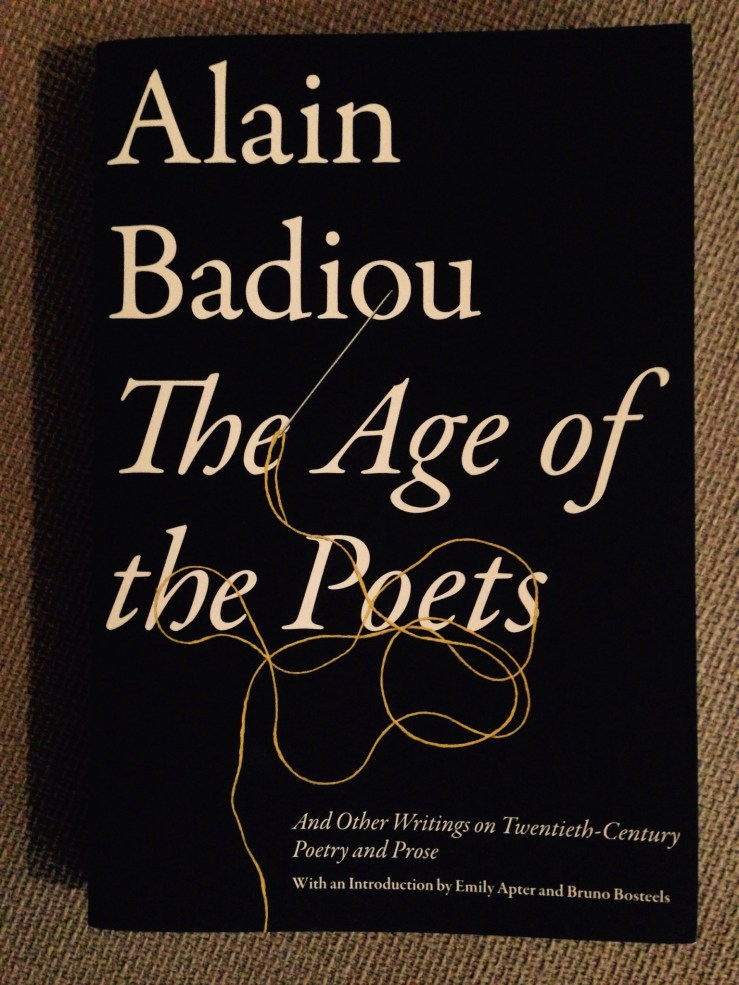
New Alain Badiou — The Age of the Poets (Book Acquired, 10.10.2014)

IMG_3585

New from Verso Books, a collection of writings from philosopher Alain Badiou. Verso’s blurb:

The Age of the Poets revisits the age-old problem of the relation between literature and philosophy, arguing against both Plato and Heidegger’s famous arguments. Philosophy neither has to ban the poets from the republic nor abdicate its own powers to the sole benefit of poetry or art. Instead, it must declare the end of what Badiou names the “age of the poets,” which stretches from Hölderlin to Celan. Drawing on ideas from his first publication on the subject, “The Autonomy of the Aesthetic Process,” Badiou offers an illuminating set of readings of contemporary French prose writers, giving us fascinating insights into the theory of the novel while also accounting for the specific position of literature between science and ideology.

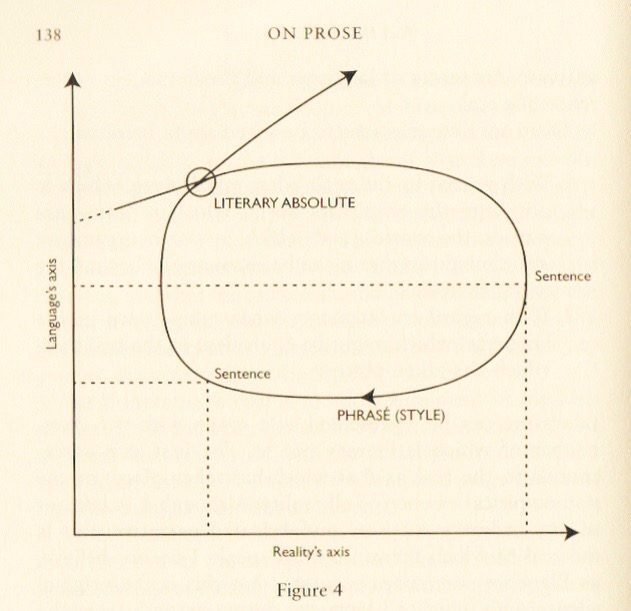
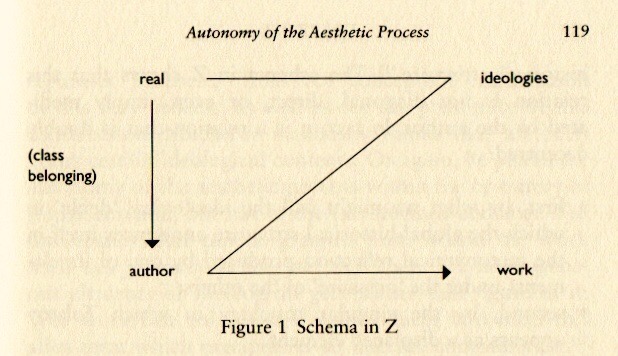
More to come—but for now: Diagrams! (I will try to understand them in context):

IMG_3588 IMG_3587

Danse Macabre — William Strang

YHVBGDnuUVI

Our books (Edgar Allan Poe)

Our books—the books which, for years, had formed no small portion of the mental existence of the invalid—were, as might be supposed, in strict keeping with this character of phantasm. We pored together over such works as the “Ververt et Chartreuse” of Gresset; the “Belphegor” of Machiavelli; the “Heaven and Hell” of Swedenborg; the “Subterranean Voyage of Nicholas Klimm” by Holberg; the “Chiromancy” of Robert Flud, of Jean D’Indaginé, and of De la Chambre; the “Journey into the Blue Distance” of Tieck; and the “City of the Sun” of Campanella. One favorite volume was a small octavo edition of the “Directorium Inquisitorium,” by the Dominican Eymeric de Gironne; and there were passages in Pomponius Mela, about the old African Satyrs and Œgipans, over which Usher would sit dreaming for hours. His chief delight, however, was found in the perusal of an exceedingly rare and curious book in quarto Gothic—the manual of a forgotten church—the Vigiliæ Mortuorum Secundum Chorum Ecclesiæ Maguntinæ.

From “The Fall of the House of Usher” by Edgar Allan Poe.

Meditation — Jean Léon Bazile Perrault

Joan of Arc — Jules Bastien-Lepage

The Fall of the House of Usher (1928 Short Film)

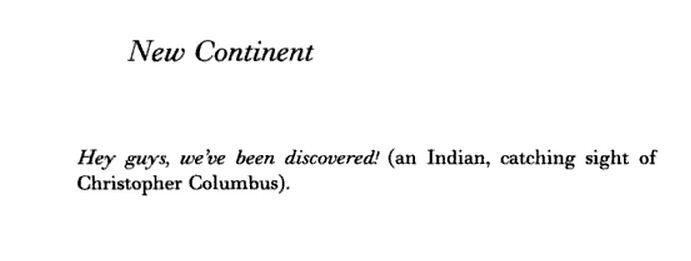
“New Continent” — Georges Perec

Ugolino Martelli — Agnolo Bronzino

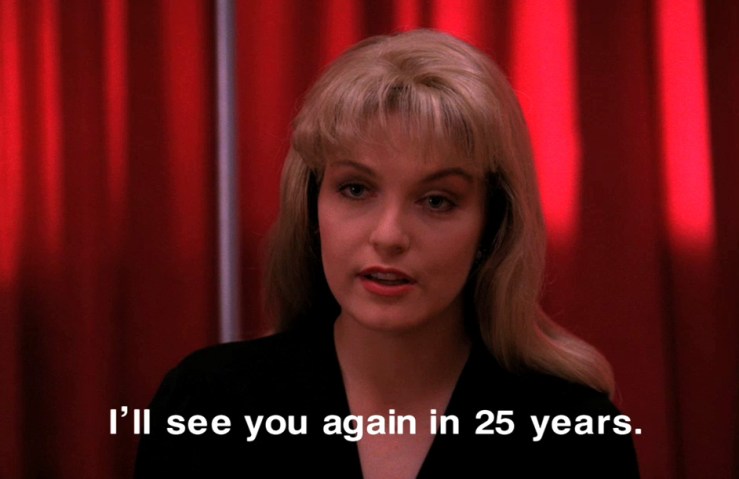
I’ll see you again in 25 years

tumblr_m74xotr7Wj1rwnwnfo1_1280 tp

Adam purchases guitars (Only Lovers Left Alive)

An idiom characterizes a society (Flannery O’Connor)

An idiom characterizes a society, and when you ignore the idiom, you are very likely ignoring the whole social fabric that could make a meaningful character. You can’t cut characters off from their society and say much about them as individuals. You can’t say anything meaningful about the mystery of a personality unless you put that personality in a believable and significant social context. And the best way to do this is through the character’s own language. When the old lady in one of Andrew Lytle’s stories says contemptuously that she has a mule that is older than Birmingham, we get in that one sentence a sense of a society and its history. A great deal of the Southern writer’s work is done for him before he begins, because our history lives in our talk. In one of Eudora Welty’s stories a character says, ‘Where I come from, we use fox for yard dogs and owls for chickens, but we sing true.’ Now there is a whole book in that one sentence; and when the people of your section can talk like that, and you ignore it, you’re just not taking advantage of what`s yours. The sound of our talk is too definite to be discarded with impunity, and if the writer tries to get rid of it, he is liable to destroy the better part of his creative power.

From Flannery O’Connor’s lecture “Writing Short Stories.” Republished in Mystery and Manners.