100 Years Ago — Peter Doig

August 10th, 1842 — Nathaniel Hawthorne’s Note-Book

August 10th.– The natural taste of man for the original Adam’s occupation is fast developing itself in me. I find that I am a good deal interested in our garden, although, as it was planted before we came here, I do not feel the same affection for the plants that I should if the seed had been sown by my own hands. It is something like nursing and educating another person’s children. Still, it was a very pleasant moment when I gathered the first string-beans, which were the earliest esculent that the garden contributed to our table. And I love to watch the successive development of each new vegetable, and mark its daily growth, which always affects me with surprise. It is as if something were being created under my own inspection, and partly by my own aid. One day, perchance, I look at my bean-vines, and see only the green leaves clambering up the poles; again, to-morrow, I give a second glance, and there are the delicate blossoms; and a third day, on a somewhat closer observation, I discover the tender young beans, hiding among the foliage. Then, each morning, I watch the swelling of the pods and calculate how soon they will be ready to yield their treasures. All this gives a pleasure and an ideality, hitherto unthought of, to the business of providing sustenance for my family. I suppose Adam felt it in Paradise; and, of merely and exclusively earthly enjoyments, there are few purer and more harmless to be experienced. Speaking of beans, by the way, they are a classical food, and their culture must have been the occupation of many ancient sages and heroes. Summer-squashes are a very pleasant vegetable to be acquainted with. They grow in the forms of urns and vases,–some shallow, others deeper, and all with a beautifully scalloped edge. Almost any squash in our garden might be copied by a sculptor, and would look lovely in marble, or in china; and, if I could afford it, I would have exact imitations of the real vegetable as portions of my dining-service. They would be very appropriate dishes for holding garden-vegetables. Besides the summer-squashes, we have the crook-necked winter-squash, which I always delight to look at, when it turns up its big rotundity to ripen in the autumn sun. Except a pumpkin, there is no vegetable production that imparts such an idea of warmth and comfort to the beholder. Our own crop, however, does not promise to be very abundant; for the leaves formed such a superfluous shade over the young blossoms, that most of them dropped off without producing the germ of fruit. Yesterday and to-day I have cut off an immense number of leaves, and have thus given the remaining blossoms a chance to profit by the air and sunshine; but the season is too far advanced, I am afraid, for the squashes to attain any great bulk, and grow yellow in the sun. We have muskmelons and watermelons, which promise to supply us with as many as we can eat. After all, the greatest interest of these vegetables does not seem to consist in their being articles of food. It is rather that we love to see something born into the world; and when a great squash or melon is produced, it is a large and tangible existence, which the imagination can seize hold of and rejoice in. I love, also, to see my own works contributing to the life and well-being of animate nature. It is pleasant to have the bees come and suck honey out of my squash-blossoms, though, when they have laden themselves, they fly away to some unknown hive, which will give me back nothing in return for what my garden has given them. But there is much more honey in the world, and so I am content. Indian corn, in the prime and glory of its verdure, is a very beautiful vegetable, both considered in the separate plant, and in a mass in a broad field, rustling and waving, and surging up and down in the breeze and sunshine of a summer afternoon. We have as many as fifty hills, I should think, which will give us an abundant supply. Pray Heaven that we may be able to eat it all! for it is not pleasant to think that anything which Nature has been at the pains to produce should be thrown away. But the hens will be glad of our superfluity, and so will the pigs, though we have neither hens nor pigs of our own. But hens we must certainly keep. There is something very sociable and quiet, and soothing, too, in their soliloquies and converse among themselves; and, in an idle and half-meditative mood, it is very pleasant to watch a party of hens picking up their daily subsistence, with a gallant chanticleer in the midst of them. Milton had evidently contemplated such a picture with delight.

I find that I have not given a very complete idea of our garden, although it certainly deserves an ample record in this chronicle, since my labors in it are the only present labors of my life. Besides what I have mentioned, we have cucumber-vines, which to-day yielded us the first cucumber of the season, a bed of beets, and another of carrots, and another of parsnips and turnips, none of which promise us a very abundant harvest. In truth, the soil is worn out, and, moreover, received very little manure this season. Also, we have cabbages in superfluous abundance, inasmuch as we neither of us have the least affection for them; and it would be unreasonable to expect Sarah, the cook, to eat fifty head of cabbages. Tomatoes, too, we shall have by and by. At our first arrival, we found green peas ready for gathering, and these, instead of the string-beans, were the first offering of the garden to our board.

Nathaniel Hawthorne’s journal entry for August 10, 1842. From The American Note-Books.
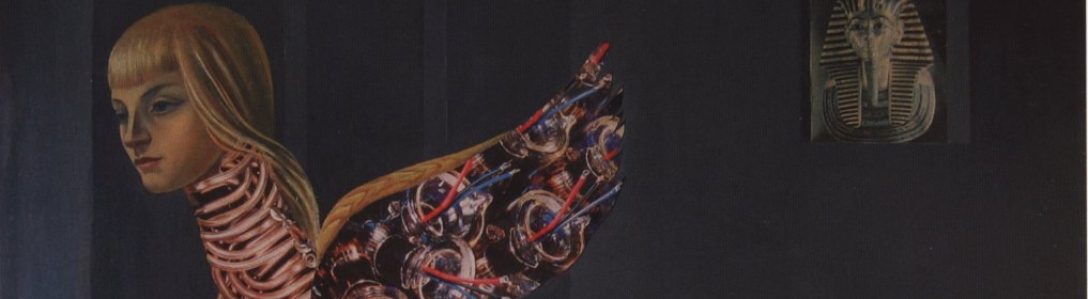
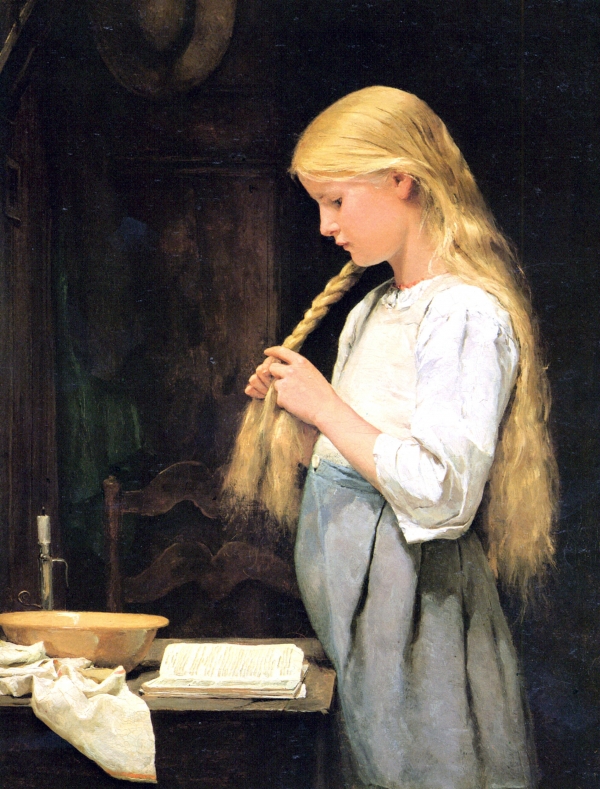
Girl Twisting Her Hair — Albert Samuel Anker

mue

The Swamp — Gustav Klimt

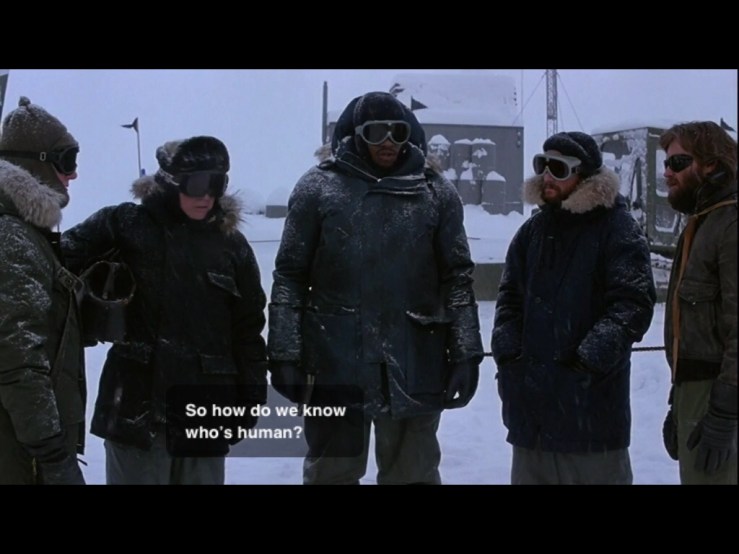
David Cronenberg, John Carpenter and John Landis in a 1982 Roundtable Discussion

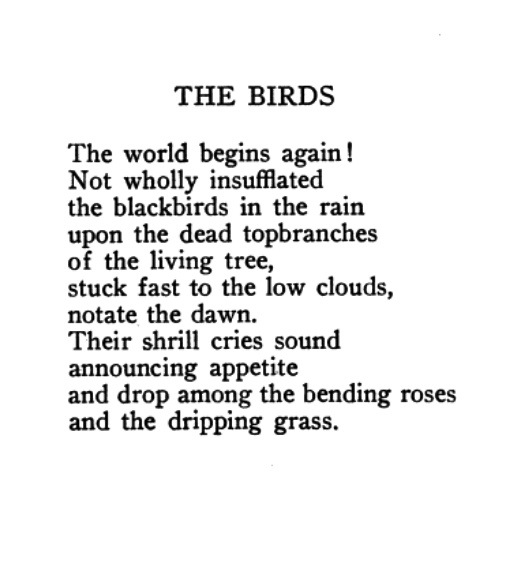
“The Birds” — William Carlos Williams

20140627-095520-35720761.jpg

Still Life with Watermelons and Apples in a Landscape — Luis Meléndez

Jackson Pollock’s Passport

Read “To the Measures Fall,” a Short Story by Richard Powers

“To the Measures Fall” by Richard Powers

First read-through: you are biking through the Cotswolds when you come across the thing. Spring of ’63. Twenty-one years old, in your junior year abroad at the University of York, after a spring term green with Chaucer, Milton, Byron, and Swinburne. (Remember Swinburne?) Year One of a life newly devoted to words. Your recent change, of course, has crushed your father. He long hoped that you would follow through on that Kennedy-inspired dream of community service. You, who might have become a first-rate social worker. You, who might have done good things for the species, or at least for the old neighborhood. But life will be books for you, from here on. Nothing has ever felt more preordained.

Term’s out, and it’s time to see every square mile of this island. Bicycle clips, a Blue Guide, a transistor radio, and skin-hugging rain. Villages slip past on valley roads as twisty as the clauses in Henry James. The book turns up in a junk shop in an old Saxon market town whose name you will remember as almost certainly having an “m” in it. Among the rusted baby buggies and ancient radios you find old cooking magazines, books on fly-tying and photography, late-fifties spy novels with cardboard covers worn as soft as felt.

The thing pops out at you: “To the Measures Fall,” by someone named Elton Wentworth. There’s nothing else like it in the shop. It’s a fat tome with rough-cut pages in a deluxe, tooled binding. The dust jacket has disappeared, but the front matter suggests that you know all about Mr. Wentworth already. Born in 1888, the author of twelve previous books and the winner of awards too numerous to mention.

The first line reads, “A freak snow hit late that year, two weeks after the sand martins returned to the gravel pits near the South Downs.” The next few paragraphs sketch out a hard-pressed town, Wotton-on-Wold, much like the one you are in, with the “m” in it. On page 3, the author reveals the date: 1913. On the last page, a village search party finds the body of a young amputee captain who served at the Somme lying at the bottom of said gravel pits. Only seven years have passed, but the lilting opening cadences have darkened into fragments from another world.

The book seems to be a sweeping portrait of rural England before and after the First World War. You check the title page: copyright 1948. Aside from two bold exclamation points at the end of Chapter 1, the pages are unblemished, perhaps unread.

Pencilled into the upper right hand of the inside front is a price: 10/6 d. Exorbitant. You draw seven pounds a week for student expenses. A three-course Chinese dinner on Station Road costs four shillings, and lunch in the canteen is half that. A 12-inch LP runs only a pound, and even a two-minute call to the States is cheaper than Mr. Wentworth’s book. Half a guinea for a used novel you’ve never heard of? Robbery. But something about that opening is too strange for you to resist. Besides, you’ve just devoted your life to literature. You graze the start of Chapter 2, in which Trevor, a spindly farmer’s son with Addison’s disease, baffles his parents by insisting on going to university. You need to know how this beginning can reach so macabre an end.

The shop’s owner is a beaked old man with a gray hairline like a cowl slipping off his head. It’s humiliating to bargain with him, but you’re desperate.

How much do you offer the junk-store owner for his used book?

You are, by the way, female. Lots of folks think you shouldn’t be out biking alone, even in the Cotswolds. See pages 214 to 223 of Mr. Wentworth’s epic.

How much would you have offered for the book had you been male?

Continue reading “Read “To the Measures Fall,” a Short Story by Richard Powers”

The Reading — George Henry

Two Girls Lying Entwined — Egon Schiele

“A Poem to Read in August” — Gilbert Sorrentino

IMG_3021

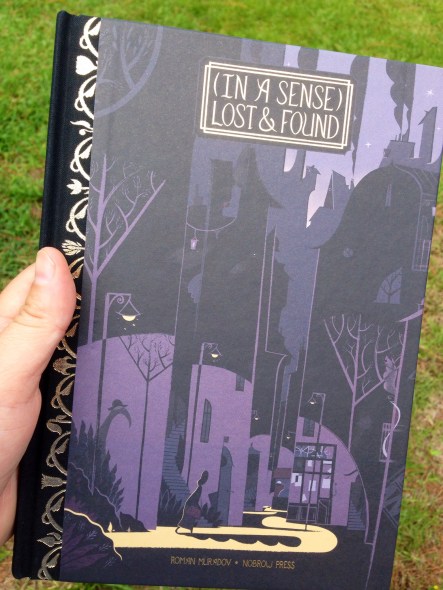
(In a Sense) Lost & Found (Book Acquired, 7.26.2014)

IMG_2935

I’ve read Roman Muradov’s debut graphic novella (In a Sense) Lost & Found a few times now and it’s great—hits the trifecta of strange, beautiful, and smart. It’s new from Nobrow Press. Here’s their blurb:

(In a Sense) Lost and Found, the first graphic novel by rising star Roman Muradov, explores the theme of innocence by treating it as a tangible object; something that can be used, lost, and mistreated. Muradov’s crisp, delicate style conjures a world of strange bookstores, absurd conspiracies, and charming wordplay. A surreal tale in the mold of the best American alternative comics, In a Sense retains its distinctly Eastern perspective.

Muradov lets the art tell this surreal story of a girl looking for something that the narrative refuses to reveal to us. There is no exposition, and readers looking for dialogue that explains everything to them will likely be perplexed. The book is gorgeous, rich, dark—I would include some panels here but the pages are so thick and dark that my iPhone simply can’t handle them. (The picture I took of the cover, above, does no justice to the book’s aesthetics). I’ll get some hi-res images for the full review I plan to post next week though. Great stuff.

Desktop — Jeremy Miranda

desktopwebiste

The thinning of language (Doris Lessing)

I am in a mood that gets more and more familiar: words lose their meaning suddenly. I find myself listening to a sentence, a phrase, a group of words, as if they are in a foreign language—the gap between what they are supposed to mean, and what in fact they say seems unbridgeable. I have been thinking of the novels about the breakdown of language, like Finnegans Wake. And the preoccupation with semantics. The fact that Stalin bothers to write a pamphlet on this subject at all is just a sign of a general uneasiness about language. But what right have I to criticize anything when sentences from the most beautiful novel can seem idiotic to me? 

… I made tea, and then I remembered a story that was sent to me last week. By a comrade living somewhere near Leeds. When I first read it, I thought it was an exercise in irony. Then a very skilful parody of a certain attitude. Then I realized it was serious—it was at the moment I searched my memory and rooted out certain fantasies of my own. But what seemed to me important was that it could be read as parody, irony or seriously. It seems to me this fact is another expression of the fragmentation of everything, the painful disintegration of something that is linked with what I feel to be true about language, the thinning of language against the density of our experience.

From Doris Lessing’s novel The Golden Notebook.

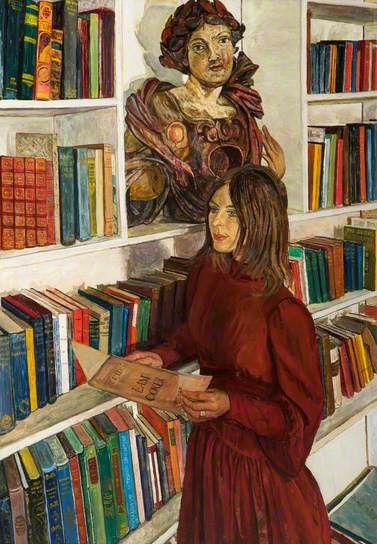
The Library — Carel Victor Morlais

Bridgeman; (c) Bridgeman; Supplied by The Public Catalogue Foundation

So how do we know who’s human?

20140731-120217-43337604.jpg