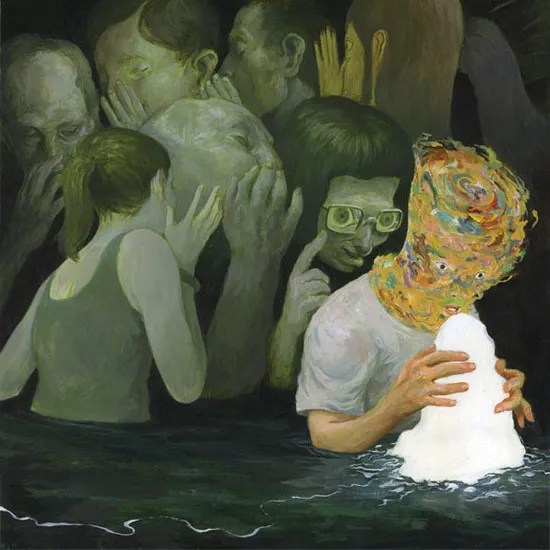
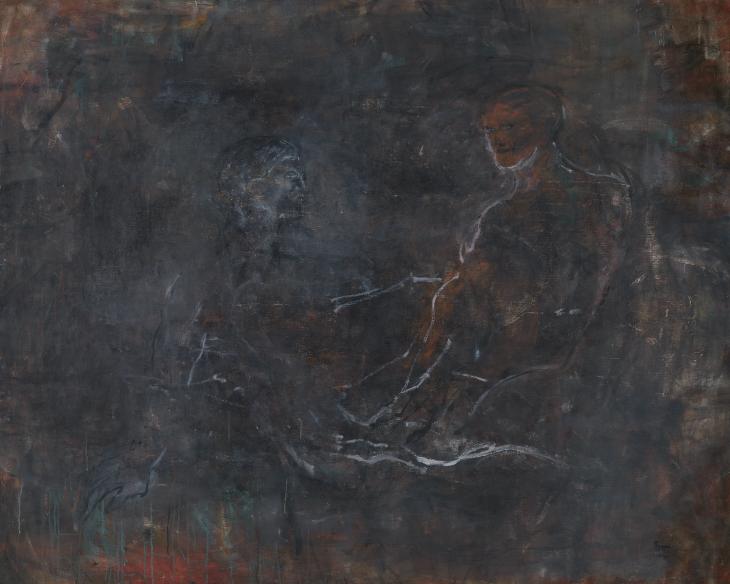
Fire Judges — Jean-Pierre Roy

Fire Judges, 2022 by Jean-Pierre Roy (b. 1974)

David Ohle’s Motorman (Book acquired, 23 Dec. 2022)

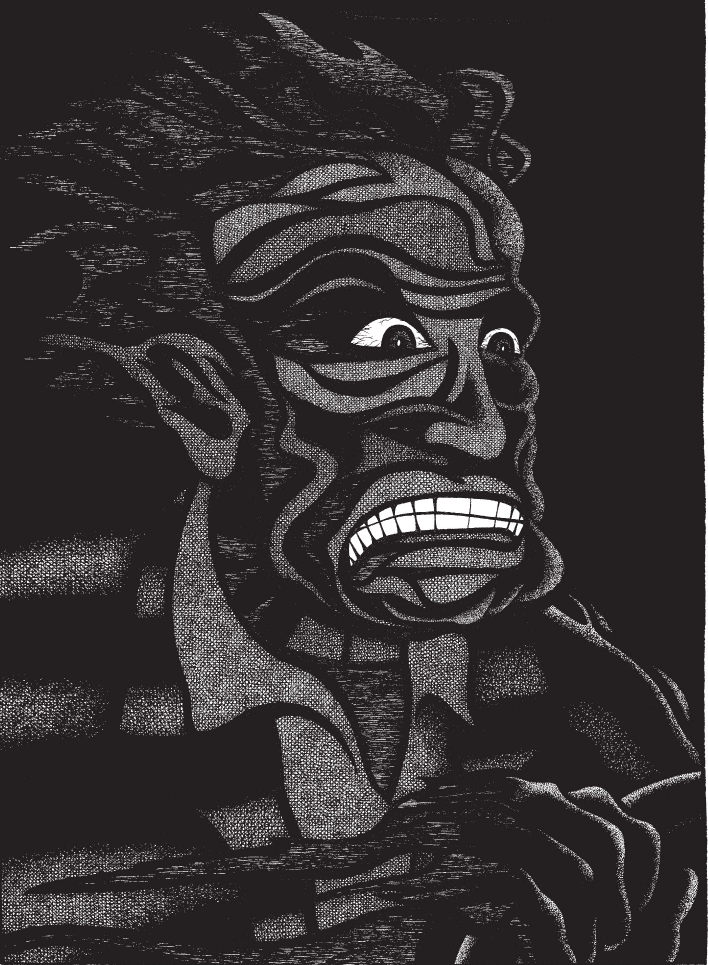
The nicest gift I received this season was from a reader of this blog, J.I.M., who sent me a 1972 hardback first edition of David Ohle’s cult classic, Motorman. The Knopf title features a design by R. Scudellari featuring an illustration by Alan E. Cober. Like a few other Knopf titles from the seventies I have, there is no dust jacket—the title and cover art are right there on the physical cover. J.I.M. included a note with this kind gift, explaining the possible provenance of the book:

For more on Motorman, check out David Green’s big fat essay on the fiction of David Ohle at Big Other.

My biggest fattest thanks again to J.I.M.!

A Game of Children — Xiao Guo Hui

A Game of Children, 2021 by Xiao Guo Hui (b. 1969)

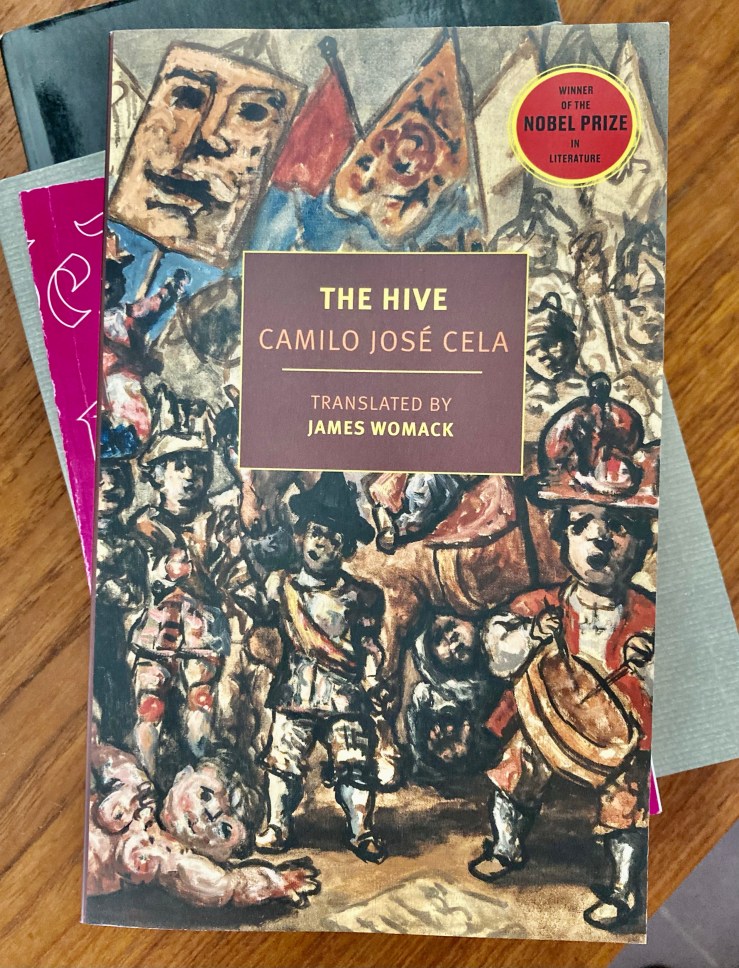
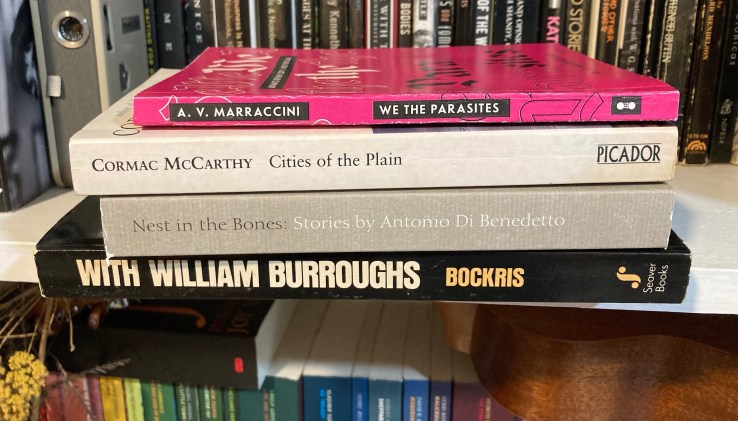
Four from Sublunary (Books acquired, 23 Dec. 2022)

Four handsome fellas from Sublunary Editions.

I really enjoyed At the Doors and Other Stories by Boris Pilnyak (in translation by Emily Laskin, Isaac Zisman, Louis Lozowick, Sofia Himmel, and John Cournos). I dipped into the title story and just kept going. It reminded me a lot of “Mondaugen’s Story” in Pynchon’s V. While the other tales weren’t quite as strong, they were definitely weird. Great stuff.

I also read Mário de Andrade’s Hallucinated City (Jack E. Tomlins), and while these poems by the Brazilian modernist didn’t wholly zap me, there’s nonetheless a persuasive energy here.

Can Xue is maybe the “big name” in this fine little quadrant. Her novella Mystery Train is translated by Natascha Bruce, and it looks pretty fucked-up. Sublunary’s jacket copy:

A chicken-farm employee named Scratch, sent by his manager to buy feed, has boarded the right train. Hasn’t he? So what if the destination on the ticket is wrong, or if he’s locked in his compartment, or if the lights are off and it’s suddenly freezing cold? And surely the whispers of a pending accident are referring to some other event, long in the past. Right? Part allegory, part fever dream, Mystery Train leads the reader on an unsettling journey into a dark wilderness thick with intrigue, mysterious women… and wolves.

A. V. Marraccini’s We the Parasites also seems very promising. The jacket copy describes content—

Intertwining fig wasps, Updike, Genet, Twombly, Rilke, jewel heists, and a vividly rendered panoply of histories and myths from classical antiquity, it both tells a strange love story and makes a slantwise argument about reading with the body. We The Parasites reconfigures how longing changes and informs our relationship with art and literature, and asks what it means to want.

—but the small book’s rhetorical form seems even more intriguing.

Interior with a Woman Combing a Little Girl’s Hair — Jacobus Vrel

Interior with a Woman Combing a Little Girl’s Hair, c. 1654-1662 by Jacobus Vrel (active 1654 – 1662)

Milk 0102 — Mu Pan

Milk 0102, 2022 by Mu Pan (b. 1976)

Still Life with Plaster Head and Books — Felice Casorati

Still Life with Plaster Head and Books by Felice Casorati (1883-1963)

Clever Hans — Natalie Frank

Clever Hans, 2013 Natalie Frank (b. 1980)

Hans went into the stable, cut out all the calves’ and sheep’s eyes, and threw them in Grethel’s face. Then Grethel became angry, tore herself loose and ran away, and became the bride of Hans.

“Clever Hans,” The Brothers Grimmd; trans. by George Bell.

The Prophecy — Kent Monkman

The Prophecy, 2021 by Kent Monkman (b. 1965)

The wolf had crossed the international boundary line at about the point where it intersected the thirtieth minute of the one hundred and eighth meridian | A passage from Cormac McCarthy’s novel The Crossing

The wolf had crossed the international boundary line at about the point where it intersected the thirtieth minute of the one hundred and eighth meridian and she had crossed the old Nations road a mile north of the boundary and followed Whitewater Creek west up into the San Luis Mountains and crossed through the gap north to the Animas range and then crossed the Animas Valley and on into the Peloncillos as told. She carried a scabbedover wound on her hip where her mate had bitten her two weeks before somewhere in the mountains of Sonora. He’d bitten her because she would not leave him. Standing with one forefoot in the jaws of a steeltrap and snarling at her to drive her off where she lay just beyond the reach of the chain. She’d flattened her ears and whined and she would not leave. In the morning they came on horses. She watched from a slope a hundred yards away as he stood up to meet them.

She wandered the eastern slopes of the Sierra de la Madera for a week. Her ancestors had hunted camels and primitive toy horses on these grounds. She found little to eat. Most of the game was slaughtered out of the country. Most of the forest cut to feed the boilers of the stampmills at the mines. The wolves in that country had been killing cattle for a long time but the ignorance of the animals was a puzzle to them. The cows bellowing and bleeding and stumbling through the mountain meadows with their shovel feet and their confusion, bawling and floundering through the fences and dragging posts and wires behind. The ranchers said they brutalized the cattle in a way they did not the wild game. As if the cows evoked in them some anger. As if they were offended by some violation of an old order. Old ceremonies. Old protocols.

She crossed the Bavispe River and moved north. She was carrying her first litter and she had no way to know the trouble she was in. She was moving out of the country not because the game was gone but because the wolves were and she needed them. When she pulled down the veal calf in the snow at the head of Foster Draw in the Peloncillo Mountains of New Mexico she had eaten little but carrion for two weeks and she wore a haunted look and she’d found no trace of wolves at all. She ate and rested and ate again. She ate till her belly dragged and she did not go back. She would not return to a kill. She would not cross a road or a rail line in daylight. She would not cross under a wire fence twice in the same place. These were the new protocols. Strictures that had not existed before. Now they did.

She ranged west into Cochise County in the state of Arizona, across the south fork of Skeleton Creek and west to the head of Starvation Canyon and south to Hog Canyon Springs. Then east again to the high country between Clanton and Foster draws. At night she would go down onto the Animas Plains and drive the wild antelope, watching them flow and turn in the dust of their own passage where it rose like smoke off the basin floor, watching the precisely indexed articulation of their limbs and the rocking movements of their heads and the slow bunching and the slow extension of their running, looking for anything at all among them that would name to her her quarry.

At this season the does were already carrying calves and as they commonly aborted long before term the one least favored so twice she found these pale unborn still warm and gawking on the ground, milkblue and near translucent in the dawn like beings miscarried from another world entire. She ate even their bones where they lay blind and dying in the snow. Before sunrise she was off the plain and she would raise her muzzle where she stood on some low promontory or rock overlooking the valley and howl and howl again into that terrible silence. She might have left the country altogether if she had not come upon the scent of a wolf just below the high pass west of Black Point. She stopped as if she’d walked into a wall.

She circled the set for the better part of an hour sorting and indexing the varied scents and ordering their sequences in an effort to reconstruct the events that had taken place here. When she left she went down through the pass south following the tracks of the horses now thirty-six hours old.

By evening she’d found all eight of the sets and she was back at the gap of the mountain again where she circled the trap whining. Then she began to dig. She dug a hole alongside the trap until the caving dirt fell away to reveal the trap’s jaw. She stood looking at it. She dug again. When she left the set the trap was sitting naked on the ground with only a handful of dirt over the waxed paper covering the pan and when the boy and his father rode through the gap the following morning that was what they found.

From Cormac McCarthy’s novel The Crossing.

Best Books of 1973?

A conversation with a colleague in January of 2022 led to my blogging about the possible “Best Books of 1972.” The post was fun to research, so here’s a sequel of sorts: What were the best books from fifty years ago?

(I don’t have to do any research for a quick answer: Gravity’s Rainbow was the best novel of 1973.)

Just as in last year’s post, I’m mostly interested in novels here, or books of a novelistic/artistic scope.

Still, with that said, I’ll begin with commerce: What were the bestsellers of 1973? The New York Times bestsellers list for 1973 picks up where their ’72 list left off, with Richard Bach’s Jonathan Livingstone Seagull leading sales for the first 11 weeks (Bach’s novel was the bestseller of 1972 for half a year). Genre fiction from Frederick Forsyth, Jacqueline Susann, and Mary Stewart accounts for more than half the year. More notable bestsellers include Kurt Vonnegut’s Breakfast of Champions, Gore Vidal’s Burr, and Graham Greene’s The Honorary Consul. (Gravity’s Rainbow was not a chart topper.)

Critic John Leonard’s end of the year wrap up for the Times in 1973 is especially instructive. He leads with Gravity’s Rainbow, describing it as

…one of the longest, darkest, most difficult and most ambitious novels in years. Its technical and verbal resources bring to mind Melville, Faulkner and Nabokov and establish Pynchon’s imaginative continuity with the great modernist movement of the early years of this century. Gravity’s Rainbow is bone‐crushingly dense, compulsively elaborate, silly, obscene, funny, tragic, poetic, dull, inspired, horrific, cold and blasted.

Leonard also recommends Doris Lessing’s The Summer Before the Dark (“her most artful exploration of her major themes: the relation of self and society, intelligence and feeling, madness and health, and, above all, the role of modern woman”) and John Leonard Clive’s  Macaulay, the Shaping of the Historian.

Some notable titles that the editors of the NYT Book Review append to Leonard’s feature include Philip Roth’s The Great American Novel, Thomas McGuane’s Ninety‐Two in the Shade, and John Cheever’s The World of Apples. The editors also call out “disappointing efforts by Don DeLillo (Great Jones Street) and Marge Piercy (Small Changes).”

In addition to the essayistic feature, the Times also offered up an extensive list of notable titles. There are around 200 books on this list, which I’ve used to help generate my own list at the end of this post. (The most interesting entry I’d never heard of is The Exile of James Joyce by Helene Cixous 

Eudora Welty’s short novel The Optimist’s Daughter is not on the list because it was not published in 1973. It was published in 1972. But it won the Pulitzer for fiction in 1973.

Infamously, there was no Pulitzer Prize awarded for fiction in 1974, even though the jurists were unanimous in their recommendation that Thomas Pynchon win it for Gravity’s Rainbow. (Gravity’s Rainbow did win the 1974 National Book Award.)

The New York Times list also fails to include Patrick White’s novel The Eye of the Storm. White won the Nobel Prize in Literature in 1973.

Neither does the NYT list include Alan Gardner’s Red Shift, J.G. Ballard’s Crash, Leon Forrest’s There Is a Tree More Ancient Than Eden, William Goldman’s The Princess Bride, B. S. Johnson’s Christie Malry’s Own Double-Entry, Anna Kavan’s Who Are You?, Clarice Lispector’s Água Viva, Jerzy Kosiński’s The Devil Tree, Cormac McCarthy’s Child of God, Toni Morrison’s Sula, Erica Jong’s Fear of Flying, Charles Bukowski’s South of No North, Harold Bloom’s The Anxiety of Influence, Madeleine L’Engle’s A Wind in the Door, Italo Calvino’s The Castle of Crossed Destinies, Susan Sontag’s On Photography, Peter Shaffer’s Equus, Kobo Abe’s The Box Man, Ursula K. Le Guin’s The Ones Who Walk Away from Omelas, Adrienne Rich’s Diving into the Wreck, E.M. Cioran’s The Trouble with Being Born or Thomas Rockwell’s juvenile classic How to Eat Fried Worms.

Here is my (almost certainly incomplete) list of the best books of 1973:

Água Viva, Clarice Lispector

The Anxiety of Influence, Harold Bloom

Breakfast of Champions, Kurt Vonnegut

Child of God,  Cormac McCarthy

Christie Malry’s Own Double-Entry, B. S. Johnson

Crash, J.G. Ballard

Fear and Loathing on the Campaign Trail, Hunter S. Thompson

Fear of Flying, Erica Jong

Gravity’s Rainbow, Thomas Pynchon

The Princess Bride, William Goldman

Red Shift, Alan Gardner

State of Grace, Joy Williams

Sula, Toni Morrison

There Is a Tree More Ancient Than Eden, Leon Forrest

Here is my short (complete) list:

Gravity’s Rainbow, Thomas Ruggles Pynchon

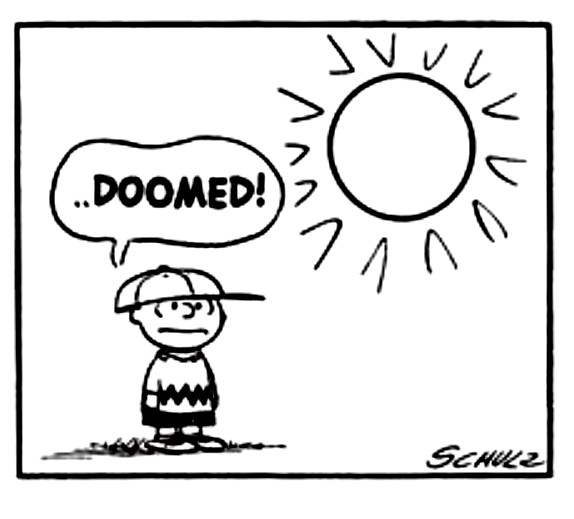
No better (Peanuts)

A few sentences on every book I read or reread in 2022


☉ indicates a reread.

☆ indicates an outstanding read.

In some cases, I’ve self-plagiarized some descriptions and evaluations from my old tweets and blog posts.


Red Shift, Alan Garner ☆

Three plots, three eras, one place: Roman-conquered England, English Civil War, contemporary (early seventies) England. Great read, reminded me a bit of Hoban’s Riddley Walker.

Tyll, Daniel Kehlmann, trans. Ross Benjamin

Tyll Ulenspiegel teaches himself to walk the tightrope and becomes the greatest jester of his age, bearing witness to the horrors of the Thirty Years’ War. Very funny, slightly cruel.

The Silentiary, Antonio di Benedetto, trans. Esther Allen

In my review, I wrote that “The Silentiary is ultimately a sad, though never dour, read” that “does not wax elegaic for a romanticized, quieter past” or “call to make peace with cacophony.” The cacophony is modernity, and Di Benedetto’s sad hero does all he can to resist it. (He fails.)

Critics, Monsters, Fanatics, and Other Literary Essays, Cynthia Ozick

Moments of sharp criticism marred by “old-man-yells-at-cloud” vibes. The thematic undercurrent of the collection is the anxiety of loss of influence.

Fever Dream, Samanta Schweblin, trans. Megan McDowell

I wanted to like this novel a lot more than I did.

Cities of the Red Night, William S. Burroughs ☉☆

Burroughs’ final trilogy was a highlight of 2022 for me. I read the first book when I was far too young to understand it (not that I “understand” it now so much as feel it). The trilogy as a whole is an underrated postmodern classic, eclipsed by Burroughs’ cult of personality and weird sixties stuff. The strange beautiful ending of Cities collapses narrative into a performative verbal utopia. Has another book so accurately captured the all-at-onceness of dreams and nightmares?

I sneaked a whole thing into a blog about the rumors that Burroughs used a ghostwriter in his later years to clean up his final trilogy.

The Soft Machine, William S. Burroughs ☉☆

A reread, a kind of quick chaser while I tried to secure the next book in Burroughs’ last trilogy.

Sir Gawain and the Green Knight, trans. Simon Armitage

I listened to the audiobook (which included the original text) and really enjoyed it. I had intended to take it in before watching the film The Green Knight, but then I forgot to watch the film. (I still haven’t seen it.)

Moon Witch, Spider King, Marlon James

I wrote a few posts about James’s follow up to his outstanding 2020 novel Black Leopard, Red Wolf. In the last post I wrote on the novel, I concluded with “More thoughts to come” and then I never blogged about it again. After the dazzle of its predecessor, Moon Witch was a (big) disappointment—but I’ll read the next installment.

Fidelity, Grace Paley

I don’t usually just sit down and read a whole book of poetry, but that’s what happened here. Checked it out from the library and it really stuck with me—playful, sad, focused on the end of life.

Don’t Hide the Madness, William S. Burroughs and Allen Ginsberg

A series of conversations between Allen Ginsberg and William S. Burroughs. Burroughs is getting pretty close to the end of his life here, and Ginsberg seems to want to get him to further cement a cultural legacy through a late oral autobiography. Burroughs repeatedly derails these attempts though, which is hilarious. Burroughs talks about whatever comes to mind (often his guns). Loved it

Two Slatterns and a King, Edna St. Vincent Millay

A short play. I don’t really remember it.

The Hole, Hiroko Oyamada, trans. David Boyd

From my review: “The Hole is wonderfully dull at times, as it should be. It’s layered but brittle, with notes of a freshness just gone sour. It’s a quick, propulsive read—a thriller, even, perhaps—but its thrills culminate in sad ambiguity.”

The Very Last Interview, David Shields

The Last Interview: pretentious, solipsistic, shallow, bathetic, and very readable. Hated it!

Augustus, John Williams ☆

Loved it. Fantastic stuff. A good friend recommended it and I read it, even though the premise seemed worked to death already. Nevermind—good writing is good writing.

Going to Meet the Man, James Baldwin

Not really sure how I’d only read two of the stories here before this year. Good stuff.

Harrow, Joy Williams ☆

Williams takes the “post-apocalyptic” quite literally–Harrow is about post-revelation, an uncovering, a delayed judgment from an idiot savant. It’s one of those books you immediately start again and see that what appeared to be baggy riffing was knotting so tight you couldn’t recognize it the first time through — the appropriate style for a novel that dramatizes Nietzsche’s eternal return as a mediation of preapocalyptic consciousness in a post-apocalyptic world.

Telluria, Vladimir Sorokin ☆

One of the best contemporary novels I’ve read in a long time. Telluria is a polyglossic satirical epic pieced together in vital miniatures. Its fifty sections are simultaneously discrete and porous, richly dense but also loose and funny. It teems with life and language, exploding notions of stable storytelling into a carnival of wild voices. Read it!

The Adding Machine, William S. Burroughs

A quick, lucid read and another stop-gap before I got a copy of The Place of Dead Roads.

The Place of Dead Roads, William S. Burroughs ☆

The strongest and strangest of Burroughs’ final trilogy.

The Western Lands, William S. Burroughs ☆

The weakest entry in the final trilogy; still great stuff and more electric than any contemporary sci-fi schlock out there.

Rip It Up, Kou Machida, trans. Daniel Joseph

A strange little chaser for the Burroughs trilogy, this Japanese novel is equally alienating and self-indulgent stuff, conjuring a desperate, stuffy world punctured by punkrock linguistic resistance.

The Trees, Percival Everett

A novel about racist lynchings shouldn’t really be this funny. The world of The Trees is simultaneously cartoonish and brutally realistic, its comedic overtures exploding into the awful, visceral immediacy of a history of racial violence that is not actually a history at all, but a lived reality.

A Short History of Russia, Mark Galeotti

I read this (and really enjoyed it) as I reread Sorokin’s Telluria.

Binti, Nnedi Okorafor

An interesting concept marred by awful prose. I was not the intended audience.

Revenge of the Scapegoat, Caren Beilin

I can’t encapsulate this zany, cruel novel into a pithy sentence or two. Read my review if you want me to justify my sentiment that this is an excellent book.

The Deer, Dashiel Carrera 

Carrera’s debut novel is sometimes brilliant, often frustrating, gloomy, surreal, and terse.

2666, Roberto Bolaño, trans. Natasha Wimmer ☉☆

My fourth full trip through 2666 was an audiobook this time. I’ll go through it again.

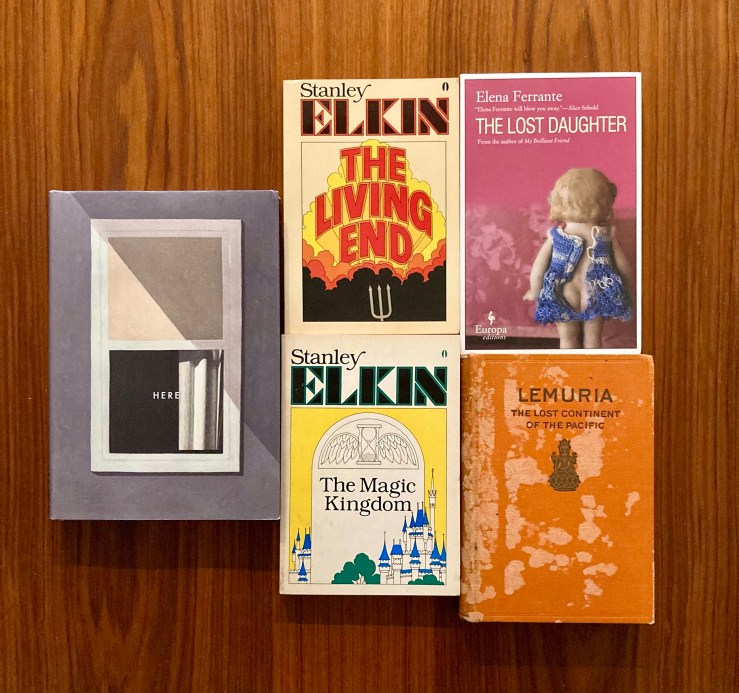
The Living End, Stanley Elkin

A perfect comedic chaser to the weight of 2666. The Living End, like the other novels I’ve read by Elkin, is probably best understood as a series of vaudevillian riffs—but those riffs add up to a wonderful metaphysical complaint here. Great stuff.

Prison Pit, Johnny Ryan

Abject violence and every manner of cruel depravity. Problematic! Mean! Funny stuff!

The Lonely Boxer, Michael Anthony Perri

A terse, dark (and often funny) boxing story packed with punchy sentences.

Blue Lard, Vladimir Sorokin, trans. Max Lawton ☆

I think Lawton’s translation of Blue Lard is out next year from NYRB, and I’ll wait until then to write more about it. If you were to ask me what my favorite book of 2022 is, I’d probably say, “Vladimir Sorokin’s Telluria,” but the truth is my favorite book of 2022 is Vladimir Sorokin’s Blue Lard—but that isn’t out yet.

Checkout 19, Claire-Louise Bennett ☆

I generally detest what might be termed autofiction unless it is particularly excellent, interesting, perceptive, and well-written: which proves that genre labels really don’t mean that much. Checkou 19 is particularly excellent, interesting, perceptive, and well-written, and I will continue to read whatever Bennett publishes.

Paradais, Fernanda Melchor, trans. Sophie Hughes

While Paradais is not as rich and full (and really, just long) as Melchor’s novel Hurricane Season, it’s cut from the same abject cloth. Two kids working towards becoming full-time alcoholics in an upscale development somewhere in Mexico ruin their lives. It’s a grimy glowing postmodern gothic, part of the Nothing Good Happens genre of what I think of as the Nothing Good Happens genre, reminiscent of Handke’s Funny Games, Bolaño’s myth crimes, and Nicolas Winding Refn’s neon romance terrors. Good stuff.

Minor Detail, Adania Shibli, trans. Elisabeth Jaquette

A short book in two distinct halves, extrapolating individual trauma onto the trauma of the Palestinian people as a whole. Another one I wanted to like more than I did.

Dull Margaret, Jim Broadbent and Dix

Actor Jim Broadbent made a graphic novel with the artist Dix based on Bruegel’s painting Dulle Griet—and it’s really good!

Their Four Hearts, Vladimir Sorokin, trans. Max Lawton

Vladimir Sorokin’s novel Their Four Hearts made me physically ill several times. To be clear, the previous statement is a form of praise.

Blood Meridian, Cormac McCarthy ☉☆

I read it or audiobook it at least once a year. I found myself falling asleep to the audiobook every night, picking it up in random places.

A Shock, Keith Ridgway ☆

The rondel of stories in A Shock coalesce into a novel that captures the weird energy of consciousness butting up against concrete reality. Standout story “The Sweat” ends with a three page monologue that begins “Happiness is lovely to come across.” Probably one of the best passages I read all year.

The Setting Sun, Osamu Dazai, trans. Donald Keene

Another book I wanted to like more than I actually did.

Players, Don DeLillo

DeLillo’s early novel reads like a dress rehearsal for the midperiod stuff (particularly The Names, Libra, and Mao II). A novel of boredom, transience, games and their players.

Fireworks, Angela Carter

If the pieces here are not as refined and unified as the anti-fairy tales that comprise Carter’s more-celebrated collection The Bloody Chamber, they are all the more fascinating as studies in sadomasochism, alienation, and the emerging of a new literary consciousness.

Tripticks, Ann Quin ☆

Quin’s fourth and final novel (in print again for the first time in two decades, thanks to And Other Stories) is a radical satire of America. It’s a road novel and an anti-road novel, elegant and messy, sexy and ugly, cruel and generous. The narrative plays out in a cartoonish, slapdash sequences of chases across the American West—the narrator is either chasing one of his ex-wives and her new lover, or is being chased by them. Flashbacks interject without transition or any other warning, treating us to grotesque cavalcade of characters, including the ex-wife’s father and mother (the father is a particularly wonderful satire of the American self-made noveau riche blowhard) and a sex cult leader. Quin also slices in lists that start somewhat orderly and then explode into hyperbole and/or bathos. The germ of Tripticks was first published in the J.G. Ballard and Martin Bax’s seminal journal Ambit as part of a contest. The gimmick was to write a story Under the Influence of Drugs. Quin won with her story, composed under the influence of the contraceptive pill.

My Phantoms, Gwendoline Riley

An unhappy novel about an unhappy family. Saw way too much of myself in this one.

Cardinal Numbers, Hob Broun ☆

I feel as if Cardinal Numbers were written specifically for me. Hob Broun’s shorts (not stories, not tales) are like an intersection of Barry Hannah and David Berman—funny, devastating, enigmatic, thoughtful. Cardinal Numbers is the best collection of short stories that no one has ever heard of.

The Spy Who Came in from the Cold, John le Carre ☆

Fun fun fun fun fun sad fun fun fun fun dark fun fun fun fun fun fun fun fun fun fun fun fun fun fun fun fun fun fun fun fun fun fun fun fun fun fun fun fun fun fun fun fun dark fun fun fun fun fun bit weird fun fun fun fun fun fun more fun fun fun fun

The Passenger, Cormac McCarthy ☆

I riffed a lot on McCarthy’s baggy opus and read exactly one review of it (Joy Williams’), but I was still attuned to enough chatter to get the impression that many people did not like The Passenger. My take is something like: The Passenger is McCarthy’s messy, sad, joyful synthesis of McCarthy’s oeuvre. If Suttree is his attempt to synthesize the American literature before it into something new (which it is), McCarthy’s last (?) big novel does the same—but for McCarthy’s books. I tried to get at that idea in some of my riffs on the book. But I’ll understand too if folks wanted Something Else from The Passenger. I loved it.

All the Pretty Horses, Cormac McCarthy ☉☆

I read it again for the first time in years as a kind of comedown from The Passenger as I waited for Stella Maris to drop. I’ll read the other Border Trilogy books next year.

First Love, Gwendoline Riley

A slim, spare, precise study of passive-aggressive cruelty, sublimated dreams, and lowered expectations. Pervading the novel is a general sense that one would prefer not to get stuck in a corner with any of these characters at a party, let alone end up living with one. I think Gwendoline Riley is a good writer but I don’t think I’ll read anymore Riley novels.

Hello America, J.G. Ballard

You’d think a novel where President Manson wants to make America great Again would feel more prescient, but Ballard’s so in love here with the sparkle and pop of Pop Art America that he fails to attend to the dirt, grease, and grime that make the machine run. A fun novel, but its contemporary currency is squashed not so much by historical reality as the weight of Ballard’s oeuvre before it.

Cinema Speculation, Quentin Tarantino

A messy book about a messy decade of filmmaking. Tarantino names a bajillion films in Cinema Speculation and makes me want to watch almost all of them. Some of his recommendations fall short of his praise (Joe) while others exceed it (Hi, Mom! and Rolling Thunder). This book almost reads like an elegy to moviegoing as a communal experience that will never come back.

Monsters, Barry Windsor-Smith ☆

When I was a kid, Barry Windsor-Smith’s Weapon X was a revelation to me, one which (perhaps ironically, as it was a Marvel comic book featuring mainstream comics’ most popular character) led me away from Marvel and DC comics into alternative stuff. When I saw Monsters on the shelf of my college library, I immediately checked it out, a little bit confused that I simply had never heard of something so big and beautiful. When I started the novel, I was a bit worried that it was simply a retooling of the Weapon X material (itself a retooling of Shelley’s Frankenstein)—but that isn’t the case. Sweeping, dense, sad, and occasionally unexpectedly funny, Monsters is Windsor-Smith’s masterpiece, a word I don’t use lightly.

Stella Maris, Cormac McCarthy

Above, I claimed that The Passenger is McCarthy’s self-synthesis of his own oeuvre. Stella Maris is the incestuous sibling of that novel, one that has to be read intertextually against it/with it—a call to read these last (?) works with/against the McCarthy novels that preceded them.

Dr. No, Percival Everett

While I was reading Stella Maris a second time, I started Everett’s Dr. No on audiobook. This was at the suggestion of Hoopla, the service my library uses. I knew that Dr. No was Everett’s new novel, and that was about it. I didn’t know that it was about a mathematician who studies nothing. It would be hard to overstate the overlap between Dr. No and Stella Maris (hell, the female protagonist in Everett’s novel is a topologist!), but they couldn’t be more tonally different. One of my favorite gags in Dr. No is the naming of characters—Everett gives characters names like “Stephanie Meyer,” “George Bush,” and “Otis Redding.” And while this initially seems like a (perhaps-lazy) postmodern joke, it ends up paying dividends in the novel’s central themes of nothing butting up against the prospect of naming nothing.

At the Doors and Other Stories, Boris Pilnyak, trans. Emily Laskin, Isaac Zisman, Louis Lozowick, Sofia Himmel, John Cournos

A lovely little book by a Russian author I’d never heard of. The title story “At the Doors” reminds me very much of “Mondaugen’s Story” in Pynchon’s V.—a strange mix of terror, grime, and zaniness that resists neat coherence. Good stuff!

Last Friday (Books acquired, 30 Dec. 2022)

I picked up first edition hardbacks of The Box Man by Kobo Abe and Fantômas by Marcel Allain and Pierre Souvestre today at the used bookstore I like to wander around every other Friday afternoon (or, if I’ve had a bad week, maybe every Friday afternoon, or even a Monday, or Thursday). I wasn’t really looking for anything in particular (okay, I was looking for a physical copy of Joy Williams’ novel Harrow) but I couldn’t resist these two hardbacks (the Abe ate up the rest of my trade credit).

The spine of Fantômas—the font, really—made me pull it down. The cover promised an intro by John Ashbery, and the dual-author thing intrigued me. I also dug the cover, which I didn’t immediately identify as a Fred Marcellino, although the jacket confirmed him as the designer. Unless I am missing it from the jacket or front matter, no translator is credited.

E. Dale Saunders is credited as the translator of Kobo Abe’s novel The Box Man — and not just on the back jacket flap of this 1974 Knopf edition (design by K.B. Hwang), but also on the cover (eh, K.B. Hwang again). From Jerome Charyn’s contemporary NYT review:

Abe’s book is a stunning addition to the literature of eccentricity, those bitter, crying voices of Melville’s Bartleby the scrivener and Dostoevsky’s underground man. It gnaws at the reader, forces him to question his values, his Shibboleths and his ritualistic props, and shoots an energetic poison into his ear. The Box Man is funny, sad and destructive, an ontological “thriller” that bumps into and contradicts its own clues.


Duck — Renée French

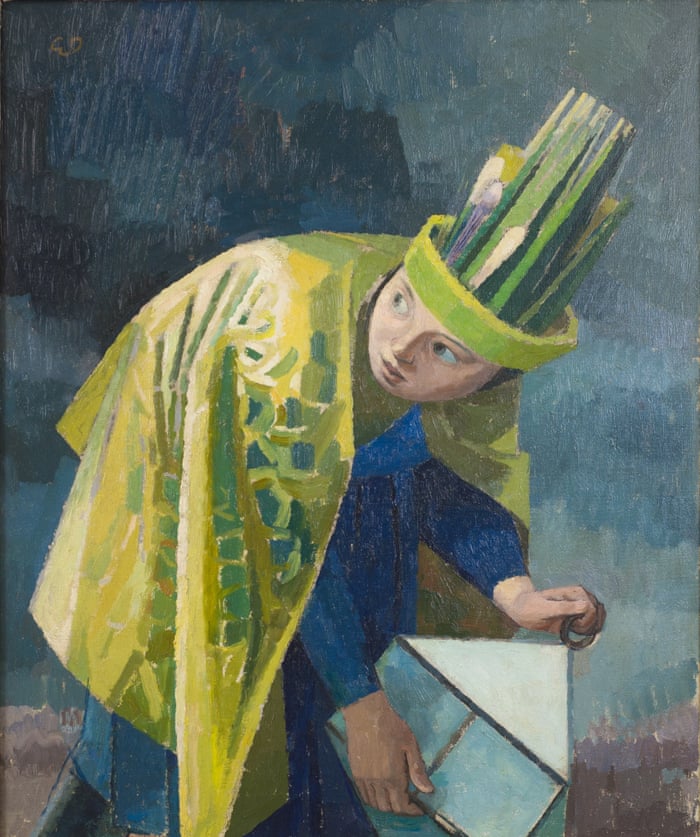
The Wizard — Peter Busch

The Wizard, 2020 by Peter Busch (b. 1971)

I still think American Psycho is a very sincere book | Bret Easton Ellis

HARI KUNZRU: In the great irony-sincerity wars of the ’90s, you and David Foster Wallace came to represent opposite poles, and in literary terms the struggle between the two modes paid off in all sorts of interesting and not so interesting ways. Irony used to feel like a defense against getting played, a way for a writer to ward off received ideas and lazy thinking. It also made us feel nihilistic and defeated. More recently we’ve seen how it can be a screen for reactionary politics. Beige-hued Instagram sincerity is intolerable for all the obvious reasons, but writers are also supposed to be interested in truth. I’ve always thought of you as a closet moralist—that is to say, someone who refuses sentiment because the stakes are too high—and I wonder where you stand on all this now.

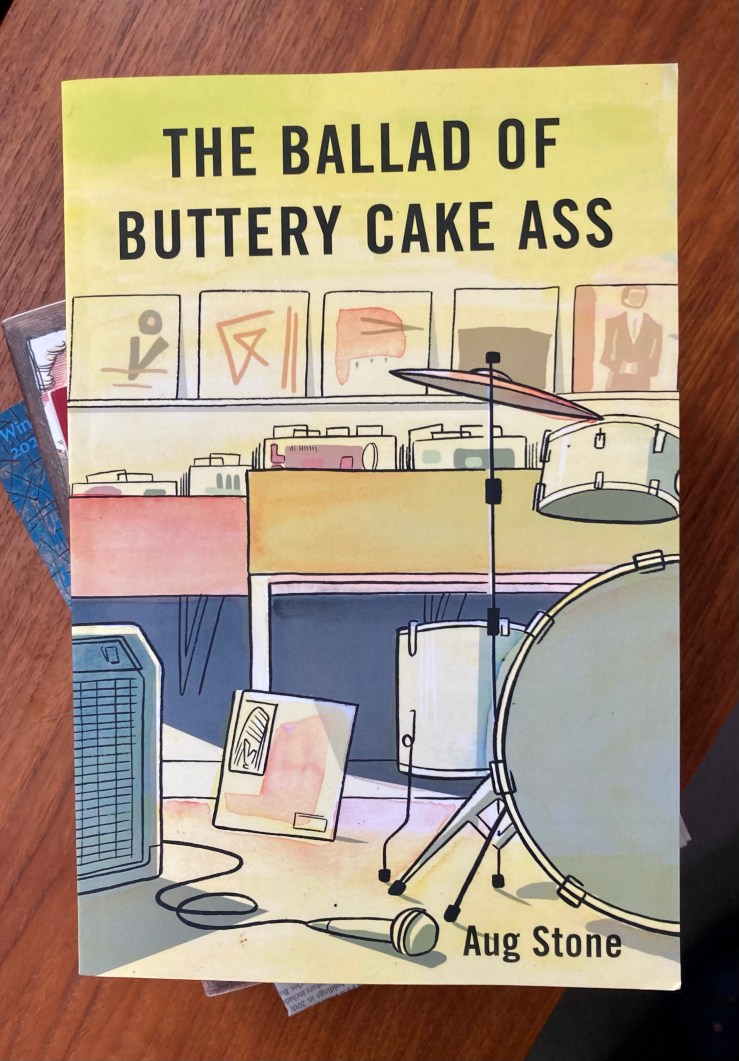
ELLIS: Honestly, Hari, I never paid much attention to the struggle even though I know David did (as did another Dave: Eggers). I always thought I was sincere—I still think American Psycho is a very sincere book, perhaps too much. So I never really grasped what it was all about or why it even was an issue. Writing isn’t a contest and it mattered very little to me. I was in my lane, David was in his. I also don’t think writers are supposed to “be” anything—and I think the truth, whatever that is, differs for every writer. And if it’s really only a truth that a writer is after then it’s a version of “the truth,” especially if you’re writing fiction. I don’t even think of myself as a closet anything— the morality is either there for a reader or it isn’t, which I think is what you meant—you can’t force it, or if you do then you’re a bit doomed as an artist. The refusal of sentiment is simply an aesthetic preference. Where do I stand now? Well, I was never a role model, I didn’t want to represent anything, I was interested in the novel as a form of communicating my pain and confusion, and writing helped me work that out. It’s always been as simple as that.

From a recent Interview interview with Bret Easton Ellis. Questioners include Dennis Cooper, Courtney Love, Ottessa Moshfegh, Paul Schrader, Tao Lin, and Candace Bushnell among many others.