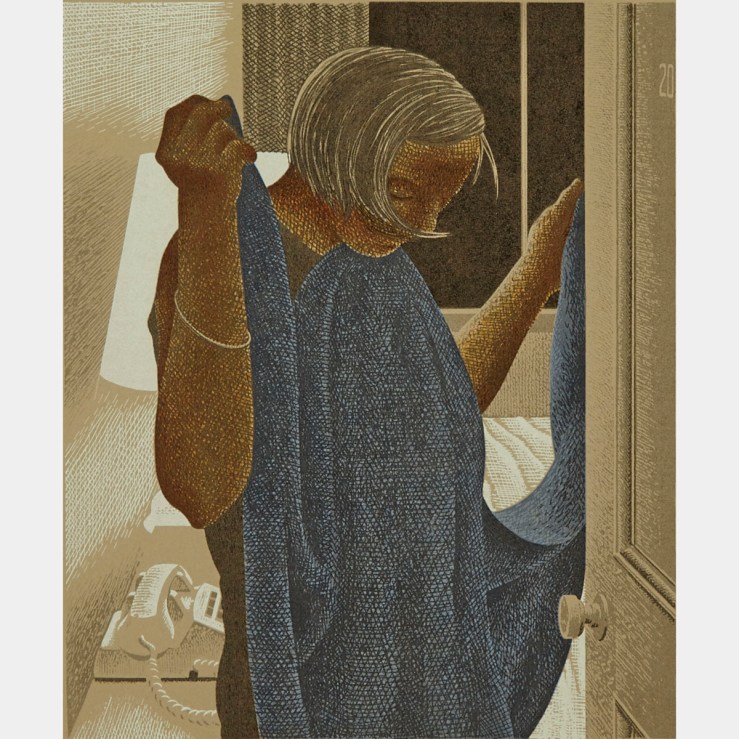
Hotel Maid — Alex Colville

waddingtons-aedc3ce8af14534419f3ce2af45a977f

Hotel Maid, 1978 by Alex Colville (1920-2013)

Blog about Ishmael Reed’s The Last Days of Louisiana Red (Book acquired 27 Feb. 2019)

img_2323

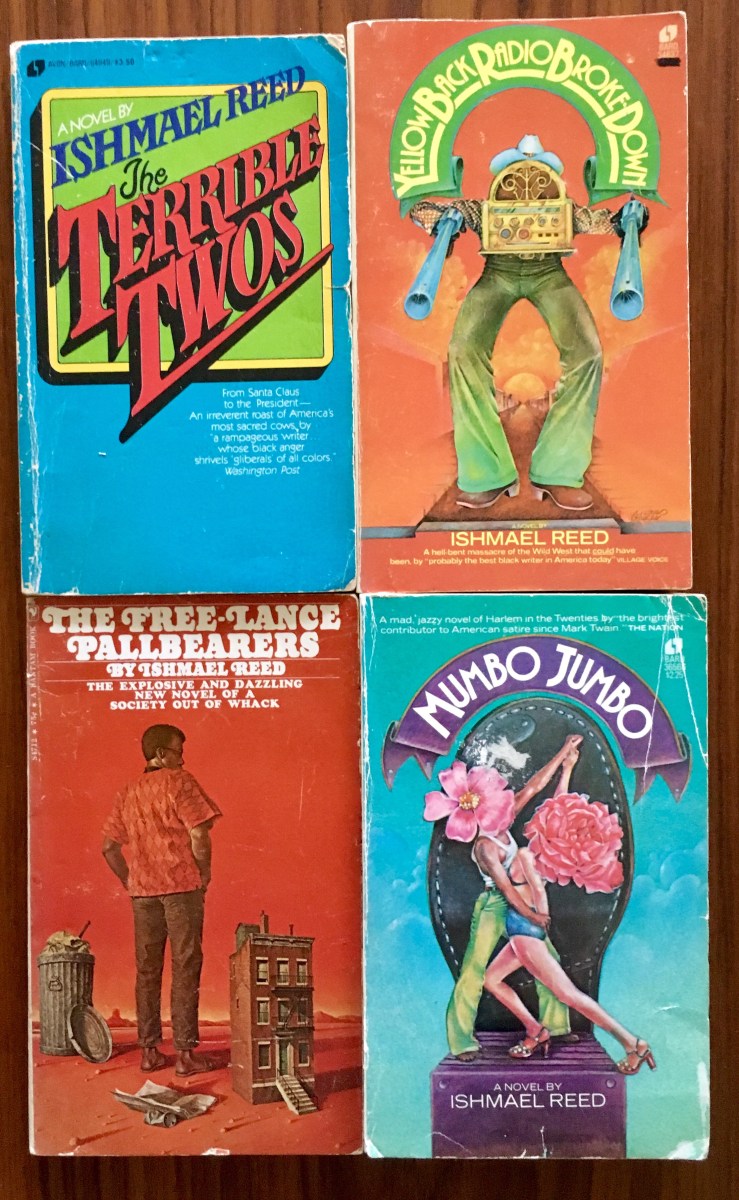
A few weeks ago I went to my favorite used bookstore to pick up a copy of Ishmael Reed’s follow up to Mumbo Jumbo, 1974’s The Last Days of Louisiana Red. The store had a few copies of it, but they were all Dalkey Archive editions with ugly covers and bad binding, so I broke down and ordered a first edition Random House hardback online. (I was tempted to pick up the Avon Bard paperback version to match the covers of the other Reed books I own, which are so beautiful I’ll share them here again):

img_2351

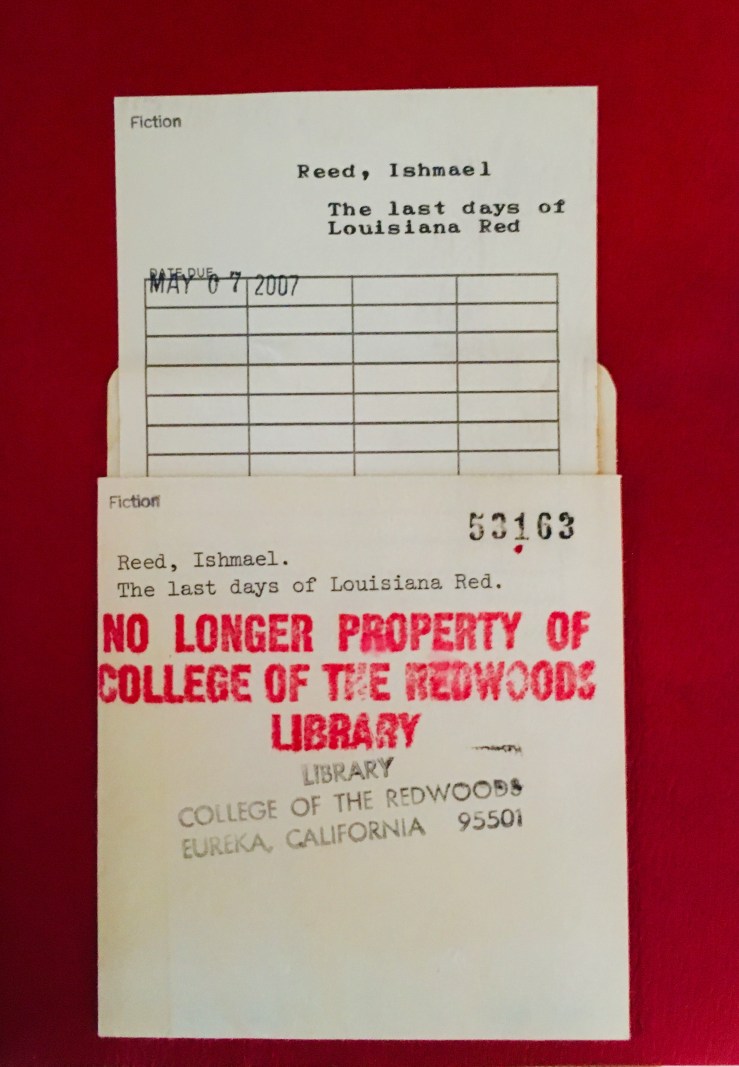
Anyway, I did the design of the hardback the came in, which the jacket flap credits as Reed’s own suggestion. Oh, and it’s an old library book:

img_2349

I read the first half of The Last Days of Louisiana Red this weekend. Reed’s writing is bitter, prescient, zany, and mythological, telegraphed in a range of comic and tragic voices. The chapters are short, and the sentences sting. The plot—well, in Louisiana Red, Reed brings back Papa LaBas the Neo-HooDoo hero of Mumbo Jumbo, and sends him to the West Coast, to Berkeley, Carlifornia to investigate the murder of Ed Yellings. Yellings, a Neo-HooDoo man himself, has discovered the cure for cancer through his mysterious enterprise, the Solid Gumbo Works. Yellings’ gumbo is also a cure for “Louisiana Red,” a poisonous mental disease that afflicts black people in the Americas. Papa LeBas is alternately helped and hindered by Yellings’ adult children: Wolf, Street, Sister, and the provocative and gifted Minnie, who leads a group of militants called the Moochers.

I’m really digging Louisiana Red, which, like the other early Reed novels I’ve read, synthesizes the history, folklore, mythology, and intellectual traditions of the African diaspora into a slapstick satire of USA at the end of the twentieth century. Reed cooks his gumbo with a wide variety of ingredients: voodoo lore and California history bubble in the same pots as riffs on astrology and Cab Calloway’s hit “Minnie the Moocher.” Reed satirizes the Berkeley youth movement, radical feminism, and intellectual hucksterism, all through an allegorical lens—he dares us, often explicitly (by way of a character named Chorus) to read Louisiana Red as an allegorical retelling of Sophocles’ Antigone. While Papa LaBas appears to be the moral center of Reed’s novel, delivering righteous condemnation after righteous condemnation of the Moochers and other persons afflicted with Louisiana Red, Reed nevertheless gives expression to a multitude of opposing viewpoints in the novel. It is a speaking novel, a novel that is both of its time but transcends it, as most of the problems and perils it diagnoses are, unfortunately, still with us. More to come.


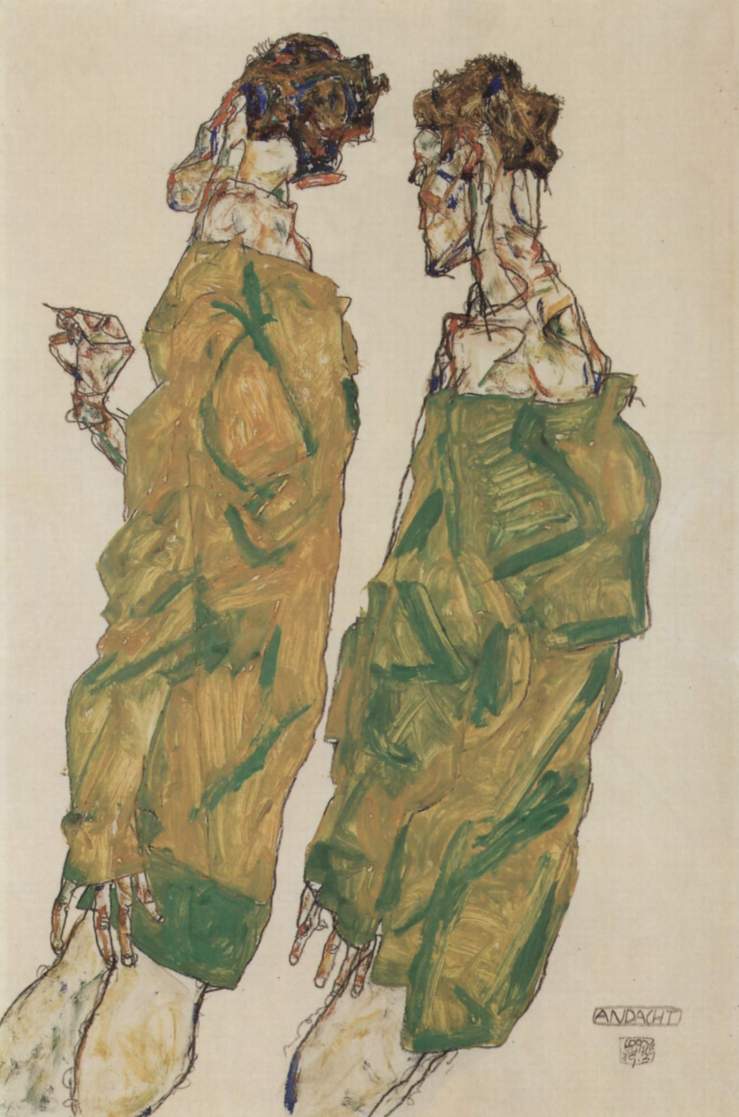
Devotion — Egon Schiele

egon_schiele_006

Devotion, 1913 — Egon Schiele (1890-1918)

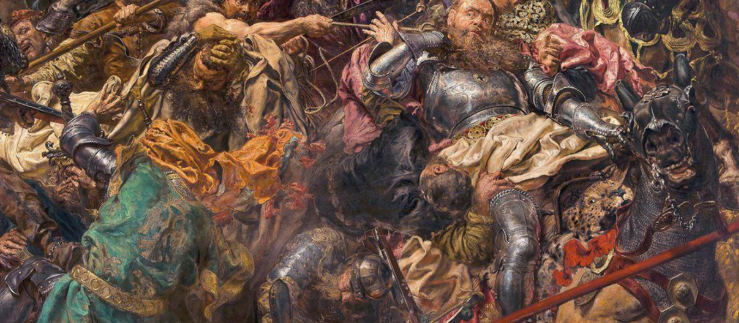
Battle of Grunwald (Detail) — Jan Matejko

Screenshot 2019-03-02 at 9.02.49 AM

Battle of Grunwald (Detail), 1878 by Jan Matejko (1838-1893)

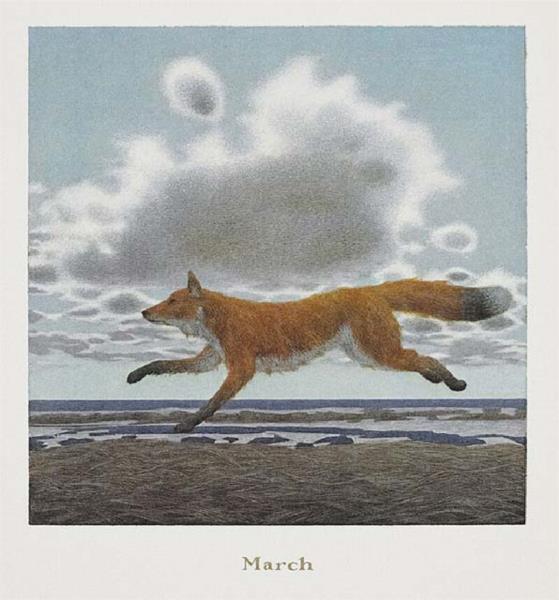
March — Alex Colville

march-1979.jpg!Large.jpg

March, 1979 by Alex Colville (1920-2013)

Battle of Grunwald (Detail) — Jan Matejko

Screenshot 2019-02-28 at 9.05.56 PM

Battle of Grunwald (Detail), 1878 — Jan Matejko (1838-1893)

The Reader — Roland Peeters

tumblr_pncac7ahq91vl54cho1_540

The Reader, by Roland Peeters (b. 1958)

It Hurts — Jean-Michel Basquiat

422820

It Hurts, 1986 by Jean-Michel Basquiat (1960-1988)

“All art constantly aspires towards the condition of music”

Katzenkopf — Georg Baselitz

445befd4db7447bf

Katzenkopf  (Cat’s Head), 1967 by Georg Baselitz (b. 1938)

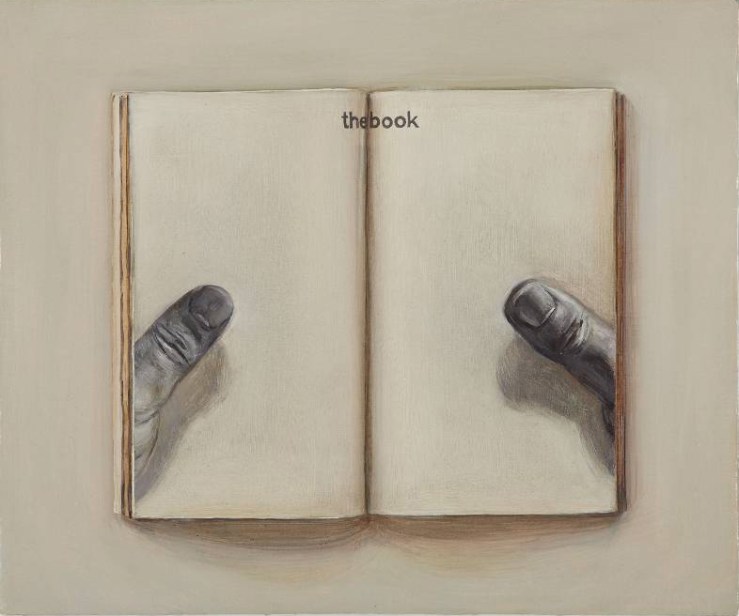
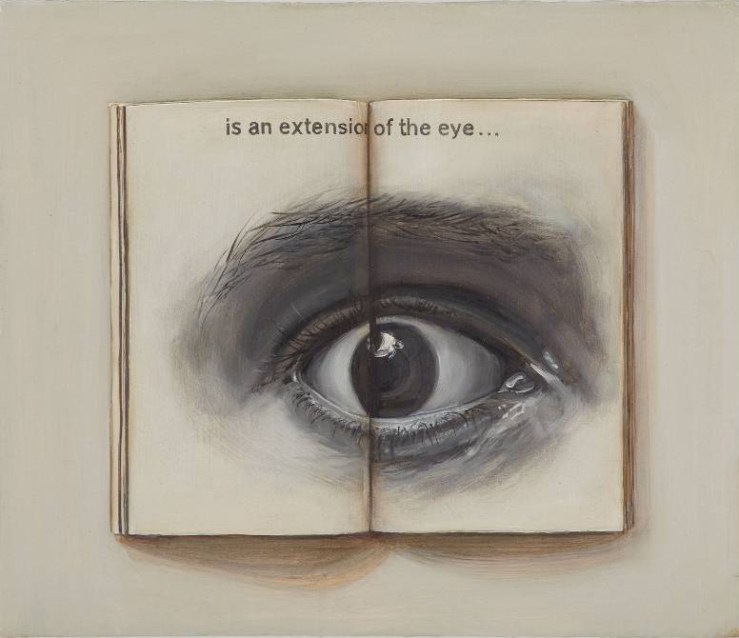
the book (is an extension of the eye) — Jen Mazza

jenmazza_thebookjenmazza_extensionofeye

the book (is an extension of the eye), 2012 by Jen Mazza (b. 1972)

Invisible Man Retreat — Gordon Parks

f0961e26999b100623b1393ee42cf5c1

Invisible Man Retreat, 1952 by Gordon Parks (1912-2006)

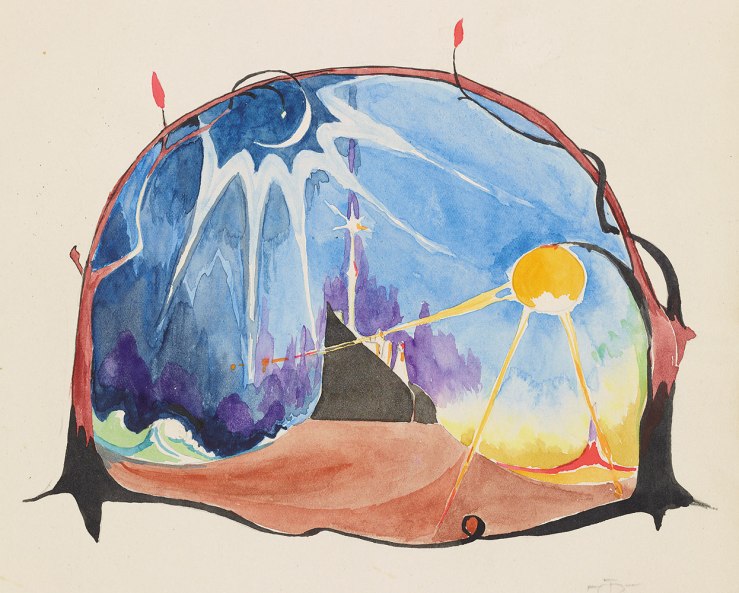
The Shores of Faery — J.R.R. Tolkien

the-shores-of-fairy

The Shores of Faery, 1915 by J.R.R. Tolkien (1892–1973).

From The Morgan Library & Museum’s exhibition “Tolkien: Maker of Middle-earth.”

An early round-cornered John Barth and Unica Zürn’s The Trumpets of Jericho (Books acquired 26 Feb. 2019)

img_2319

I cleaned up a large bookcase this weekend, and filled a purge box with close to two dozen books. I took that box to the used bookstore I frequent to trade in for store credit, and browsed a bit, hoping to find a used copy of Joy Williams’ The Visiting Privilege (I finished her debut collection Taking Care this weekend).

No luck with the Williams. I ambled down by the Zs though, where I found a new copy of  Unica Zürn’s novella The Trumpet in English translation by Christina Svendsen. I knew a bit about Zürn (mostly her art and text poems, as well as her relationships with Hans Bellmer and Henri Michaux), but I hadn’t heard of Trumpets.

The Trumpets of Jericho is published by Wakefield Press, which has a great track record as far as I’m concerned. I loved their edition of Gisèle Prassinos’ The Arthritic Grasshopper and they’re recent book Letters, Dreams & Other Writings by Remedios Varo is one of my favorite things this year. Anyway, here’s the Wakefield blurb for The Trumpets of Jericho:

This fierce fable of childbirth by German Surrealist Unica Zürn was written after she had already given birth to two children and undergone the self-induced abortion of another in Berlin in the 1950s. Beginning in the relatively straightforward, if disturbing, narrative of a young woman in a tower (with a bat in her hair and ravens for company) engaged in a psychic war with the parasitic son in her belly, The Trumpets of Jericho dissolves into a beautiful nightmare of hypnotic obsession and mythical language, stitched together with anagrams and private ruminations. Arguably Zürn’s most extreme experiment in prose, and never before translated into English, this novella dramatizes the frontiers of the body—its defensive walls as well as its cavities and thresholds—animating a harrowing and painfully, twistedly honest depiction of motherhood as a breakdown in the distinction between self and other, transposed into the language of darkest fairy tales.

The Trumpets of Jericho includes a few of Zürn’s illustrations, including this one—

img_2321

I also browsed John Barth books a bit. I’ve been reading Robert Coover’s early novel Origin of the Brunists, which reminds me a bit of John Barth’s first two novels, The Floating Opera and End of the Road. It’s not the content as much as the style of these early works that I find similar, and I wanted to dip into the prose of The Floating Opera, which I do not own.

(I have a movie tie-in version of End of the Road. I have never seen the movie, but one of my favorite reading memories is reading the entire novel in a friend’s mother’s childhood bedroom in an entire night. We had gone down to Miami for a few days and were staying with his grandfather. His mother had been an English major, and her bedroom seemed wholly unchanged from like, 1973 (the whole house seemed stuck wonderfully in 1973), and I picked up End of the Road at like midnight and read until four or six or whatever. Great times).

Anyway, this round-cornered Avon copy (1964) of End of the Road jumped out at me. I was smitten! I feel like I’ve seen round-cornered massmarket paperbacks before, but I don’t really remember any specifically. So I googled, and came up with this unsigned article from The New York Times from 17 March 1964:

Avon Books, a division of the Hearst Corporation, has attacked the problem of the dogeared paperback by cutting off the ears. The result is a book with rounded corners at the edges and square corners at the binding.

The company has also improved design, type and paper of its paperbacks. The first titles in the new format are “The Time Has Come” by John Rock, Brendan Behan’s “Borstal Boy,” Herbert Tarr’s “The Conversion of Chaplain Carr,” Nathaniel West’s “Miss Lonelyhearts,” Aldous Huxley’s “After Many a Summer Dies the Swan” and “Those Barren Leaves,” and Van Wyck Brooks’s “The Writer in America.”

I dogear the hell out of my books, by the way.

img_2320

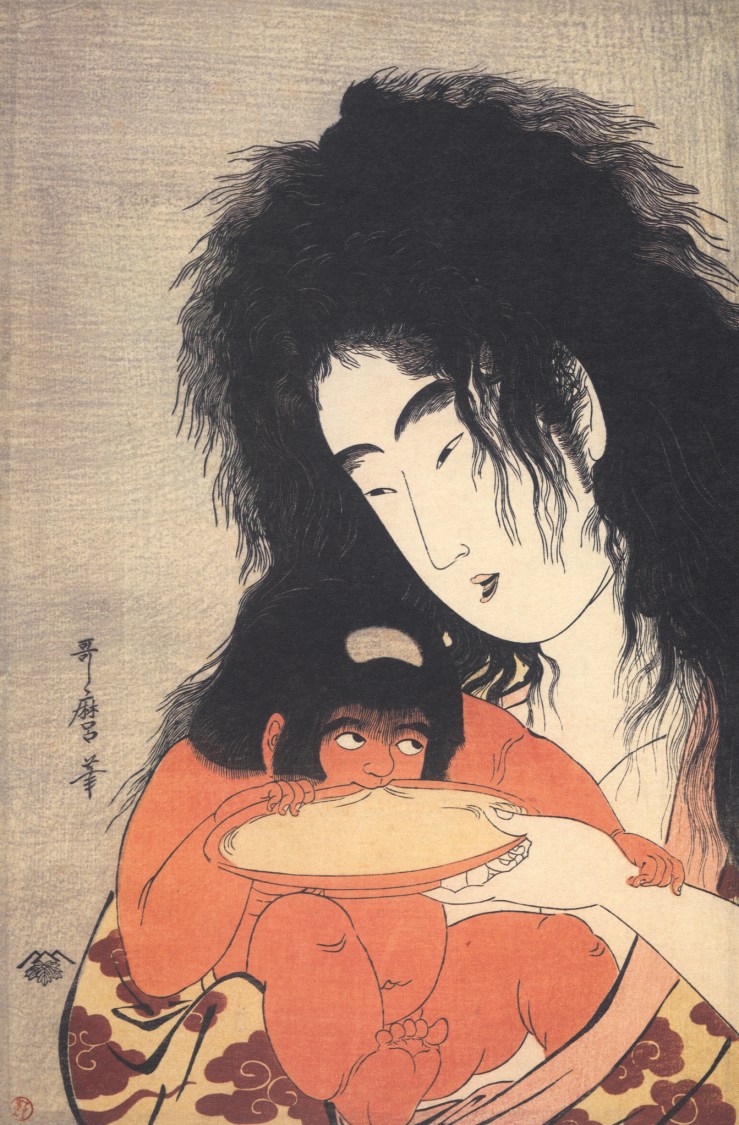
Kintaro Sakazuki with a Yama-uba — Kitagawa Utamaro

yamanba_and_kintaro_sakazuki

Kintaro Sakazuki with a Yama-uba, 18th century by Kitagawa Utamaro (c.1753-1806)


Wheeled Through to Kind Measure — Lynette Yiadom-Boakye

lyb18.011_wheeled_through_to_kind_measure_lr

Wheeled Through to Kind Measure, 2018 by Lynette Yiadom-Boakye (b. 1977)

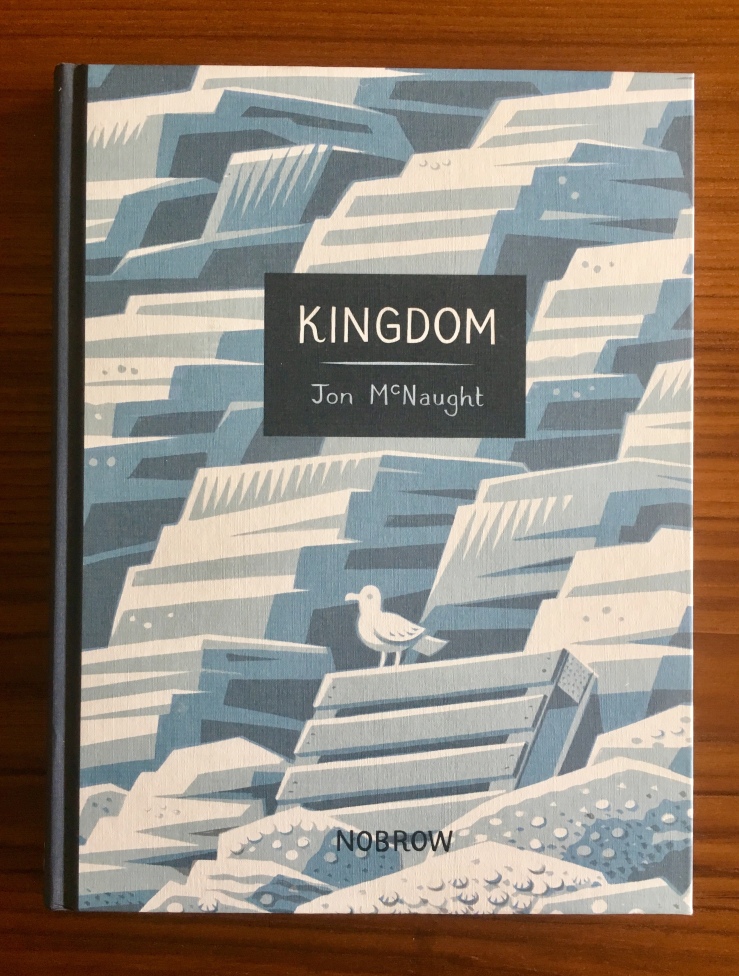
A little riff on Jon McNaught’s Kingdom (Book acquired, 20 Feb. 2019)

img_2308

I got a physical copy of Jon McNaught’s latest graphic novel Kingdom last week. Here is publisher Nobrow’s blurb for the book, which will serve as a rough plot summary:

A family sets off for a long weekend at a caravan park on the British coast. We follow them through the familiar landscapes of a summer holiday: motorway service stations, windswept cliffs, dilapidated museums and tourist giftshops. In this atmospheric and contemplative work, Jon McNaught explores the rhythms of nature, the passing of time, and the beauty and boredom of a summer holiday.

A few weeks ago, I’d been sent a digital reader’s copy of Kingdom to review for The Comics Journal, so I’d already read it, but getting a physical copy was like reading it anew. Nobrow’s books are, in general, lovely. They look lovely, are large and colorful and printed on rich thick paper. They smell great too.

Reading Kingdom in print was a much more pleasurable aesthetic experience than reading it on an iPad. The story was the same, of course, but my eyes went across it differently, working with my fingers, lingering, moving backwards and forwards, shuffling pages. The feeling of the story came across stronger, somehow, than it did on a screen–McNaught’s themes of boredom, nature, and our ways of seeing nature resonated more when I could rub my hands on the pages themselves. I do not have a simple explanation for this. There’s an intangibility I’m pointing toward, but one that has to do with tangibility of course: reading as a tactile process.

I’m not a Luddite. I like ebooks, and I generally like to have an ebook of any novel that I’m reading so that I can read it late at night. (Digital copies also make quoting at length for reviews much easier). But I find that screens dampen or mute or hinder something of the aesthetic experience in reading highly-visual narratives, like comics and poetry.

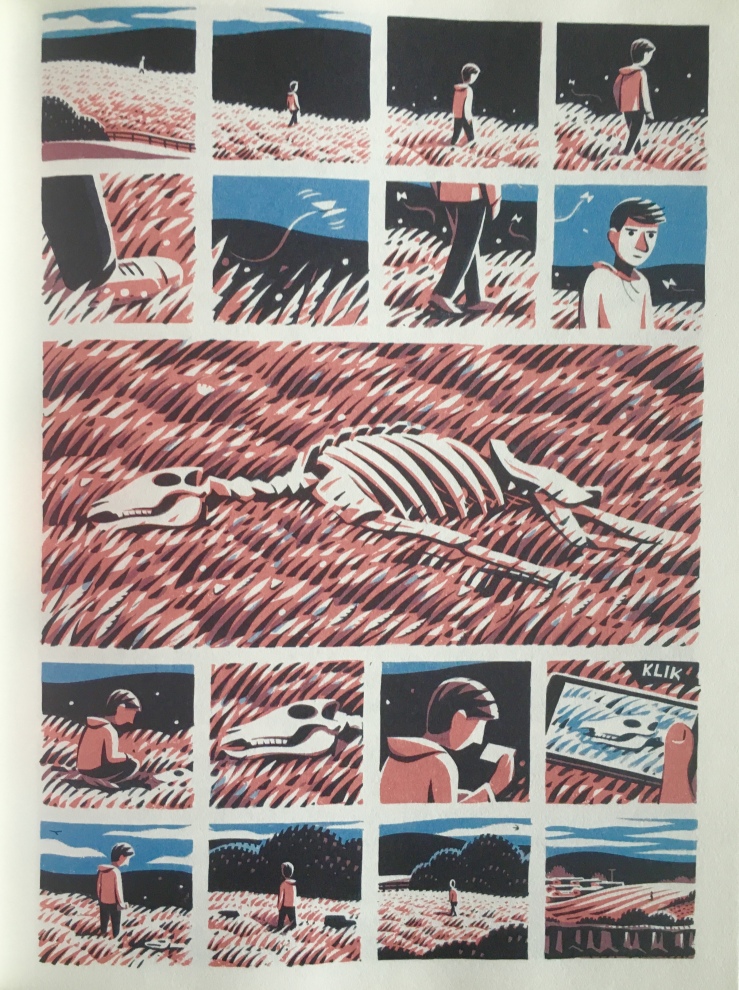
That last phrase, “comics and poetry”—I think that that’s what McNaught does by the way. His comics are visual poems, moods, feelings, evocations of time and space bounded not in words but in sounds, not in symbols and signs but in the objects themselves. The feeling of feeling of his comics is hard to pin down: tranquil and soothing with tinges of melancholy, gentle touches of pleasant boredom, waves of recognition: recognition of spirit, of impulse, of fellow feeling: etc. We see his characters seeing the world, being in the world, and seeing themselves seeing and being in the world. And we also see them mediating that world—on screens.

img_2310I liked Kingdom the first time I read it on a screen. I loved it the second time I read it on paper. Full review soon at The Comics Journal.