
Category: Art
Studies of the Arm — Leonardo da Vinci

An Extract From Reiner Stach’s “Kafka: The Years of Insight”
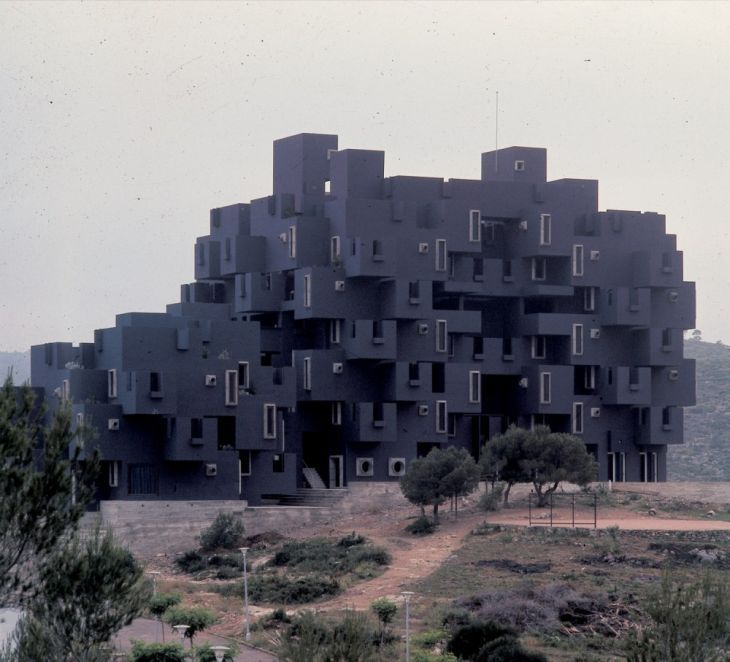
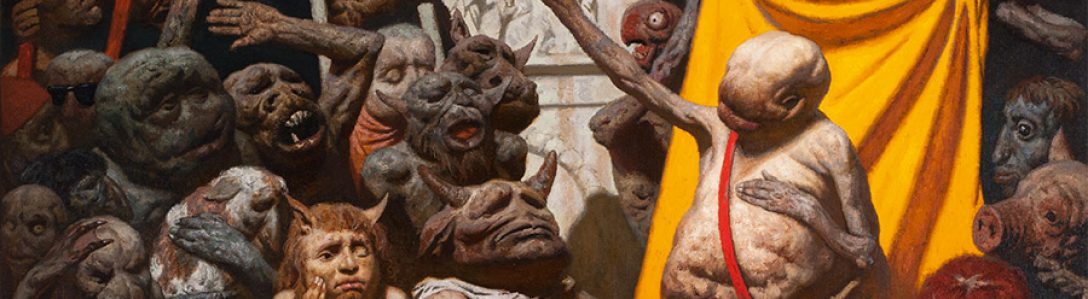
The easy possibility of writing letters–from a purely theoretical point of view–must have brought ruination to the souls of the world. Writing letters is actually communication with ghosts, not only with the ghost of the recipient, but also with one’s own ghost, which secretly evolves inside the letter one is writing or even in a whole series of letters where one letter corroborates another and can cite it is a witness. How did people ever get the idea they could communicate with one another by letter! One can think about someone far away and one can hold on to someone nearby; everything else is beyond human power. But writing letters means barring oneself to the ghosts, who are greedily awaiting that. Written kisses never arrive at their destination; the ghosts drink them up along the way. This ample nourishment enables them to multiply so enormously. Mankind senses this and struggles against it; in order to attain a natural communication and a tranquility of soul, and to switch off the ghostly dimension as far as possible, man invented trains, cars, airplanes, but nothing helps anymore. These are evidently inventions devised at the moment of crashing. The opposing side is so much calmer and stronger; after the postal system, the ghosts invented the telegraph, the telephone, the wireless. The ghosts will not starve, but we will parish.
The opposing side. The phrase reveals that his mythopoeic imagination had reached the next level. Although the recipient of this letter could not know it, Kafka had just written a novel about this opposing side. But in The Castle, the fiends (who work mainly at night) are no longer a chaotic mob but emissaries of a ststem, officials who are not free and are themselves subjugated to an unfathomable will. Somewhere inside the castle a highest authority lives; it is the castle of Count Westwest, without whose tacit approval not a creature can stir. This creature with the unearthly name is mentioned on page 20, only to disappear behind a smoke screen of endless chatter. And no one penetrates these walls by waiting patiently for them to become porous–as in Kafka’s “Before The Law” legend–or by the land surveyor’s challenge to a “fight.” The highest authority exists, but it remains unrelentingly remote, and thus the crucial question of whether it is hostile or even evil remains a matter of conjecture. Kafka himself was not clear on this. A few months before beginning the novel, he wrote:
The systematic destruction of myself over the years is astonishing, it was like a slowly widening breach in a dam, a purposeful action. The spirit that brought it about must now be celebrating triumphs; why doesn’t it let me take part in them? But perhaps it hasn’t yet completed its work and can therefore think of nothing else.
(trans. Shelley Frisch).
The Hammock — Thomas Theodor Heine

Portrait of Friederike Maria Beer — Egon Schiele

A Riff Jodorowsky’s Dune (And Some Lovely Film Posters)
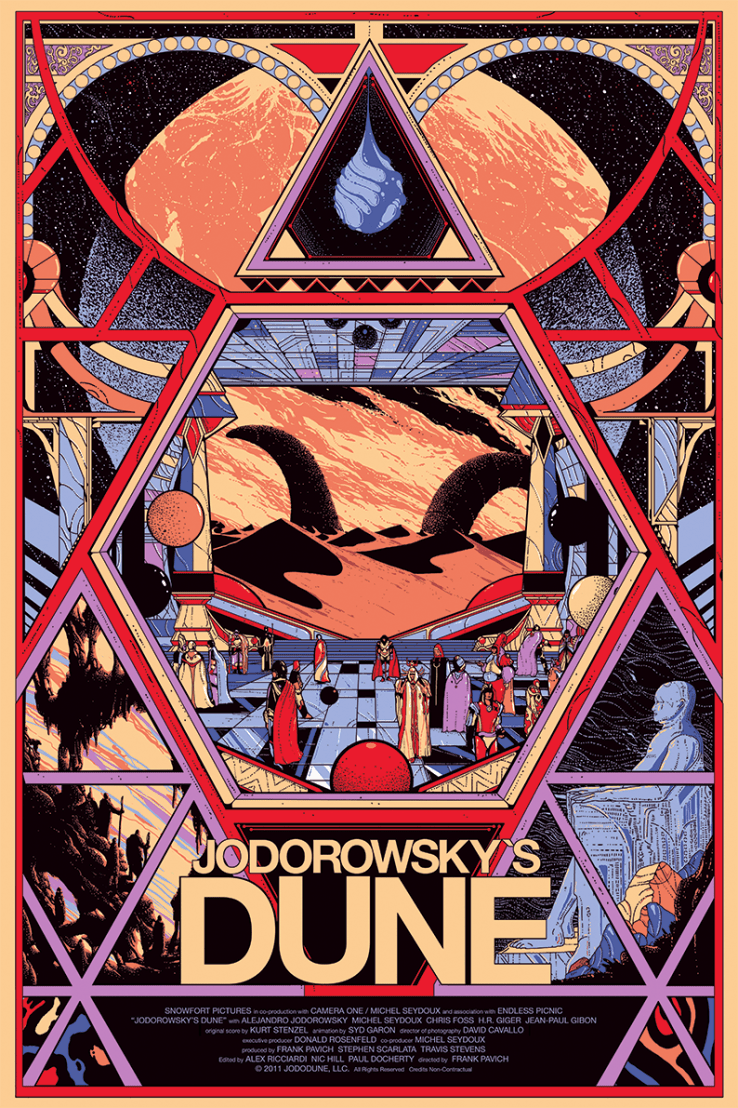
Fans of Alejandro Jodorowsky and will likely already be familiar with the story that unfolds in Jodorowsky’s Dune, a new documentary by Frank Pavich. The short version: After the success of his midnight cult films El Topo and The Holy Mountain, Jodorowsky moves to a castle in France to turn Frank Herbert’s sci-fi novel Dune into a film. Jodorowky put together a group of “spiritual warriors” to aid him in this quest, including the core team of Dan O’Bannon (who went on to create Alien), H.R. Giger, and the French artist Jean Giraud, aka Moebius, whose character designs and storyboards are the concrete manifestations of Jodorowsky’s vision. Jodorowsky also sought out Orson Welles, Salvador Dali, Pink Floyd, and Mick Jagger, among others. The project resulted in a tome the size of several phonebooks, including paintings, designs, technical solutions, and a storyboard by Moebius—but no film. Studios shied away from Jodorowsky, daunted in no small part by the film’s proposed fourteen hour running time. Dino De Laurentiis eventually bought the film rights and handed the project to David Lynch, resulting in 1984’s admirable failure Dune.
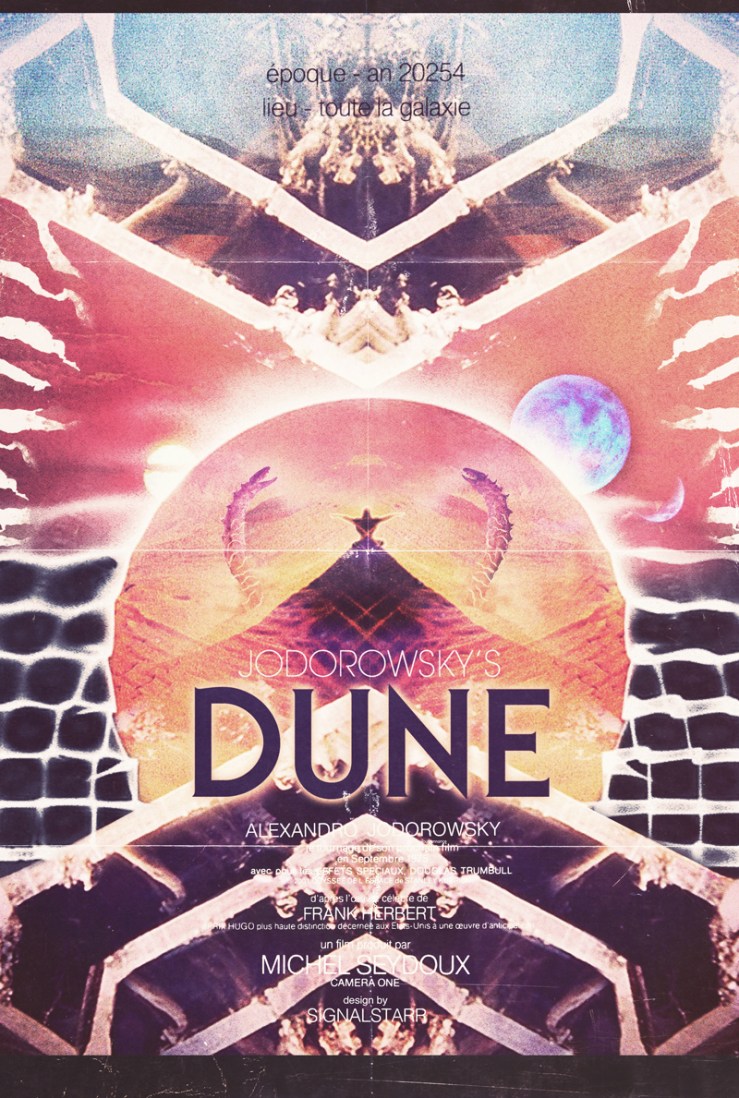
Jodorowsky’s Dune enriches and enhances the mythic status of Jodo (as he’s affectionately called by half the interviewees) and his non-film. Most of this enhancing comes from Jodo himself, whose shaman-presence radiates through the screen, charming the camera and the viewer. Here is someone spinning his own legend, telling stories he’s told a million times before, it seems, but weaving them into a more definitive tapestry—one that covers over half-truths, poses, and outright fraudulence. Like any great con-man, Jodo believes in his own bullshit and makes his audience want to believe it as well. His little stories—promising to buy off Orson Welles with a personal chef and plenty of wine, snapping at Pink Floyd while they wolf down hamburgers, a fateful across-the-room meeting with Mick Jagger, dueling with Dali—these anecdotes are the real life-force of the film.
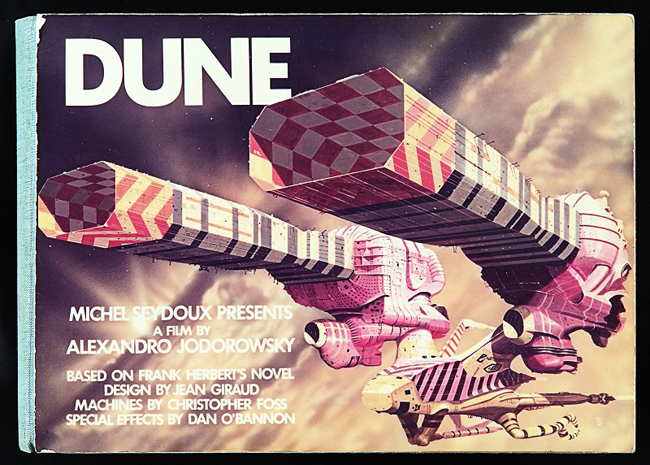
The other talking heads (and occasional disembodied voices) in the documentary offer a more nuanced, reality-based perspective, although it’s always clear that Jodo’s core team of “spiritual warriors” were willing to do whatever he asked of them (including Jodo’s son, who was to play the starring role of Paul Atreides—he had to endure several years of intense martial arts training). Jodorowsky’s influence on H.R. Giger and O’Bannon is especially clear, and the film makes a strong case that many of the concepts that landed in Jodo’s Dune-film-tome eventually showed up all over subsequent sci-fi and fantasy films.
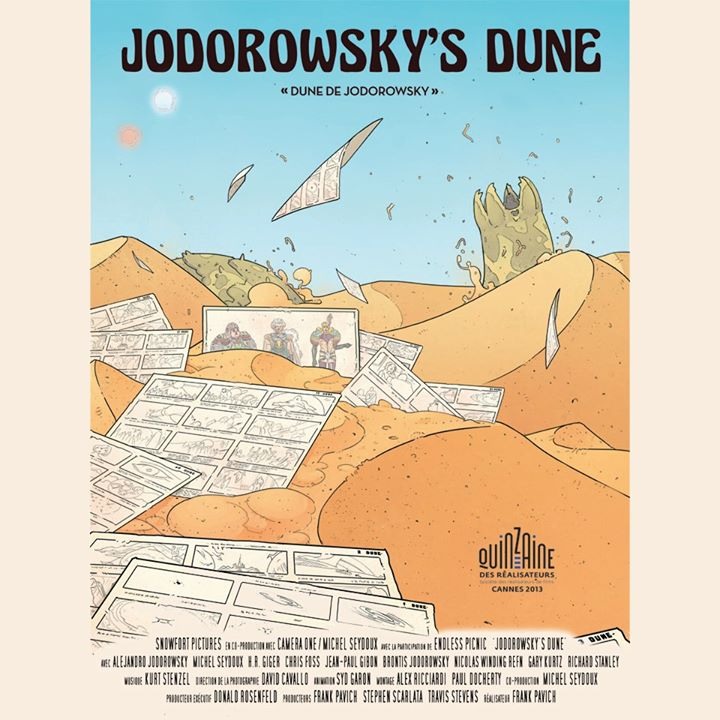
Moebius is sorely missing here. He’s repeatedly (and correctly) credited as a genius, but his overall influence on the project is understated, and unless I blinked and missed it, there is no footage of him in the film—not even a voiceover (conflicting film rights?).
Perhaps what’s most significantly missing from the film is Frank Herbert. Early on, Jodorowsky admits that he hadn’t read Dune, just had the plot summarized by a friend. As the film progresses, it becomes evident that Jodorowsky probably never bothered to read the book. “I was raping Frank Herbert…but with love,” he declares at one point. Of course, it’s Jodorowsky’s Dune—not Herbert’s Dune.
The film also avoids spending much time on Lynch’s Dune, which is probably for the better. Still, there’s a wonderful moment near the end when Jodorowsky shares his thoughts on Lynch’s take (spoiler: He agreed with pretty much every other critic).
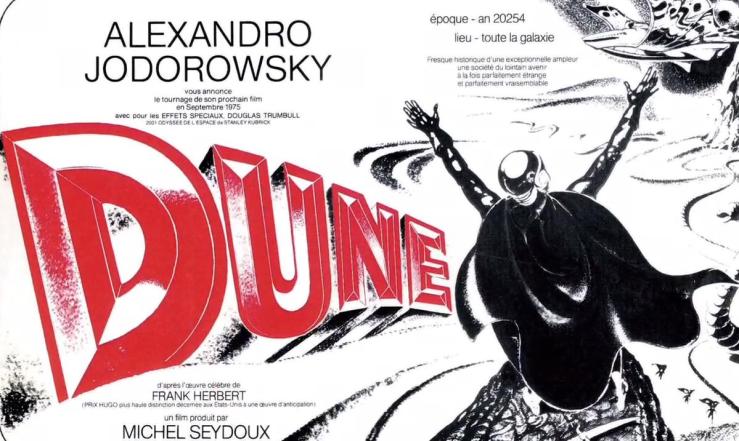
Jodorowsky is clearly still angry that the film was never made. Like a magician practiced in misdirection, he spends much of the film hiding his wounded ego. His performance conveys the appearance—but not the spirit—of candor. In a rare moment that feels honest though, he grasps the tome he made with his spiritual warriors and expresses how much he would like somebody—anybody—to make the film.
Do we actually want Jodorowsky’s Dune? Isn’t it somehow better for the myth to exist, the chimera, the idealization, the-could-have-been? The filmmakers of Jodorowsky’s Dune offer us a version or a template or a guide. They do a wonderful job of synthesizing disparate materials into a unified audiovisual experience. Animation and original music bring the storyboards and concept art into vivid life, and Jodo’s voice commands and directs the viewer’s imagination. And this is the real joy of Jodorowsky’s Dune: A chance for the viewer to imagine, along with its shaman-author, the film that never happened.
Peace — William H. Johnson

Galatea — Gustave Moreau

Sea Piece (Cloudy) — Gerhard Richter

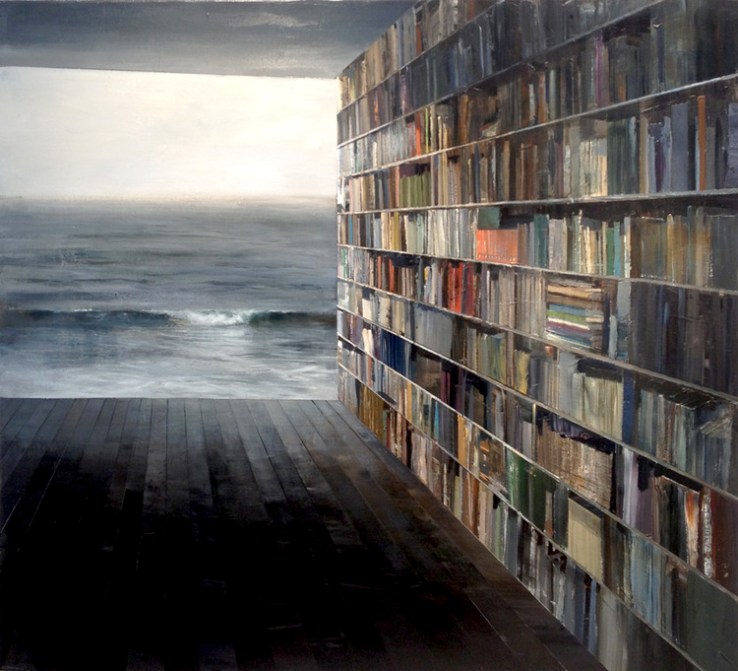
Library with Grey Sea — Jeremy Miranda
Punktum — Daniel Richter

Robert Hughes Explores the Entanglement of Big Money and Art in The Mona Lisa Curse
Saint Casilda — Francisco de Zurbarán

Marcel Duchamp’s World Tour: Playing Chess with Tracey (Detail) — Peter Blake

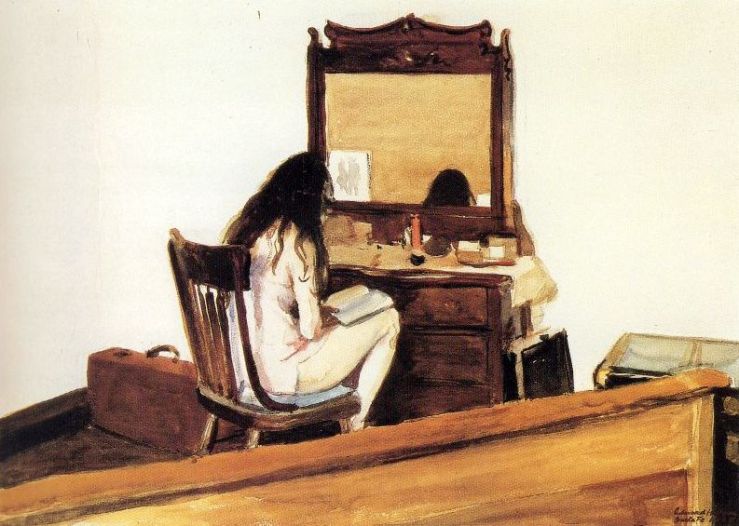
Interior (Model Reading) — Edward Hopper
The Rosy Wealth of June — Henri Fantin-Latour

Control Tower — Jeffrey Smart

 Biblioklept