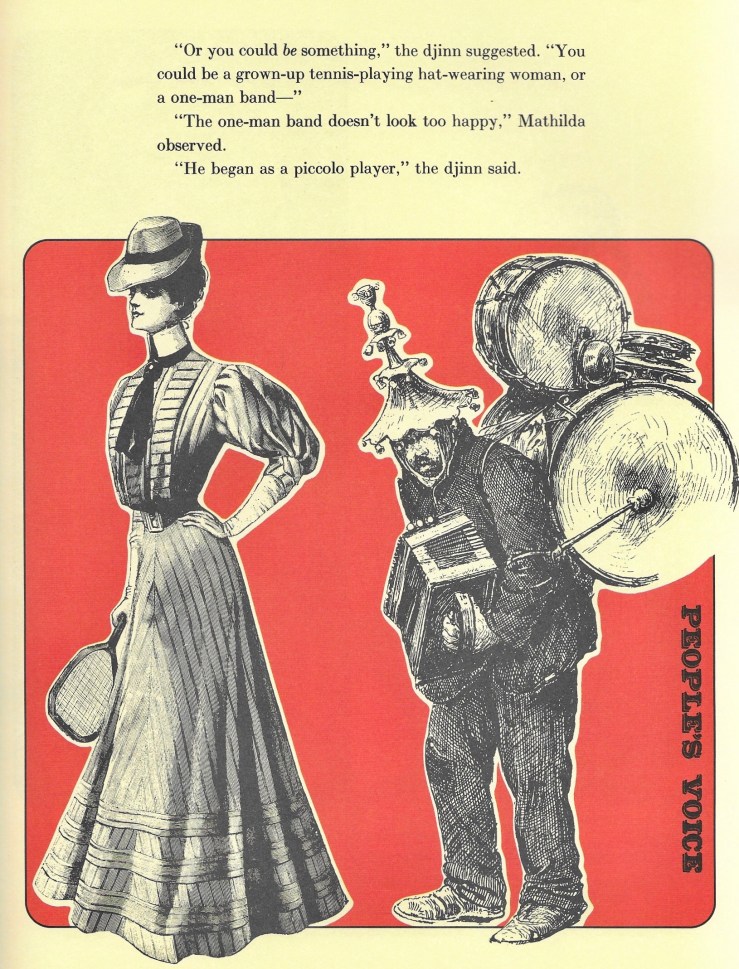
From Donald Barthelme’s children’s book The Slightly Irregular Fire Engine; or The Hithering Thithering Djinn.

From Donald Barthelme’s children’s book The Slightly Irregular Fire Engine; or The Hithering Thithering Djinn.

Niagra Red Chair, 2013 by Jamie Adams (b. 1961)

They’re talking about things of which they don’t have the slightest understanding, anyway. It’s only because of their stupidity that they’re able to be so sure of themselves.
Very easy to read
I ate
Paradise
Congratulations
Our box
Everyone
You to you
Subject
On coffee
I do not have it
They are awesome
Very good
It is very cold

It totally depends
Get up
Red palesgra
Wheelchair
Rain covered
That
It’s white
Chicken
It is a singular thing, that, at the distance, say, of five feet, the work of the greatest dunce looks just as well as that of the greatest genius,–that little space being all the distance between genius and stupidity.


There is evil in every human heart, which may remain latent, perhaps, through the whole of life; but circumstances may rouse it to activity. To imagine such circumstances. A woman, tempted to be false to her husband, apparently through mere whim,–or a young man to feel an instinctive thirst for blood, and to commit murder. This appetite may be traced in the popularity of criminal trials. The appetite might be observed first in a child, and then traced upwards, manifesting itself in crimes suited to every stage of life.







Roommates, 1994 by Roy Lichtenstein (1923–1997)
“Classic Scene”
by
William Carlos Williams
A power-house
in the shape of
a red brick chair
90 feet high
on the seat of which
sit the figures
of two metal
stacks–aluminum–
commanding an area
of squalid shacks
side by side–
from one of which
buff smoke
streams while under
a grey sky
the other remains
passive today–

Classic Landscape, 1931 by Charles Sheeler (1883–1965)

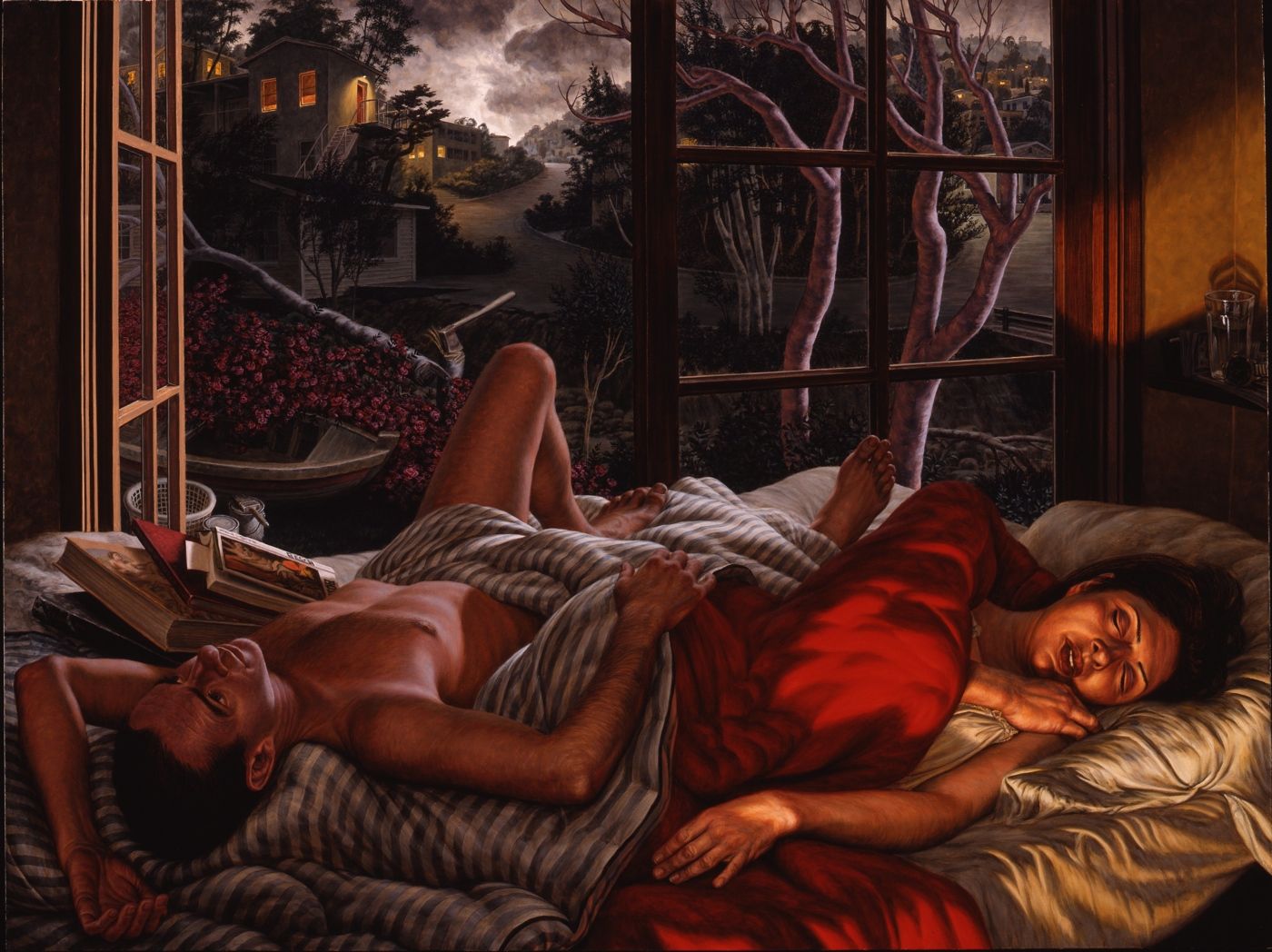
Sleep of Trees, 2000 by F. Scott Hess (b. 1955)

From The Minus Times #29, as republished in The Minus Times Collected.

Nervous in the Service, 2009 by Hilary Harkness (b. 1971)

I managed to snag a cheap used copy of William Melvin Kelley’s fourth novel Dem (or, more properly, dem) yesterday. I usually just snap a pic when I do these book acquired posts, but the cover for this 1969 Collier mass-market, by Leo and Diane Dillon, was simply too good not to scan.
I read not-quite-half of dem today, and the Dillons’ cover captures Kelley’s hypercolor satire of white upper-middle-class America: the infantalized businessman, attended by a black domestic, his bored wife not-quite-off-scene; and hey—look in that mirror.
I’ll admit that the book was hard to break into for the first few moments, until a wild moment around page 20 or so, that I’m still waiting on the novel to deliver upon (or, as it seems at this point, to depart from entirely). Kelley’s style in dem is choppier, sharper, more cartoonish than his Faulknerian debut A Different Drummer and if dem skews towards absurd irony where Drummer was heroic-tragic, both novels are rooted in intense anger tempered by strange empathy.
As its subheading attests, dem is, like Drummer, a take on white people viewing black people, and over a half-century after its publication, many of the tropes Kelley employs here still ring painfully true. His “hero,” Mitchell Pierce is a lazy advertising executive, bored with his wife, a misogynist who occasionally longs to return to the “wars in Asia.” He’s also deeply, profoundly racist; structurally racist; the kind of racist who does not think of his racism as racism. At the same time, Kelley seems to extend little parcels of sympathy to Pierce, even as he reveals the dude to be a piece of shit, as if to say, What else could he end up being in this system but a piece of shit?
The novel I’m most interested in reading by Kelley is his last, 1970’s Dunfords Travels Everywheres, long out of print and hard (read: expensive on the internet) to find. It is, apparently, his most postmodern novel, his most polyglossic, and, if the stuff I’ve read on it is accurate, it represents his most profound satirical break/engagement with reality. Fortunately, it’s getting a reprint this fall. Looking forward to it.
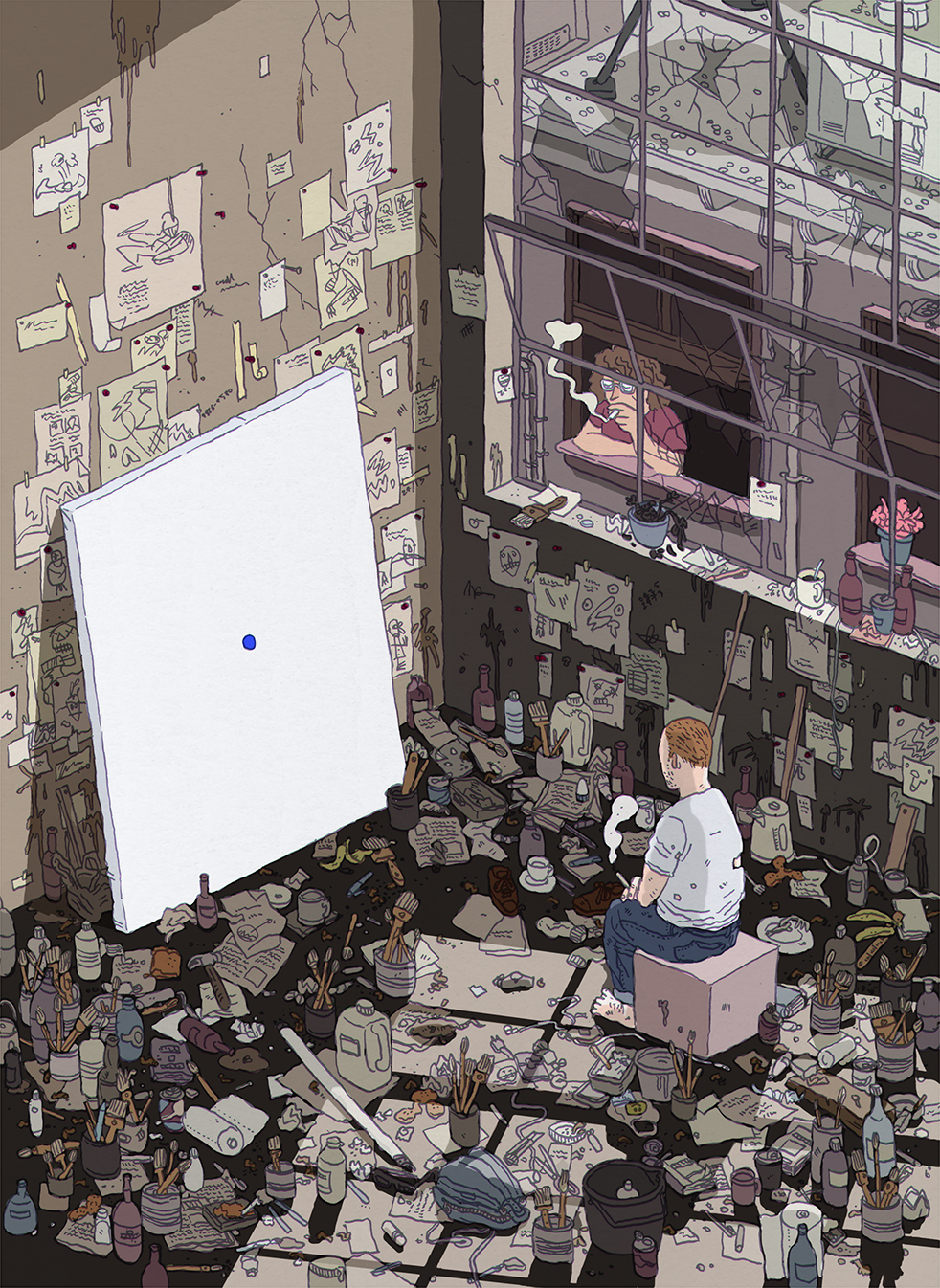
The Minimalist, 2017 by Ilya Milstein
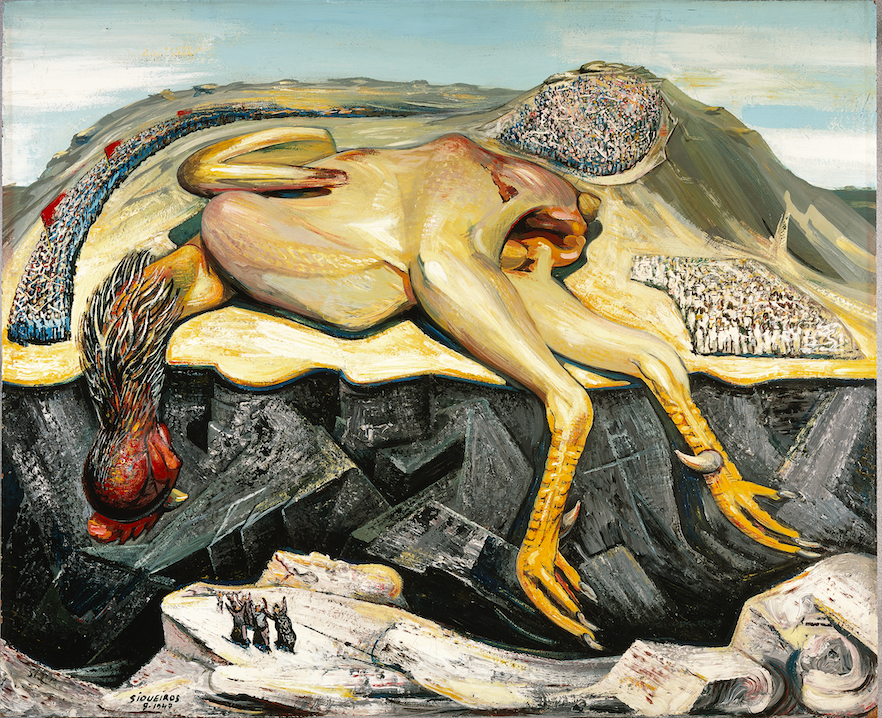
Death and Funeral of Cain, 1947 by David Alfaro Siqueiros (1896-1974)

Sketch of a Seated Man Reading by Eileen Agar (1899–1991)

Passionate, 1943 by Carol Rama (1918-2015)

Game, 1989 by George Petrovich Kichigin (b. 1951)
 Biblioklept