Bukowski for Kids — Bob Staake

tumblr_maabejLlgG1qh0usho1_500

Can Not Prevent It, but There Is No Need to Prevent It — Ryohei Hase

28_01

Thomas Pynchon’s Mason & Dixon (Second Riff: The Pygmies’ Discovery of Great Britain)

A. Okay. So I finished the first section of Mason & Dixon a few days ago. I’m now at the part where our titular heroes are smoking weed and eating snacks with George Washington. I can’t possibly handle all the material I’ve read so far—even in a riff (here’s the first riff for anyone inclined)—so instead I’ll annotate a few passages from Ch. 19, one of my favorite episodes so far.

B. Setting and context: 1762. “The George,” a pub in Gloucestershire (Mason’s home county). The patrons at the tavern are heatedly discussing the eleven days that went “missing” when the British moved from the Julian calendar to the Gregorian calendar.

One (satirical) source for this controversy comes from William Hogarth’s 1755 painting An Election Entertainment; in the detail below, you can read (barely) the slogan  “Give us our Eleven Days” on the black banner under the man’s foot.

a

A bit more context, via History Today:

In 1750 England and her empire, including the American colonies, still adhered to the old Julian calendar, which was now eleven days ahead of the Gregorian calendar, introduced in 1582 by Pope Gregory XIII and in use in most of Europe.

Attempts in the sixteenth and seventeenth centuries to adopt the new calendar had broken on the rock of the Church of England, which denounced it as popish. The prime mover in changing the situation was George Parker, second Earl of Macclesfield, a keen astronomer and a Fellow of the Royal Society. He was assisted in his calculations by his friend James Bradley…

I emphasized Bradley—Mason’s mentor—and Macclesfield as they are minor characters in this episode.

Basically, the pub patrons demand that Mason explain what happened to the missing eleven days.

C. Okay—so this whole episode, this discussion of time and space clearly helps underline the big themes of Mason & Dixon: How to measure the intangible, the invisible—how to pin down the metaphysical to the physical—how to know and how to not know. (Hence all the paranoia). Continue reading “Thomas Pynchon’s Mason & Dixon (Second Riff: The Pygmies’ Discovery of Great Britain)” →
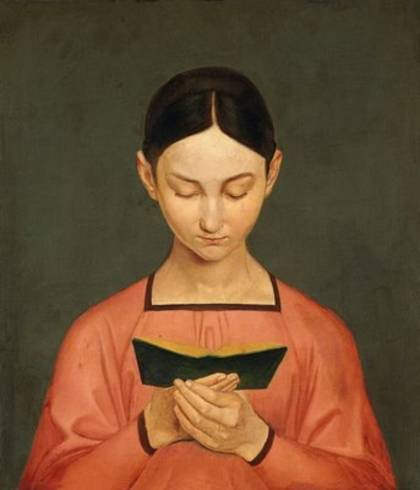
Young Girl Reading — Gustav Adolph Hennig

gustavv-adolph-henning-jene-fille-lisant-1828.1299571148.thumbnail

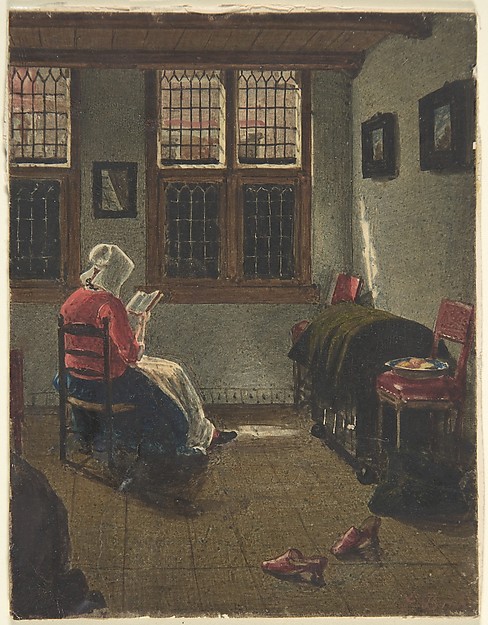
A Woman Reading — François Bonvin (After Pieter Janssens Elinga)

DP805444

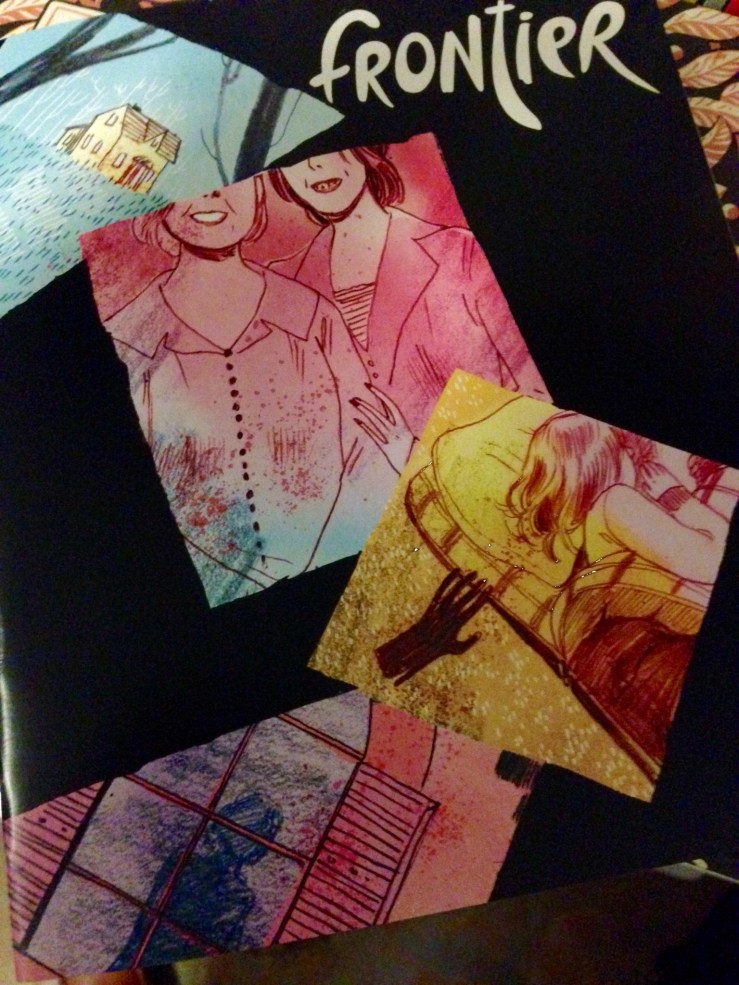
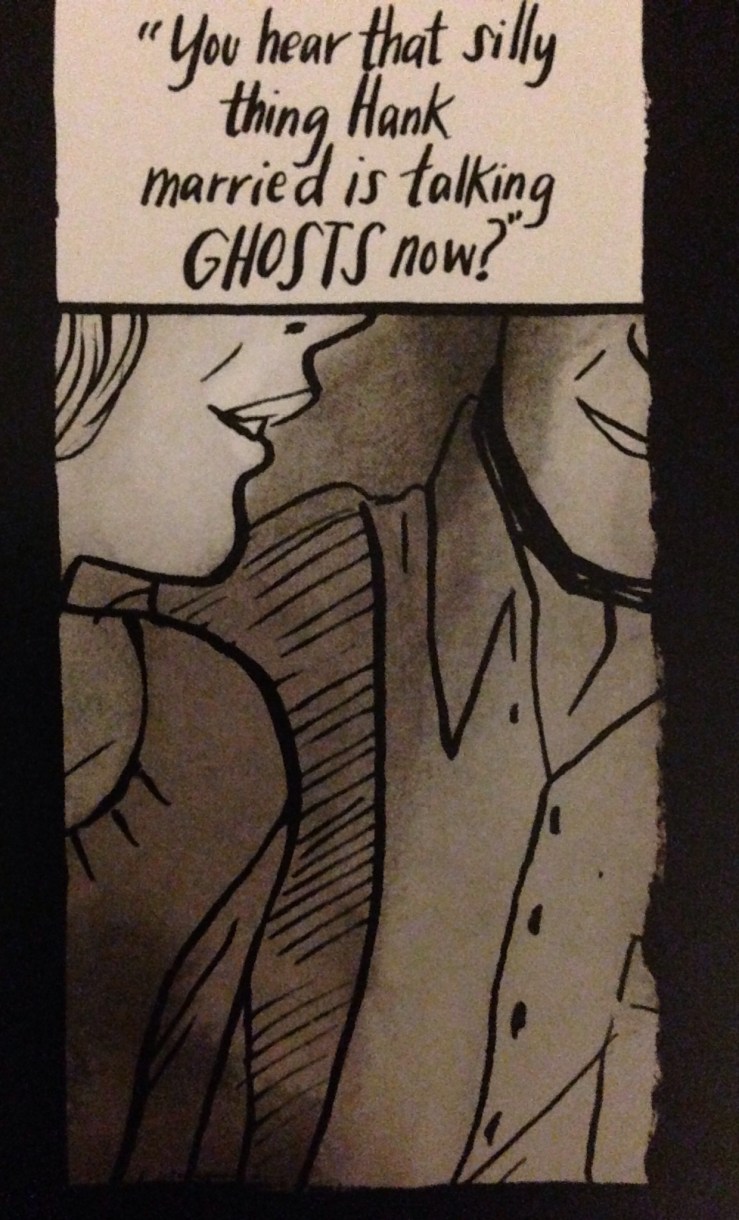
Emily Carroll’s Ann by the Bed (Book acquired, 12.05.2014)

IMG_4148.JPG

I was pleasantly surprised when a copy of Emily Carroll’s issue of Frontier came in Friday’s mail. I tried to read it right away but a domestic chore intervened—which ended up working out better, really. I read it in bed by the light of my iPhone’s flashlight, which is exactly as god intended.

IMG_4151.JPG

Publisher Youth in Decline’s blurb:

Our final issue of 2014 features an eerie and stunning original comic by Emily Carroll titled, “Ann by the Bed.” Experience the dreadful tale of Ann Herron’s bloody murder, and the awful legacy that persists today in Southern Ontario.

IMG_4149.JPG

Full review forthcoming. Until then, check out Carroll’s excellent comics,“The Prince and the Sea,” and “His Face All Red.”

IMG_4152.JPG

Woman Reading — Pieter Janssens Elinga

169161900

Portrait of Dido Elizabeth Belle Lindsay and Her Cousin Lady Elizabeth Murray — Johann Zoffany (Attributed)

Woman Reading — François Bonvin

Roberto Bolaño’s Antwerp (Book acquired, 12.04.2014)

IMG_4135.JPG

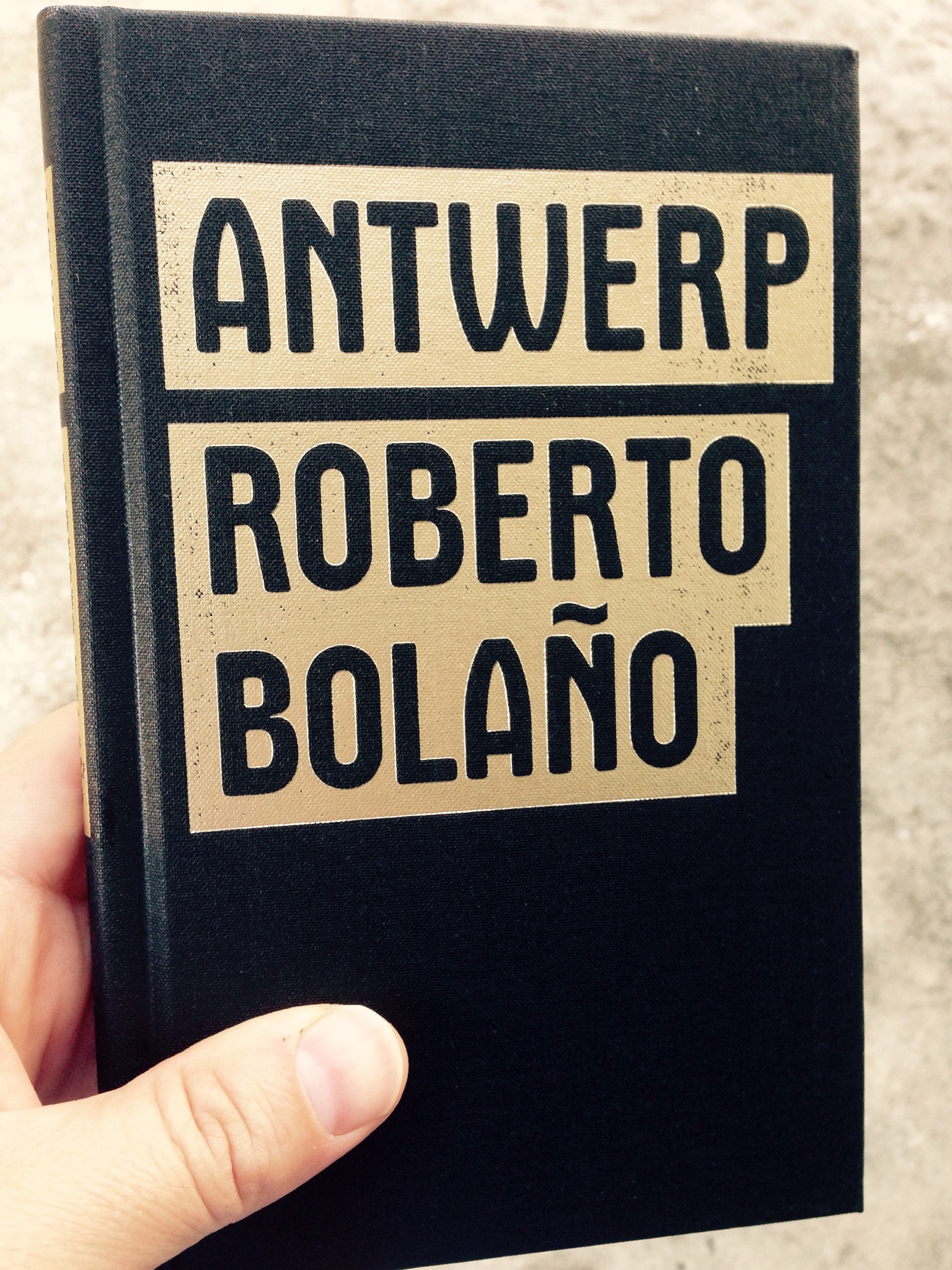
Bolaño’s Antwerp. Found it today at the bookstore. I was there picking up a book I’d ordered as a present for someone else. Honest.
Antwerp is Bolaño’s first novel and it’s not particularly great, but I didn’t own it up until now, and I guess I’m a completist nerd, and this New Directions clothbound edition is beautiful, so…
IMG_4136.JPG

Young Woman Reading in the Garden — Henri Lebasque

A Shut Book Is Just a Block — Amandine Alessandra

916011233767581

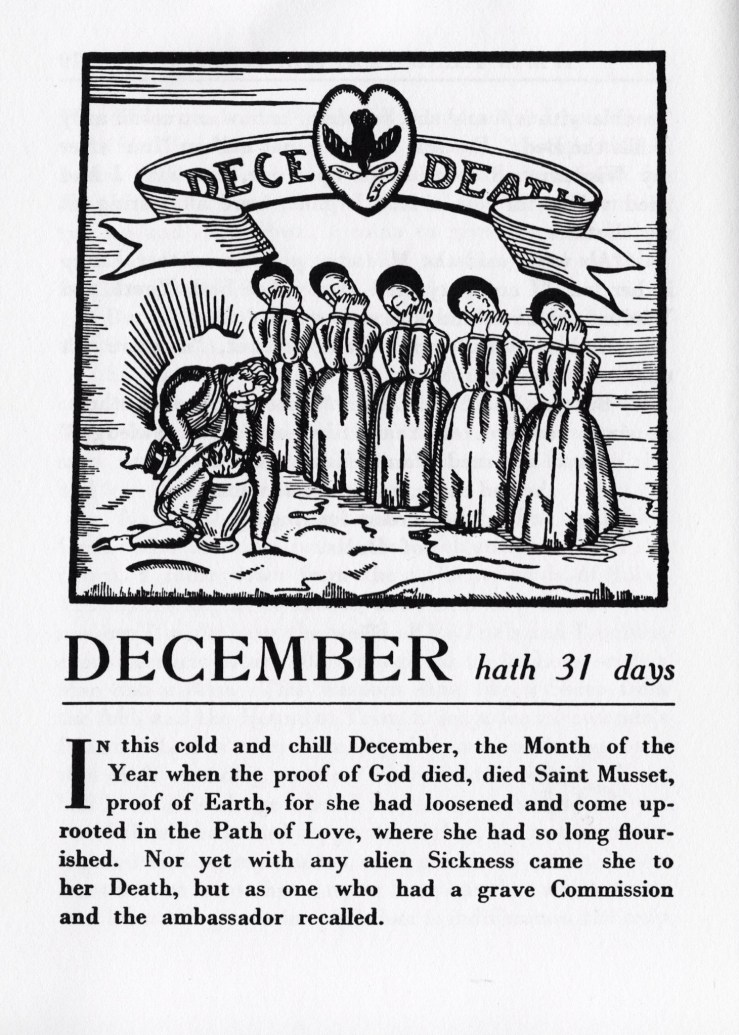
December — Djuna Barnes

IMG_4121.JPG

The Reading Girl — Marie-Augustin Zwiller

Making Nice (Book Acquired, Some Time in Early November)

IMG_4022

Matt Sumell’s debut is Making Nice. Christine Schutt compares it to Barry Hannah and James Dickey. Keep meaning to dip into it. Publisher Henry Holt’s blurb:

A gut-punch of a debut about love, grief, and family; the arrival of a brilliant, infectious new voice for our age

In Matt Sumell’s blazing first book, our hero Alby flails wildly against the world around him—he punches his sister (she deserved it), “unprotectos” broads (they deserved it and liked it), gets drunk and picks fights (all deserved), defends defenseless creatures both large and small, and spews insults at children, slow drivers, old ladies, and every single surviving member of his family. In each of these stories Alby distills the anguish, the terror, the humor, and the strange grace—or lack of—he experiences in the aftermath of his mother’s death. Swirling at the center of Alby’s rage is a grief so big, so profound, it might swallow him whole. As he drinks, screws, and jokes his way through his pain and heartache, Alby’s anger, his kindness, and his capacity for good bubble up when he (and we) least expect it. Sumell delivers “a naked rendering of a heart sorting through its broken pieces to survive.*”

Making Nice is a powerful, full-steam-ahead ride that will keep you laughing even as you try to catch your breath; a new classic about love, loss, and the fine line between grappling through grief and fighting for (and with) the only family you’ve got.


Young Woman Reading — Marie-Augustin Zwiller

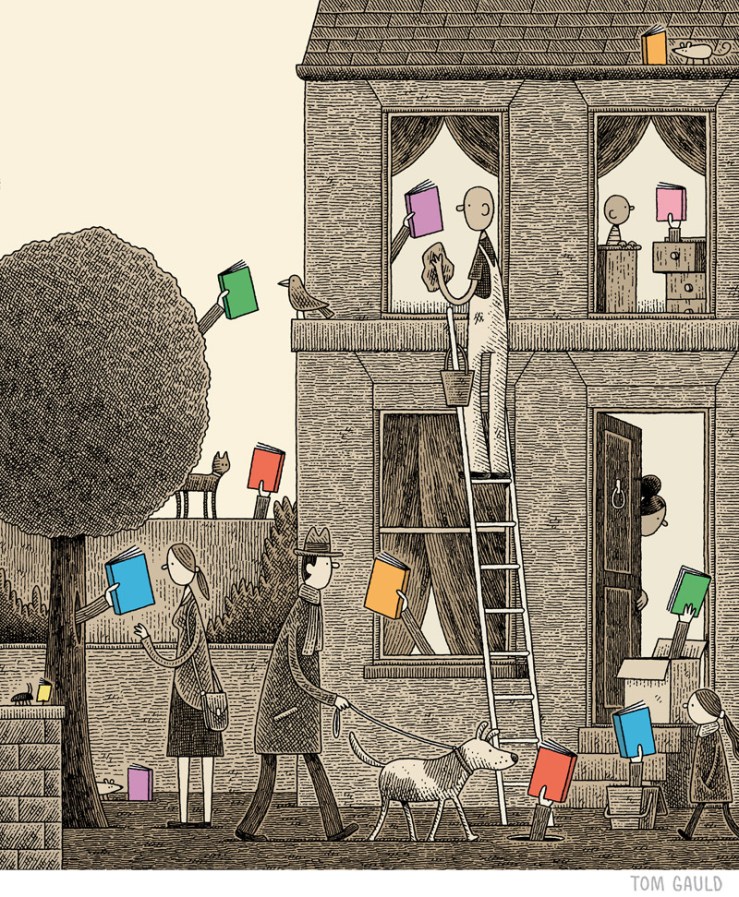
Readers (Guardian Cover) — Tom Gauld

tumblr_nftj4fswTi1rwkrdbo1_1280