The Physician — Gerrit Dou

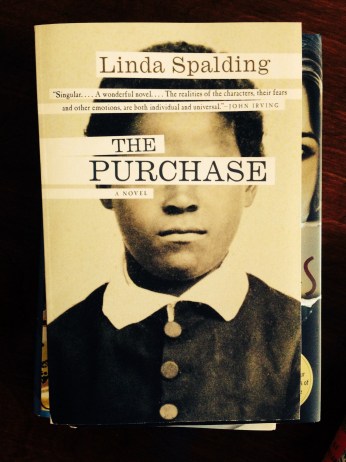
The Purchase (Book Acquired, 9.03.2014)

IMG_3226

Linda Spalding’s novel The Purchase is new in trade paperback from Random House. Their blurb:

Pennsylvania, 1798. Daniel Dickinson, a devout Quaker, has just lost his wife. When he marries a fifteen-year-old Methodist orphan to help with his five small children, his fellow Quakers disown him for his impropriety. Forced out of the only community he’s ever known, Daniel moves his family to the Virginia frontier. He has in hand a few land warrants, with which he plans to establish his new homestead.
Although determined to hold to his Quaker belief in abolitionism, Daniel is now in a slave state, and he soon finds himself the owner of a young boy named Onesimus. This fatal purchase sets in motion a twisted chain of events that will forever change his children’s lives—and his own. An unforgettable story of sacrifice and redemption, The Purchase powerfully explores questions of fate, faith, loyalty, and conscience.

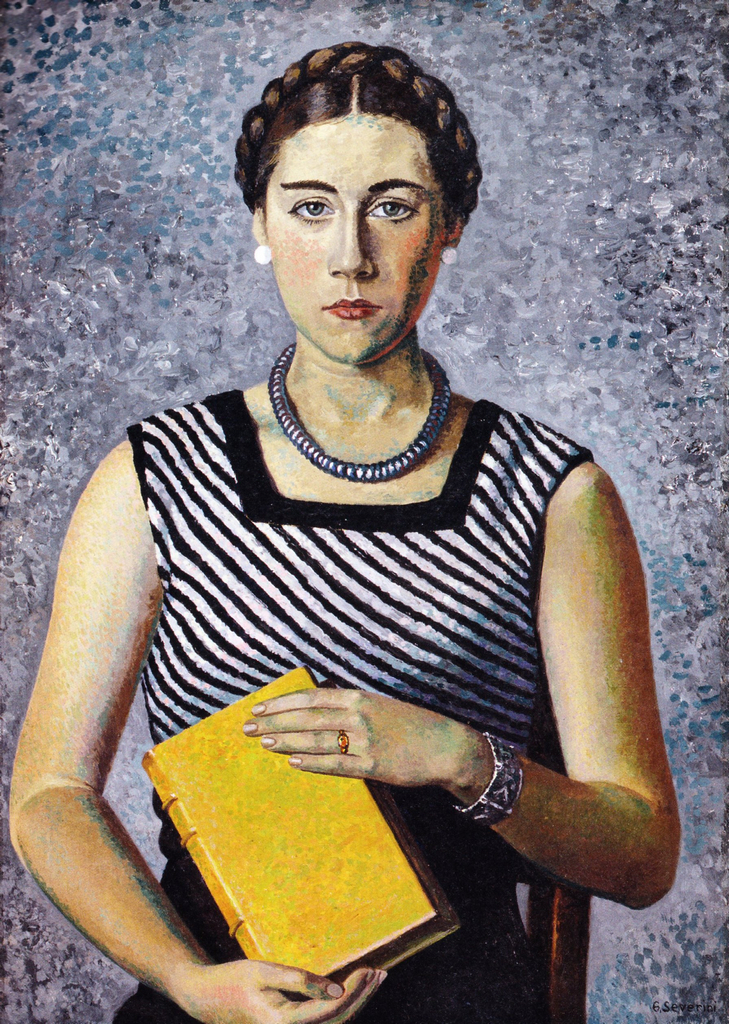
Portrait of Gina Severini — Gino Severini

12273OP1036AU19568

The Wood of the Self-Murderers: The Harpies and the Suicides — William Blake

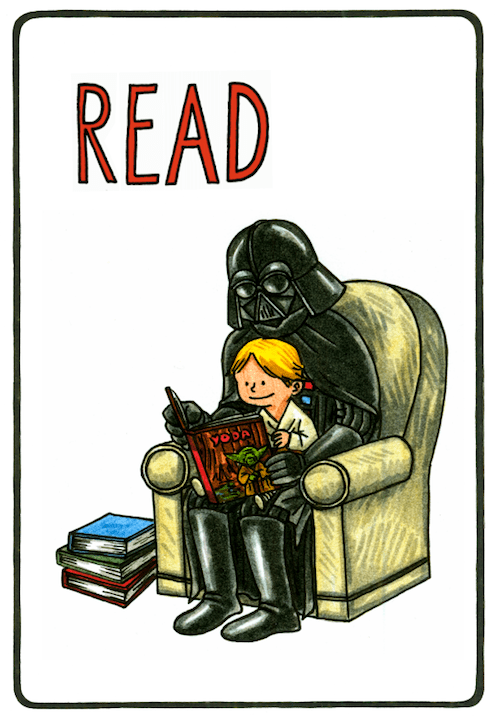
Read — Jeffrey Brown

dvread

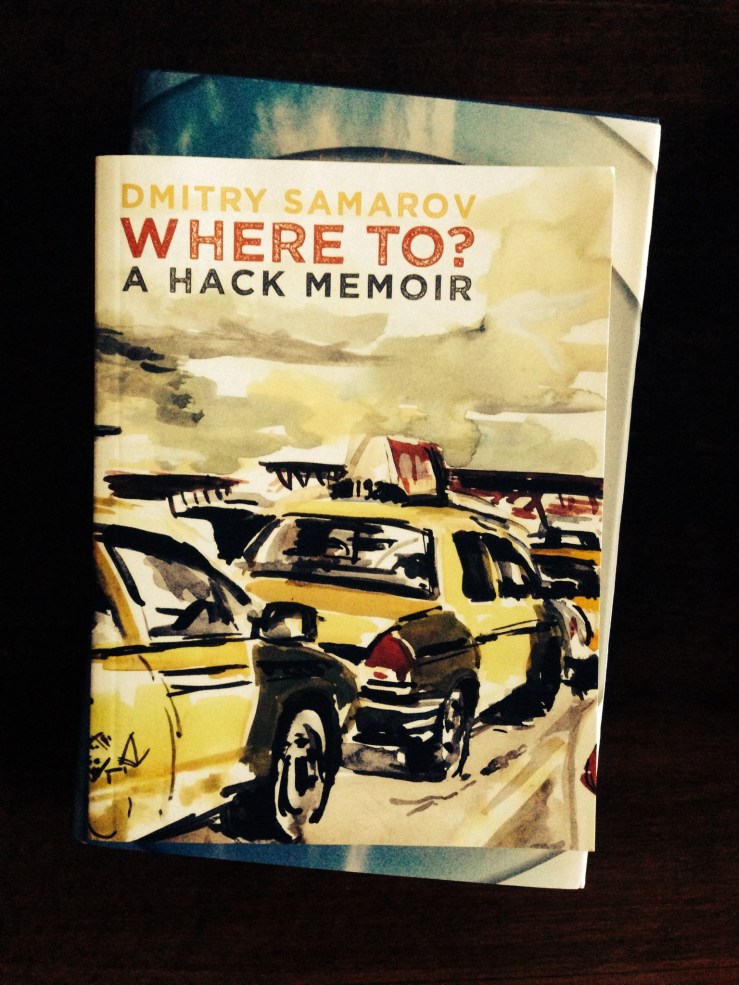
Dmitry Samarov’s Where To? (Book Acquired, 8.22.2014)

IMG_3209

Where To? A Hack Memoir is Dmitry Samarov’s sequel to Hack.

Publisher Curbside Splendor’s blurb:

Dmitry Samarov’s illustrated memoir captures encounters with drunken passengers, overbearing cops, unreasonable city bureaucracy, his fellow cabdrivers, a few potholes, and other unexpectedly beautiful moments. Accompanied by dozens of Samarov’s original artworks—composed during traffic jams, waits at the airport, and lulls in his shifts—the stories in Where To? provide a street-level view of America from the perspective of an immigrant painter driving a cab for money.

I interviewed Dmitry about his art and his writing a few years ago, and he described Hack:

Hack started as a zine around 2000 as a way for me to make sense of my three years driving a cab in Boston (1993-1997). It was called Hack because the license to operate a taxi in Boston was called a Hackney Carriage License and they used to call cabbies hacks in the old days. It was my first attempt at writing outside of school homework assignments and there really wasn’t much writing, it was mostly pictures. Those pictures were a challenge too because, as I’ve said, I work primarily from direct observation and the only way to do these were from memory. These illustrations were made to work together with the words, not to stand on their own and that has continued to be the case through the whole history of Hack.

I started driving a taxi in Chicago in 2003 and revived Hack as a blog late in 2006. To my surprise, it got notice pretty quickly from some in the local press—Whet Moser, then of theChicago Reader especially—-and my high school pal John Hodgman mentioning it in a magazine didn’t hurt either. That got it noticed by a publicist at University of Chicago Press named Levi Stahl. He bought a copy of my self-published compilation (see the third one down) and eventually pitched Hack as a book to his employers. They published it in October 2011.

“Indiscretion” — Guy de Maupassant

“Indiscretion”

by 

Guy de Maupassant

They had loved each other before marriage with a pure and lofty love. They had first met on the sea-shore. He had thought this young girl charming, as she passed by with her light-colored parasol and her dainty dress amid the marine landscape against the horizon. He had loved her, blond and slender, in these surroundings of blue ocean and spacious sky. He could not distinguish the tenderness which this budding woman awoke in him from the vague and powerful emotion which the fresh salt air and the grand scenery of surf and sunshine and waves aroused in his soul.
She, on the other hand, had loved him because he courted her, because he was young, rich, kind, and attentive. She had loved him because it is natural for young girls to love men who whisper sweet nothings to them.
So, for three months, they had lived side by side, and hand in hand. The greeting which they exchanged in the morning before the bath, in the freshness of the morning, or in the evening on the sand, under the stars, in the warmth of a calm night, whispered low, very low, already had the flavor of kisses, though their lips had never met.
Each dreamed of the other at night, each thought of the other on awaking, and, without yet having voiced their sentiments, each longer for the other, body and soul.
After marriage their love descended to earth. It was at first a tireless, sensuous passion, then exalted tenderness composed of tangible poetry, more refined caresses, and new and foolish inventions. Every glance and gesture was an expression of passion. Continue reading ““Indiscretion” — Guy de Maupassant”

Still Life and Street — M.C. Escher

Lars Iyer’s Wittgenstein Jr (Book Acquired, 8.29.2014)

IMG_3208

Lars Iyer’s latest is now available in hardback from Melville House. Iyer discussed the novel a bit with me when I interviewed him last year:

Wittgenstein Jr? A difficult novel to write, not least because it is my first attempt at pure fiction. I had the safeguard of basing it on the life of the real Wittgenstein, replaying it in a Cambridge University of the present. But I had to dream up characters, narrative incident, narrative colour… Above all, I had to find new rhythms of writing, which fit my version of Wittgenstein himself, and fit his students. Everything is about rhythm!

There’s high despair and low humour – a lot of humour. There’s romance. There’s paranoia. There’s utopianism: dreams of friendship, of politics, of meaning. There’s lyricism. There’s madness. There’s anti-Cambridge-dons invective. There’s dance. There are songs (all novels should have songs). There are long walks in the snow. Allusions to Paul, paraphrases of rabbinical commentaries on the Bible, quotes from Wallace Stevens, from Goethe, lines from Pretty Woman… Dramatic re-enactments of great philosophical deaths…

We could probably maybe add the novel to David Markson’s list from Vanishing Point:

Lucy Hessel Reading — Edouard Vuillard

The Country School — Winslow Homer

Annunciation (Detail) — Master of Flemalle (Robert Campin)

1a Master Of Flemalle (Robert Campin) Annunciation Detail 1425

Mystery Prayer IV — Kilian Eng

kilian_eng-mystery_prayer_iv_1600x2263_marked

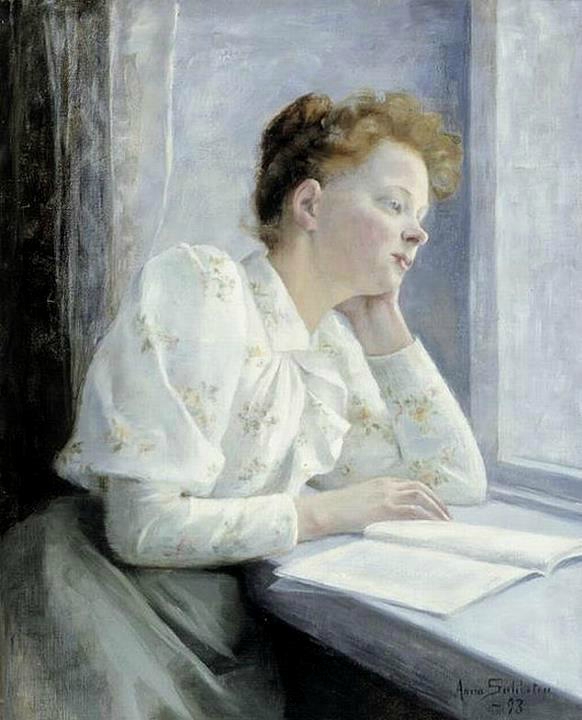
Woman Reading at the Window — Anna Sahlstén

94529534

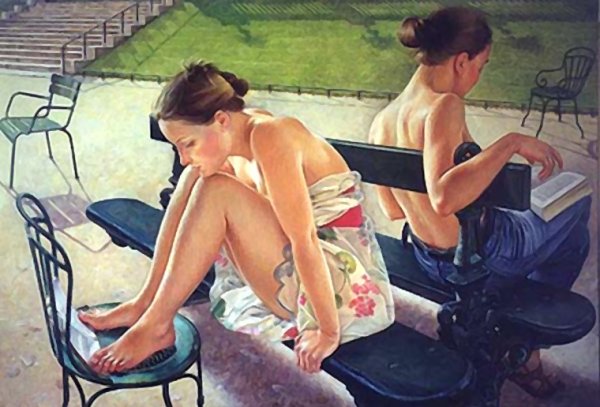
Reading in the Garden — Francine van Hove

fvh

Neve, The Moon Is Chilling — Utagawa Kuniyoshi

A Conversation about Ben Lerner’s Novel 10:04 (Part 1)

1004

[Context/editorial note: Ben Lerner’s new novel 10:04 wasn’t on my radar until Ryan Chang, who has been contributing reviews, riffs, citations, and other good stuff to this blog for the some time now, brought it up. He digs it, I don’t—but in fairness, I haven’t finished it yet. I was determined to abandon it, but Ryan’s emails kept me interested enough to continue; our conversation of the past five days is presented below. The book frustrates and rewards; at times I’ve laughed out loud and at other moments I’ve sprained my eyeballs by rolling them. More to come, because this is pretty long—but I think Ryan, who offers the bulk of the analysis here, makes a strong case for Lerner’s book. — ET].   

Edwin Turner: Got an e-galley of the Lerner book. I don’t know if it’s that I’m almost exactly the same age as Lerner/the narrator or what, but I really really hate it so far! He’s very smart and the sentences are often great, but I find myself rolling my eyes at a lot of what he’s doing—it’s probably me not him. The narrative voice strikes me as so thoroughly inauthentic that I want to grab the narrator by the lapels and shout, Quit aping Sebald, quit trying to show how clever you are, and just observe and report! Again, it’s probably me not him.

Ryan Chang: I know what you mean; though it won’t bear any difference to your reading, I can attest personally to the diction & syntax of the narrator and Lerner himself (indeed, he does speak like that). I don’t think it’s an affectation, but I think it’s real “poet-y.” It is a criticism I forgive b/c I see that the tension between authenticity (of time) and inauthenticity (of time; especially exemplified in the Whole Foods/Instant coffee scene — which narrative context of time determines the Real, the Market (or its interpretation of Universal time) or our intuition (something like Whitmanic time, where time is experienced not on a linear, progressive plane but a circular, lateral one?)) is a crucial thread that runs throughout 10:04 and in Lerner’s other work. That said, I know  that in reviews to come of the book he’ll get slammed for that (I think the Kirkus review already did this).

A lot of my friends echo your distaste for Lerner for those exact same reasons, and I totally see why, and I’m kind of annoyed by it too. For me, the success of the book lies in the reclamation of fiction as a communal space from fetish book object/commercial futurity (author advances, agents, contracts, etc. — you already get some of this early on but there is more to come in a beautifully scathing scene of the NYC literary scene) And also, a kind of shiv to the Standard American Novelistic Form that reinforces traditional forms of American identity-making that Gass/Gaddis/Markson et al. have been doing for years and, I think, a poisonous strain of American political sentimentality that keeps most of us “depressed.” I think, too, because I’ve read it twice now, that there is an acknowledgment of his complicity in the very machines he participates in, and an inability, at least on his own, to dismantle those systems. Not sure if we should forgive him for criticizing the bourgeois Food Co-Op while being a member, albeit begrudgingly or tolerate his admission. There’s a lot of celebration of Whitmanic politics in that book, a return to a kind of Whitmanic democratic person is a return to a democratic reading is a return to a “real” democracy shared through the space of the book, of the position of the reader looking at an object and knowing that her “I” is shared amongst several. I’m not sure if you’ve gotten here yet, but he keeps intoning this phrase “bad forms of collectivity” as a better solution than nothing, than “modernist difficulty as resistance to the market.”

The Sebald comparison is apt, esp. with the form & diction & syntax, and I agree with you–Sebald is the master. There’s also something to be said, though, that this kind of fiction-making is badly needed in contemporary American letters on the Big 5 Publishing scene. I mean, I can’t read another fucking book about Brooklyn parents or mid-career Manhattan artist crises without wringing my neck. The kind of book Sebald innovated, too, is able to dismantle received ideas of art/history/writing/identity etc.;  I may be being too generous here, but I think it’s a form that will see continued adoption on this side of the pond.

ET: So your response made me return to the book, Ryan. The line that made me quit was something like, “The place was so quiet I could hear the bartender mixing our artisanal cocktails” or something like that—-I’m still not sure how to read that line as anything but a parody, but I think that the narrator, author, and writer are all sincere in trying to capture or document a particular time/feeling with the phrase. And as I continued reading, I was rewarded by the episode of the older poets/mentors, and their “daughter,” whom the narrator obsessed over—a very fine passage—humorous, reflective, a kind of parodic-but-sincere take on wanting to belong to a particular artistic scene. (What continues to unsettle me is the narrator’s assurance of his own achievement, although I could be wrong).

Continue reading “A Conversation about Ben Lerner’s Novel 10:04 (Part 1)”