Feral hamsters are not pets. They mean business.

2976326_orig

Lisette’s List (Book Acquired, Some Time in August, 2014)

IMG_3040

Susan Vreeland’s historical novel Lisette’s List is new in hardback from Random House. The Kirkus review is pretty enthusiastic:

Une jolie Parisienne in Provence during the turbulent World War II years comes to understand love and great art to the core of her being.

In a sweeping historical novel set in Vichy, France, Lisette Roux, a 20-year-old bride who longs for “window-shopping, cabaret hopping, gallery gazing,” grudgingly moves out of Paris to the rural south to take care of her new husband André’s aging grandfather in 1937. “How are we going to survive in a town without a gallery?” she asks in dismay. But Pascal is not your ordinary grandpère: An ochre miner–turned–pigment salesman, he befriended young, unappreciated painters and amassed a collection of Cézanne, Pissarro and Picasso paintings. After Pascal dies, the loving couple is cast out of an Edenic existence following the German invasion of France. André enlists to fight the Nazis and meets a tragic end midway through the book. Lisette’s short stay in Provence stretches out more than a decade, prolonged by the war and her determined attempt to find Pascal’s pictures, which André hid for safekeeping before going to war. Lisette’s sensibility deepens as she grows closer to former prisoner of war Maxime Legrand, André’s fellow soldier and best friend. Marc and Bella Chagall, hiding in Provence because they are Jewish, show up for a brief but blazing cameo appearance. Vreeland, who has proven in earlier art-themed best-sellers that she has an exquisite eye for detail, is enormously talented at establishing the important societal role of art, particularly relevant here as the Nazis both steal and burn it. While her prose can get a bit fluffy (“apricot trees blossoming with pinkish-white petals like flakes of the moon”) and the book wraps up a tad too tidily, her deeply researched novel is mesmerizing.

Merveilleux. Vreeland’s passionate writing is as good as a private showing at the Louvre.

The First Class Compartment — Edouard Vuillard

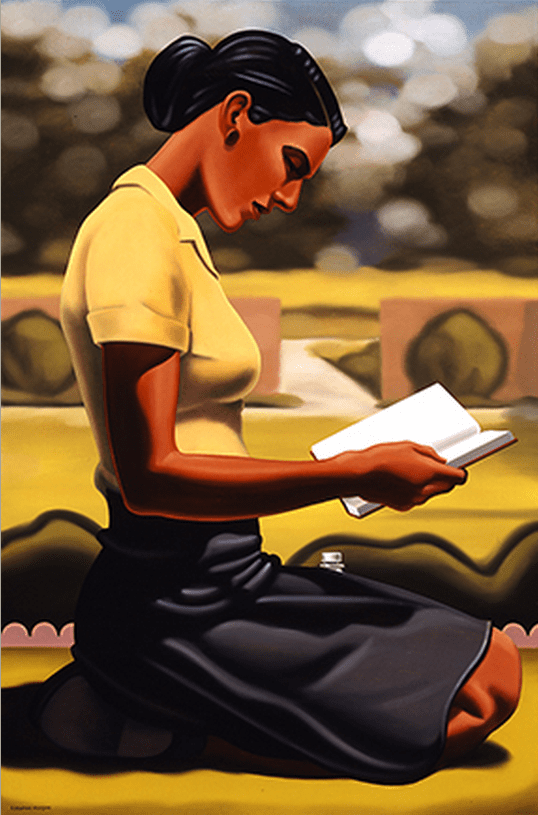
Lucidity — Kenton Nelson

Capture

Pitcher, Lemons and Book — Paul Wonner

The Japanese Book — William Merritt Chase

Bookshelf — Jessica Rohrer

Bookshelf_2010_15x11 inches

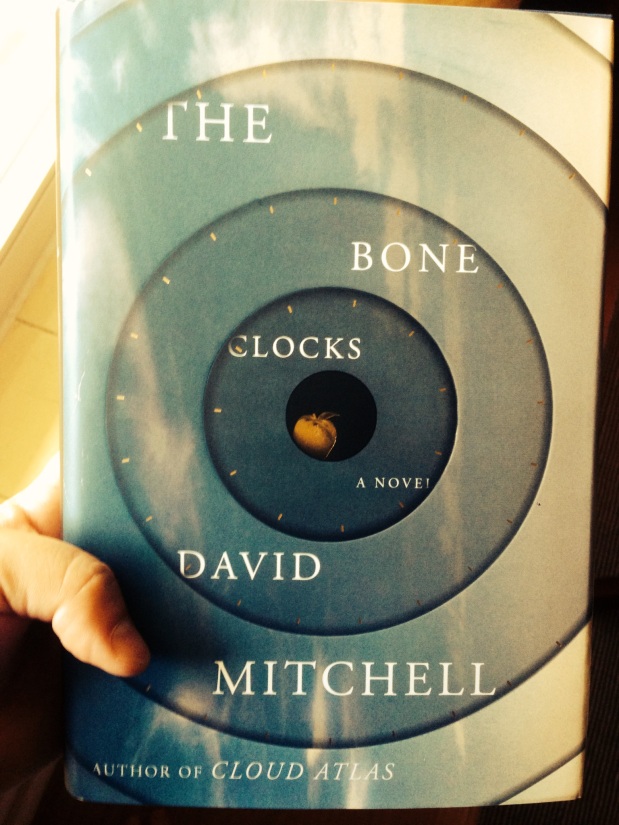
David Mitchell’s The Bone Clocks (Book Acquired, 8.19.2014)

IMG_3128

David Mitchell’s new novel The Bone Clocks showed up at Biblioklept World Headquarters earlier this week, but I’ve been busy with the start of the Fall semester and haven’t had a chance to get into it yet. Here’s publisher Random House’s blurb:

Following a terrible fight with her mother over her boyfriend, fifteen-year-old Holly Sykes slams the door on her family and her old life. But Holly is no typical teenage runaway: A sensitive child once contacted by voices she knew only as “the radio people,” Holly is a lightning rod for psychic phenomena. Now, as she wanders deeper into the English countryside, visions and coincidences reorder her reality until they assume the aura of a nightmare brought to life.

For Holly has caught the attention of a cabal of dangerous mystics—and their enemies. But her lost weekend is merely the prelude to a shocking disappearance that leaves her family irrevocably scarred. This unsolved mystery will echo through every decade of Holly’s life, affecting all the people Holly loves—even the ones who are not yet born.

A Cambridge scholarship boy grooming himself for wealth and influence, a conflicted father who feels alive only while reporting on the war in Iraq, a middle-aged writer mourning his exile from the bestseller list—all have a part to play in this surreal, invisible war on the margins of our world. From the medieval Swiss Alps to the nineteenth-century Australian bush, from a hotel in Shanghai to a Manhattan townhouse in the near future, their stories come together in moments of everyday grace and extraordinary wonder.

Rich with character and realms of possibility, The Bone Clocks is a kaleidoscopic novel that begs to be taken apart and put back together by a writer The Washington Post calls “the novelist who’s been showing us the future of fiction.”

An elegant conjurer of interconnected tales, a genre-bending daredevil, and a master prose stylist, David Mitchell has become one of the leading literary voices of his generation. His hypnotic new novel, The Bone Clocks, crackles with invention and wit and sheer storytelling pleasure—it is fiction at its most spellbinding.

The American Poseur’s Journal | Doris Lessing’s The Golden Notebook

This section of Doris Lessing’s novel The Golden Notebook actually made me laugh aloud. She offers a wonderful parody of “a young American living on an allowance from his father who works in insurance”; the section recalls William Gaddis’s similar send-ups in The Recognitions (and again links the two novels together in my consciousness).

[The right side of the black notebook, under the heading Money, continued.]

Some months ago I got a letter from the Pomegranate Review, New Zealand, asking for a story. Wrote back, saying I did not write stories. They replied asking for ‘portions of your journals, if you keep them’. Replied saying I did not believe in publishing journals written for oneself. Amused myself composing imaginary journal, of the right tone for a literary review in a colony or the Dominions: circles isolated from the centres of culture will tolerate a far more solemn tone than the editors and their customers in let’s say London or Paris. (Though sometimes I wonder.) This journal is kept by a young American living on an allowance from his father who works in insurance. He has had three short stories published and has completed a third of a novel. He drinks rather too much, but not as much as he likes people to think; takes marihuana, but only when friends from the States visit him. He is full of contempt for that crude phenomenon, the United States of America.

April 16th. On the steps of the Louvre. Remembered Dora. That girl was in real trouble. I wonder if she has solved her problems. Must write to my father. The tone of his last letter hurt me. Must we be always isolated from each other? I am an artist – Mon Dieu!

April 17th. The Gare de Lyon. Thought of Lise. My God, and that was two years ago! What have I done with my life? Paris has stolen it … must re-read Proust.

April 18th. London. The Horseguards’ Parade. A writer is the conscience of the world. Thought of Marie. It is a writer’s duty to betray his wife, his country and his friend if it serves his art. Also his mistress.

April 18th. Outside Buckingham Palace. George Eliot is the rich man’s Gissing. Must write to my father. Only ninety dollars left. Will we ever speak the same language? Continue reading “The American Poseur’s Journal | Doris Lessing’s The Golden Notebook”

The Temptation of St. Anthony — Felicien Rops

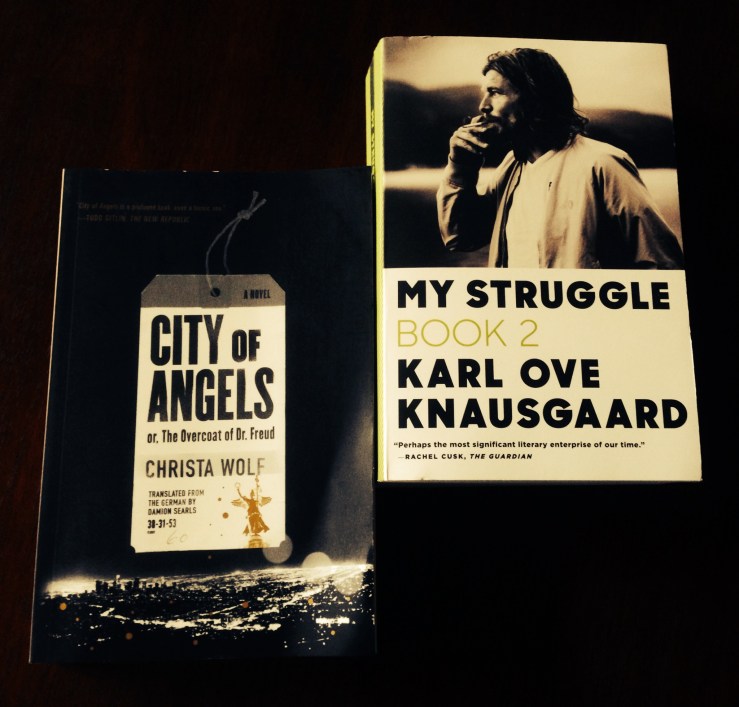
Karl Ove Knaussgard/Christa Wolf (Books Acquired, 8.11.2014)

IMG_3111

Came back to work for the fall semester and these were in my mailbox.

I like the older, zanier, less-austere FS&G paperback covers of the Knausgaard better.

Lady In Black — Irving R Wiles

L’abjection is something that disgusts you (Julia Kristeva)

CaptureJulia Kristeva, defining abjection, in a 1980 interview with Elaine Hoffmann Baruch.
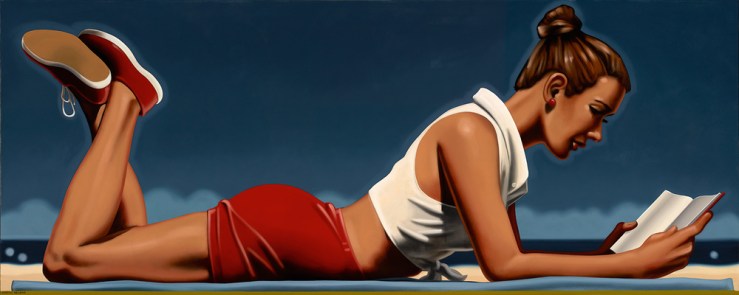
Lost Pocketbook, Night Train — Sally Storch

SS-web.04

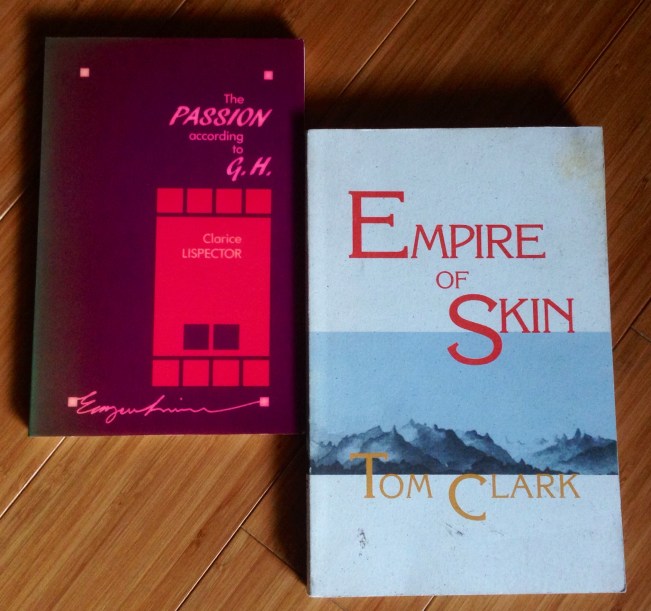
Clarice Lispector/Tom Clark (Books Acquired, 8.15.2014)

IMG_3109.JPG

The Vision — Kenton Nelson

TheVision

What’s got into you? | Ventriloquism in Doris Lessing’s novel The Golden Notebook

In Doris Lessing’s novel The Golden Notebook, Marion Portmain, a housewife neglected by her husband, resolves that she will begin to live her life with the aim of helping other people. Marion believes that this change is a major breakthrough in her life, a moment to claim agency for herself and to find her own authentic voice in a world where she has been silenced and ignored.

She asks her friend, the book’s protagonist Anna Wulf for the address of an imprisoned South African political activist:

‘Do you remember that black leader, the African man you used to know? Mathews, or something like that?’

This was not at all what Anna had expected. ‘You don’t mean Tom Mathlong?’Marion had actually taken out a notebook and was sitting with a poised pencil.

Marion has taken up her own notebook, a parallel to the colored notebooks that Anna keeps to impose some semblance of order—or at least to contain—the chaos of modernity.

Anna protests Marion’s request; she implicitly condescends Marion’s naïvety and myopic worldview:

‘But Marion…’ Anna looked at Marion, trying to make contact with the woman she had been talking to only a few minutes before. She was met by a gaze from brown eyes glazed with a guilty but happy hysteria. Anna went on, firmly: ‘It’s not a nice organized prison like Brixton or somewhere like that. It’s probably a shack in the bush, hundreds of miles from anywhere, about fifty political prisoners, and very likely they don’t even get letters. What did you think?—that they had visiting days and rights and things like that?’

And here is where the scene becomes particularly intriguing for me, as Anna begins to break down the various sources that ventriloquize Marion’s “new” consciousness: 

Marion pouted and said: ‘I think that’s an awfully negative attitude to take about the poor things.’

Anna thought: negative attitude is Tommy’s—echoes from the Communist Party; but poor things is all Marion’s—probably her mother and sisters give old clothes to charities.

For Anna, Marion’s (attempt at) a new outlook is merely the weak synthesis of the language of Marion’s stepson’s communism with the stock-phrases of her aristocratic family’s noblesse oblige. Anna does not accept Marion’s “transformation” as authentic, but rather the product of tuning in new voices. 

As Marion continues, Anna analyzes her speech, her unvoiced comments interposed in parentheses that name the news sources from which Marion has “clipped” her thoughts:

‘I mean,’ said Marion happily, ‘it’s a continent in chains, well, isn’t it?’ (Tribune, thought Anna; or possibly the Daily Worker.) ‘And measures ought to be taken immediately to restore the Africans’ faith in justice if it is not already too late.’ (The New Statesman, thought Anna.) ‘Well at least the situation ought to be thoroughly gone into in the interests of everybody.’ (The Manchester Guardian, at a time of acute crisis.) ‘But Anna, I don’t understand your attitude. Surely you’ll admit there’s evidence that something’s gone wrong?’ (The Times, editorializing a week after the news that the white administration has shot twenty Africans and imprisoned fifty more without trial.)

‘Marion, what’s got into you?

This scene responds to an earlier section of The Golden Notebook (I wrote before about it here) in which Anna’s note-book becomes pure collage: She no longer writes in her own “original” language, but rather cuts fragments from newspapers and pastes them directly into her diary. The section highlights (and rhetorically demonstrates) the novel’s theme of the disintegration of language, meaning, and order—one of the central problems of postmodernist literature.

Anna’s question to Marion at the end of the passage I’ve cited — “What’s got into you?” — is a banal commonplace, yet utterly sincere, authentic—-and all the more authentic for its underlying irony: Anna has already decided what’s “got into” Marion (The Tribune, The Daily Worker, etc.). 

Lessing’s passage here underscores just how susceptible we are to not-knowing, just at the moment when we feel most confident in our belief. Marion feels wholly authentic here, feels her way-of-seeing as rich, full, clear, alive—but it’s this very feeling of clarity that blinds her from seeing herself (seeing herself) parroting back the stock language of the sources that have infiltrated her consciousness.

Anna is far more attuned to her own self-blindness; indeed, her color-coded notebooks are a means to account for the discursive narratives that might try to give shape to the messiness of consciousness. In one extended episode, Anna attempts to write a complete narrative of a particular day, but as she repeatedly notes, her awareness of her project leads to such a heightened self-consciousness that every observation she makes about the day is placed under radical suspicion—she sees that she sees herself seeing (herself), but, intuiting her consciousness’ structure, also understands that there are ways in which she cannot see herself seeing (herself).

Can Anna’s realization of the limitations of first-person-perspective help to free her? I have not yet finished the novel, but so far, Lessing depicts the question as a deep, painful struggle. Anna grapples with a disintegrating sense of self, a self that can identify (and cut out and paste and record and document) the voices that have “got into” her, even as those voices destabilize her identity.