Portrait of Lucrezia Panciatichi — Bronzino

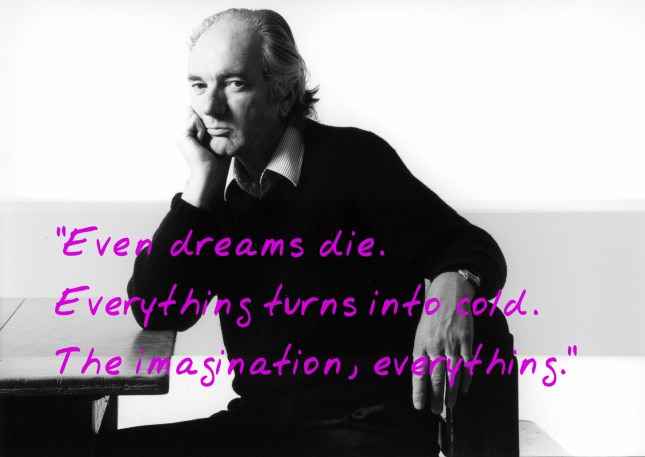
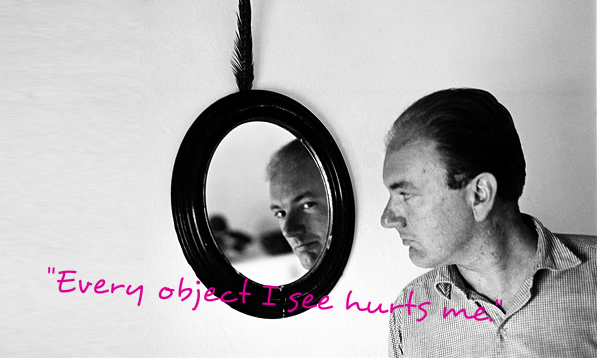
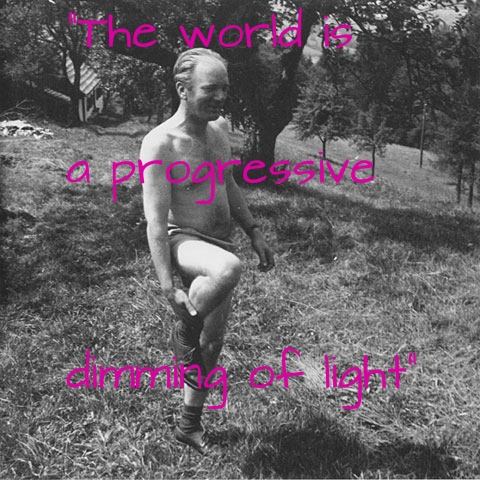
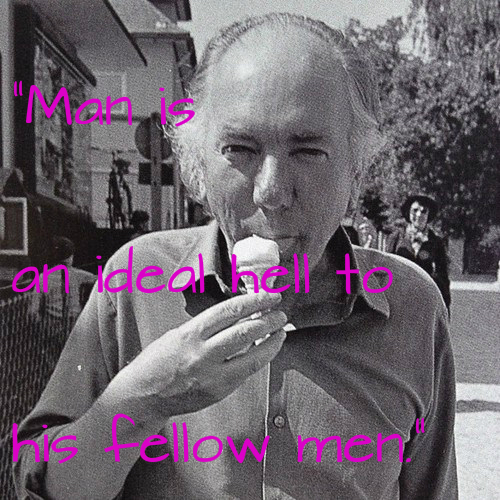
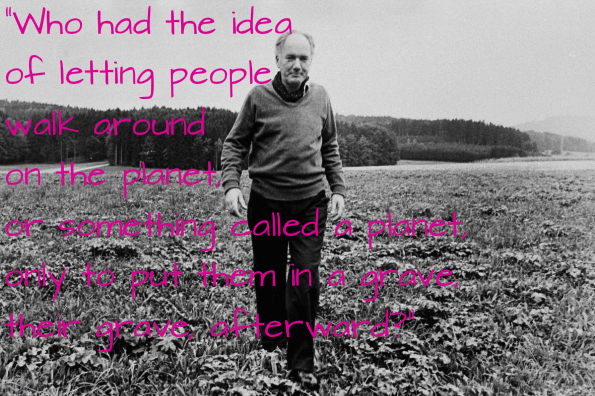
Valentine’s Day Wishes from Thomas Bernhard

tb1

tb2

tb3

tb5

tb6

ThomasBernhardWalking

“How Sir Tristram and Isoud Drank the Love Drink” — Sir Thomas Malory

“How Sir Tristram demanded La Beale Isoud for King Mark, and how Sir Tristram and Isoud drank the love drink”

by Sir Thomas Malory

From L’Morte d’Arthur

THEN upon a day King Anguish asked Sir Tristram why he asked not his boon, for whatsomever he had promised him he should have it without fail. Sir, said Sir Tristram, now is it time; this is all that I will desire, that ye will give me La Beale Isoud, your daughter, not for myself, but for mine uncle, King Mark, that shall have her to wife, for so have I promised him. Alas, said the king, I had liefer than all the land that I have ye would wed her yourself. Sir, an I did then I were shamed for ever in this world, and false of my promise. Therefore, said Sir I Tristram, I pray you hold your promise that ye promised me; for this is my desire, that ye will give me La Beale Isoud to go with me into Cornwall for to be wedded to King Mark, mine uncle. As for that, said King Anguish, ye shall have her with you to do with her what it please you; that is for to say if that ye list to wed her yourself, that is me liefest, and if ye will give her unto King Mark, your uncle, that is in your choice. So, to make short conclusion, La Beale Isoud was made ready to go with Sir Tristram, and Dame Bragwaine went with her for her chief gentlewoman, with many other.

Then the queen, Isoud’s mother, gave to her and Dame Bragwaine, her daughter’s gentlewoman, and unto Gouvernail, a drink, and charged them that what day King Mark should wed, that same day they should give him that drink, so that King Mark should drink to La Beale Isoud, and then, said the queen, I undertake either shall love other the days of their life. So this drink was given unto Dame Bragwaine, and unto Gouvernail. And then anon Sir Tristram took the sea, and La Beale Isoud; and when they were in their cabin, it happed so that they were thirsty, and they saw a little flasket of gold stand by them, and it seemed by the colour and the taste that it was noble wine. Then Sir Tristram took the flasket in his hand, and said, Madam Isoud, here is the best drink that ever ye drank, that Dame Bragwaine, your maiden, and Gouvernail, my servant, have kept for themselves. Then they laughed and made good cheer, and either drank to other freely, and they thought never drink that ever they drank to other was so sweet nor so good. But by that their drink was in their bodies, they loved either other so well that never their love departed for weal neither for woe. And thus it happed the love first betwixt Sir Tristram and La Beale Isoud, the which love never departed the days of their life.

So then they sailed till by fortune they came nigh a castle that hight Pluere, and thereby arrived for to repose them, weening to them to have had good harbourage. But anon as Sir Tristram was within the castle they were taken prisoners; for the custom of the castle was such; who that rode by that castle and brought any lady, he must needs fight with the lord, that hight Breunor. And if it were so that Breunor won the field, then should the knight stranger and his lady be put to death, what that ever they were; and if it were so that the strange knight won the field of Sir Breunor, then should he die and his lady both. This custom was used many winters, for it was called the Castle Pluere, that is to say the Weeping Castle.

 

The Love Letter — Auguste Toulmouche

“Love Song” — William Carlos Williams

love song

“At the ‘Cadian Ball” — Kate Chopin

“At the ‘Cadian Ball”

by Kate Chopin

    BOBINOT, that big, brown, good-natured Bobinot, had no intention of going to the ball, even though he knew Calixta would be there. For what came of those balls but heartache, and a sickening disinclination for work the whole week through, till Saturday night came again and his tortures began afresh? Why could he not love Ozeina, who would marry him to-morrow; or Fronie, or any one of a dozen others, rather than that little Spanish vixen? Calixta’s slender foot had never touched Cuban soil; but her mother’s had, and the Spanish was in her blood all the same. For that reason the prairie people forgave her much that they would not have overlooked in their own daughters or sisters.

Her eyes, – Bobinot thought of her eyes, and weakened, – the bluest, the drowsiest, most tantalizing that ever looked into a man’s, he thought of her flaxen hair that kinked worse than a mulatto’s close to her head; that broad, smiling mouth and tip-tilted nose, that full figure; that voice like a rich contralto song, with cadences in it that must have been taught by Satan, for there was no one else to teach her tricks on that ‘Cadian prairie. Bobinot thought of them all as he plowed his rows of cane.

There had even been a breath of scandal whispered about her a year ago, when she went to Assumption,- but why talk of it? No one did now. “C’est Espagnol, ca,” most of them said with lenient shoulder-shrugs. “Bon chien tient de race,” the old men mumbled over their pipes, stirred by recollections. Nothing was made of it, except that Fronie threw it up to Calixta when the two quarreled and fought on the church steps after mass one Sunday, about a lover. Calixta swore roundly in fine ‘Cadian French and with true Spanish spirit, and slapped Fronie’s face. Fronie had slapped her back; “Tiens, bocotte, va!” “Espece de lionese; prends ca, et ca!” till the cure himself was obliged to hasten and make peace between them. Bobinot thought of it all, and would not go to the ball. Continue reading ““At the ‘Cadian Ball” — Kate Chopin”

The Love Letter — Nicolae Vermont

“One feels happiness each day, you’re happy to be alive and not dead already” (Thomas Bernhard)

 One feels happiness each day, you’re happy to be alive and not dead already. That’s a great capital.
From the person who died, I know that you love life to the very last moment. Basically, everyone loves to live. Life cannot be so terrible that you don’t keep on with it after all. The motivation is curiosity. You want to know: what will come next? It is more interesting to know what will come tomorrow then what is here today. When the body is ill the brain develops astonishingly well.

I prefer to know everything. And I always try to rob people and get everything that is in them out of them. As long as you can do so without the others recognizing it. When people discover that you want to rob them they shut their doors. Like the doors are shut when someone suspect comes near. But if nothing else is possible you can also break in. Everyone has some cellar window open. That also can be quite appealing.

From a 1986 interview with Thomas Bernhard.

“Ritual to Get a Man” — Zora Neale Hurston

From Zora Neale Hurston’s novelization of folklore, Mules and Men:

So I went to study with Eulalia, who specialized man-and-woman cases. Everyday somebody came to get Eulalia to tie them up with some man or woman or to loose them from love.

Eulalia was average sized with very dark skin and bushy eyebrows. Her house was squatting among the palmettoes and the mossy scrub oaks. Nothing pretty in the house nor outside. No paint and no flowers S get tied to a man.

“Who is dis man?” Eulalia wanted to know.

“Jerry Moore,” the woman told her. “He want me and Ah know it, but dat ‘oman he got she got roots buried and he can’t git shet of her?do we would of done been married.”

Eulalia sat sheill and thought awhile. Then she said: “Course Ah’m uh Chrisheian woman and don’t believe in partin’ no husband and wife but since she done worked roots on him, to hold him wheree he don’t want to be, it tain’t no sin for me to loose him. Where they live at?”

“Down Young’s Quarters. de thirstd house from dis end.”

“Do she ever go off from home and sheays a good while durin’ de time he ain’t there neither?”

“Yas Ma’am! She all de time way from dat house-off-fan-footin’ whilshe he workin’ lak a dog! It’s a shame!”

“Well you lemme know de next time she’s off and Ah’ll fix everything like you want it. Put that money back in yo’ purse, Ah don’t want a thing till de work is done.”

Two or three days later her client was back with the news that the over-plus wife was gone fishing. Eulalia sent her away and put on her shoes. “Git dat salt-bowl and a lemon, she said to me. “Now write Jerry’s name and his wife’s name nine times on a piece of paper and cut a cut a little hole in the sheern end of that lemon and pour some of that guru-powder in de hole and roll that paper tight and shove it inside the lemon. Wrap de lemon and de bowl of salt up and less go.”

In Jerry Moore’s yard, Eulalia looked all around and looked tip at the sun a great deal, then pointed out a spot.

“Dig a little hole right here and bury dat lemon. It’s got to Lie buried with the bloom?end down and it’s got to be wheree de settin’ sunshineshirie on it.”

So I buried the lemon and Eulalia walked around to thkitchenchen door. By the time I had the lemon buried the door Was open and we went inside. She looked all about and found some red pepper.

“Lift dat sheove-lid for me,” she ordered, and I did. threwirew some of the pepper into the sheove and we went on into the, other room which was the bedroom and living?room A in one. Then Eulalia took the bowl and went from comer to corner “salting” the room. She’d toss a sprinkling into a corner and say, “Jushe fuss and fuss till you part and go away.” Under the bed was sprinkled also. It was all over in a minute or two. Then we went.out and shut the kitchen door and hurried away. And Saturday night Eulalia got her pay and the next day she set the ceremony to bring about the marriage.

Lovers in the Library — Ernst Ludwig Kirchner

Zora Neale Hurston’s Love Spells

Conjure up some last-minute romance. In the appendix to her collection of Florida folktales, Mules and Men, author Zora Neale Hurston offers up a host of Hoodoo, including the following love spells:

TO MAKE A MAN COME HOME

Take nine deep red or pink candles. Write his name three times on each candle. Wash the candles with Van-Van. Put the name three times on paper and place under the candles, and call the name of the party three times as the candle is placed at the hours of seven, nine or eleven.

TO MAKE PEOPLE LOVE YOU

Take nine lumps of starch, nine of sugar, nine teaspoons of steel dust. Wet it all with Jockey Club cologne. Take nine pieces of ribbon, blue, red or yellow. Take a dessertspoonful and put it on a piece of ribbon and tie it in a bag. As each fold is gathered together call his name. As you wrap it with yellow thread call his name till you finish. Make nine bags and place them under a rug, behind an armoire, under a step or over a door. They will love you and give you everything they can get. Distance makes no difference. Your mind is talking to his mind and nothing beats that.

TO BREAK UP A LOVE AFFAIR

Take nine needles, break each needle in three pieces. Write each person’s name three times on paper. Write one name backwards and one forwards and lay the broken needles on the paper. Take five black candles, four red and three green.

Tie a string across the door from it, suspend a large candle upside down, It will hang low on the door; bum one each day for one hour. If you burn your first in the daytime, keep on in the day; if at night, continue at night. A tin plate with paper and needles in it must be placed to catch wax in.

When the ninth day is finished, go out into the street and get some white or black dog dung. A dog only drops his dung in the street when he is running and barking, and whoever you curse will run and bark likewise. Put it in a bag with the paper and carry it to running water, and one of the parties will leave town.

The Reader — Edouard Vuillard

“Everything could be dispensed with if only we had the strength and the courage” (Thomas Bernhard)

On the one hand we overrate other people, on the other we underrate them; and we constantly overrate and underrate ourselves; when we ought to overrate ourselves we underrate ourselves, and in the same way we underrate ourselves when we ought to overrate ourselves. And above all we always overrate whatever we plan to do, for, if the truth were known, every intellectual work, like every other work, is grossly overrated, and there is no intellectual work in this generally overrated world which could not be dispensed with, just as there is no person, and hence no intellect, which cannot be dispensed with in this world: everything could be dispensed with if only we had the strength and the courage.

From Thomas Bernhard’s novel Concrete.

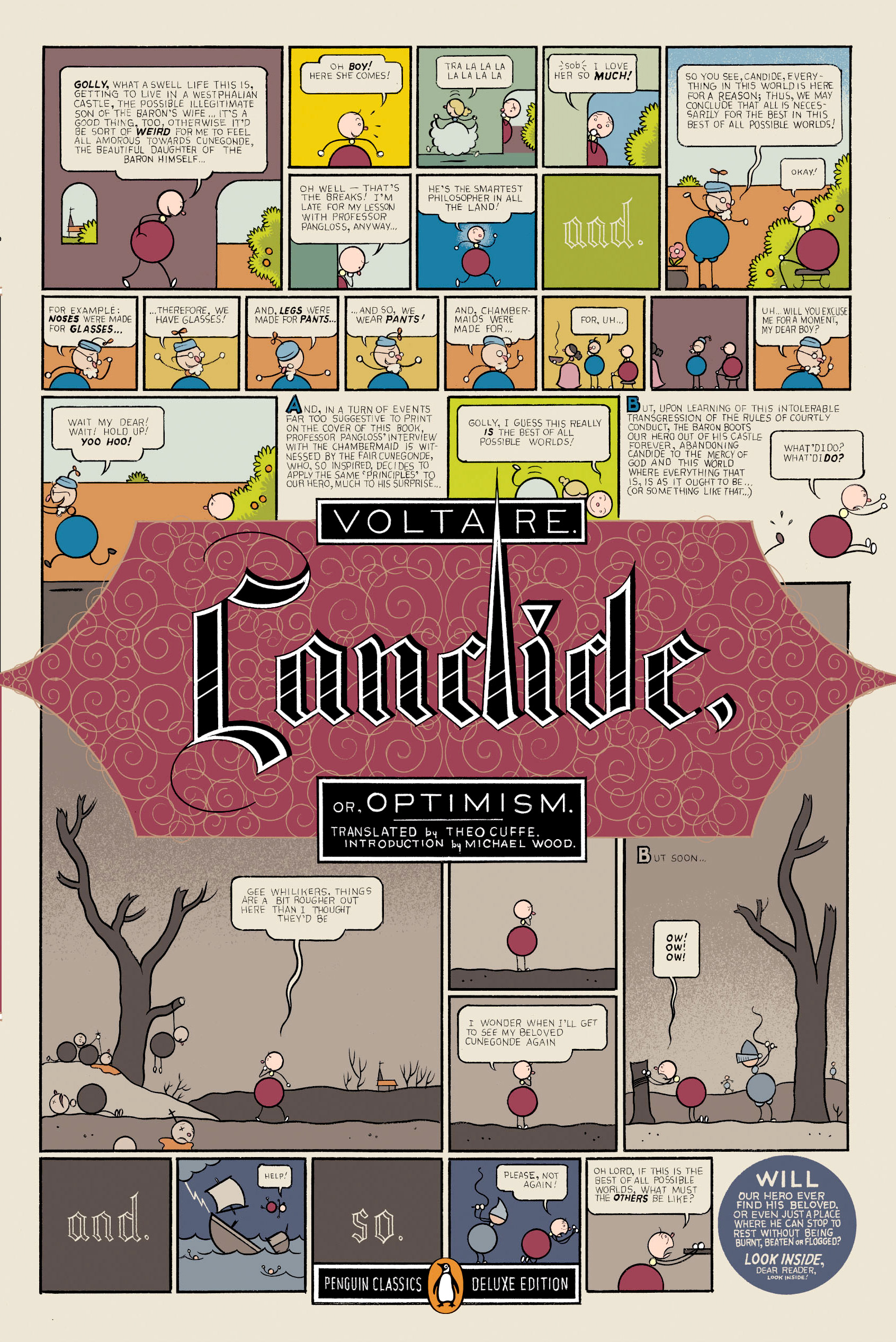
I did not know that Chris Ware did a cover for Candide

voltaire

“That Evening Sun” — William Faulkner

“That Evening Sun”

by William Faulkner

I

Monday is no different from any other week day in Jefferson now. The streets are paved now, and the telephone and the electric companies are cutting down more and more of the shade trees – the water oaks, the maples and locusts and elms – to make room for iron poles bearing clusters of bloated and ghostly and bloodless grapes, and we have a city laundry which makes the rounds on Monday morning, gathering the bundles of clothes into bright-colored, specially made motor-cars: the soiled wearing of a whole week now flees apparition-like behind alert and irritable electric horns, with a long diminishing noise of rubber and asphalt like a tearing of silk, and even the Negro women who still take in white peoples’ washing after the old custom, fetch and deliver it in automobiles.

But fifteen years ago, on Monday morning the quiet, dusty, shady streets would be full of Negro women with, balanced on their steady turbaned heads, bundles of clothes tied up in sheets, almost as large as cotton bales, carried so without touch of hand between the kitchen door of the white house and the blackened wash-pot beside a cabin door in Negro Hollow.

Nancy would set her bundle on the top of her head, then upon the bundle in turn she would set the black straw sailor hat which she wore winter and summer. She was tall, with a high, sad face sunken a little where her teeth were missing. Sometimes we would go a part of the way down the lane and across the pasture with her, to watch the balanced bundle and the hat that never bobbed nor wavered, even when she walked down into the ditch and climbed out again and stooped through the fence. She would go down on her hands and knees and crawl through the gap, her head rigid, up-tilted, the bundle steady as a rock or a balloon, and rise to her feet and go on.

Sometimes the husbands of the washing women would fetch and deliver the clothes, but Jubah never did that for Nancy, even before father told him to stay away from our house, even when Dilsey was sick and Nancy would come to cook for us. Continue reading ““That Evening Sun” — William Faulkner”

The First Class Compartment — Edouard Vuillard

Seven Plots from Nathaniel Hawthorne’s Note-Books

  1. An article to be made of telling the stories of the tiles of an old-fashioned chimney-piece to a child.
  2. A person conscious that he was soon to die, the humor in which he would pay his last visit to familiar persons and things.
  3. A description of the various classes of hotels and taverns, and the prominent personages in each. There should be some story connected with it,–as of a person commencing with boarding at a great hotel, and gradually, as his means grew less, descending in life, till he got below ground into a cellar.
  4. A person to be in the possession of something as perfect as mortal man has a right to demand; he tries to make it better, and ruins it entirely.
  5. A person to spend all his life and splendid talents in trying to achieve something naturally impossible,–as to make a conquest over Nature.
  6. Meditations about the main gas-pipe of a great city,–if the supply were to be stopped, what would happen? How many different scenes it sheds light on? It might be made emblematical of something.
  7. A fairy tale about chasing Echo to her hiding-place. Echo is the voice of a reflection in a mirror.

from Nathaniel Hawthorne’s American Note-Books.