Four Notes on the World from Samuel Butler’s Note-Books

  1. The world is a gambling-table so arranged that all who enter the casino must play and all must lose more or less heavily in the long run, though they win occasionally by the way.
  2. We play out our days as we play out cards, taking them as they come, not knowing what they will be, hoping for a lucky card and sometimes getting one, often getting just the wrong one.
  3. The world may not be particularly wise – still, we know of nothing wiser.
  4. The world will always be governed by self-interest.  We should not try to stop this, we should try to make the self-interest of cads a little more coincident with that of decent people.

—From Samuel Butler’s Note-Books.


An Enthralling Novel — Julius LeBlanc Stewart

Map of American Folklore

map of folklore

(Via).

Philip Roth on Franz Kafka

I am looking, as I write of Kafka, at the photograph taken of him at the age of forty (my age)—it is 1924, as sweet and hopeful a year as he may ever have known as a man, and the year of his death.His face is sharp and skeletal, a burrower’s face:pronounced cheekbones made even more conspicuous by the absence of sideburns; the ears shaped and angled on his head like angel wings; an intense, creaturely gaze of startled composure—enormous fears, enormous control; a black towel of Levantine hair pulled close around the skull the only sensuous feature; there is a familiar Jewish flare in the bridge of the nose, the nose itself is long and weighted slightly at the tip—the nose of half the Jewish boys who were my friends in high school.Skulls chiseled like this one were shoveled by the thousands from the ovens; had he lived, his would have been among them, along with the skulls of his three younger sisters.

Of course, it is no more horrifying to think of Franz Kafka in Auschwitz than to think of anyone in Auschwitz—it is just horrifying in its own way.But he died too soon for the holocaust.Had he lived, perhaps he would have escaped with his good friend Max Brod, who found refuge in Palestine, a citizen of Israel until his death there in 1968.But Kafka escaping?It seems unlikely for one so fascinated by entrapment and careers that culminate in anguished death.Still, there is Karl Rossmann, his American greenhorn.Having imagined Karl’s escape to America and his mixed luck here, could not Kafka have found a way to execute an escape for himself?The New School for Social Research in New York becoming his Great Nature Theatre of Oklahoma?Or perhaps, through the influence of Thomas Mann, a position in the German department at Princeton … But then, had Kafka lived, it is not at all certain that the books of his which Mann celebrated from his refuge in New Jersey would ever have been published; eventually Kafka might either have destroyed those manuscripts that he had once bid Max Brod to dispose of at his death or, at the least, continued to keep them his secret.The Jewish refugee arriving in America in 1938 would not then have been Mann’s “religious humorist” but a frail and bookish fifty-five-year-old bachelor, formerly a lawyer for a government insurance firm in Prague, retired on a pension in Berlin at the time of Hitler’s rise to power—an author, yes, but of a few eccentric stories, mostly about animals, stories no one in America had ever heard of and only a handful in Europe had read; a homeless K., but without K.’s willfulness and purpose, a homeless Karl, but without Karl’s youthful spirit and resilience; just a Jew lucky enough to have escaped with his life, in his possession a suitcase containing some clothes, some family photos, some Prague mementos, and the manuscripts, still unpublished and in pieces, of AmerikaThe TrialThe Castle, and (stranger things happen) three more fragmented novels, no less remarkable than the bizarre masterworks that he keeps to himself out of oedipal timidity, perfectionist madness, and insatiable longings for solitude and spiritual purity.

–From Philip Roth’s essay “ ‘I Always Wanted You to Admire My Fasting’; or, Looking at Kafka.” Read the entire essay.


Marguerite — Guy Rose

My impossible ones (Nietzsche)

n

Portrait of Franz Kafka — Milton Glaser

kafka milton glaser

(Via).

RIP Elmore Leonard

Elmore Leonard 1983

RIP Elmore Leonard, 1925 – 2013

elmore-leonard-writing-advice

“I Am Essentially Marxian” and Other Notes from F. Scott Fitzgerald’s Notebooks

  1. D. H. Lawrence great attempt to synthesize animal and emotional—things he left out. Essential pre-Marxian. Just as I am essentially Marxian.
  2. When Whitman said “Oh Pioneers” he said all.
  3. Byron’s mountains warm.
  4. Reporting the extreme things as if they were the average things will start you on the art of fiction.
  5. Work out my hard luck season—my most productive seasons, etc
  6. Conrad’s secret theory examined.He knew that things do transpire about people. Therefore he wrote the truth and transposed it to parallel to give that quality, adding confusion however to his structure. Nevertheless there is in his scheme a desire to imitate life which is in all the big shots. Have I such an idea in the composition of this book?
  7. Conrad influenced by Man Without a Country
  8. No English painting because of their putting everything into words.
  9. List of Zelda’s faults and virtues as a writer.
  10. Chapter in slow motion.
  11. Right to Pretty heroines
  12. Tie up with Faulkner—Lord Fauntleroy.

–From F. Scott Fitzgerald’s The Notebooks.

Reading Rabelais — Jehan Georges Vibert

Gargoyles, Thomas Bernhard’s Philosophical Novel of Abject Madness

In its English translation, Thomas Bernhard’s 1967 breakthrough novel Verstörung received the title GargoylesVerstörung translates to something like distress or disturbance, while Gargoyles (obviously) evokes Gothic monsters. Considered together, both titles communicate this philosophical novel’s themes of abjection, decay, and madness.

Bernhard explores these themes by dividing the novel into two sections that occur over the span of the same day. In the first section, “First Page,” a country doctor takes his son on his daily rounds in rural Stryia, “a relatively large and ‘difficult’ district.” The son, a mining engineer student and aspiring scientist, is ostensibly the narrator of Gargoyles. He tells us that his father “was taking me with him for the sake of my studies.” Their journey culminates in a visit to Hochgobernitz, the gloomy castle of Prince Saurau, an insane, suicidal aristocrat who mourns his own son’s self-exile to England, where he has gone to study. While the doctor’s son remains the narrator of the book in “The Prince,” the second part of Gargoyles, Prince Saurau overwhelms the novel with the force of his monologue, a tirade that gobbles up all that comes before it. His monologue ventriloquizes the narrator’s consciousness, echoing in the young man’s skull long after he’s left the castle.

The prince’s monologue is a prototypical Bernhardian rant that will be familiar to anyone who’s read The Loser or Correction (and undoubtedly other Bernhard novels I haven’t read yet). Unlike those novels, Gargoyles offers its first section “First Page” as a point of contrast to the monologue that will come later. These episodes are short and digestible, and while hardly conventional, they are far easier to handle than the sustained intensity of the prince’s monologue. The grotesque cavalcade that the doctor and son trek through in “First Page” allows Bernhard to set out his themes — not neatly or precisely, but clearly — before the prince commences to swallow and then vomit them.

Here are the first two paragraphs of the novel:

On the twenty-sixth my father drove off to Salla at two o’clock in the morning to see to a schoolteacher whom he found dying and left dead. From there he set out toward Hüllberg to treat a child who had fallen into a hog tub full of boiling water that spring. Discharged from the hospital weeks ago, it was now back with its parents.

He liked seeing the child, and dropped by there whenever he could. The parents were simple people, the father a miner in Köflach, the mother a servant in a butcher’s household in Voitsberg. But the child was not left alone all day; it was in the care of one of the mother’s sisters. On this day my father described the child to me in greater detail than ever before, adding that he was afraid it had only a short time to live. “I can say for a certainty that it won’t last through the winter, so I am going to see it as often as possible now,” he said. It struck me that he spoke of the child as a beloved person, very quietly and without having to consider his words.

The specter of infanticide and the doctor’s resistance to it haunts the novel. We can also sense a cerebral chilliness in the narrator, who is “struck” by his father’s empathy. The doctor’s empathy repeats throughout the novel; we next see it clearly when he’s brought to attend an innkeeper’s wife assaulted in the early morning “without the slightest provocation” by one of the drunken miners who frequented her inn. Unconscious for hours before police or doctor are even called for, the woman dies. But—

It was of no importance that the innkeeper had not notified him of the fatal blow until three hours after the incident, my father said. The woman could not have been saved. The deceased woman was thirty-three, and my father had known her for years. It had always seemed to him that innkeepers treated their wives with extreme callousness, he said. They themselves usually went to bed early, having overworked themselves all day on their slaughtering, their cattle dealing, their farms. But because they thought of nothing but the business, they left their wives to take care of the taverns until the early morning hours, exposed to the male clients who drank steadily so that as the night wore on their natural brutality became less and less restrained.

As the day unfolds, the “natural brutality” that the doctor is up against evinces again and again in the various gargoyles he attends to. The rumor of the innkeeper’s wife’s murder floats in the background as a reminder of violence and brutality that bizarrely unites this community of outsiders.

Those outsiders: a bedridden, dying woman with a feeble-minded son and a murderer for a brother; a retired industrialist, living “like man and wife” with his half-sister, who devotes “himself to a literary work over which he agonized, even as it kept his mind off his inner agony”; the school teacher whose death initiates the novel; mill workers murdering exotic birds with the help of a young bewildered Turk; an insane and deformed man, the son’s age, attended to and cared for by his sister. And the prince. But I’ve rushed through so much here, so much force of language, so much terror, so much horror.

These gargoyles live, if it can be called that, in abject, isolated otherness. The doctor diagnoses it for his son:

. . . no human being could continue to exist in such total isolation without doing severe damage to his intellect and psyche. It was a well-known phenomenon, my father said, that at a crisis in their lives some people seek out a dungeon, voluntarily enter it, and devote their lives—which they regard as philosophically oriented—to some scholarly task or to some imaginative scientific obsession. They always take with them into their dungeon some creature who is attached to them. In most cases they sooner or later destroy this creature who has entered the dungeon with them, and then themselves. The process always goes slowly at first.

There is something of a warning here for the doctor’s son, who tells us at one point: “Every day I completely built myself up, and completely destroyed myself.” Like Roithamer of Correction, the son is something of a control freak (“Only through such control can man be happy and perceive his own nature”), and, like Roithamer and so many other Bernhardian figures, he has a frail (perhaps suicidal) sister who could perhaps fall prey to his idealism—who might indeed be the “creature who has entered the dungeon” with him.

There’s also the risk, one which the doctor perhaps did not account for when he set out to help his son with his “studies,” that the son might fall into the prince’s dungeon. But perhaps I’m making too much of the doctor’s empathy, of his resistance to brutality and his commitment to caring for those who repel all others. His own philosophy seems coded in misanthropy and failure. “All of living is nothing but a fervid attempt to move closer together,” he says at one point. But also: “Communication is impossible.”

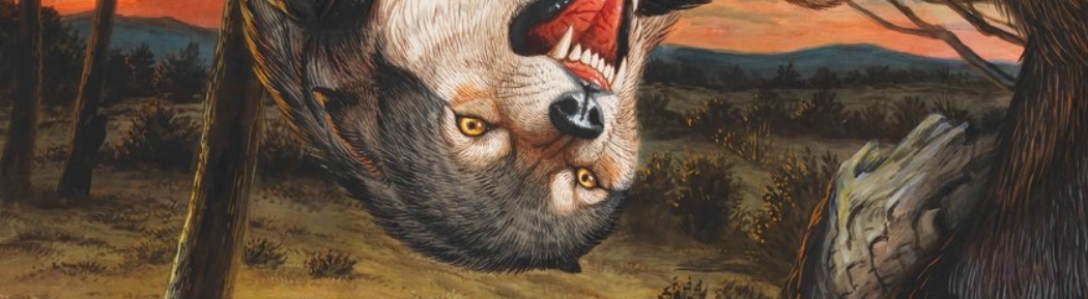
The resistance to abjection is paradoxical—as the doctor points out, the “philosophically oriented” and “imaginative scientific obsession[s]” often lead people deeper into the abyss—as the prince’s monologue will illustrate. Each of the gargoyles presented in the text offers a rare and special talent—art, music, philosophy, etc. Sussing out the novel’s treatment of the philosophies it invokes is beyond my ken, but I can’t resist lazily dropping a few names: Kant, Marx, Nietzsche, Pascal, Diederot (all on the doctor’s reading list), and Schopenhauer, whose philosophy of the will surely informs the text more than I can manage here. (From the prince’s father’s suicide note: “Schopenhauer has always been the best nourishment for me”). And while I’m lazily dropping names: Edgar Allan Poe, King Lear, Macbeth, Dostoevsky, and Francisco Goya—especially his Los caprichos, a few of which accompany this review . (And although he came after, I can’t help but read Roberto Bolaño in some of the more grotesque, horrific passages).

The levels of ventriloquizing and the layers of madness set against the novel’s depiction of radical repression lead to an abyssal paradox, perhaps best figured not in the philosophers Bernhard invokes but in the novel’s backdrop: a dark, enveloping gorge, the yawning chasm that surrounds the high walls of the castle the prince walks with his auditors. These walls are the stage from which the prince performs his monologue; their visceral dramatic emphasis derives from the abyss below. In an ironic note at the beginning of “The Prince,” the son remarks, “From here, I thought, you probably had the finest view of the entire country.”

Upon this stage, Bernhard’s main characters function as asymmetrical parallels (forgive the purposeful absurdity of this oxymoron). The father and his son the narrator are set against the prince and his absent son. In a particularly bizarre episode, the prince recounts a dream:

“But my son,” he said, “will destroy Hochgobernitz as soon as he receives it into his hands.”

Last night, the prince said, he had had a dream. “In this dream,” he said, “I was able to look at a sheet of paper moving slowly from far below to high up, paper on which my own son had written the following. I see every word that my son is writing on that sheet of paper,” the prince said. “It is my son’s hand writing it. My son writes: As one who has taken refuge in scientific allegories I seemed to have cured myself of my father for good, as one cures oneself of a contagious disease. But today I see that this disease is an elemental, shattering fatal illness of which everyone without exception dies. Eight months after my father’s suicide—note that, Doctor, after his father’s suicide, after my suicide; my son writes about my suicide!—eight months after my father’s suicide everything is already ruined, and I can say that I have ruined it. I can say that I have ruined Hochgobernitz, my son writes, and he writes: I have ruined this flourishing economy! This tremendous, anachronistic agricultural and forest economy. I suddenly see, my son writes,” the prince said, “that by liquidating the business even though or precisely because it is the best, I am for the first time implementing my theory, my son writes!” the prince said.

Note the strange layers of narration and creation here. The prince’s son, a creation of the prince, exists in the prince’s dream (another creation) where he creates a manuscript. All this creation though points to destruction—of the father, of the ancestral estate. The prince’s impulses signal self-erasure, suicide as a kind of radical return of the repressed (here, Austria’s inability to speak about, reconcile, admit its complicity in the horrors of World War 2).

The doctor contrasts with the prince, perhaps representing an order, health, and sanity that serve to sharpen and darken the abject decay of the crazed aristocrat. “My father goes to see the prince only to treat him for his insomnia,” observes the narrator, “without doing anything about his real illness . . . his madness.” But can the doctor really treat the prince’s illness?

Both fathers in their respective philosophies signal the possible paths that might be inherited by their sons (and, if you like, by allegorical extension the sons could represent Austria, or perhaps even Western Europe). How to live against the promise of suicide, against the perils of infanticide, against the kind of “natural brutality” that leads to murder, insanity, the abyss?

This problem is encoded into Bernhard’s rhetorical technique. The prince’s devastating monologue consumes the narrative, reader and narrator alike. By the end of the novel, he’s infiltrated (and perhaps infected) the narrator’s consciousness, highlighting the dramatic stakes here—of being ventriloquized, possessed by the diseases of history and authority—an illness that trends to self-destruction. It’s worth sharing a passage at some length; the following section highlights and perhaps even condenses what I take to be the core themes of Gargoyles:

“Whenever I look at people, I look at unhappy people,” the prince said. “They are people who carry their torment into the streets and thus make the world a comedy, which is of course laughable. In this comedy they all suffer from tumors both mental and physical; they take pleasure in their fatal illness. When they hear its name, no matter whether the scene is London, Brussels, or Styria, they are frightened, but they try not to show their fright. All these people conceal the actual play within the comedy that this world is. Whenever they feel themselves unobserved, they run away from themselves toward themselves. Grotesque. But we do not even see the most ridiculous side of it because the most ridiculous side is always the reverse side. God sometimes speaks to them, but he uses the same vulgar words as they themselves, the same clumsy phrases. Whether a person has a gigantic factory or a gigantic farm or an equally gigantic sentence of Pascal’s in his head, is all the same,” the prince said. “It is poverty that makes people the same; at the human core, even the greatest wealth is poverty. In men’s minds and bodies poverty is always simultaneously a poverty of the body and a poverty of the mind, which necessarily makes them sick and drives them mad. Listen to me, Doctor, all my life I have seen nothing but sick people and madmen. Wherever I look, the worn and the dying look back at me. All the billions of the human race spread over the five continents are nothing but one vast community of the dying. Comedy!” the prince said. “Every person I see and everyone I hear anything about, no matter what it is, prove to me the absolute obtuseness of this whole human race and that this whole human race and all of nature are a fraud. Comedy. The world actually is, as has so often been said, a stage on which roles are forever being rehearsed. Wherever we look it is a perpetual learning to speak and learning to walk and learning to think and learning by heart, learning to cheat, learning to die, learning to be dead. This is what takes up all our time. Men are nothing but actors putting on a show all too familiar to us. Learners of roles,” the prince said. “Each of us is forever learning one (his) or several or all imaginable roles, without knowing why he is learning them (or for whom). This stage is an unending torment and no one feels that the events on it are a pleasure. But everything that happens on this stage happens naturally. A critic to explain the play is constantly being sought. When the curtain rises, everything is over.” Life, he went on, changing his image, was a school in which death was being taught. It was filled with millions and billions of pupils and teachers. The world was the school of death. “First the world is the elementary school of death, then the secondary school of death, then, for the very few, the university of death,” the prince said. People alternate as teachers or pupils in these schools. “The only attainable goal of study is death,” he said.

Such searing nihilism here—the prince angrily mourns the grotesqueness of the world, the lack of agency of people to control their own fate, to be but players, dummies mumbling someone else’s script. And it all leads to death. For the prince, dialogue is impossible in the face of this death: “All interlocutors are always mutually pushing one another into all abysses.” But the prince, notably, is his own interlocutor; he pushes himself into abysses of his own contrivance.

Neither is love a solution for the prince:

“We face questions like an open grave about to be filled. It is also absurd, you know, for me to be talking of the absurdity,” he said. “My character can justly be called thoroughly unloving. But with equal justice I call the world utterly unloving. Love is an absurdity for which there is no place in nature.

And community?

We see in a person frailties which at once make us see the frailties of the community in which we live, the frailties of all communities, the state; we feel them, we see through them, we catastrophize them.

But is this necessarily the essential view of the novel? I don’t think it plausible to argue that the prince’s monologue be read entirely ironically, but it’s worth bearing in mind that both his auditors understand him to be mentally ill and terribly isolated. The guy is histrionic, a drama fiend holding forth on his stage. And while his acerbic misanthropy and nihilism may scorch, it’s also very, very funny. I chuckled a lot reading Gargoyles.

But yes—the prince is sincere in his pain. “We assume the spirit of the walls that surround us,” he declares near the end of the novel. He’s a a prisoner in his own gloomy castle, the dungeon he refuses to leave. He resents his son’s self-exile to London, but also longs—literally dreams for—his son to return to destroy that dungeon.

Of his family: “But probably all these creatures deserve ruthlessness more than pity.” I think that But is important here. The doctor, like the prince, also situates everyone on an axis of ruthlessness and pity. The doctor is full of cruel observations about the gargoyles he encounters. But: But he gets up, goes out, does his rounds, tries in some way to mitigate some of the “natural brutality” of the world. And he tries to show this world—and this method—to his son this as well, for his son’s “studies.” In the room of the lonely, dying woman, the son remarks of his father: “I noticed that he made an effort to stretch out the call, for all his eagerness to leave.” The son, in thrall to the prince’s monologue, perhaps fails to notice that his father also stretches out his time on the castle wall despite an eagerness to leave the prince.

By the end of the novel, we see the prince’s consciousness inhabiting the son’s thoughts:

In bed I thought: What did the prince say? “Always wanting to change everything has been a constant craving with me, an outrageous desire which leads to the most painful disputes. The catastrophe begins with getting out of bed. 

The pessimism and sheer despair here erupts into black comedy with that last line, one echoed in Bernhard’s later novel Correction: “Waking up is the always frightening minimum of existence.” If to simply get out of bed (which, of course, is where the son is as he work’s through the prince’s ideas) is to invoke and invite disaster and despair, it’s worth noting that this simple action—getting out of bed—is what the doctor performs each day, even if it means he wakes to a dead teacher, a boiled infant, a murdered wife. While hardly a beacon of optimism or hope, the doctor nonetheless figures an alternative to the prince’s abject madness. If we “assume the spirit of the walls that surround us,” the doctor understands that it’s important to leave those walls, to not seek out dungeons—and drag others into dungeons with us.

Gargoyles is by turns bleak and nihilistic. It’s also energetic, profound, and at times very, very funny. Its opening section will likely provide an accessible introduction to readers interested in Bernhard, with the prince’s monologue offering the full Bernhardian experience. Dark, cruel, and taxing, Gargoyles isn’t particularly fun reading—except when it is. Highly recommended.

The Little School Boy — Pierre-Auguste Renoir

“Portrait of a Lady” — William Carlos Williams

wcw

“Genius and Virtue” — Arthur Schopenhauer

“Genius and Virtue” by Arthur Schopenhauer

When I think, it is the spirit of the world which is striving to express its thought; it is nature which is trying to know and fathom itself. It is not the thoughts of some other mind, which I am endeavouring to trace; but it is I who transform that which exists into something which is known and thought, and would otherwise neither come into being nor continue in it.

In the realm of physics it was held for thousands of years to be a fact beyond question that water was a simple and consequently an original element. In the same way in the realm of metaphysics it was held for a still longer period that the ego was a simple and consequently an indestructible entity. I have shown, however, that it is composed of two heterogeneous parts, namely, the Will, which is metaphysical in its character, a thing in itself, and the knowing subject, which is physical and a mere phenomenon.

Let me illustrate what I mean. Take any large, massive, heavy building: this hard, ponderous body that fills so much space exists, I tell you, only in the soft pulp of the brain. There alone, in the human brain, has it any being. Unless you understand this, you can go no further.

Truly it is the world itself that is a miracle; the world of material bodies. I looked at two of them. Both were heavy, symmetrical, and beautiful. One was a jasper vase with golden rim and golden handles; the other was an organism, an animal, a man. When I had sufficiently admired their exterior, I asked my attendant genius to allow me to examine the inside of them; and I did so. In the vase I found nothing but the force of gravity and a certain obscure desire, which took the form of chemical affinity. But when I entered into the other—how shall I express my astonishment at what I saw? It is more incredible than all the fairy tales and fables that were ever conceived. Nevertheless, I shall try to describe it, even at the risk of finding no credence for my tale.

In this second thing, or rather in the upper end of it, called the head, which on its exterior side looks like anything else—a body in space, heavy, and so on—I found no less an object than the whole world itself, together with the whole of the space in which all of it exists, and the whole of the time in which all of it moves, and finally everything that fills both time and space in all its variegated and infinite character; nay, strangest sight of all, I found myself walking about in it! It was no picture that I saw; it was no peep-show, but reality itself. This it is that is really and truly to be found in a thing which is no bigger than a cabbage, and which, on occasion, an executioner might strike off at a blow, and suddenly smother that world in darkness and night. The world, I say, would vanish, did not heads grow like mushrooms, and were there not always plenty of them ready to snatch it up as it is sinking down into nothing, and keep it going like a ball. This world is an idea which they all have in common, and they express the community of their thought by the word “objectivity.”

In the face of this vision I felt as if I were Ardschuna when Krishna appeared to him in his true majesty, with his hundred thousand arms and eyes and mouths. Continue reading ““Genius and Virtue” — Arthur Schopenhauer”

Don Quixote Reads a Sonnet — Gustave Doré

More at Gustave Doré’s Don Quixote


“Whenever I look at people, I look at unhappy people” (Thomas Bernhard’s Gargoyles)

“Whenever I look at people, I look at unhappy people,” the prince said. “They are people who carry their torment into the streets and thus make the world a comedy, which is of course laughable. In this comedy they all suffer from tumors both mental and physical; they take pleasure in their fatal illness. When they hear its name, no matter whether the scene is London, Brussels, or Styria, they are frightened, but they try not to show their fright. All these people conceal the actual play within the comedy that this world is. Whenever they feel themselves unobserved, they run away from themselves toward themselves. Grotesque. But we do not even see the most ridiculous side of it because the most ridiculous side is always the reverse side. God sometimes speaks to them, but he uses the same vulgar words as they themselves, the same clumsy phrases. Whether a person has a gigantic factory or a gigantic farm or an equally gigantic sentence of Pascal’s in his head, is all the same,” the prince said. “It is poverty that makes people the same; at the human core, even the greatest wealth is poverty. In men’s minds and bodies poverty is always simultaneously a poverty of the body and a poverty of the mind, which necessarily makes them sick and drives them mad. Listen to me, Doctor, all my life I have seen nothing but sick people and madmen. Wherever I look, the worn and the dying look back at me. All the billions of the human race spread over the five continents are nothing but one vast community of the dying. Comedy!” the prince said. “Every person I see and everyone I hear anything about, no matter what it is, prove to me the absolute obtuseness of this whole human race and that this whole human race and all of nature are a fraud. Comedy. The world actually is, as has so often been said, a stage on which roles are forever being rehearsed. Wherever we look it is a perpetual learning to speak and learning to walk and learning to think and learning by heart, learning to cheat, learning to die, learning to be dead. This is what takes up all our time. Men are nothing but actors putting on a show all too familiar to us. Learners of roles,” the prince said. “Each of us is forever learning one (his) or several or all imaginable roles, without knowing why he is learning them (or for whom). This stage is an unending torment and no one feels that the events on it are a pleasure. But everything that happens on this stage happens naturally. A critic to explain the play is constantly being sought. When the curtain rises, everything is over.” Life, he went on, changing his image, was a school in which death was being taught. It was filled with millions and billions of pupils and teachers. The world was the school of death. “First the world is the elementary school of death, then the secondary school of death, then, for the very few, the university of death,” the prince said. People alternate as teachers or pupils in these schools. “The only attainable goal of study is death,” he said.

—From Thomas Bernhard’s novel Gargoyles.

“Harbor Town” — Yasunari Kawabata

kawabata