“Christmas Card from a Hooker in Minneapolis” — Tom Waits

“Peace on Earth/Little Drummer Boy” — Will Ferrell & John C. Reilly

Vodpod videos no longer available.

I Review Def Jam 25, the Overstuffed Illustrated Oral History of a Record Label that Helped Change American Culture

It’s hard to underestimate the influence that Def Jam Records brought to bear on contemporary culture. Not only did the label help to legitimize rap and hip hop as commercially viable (and artistic) art form, it also helped to redefine attitudes about fashion, culture, race, and even business. At its core, the early days of Def Jam were an energetic experiment in synthesis, combining the DIY spirit of punk rock with the nascent rhythms of hip hop, all twisted up in a graffiti writer’s aesthetic. Def Jam 25, a huge, overstuffed illustrated oral history of the label’s first quarter century, details the fascinating beginnings, successes—and many, many troubles—of the strange child of Rick Rubin and Russell Simmons.

Rick Rubin Hard at Work

Def Jam 25 focuses its initial energy on Rick Rubin, who comes across as the dark, eccentric spirit whose aesthetic and temperament would come to define the label’s early successes. Rubin started the label out of his NYU dorm to release a single by his artcore band Hose. Rubin was soon introduced to Simmons (by Vincent Gallo, of all people), and the duo would go on to produce and release huge hits from the Beastie Boys, L.L. Cool J, Run DMC, and a host of others.

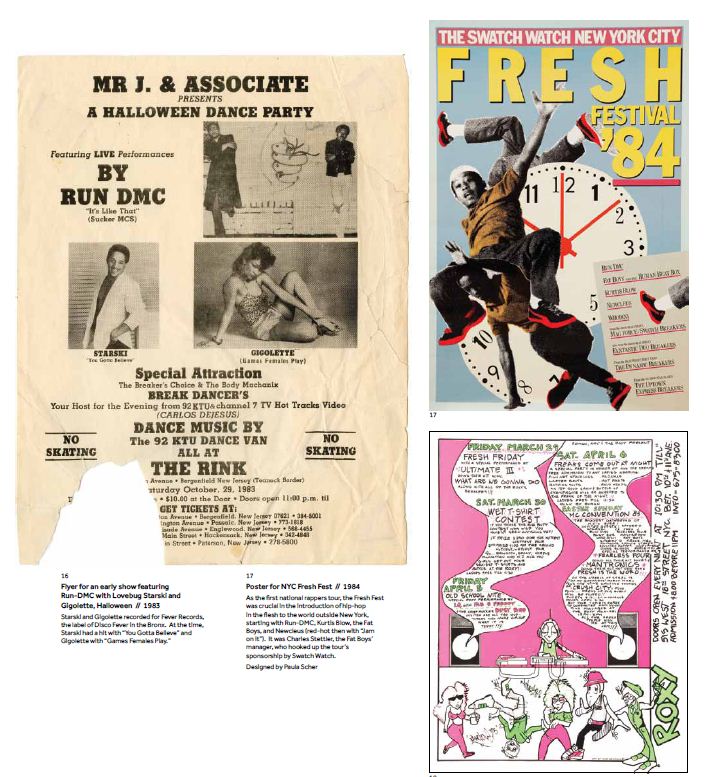
Early Flyers

Def Jam 25 combines photographs and essays with shorter eyewitness commentaries from the artists, designers, musicians, producers, and business guys who helped define Def Jam. The effect is intriguing, often insightful, occasionally funny, and especially fascinating when folks share very different accounts of how things went down. The early years of the label are documented with an energy that matches the verve of Def Jam’s pioneering work in the ’80s, and if I dwell on the first thirds, it’s only because there’s something so electrifying about those early years, when Slayer and Public Enemy were labelmates and Aerosmith and Run DMC could craft a top ten hit together.

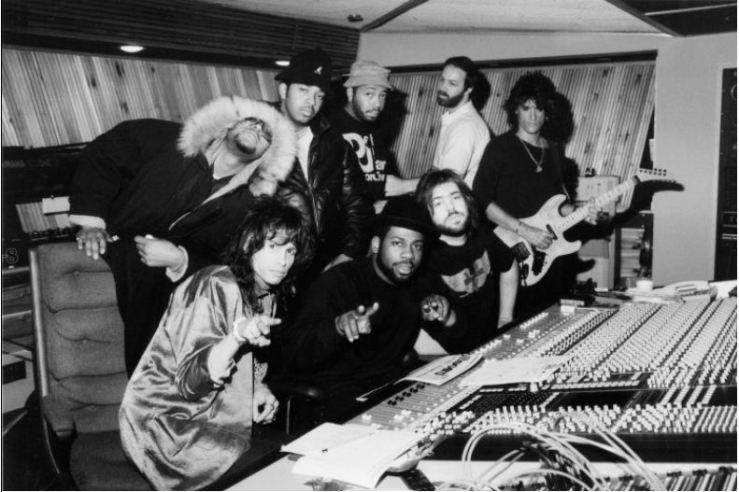
From the "Walk This Way" Sessions

Def Jam’s success continued unabated after Rubin’s departure in 1988, and it’s hard to argue that a label putting out records by EPMD, Nas, De La Soul, Public Enemy, and the Roots was somehow less artistic and more commercial after that point. Still, Rubin’s strange punk rock energy was clearly irreplaceable, and while it remains part of the Def Jam template to this day, it’s hard to get as psyched about Rihanna and Ja Rule as it is about Slick Rick or even Onyx. But that has little to do with the actual book I suppose, which is lovingly crafted and impeccably designed.

Def Jam 25 is a great big coffee table book for people who actually like to read (and for your guests who don’t like to read, the book explodes with vivid imagery). The book reveals (and reflects) Def Jam Records as a marvelous synthesis of art, design, fashion, and business, a label that was (and is) dramatically unstable and also wildly innovative. The book will appeal to fans of music and culture alike. Def Jam 25 is new in hardback from Rizzoli.

Rubin and Simmons, 2009

“27 Sounds Manufactured in a Kitchen” — John Cage

The Obligatory Best of 2011 List(s)

Best Books I Read in 2011 That Were Published in 2011 (Or Close Enough to 2011)

MetaMaus, Art Spiegelman

The Avian Gospels, Adam Novy

Spurious, Lars Iyer

The Third Reich, Roberto Bolaño

Humiliation, Wayne Koestenbaum

The Pale King, David Foster Wallace

Between Parentheses, Roberto Bolaño

***

Best Books I Read in 2011 That Were Published Before 2011

The Elementary Particles, Michel Houellebecq

Wittgenstein’s Mistress, David Markson

Expelled from Eden: A William Vollmann Reader

Ray, Barry Hannah

Trans-Atlantyk, Witold Gombrowicz

The Garden of Eden, Ernest Hemingway

Light in August, William Faulkner

Hadji Murad, Leo Tolstoy

First Love and Other Sorrows, Harold Brodkey

Airships, Barry Hannah

Speedboat, Renata Adler

Under the Volcano, Malcolm Lowry

Vertigo, W.G. Sebald

***

Best Rereading

Candide, Voltaire

***

Best Audiobook of 2011

The Collected Fictions of Gordon Lish, read by Gordon Lish

***

Best Film of 2011

The Tree of Life

***

Most Charming Film of 2011

Midnight in Paris

***

Most Overhyped Book of 2011

The Art of Fielding, Chad Harbach

***

Best Book Cover of 2011 

***

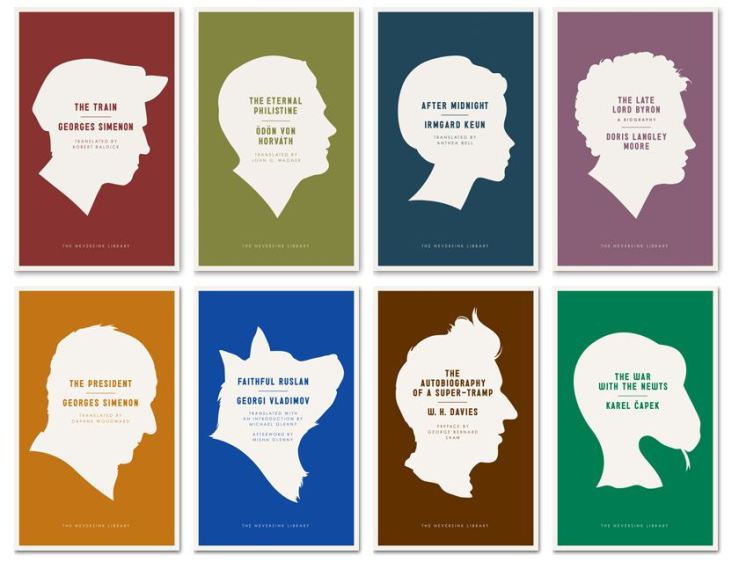
Best Book Series Design

Melville House’s Neversink Imprint


***

Weirdest (Yet Nevertheless Moving) Novel of 2011

How to Keep Your Volkswagen Alive, Chris Boucher

***

Book I Read in 2011 That Still Confounds and Haunts Me

The Kindly Ones, Jonathan Littell

***

Saddest Book I Read in 2011

Tie: Under the Volcano, Malcolm Lowry; The Stories of Breece D’J Pancake, Breece D’J Pancake

***

Best Essay (Print)

“Some Notes on Translation and on Madame Bovary,” Lydia Davis (The Paris Review)

***

Best Essay (Online)

“Nude in Your Hot Tub, Facing the Abyss (A Literary Manifesto After the End of Literature and Manifestos),”  Lars Iyer (White Review)

***

Worst Literary Trend of 2011

Tie: Lame “literary fiction” novels; Articles that link everything to David Foster Wallace

***

Best Literary Trend of 2011

Plagiarism!

***

Most Obvious Disclaimer

I did not read or see or hear every book or essay or audiobook or film or TV show or record or video that came out in 2011. Also, there are some days left in the year. These are all, just like, opinions man.

“Thembi” — Pharaoh Sanders

Jeff Bridges Compares Pulp Fiction to Talking Heads, Creating Trifecta of Cool

“Shopping Is a Feeling” — David Byrne

“There’s That Rainy Day” — Wes Montgomery

Guy Fawkes Day and V for Vendetta

“Remember, remember the 5th of November…”

I was lucky enough to live in New Zealand for a few years as a kid, so I got to experience Guy Fawkes Day. We made effigies of Guy, then we burned them on a bonfire. There was a barbecue and fireworks. To my American ass, it seemed a mixture of the Fourth of July and Halloween—strange and marvelous.

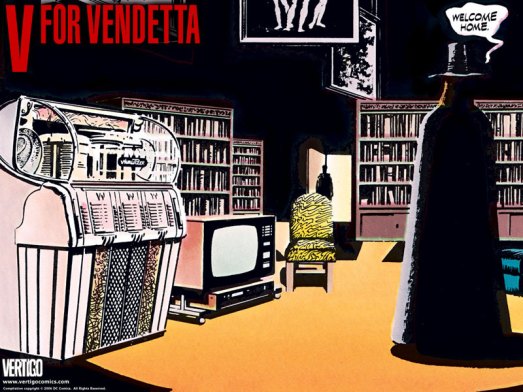
It was a few years after my last Guy Fawkes experience that I read Alan Moore’s V for Vendetta. V, an anarchist who wears a stylized Guy Fawkes mask, wages a vigilante war on a harsh authoritarian government. Along with Frank Miller’s The Dark Knight Returns, V was a first for me, something different from the comics I was reading at the time, stuff like Chris Claremont’s run on The Uncanny X-Men and other Marvel titles.

A film version of V for Vendetta was released in 2006; Alan Moore famously had his name removed from it. I enjoyed the film, although it certainly wasn’t as good or thought-provoking as Moore’s original story. And even though the film looked good, the passive experience of watching an action movie can’t measure up to David Lloyd’s original art work and that wonderful space between the panels of comics that engages the reader’s imagination.

v_for_vendetta_5_800×600.jpg

This afternoon [see editorial note below] I finished the first graphic novel of Alan Moore’s  run writing Swamp Thing, and I can’t wait until my library hold on the second graphic novel comes in. I had no idea Saga of the Swamp Thing would be as good as it was, nor as beautifully illustrated; it’s actually better than V for Vendetta or Moore’s other famed work, Watchmen (and none of these titles are even in the same league as Moore’s masterpiece, From Hell). Alan Moore and Steve Bissette’s run on the DC Comics series essentially led to DC’s creation of the edgier Vertigo imprint for their more “mature” titles, such as The Sandman. These titles helped to change the audiences of “comic books” and helped to make the graphic novel a new standard in the medium (no mean feat, considering the fanboyish culture of comic nerds, a culture that prizes rarity of print run over quality of storytelling).

One of the lessons in V for Vendetta is to illustrate what happens when we don’t allow for dissent, what happens when ideas are both prescribed and proscribed, and all dialogue is muted. Authoritarian governments consolidate their power from the silencing of ideas. A healthy society requires all sorts of opinions, even ones we don’t like. The smiling Americans in this photo aren’t burning effigies of would-be revolutionaries, they are burning something much more dangerous–books.

book-burning.jpg

[Editorial note: So, I ran a version of this post on Nov. 5, 2006—it’s actually one of the first posts I ever did on the blog, which I began in Sept. 2006. Looking over it—which is to say editing it and making minor revisions (and grimacing frequently, but trying to keep those revisions minor, like moving commas)—I can see the growth and scope of the blog; especially I can see my own limited sense of what I wanted Biblioklept to be. The post also strikes me as excessively vague and preachy (especially that last paragraph, written after years of Bush Era Fatigue, which is kinda sorta still going on, I guess, Bush Era Fatigue, I mean, only I’d give it another name now). I wish I could remember more details of Guy Fawkes Day/Night, but I was young—9, 10, 11—and it seems vague. I still remember the history of Guy Fawkes and the Gunpowder Plot, although that’s probably more a result of paying attention in AP European History than anything else. This editorial note is way too long. I never finished Alan Moore’s run on Swamp Thing, but the second volume was good, as I recall].

“Gotta Get Up” — Harry Nilsson

Michael Jackson’s Death Mask (Sorta, But Not Really)

Regular readers of Biblioklept may know that for the past year or so I’ve posted a death mask every Sunday. Sometimes these “death masks” are actually life masks or even busts made years after burial. Obviously, these bizarre statues—which belonged to Jackson himself—are not death masks in any literal sense, but I think that they capture some of the strange horror of MJ. As I argued in an essay written shortly after his death, Jackson’s physical body was a concentrated site and signal of the American Dream as process, as change, as commodity capital written on the physical self. The death masks above (as I choose to call them) embody the bizarre fascination that will always mark any serious consideration of Jackson’s career as a public figure. As he showed us repeatedly in his music videos and short films — not to mention in his multiple radical plastic surgeries — Jackson posited his physical body as a site of mutation, transformation, and disruptive change; these changes ran the gamut of physical possibility, from the organic werebeast/zombie dancing king at the center of “Thriller” to the mechanized cyborg we see above. In any case, forgive this post’s (probably) lurid title—it is simply offered in the spirit of consistency, affording me an opportunity to share some strange pics of a tragic, horrific figure this Halloween.

Books Acquired, 10.22.2011

20111023-103958.jpg

I was too busy on Saturday to document the books that arrived at Biblioklept World Headquarters, but here they are of a Sunday, both sporting impeccable design and, uh, burgundy.

Richard Locke’s Critical Children (Columbia UP) examines childhood in a number of novels, including Dickens, Twain, Peter Pan,Lolita, Catcher in the Rye, and The Turn of the Screw. Here’s Locke, synthesizing these figures in Holden Caulfield—

Salinger’s most famous character, sixteen-year-old Holden, is a holy rebel who combines elements of Oliver Twist and the Artful Dodger, Huckleberry Finn and Peter Pan. Like Oliver, Holden can be said to represent “the principle of Good surviving through every adverse circumstance, and triumphing at last.” Like the Artful Dodger, he is a quick-tongued urban trickster. Like Peter Pan, he mocks his own conventional (and comfortably affluent) society and wants to never grow up. But his most celebrated ancestor is Huckleberry Finn. Salinger transforms Huck the frontier fugitive into Holden the prep-school dropout: both boys’ famously provocative colloquial voices embody their quests for American freedom and authenticity.


20111023-104321.jpg

I can’t overstate the aesthetic pleasure I take in Def Jam Recordings:  The First 25 Years of the Last Great Record Label by Bill Adler and Dan Charnas. It’s huge—thick and big and crammed with photos and interviews and memories—all kinds of great stuff. It makes sense of course that Def Jam, a label as much about style as it was about music, would produce such a beautiful book, but this beast surpasses the expectations most of us might have for a coffee table book: it also functions as an oral history of the people, music, fashion, politics, money, and culture of Def Jam—the influence of which on popular culture simply cannot be underestimated. Full review forthcoming, but two random pics for now—


20111023-104019.jpg

20111023-104026.jpg


Book Acquired, 10.06.2011

20111006-144405.jpg

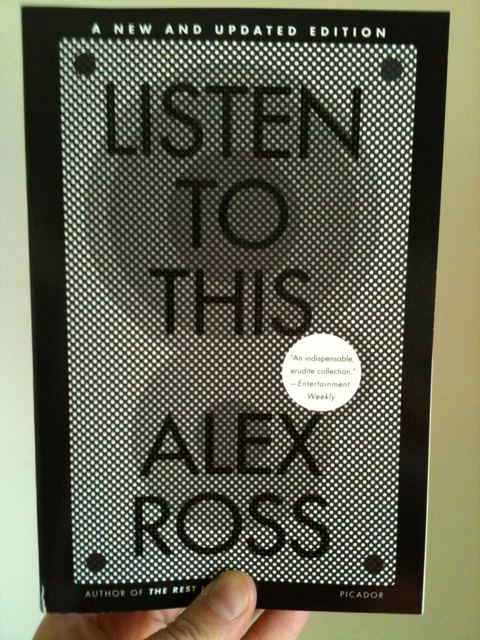
Listen to This by Alex Ross. Publisher Picador’s description—

Listen to This—which collects Alex Ross’s finest writing for The New Yorker since 1994—is the rare book that moves across the entire landscape of music, from classical to rock and back again.  In this series of lively, erudite essays, Ross tells of his own late-blooming discovery of pop, and of how contemporary sounds relate to centuries of musical tradition.  He vividly sketches canonical composers such as Schubert, Verdi, and Brahms; gives us in-depth interviews with modern pop masters such as Björk and Radiohead; and, in a previously unpublished essay, he brilliantly retells hundreds of years of music history—from Renaissance dances to Led Zeppelin—through a few iconic bass lines of celebration and lament. Witty, passionate, and brimming with insight, Listen to This shows how music expresses the full complexity of the human condition.

“Go Limp” — Nina Simone

Oh Well, Whatever, Nevermind (Kurt Cobain Reconsidered)

I was twelve years old when Nirvana’s landmark record Nevermind came out in September of 1991 and supposedly changed the American cultural landscape forever. I was the perfect age to be radically influenced by the onset of the whole grunge thing. Before I got a hold of Nevermind, my favorite records were R.E.M’s Out of Time and De La Soul’s De La Soul is Dead, both of which had come out a few months earlier that year. I also really, really loved Aerosmith’s Greatest Hits (you know…the red album), and U2’s The Joshua Tree. These were some of the earliest CDs I ever owned, and reflecting on this now, it seems odd that my favorite albums could also be brand new, contemporary.

I mention a few of the CDs I owned because I think I’m a relatively typical audiophile of the age group I’m discussing here (roughly, persons born between 1975-1981, although these dates, as I write them, seem awfully silly and arbitrary). I had already outgrown dumb hair metal and had begun to realize that most of the hip-hop I was listening to was not nearly as offensive as I thought it should be. I wanted something new and different and weird, and by the beginning of the seventh grade I’d already begun to scour Rolling Stone, which still had a modicum of cultural relevance in the early nineties. I was also cherry-picking from cool movie soundtracks, and to this day I know that the soundtrack to the oh-so-forgettable 1990 film Pump Up the Volume (Christian Slater as pirate DJ leads a minor youth rebellion) had as much to do with the forging of my musical taste as any other source: this is where I was exposed to two of the bands that would help forge my musical taste for the next decade, Pixies and The Sonic Youth. So, like many other young audiophiles, by the end of 1991–around the time “Smells Like Teen Spirit” was blowing up–I was already moving away from “mainstream” music as quickly as I knew how. Only Nirvana became the new mainstream, grunge became a fashion status, and, feeling like a cultural movement that I was barely even tangentially a part of had been commodified and commercialized, I had rejected the whole thing by the time I had gotten to high school in 1993. This meant rejecting wholesale a number of albums I had loved throughout middle school.

The same month Nevermind came out, so did the Red Hot Chili Pepper’s Blood Sugar Sex Magik, spawning the massive hit “Under the Bridge.” Pearl Jam’s debut Ten came out a month before Nevermind, but really didn’t pick up steam until mid ’92–grunge was in full effect by then; it too produced a mega-hit with “Jeremy.” U2’s Achtung Baby dropped in November–at this point they seemed like the elder statesmen of what was now so brashly defined as “alternative” music (“Alternative to what?” we wondered). “One” was a smash hit. The aforementioned R.E.M. album Out of Time became the year’s critical favorite, with “Losing My Religion” as one of the most unexpected number-ones of 1991. By the end of 1992, U2 and R.E.M. were “the most important bands in the world,” according to every music and entertainment magazine, and Nirvana was getting major credit for initiating a cultural revolution. I loved all of these albums dearly, and, as I mentioned above, denied all of them just a few short years later in favor of a new wave of independent label music–bands like Pavement, Superchunk, and the Archers of Loaf–bands that probably would never have achieved such successful careers without the aforementioned mega-hits that prompted the shift in cultural zeitgeist.
I present all of this evidence merely to point out that the success of these bands–contrasted with the other crap that was happening at the end of the 80s and beginning of the 90s, like White Snake and The New Kids on the Block and Warrant and Nelson and C + C Music Factory–points to something larger than the force of Nevermind alone. (It’s worth pointing out here that Guns N’ Roses released Use Your Illusion I & II a week before Nevermind; these albums had a number of hits including the monster-success of “November Rain,” and, in retrospect, I believe, for all their cock-rockery, are more akin to the albums indicative of paradigm shift I described above than to the hair metal schlock they’re often identified with). Nevermind is often credited with spearheading a musical/cultural “revolution”; this “revolution” in music was already well underway though.

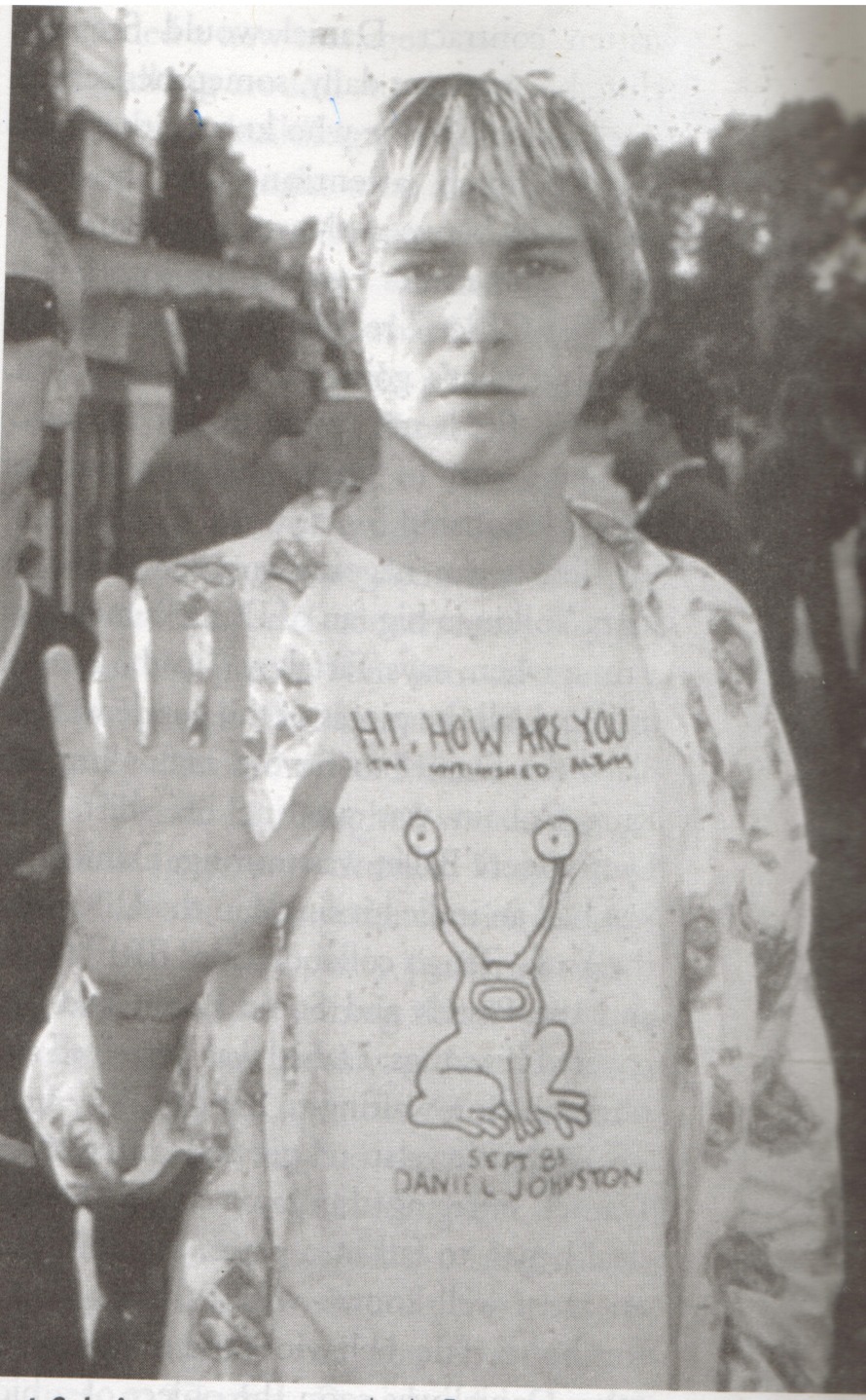
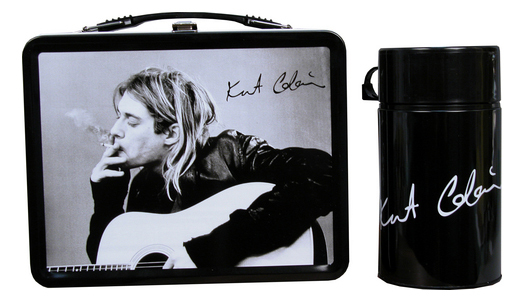
To be sure, Nevermind is a great album, but its cultural cache has more to do with the figure of Kurt Cobain than its relevance and popularity at the time (to see how the myth of Nevermind has grown, simply look at Rolling Stone‘s successive reviews of the album, from 1991, 1992, and 2004, respectively: the magazine gives the album three out of five stars, then four, before finally awarding it five stars thirteen years after the fact). Millions of kids saw Cobain wear Daniel Johnston t-shirts, reference the Melvins, and admit that his songs were really just crude Pixies ripoffs. Cobain, in short, exposed millions of regular kids to an angrier, rougher youth culture, a truly underground music that could react to the failed youth culture of the (now old) boomer generation of the 1960s, which had been forcing an illusory idealization of that decade down our throats forever. Ironically, it was this same boomer generation that greedily milked grunge for all it was worth, commodifying youth culture again into a twisted joke, a stupid lunch box, an action figure, a t-shirt at the mall. No wonder Cobain offed himself.
So why write about this now? It’s been 20 years, and there hasn’t been a record like Nevermind or mega-hits as salient, and dare I suggest meaningful, as “Smells Like Teen Spirit,” “Losing My Religion,” “Under the Bridge,” “One,” or “Jeremy” for quite sometime. The success in the mid-nineties of bands like Smashing Pumpkins and Soundgarden–bands that I didn’t hate but made fun of–seems strange now. Even the music of those elegant bachelors, the Stone Temple Pilots–grunge 2.0–seems oddly strong when held up against the watered-down drivel that passes for contemporary hard rock. Youth music today is archly, ironically aware of its own cultural position and its own performativity in a marketplace. I’m sickened by even thinking of the toothless fourth generation emo-or-whatever-you-wanna-call-it derived from Green Day (another band I didn’t hate but but made fun of) that passes for “pop-punk.” In all its silly winking at the audience, its safe-as-milk non-personality, much of this music represents the ultimate commodifiaction and commercialization of “punk”–the aesthetic that Nevermind helped to re-ignite. (In another genre, hip-hop, after 30 years of existence, has claimed its right–with a sharp vengeance–to be as stupid as any other form of music. Don’t get me started). The irony Cobain and others explored was never a smart-assed irony that coyly winked at the audience, inviting them to laugh along with whatever cultural references were being rehashed; Cobain’s irony was mean and angry–it was a critique of American hegemonic mall culture. Current youth music, rock, emo, whatever it is, is simply a celebration of greedy materialism hiding under the thinnest ironic sheen.

And here’s what I think is the saddest part: I don’t think there can be another Nevermind. To be sure, there will always be fantastic, landmark, music-changing records–I have no doubt about that (see: 1997’s OK Computer f’r’instance). But a record that channels a truly punk aesthetic into mainstream American consciousness is simply not going to happen again. For over fifteen years, critics (and executives) have been looking to award “next big thing” status to just about anyone (do you remember when the Chemical Brothers were supposed to be the “next big thing”? You don’t?). The internet has changed the old model. In the past, records like Nevermind propagated a “trickle-down” effect, if you will–kids in the heartland see Cobain give the Raincoats props, buy Raincoats’ records, get into X-Ray Spex, get into Black Flag, get into Pavement, whatever. In contrast, the internet provides a diffusion model of immediately accessible cultural immersion. Anyone with a DSL connection and a few hours to kill on Allmusic can access indie culture. And that’s a good thing. But still: I’ll get nostalgic here: in the old days, we used to write to the labels and get catalogs and order music via snail mail. We used to buy albums on pure faith that they were good. You couldn’t just click on an mp3 (or steal entire albums on p2p networks or over torrents). But I’m not railing against the internet. I think it’s great that a kid in Montana can become thoroughly exposed to Drag City records or the works of Big Black in just a week. But that will never translate into a wide-scale youth culture shift. Instead, we’ll continue to have what we have now: lots of really, really shitty music on radio and TV. And this is our culture.

There won’t be another Beatles or another Sex Pistols–there won’t be another group that challenges our collective cultural sensibility to make a large jump. There won’t even be an Elvis or a Madonna, a performer that challenges our ethics and morality. Instead, we will continue to have watered-down crap on mainstream media, as well as plenty of choices for those who take the time to look. But those choices will be marginalized, kept on the sidelines out of mainstream American-consciousness, and what we’ll lose is an opportunity to progress and enrich the entirety of our culture. Who knows though–I could be wrong; perhaps I’m just old and out of touch. Perhaps a wholly new and dynamic artist or group will come out that will capture the anti-establishment roots of rock and roll and inspirit a new and dramatically different course in contemporary youth culture. But I don’t see it happening again. I hope I’m wrong.

[Editorial note: We ran a slightly different (but pretty much the same) version of this post in April of 2008]